The Healer of Sorrows Icon of Virgin Mary
Price range: $500 through $1600
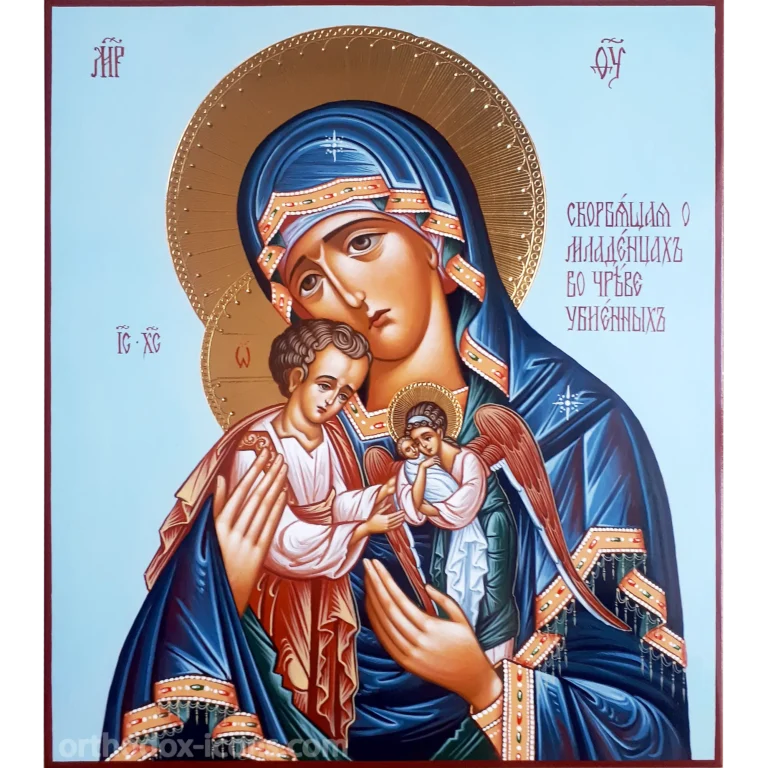
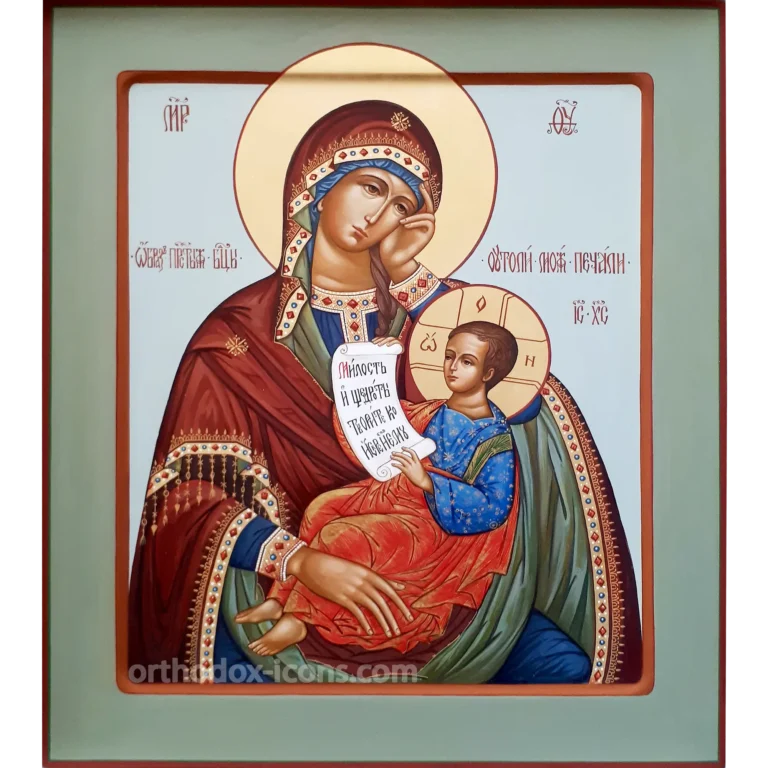
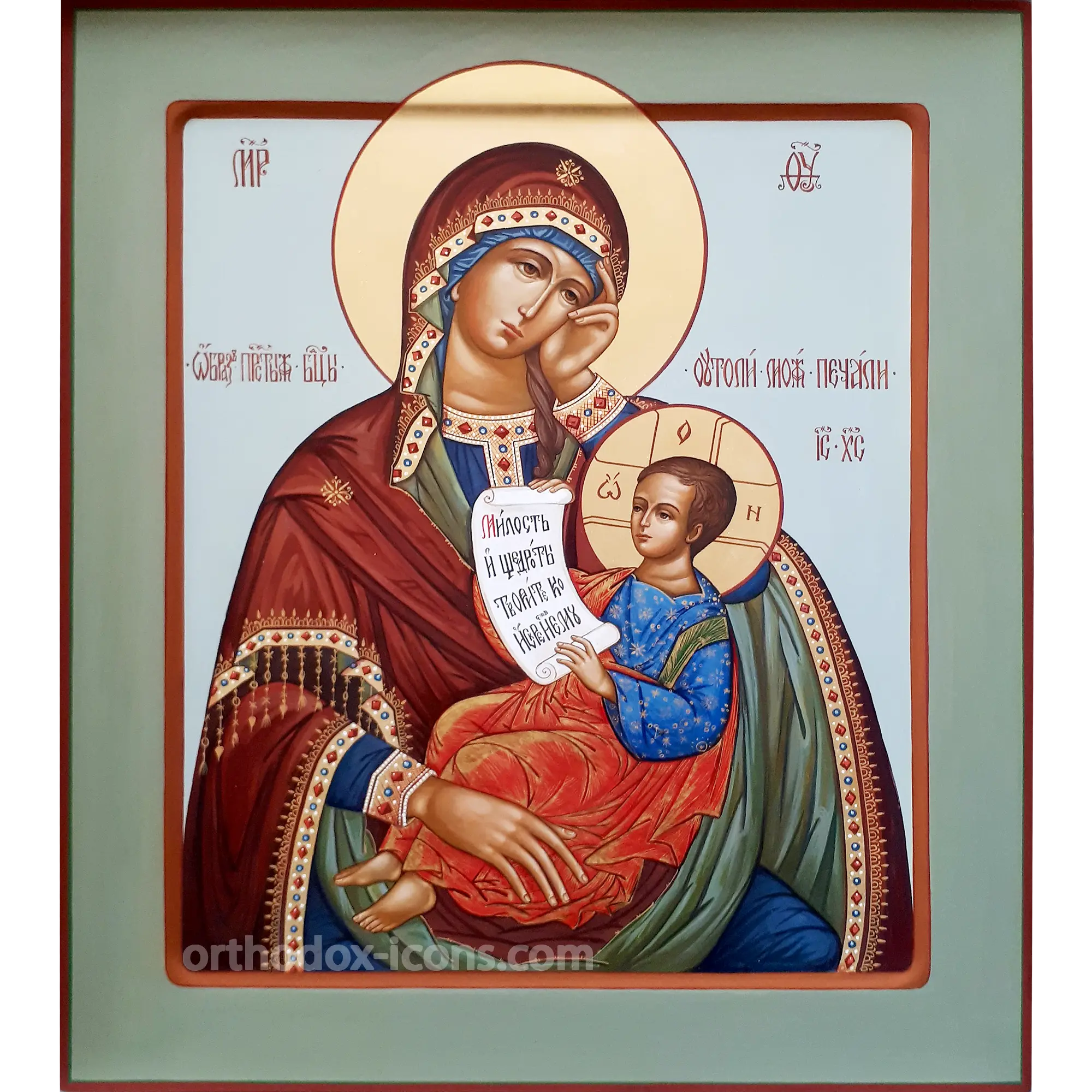
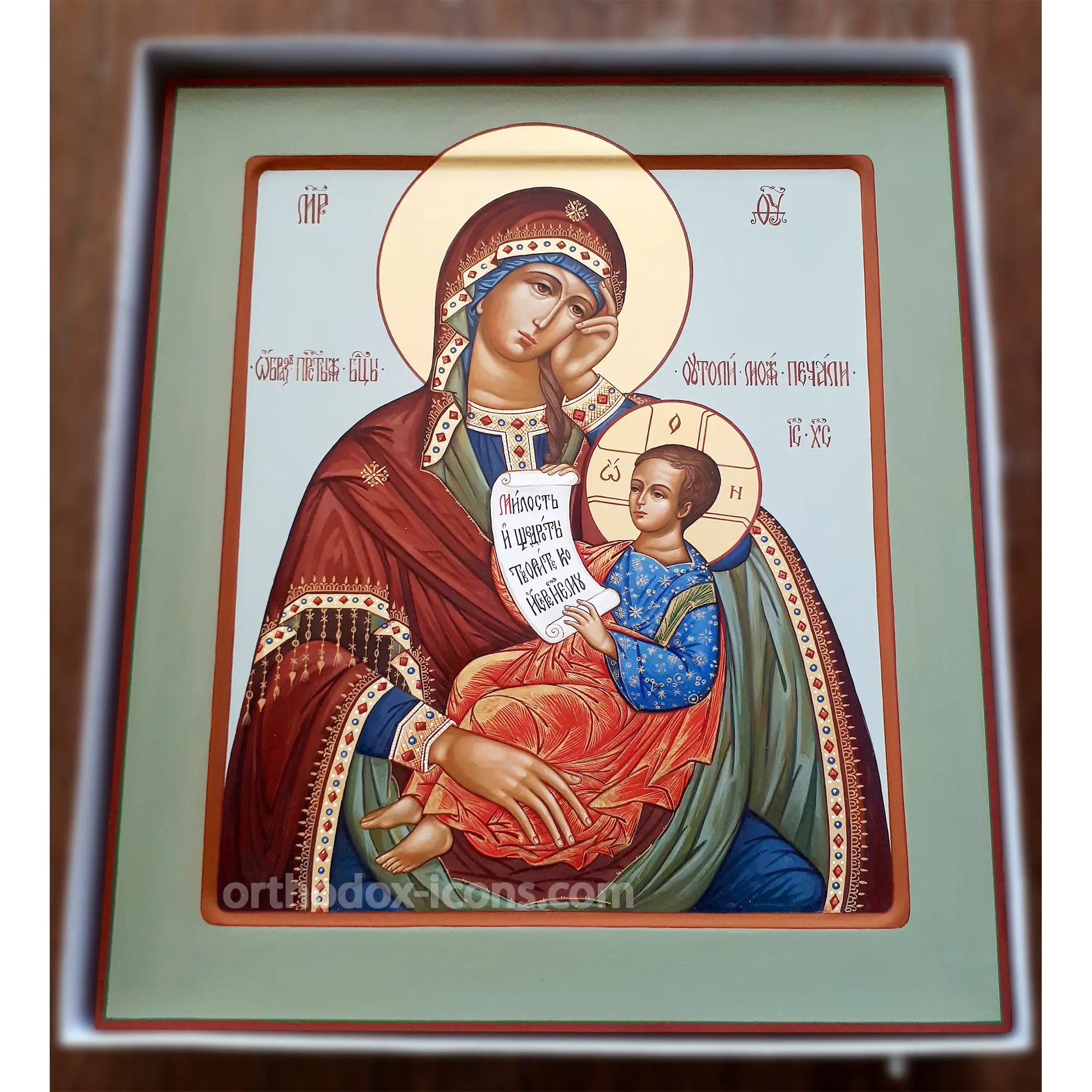
The Healer of Sorrows Icon of Virgin Mary is a hand-painted Mother of God icon known in Russian as Utoli moya Pechali, a prayerful image for consolation in grief, illness, despondency, and despair.
Available sizes: 17×21 cm (6.7×8.3 in), 20×24 cm (7.9×9.4 in), 27×31 cm (10.6×12.2 in), 30×40 cm (11.8×15.7 in). Larger iconostasis sizes may be discussed before painting.
Materials: linden board with oak braces, linen pavoloka, chalk levkas, 960 gold leaf halos, mineral egg tempera, protective finish.
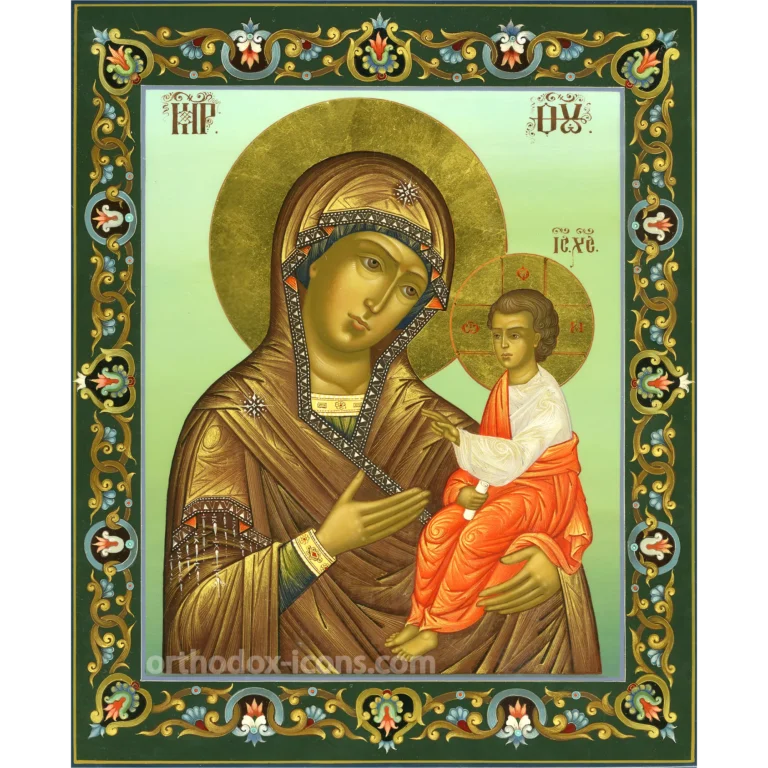
Technique: hand icon painting in a mixed canonical and academic manner, olive-green background with terracotta border, gold halos, and fine ornamental work on the garments.
It is possible to paint an image in any size to order
Free shipping worldwide
The Healer of Sorrows Icon of Virgin Mary is a hand-painted Orthodox icon of the Mother of God known in Russian as Utoli moya Pechali, meaning Soothe My Sorrows. The name is not merely historical; it is a direct cry of a suffering human soul to the Mother of God, who herself stood in sorrow at the Cross of her Divine Son.
This icon is a visible image of mercy, compassion, and maternal love. It is especially close to those who are overwhelmed by grief, depression, spiritual despondency, illness, fear, or a heavy life crisis. The Mother of God is shown as one who hears suffering and shares it with tender attention.
The hand-painted version offered here combines traditional iconographic composition with soft academic modeling of the faces. The olive-green background with terracotta border, golden halos, and jewel-like ornament on the garments give the icon a noble and restrained beauty.
History of the Icon: The Miracle in Pupyshev
The roots of this icon go back many centuries. According to church records, the first icon with this title was brought to Moscow by Cossacks in 1640, during the reign of Tsar Michael Feodorovich. It was placed in the Church of Saint Nicholas the Wonderworker in Pupyshev, in the Zamoskvorechye district of Moscow.
The icon was once deeply venerated by local parishioners, but after a fire and later rebuilding of the church, it was gradually forgotten. Darkened by time and soot, it was placed in storage in the church bell tower among old and unused items.
Its fame returned in 1760 through a remarkable healing. A noble woman near Moscow suffered from a terrible illness. She was completely paralyzed and could not even move her hand because of pain. Physicians were powerless, and she stood near death.
One night she saw a bright light and the face of the Most Holy Theotokos. The Mother of God told her to go to Moscow, to the Church of Saint Nicholas in Pupyshev, and pray before the icon bearing the inscription Soothe My Sorrows. In the vision she was shown the very image: the Mother of God supporting her head with her hand.
When the sick woman was carried to the church, the priests did not find such an icon in the main church. Then old icons were brought down from the bell tower. Among them was a darkened, dusty image. As soon as it was cleaned, the woman recognized it and cried out. After a prayer service before the icon, she rose to her feet healed. The feast of the icon was later established on February 7, or January 25 according to the old calendar.
Iconography: Theology of Compassion
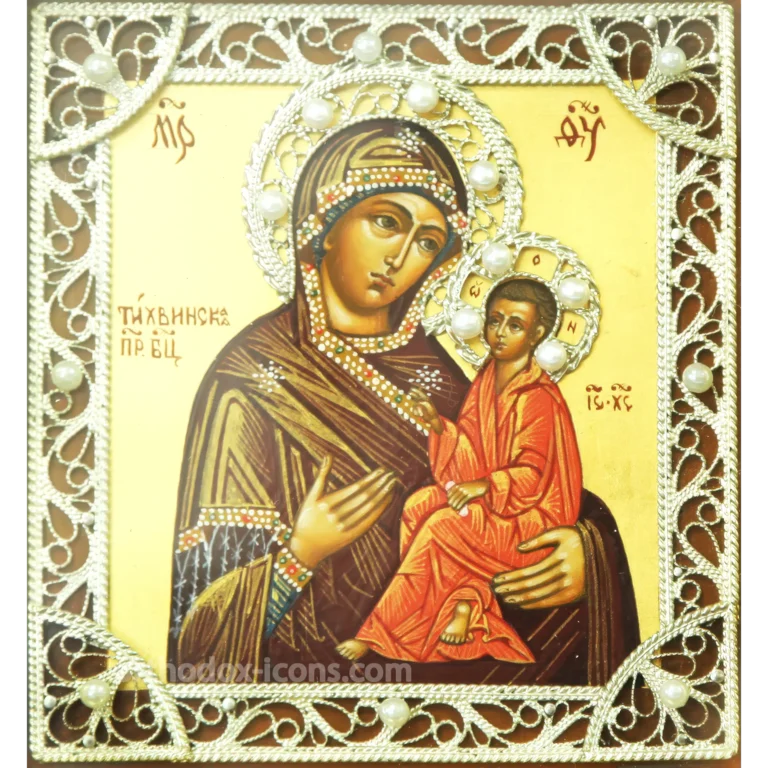
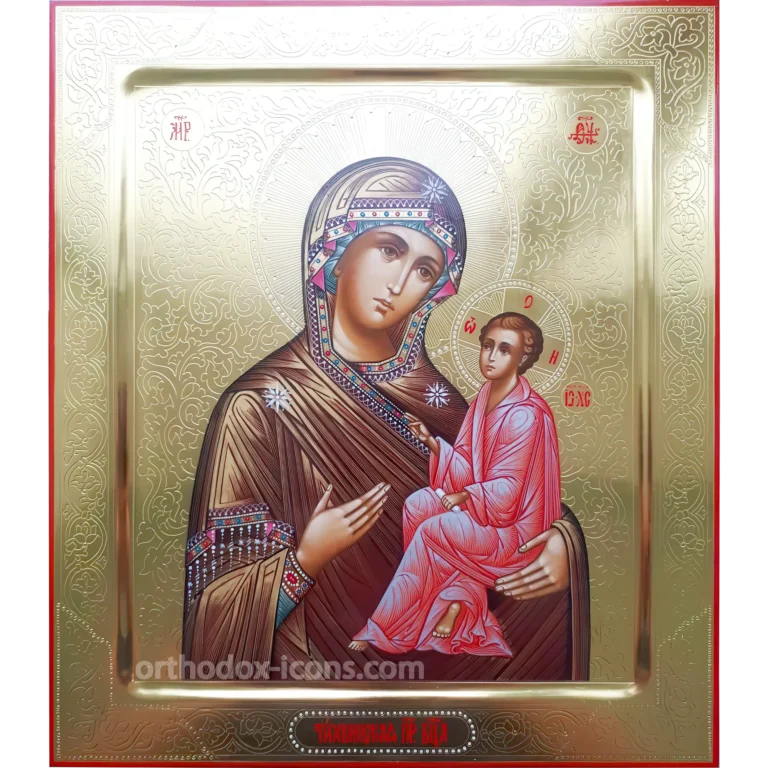
The Healer of Sorrows icon is related to the Eleusa, or Tenderness, type, whose purpose is to show the merciful and compassionate love of the Mother of God toward the human race. Its most recognizable feature is the gesture of the Theotokos: her left hand gently rests against her cheek while her head inclines.
In ancient and Byzantine visual language, this gesture expresses deep sorrow, thoughtfulness, and attentive listening. The Mother of God seems to listen to the quiet tears and prayers of every suffering person, sharing their pain and offering maternal consolation.
The Christ Child sits on the lap of His Mother, not as a static figure but in gentle movement, turning toward those who pray. In this version He wears a blue chiton with gold assist and floral ornament, with an orange-red himation above it.
In His hands, Christ holds an open scroll. Texts on the scroll may differ in various versions. On this icon, the words speak of mercy and generosity that do not run dry. The scroll becomes a visible promise that sincere prayer for help is not forgotten by God.
Prayer Before the Healer of Sorrows Icon
The very title of the icon points to its main spiritual meaning: the soothing of grief, despair, and the heavy storms of the soul. Orthodox Christians approach this image when sorrow becomes too much to carry alone.
- For depression and despondency: people pray before the icon during deep emotional wounds, panic, chronic anxiety, despair, and loss of meaning.
- For physical illness: remembering the healing in Moscow, the faithful pray for those suffering from paralysis, stroke, severe chronic illness, and conditions of the body that seem difficult to heal.
- For softening of hearts: prayers before this icon also ask for the calming of anger, family conflict, court disputes, hatred, and human cruelty.
- For deliverance from destructive passions: in Orthodox spiritual language, sorrows may also include addictions and inner bondage that torment the soul.
Mstyora Painting, Gold Halos, and Ornament
This icon is painted on a solid linden board. Oak braces are inserted into the back to help prevent the board from warping when humidity changes. The front is covered with linen pavoloka and then with multiple layers of hot chalk levkas, polished smooth before painting.
The halos of the Mother of God and Christ are gilded with genuine 960 gold leaf. Gold in Orthodox iconography points to divine, uncreated light and the heavenly kingdom. High-purity gold does not darken or oxidize in ordinary air when cared for properly.
The faces are painted in a soft academic manner, with volume, warmth, and living expression. The garments are decorated with fine ornamental details: pearl-like lines, gold patterns, and delicate borders that imitate precious embroidery and handwork.
The color design is calm and distinctive: an olive-green background framed by a terracotta border. This restrained palette supports the spiritual seriousness of the image and keeps the viewer’s attention on the compassionate face of the Mother of God.
Characteristics of the Hand-Painted Icon
| Icon name | Healer of Sorrows Icon of Virgin Mary, Utoli moya Pechali |
|---|---|
| Iconographic type | Eleusa, Tenderness, with academic painting elements |
| Gilding | Halos covered with genuine 960 gold leaf |
| Board | Solid linden board, oak braces, linen pavoloka, chalk levkas |
| Decoration | Fine ornamental work on the garments, imitation of pearl and precious embroidery |
| Background | Olive-green background with terracotta border |
| Available sizes | 17×21 cm (6.7×8.3 in), 20×24 cm (7.9×9.4 in), 27×31 cm (10.6×12.2 in), 30×40 cm (11.8×15.7 in) |
| Larger sizes | Large iconostasis formats may be discussed before painting |
| Shipping | Free international shipping is included; payment is due upon delivery. |
Questions and Answers
What does the name Healer of Sorrows mean?
The Russian title Utoli moya Pechali is a direct prayer to the Mother of God: soothe my sorrows. The word sorrows includes grief, spiritual pain, depression, physical illness, despondency, and despair.
How can this icon be recognized visually?
The most recognizable feature is the left hand of the Mother of God, which gently rests against her cheek as her head inclines. This ancient gesture expresses deep compassion, attentive listening, and maternal consolation.
What miracle made this icon famous?
In 1760 in Moscow, a completely paralyzed woman saw this icon in a vision and was brought to the Church of Saint Nicholas in Pupyshev. The icon was found dusty in the bell tower, and after a prayer service before it, the woman stood up healed.
In what situations is prayer offered before this icon?
People pray before this icon in deep grief, loss of loved ones, depression, panic, despair, severe physical illness, paralysis, stroke, chronic illness, and also for deliverance from destructive addictions.
When is the feast day of this icon?
The feast of the Healer of Sorrows icon is celebrated on February 7 according to the civil calendar, January 25 according to the old calendar. This date remembers the healing miracle in Moscow in 1760.
What is written on the scroll held by the Christ Child?
The Christ Child holds an open scroll. On this version, the words speak of mercy and compassion: Your mercy and generosity toward me are inexhaustible. The scroll is a sign that sincere prayer for help is not rejected.
What is special about the academic style of this icon?
Unlike a stricter Byzantine manner, the academic style uses light, shadow, and volume. The face of the Mother of God appears warm, realistic, and emotionally expressive while remaining a reverent Orthodox image.
Will the gold halos darken over time?
No. The halos are gilded with genuine 960 gold leaf, not imitation metal leaf. High-purity gold does not oxidize or lose its brightness in ordinary air when properly cared for.
Why are oak braces inserted into the back of the board?
Wood reacts to changes in humidity and temperature. Oak braces set into the back of the linden board work as a firm stabilizing frame, helping prevent warping and cracking.
What sizes are available?
The icon can be ordered in 17×21 cm, 20×24 cm, 27×31 cm, and 30×40 cm, with larger monumental formats for church iconostasis work available by agreement.
| Dimensions | 17x21cm (6.7×8.3 in), 20x24cm (7.9×9.4 in), 27x31cm (10.6×12.2 in), 30x40cm (11.8×15.7 in) |
|---|---|
| Name | Mary |