August Icon of the Mother of God
$3750
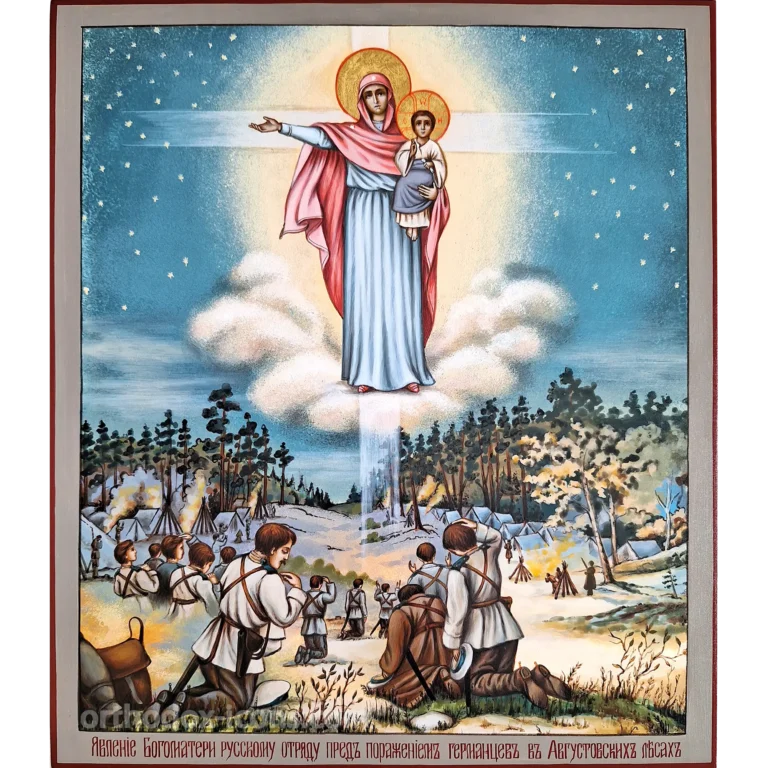
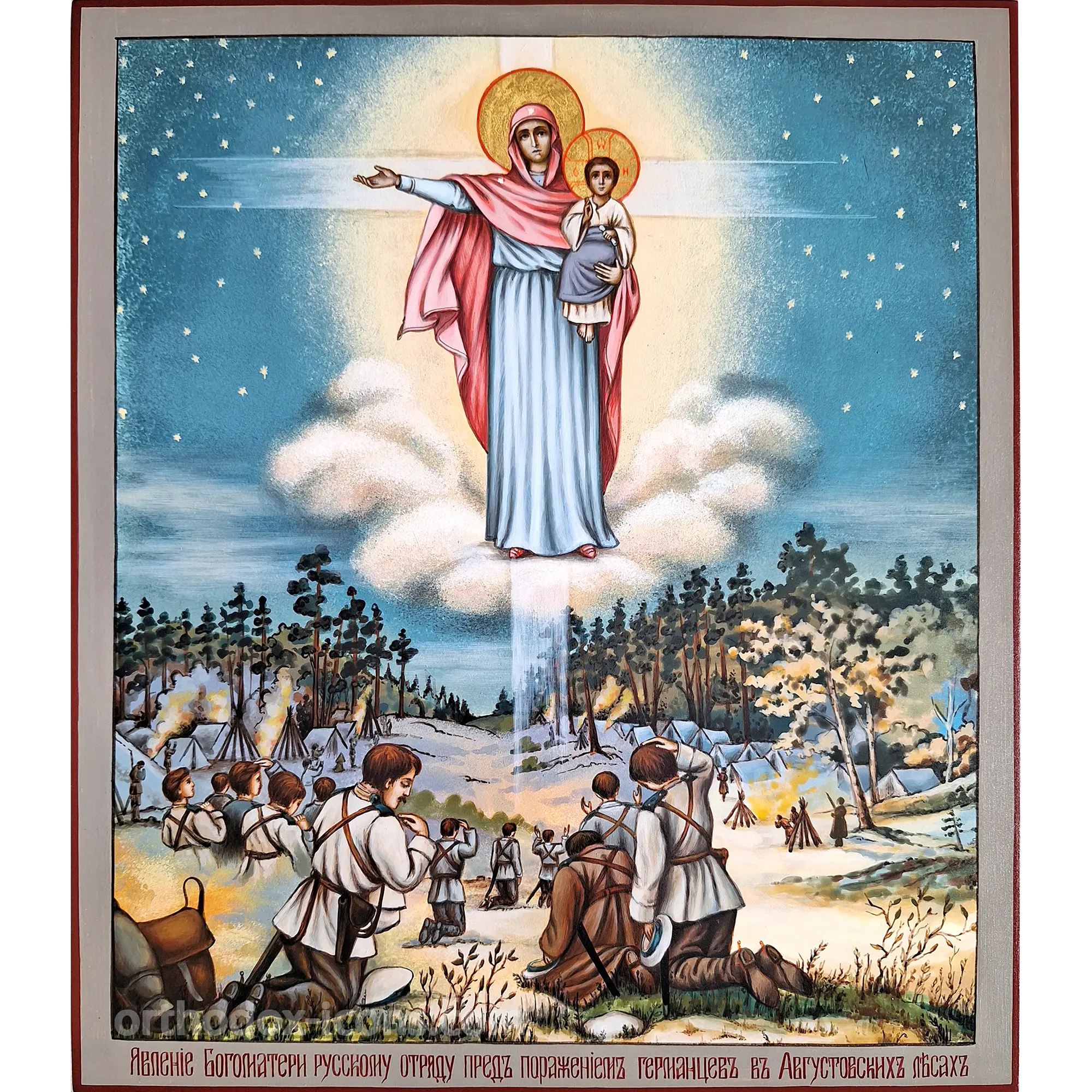
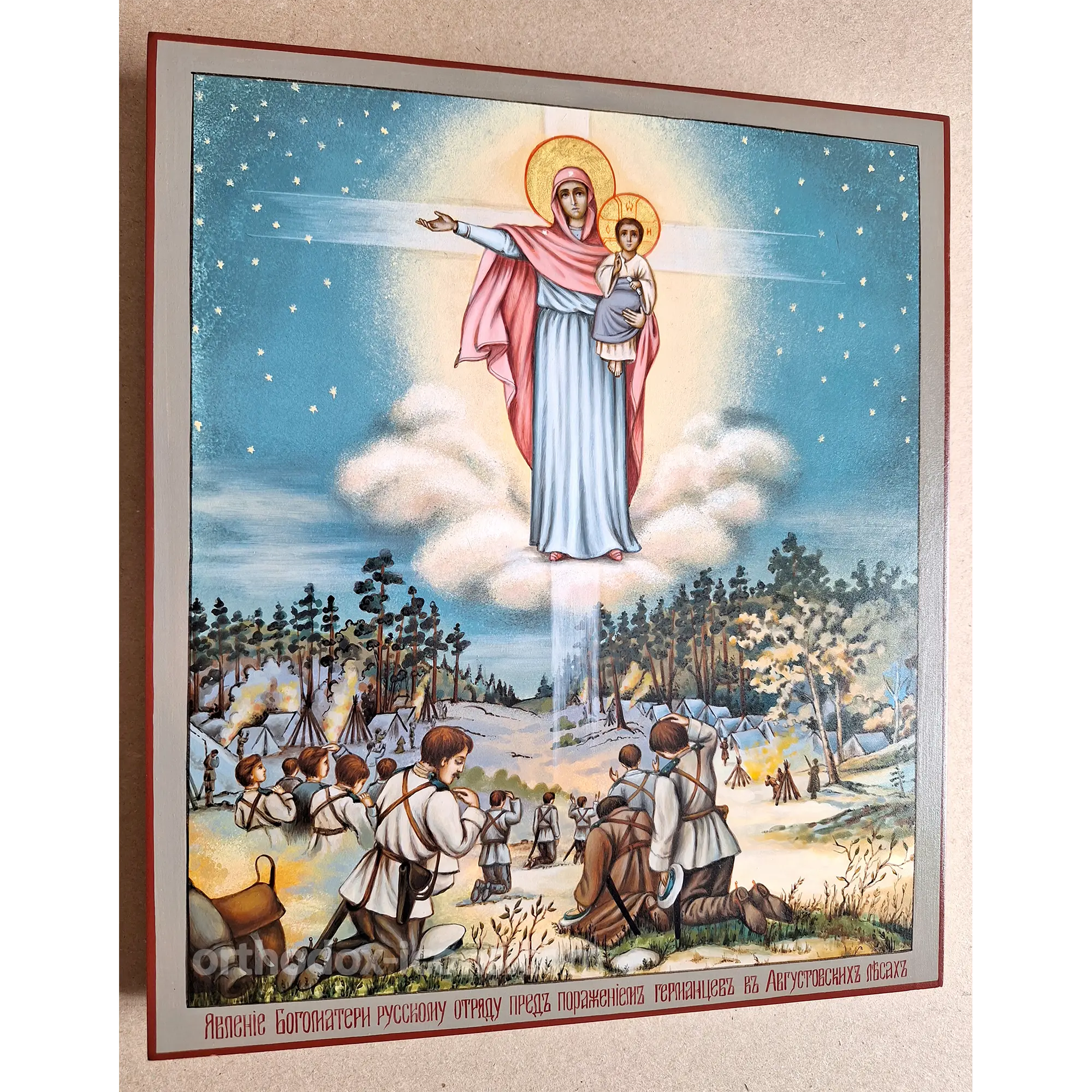
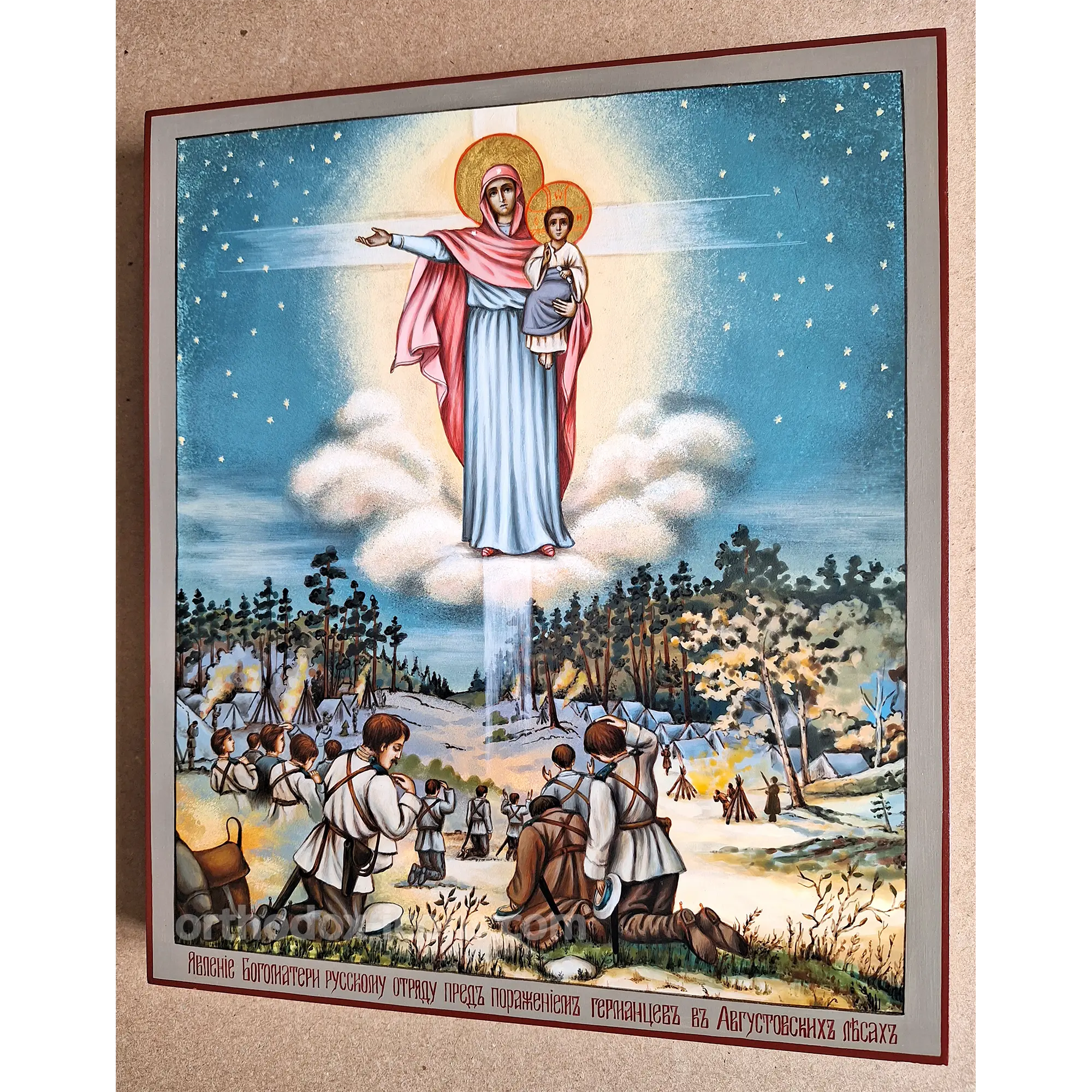
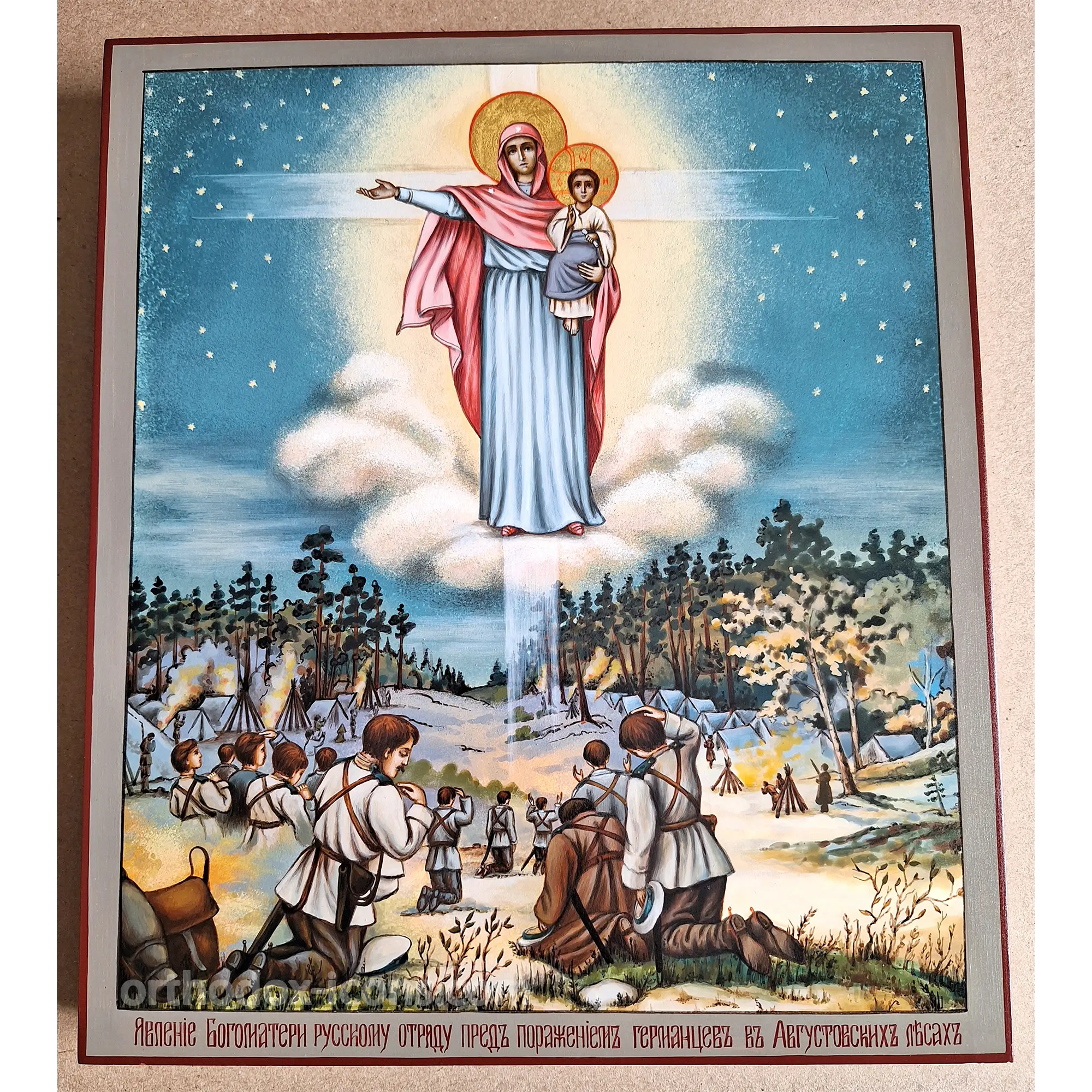
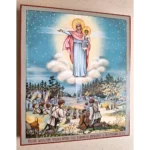
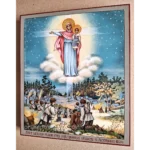
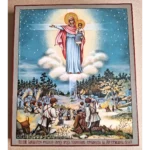
August Icon of the Mother of God is a hand-painted historical Orthodox icon of the apparition of the Theotokos to Russian soldiers in the Augustow forests during World War I.
Available size: 30×40 cm (11.8×15.7 in). Larger church, regimental, garrison, and iconostasis sizes may be discussed before painting.
Materials: solid linden board with oak braces, linen pavoloka, chalk levkas, mineral egg tempera, 23K gold leaf (960 purity) halos, protective finish.
Technique: detailed hand painting on wood with night landscape, soldiers, military camp, starry sky, luminous cross, and gold halos.
It is possible to paint an image in any size to order
Free shipping worldwide
August Icon of the Mother of God is a hand-painted historical Orthodox icon connected with a wartime apparition during the First World War. Unlike many ancient Mother of God icons whose origins are lost in the early centuries, this image belongs to the modern period and is linked with eyewitness reports, military accounts, newspaper testimony, and church investigation.
The icon is also known as the August Victory or the Apparition of the Mother of God to a Russian detachment. It shows the Theotokos with the Christ Child appearing in the night sky above Russian soldiers in the Augustow forests. The image is venerated as a prayerful protection for soldiers, defenders, and all who serve in danger.
This composition is unusually complex for an icon: it includes a night landscape, a military camp, kneeling soldiers, campfires, a starry sky, the Mother of God on a shining cloud, and the luminous cross that appeared after the vision. For this reason it is usually painted in 30×40 cm (11.8×15.7 in) or larger sizes.
The Apparition in the Augustow Forests
The history of the August Icon is inseparable from the tragic and heroic events of the beginning of the First World War. In September 1914, the Russian Imperial Army fought heavy battles in East Prussia and in the territory of present-day Poland. In the area of the Augustow forests, near the town of Augustow, Russian units found themselves in a dangerous position, exhausted and threatened by encirclement.
The reported apparition took place during the night from September 14 to September 15, 1914, according to the civil calendar. Around midnight, Russian soldiers and officers who were on watch or resting near campfires saw an unusual light in the dark starry sky. From that light, the figure of the Most Holy Theotokos with the Christ Child gradually appeared.
The Mother of God stood on a cloud, holding the Christ Child on her left arm. Her right hand was stretched forward, pointing westward, toward the enemy positions and the direction of escape from the closing danger. The apparition lasted about ten to fifteen minutes. Soldiers fell to their knees, removed their caps, crossed themselves, and prayed with tears.
As the vision faded, a bright cross remained in the sky for a time. The next day, Russian troops went into battle with renewed courage. According to the reports preserved in the tradition, the soldiers who had seen the apparition survived the bloody engagement. News of the Augustow miracle quickly spread through the army and the home front.
The Holy Synod began an investigation, questioning eyewitness soldiers under oath. In 1916 the Synod recognized the event and blessed the painting of icons that recorded the apparition. Thus the August Icon of the Mother of God entered the iconographic tradition.
Iconography: Heaven and Earth in One Scene
The August Icon is a historical narrative icon. Its composition joins the heavenly and earthly worlds in a single image. In the upper part, the Mother of God appears in the night sky, standing on a shining cloud. Behind her is the luminous cross, and around her is the deep darkness of the star-filled heavens.
The Virgin Mary is dressed in a blue tunic, symbolizing purity, and a red maphorion, symbolizing royal dignity and suffering. She holds the Christ Child on her left arm, while her right hand points forward with both authority and maternal care. Christ blesses the praying soldiers and holds a scroll, the sign of the Word of God.
The lower part shows the earthly sphere: a dark coniferous forest, a clearing, tents, burning campfires, and soldiers of the imperial army. The column of light from the heavenly cloud descends toward the ground, showing that the heavenly sign enters the historical moment.
The soldiers are shown at the moment of spiritual astonishment. Some kneel, some cross themselves, some fold their hands in prayer, and all look upward toward the miracle. Their uniforms, boots, belts, and nearby rifles root the icon in the concrete military reality of 1914.
Prayer Before the August Icon
Because this icon was born from a military event, it has become a special prayer image for soldiers, defenders, and those who carry responsibility in dangerous service. It is also a source of comfort for families who wait for loved ones in places of danger.
- For soldiers and servicemen: mothers, wives, sisters, and relatives pray for the life, health, courage, and safe return of those serving in conflict or dangerous duty.
- For deliverance from hopeless situations: as the Mother of God showed the way out of encirclement in 1914, people pray before this icon when circumstances seem closed and human help is weak.
- For courage and clarity: soldiers and officers ask for freedom from panic, steadiness under pressure, clear judgment, and the strength to fulfill their duty honorably.
- For peace and protection: the icon is used in prayer for the end of bloodshed, protection of borders, and deliverance from enemy attack.
Mstyora Technique and Detailed Painting
Painting the August Icon requires a large and stable board because the composition contains many small figures and historical details. The icon is painted on selected solid linden, strengthened on the back with oak braces. The front is covered with linen pavoloka and ten to fifteen layers of chalk levkas, polished smooth before painting begins.
The scene is painted in natural mineral egg tempera with fine brushes. The icon painter must handle night sky, forest, flames, tents, soldiers, uniforms, faces, and the heavenly apparition in a single balanced composition. Special attention is given to the faces of the Mother of God and the soldiers, which are painted with soft, volumetric modeling.
The halos of the Theotokos and Christ are gilded with genuine 23K gold leaf (960 purity). Against the dark night sky, the gold halos emphasize the divine nature of the apparition and give the heavenly figures a radiant center.
Characteristics of the Hand-Painted Icon
| Icon name | August Icon of the Mother of God, August Victory |
|---|---|
| Iconographic type | Historical narrative icon, apparition of the Mother of God |
| Board | Solid linden board, transverse oak braces, linen pavoloka, chalk levkas |
| Painting technique | Hand painting in natural mineral egg tempera |
| Gilding | Halos covered with genuine 23K gold leaf (960 purity) |
| Composition | Night landscape, soldiers, military camp, starry sky, luminous cross |
| Available size | 30×40 cm (11.8×15.7 in) |
| Larger sizes | Large garrison, regimental, church, and iconostasis formats may be discussed before painting |
| Shipping | Free international shipping is included; payment is due upon delivery. |
Questions and Answers
Why is this icon called the August Icon?
The name does not come from the summer month, but from the town of Augustow in eastern Poland, then part of Suwalki Governorate. In the Augustow forests near that town, Russian soldiers reported seeing the Mother of God in 1914.
For whom is prayer offered before this icon?
The August Icon is especially connected with prayer for soldiers, defenders, and those in danger. Mothers, wives, and relatives pray for the protection, courage, health, and safe return of those serving in difficult or dangerous conditions.
What is shown in the lower part of the icon?
The lower part shows a Russian military camp in 1914: a night forest, tents, campfires, soldiers in pre-revolutionary uniforms, and men kneeling in awe before the heavenly apparition.
Where is the Mother of God pointing?
Her right hand points westward, historically understood as the direction of the enemy positions and the way out of danger. In the icon, the gesture becomes a sign of guidance, protection, and deliverance.
When is the feast day of the August Icon?
The commemoration of the August Icon is observed on September 14 according to the civil calendar, September 1 according to the old calendar, recalling the apparition to soldiers in 1914.
Is this event historically documented?
Yes. The apparition was reported in wartime newspapers, military accounts, and eyewitness testimony. The Holy Synod investigated the reports, questioned soldiers under oath, and in 1916 recognized the event and blessed the painting of icons of it.
Why is this icon usually painted in larger sizes?
The composition is complex and multi-figured. It includes soldiers’ faces, uniforms, weapons, camp details, a forest, starry sky, the Theotokos, Christ, and the luminous cross. A size of 30×40 cm or larger allows these details to be painted clearly.
What materials are used for this icon?
The icon is painted on a solid linden board strengthened with oak braces. Linen pavoloka and chalk levkas prepare the surface, mineral egg tempera is used for the painting, and the halos are gilded with genuine 23K gold leaf (960 purity).
What is the shining cross behind the Mother of God?
According to soldiers’ testimony, after the figure of the Mother of God and Christ began to fade in the night sky, a bright luminous cross remained for a time. The icon preserves this part of the event behind the heavenly figure.
Can this icon be ordered for a military church?
Yes. The August Icon is especially suitable for regimental, garrison, and military churches. Larger monumental formats for church placement or iconostasis use may be discussed before painting.
| Name | Mary |
|---|---|
| Dimensions | 30x40cm (11.8×15.7 in) |