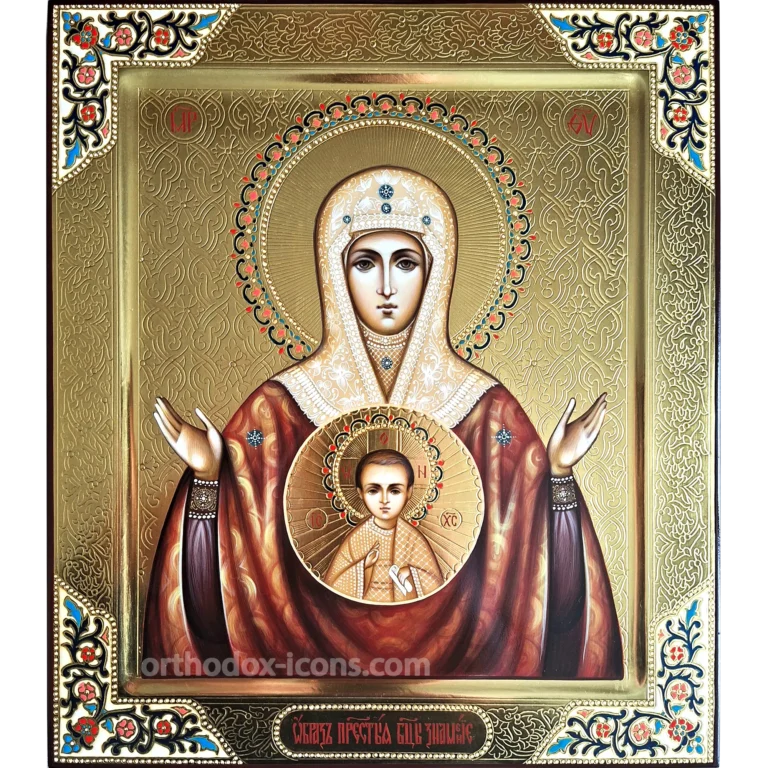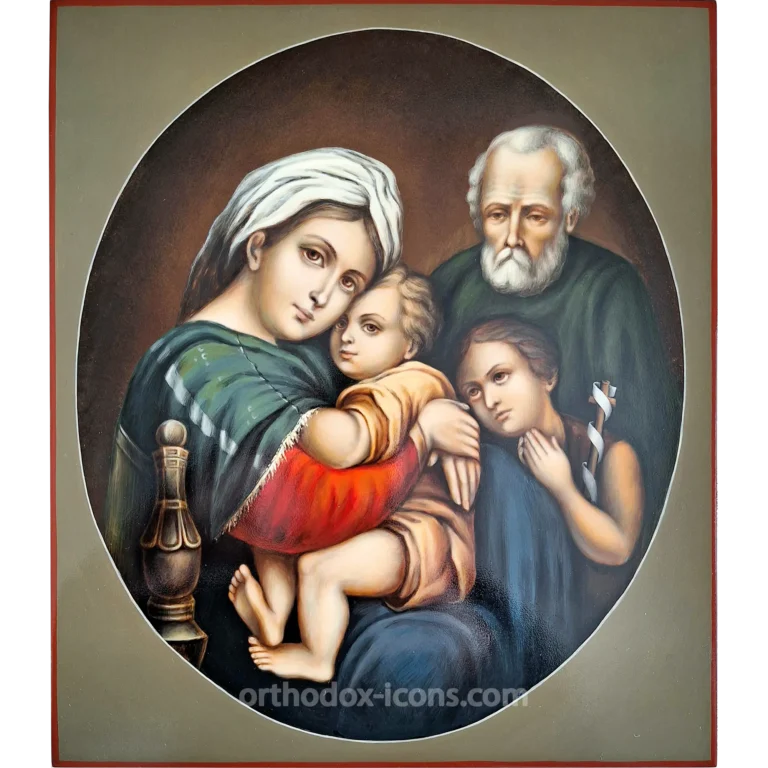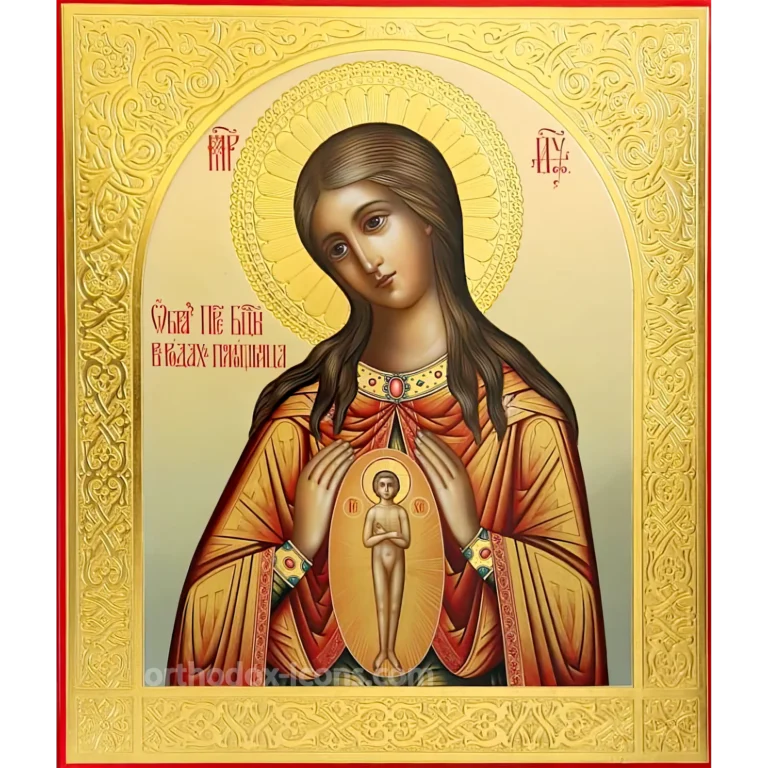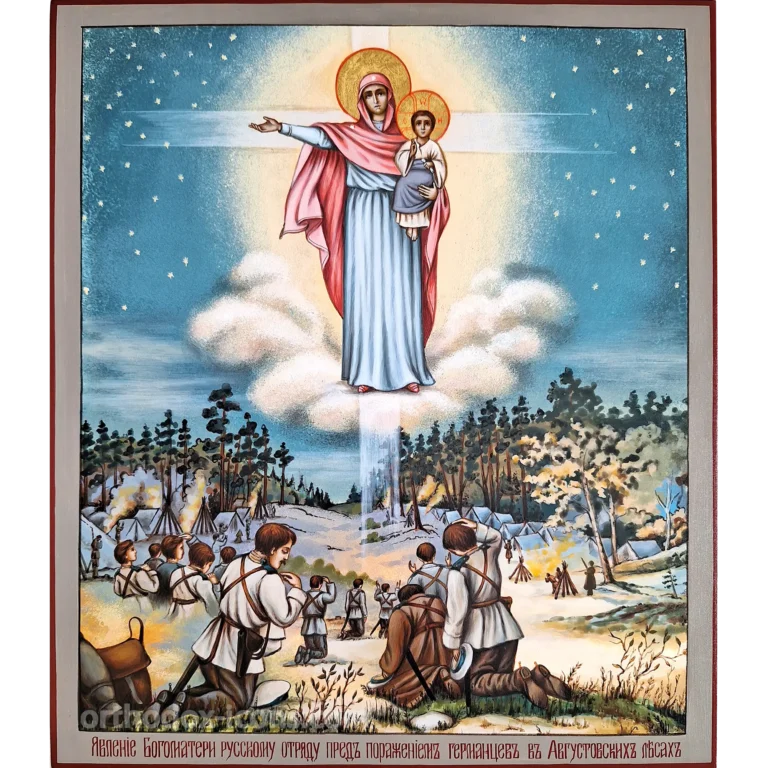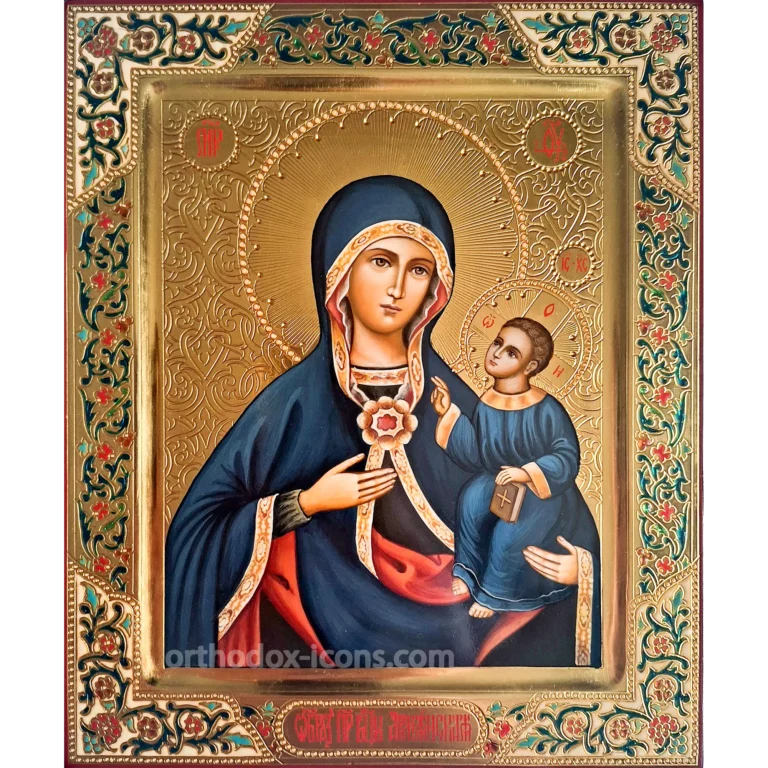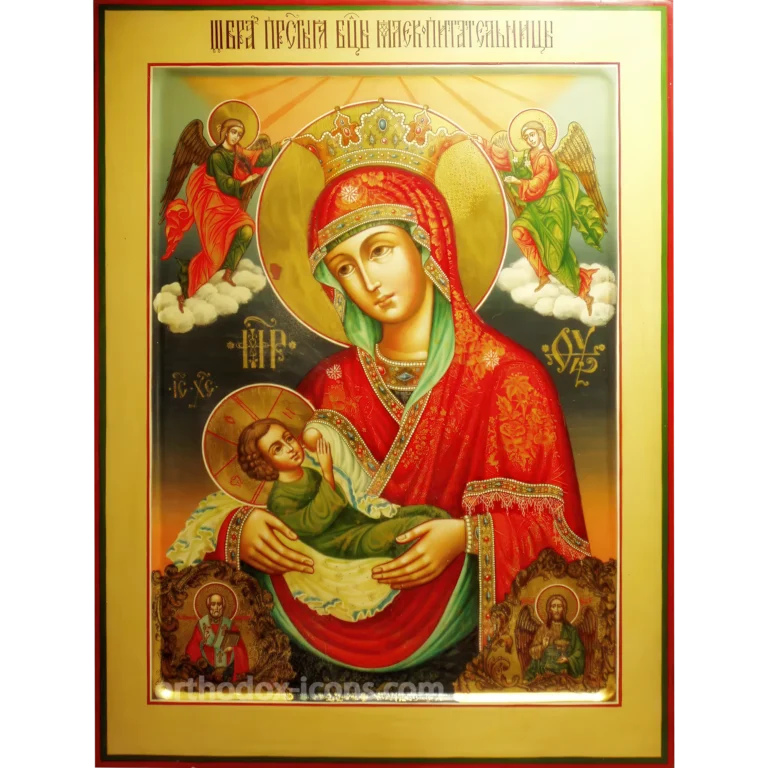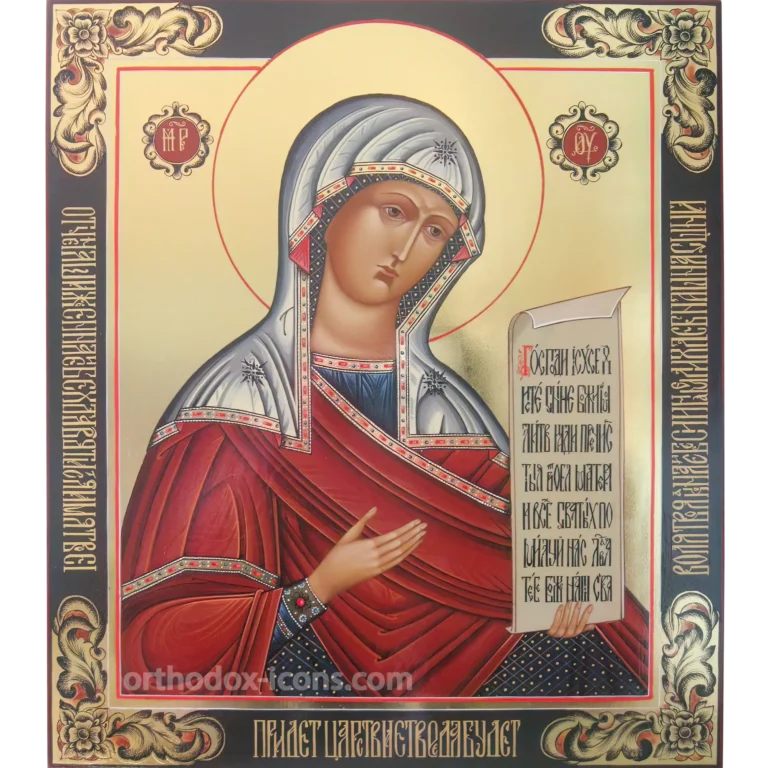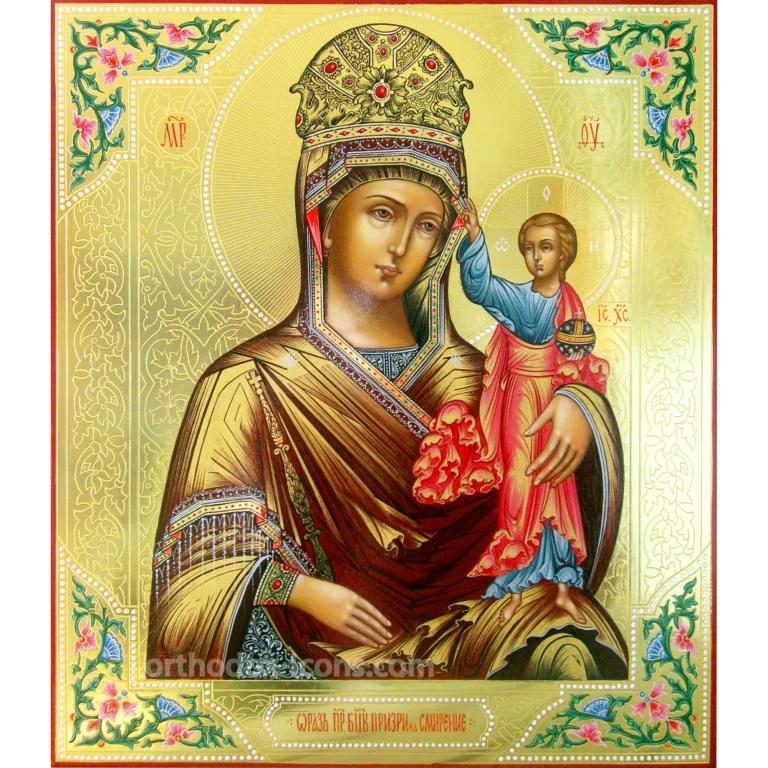
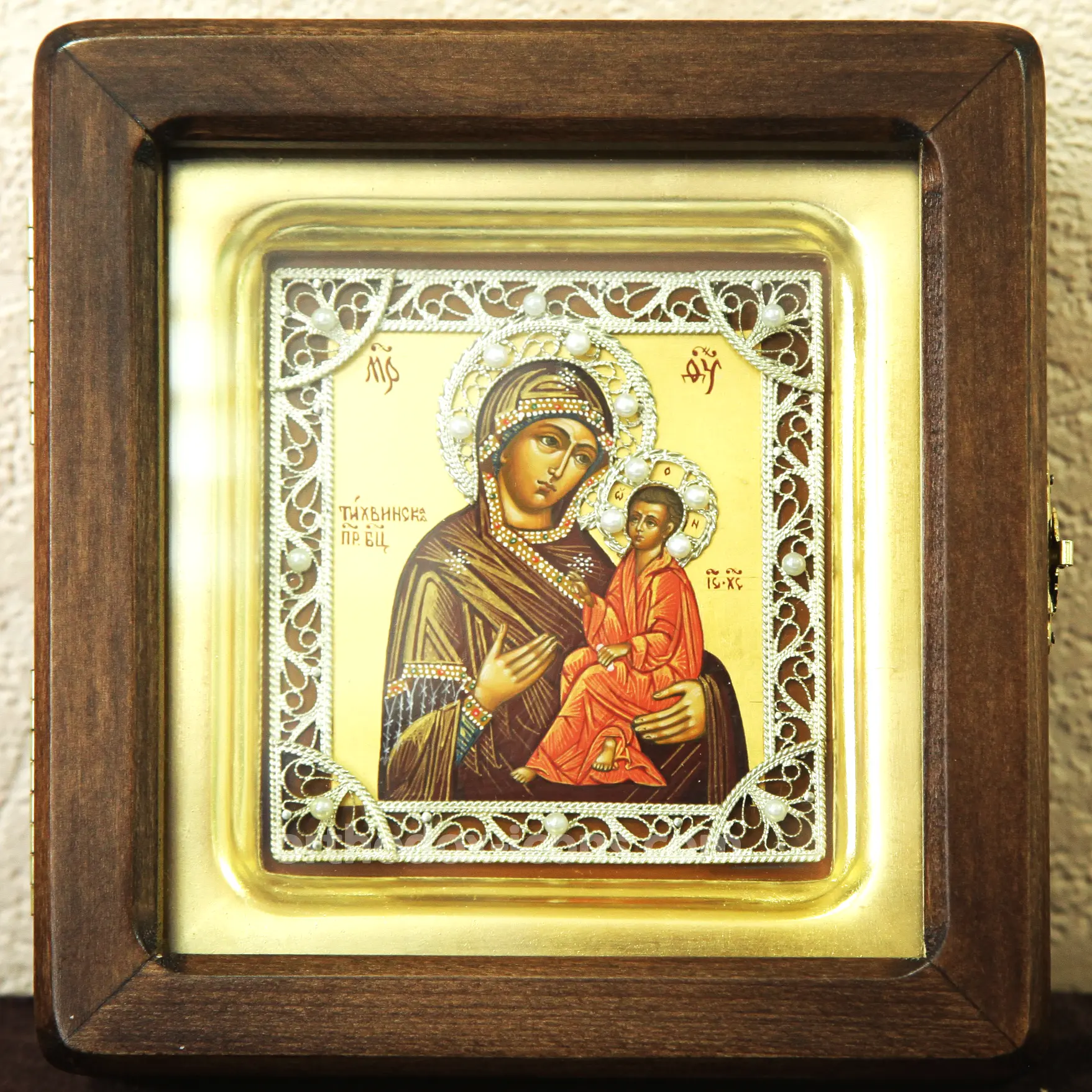
Tikhvin Filigree Icon of Virgin Mary
$950
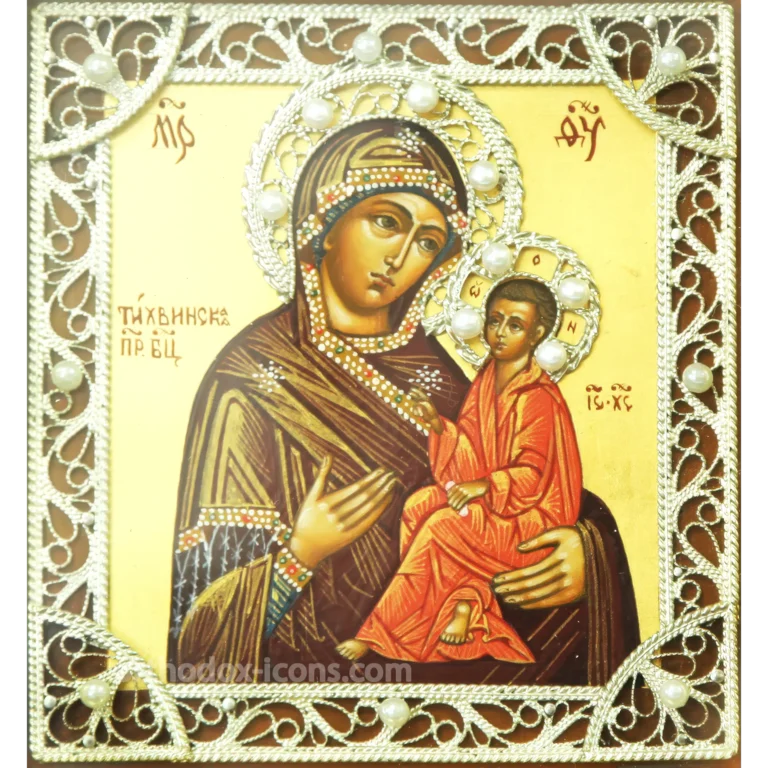
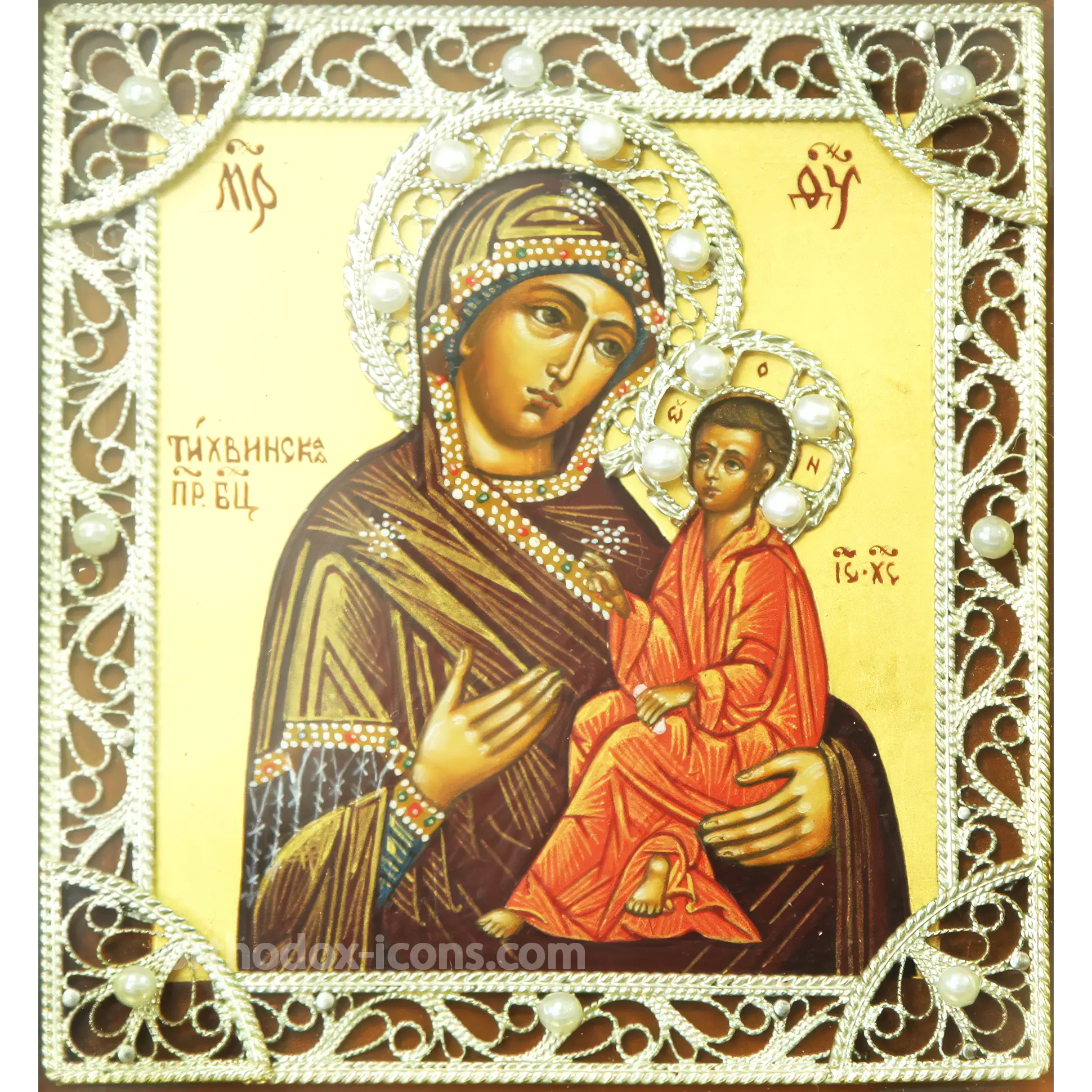
Tikhvin Filigree Icon of Virgin Mary is a hand-painted Tikhvin Mother of God icon in the Hodegetria type, richly decorated with silver-tone filigree and white pearl inlay.
Available size: 17×21 cm (6.7×8.3 in). Larger church and iconostasis sizes may be discussed before painting.
Materials: linden board with oak braces, pavoloka, chalk levkas, 960 gold leaf background, mineral egg tempera, silver-tone filigree, white pearls, protective lacquer.
Technique: fully hand-painted Orthodox icon on wood with gold ground, Hodegetria composition, filigree borders and halos, and pearl ornament.
It is possible to paint an image in any size to order
Free shipping worldwide
Tikhvin Filigree Icon of Virgin Mary is a hand-painted Tikhvin Icon of the Mother of God in the Hodegetria, or She Who Shows the Way, type. This ancient wonderworking image is especially venerated as a protector of children, mothers, family life, and those seeking guidance on the true path.
This particular icon unites traditional egg-tempera painting with the refined jewelry technique of filigree. The fields, corners, and halos are decorated with delicate silver-tone openwork ornament, set with white pearl beads. The background is covered with genuine 960 gold leaf, giving the icon the appearance of a precious family shrine.
The icon is painted on a solid linden board with oak braces, pavoloka, chalk levkas, mineral egg tempera, gold leaf, filigree, pearls, and protective lacquer. The listed size is 17×21 cm (6.7×8.3 in), with larger church or iconostasis formats available by agreement.
History of the Tikhvin Icon
The history of the Tikhvin Icon is filled with events remembered in Orthodox tradition as wondrous and providential. According to church tradition, the first image was painted by the holy Apostle and Evangelist Luke during the earthly life of the Virgin Mary. For centuries the holy image was kept in the Byzantine world.
In 1383, about seventy years before the fall of Constantinople, the icon mysteriously disappeared from the imperial city. In the same year, Russian fishermen on Lake Ladoga witnessed a striking miracle: the icon, shining with radiant light, appeared moving through the air above the waters.
On the place connected with the apparition, pious Christians built a wooden church in honor of the Dormition of the Mother of God. Later, in 1560, by order of Tsar Ivan the Terrible, the famous Tikhvin Dormition Monastery was founded there. The monastery became one of the great centers of veneration of the Mother of God.
The twentieth-century history of the icon was tragic but ended with joy. During the Second World War, when Tikhvin was occupied, the holy image was taken to Pskov, then Riga, and eventually to the United States. In 2004, after about sixty years abroad, the original wonderworking icon returned to Russia and again took its place in the Tikhvin Dormition Monastery.
Iconography: The Tikhvin Hodegetria
The Tikhvin Icon belongs to the classic Byzantine type Hodegetria, meaning She Who Shows the Way. The main theological meaning of this type is the manifestation of Christ as the heavenly King, Judge, and Savior. The Mother of God presents Him to the faithful and points to Him as the one true path to salvation.
The Theotokos is shown half-length and frontal, with a slight inclination of the head toward her Son. Her right hand is raised in a gesture that directs the praying person toward the Christ Child. Her dark cherry maphorion is enriched with gold edging and gold assist, signs of divine grace shining through the holy image.
The Christ Child sits on the left arm of His Mother. Unlike icons of the Tenderness type, He sits upright with royal dignity. In His left hand He holds a rolled scroll, symbolizing the Gospel and the Word of God. With His right hand He blesses in the traditional manner.
The distinctive visual feature of the Tikhvin iconographic type is the position of Christ’s feet. His right foot is bent beneath the left so that the bare heel is clearly visible. This detail helps distinguish the Tikhvin image from other Hodegetria icons, such as the Smolensk or Iveron Mother of God.
Prayer Before the Tikhvin Mother of God
The Tikhvin Icon has long been known in Orthodox life as a deeply loved image for children and motherhood. Families come to this icon with their sorrows, hopes, and prayers for the health and spiritual protection of children.
- For infants and children: mothers pray for healing from illness, peaceful sleep, protection from harm, and the health of a child.
- For learning and upbringing: the Tikhvin Mother of God is asked to help children in study, guide teenagers away from harmful influences, and preserve understanding between generations.
- For the gift of children and safe childbirth: childless spouses pray for conception, while expectant mothers pray for safe pregnancy and birth.
- For adults in illness and confusion: the faithful also ask for help in serious illness, neurological suffering, heart trouble, diseases of the joints, blindness, and moments of spiritual distress.
Filigree and Mstyora Craftsmanship
This icon is a complex union of traditional icon painting and jewelry art. Images decorated with skan, or filigree, have long been considered signs of high ceremonial dignity in Russian church art. The filigree lace surrounding the field and borders is not merely decorative; it creates a precious frame for a holy image.
The icon is painted on a strong linden board. Oak braces are set into the back of the board to protect it from warping. The front is covered with pavoloka and chalk levkas, forming the traditional ground for icon painting.
The background is covered with genuine 960 gold leaf, while the faces and garments are painted in natural mineral egg tempera. The icon painter builds the faces in layers, from darker underpainting to warm light, so that the image remains calm, living, and prayerful.
The main decoration is the filigree work on the borders and halos. Thin silver-tone metal wires are twisted and woven by hand into a delicate openwork pattern. The ornament is then carefully fixed to the icon and inlaid with white pearl beads, giving the image the character of a treasured family relic.
Icon Characteristics
| Name | Tikhvin Filigree Icon of Virgin Mary |
|---|---|
| Traditional title | Tikhvin Icon of the Mother of God in filigree |
| Iconographic type | Hodegetria, She Who Shows the Way |
| Main prayer meaning | Children, motherhood, family protection, healing, guidance, and help in learning |
| Board | Solid linden board with oak braces, pavoloka, and chalk levkas |
| Painting | Natural mineral egg tempera on egg yolk |
| Gold background | Full covering with genuine 960 gold leaf |
| Jewelry decoration | Handmade silver-tone filigree on fields and halos, inlaid with white pearls |
| Available size | 17×21 cm (6.7×8.3 in) |
| Larger formats | Larger church and iconostasis sizes may be discussed before painting |
| Production time | Approximately 2 months |
| Shipping | Free international shipping is included; payment is due upon delivery. |
A Family Heirloom and Gift for Children
Because the Tikhvin Mother of God is especially connected with children, this icon is often chosen as a meaningful Orthodox gift for the birth or baptism of a child. The filigree and pearl ornament make it suitable as a family heirloom that can be passed from one generation to another.
The richness of the decoration does not replace the prayerful meaning of the icon. The gold, filigree, pearls, and careful tempera painting serve the sacred image of the Mother of God and Christ, making the icon both a devotional object and a work of traditional Orthodox craftsmanship.
Questions and Answers
Why is the Tikhvin Icon often called an icon for children?
In Orthodox tradition the Tikhvin Mother of God is especially associated with prayer for infants and children. Mothers pray before this icon for healing, peaceful sleep, protection, help in learning, and guidance for children and teenagers.
How can the Tikhvin Icon be distinguished from other Hodegetria icons?
A key visual feature is the position of the Christ Child’s legs. His right foot is bent under the left so that the bare heel is visible, a detail closely associated with the Tikhvin iconographic type.
What is filigree on an icon?
Filigree, also called skan, is a traditional jewelry technique. Thin silver-tone metal wires are twisted and woven by hand into a delicate openwork pattern used here for the borders, corners, and halos.
What stones or inlays decorate this icon?
The filigree ornament is set with neat white pearl beads. In Orthodox visual language, pearl-like ornament suggests purity, preciousness, and the beauty of the heavenly kingdom.
When is the feast day of the Tikhvin Icon?
The Tikhvin Icon of the Mother of God is commemorated on July 9 according to the civil calendar, June 26 according to the old calendar, recalling the miraculous appearance of the icon in 1383.
Where is the original Tikhvin Icon now?
After being taken abroad during the Second World War and kept in the United States for many years, the original wonderworking icon was returned in 2004 to the Tikhvin Dormition Monastery.
For what else do people pray before the Tikhvin Mother of God?
Besides prayers for children, the faithful ask for healing from serious illness, help in confusion, protection from despondency, guidance on the right path, and peace in family life.
What does the gold background mean?
The background is covered with genuine 960 gold leaf. In Orthodox iconography, gold is not a sign of material luxury, but a symbol of divine uncreated light and the heavenly realm.
What does Christ hold in His hand?
The Christ Child holds a rolled white scroll in His left hand, symbolizing the Gospel, divine teaching, and the Word of God. With His right hand He blesses those who pray.
Is this icon suitable as a gift for the birth of a child?
Yes. Because of its connection with children and its rich filigree and pearl ornament, this icon is a meaningful Orthodox gift for a birth, baptism, or family blessing.
| Dimensions | 17x21cm (6.7×8.3 in) |
|---|---|
| Name | Mary |