Tikhvin Icon of Virgin Mary
Price range: $700 through $2250
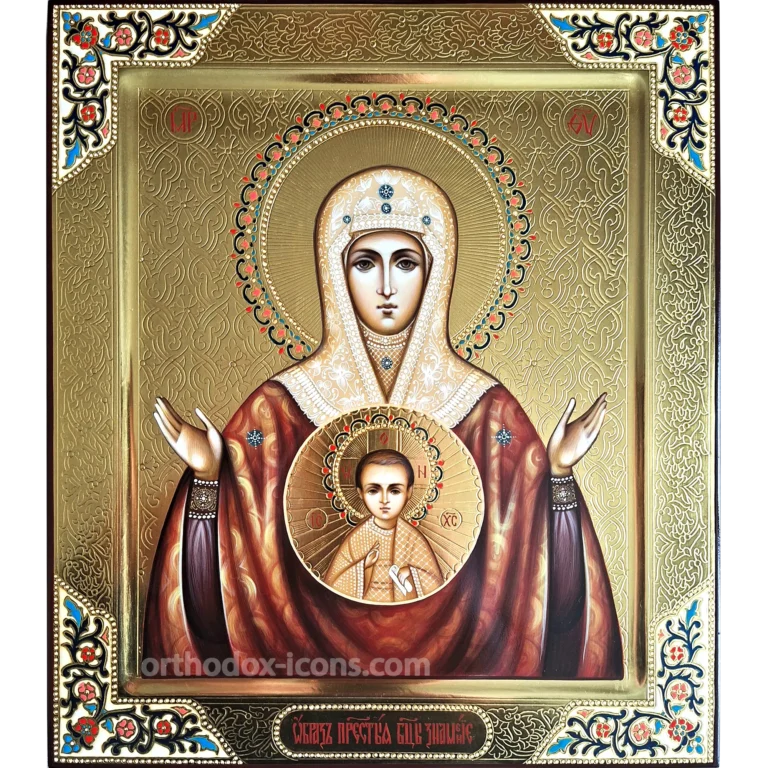
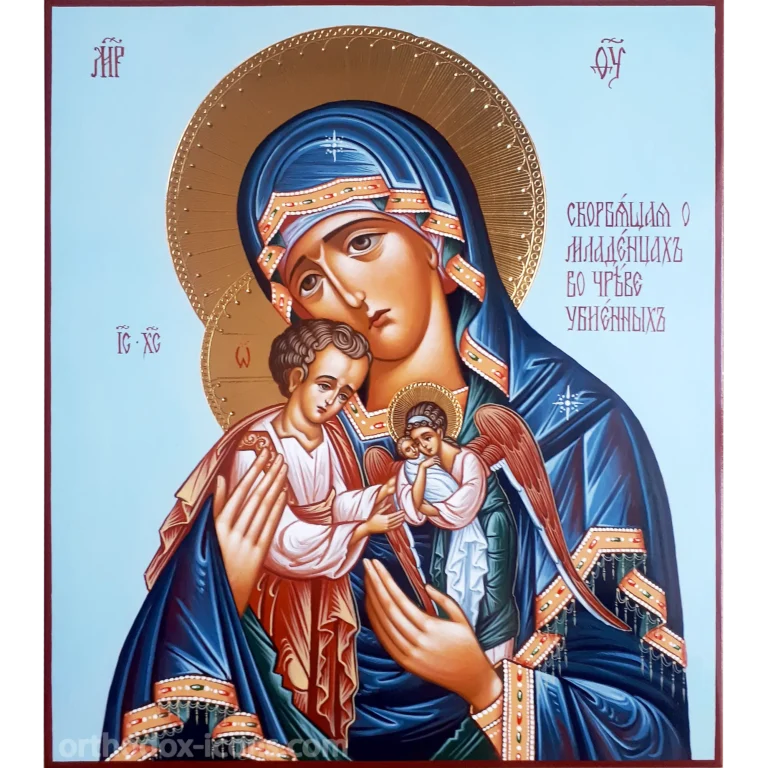
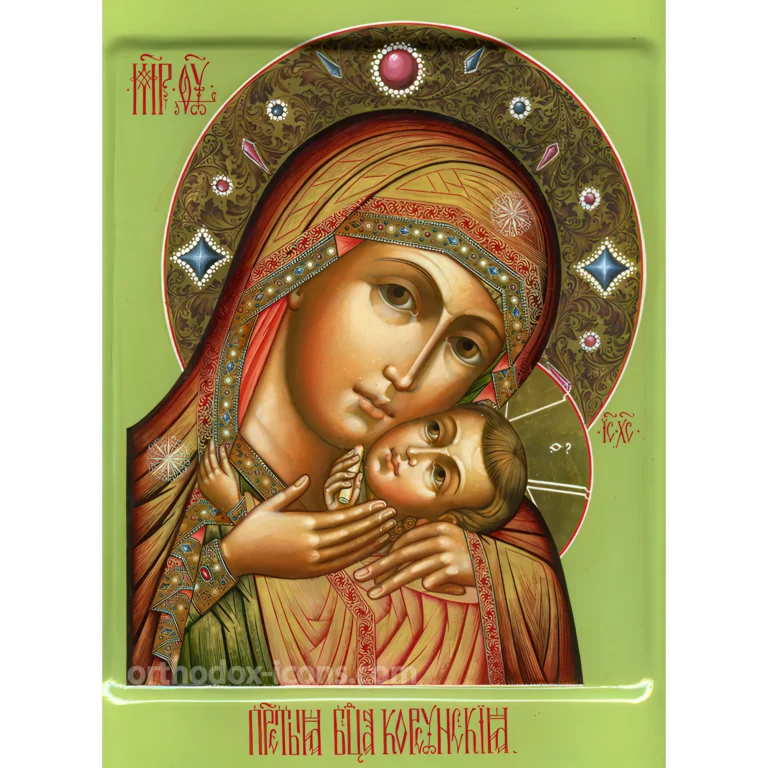
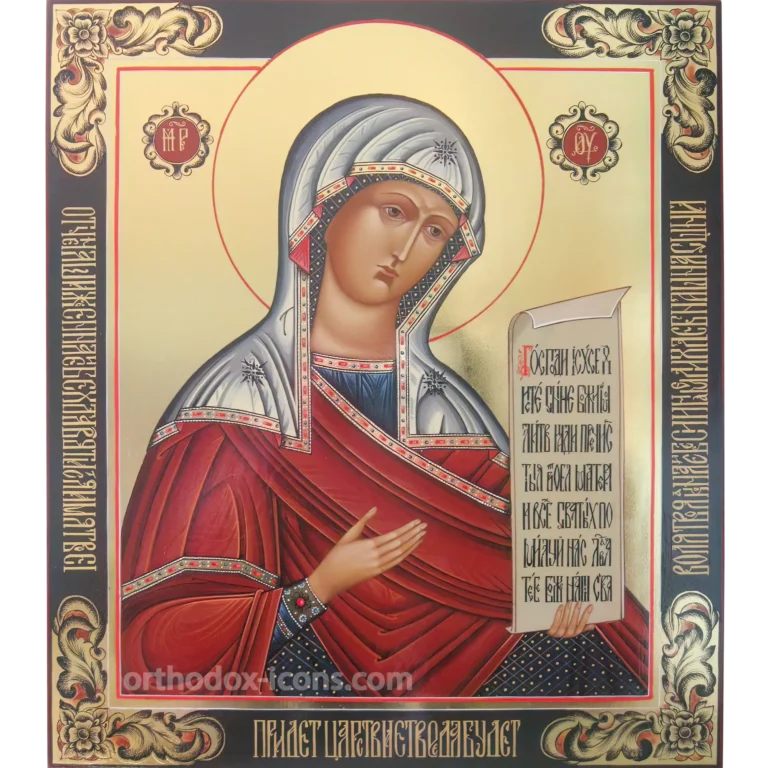
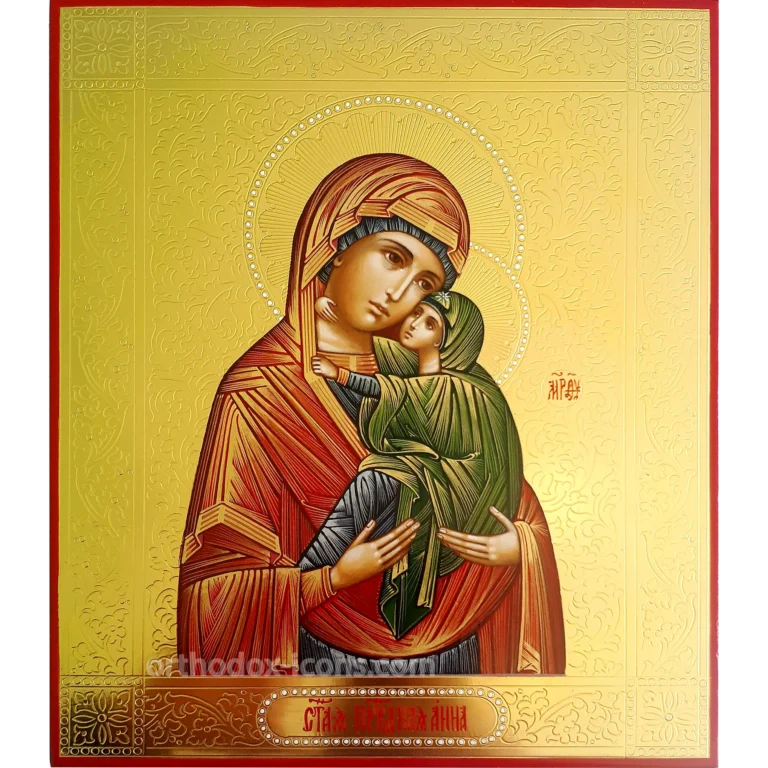
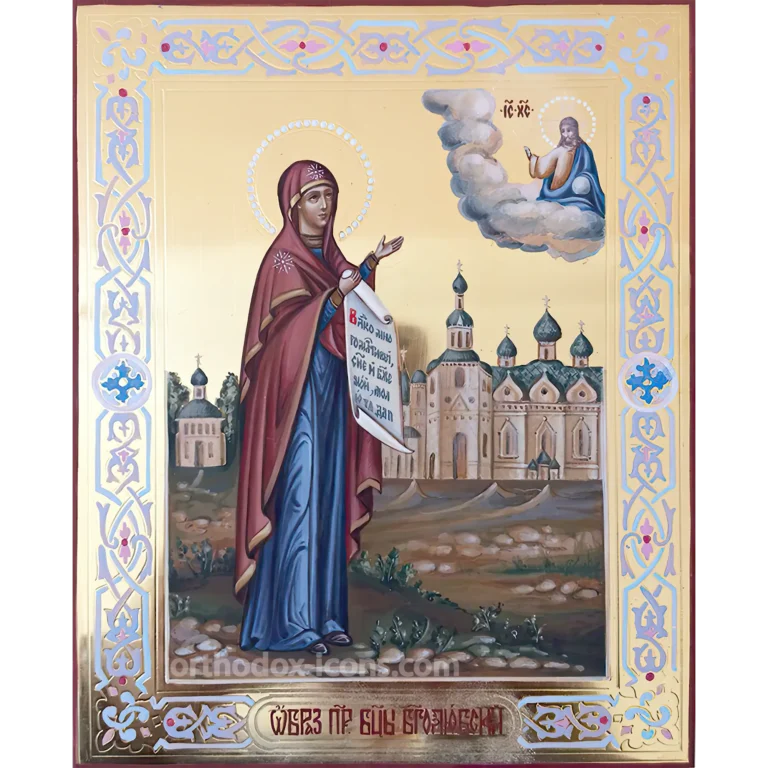
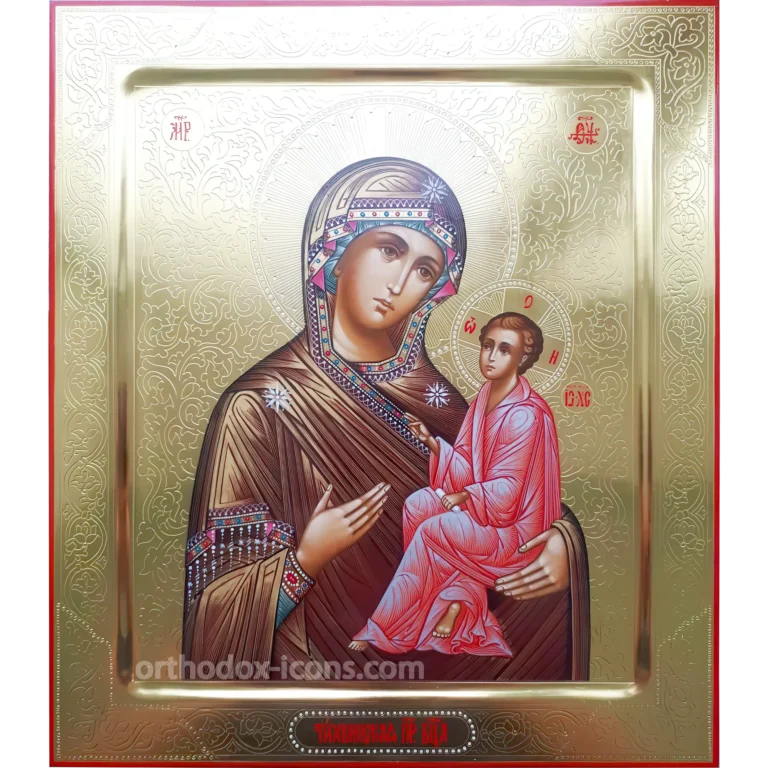
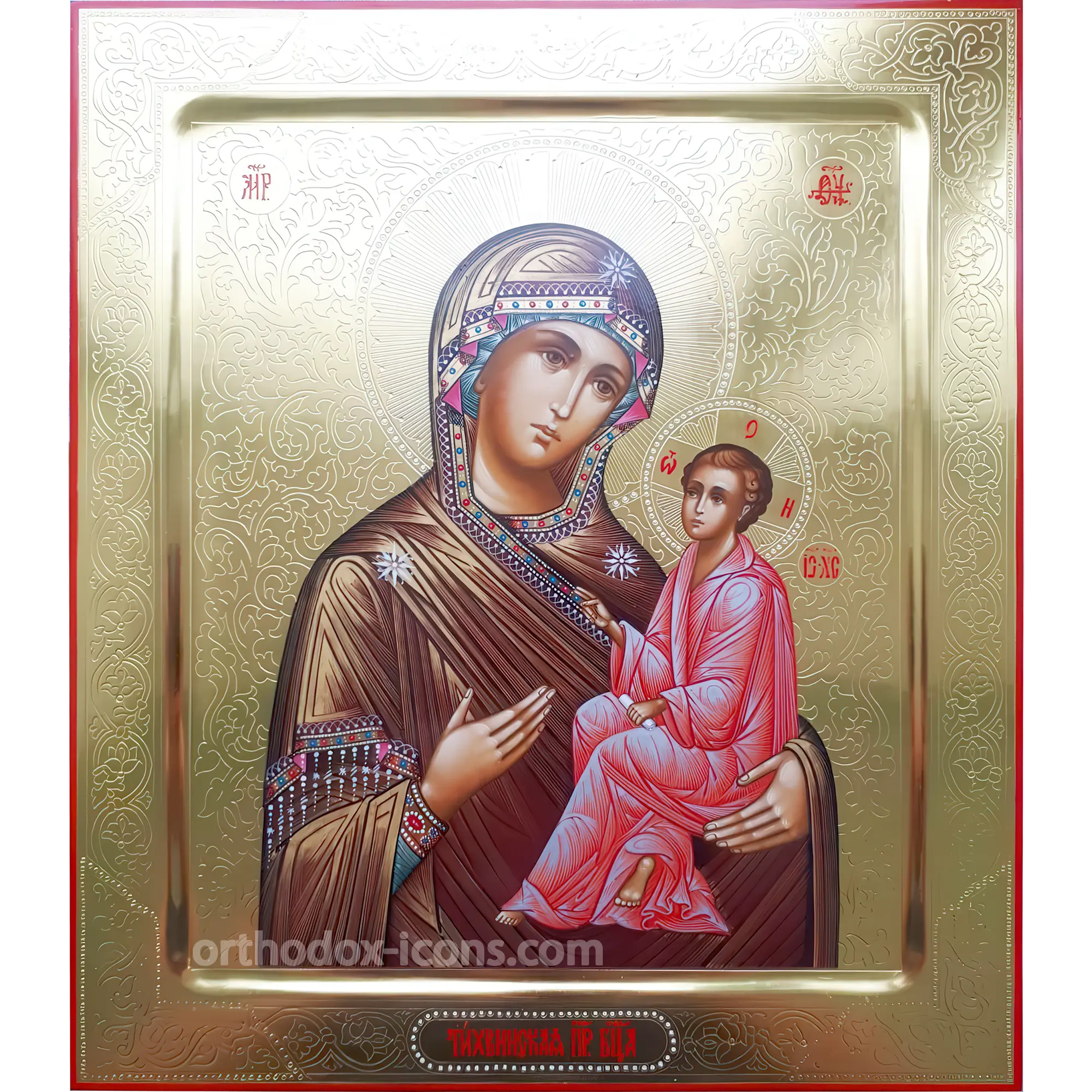
Tikhvin Icon of Virgin Mary is a hand-painted Hodegetria icon of the Mother of God, with a soft expression of sorrow and love, a rich gold background, and ornamental relief tooling.
Available sizes: 17×21 cm (6.7×8.3 in), 20×24 cm (7.9×9.4 in), 27×31 cm (10.6×12.2 in), 30×40 cm (11.8×15.7 in). Iconostasis sizes may be discussed before painting.
Materials: linden board with kovcheg and oak braces, linen pavoloka, chalk levkas, 960 gold leaf, mineral egg tempera, protective lacquer.
Technique: hand icon painting on wood, gold leaf background and halos, relief tooling on the gold, mineral pigments in egg tempera.
It is possible to paint an image in any size to order
Free shipping worldwide
Tikhvin Icon of Virgin Mary is a hand-painted Orthodox icon of the Mother of God in the Hodegetria type, the Directress. It is one of the most beloved and venerated images of the Theotokos, honored as a source of consolation, protection, and prayerful help for Orthodox Christians across many generations.
The icon is filled with deep spiritual symbolism and a soft maternal sorrow. The Mother of God holds the Christ Child and points to Him, showing that the path of salvation is found in her Divine Son. Her face is calm and compassionate, and the whole image is intended to support prayer in the home or in a church setting.
Main Features of the Icon
- Classic Hodegetria image of the Mother of God, the Directress.
- Finely painted faces with a gentle expression of sorrow and love.
- Rich gold background with ornamental relief tooling.
- Traditional Orthodox icon painting technique on a prepared wooden board.
- Suitable for a family icon corner, chapel, or church placement.
History of the Tikhvin Icon of the Mother of God
The Tikhvin Icon of the Mother of God holds a special place in Orthodox spiritual life. According to church tradition, the prototype was painted by the holy Apostle and Evangelist Luke, the first icon painter, who made images of the Most Holy Theotokos during her earthly life. This tradition emphasizes both the antiquity of the icon and its grace-filled significance.
According to the chronicles, the icon appeared miraculously in the fourteenth century near the town of Tikhvin. It was found near the bank of the Tikhvinka River, where the Tikhvin Dormition Monastery of the Mother of God was later established. From that time the icon became known for many miracles, including healings, protection from invasions, and spiritual help given to the faithful.
The icon also played an important role in Russian history during times of unrest and war. Believers turned to the Tikhvin Mother of God with prayers for the protection of the land and people, and the image became a sign of the Mother of God’s intercession.
Iconography and Artistic Features
The Tikhvin icon belongs to the Hodegetria type, which means Directress or She Who Shows the Way. The Mother of God is shown with the Christ Child on her left arm, while her right hand points to Him as the way of salvation.
The gentle inclination of the Mother of God’s head is especially expressive. It conveys spiritual concentration and compassion for the world. Her face is painted with soft transitions of light and shadow, giving the image a sense of living presence without losing the restraint required in Orthodox iconography.
The Christ Child sits on the arm of the Mother of God in a characteristic pose. His legs are slightly crossed, and His right hand blesses. His gaze is directed to the side, suggesting divine knowledge and the mystery of His person.
In this version, the deep gold background with fine ornament symbolizes the Kingdom of Heaven. The maphorion of the Mother of God is richly decorated, and the bright red garment of the Christ Child recalls both royal dignity and the sacrificial love of Christ.
Theological Meaning and Prayer
The Tikhvin icon reveals one of the central truths of Christianity: the Incarnation of the Son of God. The Mother of God appears not only as Mother, but as the one who directs humanity toward Christ. Her gesture is a theological statement: salvation is possible only through the Son of God.
At the same time, the expression of the Theotokos is filled with quiet sorrow, reminding the faithful of the future suffering of Christ. The icon also speaks of the deep bond between God and humanity. Christ is shown as true God and true Man, while the Mother of God stands as a living bridge between heaven and earth.
- Guidance toward salvation through Christ.
- The intercession of the Mother of God for people.
- Consolation in sorrow and difficult trials.
- A reminder of divine love and the sacrifice of Christ.
What People Pray For Before the Tikhvin Icon
Believers bring many different needs before the Tikhvin icon. It is known as a strong intercessory image and helper in difficult circumstances.
- For protection of children and family.
- For health, healing, and recovery from illness.
- For help in difficult life situations.
- For protection of the home from misfortune and sorrow.
- For spiritual strengthening, patience, and faith.
Mothers especially often pray before the Tikhvin icon for their children. In Orthodox devotion, this image is closely connected with family life, motherhood, care for children, and the protection of the household.
Traditional Materials and Technique
The icon is made according to the traditional methods of Orthodox icon painting. The foundation is a natural linden board, strengthened with oak braces to help prevent deformation. A kovcheg is formed on the front of the board, marking the sacred space of the icon.
The board is covered with linen pavoloka and chalk levkas, a traditional ground for icon painting. The image is painted with mineral pigments mixed with egg emulsion, creating a durable tempera surface with depth and clarity.
The background and halos are covered with genuine 960 gold leaf. Relief tooling and ornament on the gold enrich the surface and help the icon catch light in a solemn, restrained way. After the painting is complete, the icon receives a protective finish.
Characteristics of the Hand-Painted Icon
| Icon name | Tikhvin Icon of Virgin Mary |
|---|---|
| Iconographic type | Orthodox icon of the Mother of God, Hodegetria |
| Board | Natural linden board with kovcheg and oak braces |
| Ground | Linen pavoloka and chalk levkas |
| Painting technique | Mineral pigments in egg tempera |
| Gilding | Genuine 960 gold leaf |
| Decoration | Relief tooling and ornament on the gold |
| Available sizes | 17×21 cm (6.7×8.3 in), 20×24 cm (7.9×9.4 in), 27×31 cm (10.6×12.2 in), 30×40 cm (11.8×15.7 in) |
| Larger sizes | Iconostasis sizes may be discussed before painting |
| Shipping | Free international shipping is included; payment is due upon delivery. |
A Spiritual Gift and Family Shrine
The Tikhvin Icon of the Mother of God is not only a work of sacred art, but also a spiritual guide. It helps the faithful gather attention in prayer, brings a sense of grace and protection to the home, and can become the center of a family icon corner.
Because it is painted by hand according to Orthodox tradition, this icon is a worthy gift for baptism, a wedding, a house blessing, or another important spiritual occasion. It is made to be kept reverently and passed on as a family holy image.
Questions and Answers
What is special about the Tikhvin Icon of the Mother of God?
It is one of the ancient and deeply venerated icons of the Mother of God, connected with miracles, protection, consolation, and guidance. This version emphasizes the Hodegetria meaning, rich gold decoration, and careful hand painting.
What iconographic type does this icon belong to?
The Tikhvin icon belongs to the Hodegetria type, the Directress. The Mother of God points to Christ as the true way of salvation.
What do people pray for before this icon?
People pray before the Tikhvin icon for protection of children and family, healing, help in difficult circumstances, protection of the home, spiritual strengthening, and firm faith.
Is this icon suitable as a gift?
Yes. A hand-painted Tikhvin icon is a meaningful Orthodox gift for baptism, a wedding, a house blessing, a family celebration, or another important spiritual occasion.
What materials are used?
The icon is made on a natural linden board, prepared with linen pavoloka and chalk levkas. It is painted in mineral egg tempera and decorated with genuine 960 gold leaf.
How is a hand-painted icon different from a printed icon?
A hand-painted icon is created individually according to the canons of Orthodox iconography. It carries artistic, devotional, and material value that a printed reproduction cannot have.
Where may this icon be placed?
It may be placed in a home icon corner, in a quiet place for prayer, or in a church setting. The icon is suitable for daily prayer and long-term family keeping.
Can an individual size be ordered?
Yes. Standard sizes include 17×21 cm, 20×24 cm, 27×31 cm, and 30×40 cm. Larger and iconostasis sizes may be discussed before painting.
What does the gold background symbolize?
In Orthodox iconography, the gold background symbolizes the Kingdom of Heaven and divine, uncreated light. It shows that the holy image belongs to the spiritual, heavenly realm.
How should the icon be cared for?
Keep the icon away from moisture, direct sun, heat, and mechanical damage. Do not wipe the gilded surface with a wet cloth; dust may be removed only with a very soft, dry brush.
| Dimensions | 17x21cm (6.7×8.3 in), 20x24cm (7.9×9.4 in), 27x31cm (10.6×12.2 in), 30x40cm (11.8×15.7 in) |
|---|---|
| Name | Mary |