Inexhaustible Chalice Theotokos Orthodox Icon
$1000
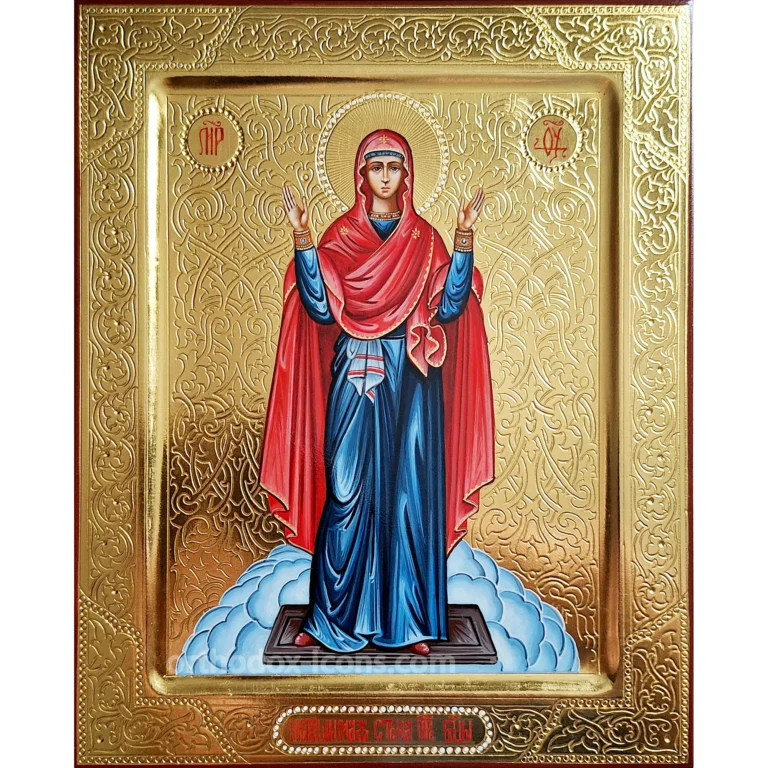
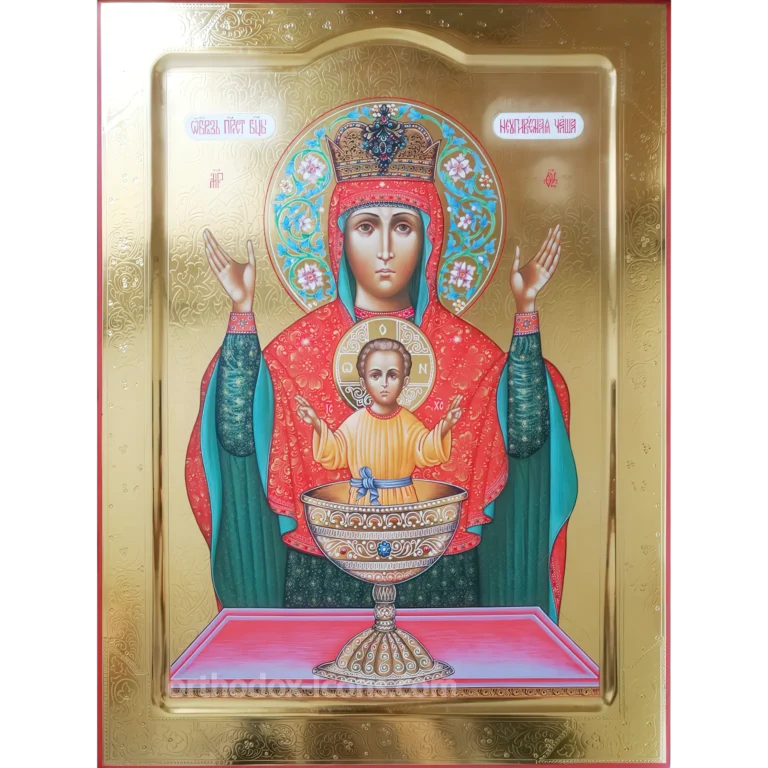
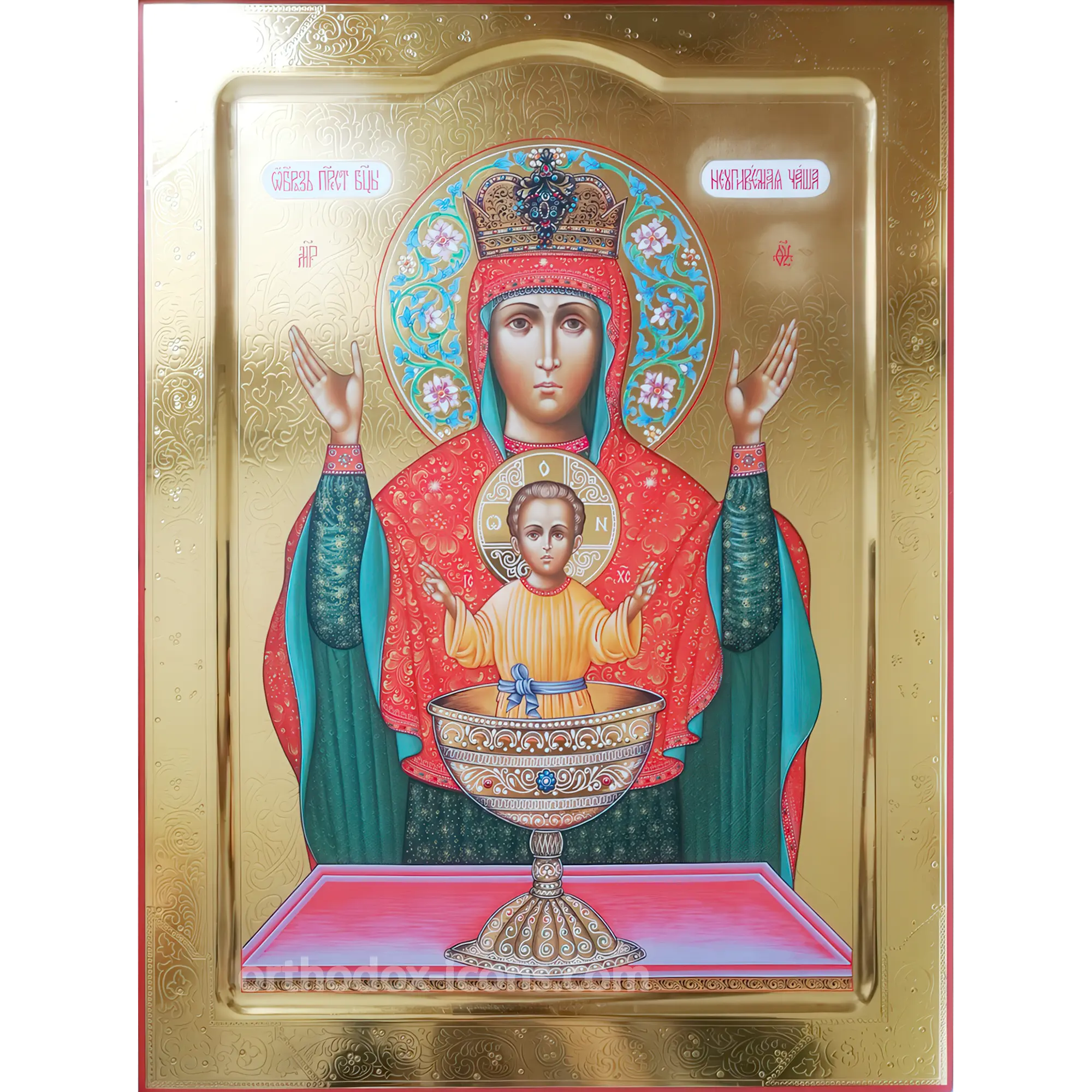
Inexhaustible Chalice Theotokos Orthodox Icon is a hand-painted icon of the Mother of God for prayer against addiction, showing Christ in the Eucharistic Chalice beneath the praying Theotokos.
Listed size: 18×31 cm (7.1×12.2 in); larger formats by agreement. Continuous hand chasing over 960 gold leaf, floral painted halo, royal crown, raised cold enamel details on the garments and Chalice, natural mineral egg tempera, and linden board with kovcheg. Free international shipping, with payment after delivery.
It is possible to paint an image in any size to order
Free shipping worldwide
Inexhaustible Chalice Theotokos Orthodox Icon is a hand-painted icon of the Mother of God known as the Inexhaustible Chalice. It is one of the most beloved Orthodox icons for prayer in the struggle against addiction, despair, and destructive habits that wound both the person and the whole family.
The Theotokos is shown praying above the eucharistic Chalice, in which the Christ Child stands as the source of true healing, mercy, and inexhaustible spiritual joy. This image gives hope not through fear of illness, but through trust in the compassion of the Mother of God and the saving grace of Christ.
This version is especially festive: the entire gold background is covered with hand chasing, the halo of the Mother of God is painted with flowers, the head is crowned, and the garments and Chalice are decorated with raised cold enamel details like pearls and precious stones. The listed size is 18×31 cm (7.1×12.2 in).
A Prayerful Icon for Healing From Addiction
When addiction enters a home, it can destroy a person’s dignity, peace of mind, health, and family life. Relatives may try many ordinary means and still feel powerless. At such moments, Orthodox Christians often turn to the Mother of God with deep and persistent prayer.
The Inexhaustible Chalice icon has become a sign of hope for people suffering from alcoholism and for families carrying the burden of a loved one’s dependency. It is also approached in prayers for freedom from drug addiction, gambling, smoking, and other passions that enslave the will.
The icon does not promise an easy or automatic solution. It calls the person and the family to repentance, prayer, courage, and trust in the mercy of Christ through the intercession of His Mother.
The Miraculous Finding in Serpukhov
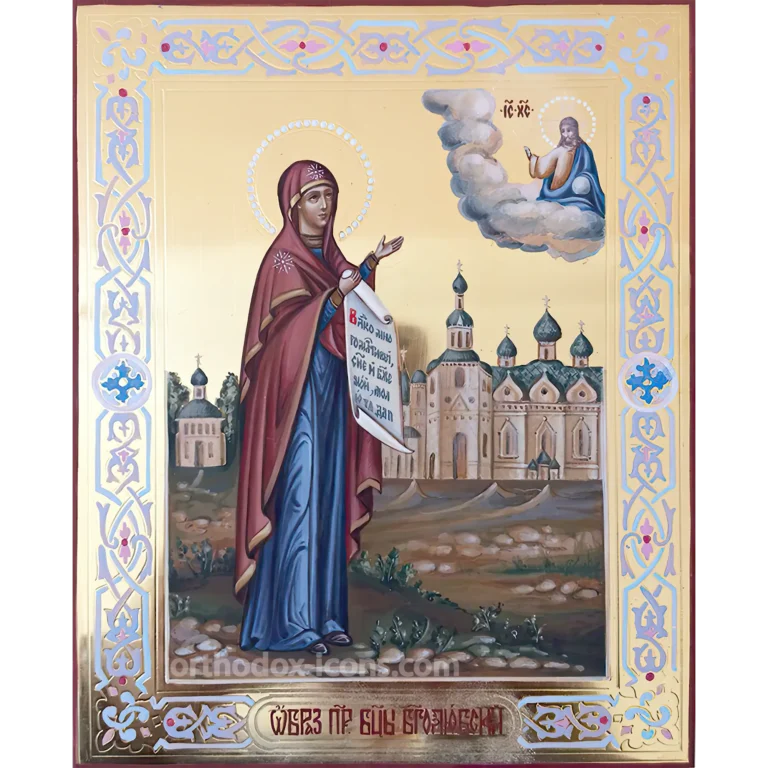
The history of the Inexhaustible Chalice icon is relatively recent and dates to 1878. In the Tula province, a retired soldier was suffering from severe drunkenness. He lost his property, fell into poverty, and because of constant drinking lost the use of his legs.
One night, a venerable elder appeared to him in a dream. The elder, later understood to be Saint Varlaam of Serpukhov, told him to go to the city of Serpukhov, to the Vladychny Monastery, find the icon called the Inexhaustible Chalice, and serve a moleben before it.
The suffering man made his way to the monastery with great difficulty. At first, the nuns did not know of any icon by that name. After a long search, an old icon was found in a passage leading to the sacristy. On the back was the inscription: Inexhaustible Chalice.
After the prayer service, a double miracle occurred. The soldier was healed not only from his uncontrollable desire for wine, but also regained the ability to walk. News of this icon then spread widely.
The Mother of God as Oranta
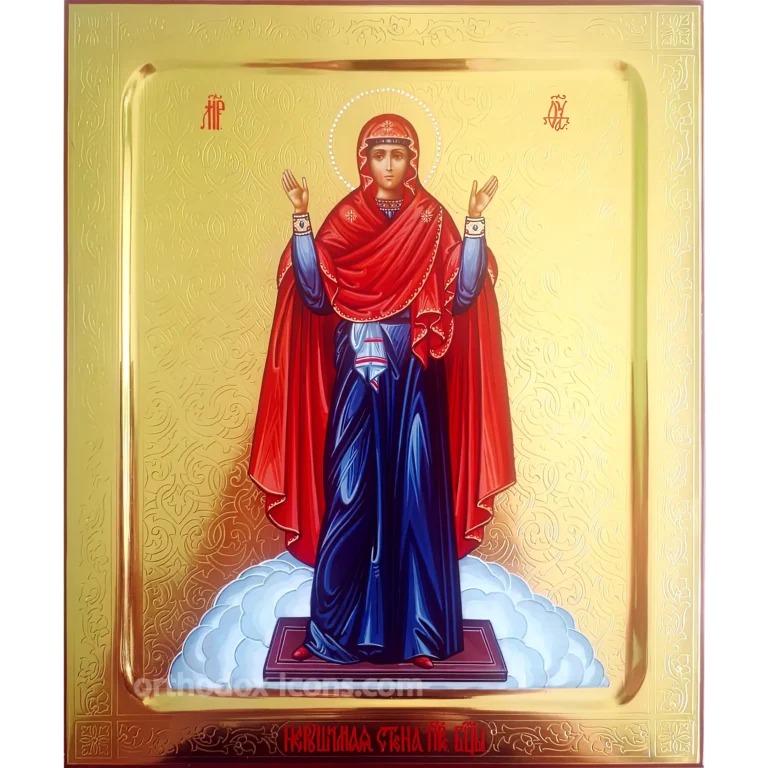
Iconographically, the Inexhaustible Chalice is related to the ancient Oranta and Sign type. The Mother of God is shown with her hands raised in prayer.
She intercedes for the sinful human race, standing before God on behalf of those who have lost strength, clarity, and freedom. Her prayer is not distant or abstract; it reaches into the most painful places of human weakness.
The raised hands express supplication, mercy, and ceaseless intercession. In this image, the Theotokos becomes a motherly advocate for people who may no longer be able to pray for themselves with strength.
The Chalice of the Eucharist
In the foreground stands the golden Chalice, or liturgical cup. Within it is the Christ Child. This is the central theological symbol of the icon.
The Chalice points to the Eucharist, the sacrament of the Body and Blood of Christ. Unlike alcohol, which can offer only temporary escape and then deeper destruction, the Eucharistic Chalice is inexhaustible because it gives true life, grace, healing, and joy in God.
The name Inexhaustible Chalice therefore contrasts false intoxication with spiritual fullness. The icon shows that the emptiness at the root of addiction cannot be healed by another destructive substitute, but by communion with Christ.
Christ Emmanuel in the Chalice
Christ is shown standing in the Chalice as the Child Emmanuel. His hands are extended in blessing on both sides.
This blessing is directed toward all who suffer, all who are burdened, and all who seek healing. The image recalls Christ’s call to come to Him and receive rest.
The Christ Child in the Chalice is not a decorative addition. He is the source of the icon’s meaning: the Mother of God leads the suffering person toward Christ, who alone gives true freedom.
Prayer for Families and Relatives
Very often, the first person to pray before the Inexhaustible Chalice is not the addicted person, but a mother, wife, husband, child, or close relative.
This is painfully understandable. A person caught in dependency may not admit the illness, may refuse help, or may be too spiritually exhausted to ask for healing.
For this reason, relatives take up prayer for the suffering person. They ask the Mother of God for awakening of conscience, softening of the heart, willingness to seek help, and deliverance from the passion.
The icon is also a prayer for the whole household: for patience, strength, forgiveness, protection of children, and the rebuilding of trust after long sorrow.
Other Dependencies and Modern Struggles
Although the icon became famous through healings from drunkenness, Orthodox Christians now pray before it in many forms of dependency.
These include drug addiction, gambling addiction, smoking, destructive internet use, and other compulsive habits that promise relief but deepen inner emptiness.
The spiritual pattern is similar: the heart seeks comfort in something that cannot truly heal it. The Inexhaustible Chalice points the suffering person back to Christ, the only source of lasting peace.
Continuous Gold Chasing and Floral Halo
This hand-painted version is bright, ornate, and full of light. The entire gold background is covered with 960 gold leaf and worked by hand with a delicate relief vegetal ornament.
The chasing makes the icon shimmer from different angles, giving the gold a living, lace-like movement. The effect supports the theme of light overcoming the darkness of illness.
The halo of the Mother of God is decorated with painted floral ornament: curling blue stems and white-pink flowers. This creates an effect reminiscent of precious enamel work.
The head of the Theotokos is crowned, emphasizing her royal dignity as Queen of Heaven and merciful intercessor.
Cold Enamel and Jewel-Like Detail
The garments of the Mother of God, the crown, and the golden Chalice are decorated with many small drops of colored cold enamel.
After hardening, these drops become raised, glossy, and firm. They resemble sapphires, rubies, pearls, and other precious stones.
This ornament does not turn the icon into a mere luxury object. It expresses the royal and liturgical dignity of the image, especially the Chalice, which is the symbol of Eucharistic healing.
Traditional Materials and Painting
The faces, hands, garments, and details are painted in natural mineral egg tempera. The pigments are prepared from ground minerals and mixed with egg medium.
This traditional technique gives the colors long life and a calm depth. It is especially important in an icon of healing, where the image should remain bright, serious, and spiritually steady.
The icon is painted on a linden board with kovcheg, linen, chalk gesso, and inserted oak splines. These traditional materials help support long-term preservation.
Icon Characteristics
| Name | Inexhaustible Chalice Theotokos Orthodox Icon |
| Iconographic type | Oranta / Sign type with Christ in the eucharistic Chalice |
| Listed size | 18×31 cm (7.1×12.2 in); larger church and iconostasis formats by agreement |
| Gold | 960 gold leaf |
| Background | Continuous hand chasing with lace-like vegetal ornament |
| Halo and garments | Painted floral halo, royal crown, and raised cold enamel details |
| Painting | Natural mineral egg tempera |
| Board | Linden board with kovcheg, linen, chalk gesso, and oak splines |
| Purpose | Prayer for deliverance from addictions, healing of family wounds, consolation, and protection of the home |
Care and Preservation
An icon with relief chasing and raised enamel should be handled carefully. Do not wash it with water, wipe it with damp cloths, or use household cleaners. Moisture and pressure can damage the gold, enamel, and tempera surface.
Dust should be removed only with a very soft dry brush. A glazed wooden kiot is recommended for long-term protection.
Ordering, Shipping, and Payment
The listed size is 18×31 cm (7.1×12.2 in). Larger church and iconostasis formats may be discussed individually. Free international shipping is included, with payment after delivery.
Questions and Answers
Why is the chalice called inexhaustible?
The chalice points to the Eucharist, the inexhaustible grace of Christ that gives healing, true joy, and spiritual life rather than destructive intoxication.
What does this icon help people pray for?
Orthodox Christians pray before this icon for freedom from alcohol addiction, drug addiction, gambling, smoking, and other destructive passions.
Can relatives pray if the addicted person does not want help?
Yes. Relatives often pray before this icon for a suffering family member, asking the Mother of God for mercy, awakening, and healing.
What iconographic type is the Inexhaustible Chalice?
It is related to the Oranta and Sign type: the Mother of God is shown in prayer, and Christ appears in the eucharistic chalice.
What does the chalice represent?
It represents the Eucharistic cup, the sacrament of Holy Communion, and the healing presence of Christ.
What size is listed for this icon?
The listed size is 18×31 cm (7.1×12.2 in). Larger church and iconostasis formats may be discussed individually.
What is special about this version?
This version has continuous hand chasing over 960 gold leaf, a painted floral halo, a royal crown, and raised cold enamel details on the garments and chalice.
What materials are used?
The icon is painted in natural mineral egg tempera on a linden board with kovcheg, linen, chalk gesso, oak splines, 960 gold leaf, hand chasing, and cold enamel.
How should the icon be cared for?
Do not wash or wipe the icon with damp cloths. Dust should be removed only with a very soft dry brush, and a glazed kiot is recommended.
How are shipping and payment arranged?
Free international shipping is included, with payment after delivery.
| Dimensions | 18x31cm (7.1×12.2 in) |
|---|---|
| Name | Mary |