Unbreakable Wall Orthodox Icon
Price range: $700 through $2250
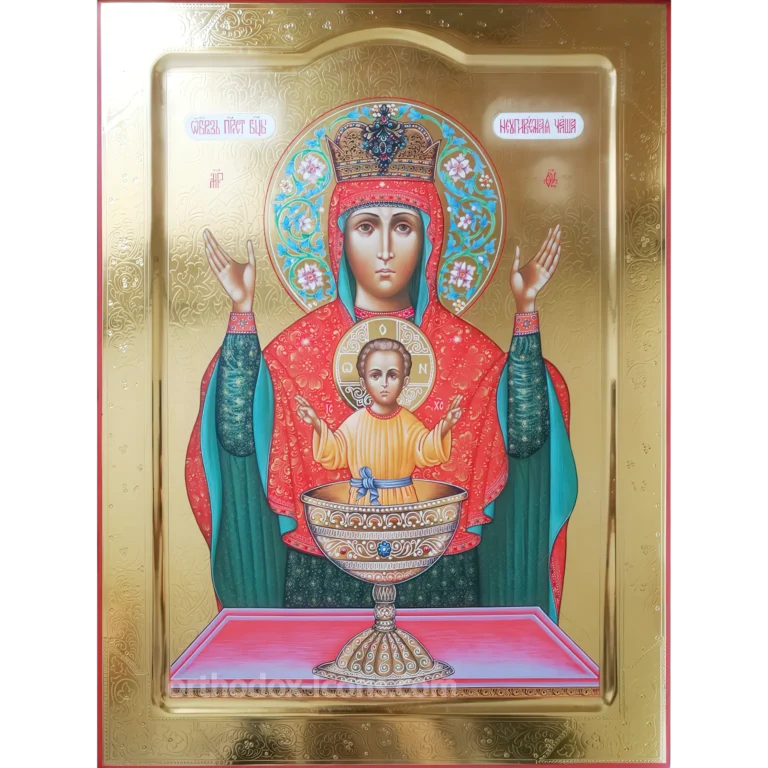
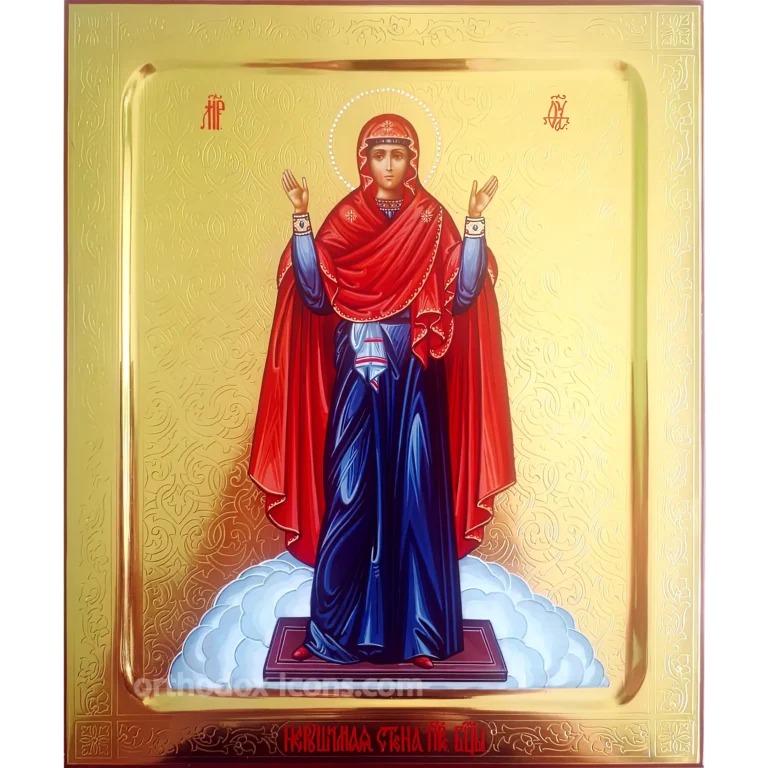
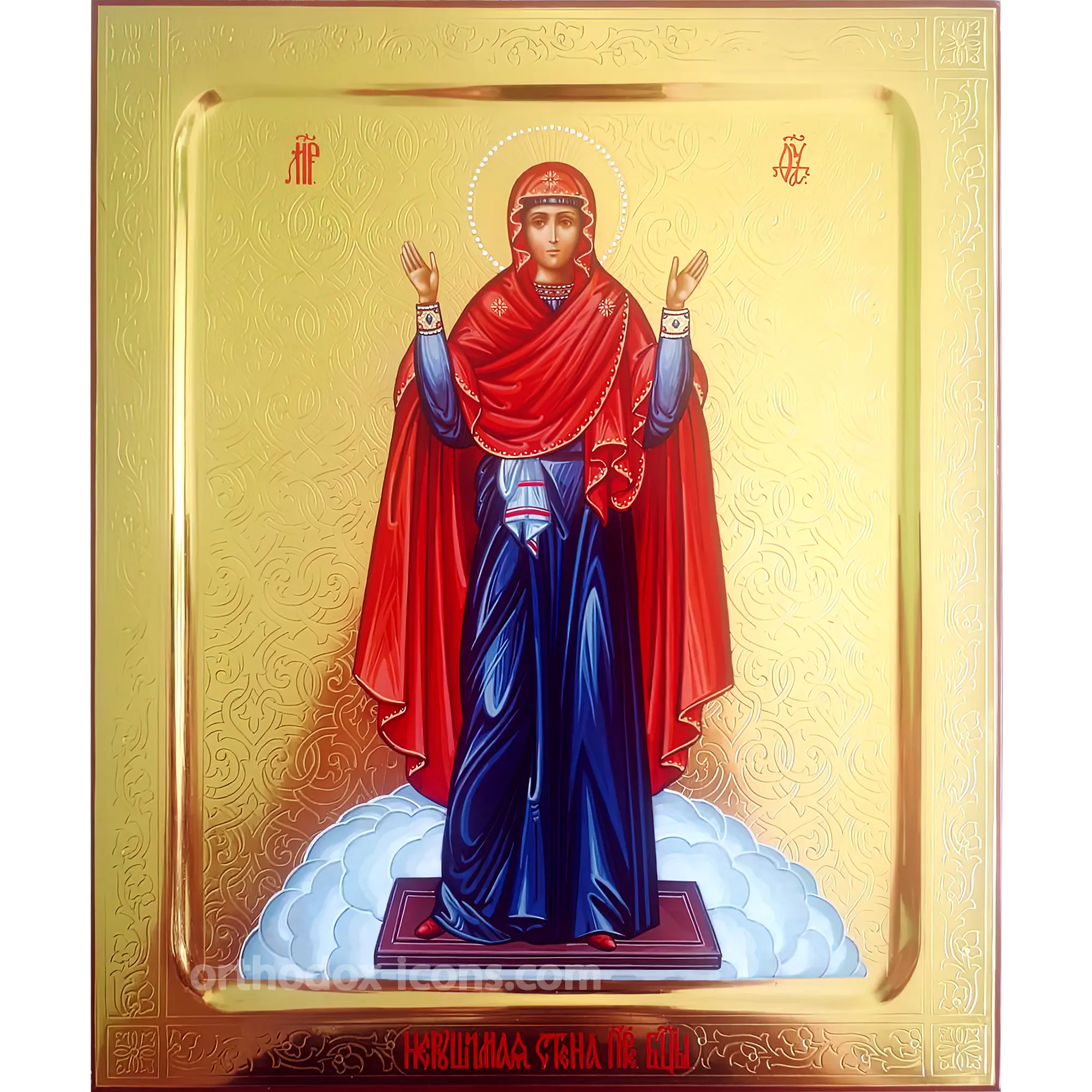
Unbreakable Wall Orthodox Icon is a hand-painted Oranta icon of the Mother of God, inspired by the ancient Kyiv Saint Sophia mosaic and venerated as a protector of the home.
Available sizes: 17×21 cm (6.7×8.3 in), 20×24 cm (7.9×9.4 in), 27×31 cm (10.6×12.2 in), and 30×40 cm (11.8×15.7 in). Full 23K gold leaf (960 purity) background with hand-tooled relief chasing, natural mineral egg tempera, linden board with kovcheg, linen, chalk gesso, and oak splines. Free international shipping, with payment after delivery.
It is possible to paint an image in any size to order
Free shipping worldwide
Unbreakable Wall Orthodox Icon is a majestic hand-painted icon of the Mother of God in the Oranta type, with hands raised in ceaseless prayer. The name itself sounds like a spiritual fortress: an unbreakable wall of intercession, protection, and hope.
This icon is especially loved as a guardian image for the home. Orthodox Christians pray before it for protection from thieves, enemies, evil intentions, fire, floods, disasters, family conflict, and every danger that threatens the household.
This version is painted with natural mineral egg tempera on a linden board and richly decorated with full 23K gold leaf (960 purity). The gold background and margins are covered with hand-tooled relief ornament, creating a solemn and luminous image for a family shrine or new home gift.
The Historical Origin in Saint Sophia of Kyiv
The Unbreakable Wall icon is historically connected with one of the greatest monuments of ancient Christian art: the monumental mosaic of the Mother of God in the main altar apse of Saint Sophia Cathedral in Kyiv.
The cathedral was founded in the first half of the eleventh century under Prince Yaroslav the Wise. In the conch of the apse stands the great mosaic image of the Mother of God, more than five meters high, raising her hands in prayer.
For almost a thousand years, Kyiv passed through invasions, fires, destruction, and periods of ruin. The cathedral was plundered, its vaults suffered, and the city was repeatedly devastated. Yet the altar wall with the mosaic of the Mother of God remained whole.
Because of this extraordinary preservation, the people gave the image the name Unbreakable Wall. Later, painted icons on wooden boards were made after this ancient mosaic and spread widely through Orthodox lands.
The Liturgical Meaning of the Name
The name Unbreakable Wall is also rooted in Orthodox prayer. In the Akathist to the Most Holy Theotokos, the Mother of God is praised as an unbreakable wall of the Kingdom.
This title does not mean physical force. It means spiritual protection: the Theotokos stands before God in prayer, sheltering the faithful through her intercession.
For this reason, the icon is often approached in moments when a person feels vulnerable: when leaving home for a long journey, when the family is under pressure, when there is fear of theft or danger, or when the peace of the household needs to be restored.
The Oranta Iconographic Type
The Unbreakable Wall belongs to the ancient iconographic type known as Oranta, meaning the One Who Prays. This is one of the oldest ways of depicting the Mother of God.
Unlike many icons of the Theotokos, she is not holding the Christ Child in her arms. Instead, she stands in prayer, with both hands lifted and the palms open outward.
This gesture is ancient and deeply biblical. It expresses total surrender to the will of God, ceaseless intercession, and the Mother of God’s prayer for the whole human race.
In this image, the Theotokos is not shown in movement or emotion. She stands upright, calm, and solemn, like a spiritual pillar. This stillness is part of the icon’s strength.
The Footstool, Clouds, and Lention
In this version, the Most Pure Virgin is shown standing on a small rectangular footstool, placed above stylized blue clouds. This detail points to her heavenly dwelling and to her merciful attention toward those who pray on earth.
The blue clouds also soften the monumental composition. They show that the Mother of God is exalted in the heavenly realm, yet not distant from human sorrow.
At her waist is a white cloth with a border, called a lention. In Orthodox symbolism, this cloth is understood as a sign of maternal mercy. It recalls the compassion of the Mother of God, who wipes away the tears of those who suffer and grieve.
Together, the raised hands, the clouds, the footstool, and the lention create an image of majestic intercession and tender mercy.
Prayer Before the Unbreakable Wall Icon
The Unbreakable Wall is one of the strongest protective icons in Orthodox devotional life. It is often placed near the entrance to the home, above the front door, or opposite the entrance.
This placement expresses a prayer that the Mother of God will guard the threshold: that evil intentions, thieves, hostility, and spiritual harm will not enter the home.
People also pray before this icon when leaving home for a long trip, asking that the household remain safe until their return.
The icon is also approached in prayer for protection from fire, flooding, sudden disasters, and other dangers that can threaten family life and property.
On a deeper level, the Mother of God is asked to become an unbreakable wall around marriage and family, protecting spouses from betrayal, quarrels, division, and despair.
Color and Monumental Presence
This icon is visually majestic. The deep blue garment and red maforion of the Mother of God stand against a radiant gold field. The contrast gives the figure both solemn dignity and warmth.
The full-length Oranta composition requires a careful sense of proportion. The icon painter must keep the figure noble, balanced, and prayerful, while allowing the face and hands to remain spiritually expressive.
The icon is not meant to feel decorative alone. Its beauty supports its prayerful meaning: the Mother of God stands before the faithful as a royal intercessor, a heavenly protectress, and a compassionate mother.
Full Gold Leaf and Hand Chasing
The main artistic feature of this version is its full gold decoration. The surface of the board, including the kovcheg and wide margins, is covered with true 23K gold leaf (960 purity).
Over the gold, the master creates a relief vegetal ornament by hand. This technique is known as chasing or tsirovka. Fine metal tools are used to press and cut the pattern into the gold surface.
The ornament covers the background and margins, giving the icon the impression of a precious metal cover while remaining part of the painted sacred image.
When light falls on the relief pattern, the gold breaks into many small reflections. This gives the icon a living radiance, suitable for a central place in the home.
Traditional Painting Technique
The face, hands, clouds, and garments are painted in natural mineral egg tempera. This is the traditional technique of Orthodox icon painting.
Mineral pigments are ground and mixed with egg medium, producing color that is deep, matte, and durable. With proper care, such painting can retain its clarity and contrast for generations.
The icon is painted on a solid linden board with kovcheg, linen, chalk gesso, and inserted oak splines. These traditional elements help the surface remain stable and suitable for long-term preservation.
The combination of a hand-painted Oranta figure, mineral tempera, gold leaf, and relief chasing makes this icon both a prayer image and a refined work of sacred craftsmanship.
Available Sizes and Use in the Home
Available sizes are 17×21 cm (6.7×8.3 in), 20×24 cm (7.9×9.4 in), 27×31 cm (10.6×12.2 in), and 30×40 cm (11.8×15.7 in). Larger church and iconostasis formats may be discussed individually.
For placement near an entrance or in a hallway, 20×24 cm (7.9×9.4 in) and 27×31 cm (10.6×12.2 in) are often practical choices. They are large enough to show the face, hands, and gold chasing clearly, while still fitting above or near a doorway.
For a central family prayer corner, 27×31 cm (10.6×12.2 in) or 30×40 cm (11.8×15.7 in) gives the icon stronger visual presence and allows the gold ornament to be seen more fully.
Icon Characteristics
| Name | Unbreakable Wall Orthodox Icon |
| Iconographic type | Oranta, the Mother of God praying with raised hands |
| Historical source | Ancient mosaic of the Mother of God in Saint Sophia Cathedral, Kyiv |
| Available sizes | 17×21 cm (6.7×8.3 in), 20×24 cm (7.9×9.4 in), 27×31 cm (10.6×12.2 in), 30×40 cm (11.8×15.7 in) |
| Background | Full 23K gold leaf (960 purity) |
| Decoration | Hand-tooled relief chasing with vegetal ornament |
| Painting | Natural mineral egg tempera |
| Board | Linden board with kovcheg, linen, chalk gesso, and oak splines |
| Purpose | Protection of the home, new home gift, family shrine, prayer for peace and safety |
Care and Preservation
An icon with full relief gilding should be protected carefully. Do not wash it with water, wipe it with damp cloths, or use chemical polishes. The gold and tempera surface can be damaged by moisture and pressure.
Dust should be removed only with a very soft dry brush. For better preservation, especially near an entrance or in a room with candles, a glazed wooden kiot is recommended.
Ordering, Shipping, and Payment
Available sizes are 17×21 cm (6.7×8.3 in), 20×24 cm (7.9×9.4 in), 27×31 cm (10.6×12.2 in), and 30×40 cm (11.8×15.7 in). Larger church and iconostasis formats may be discussed individually. Free international shipping is included, with payment after delivery.
Questions and Answers
Why is this icon called the Unbreakable Wall?
The name refers both to the preserved altar mosaic in Saint Sophia Cathedral in Kyiv and to the Akathist image of the Mother of God as an unbreakable spiritual wall.
What iconographic type is this icon?
It belongs to the Oranta type, in which the Mother of God is shown praying with her hands raised, without the Christ Child in her arms.
Where is this icon traditionally placed in a home?
It is often placed near the entrance, above the door, or opposite the door as a prayerful sign of protection for the home.
What does the raised-hands gesture mean?
It is an ancient prayer gesture expressing intercession, surrender to God, and the Mother of God’s ceaseless prayer for the world.
What is the white cloth at the waist of the Mother of God?
It is a lention, traditionally understood as a symbol of her maternal mercy and her compassion for those who suffer and weep.
What materials are used?
The icon is painted in natural mineral egg tempera on a linden board with kovcheg, linen, chalk gesso, oak splines, and 23K gold leaf (960 purity).
What is gold chasing or tsirovka?
It is a hand-tooled relief ornament made directly on the gold leaf surface with fine metal tools.
What sizes are available?
Available sizes are 17×21 cm (6.7×8.3 in), 20×24 cm (7.9×9.4 in), 27×31 cm (10.6×12.2 in), and 30×40 cm (11.8×15.7 in).
How should an icon with gold chasing be cared for?
Do not wash or polish it. Dust should be removed only with a very soft dry brush, and a glazed kiot is recommended.
How are shipping and payment arranged?
Free international shipping is included, with payment after delivery.
| Dimensions | 17x21cm (6.7×8.3 in), 20x24cm (7.9×9.4 in), 27x31cm (10.6×12.2 in), 30x40cm (11.8×15.7 in) |
|---|---|
| Name | Mary |