
Of the Three Joys of Virgin Mary Icon
$1250
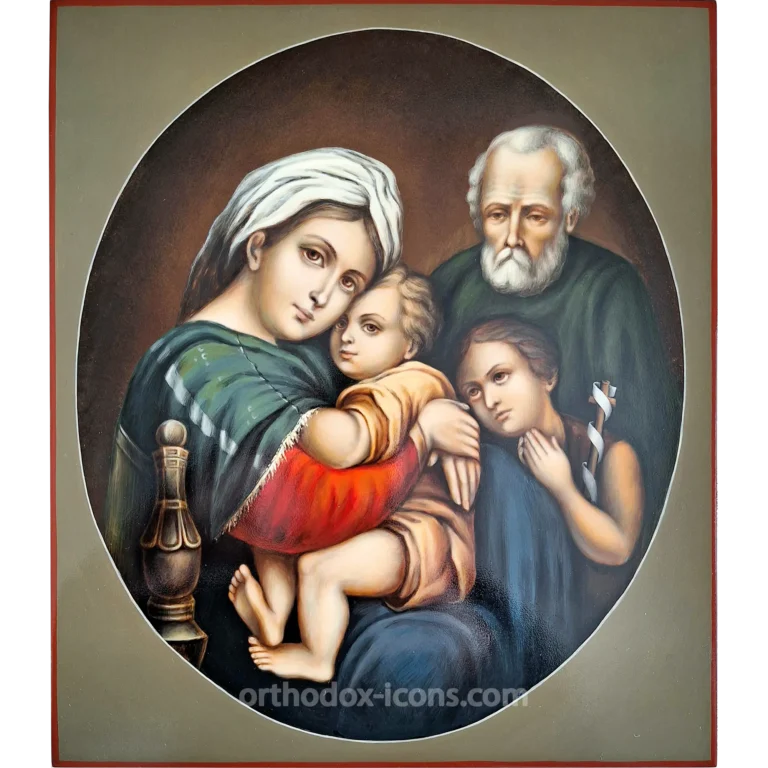
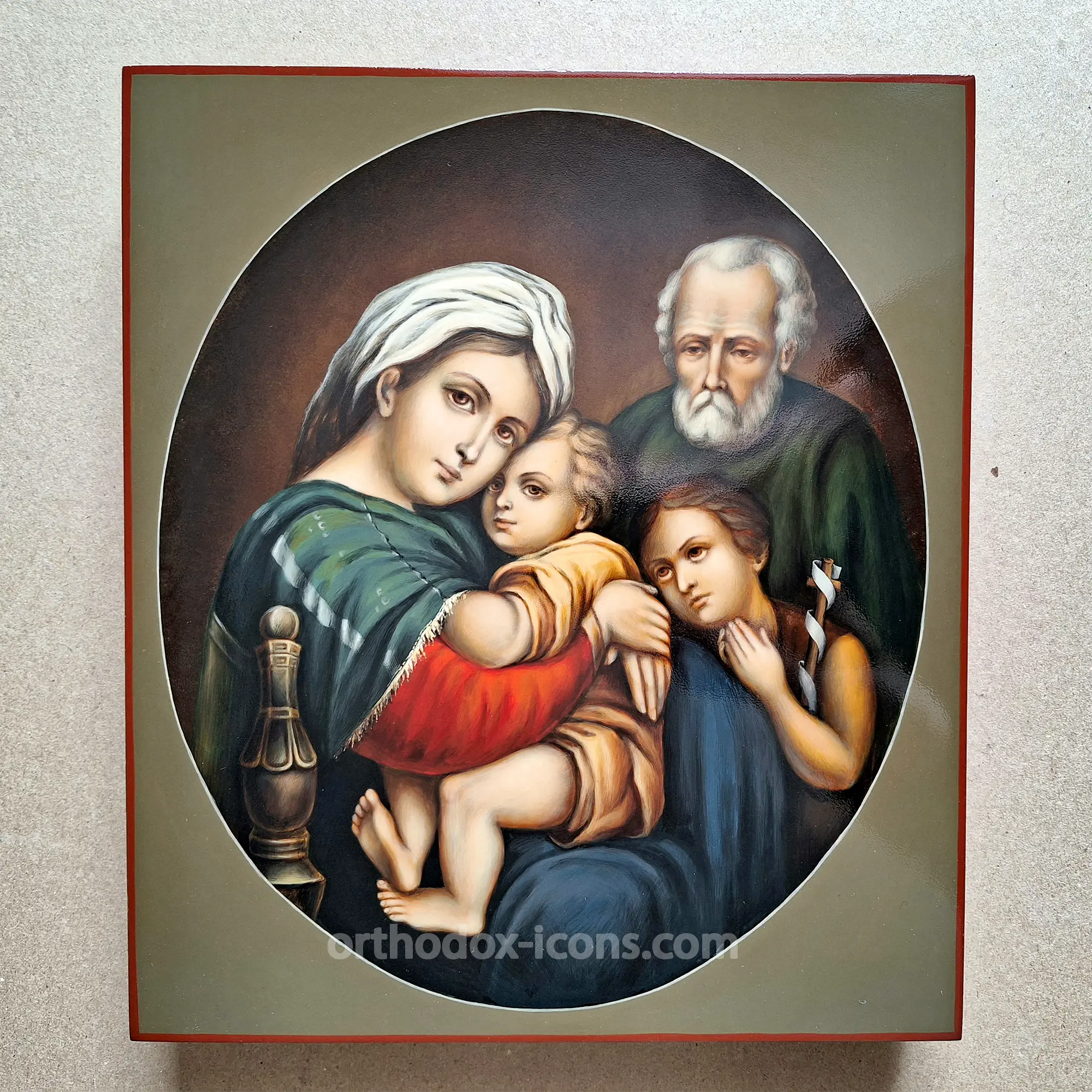
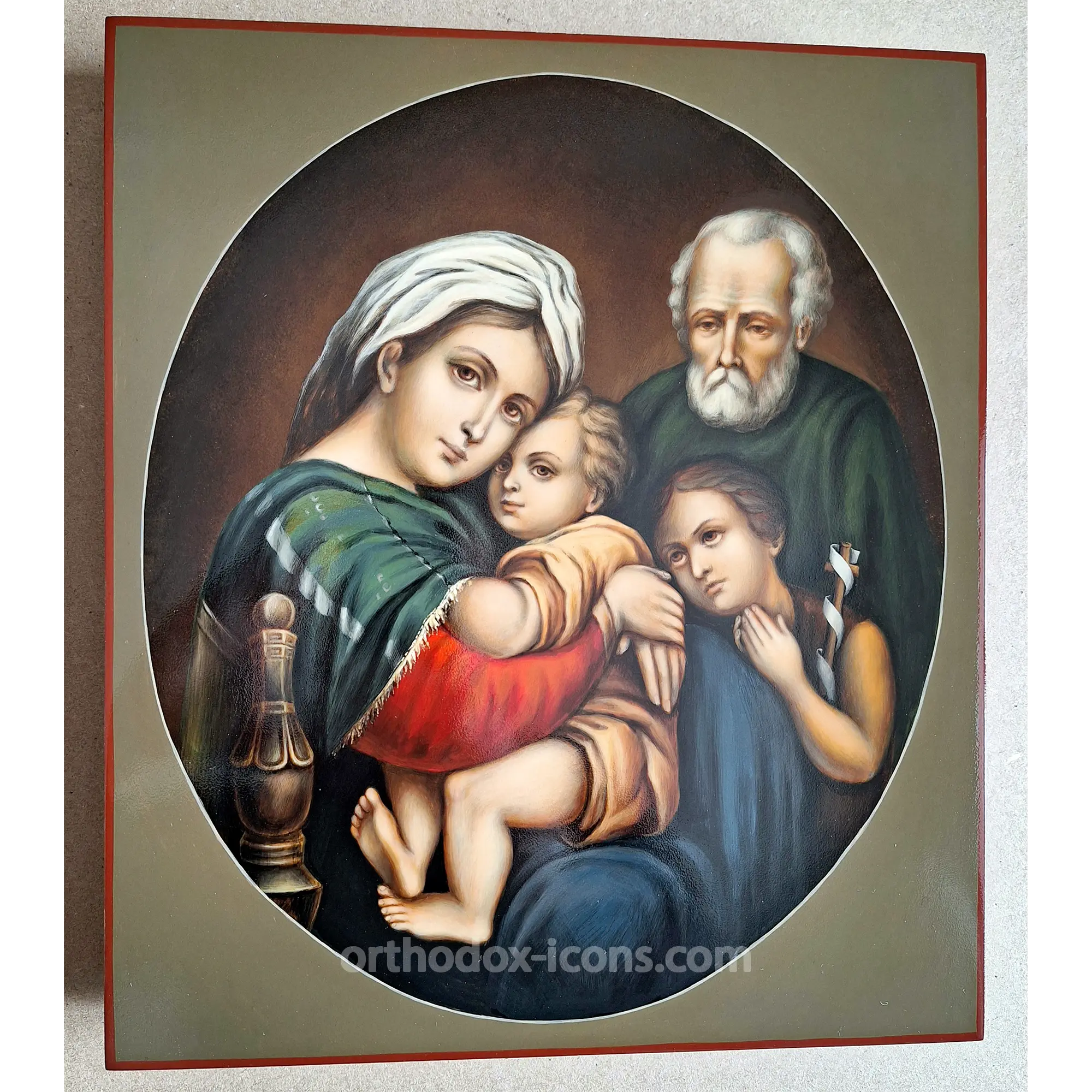
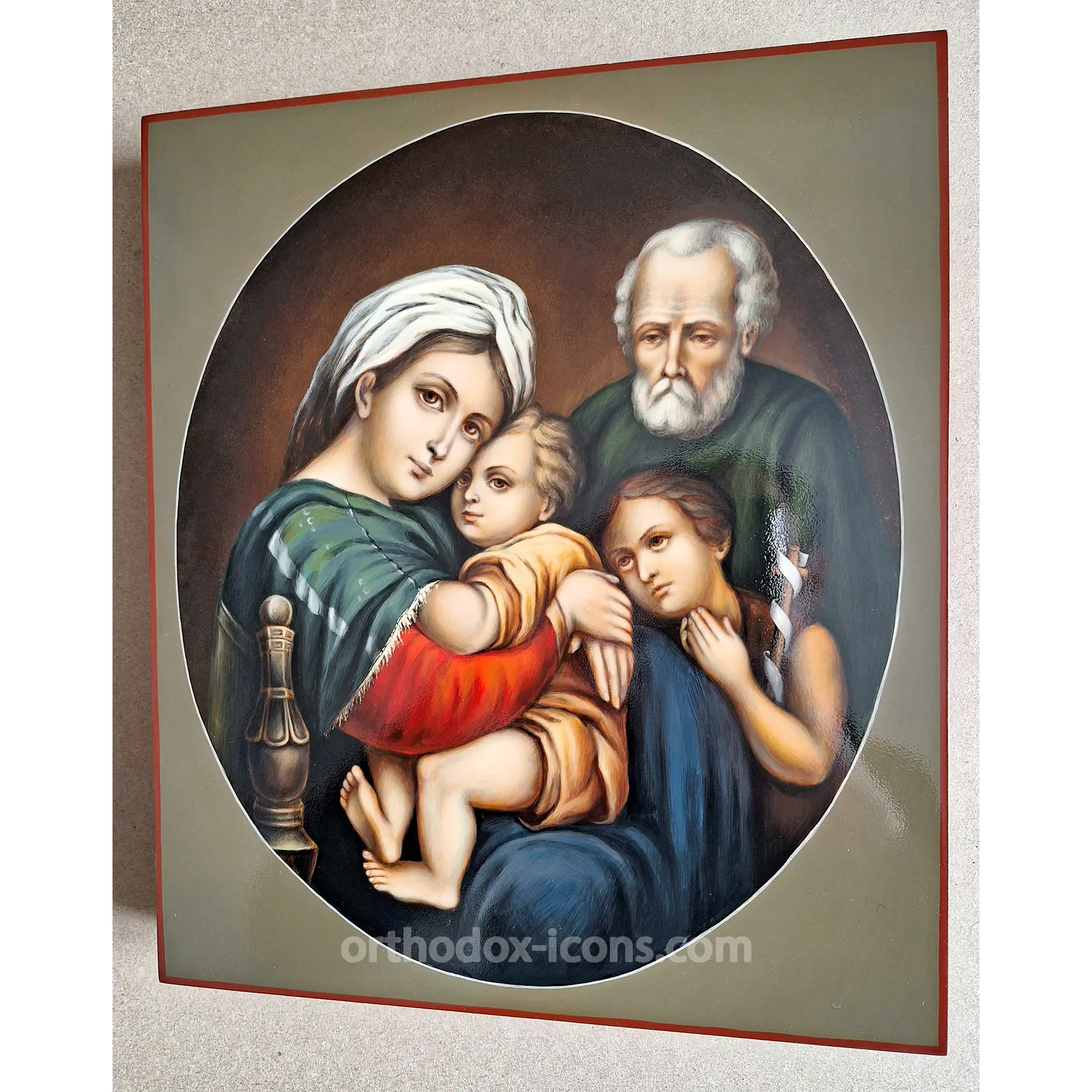
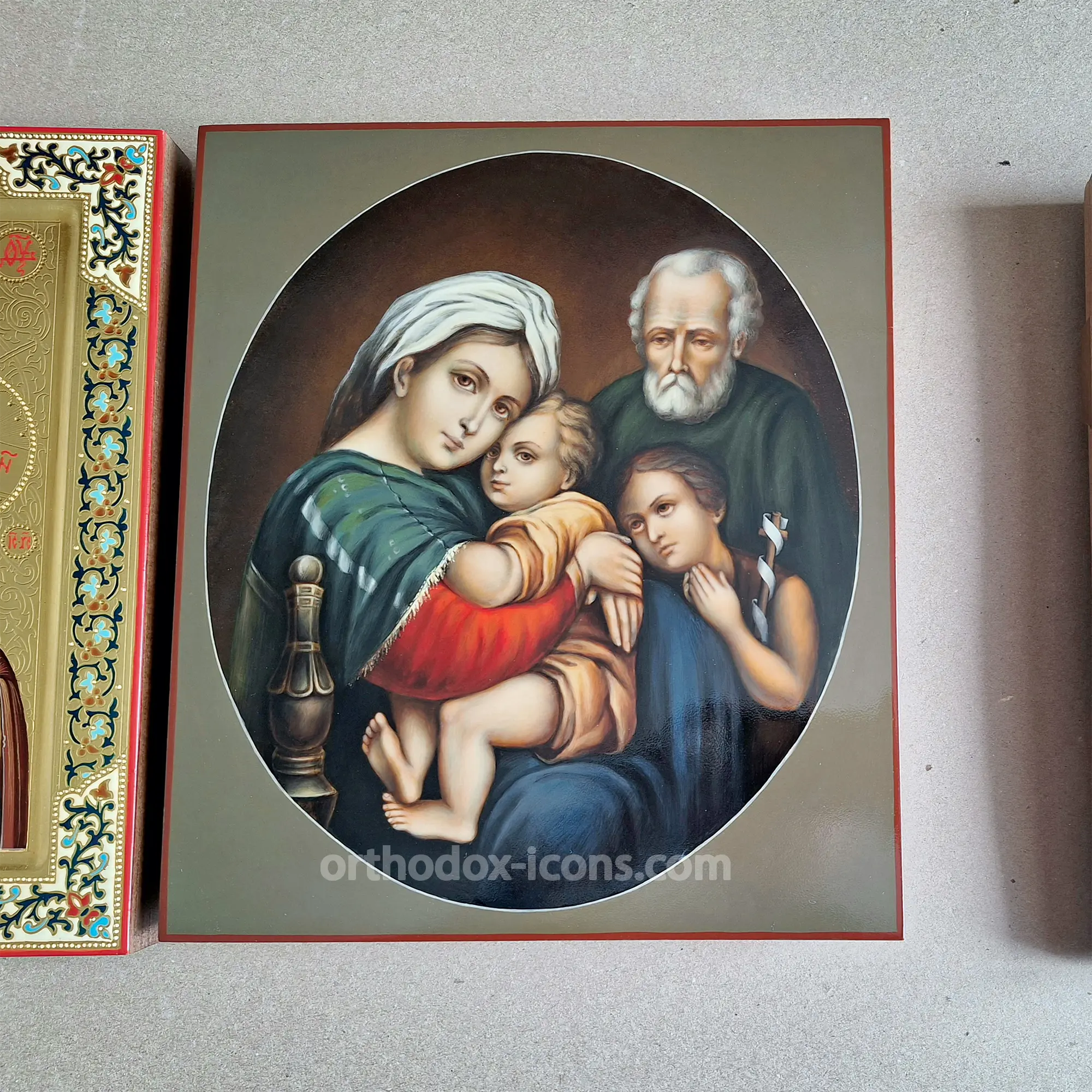
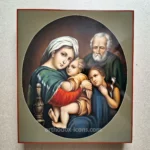
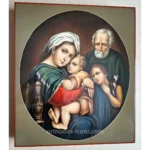
Of the Three Joys of Virgin Mary Icon is a hand-painted Orthodox icon in academic, or Fryazhsky, style, based on the Holy Family composition associated with Raphael’s Madonna della Seggiola.
Available size: 27×31 cm (10.6×12.2 in). Larger church and iconostasis sizes may be discussed before painting.
Materials: linden board with oak braces, linen pavoloka, chalk levkas, natural pigments, multilayer painting, protective varnish.
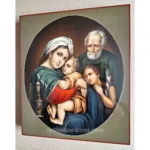
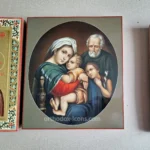
Technique: academic hand painting with glazing, oval tondo composition on a rectangular board, matte olive-gray background, and thin red border. No gilded field is used.
It is possible to paint an image in any size to order
Free shipping worldwide
Of the Three Joys of Virgin Mary Icon is a rare hand-painted Orthodox icon whose history and appearance set it apart from stricter Byzantine iconographic types. The image carries a special warmth, tenderness, and human immediacy, while still serving as a holy image for prayer and consolation.
This icon is painted in the academic, or Fryazhsky, style of Russian icon painting. It is connected with Western Renaissance composition, especially Raphael’s Madonna della Seggiola, but it was received and reinterpreted in Orthodox devotion. The result is an image where Italian pictorial beauty and Russian Orthodox prayer meet in a single composition.
The icon is especially associated with help in hopeless situations: unjust accusation, return of lost property, deliverance from captivity, and the restoration of family joy. It is also loved as an image of the Holy Family and a prayer for peace in the home.
From Raphael to the Moscow Miracle
The history of the Three Joys icon reads almost like a historical novel. In the early eighteenth century, during the reforms of Peter the Great, talented Russian painters were often sent to Europe to study secular art. One such artist studied in Italy and was deeply moved by Raphael’s famous Madonna della Seggiola, painted in 1513-1514.
The Russian painter made a careful copy of the Renaissance masterpiece and brought it back to Moscow. He gave the painting to a relative, a priest who served at the Church of the Life-Giving Trinity on Gryazeh, on Pokrovka. Because the image was painted in a distinctly Western, realistic manner, the priest did not place it in the altar or local iconostasis. Instead, it was hung on the covered porch above the entrance to the church.
The image remained there for decades until a remarkable miracle made it famous. A noble woman in Moscow was suddenly struck by three terrible sorrows. Her husband was falsely accused and exiled, the family estate was confiscated, and her beloved only son was captured in war. Left alone and crushed by grief, she turned to prayer.
One night she saw the Most Holy Theotokos in a dream and was told to find the image of the Holy Family and pray before it. She searched many churches and monasteries before finding the image on the porch of the Trinity church. She prayed before it with tears, and soon received three joyful pieces of news: her husband was vindicated and returned, the confiscated property was restored, and her son came home safely from captivity.
Iconography: Holy Family and Hidden Symbols
The composition of this icon is arranged as a tondo, an oval or circular image placed within the rectangular form of the icon board. In Christian art, the circle or oval can suggest eternity, wholeness, and the perfection of divine providence.
At the center are the Mother of God and the Christ Child. The Virgin Mary holds the Child close with deep maternal tenderness and a quiet, hidden sorrow. Their faces touch, and the gaze of the Mother of God meets the one who prays with compassion and understanding.
The garments are painted with great attention to folds, color, and volume. The Mother of God wears an emerald-green maphorion with a golden border and a rich red inner garment. The Christ Child is painted with a soft, childlike body and a living human warmth, characteristic of the academic style.
In the background, the righteous Joseph the Betrothed is shown as an elder with gray hair and a full beard, dressed in dark green garments. His presence turns the composition into an image of the Holy Family and emphasizes marriage, protection, and the home.
The young John the Forerunner is shown below, with his hands folded in reverence before Christ. Near him is a long, slender cross wrapped with a white ribbon, a prophetic sign of the future Passion. The turned wooden baluster in the lower corner recalls Raphael’s chair and may be read as a sign of the royal throne of the Queen of Heaven.
Prayer Before the Three Joys Icon
Because of its history, the Three Joys icon became a symbol of hope when all human means appear exhausted. It is approached not for sentimental comfort alone, but for strong prayer in extreme hardship.
- For justice in court: the icon is approached in cases of slander, false accusation, unfair judgment, and the need for truth to be revealed.
- For the return of what was lost: people pray for the recovery of stolen property, unpaid debts, housing problems, and difficult financial matters.
- For soldiers and captives: the icon was especially venerated by Cossacks before the Revolution. Mothers and wives prayed for the return of sons and husbands from war, captivity, or disappearance.
- For family peace: because the icon depicts the Holy Family, it is approached for reconciliation between spouses, protection of the home, and the gift of children.
Academic Painting on a Linden Board
The creation of this icon in the academic pictorial style differs from the more austere traditional manner. The master must know Orthodox iconographic meaning, but also classical drawing, light and shadow, anatomy, perspective, and careful multilayer painting.
The board is made from well-dried linden. Oak braces are inserted into the back to help prevent warping. The front is covered with linen pavoloka and chalk levkas, which is polished to an exceptionally smooth surface. In a pictorial icon, even a small roughness can interfere with the delicate transitions of light and color.
The painting is built up in transparent layers, or glazes. Faces, bodies, and garments are painted gradually, each layer drying before the next is applied. This creates depth of color, softness of skin, texture of fabric, and a realistic sense of volume.
Unlike many gilded icons, this icon does not use a gilded field. The oval image is set into a calm matte olive-gray field on the rectangular board, with a thin red border around the edge. This restrained background supports the warmth and realism of the composition.
Characteristics of the Hand-Painted Icon
| Icon name | Of the Three Joys of the Mother of God, Holy Family |
|---|---|
| Painting style | Academic, pictorial style, Fryazhsky painting |
| Composition | Oval tondo placed within a rectangular icon board |
| Board | Solid linden board, oak braces, linen pavoloka, chalk levkas |
| Painting technique | Multilayer painting with natural pigments and glazes |
| Background | Matte olive-gray background with a thin red border, without gilding |
| Available size | 27×31 cm (10.6×12.2 in) |
| Larger sizes | Large and iconostasis formats may be discussed before painting |
| Shipping | Free international shipping is included; payment is due upon delivery. |
Questions and Answers
Why is the icon called Of the Three Joys?
The name comes from a miracle in Moscow. A noble woman whose husband had been exiled, whose estate had been taken, and whose son had been captured prayed before this image. Soon she received three joyful pieces of news: her husband was cleared, her property was returned, and her son came home from captivity.
Is this icon connected with Raphael?
Yes. The prototype of the Russian icon is connected with Raphael’s Madonna della Seggiola, or Madonna of the Chair. Russian icon painters reinterpreted the Renaissance composition within Orthodox devotional tradition, adding Orthodox meaning and symbolism.
Who is shown together with the Mother of God and Christ?
Besides the Mother of God and the Christ Child, the icon shows the righteous Joseph the Betrothed in the background and the young John the Forerunner below, holding a prophetic cross wrapped with a ribbon.
In what difficult situations is prayer offered before this icon?
The icon is traditionally approached in desperate circumstances: unjust accusation, court cases, loss of property, separation from loved ones, captivity, and the return of soldiers or missing family members.
Can one pray before this icon for family problems?
Yes. Because the icon presents the Holy Family, it is approached for peace between spouses, healing of family conflict, prevention of divorce, and the gift of children.
What is special about the academic, or Fryazhsky, style?
Academic or Fryazhsky painting uses realistic modeling, perspective, anatomy, deep light and shadow, and multilayer glazing. It differs from more austere Byzantine stylization by giving the faces and garments a soft, lifelike volume.
Why is the image oval while the board is rectangular?
The oval or round composition is called a tondo. It was especially loved in Renaissance Italy and can symbolize divine perfection. In this icon, the oval composition is placed within a traditional rectangular icon board.
Why are oak braces used on the back of the icon?
The icon board is made from linden, which reacts to changes in humidity. Oak braces inserted into the back act as a firm frame, helping prevent warping and cracking over time.
What is the wooden object in the lower left corner?
It is a turned baluster, part of the chair motif inherited from Raphael’s Madonna of the Chair. In a theological reading, the chair can be understood as a royal throne fitting the Queen of Heaven.
What sizes can be ordered?
The listed size is 27×31 cm, suitable for a home icon corner or a substantial gift. Larger and more monumental formats for a church setting may be discussed before painting.
| Name | Mary |
|---|---|
| Dimensions | 27x31cm (10.6×12.2 in) |