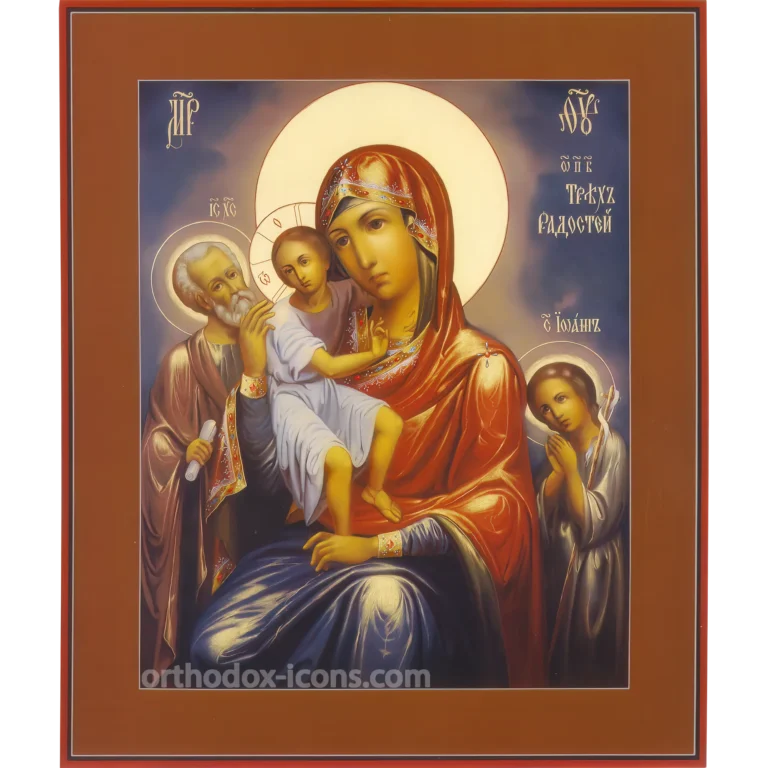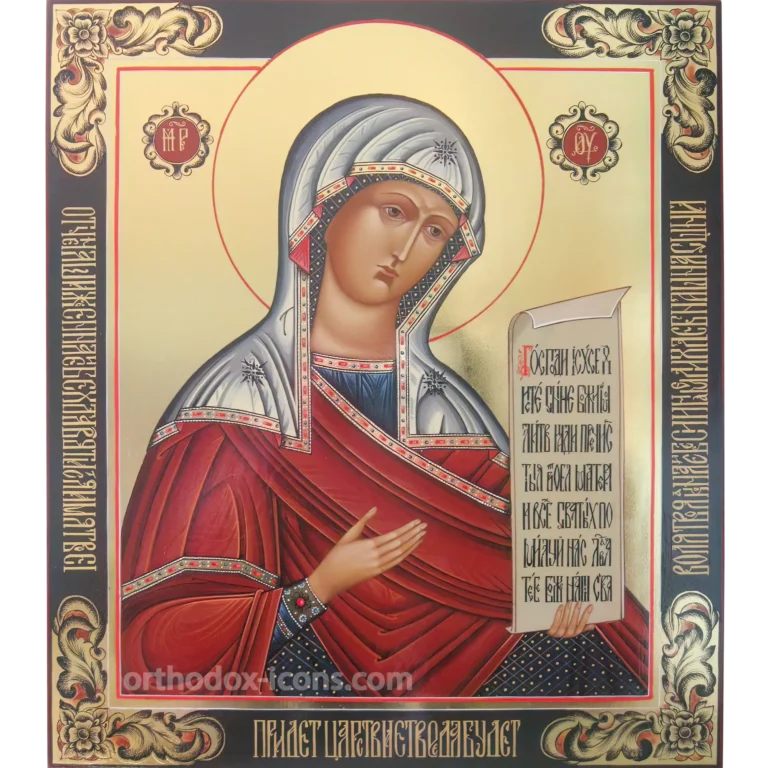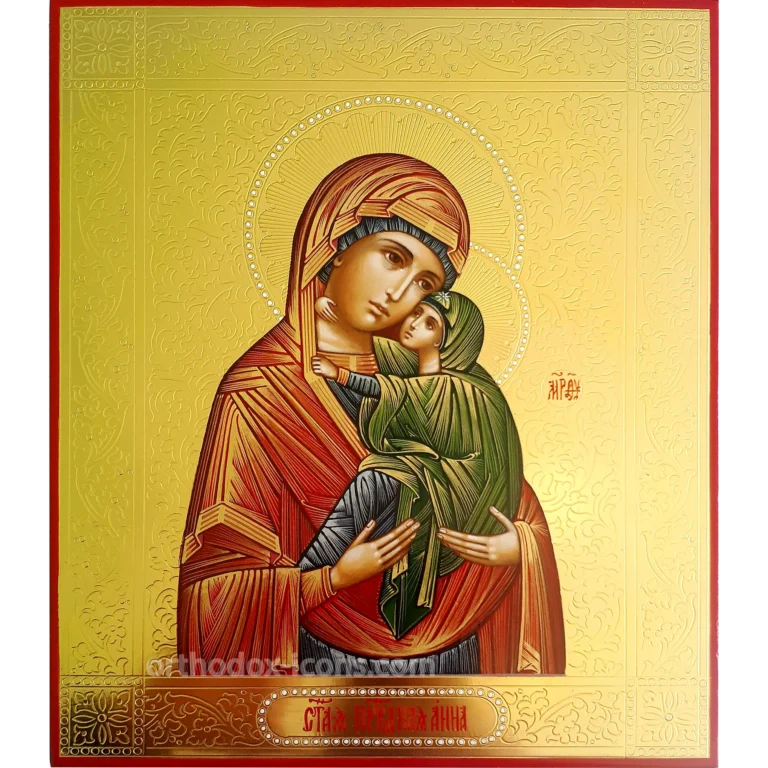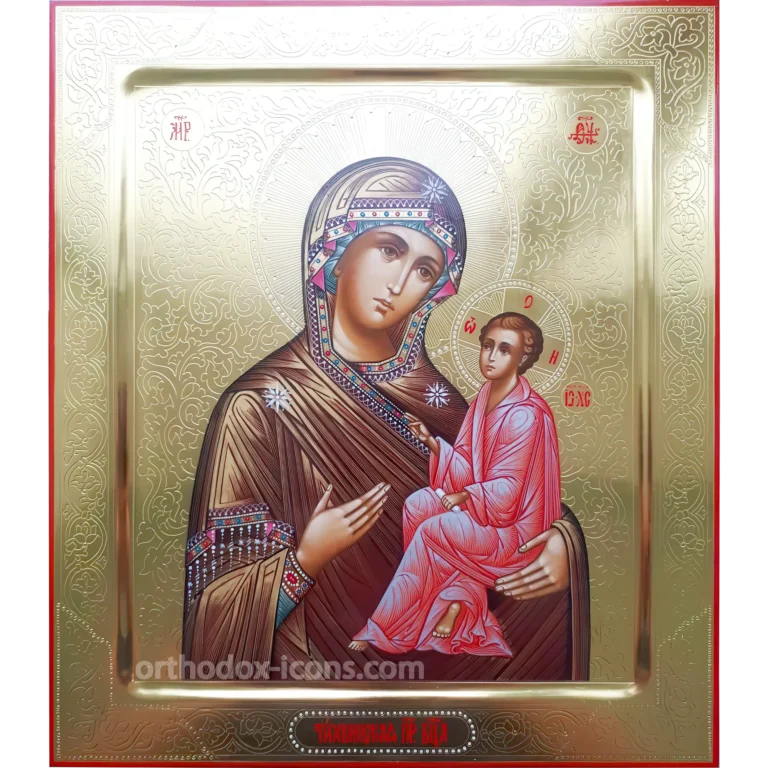
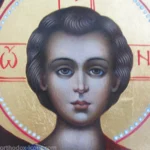
Virgin Hodegetria Orthodox Icon
$750
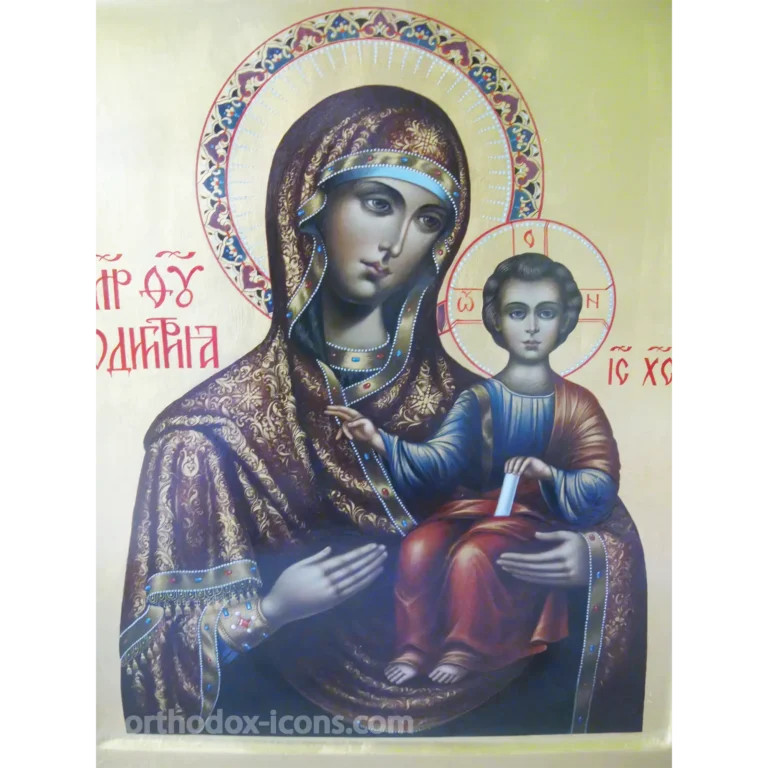
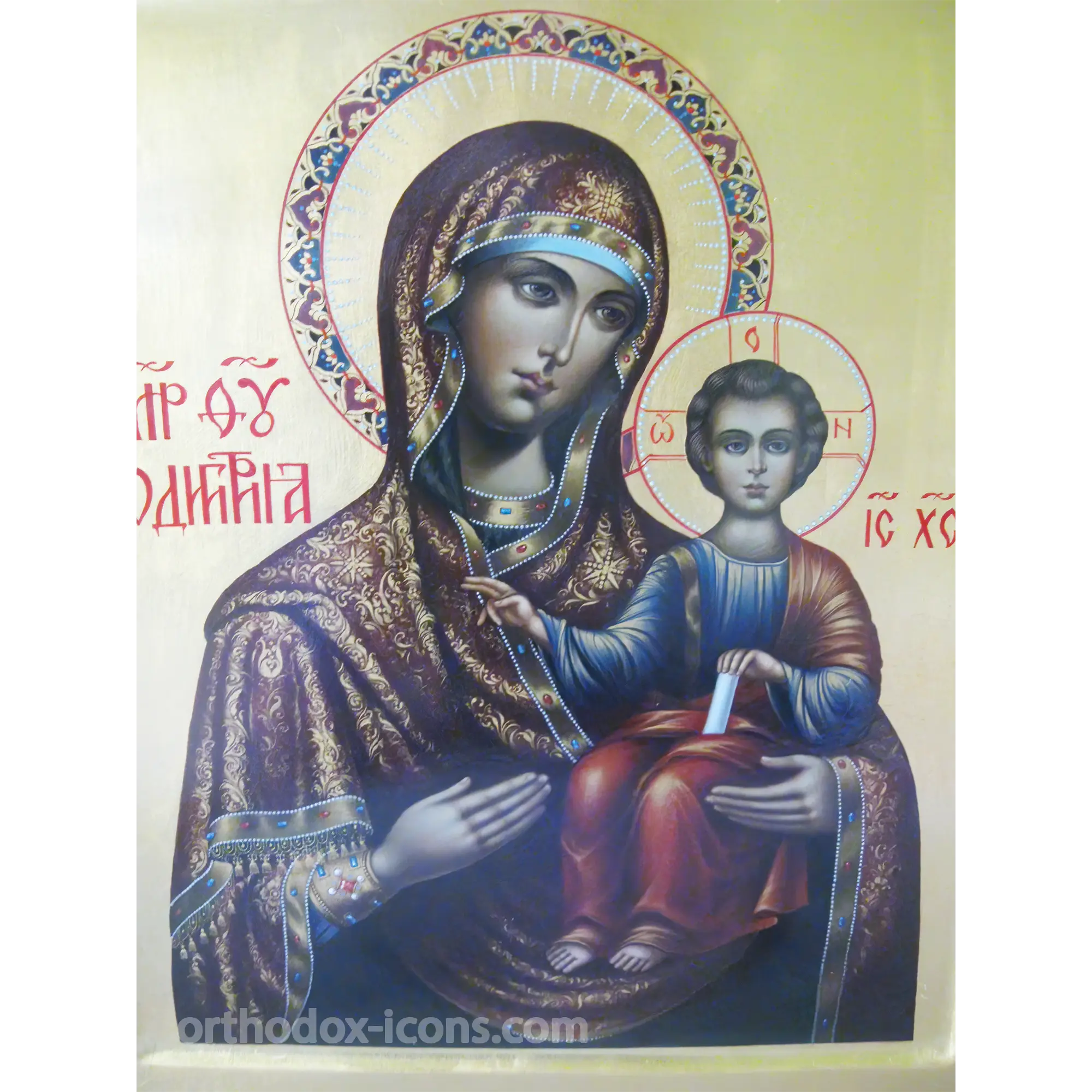
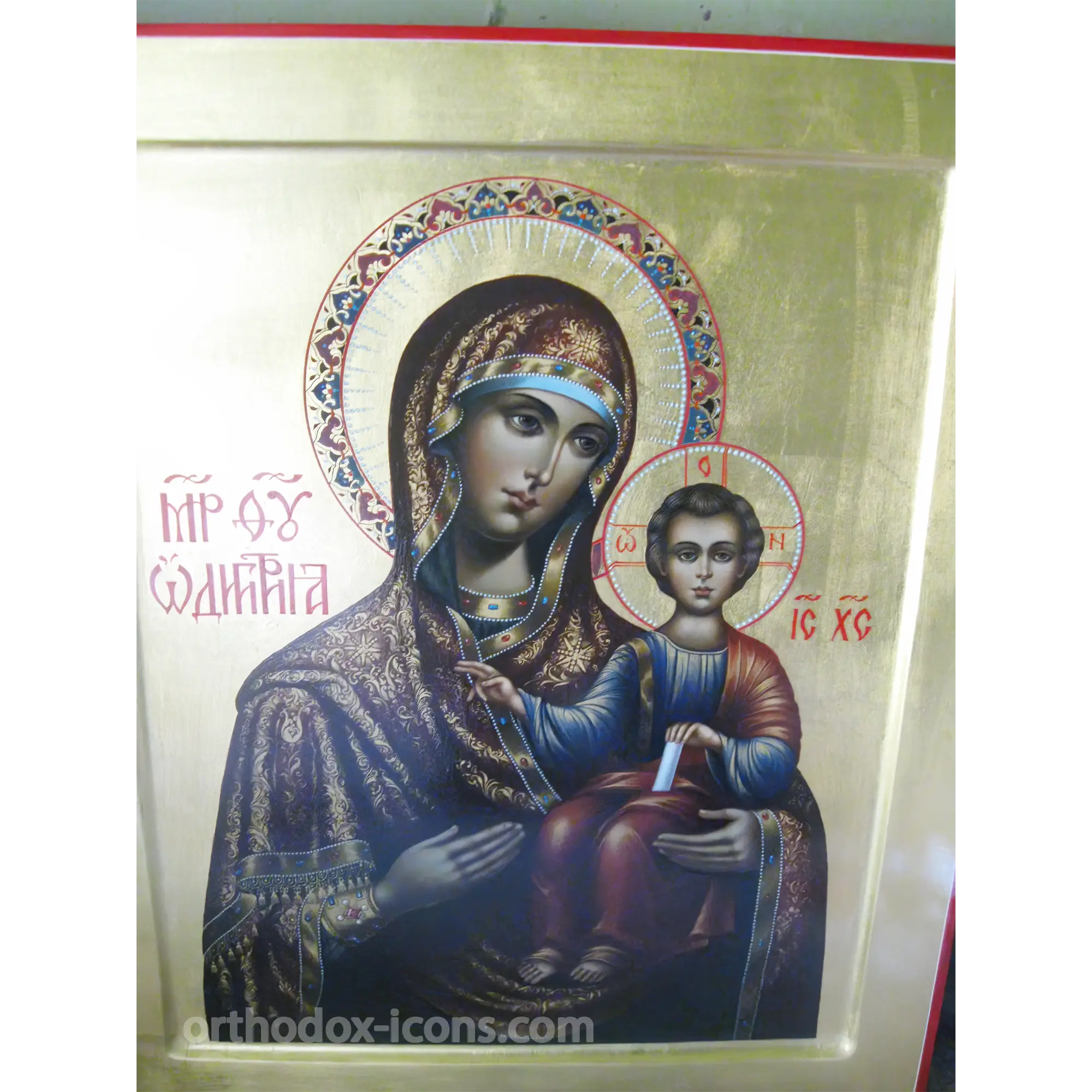
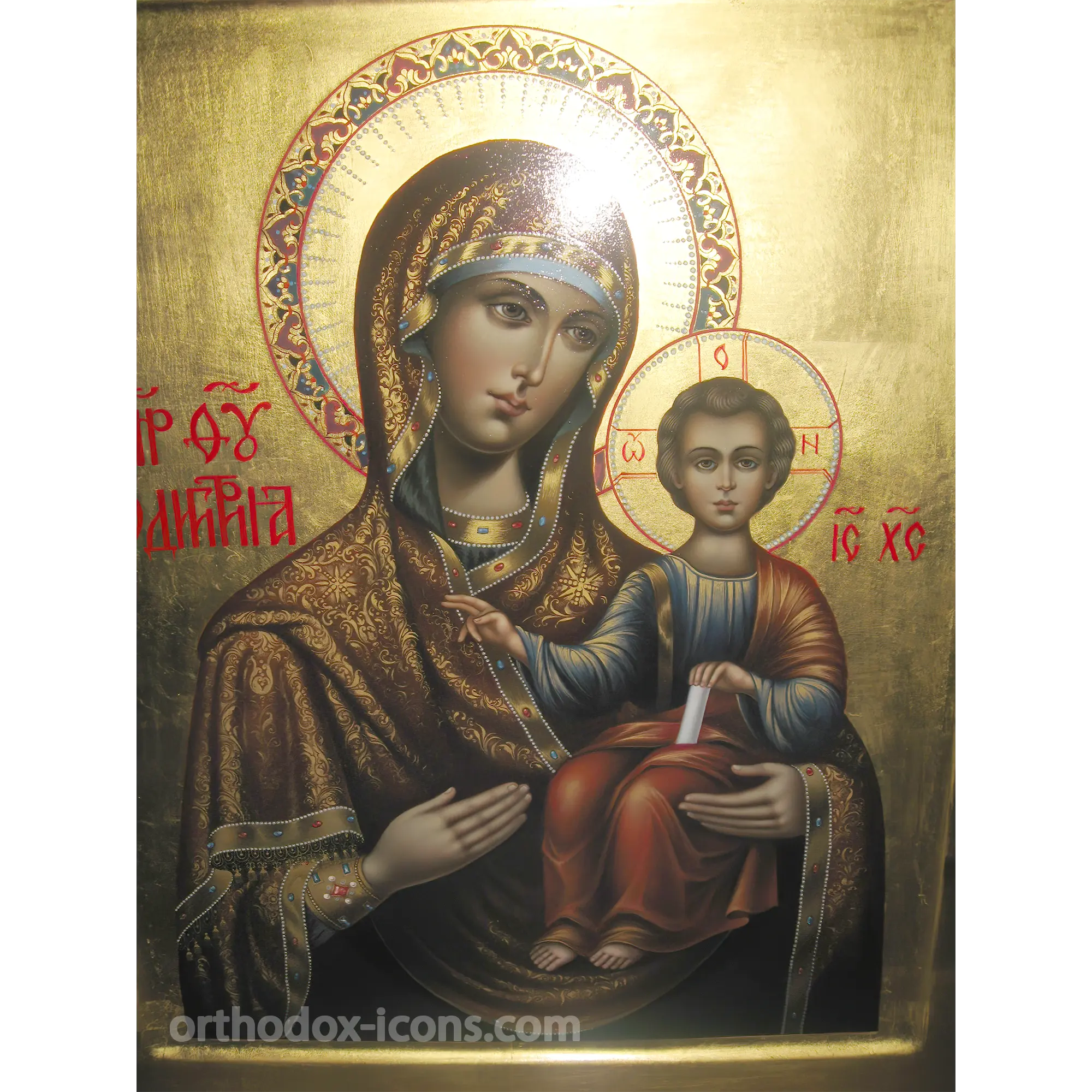
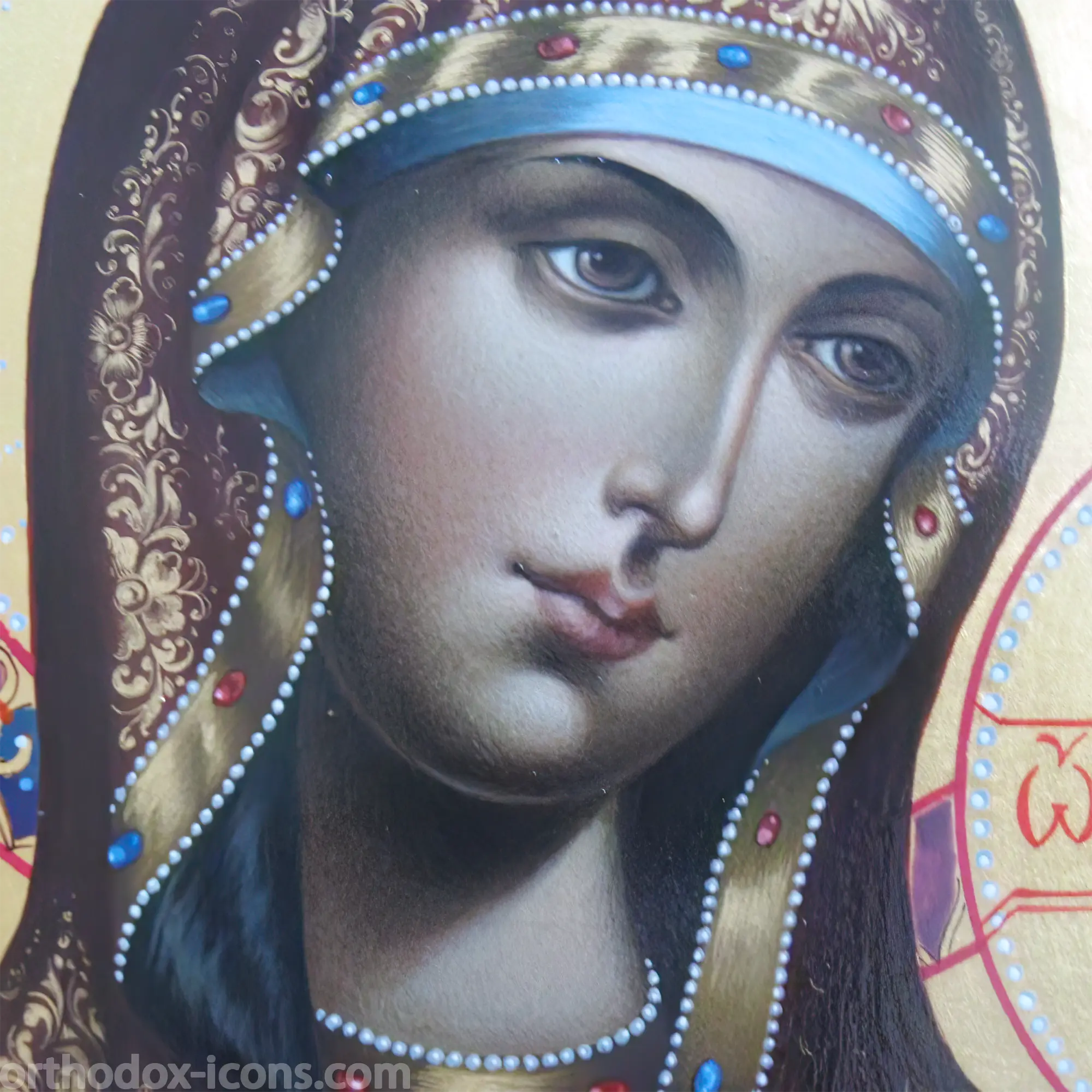
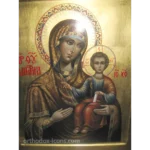
Virgin Hodegetria Orthodox Icon is a hand-painted Hodegetria icon of the Mother of God, the Directress, showing the Theotokos pointing to Christ as the true Way, Truth, and Life.
Listed size: 17×21 cm (6.7×8.3 in); larger formats by agreement. 960 gold leaf background and margins, painted ornamental halo, cold enamel jewel-like garment details, natural mineral egg tempera, and linden board with kovcheg. Free international shipping, with payment after delivery.
It is possible to paint an image in any size to order
Free shipping worldwide
Virgin Hodegetria Orthodox Icon is a hand-painted Orthodox icon of the Mother of God in the ancient Hodegetria type, the Directress. In this solemn composition, the Theotokos holds Christ on her left arm and points to Him with her right hand, showing the faithful the true path to salvation.
Unlike the tender Eleusa type, where Mother and Child press their faces together, Hodegetria is strict, frontal, and dogmatic. It does not primarily show earthly emotion; it teaches, guides, and points clearly to Christ as the Way, the Truth, and the Life.
The listed size is 17×21 cm (6.7×8.3 in). The icon has a 960 gold leaf background and margins, a painted ornamental halo, cold enamel jewel-like garment details, natural mineral egg tempera, and a linden board with kovcheg.
The Meaning of Hodegetria
The Greek word Hodegetria means Directress or She Who Shows the Way. This name belongs to one of the most ancient, majestic, and widely venerated iconographic types of the Mother of God.
The meaning is direct and profound. The Mother of God does not draw attention to herself alone. She points to Christ, showing every person where salvation is found.
Her gesture says without words: here is the true path, here is the Lord, here is the One whom the soul must follow in order not to be lost.
This is why the Hodegetria icon is especially loved by people facing difficult choices, spiritual confusion, travel, danger, or a need for clear direction.
Ancient Origin and Constantinople
According to Church tradition, the first Hodegetria icon was painted by the Apostle and Evangelist Luke from life during the earthly days of the Mother of God.
Historically, the name became especially connected with Constantinople. In the fifth century, Empress Eudocia brought a revered image from the Holy Land to the capital of the Byzantine Empire.
The icon was first kept in the famous Blachernae church and later placed in the Hodegon Monastery. This monastery was associated with guides and with the healing of the blind.
According to tradition, the Mother of God appeared to two blind men, took them by the hands, and led them to a healing spring near the monastery. After washing their eyes, they received sight. From this miracle, the name Hodegetria, Directress, became deeply rooted.
The Loss of the Original and the Spread of Copies
The Hodegetria became one of the great protective icons of Byzantium. Emperors took the image on military campaigns, and solemn processions were held with it in Constantinople.
After the fall of Constantinople in the fifteenth century, the original icon was lost. Tradition says it may have been destroyed for the sake of its precious covering.
Yet by that time, copies of the Hodegetria had spread throughout the Orthodox world. Many great icons known in Russia belong to or are connected with the Hodegetria family, including the Smolensk, Iveron, Tikhvin, Kazan, and Jerusalem icons.
The Gesture of the Directress
The Mother of God is shown half-length or nearly half-length. Her left arm serves as a throne for the Christ Child.
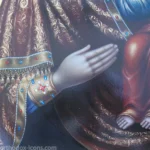
Her right hand is raised near her chest and points gently but unmistakably toward Him. This gesture is the key to the entire icon.
The Theotokos appears as a wise spiritual guide. She does not replace the Savior; she reveals Him, leads to Him, and teaches the faithful to trust Him.
Christ as Pantocrator
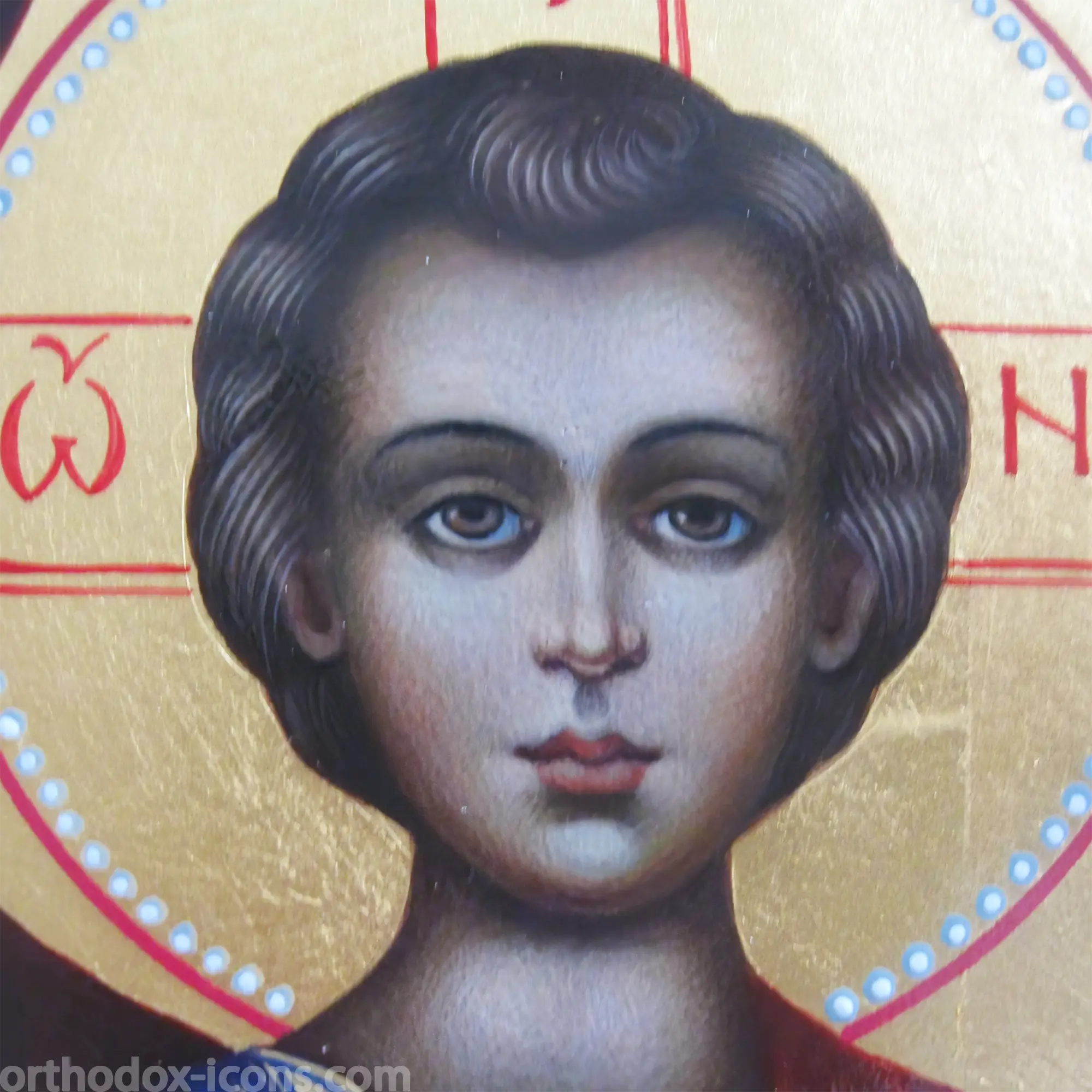
The Christ Child in Hodegetria icons is not shown as a helpless infant. He is depicted as the pre-eternal Word of God, the Pantocrator, the ruler and sustainer of all creation.
His forehead is high, His expression is serious, and His gaze is full of divine wisdom. Even as a Child, He is shown as the Lord of the universe.
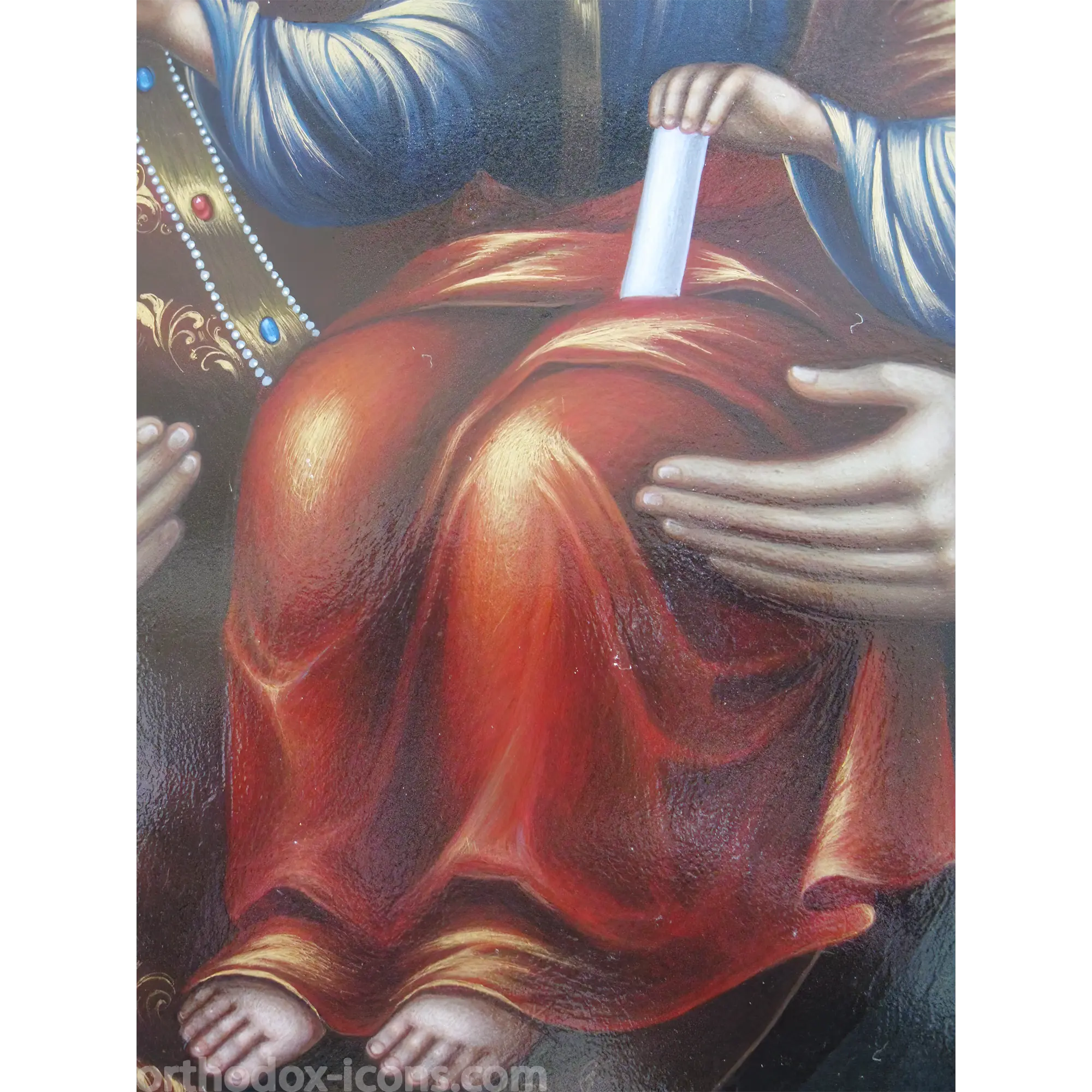
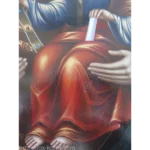
His right hand is raised in blessing, blessing His Mother and the whole world He created. His left hand holds a white scroll.
The White Scroll
The scroll in Christ’s hand symbolizes the Gospel, the New Covenant, and the saving teaching brought by the Lord to mankind.
It shows Christ as Teacher and Lawgiver. He does not merely comfort; He reveals the way of life and calls each person to follow Him.
In some rare versions, a closed book may be shown instead of the scroll, but the meaning remains connected with divine teaching and salvation.
Garments and Stars
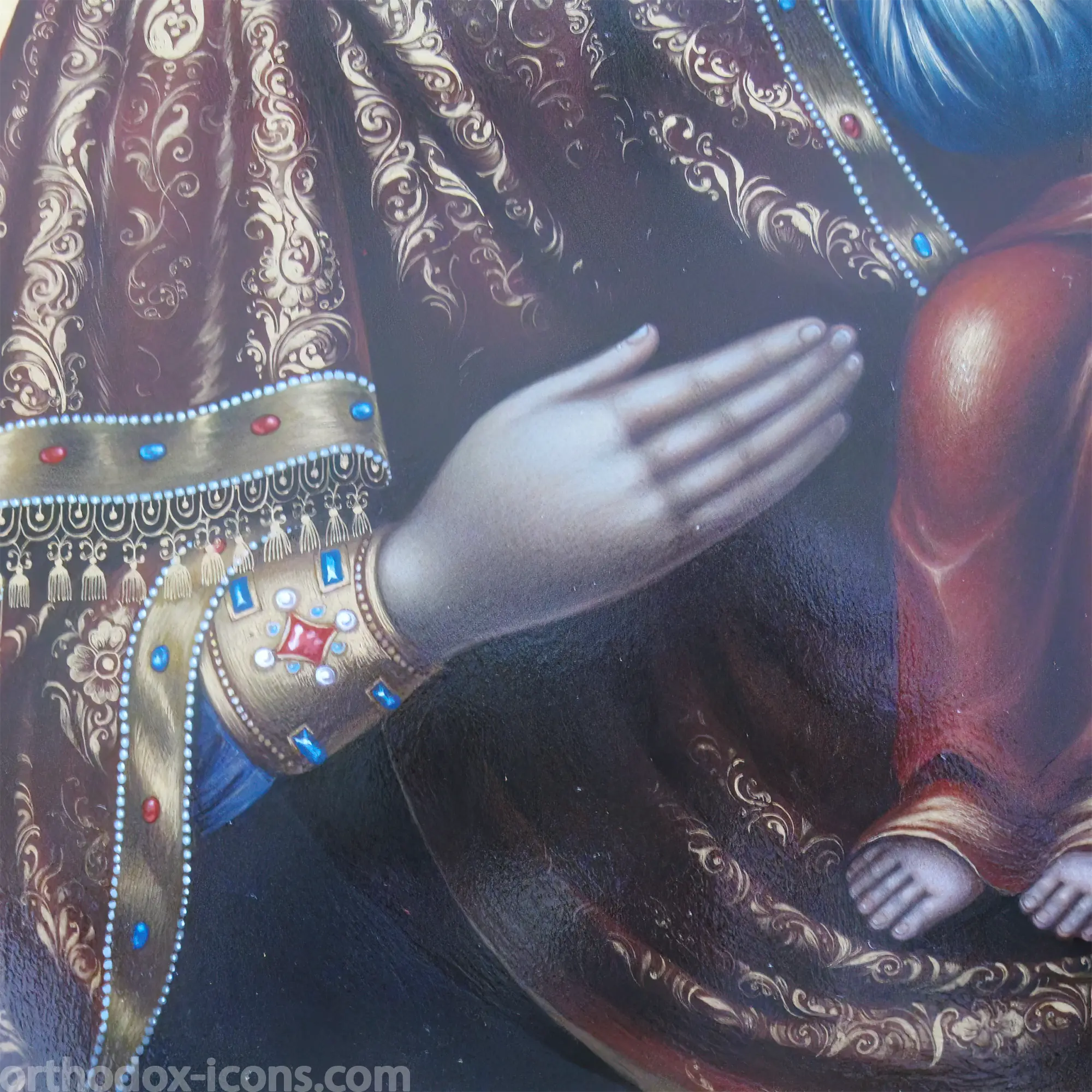
The maforion of the Mother of God is painted in a dark cherry or purple tone, signifying her royal dignity and the sorrows she endured.
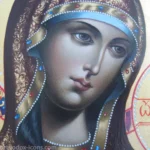
On her head and shoulders are golden stars. These are strict canonical signs of her ever-virginity: before, during, and after the Nativity of Christ.
Christ is clothed in a light chiton and golden himation, emphasizing the radiance of His divine glory.
Prayer Before the Directress
Orthodox Christians pray before the Hodegetria icon when they need guidance in major decisions: marriage, work, moving, study, calling, or a difficult family choice.
The icon is also a traditional helper for travelers. Its very name makes it meaningful before a long road, flight, sea journey, or dangerous trip.
Historically, Hodegetria was also connected with protection of armies. Today mothers and wives pray before the icon for husbands and sons in military service or dangerous places.
Because the name is linked with the healing of blind men, people also pray before Hodegetria for healing of illnesses, especially eye diseases, and for deliverance from spiritual blindness.
The icon is also approached in prayer for peace in the family, protection of the home, and guidance of children onto a righteous path.
Gold, Painted Halo, and Enamel Ornament
This hand-painted version is richly decorated while preserving the strict Hodegetria composition. The background and wide margins are covered with true 960 gold leaf.
The gold symbolizes divine light and creates a quiet heavenly radiance around the holy figures.
The halo of the Mother of God is not simply outlined. It is painted by hand with a refined floral and geometric ornament in burgundy and blue tones, framed by a white pearl-like dotted border.
The garments of the Mother of God and Christ are decorated with raised cold enamel details. These colored drops imitate rubies, sapphires, and river pearls along the gold borders of the garments.
Traditional Tempera Painting
The faces are painted in natural mineral egg tempera. The icon painter builds the flesh tones with thin, transparent layers known as plav, creating depth, warmth, and a calm living presence.
The icon is painted on a linden board prepared with kovcheg, linen, chalk gesso, and inserted oak splines. These materials support the stability and long life of the image.
The result is a small but richly finished icon, suitable as a spiritual support for the home, a travel-related blessing, or a family prayer image.
Icon Characteristics
| Name | Virgin Hodegetria Orthodox Icon |
| Iconographic type | Hodegetria, the Mother of God as Directress |
| Listed size | 17×21 cm (6.7×8.3 in); larger formats by agreement |
| Composition | The Mother of God points to Christ, who blesses and holds a white scroll |
| Gold | 960 gold leaf on background and margins |
| Decoration | Painted ornamental halo and cold enamel jewel-like garment details |
| Painting | Natural mineral egg tempera |
| Board | Linden board with kovcheg, linen, chalk gesso, and oak splines |
| Purpose | Guidance in life choices, protection in travel, prayer for soldiers, healing, and family peace |
Care and Preservation
An icon with 960 gold leaf and cold enamel should be protected from moisture, heat, direct sunlight, and sudden temperature changes. Do not wash it, wipe it with damp cloths, or use household cleaners.
Dust may be removed only with a very soft dry brush. A glazed kiot is recommended for long-term protection of the gold, enamel, and tempera painting.
Ordering, Shipping, and Payment
The listed size is 17×21 cm (6.7×8.3 in). Larger formats may be discussed individually. Free international shipping is included, with payment after delivery.
Questions and Answers
Why is this icon called Hodegetria?
Hodegetria means Directress or She Who Shows the Way. The Mother of God points to Christ as the true Way, Truth, and Life.
How is Hodegetria different from Eleusa?
In Eleusa icons the Mother and Child touch cheek to cheek, while in Hodegetria they face the viewer solemnly and the Theotokos points to Christ.
What does the scroll in Christ’s hand mean?
The scroll symbolizes the Gospel and the saving teaching brought by Christ to the world.
Why is Christ shown with a serious adult-like face?
Orthodox iconography shows Christ as the pre-eternal Word of God, full of divine wisdom even when depicted as a Child.
When do people pray before the Hodegetria icon?
They pray before it for guidance in important choices, protection while traveling, healing, peace in the family, and protection of soldiers.
What does the gold background mean?
The 960 gold leaf background symbolizes divine light, eternity, and the heavenly kingdom.
What are the colored dots on the garments?
They are raised cold enamel details that imitate rubies, sapphires, and pearls on the sacred garments.
What size is listed for this icon?
The listed size is 17×21 cm (6.7×8.3 in). Larger formats may be discussed individually.
What materials are used?
The icon is painted in natural mineral egg tempera on a linden board with kovcheg, linen, chalk gesso, oak splines, 960 gold leaf, and cold enamel detail.
How are shipping and payment arranged?
Free international shipping is included, with payment after delivery.
| Dimensions | 17x21cm (6.7×8.3 in) |
|---|---|
| Name | Mary |