Support of the Humble Virgin Mary Icon
$1500
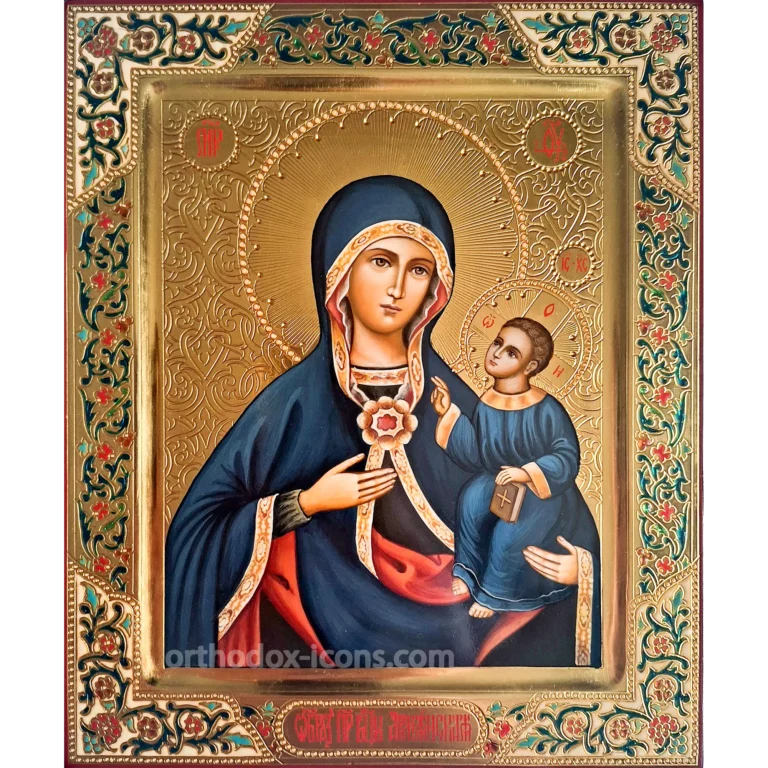
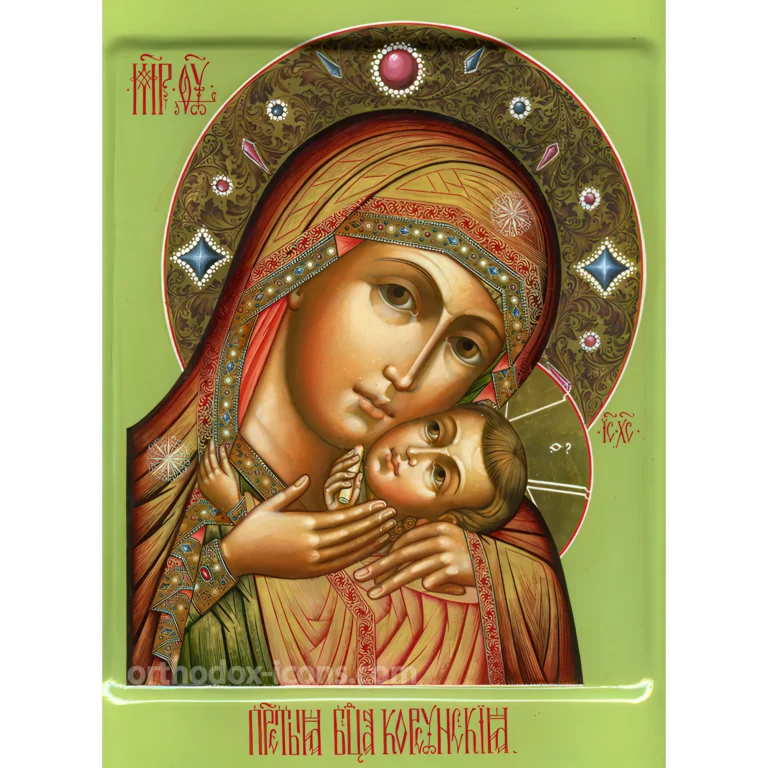
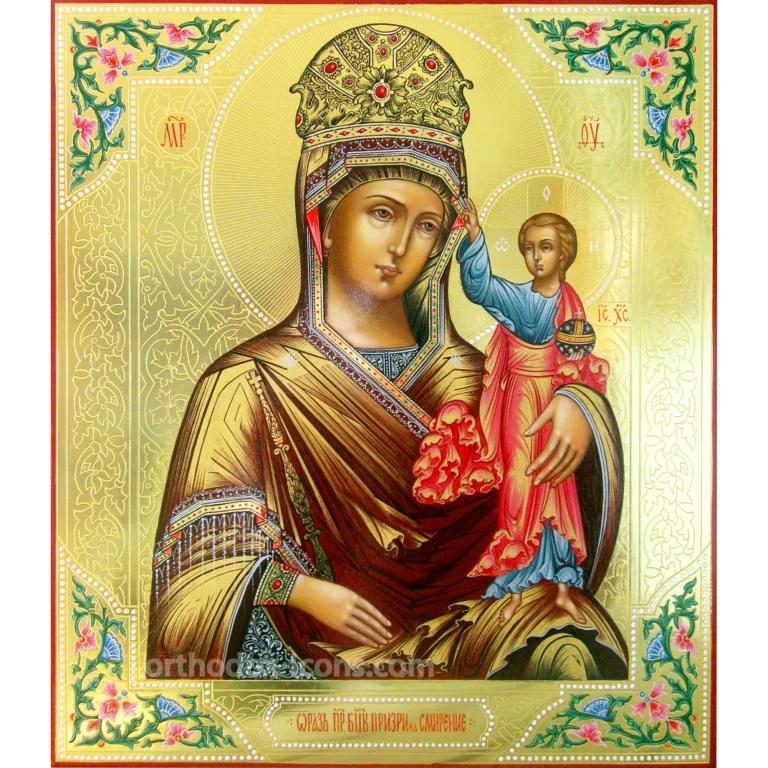
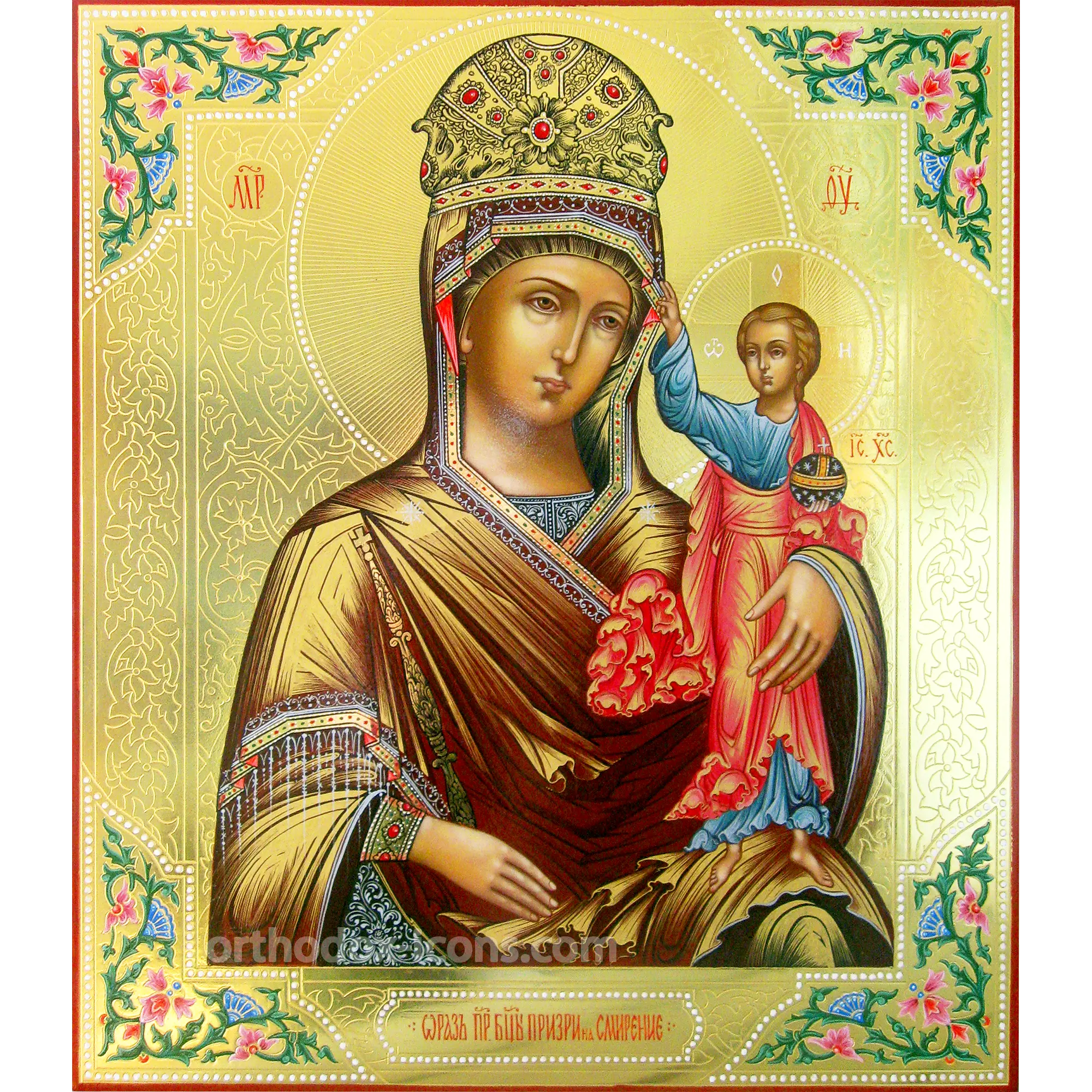
Support of the Humble Virgin Mary Icon is a hand-painted “Prizri na smirenie” icon of the Mother of God, where Christ gently turns His Mother’s face toward the praying faithful.
Listed size: 27×31 cm (10.6×12.2 in); larger formats by agreement. Academic-style painting, 960 gold leaf with hand chasing, colored cold enamel details, linden board with kovcheg, linen, chalk gesso, and oak splines. Free international shipping, with payment after delivery.
It is possible to paint an image in any size to order
Free shipping worldwide
Support of the Humble Virgin Mary Icon is a deeply venerated hand-painted icon of the Mother of God, known in Russian devotion as Prizri na smirenie, meaning “Look upon humility” or “Look mercifully upon the humble.” It is one of the most tender and unusual images of the Theotokos.
The icon is especially striking because of the unique gesture of the Christ Child. With His small hand, He gently touches the cheek of His Mother and turns her face toward those standing before the icon, as if asking her to look with mercy upon their prayers, grief, and humility.
The listed size is 27×31 cm (10.6×12.2 in). This version is painted in an academic style with soft, realistic faces, 960 gold leaf, hand chasing, and cold enamel details on a linden board with kovcheg.
A Tender Icon of Mercy
Among icons of the Mother of God, Support of the Humble holds a special place. It is not severe or distant. The image is filled with human warmth, compassion, and attentive mercy.
The Mother of God looks directly toward the person praying. Her gaze is meek, sorrowful, and deeply responsive. The icon makes visible the belief that the Lord hears every prayer and gives His Mother to the faithful as intercessor.
The gesture of Christ gives the whole image its spiritual power. He turns the attention of the Theotokos toward those who suffer, showing that divine mercy is not abstract but personal and near.
The Meaning of the Name
The name of the icon comes from the Gospel of Luke, from the hymn of the Mother of God at her meeting with righteous Elizabeth: “My soul magnifies the Lord… for He has regarded the low estate of His handmaiden.”
In Church Slavonic, the word translated as “look upon” or “regard” does not mean to reject or despise. It means to look mercifully, to turn attention toward someone, to descend in compassion.
Therefore the name is a prayer: Mother of God, look mercifully upon our humility, our weakness, our suffering, and our need.
The Pskov Revelation of 1420
The history of the icon begins in the fifteenth century, during a dark and painful time for the Pskov land. In 1420, the region was struck by plague, famine, and the threat of invasion by the forces of the Lithuanian prince Vytautas.
In that time of fear and grief, the icon was revealed near Pskov on Kamennoye Lake. From the right eye of the Mother of God, blood was said to flow miraculously.
This sign was understood as a witness that the Queen of Heaven suffered with the people and wept with them. The icon was carried in procession to Pskov and placed in the Trinity Cathedral.
After common prayer before the newly revealed holy image, the epidemic began to subside and the enemy forces withdrew from the city.
The Kyiv Miracle of 1993
The ancient Pskov original was lost during the turmoil of the revolutionary period, but copies of the icon continued to be venerated.
One of the most famous modern events took place in 1993 at the Holy Entrance Monastery in Kyiv. A nineteenth-century copy of the Support of the Humble icon was kept in a kiot under glass.
When the monks decided to clean the glass, they discovered a clear, silvery, non-painted imprint of the faces of the Mother of God and Christ on the glass itself.
Scientific examinations by physicists and chemists could not explain the nature of the phenomenon. In 1995, the Holy Synod officially recognized that copy as wonderworking.
The Unique Iconographic Gesture
Compositionally, the icon is related to the Hodegetria type, but it has a unique dynamic feature.
The Mother of God is shown half-length, holding the Christ Child on her left arm. In her right hand she holds a scepter or branch, a sign of her royal dignity.
Christ is clothed in light garments. In one hand He may hold an orb or sphere, a symbol of His lordship over the world. With the other hand He touches the cheek of His Mother.
This touch is the heart of the icon. It can be understood as Christ saying: “Look at these people who stand humbly before you; hear their sorrows and bring their prayers to Me.”
Prayer Before Support of the Humble
This icon is traditionally approached in difficult and seemingly hopeless situations. The humility named in the icon is not weakness; it is the strength of entrusting one’s life to God.
People pray before this image for healing from serious illness, especially women’s illnesses, heart and vascular problems, and troubles with vision.
The icon is also loved by those suffering from slander, injustice, conflicts at work, legal pressure, and false accusation. The Mother of God is asked to reveal the truth and protect the innocent.
Families pray before it for relatives caught in addiction, pride, or destructive choices, asking that they be brought to repentance and spiritual clarity.
There is also a tradition of praying before this icon for the peaceful resolution of difficult housing and household problems.
Peace of Heart in Sorrow
The icon is especially close to those struggling with inner grief, despair, depression, anxiety, and loss of faith.
Its theology is gentle but firm: when a person cannot force life into order, the Mother of God is asked to look mercifully upon the humble and suffering heart.
The image does not remove the need for action, repentance, medical care, or reconciliation. It gives a spiritual center from which a person can begin to breathe, pray, and continue.
Academic Painting Style
This version is painted in the academic, pictorial manner that entered Russian religious art in the eighteenth and nineteenth centuries.
Unlike strict flat Byzantine stylization, academic painting uses soft light and shadow, realistic volume, anatomical precision, and warm human expression.
The faces of the Mother of God and Christ are painted with unusual tenderness. Their realism is meant to deepen the emotional response of the person praying, while the icon remains a sacred image and not merely a portrait.
Gold Chasing and Cold Enamel
The background and wide margins are covered with true 960 gold leaf. Over the gold, the master creates a hand-tooled relief ornament, often with vegetal patterns.
This gold chasing gives the icon texture, depth, and a living play of light. It is a slow and precise work requiring great care.
The chased ornament, halos, and garment details are further decorated with colored cold enamel drops. These red, blue, and green accents imitate rubies, sapphires, emeralds, and other precious stones.
The glossy enamel contrasts with the warm gold and gives the icon a royal, festive appearance.
Traditional Board and Materials
The icon is painted on a solid linden board strengthened with oak splines. The splines help protect the wood from bending as humidity changes over time.
The front of the board is prepared with kovcheg, linen, and chalk gesso. The painting and gilding are then applied over this traditional ground.
The icon combines academic painting with classic icon materials: gold, prepared board, mineral colors, and careful decorative work.
Icon Characteristics
| Name | Support of the Humble Virgin Mary Icon |
| Traditional name | Prizri na smirenie, Mother of God “Look upon humility” |
| Iconographic type | Mother of God with Christ, related to Hodegetria, with unique cheek-touching gesture |
| Listed size | 27×31 cm (10.6×12.2 in); larger church and iconostasis formats by agreement |
| Painting style | Academic painting with realistic volume and soft expression |
| Gold | 960 gold leaf with hand relief chasing |
| Decoration | Colored cold enamel details imitating precious stones |
| Board | Linden board with kovcheg, linen, chalk gesso, and oak splines |
| Purpose | Prayer for healing, protection from slander, repentance, peace of heart, family help, and difficult housing troubles |
Care and Preservation
An icon with gold chasing and cold enamel should be protected from moisture, direct sunlight, heat, and sudden humidity changes. Do not wash it, wipe it with damp cloths, or use household cleaners.
Dust may be removed only with a very soft dry brush. A glazed wooden kiot is recommended for long-term protection of the gold, enamel, and painted surface.
Ordering, Shipping, and Payment
The listed size is 27×31 cm (10.6×12.2 in). Larger church and iconostasis formats may be discussed individually. Free international shipping is included, with payment after delivery.
Questions and Answers
What does Support of the Humble mean?
The name comes from Luke 1:48 and means that the Mother of God looks mercifully upon the humility, suffering, and need of those who pray.
Why does Christ touch the cheek of the Mother of God?
This unique gesture shows Christ gently turning His Mother’s face toward the praying people, asking her to hear and intercede for them.
When was this icon first revealed?
The icon was revealed in the Pskov region in 1420, during plague, famine, and danger of invasion.
What happened in Kyiv in 1993?
A nineteenth-century copy in the Kyiv Holy Entrance Monastery left a mysterious silvery imprint of the faces on the glass of its kiot.
What do people pray for before this icon?
They pray for healing, protection from slander and injustice, repentance of loved ones, peace of heart, and help with difficult housing problems.
What is academic icon painting?
Academic icon painting uses realistic volume, soft light and shade, anatomical precision, and warm human expression.
What is gold chasing?
Gold chasing is a hand-tooled relief ornament made over the gilded surface, giving the background texture and light-play.
What size is listed for this icon?
The listed size is 27×31 cm (10.6×12.2 in). Larger church and iconostasis formats may be discussed individually.
What materials are used?
The icon is painted on a linden board with kovcheg, linen, chalk gesso, oak splines, 960 gold leaf, hand chasing, cold enamel, and mineral painting.
How are shipping and payment arranged?
Free international shipping is included, with payment after delivery.
| Dimensions | 27x31cm (10.6×12.2 in) |
|---|---|
| Name | Mary |