Nativity of the Blessed Virgin Orthodox Icon
Price range: $850 through $1750
Available sizes: 20×24 cm (7.9×9.4 in), 27×31 cm (10.6×12.2 in), 30×40 cm (11.8×15.7 in).
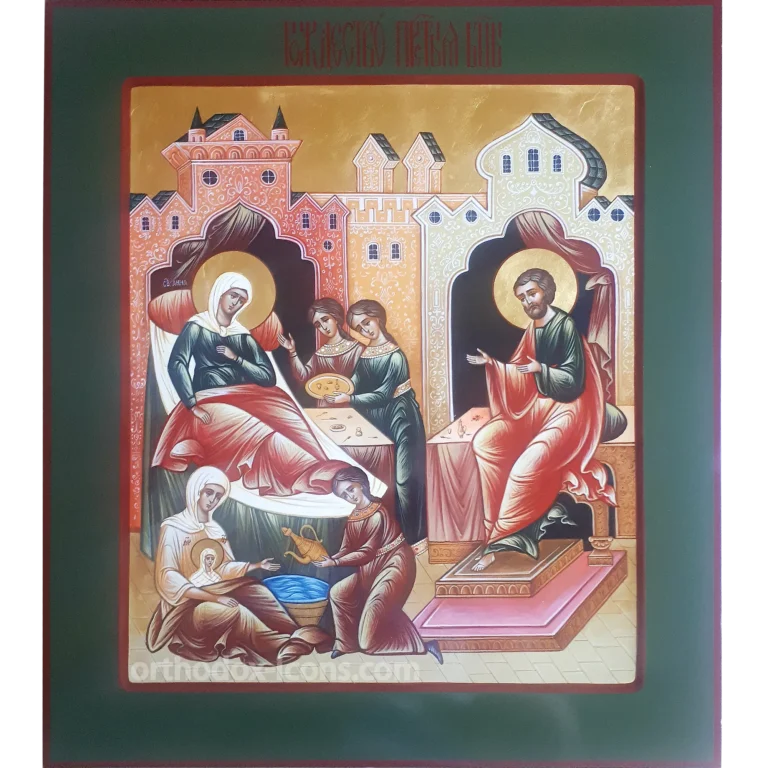
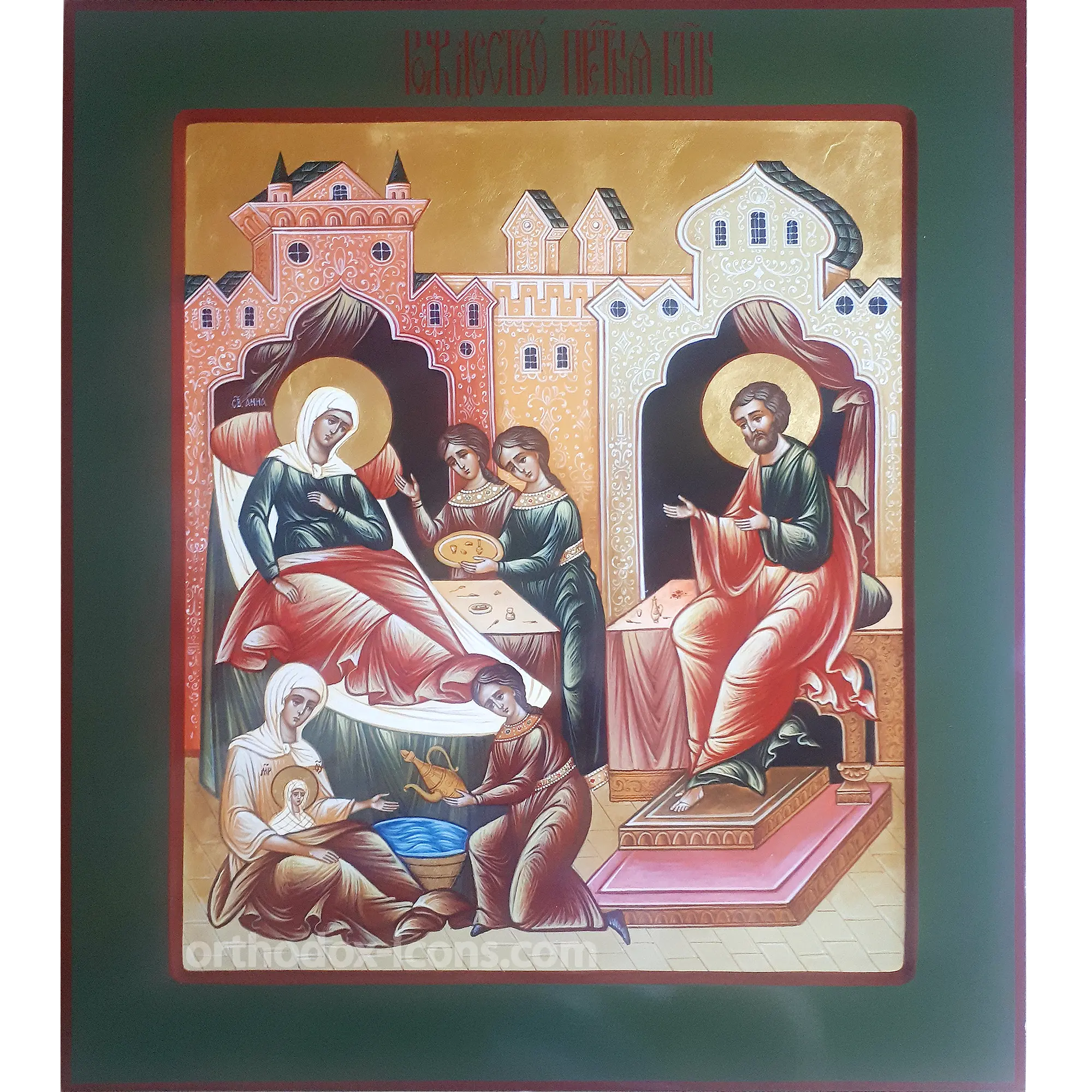
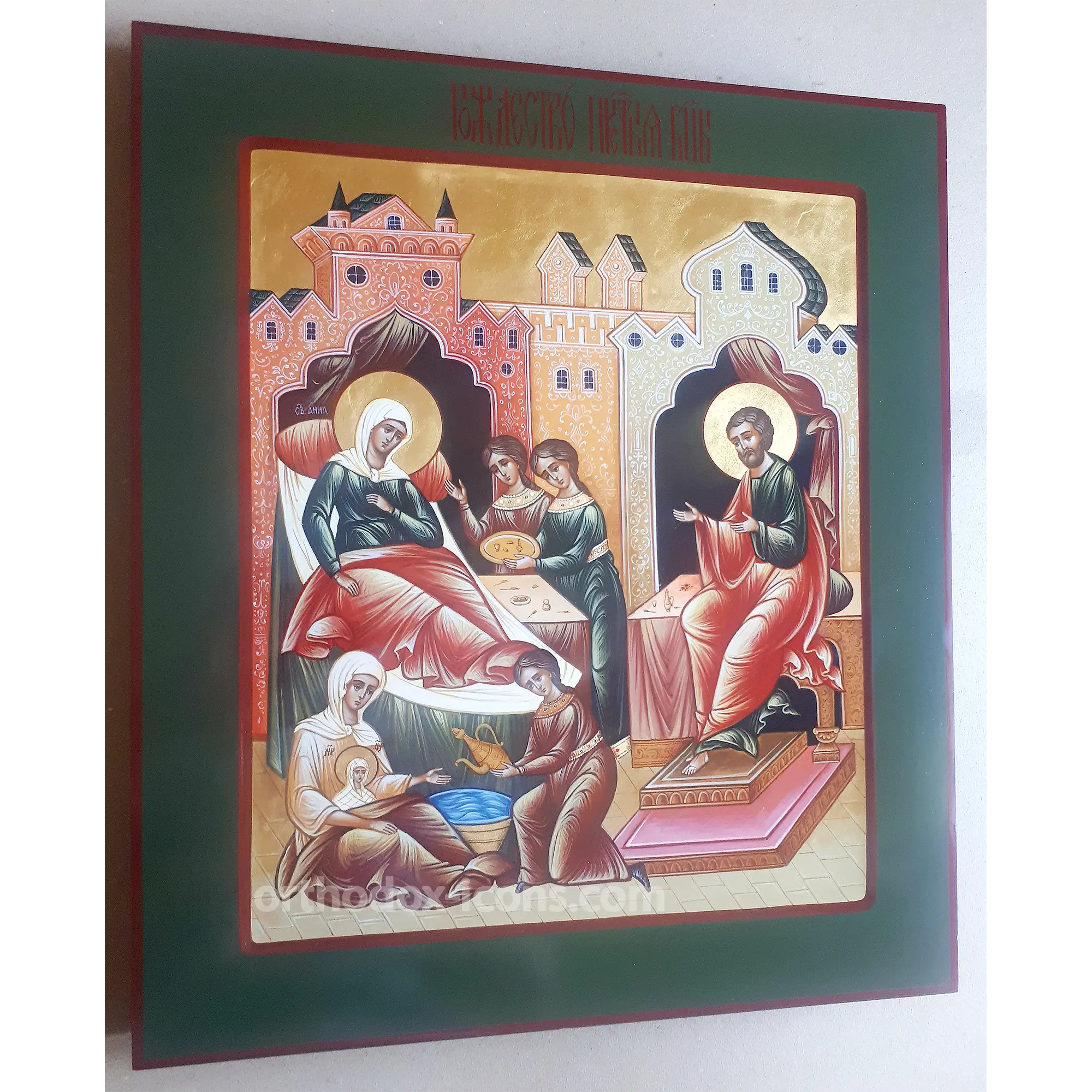
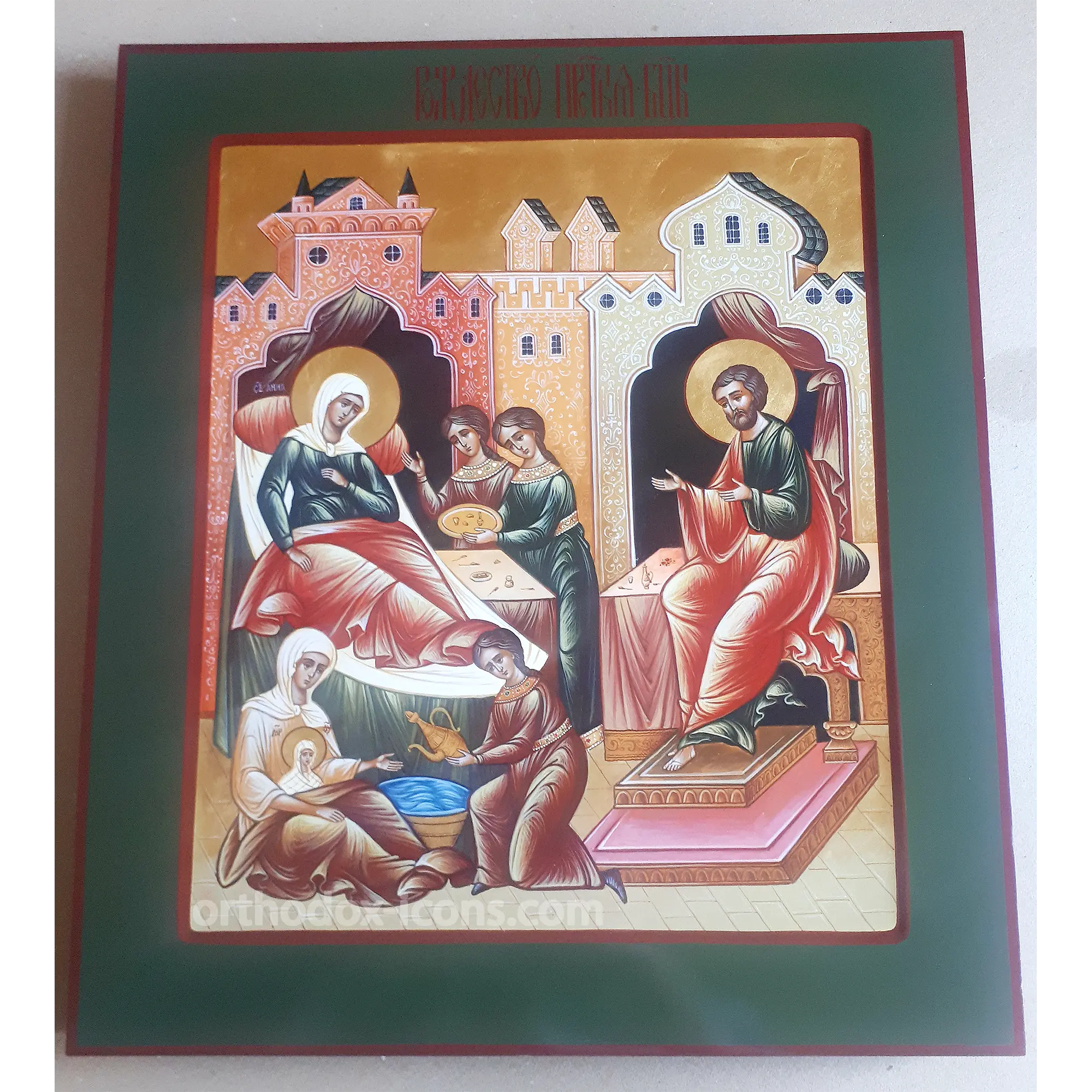
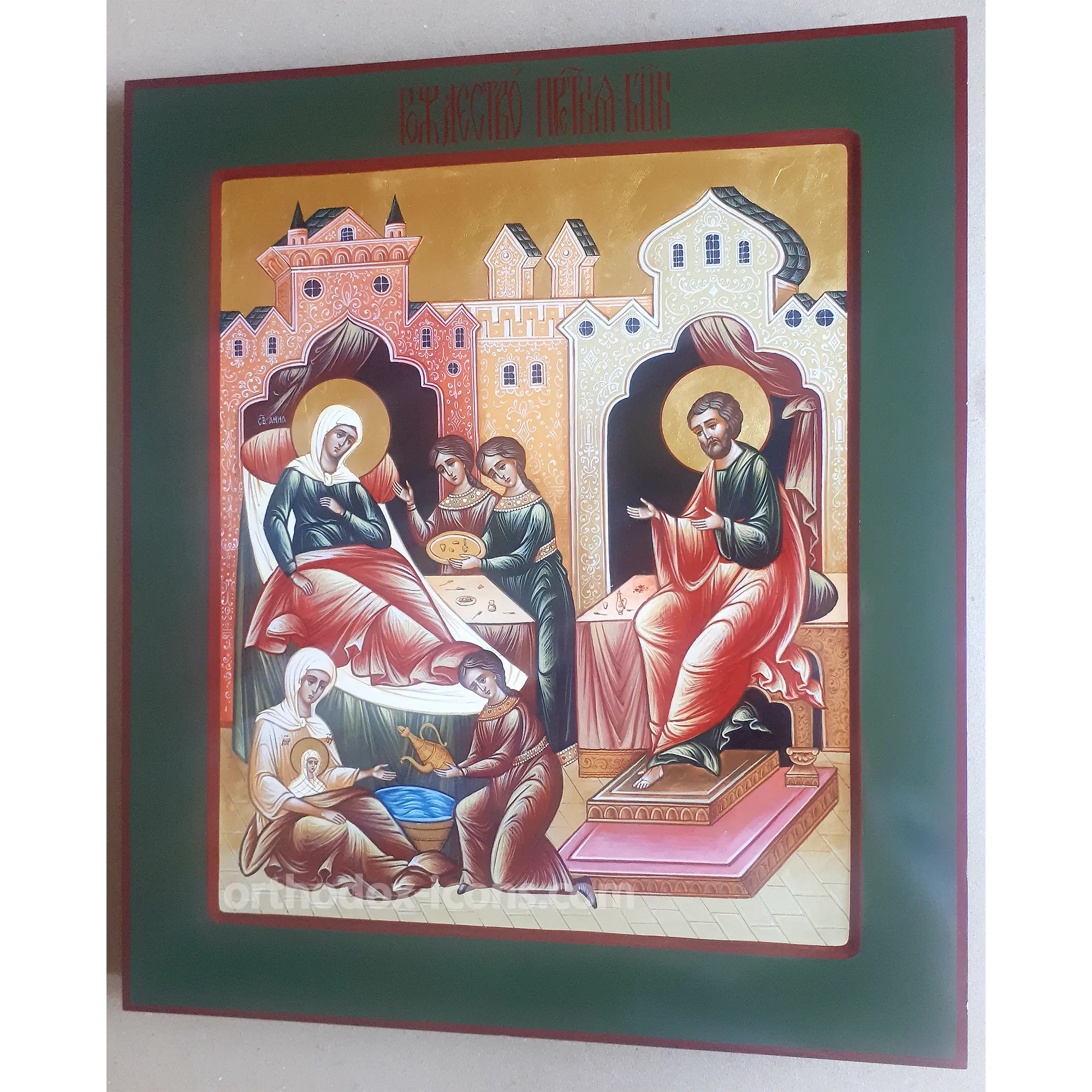
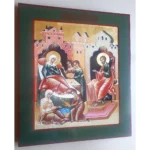
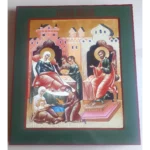
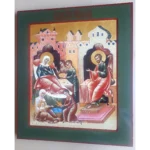
The Nativity of the Blessed Virgin Orthodox Icon depicts the birth of the Theotokos, the feast that opens the Orthodox liturgical year. This hand-painted Mstyora icon presents a warm and family-centered version of the scene: righteous Joachim and Anna sit facing one another in joyful conversation inside richly painted chambers, while the lower left scene shows the first washing of the newborn Mary. Servant maidens bring gifts, a red velum marks the indoor setting, and gold details enrich the architecture, halos, and garments. Painted with mineral egg tempera on a linden board with 23K gold leaf. Free international shipping is included; payment is due upon delivery.
It is possible to paint an image in any size to order
Free shipping worldwide
The Nativity of the Blessed Virgin Orthodox Icon depicts the birth of the Most Holy Theotokos and Ever-Virgin Mary, one of the Twelve Great Feasts of the Orthodox Church. Celebrated on September 21 according to the new calendar, this feast opens the yearly liturgical cycle. The birth of the Virgin Mary is the first light before the rising of Christ, the Sun of Righteousness.
This icon is not only a historical scene. It is an image of patience, answered prayer, family faithfulness, and the beginning of the New Testament hope. The birth of Mary shows that nothing is impossible with God, and that long suffering, humility, and prayer can become the doorway to divine joy.
The hand-painted icon offered here is made in the Mstyora tradition. Unlike stricter static versions, this composition is filled with warmth and domestic tenderness. Joachim and Anna are shown together in quiet, joyful conversation, while the lower scene shows the first washing of the newborn Mary. The architecture, red velum, gold details, and mineral egg tempera give the icon a festive and reverent character.
Nativity of the Blessed Virgin Orthodox Icon – The Feast of Hope
The details of the birth of the Mother of God are preserved not in the canonical Gospels, but in ancient Church tradition, especially in the Protoevangelium of James from the second century. According to this tradition, righteous Joachim and Anna lived in Nazareth. Joachim was of the royal line of David, and Anna came from the priestly line of Aaron.
Their life was marked by faith and mercy. They gave generously to the Temple and to the poor. Yet they carried a heavy sorrow: they reached old age without children. In Old Testament Israel, childlessness was often seen as a public disgrace, and they endured mockery and humiliation.
Their sorrow became especially painful when, during a great feast, the high priest refused to accept Joachim’s offering in the Temple, saying that he had not given offspring to Israel. Joachim, wounded and grieving, went into the wilderness and fasted and prayed for forty days. At the same time Anna prayed in her garden, promising to dedicate her child to God if the Lord would grant her one.
Their prayer was heard. Archangel Gabriel appeared to both of them with the joyful news that they would have a daughter who would become a blessing for the whole world. Soon after their meeting at the Golden Gate of Jerusalem, the Virgin Mary was born in their home.
Joachim and Anna in Joyful Conversation
The iconography of this particular image is especially warm and family-centered. The composition is divided into meaningful parts and united by rich architectural chambers. The main focus is not only the birth itself, but also the spiritual unity of righteous Joachim and Anna.
On the left, Saint Anna sits on a high bed draped with a red covering. She wears a dark green chiton and a white veil. On the right, righteous Joachim sits on a carved golden throne with a footstool, wearing a red himation and green chiton. They turn toward one another. Joachim extends his hands, while Anna listens attentively. Their gestures express the quiet joy of two people who have carried a long sorrow together and now understand the greatness of the miracle given to them.
Behind Anna’s bed stand servant maidens bringing gifts and food on a golden dish. Their presence gives the image a sense of household celebration and the joyful bustle surrounding a long-awaited birth.
The First Washing of the Newborn Mary
In the lower left corner, the icon shows the first washing of the newborn Virgin Mary. One midwife sits on the floor and gently holds the infant on her knees. Another pours water from a golden pitcher into the round basin. The newborn Mary is shown with a halo and monogram, already marked by her unique vocation.
This domestic detail has profound theological meaning. It shows that the Mother of God was born in a real human way and was cared for like every infant. The image therefore confirms the true humanity of the Theotokos, through whom Christ would later take on true human nature.
Architecture, Velum, and Gold Details
The scene takes place against richly painted chambers with towers, battlements, arches, and a red velum stretched between them. In Orthodox iconography, the velum indicates that the event is taking place indoors, in the house of Joachim and Anna, even though the architecture is shown outwardly.
The dark green background with red edging creates a deep contrast that makes the gold details shine. Gold is used for halos, the folds and highlights of garments, the carved furniture, and the ornamental architecture. These details give the icon a solemn and festive character while preserving the warmth of the family scene.
Prayer Before the Nativity of the Theotokos Icon
Because the feast is connected with the miraculous end of the long childlessness of Joachim and Anna, this icon is especially dear to couples praying for children. People who have struggled with infertility may pray before it for patience, hope, healing, and the gift of parenthood according to God’s will.
Expectant mothers pray before the Nativity of the Theotokos icon for a healthy pregnancy, protection of the child, and safe childbirth. Families also pray for peace between spouses, reconciliation, and the preservation of love through difficult years.
The image of Joachim and Anna is a model of faithful marriage, shared sorrow, and mutual support. Parents pray before this icon for wisdom in raising children, asking that their sons and daughters grow in health, kindness, obedience, and Orthodox faith.
The icon also brings consolation to those who suffer despondency, loneliness, public reproach, or long waiting. It reminds the faithful that God can bring joy even after many years of silence and sorrow.
Materials and Mstyora Technique
The icon is painted according to the Mstyora school of icon painting. The base is a seasoned linden board strengthened with inserted oak braces on the back. These braces help protect the board from warping as humidity and temperature change. Linen is applied to the front, and natural chalk gesso is built up in layers to create a stable ground.
The painting is made with mineral egg tempera. The icon painter prepares natural mineral pigments, such as tones associated with lapis, cinnabar, ocher, and malachite, and mixes them with egg emulsion. This traditional technique gives the colors depth and durability.
The halos and decorative architectural elements are enriched with 23K gold leaf and gold assist. These details express divine light and give the scene the bright solemnity proper to a feast icon.
Available Sizes
The available sizes are 20×24 cm (7.9×9.4 in), 27×31 cm (10.6×12.2 in), and 30×40 cm (11.8×15.7 in). The 20×24 cm size is compact and suitable for a bedroom, nursery, or travel prayer corner. The 27×31 cm size is the classic home icon format, allowing the faces, garments, and architectural details to be seen clearly.
The 30×40 cm size gives the composition a more solemn presence and is well suited for a central place in the home icon corner or as a gift for a wedding anniversary. Larger church and iconostasis formats can be discussed individually.
Free international shipping is included; payment is due upon delivery.
Icon Characteristics
| Feature | Description |
|---|---|
| Feast | Nativity of the Most Holy Theotokos, one of the Twelve Great Feasts |
| Main figures | Righteous Joachim and Anna, servant maidens, midwives, and the newborn Virgin Mary |
| Composition | Joachim and Anna in joyful conversation, lower scene of the first washing, architectural chambers with velum |
| Board | Linden wood with linen, natural gesso, and inserted oak braces |
| Painting | Mineral egg tempera in the Mstyora tradition |
| Gold | 23K gold leaf on halos, garment highlights, and architectural details |
| Available sizes | 20×24 cm, 27×31 cm, 30×40 cm, with church formats by agreement |
| Prayer use | Prayer for children, fertility, pregnancy, safe childbirth, family peace, and consolation |
The Nativity of the Blessed Virgin Orthodox Icon is a tender and joyful image of answered prayer. It is especially meaningful for families, expectant mothers, couples longing for children, and all who need hope after a long season of waiting.
Questions and Answers
When is the Nativity of the Blessed Virgin celebrated?
The Orthodox Church celebrates the Nativity of the Most Holy Theotokos on September 21 according to the new calendar, September 8 according to the old calendar.
Who are Joachim and Anna?
Righteous Joachim and Anna are the parents of the Virgin Mary. They endured childlessness into old age before God answered their prayer.
What is distinctive about this icon composition?
This version emphasizes the joyful meeting and quiet conversation of Joachim and Anna, together with the lower scene of the first washing of the newborn Mary.
What happens in the lower left part of the icon?
The lower scene shows midwives washing the newborn Virgin Mary, emphasizing the true human birth and care of the Mother of God.
What does the red velum mean?
The red velum stretched between the buildings indicates that the event is taking place indoors, in the house of Joachim and Anna.
What are people accustomed to pray for before this icon?
People pray before this icon for the gift of children, healing from infertility, safe pregnancy, easy childbirth, family peace, and the upbringing of children in faith.
What materials are used?
The icon is painted on a linden board with linen, natural gesso, mineral egg tempera, 23K gold leaf, and gold assist on the garments and architecture.
What sizes are available?
The available sizes are 20×24 cm (7.9×9.4 in), 27×31 cm (10.6×12.2 in), and 30×40 cm (11.8×15.7 in).
Which size is best for a home icon corner?
The 27×31 cm size is usually the most balanced home format. The 20×24 cm size is compact, while 30×40 cm gives the composition a more solemn presence.
Do you ship internationally?
Yes. Free international shipping is included, and payment is due upon delivery.
| Dimensions | 20x24cm (7.9×9.4 in), 27x31cm (10.6×12.2 in), 30x40cm (11.8×15.7 in) |
|---|---|
| Name | Mary |