Nursing the Child Orthodox Icon
$6000
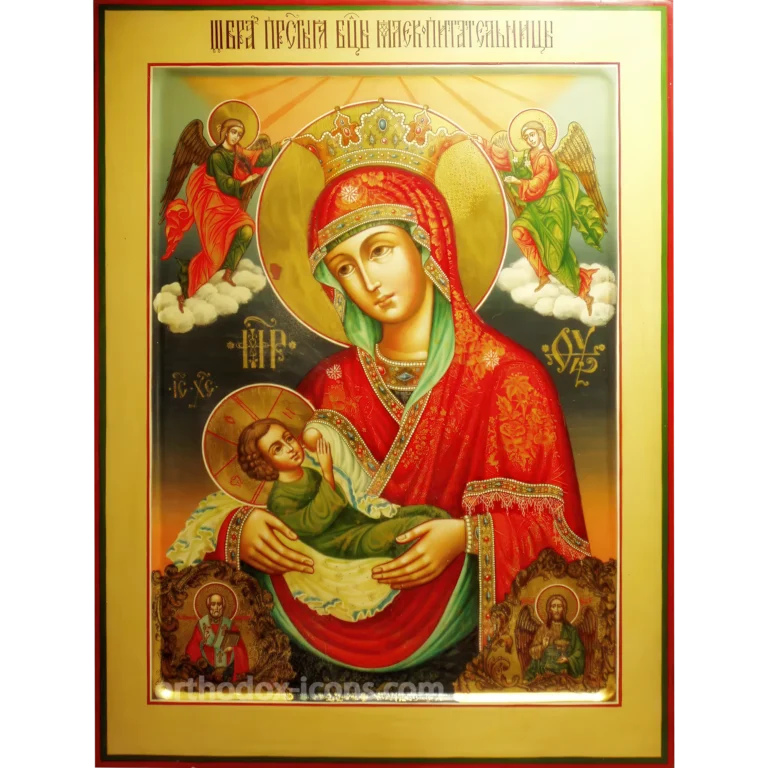
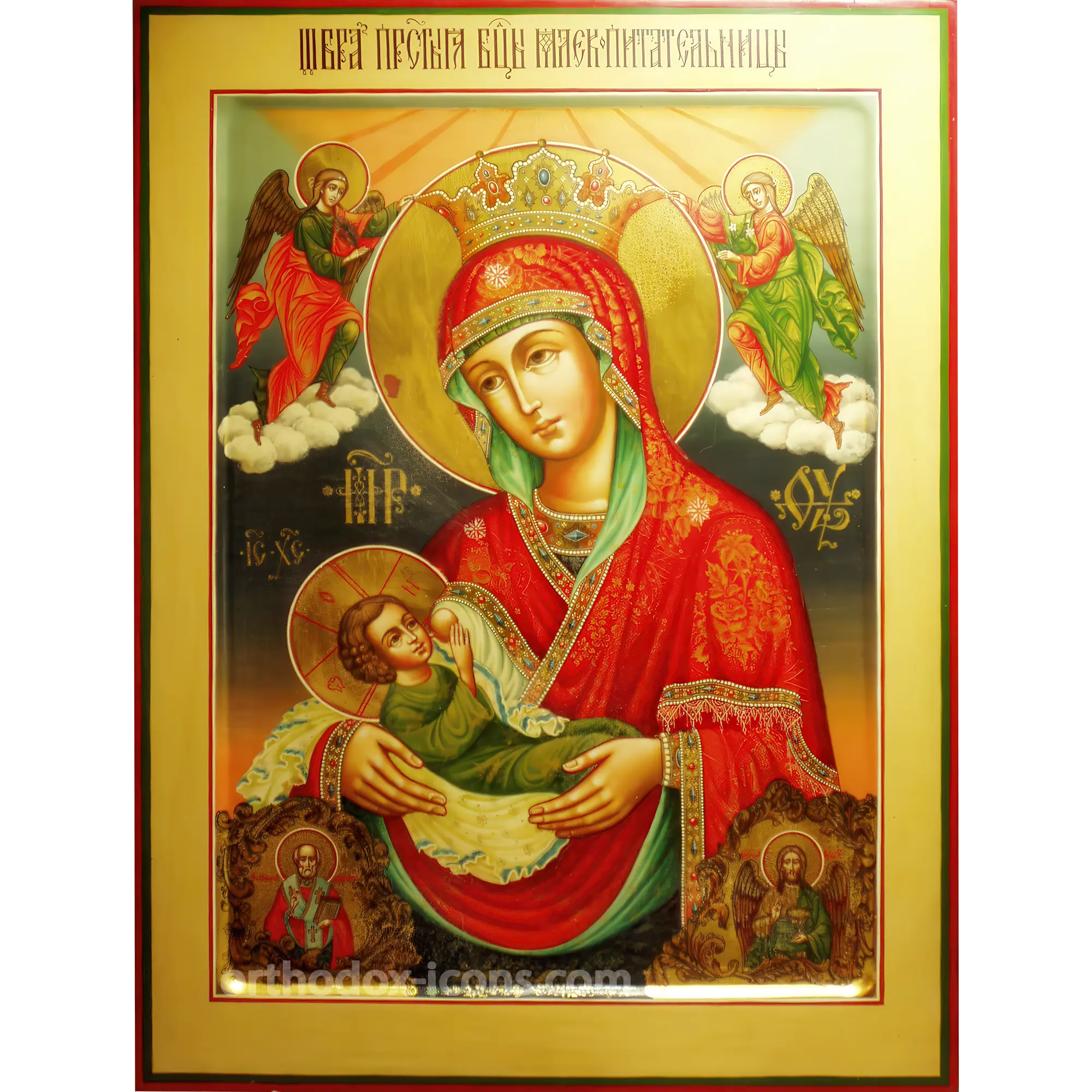
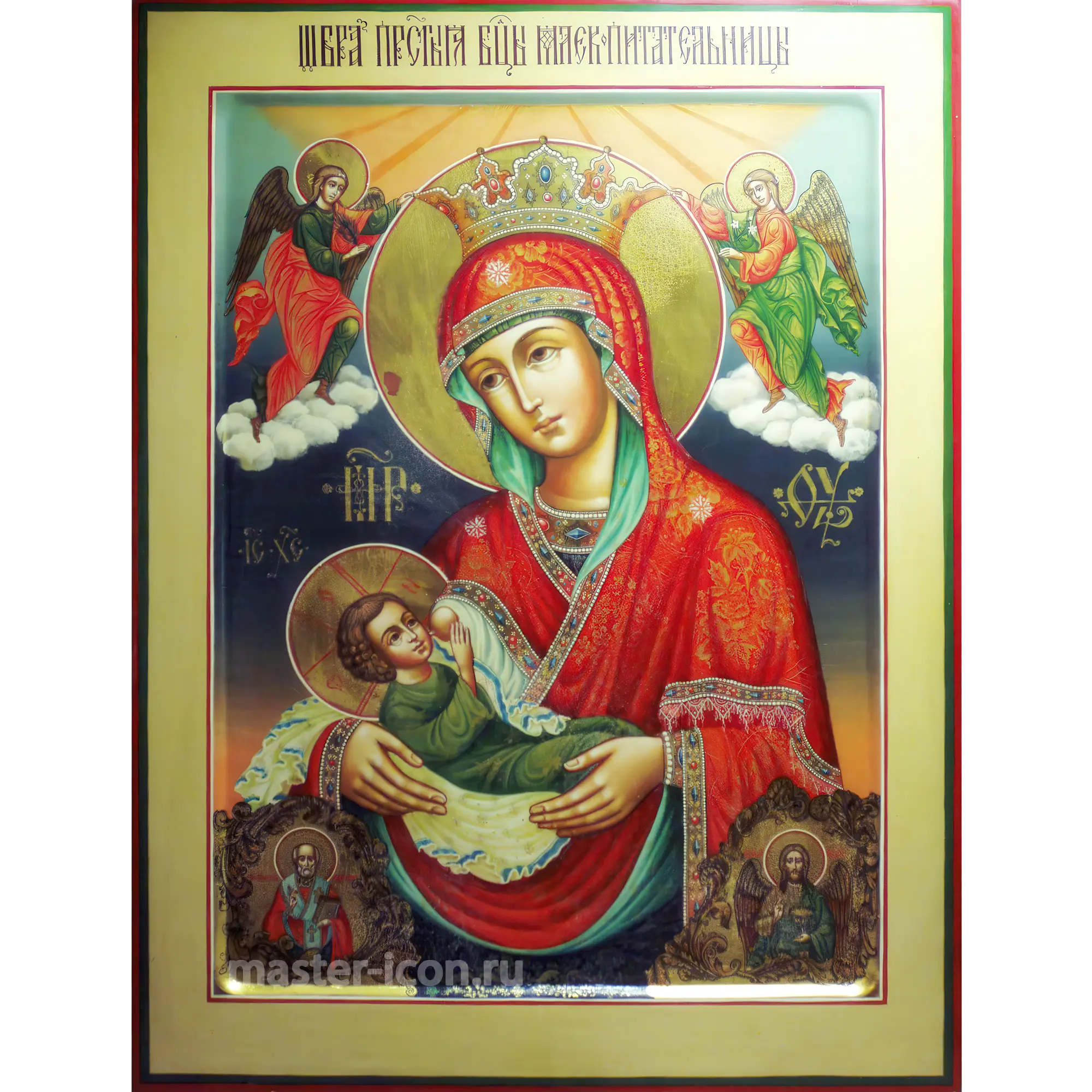
Nursing the Child Orthodox Icon is a rare hand-painted Galaktotrophousa icon of the Mother of God nursing Christ, with angels, crown, and lower saint cartouches.
Available size: 40×50 cm (15.7×19.7 in); large church formats by agreement. Full 23K gold leaf (960 purity) background, red maforion with fine gold brocade-like ornament, pearl-like garment detail, miniature saints, natural mineral egg tempera, and linden board with kovcheg. Free international shipping, with payment after delivery.
It is possible to paint an image in any size to order
Free shipping worldwide
Nursing the Child Orthodox Icon is a rare hand-painted Orthodox icon of the Mother of God nursing Christ. In Greek tradition this image is known as Galaktotrophousa, the Milk-Giver. It is one of the most intimate and deeply human images of the Theotokos, showing not only heavenly glory but also the real tenderness of motherhood.
The icon reveals Christ as a true Child who receives food, warmth, and care from His Mother. At the same time, it remains a theological image: the One who feeds all creation becomes man and is nourished by the Virgin Mary for the salvation of the world.
This version is a large and elaborate multi-figure composition. It includes two angels holding a crown above the Mother of God, lower painted cartouches with saints, rich gold ornament on the red maforion, and a full 23K gold leaf (960 purity) background. The listed size is 40×50 cm (15.7×19.7 in).
The Ancient Galaktotrophousa Tradition
The history of the Nursing Mother of God icon reaches back to the early Christian East. Orthodox tradition connects the image with the Lavra of Saint Sabbas the Sanctified near Jerusalem.
Before his repose in 532, Saint Sabbas foretold that many centuries later a noble pilgrim of royal blood from Serbia, bearing the same name Sabbas, would come to the monastery. He instructed the brethren to give this pilgrim the wonderworking icon of the Nursing Mother of God as a blessing.
The prophecy was fulfilled almost seven centuries later, when Saint Sabbas, Archbishop of Serbia, came to the Lavra. According to tradition, when he approached the tomb of Saint Sabbas the Sanctified, the abbot’s staff standing there fell at his feet. The monks recognized the foretold visitor and gave him the holy objects that had been entrusted for him, including the Nursing Mother of God icon.
Saint Sabbas brought the icon to Mount Athos and placed it in the Karyes cell connected with the Hilandar Monastery. From there the image became especially loved among Orthodox Christians as a tender and powerful icon for mothers, children, and families.
The Icon in Russian Devotion
A revered copy of the Athonite icon was brought to Russia in the nineteenth century. In 1860, Archimandrite Gabriel, abbot of the Russian Saint Elias Skete on Mount Athos, sent a copy of the Nursing Mother of God to the Kursk province.
After that, copies of the icon spread through other churches of the Russian Empire. The image became associated with many accounts of help for mothers and healings of infants through prayer before the Theotokos.
Because of this history, the icon is especially meaningful for women expecting a child, young mothers, couples praying for the gift of children, and families seeking the protection of the Mother of God for infants.
The Mystery of the Incarnation
The Nursing the Child icon is unusual because it shows a deeply physical, earthly moment: the Virgin Mary feeding Christ with her own milk. This direct image of motherhood can seem startling, but its theological meaning is profound.
The icon affirms that Jesus Christ did not merely appear to be human. He truly became man. He was born as a real child, needed food and care, and received maternal nourishment from the Theotokos.
For Orthodox faith, this is not a sentimental detail. It is a visible confession of the Incarnation: the Son of God took flesh fully and truly, entering human life from its first helpless moments.
At the same time, the image reveals the love and humility of the Mother of God. She gives her body, care, and tenderness to the Child who is also her Lord and Creator.
The Crown and Angels
In this version, the Mother of God is crowned. Two angels fly above her and hold a richly decorated crown over her head. This detail reminds the viewer that the intimate nursing scene does not diminish her heavenly dignity.
The Theotokos is shown as a mother, but also as Queen of Heaven, Lady of angels, and intercessor for the faithful. The crown creates a deliberate contrast: the humility of nursing and the glory of heavenly queenship belong together in one image.
The red maforion of the Mother of God also carries royal meaning. Its rich color speaks of dignity, sacrifice, and maternal love, while the fine gold ornament makes the garment appear like precious brocade.
Lower Cartouches With Saints
The lower corners of the icon contain two shaped cartouches, or small painted medallion-like panels. In this version, they show Saint Nicholas the Wonderworker and Saint John the Forerunner, shown as the Angel of the Desert.
Such cartouches are part of the icon’s multi-figure composition. They deepen the prayerful character of the image and connect the central Mother of God icon with the wider communion of saints.
In commissioned icons, such lower panels may also include patron saints of the family. This makes the icon personal while preserving the central theological subject of the Nursing Mother of God.
Prayer Before the Nursing Mother of God
This icon is especially close to mothers and infants. Orthodox Christians pray before the Nursing Mother of God for the gift of children, healing from infertility, a peaceful pregnancy, and safe childbirth.
Young mothers also pray before this image when they are worried about nursing, lack of breast milk, illness of the breasts, or anxiety connected with feeding and caring for a newborn child.
The icon is also approached in prayer for the health of babies, peaceful sleep, protection from illness, and the harmonious physical and spiritual development of children.
Because the image is so tender, it can also bring consolation to parents in fear, exhaustion, or sorrow. It reminds the faithful that the Mother of God knows the vulnerability of motherhood from within.
Gold Background and Brocade-Like Garments
This icon is richly painted and highly detailed. The entire background is covered with 23K gold leaf (960 purity), including the upper space with rays of light. The gold fills the scene with warm radiance and gives the composition a solemn, heavenly atmosphere.
The red maforion of the Theotokos is covered with a very fine gold ornament. The pattern is painted with such delicacy that the garment appears like brocade woven with gold thread.
The edges of the garment are decorated with gold fringe and pearl-like ornamental painting. These details are not merely decorative; they emphasize the royal dignity of the Mother of God while preserving the tenderness of the nursing scene.
Miniature Painting and Fine Detail
The lower cartouches are painted in miniature technique. Their shapes are modeled so carefully that they appear almost carved from aged bronze or darkened gold.
The saints inside the cartouches require extremely precise work, because each figure must remain readable within a small painted field. This is one reason the icon is made in a large 40×50 cm (15.7×19.7 in) format: the composition needs space for the main figures, angels, crown, gold ornament, and miniature saints.
The faces, garments, angels, cartouches, and gold ornament together make this icon not a simple domestic image but a complex hand-painted work intended for a central place in a family icon corner or prayer room.
Materials and Traditional Technique
The icon is painted in natural mineral egg tempera. The pigments are prepared from ground minerals and mixed with egg medium, giving the image depth, stability, and long-lasting color.
The base is a solid linden board with a traditional kovcheg. Linen is applied to the surface, followed by chalk gesso. Oak splines are inserted into the back to help protect the board from bending over time.
The gold leaf, tempera painting, and miniature detail require careful preservation. This icon is intended as a family shrine and may be passed down if handled properly.
Icon Characteristics
| Name | Nursing the Child Orthodox Icon |
| Traditional name | Nursing Mother of God, Galaktotrophousa |
| Iconographic type | The Mother of God nursing the Christ Child |
| Composition | Multi-figure composition with angels, crown, and lower cartouches |
| Available size | 40×50 cm (15.7×19.7 in); large church and iconostasis formats by agreement |
| Background | Full 23K gold leaf (960 purity) |
| Garment detail | Fine gold ornament imitating brocade, with pearl-like decorative painting |
| Lower cartouches | Miniature images of saints, including Saint Nicholas and Saint John the Forerunner in this version |
| Painting | Natural mineral egg tempera |
| Board | Linden board with kovcheg, linen, chalk gesso, and oak splines |
| Purpose | Gift for a mother, birth of a child, baptism, prayer for children, or central family shrine |
Care and Preservation
Do not wash the icon with water, wipe it with damp cloths, or use cleaning products. Gold leaf and tempera painting should be protected from moisture, heat, direct sunlight, and mechanical pressure.
Dust may be removed only with a very soft dry brush. Because this is a large, detailed icon with gold and miniature painting, a glazed kiot is recommended for long-term protection.
Ordering, Shipping, and Payment
The listed size is 40×50 cm (15.7×19.7 in). Large church and iconostasis formats may be discussed individually. Free international shipping is included, with payment after delivery.
Questions and Answers
What is the Nursing the Child Orthodox Icon?
It is a rare Orthodox icon of the Mother of God nursing Christ, also known in Greek tradition as Galaktotrophousa.
Why is this icon considered rare?
The image shows the very intimate and human act of nursing, so it has always been less common than stricter frontal icons of the Mother of God.
What is the theological meaning of the nursing scene?
It confirms the true humanity of Christ: the Son of God truly became man and, like every infant, received nourishment from His Mother.
What do Orthodox Christians pray for before this icon?
They pray for the gift of children, a peaceful pregnancy, safe childbirth, enough breast milk, the health of infants, and consolation for mothers.
What is shown in the upper part of the icon?
Two flying angels hold a richly decorated crown above the head of the Mother of God, honoring her as Queen of Heaven.
Who may be shown in the lower cartouches?
The lower cartouches may show saints connected with the history of the icon or the patron saints of the family for whom the icon is painted.
What size is listed for this icon?
The listed size is 40×50 cm (15.7×19.7 in). Large church and iconostasis sizes may be discussed individually.
What materials are used?
The icon is painted with natural mineral egg tempera on a linden board with kovcheg, linen, chalk gesso, oak splines, and 23K gold leaf (960 purity).
How should this icon be cared for?
Do not wash, polish, or wipe the gold and tempera surface with damp cloths. Dust may be removed only with a very soft dry brush.
How are shipping and payment arranged?
Free international shipping is included, with payment after delivery.
| Name | Mary |
|---|---|
| Dimensions | 40×50 cm (15.7×19.7 in) |