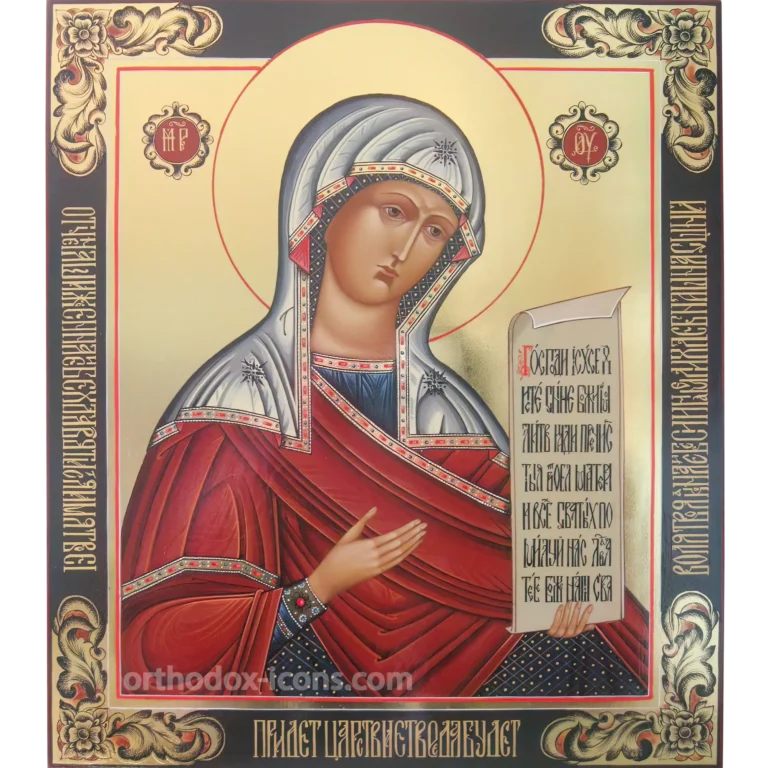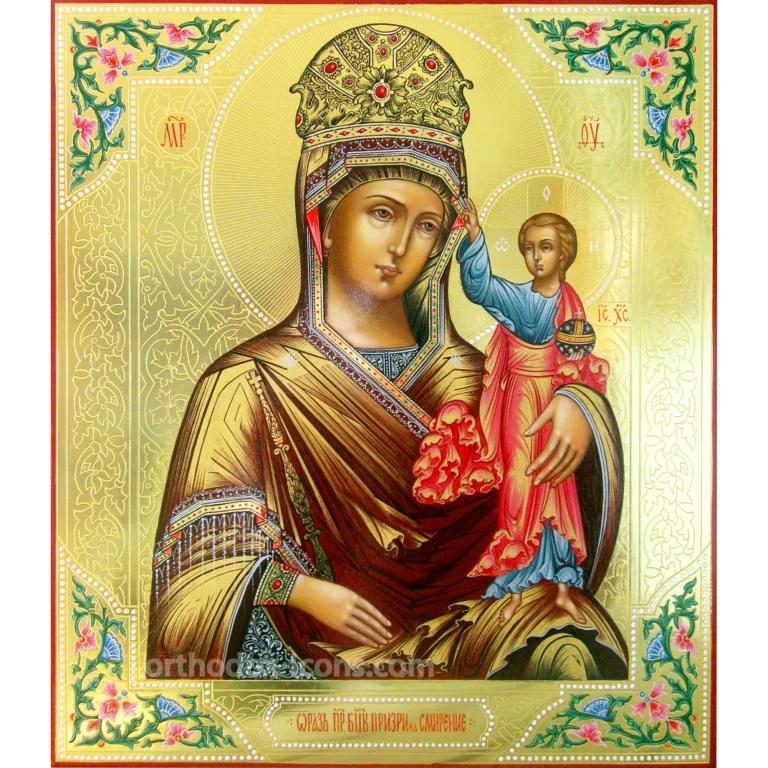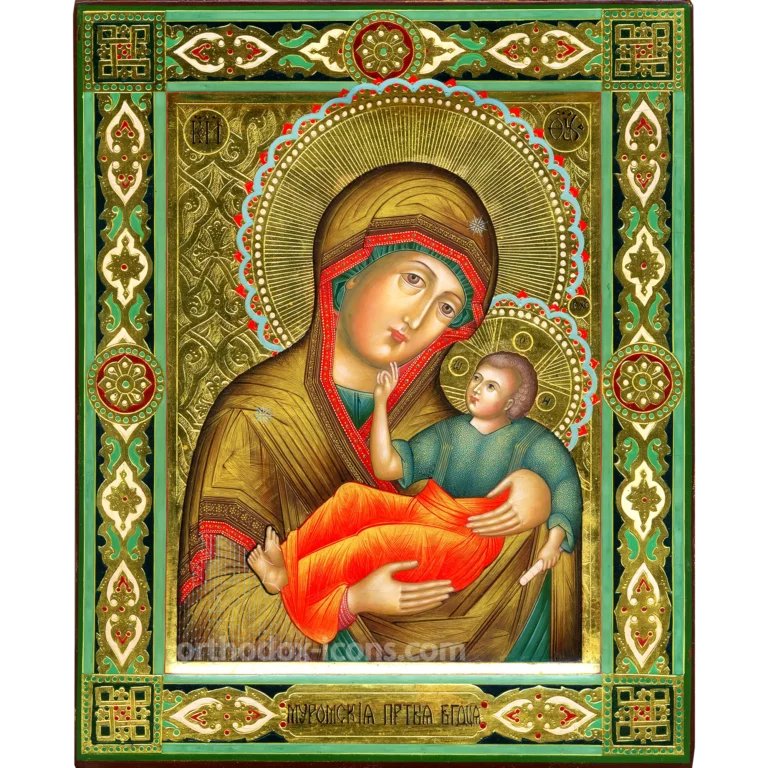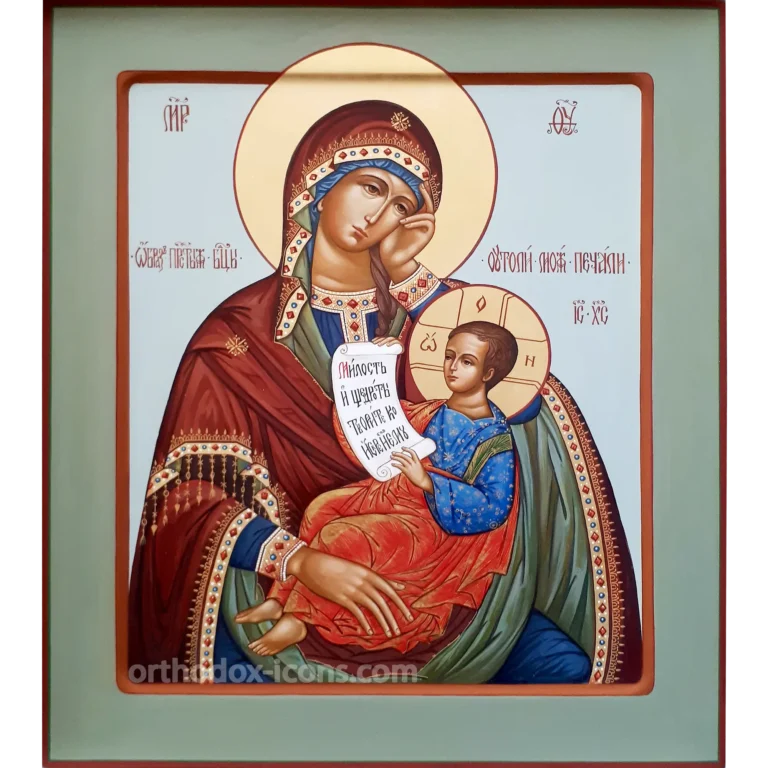
Orthodox Icon of Unbreakable Wall
Price range: $700 through $2250
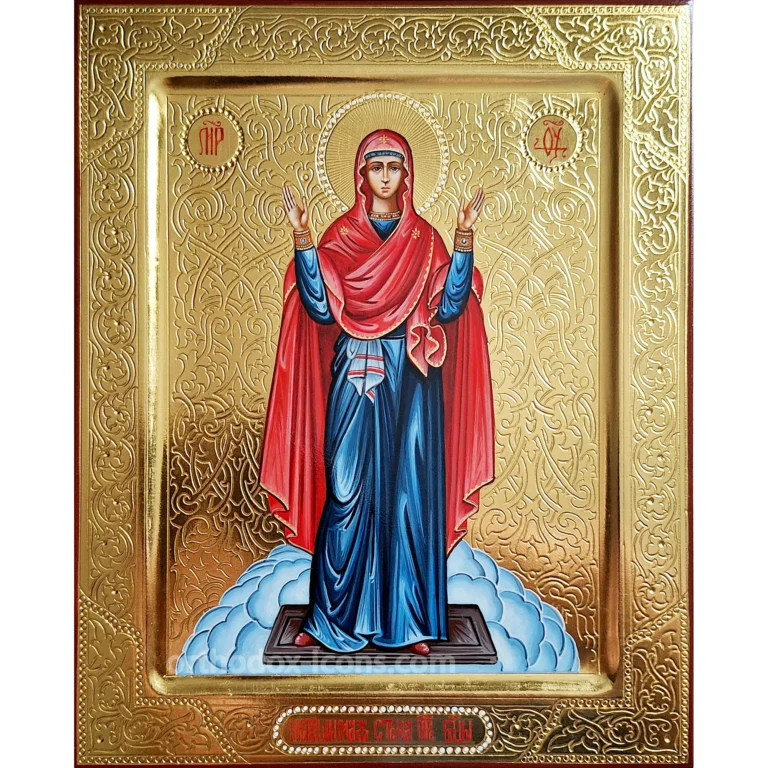
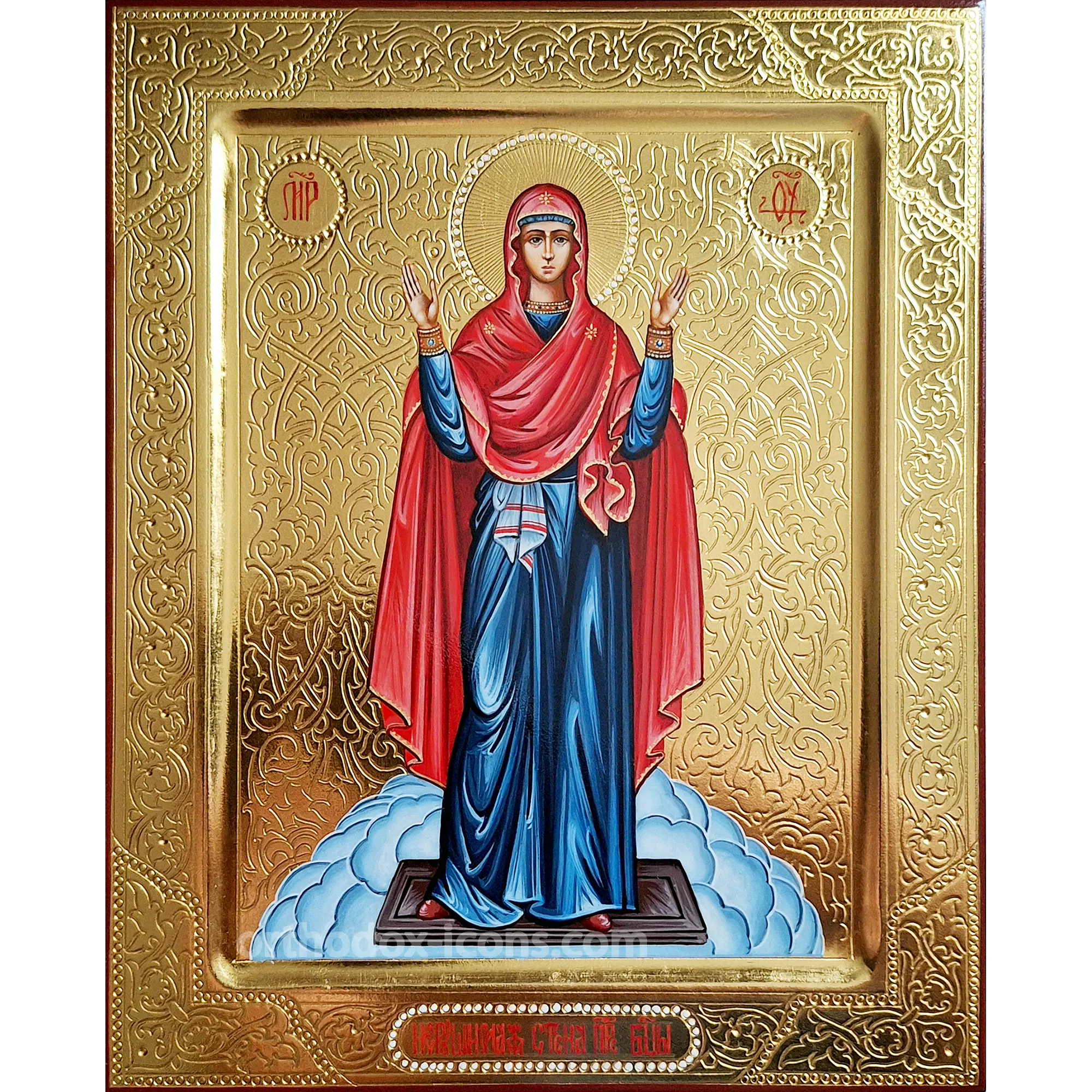
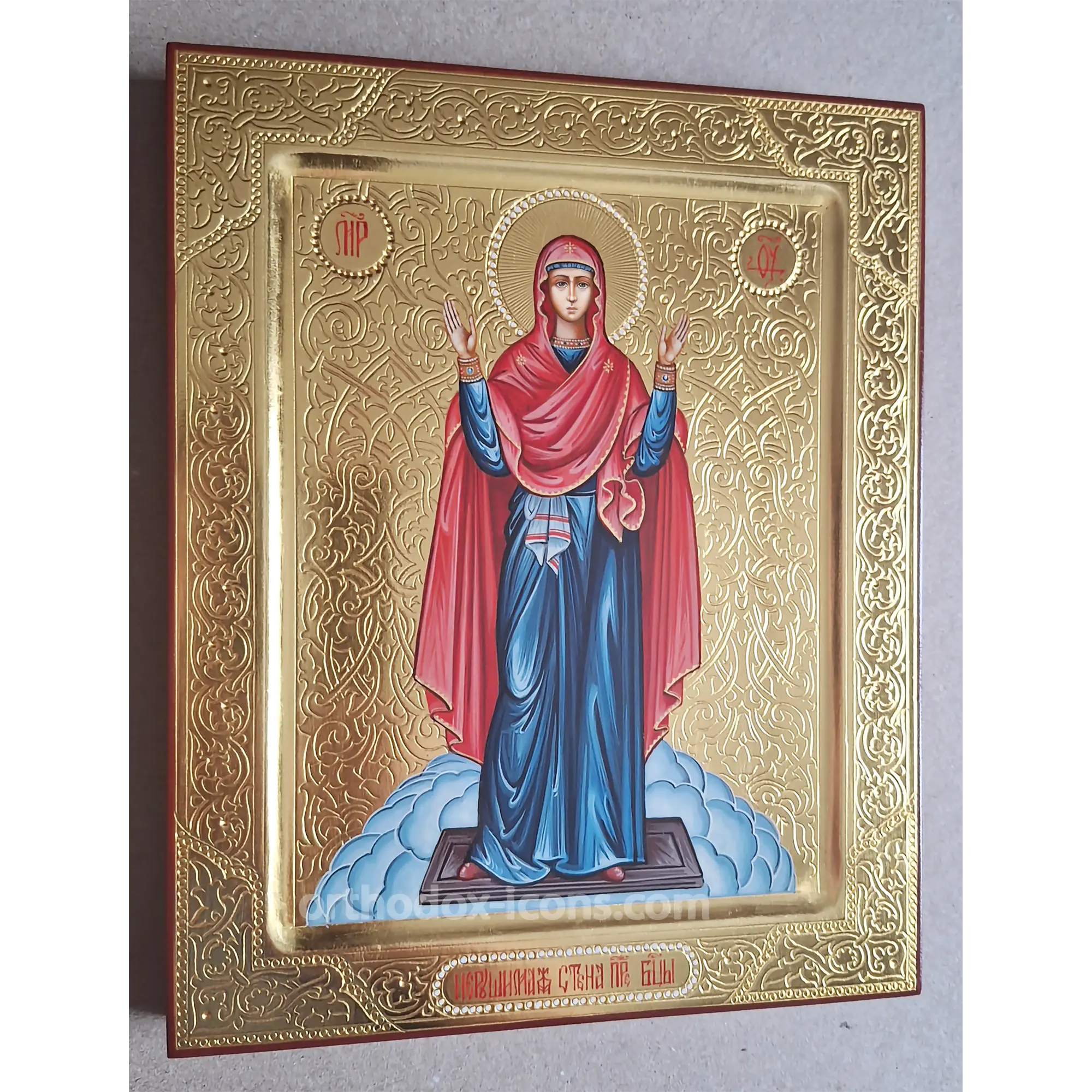
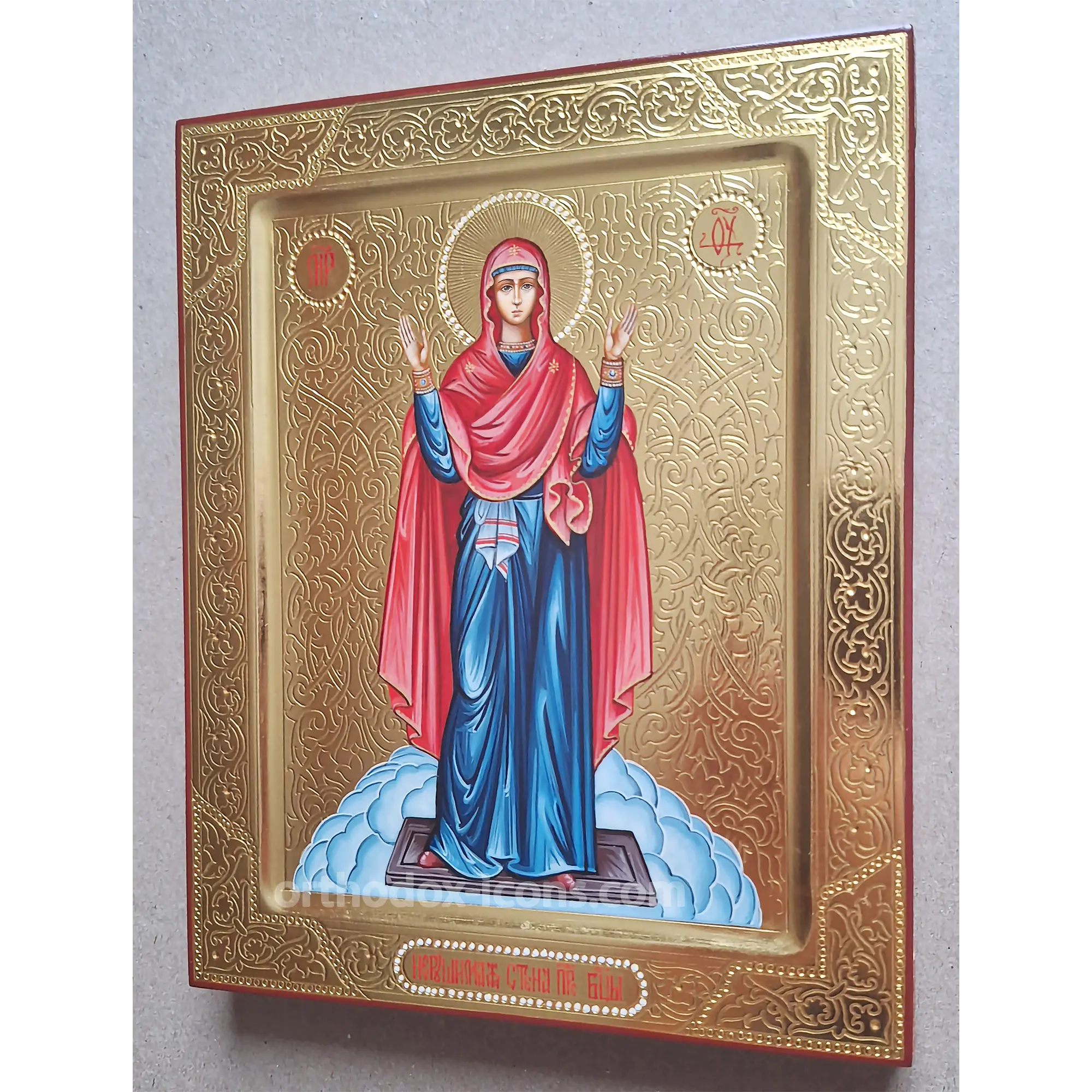
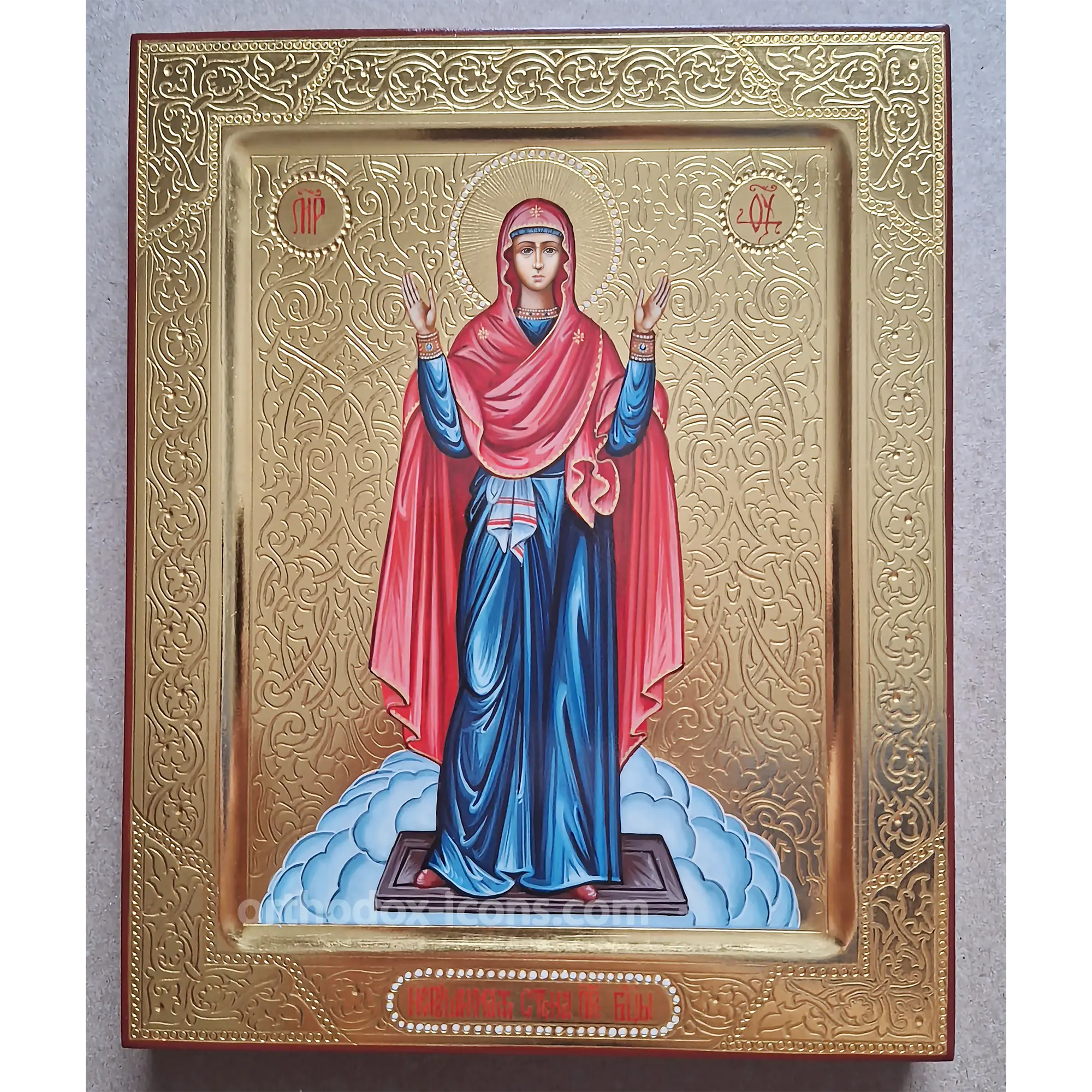
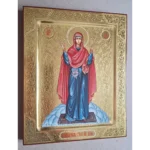
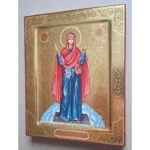
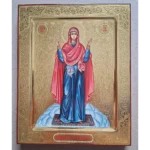
Orthodox Icon of Unbreakable Wall is a richly decorated hand-painted Oranta icon of the Mother of God, traditionally placed near the entrance as a prayerful protector of the home.
Available sizes: 17×21 cm (6.7×8.3 in), 20×24 cm (7.9×9.4 in), 27×31 cm (10.6×12.2 in), and 30×40 cm (11.8×15.7 in). Its main feature is continuous hand chasing over 23K gold leaf (960 purity) across both the kovcheg and margins, with natural mineral egg tempera on a linden board. Free international shipping, with payment after delivery.
It is possible to paint an image in any size to order
Free shipping worldwide
Orthodox Icon of Unbreakable Wall is a solemn hand-painted icon of the Mother of God in the Oranta type. The image expresses spiritual protection, ceaseless prayer, and maternal intercession. The Theotokos stands with hands raised, as if covering the whole world in prayer.
This version is especially ornate. Its defining feature is a continuous hand-chased gold surface: both the kovcheg and the wide margins are covered with a dense relief vegetal ornament worked by hand over 23K gold leaf (960 purity). The result recalls a precious chased metal cover while remaining a fully hand-painted icon.
Available sizes: 17×21 cm (6.7×8.3 in), 20×24 cm (7.9×9.4 in), 27×31 cm (10.6×12.2 in), and 30×40 cm (11.8×15.7 in). Larger church and iconostasis formats may be discussed individually.
A Spiritual Image of Protection
The Unbreakable Wall is one of the most powerful protective images of the Mother of God in Orthodox devotion. Its name itself suggests a spiritual fortress: a wall that cannot be broken by grief, danger, hostility, or fear.
For centuries, believers have sought shelter with the Queen of Heaven during wars, epidemics, personal tragedy, family conflict, and threats to the home. The icon answers this need visually: the Mother of God stands upright, calm, and immovable, with hands raised in prayer.
Her gaze is directed toward the person praying before the icon. Her open hands express intercession rather than defense by force. The protection of this icon is prayerful, maternal, and spiritual.
The Kyiv Mosaic and the Origin of the Name
The historical prototype of the Unbreakable Wall is the famous mosaic of the Mother of God in Saint Sophia Cathedral in Kyiv. This great cathedral was built in the eleventh century under Prince Yaroslav the Wise.
In the main altar apse, millions of pieces of colored smalt form a monumental image of the praying Mother of God. The figure is more than five meters high and dominates the sanctuary with quiet majesty.
Over the centuries, Kyiv endured repeated devastation. The city was attacked, burned, and plundered; churches were damaged, roofs collapsed, and walls were destroyed. Yet the altar wall of Saint Sophia with the shining mosaic of the Mother of God remained standing.
Seeing this preservation through disasters, the faithful began to call the image the Unbreakable Wall. Painted icons on wooden boards were later made after the Kyiv image and became beloved throughout Orthodox lands.
The Akathist Meaning of the Unbreakable Wall
The name also has a liturgical foundation. In the Akathist to the Most Holy Theotokos, she is praised as the unbreakable wall of the Kingdom.
This phrase gives the icon its spiritual depth. The Mother of God is not a wall of stone, but a living intercessor who stands before God for the faithful.
When Orthodox Christians pray before this icon, they ask not for a charm or mechanical protection, but for the mercy of Christ through the prayers of His Mother.
The Oranta: The Mother of God in Prayer
The Unbreakable Wall belongs to the ancient iconographic type called Oranta, meaning the One Who Prays. In this type, the Mother of God is shown without the Christ Child in her arms.
She stands full-length, with her hands raised near the level of her face and her palms open. This is an ancient gesture of intense prayer, known from biblical and early Christian tradition.
The Oranta type shows the Theotokos as the great intercessor for the human race. She stands before the throne of God, praying for those who suffer, repent, fear, or seek refuge.
The stillness of the figure is important. The icon does not show movement or anxiety. It shows unwavering prayer, a spiritual wall that does not collapse under pressure.
The Meaning of the Garments
The colors of the garments are canonical and meaningful. The lower garment, or chiton, is painted in a deep blue tone, signifying heavenly purity, virginity, and spiritual depth.
The upper mantle, or maforion, is red or scarlet. This color speaks of royal dignity, because the Theotokos is honored as Queen of Heaven. It also recalls maternal love and the suffering connected with the Cross of her Son.
The contrast between deep blue and red gives the figure solemnity and emotional strength. Against the radiant gold, these colors make the Mother of God appear both royal and compassionate.
The Lention, Footstool, and Clouds
At the waist of the Mother of God is a white embroidered cloth called a lention. In Orthodox symbolism, it expresses her mercy toward those who suffer.
The lention is understood as the cloth with which the merciful Mother wipes away the tears of grieving, sick, and repentant people. It is a small detail, but it makes the image deeply pastoral and human.
The Mother of God stands on a small golden rectangular footstool. This elevated support recalls the dignity of her heavenly state and her role as Queen of Heaven.
The footstool rests on rich blue clouds, showing that she dwells in the Heavenly Kingdom while still looking mercifully toward the faithful on earth.
Protection of the Home and Family
The Unbreakable Wall is traditionally treated as a strong protective icon for the home. It is often placed not only in the family icon corner, but near the entrance.
Many Orthodox families place the icon above the front door or on the wall opposite the entrance, so that the face of the Mother of God is directed toward everyone entering the home.
This expresses a prayer that thieves, hostile people, envy, illness, and destructive intentions will not enter the household.
Families also pray before this icon when leaving for a long journey, asking the Theotokos to guard the home from fire, flooding, theft, and sudden misfortune.
The phrase Unbreakable Wall also applies to marriage and family life. Before this icon, people ask the Mother of God to strengthen spouses in faithfulness, peace, patience, and mutual understanding.
Continuous Gold Chasing Across the Icon
The artistic distinction of this version is the unusually rich hand-chased gold decoration. Unlike icons where the gold field remains smooth or the ornament is limited to the margins, this image has a continuous relief pattern.
The wide margins and the inner kovcheg are both covered with a dense vegetal ornament. The master presses and works the design by hand into the surface of the 23K gold leaf (960 purity) using fine metal tools.
This gives the icon the impression of a massive precious basma or chased metal cover. When candle or lamp light touches the surface, the relief breaks the light into many small reflections.
The effect is festive and solemn, but it is not merely decorative. The gold field symbolizes divine light, and the uninterrupted ornament reinforces the icon’s sense of sacred protection and royal dignity.
Traditional Egg Tempera Painting
The figure of the Mother of God, her face, hands, garments, and clouds are painted in natural mineral egg tempera. This technique has been used in Orthodox icon painting for centuries.
Mineral pigments are ground and mixed with egg medium, producing colors that are clear, matte, and resistant to fading. The deep folds of the garments and the restrained expression of the face depend on this careful tempera work.
The icon is painted on a linden board prepared with kovcheg, linen, chalk gesso, and inserted oak splines. These materials help the icon remain stable and suitable for long-term preservation.
Available Sizes and Gift Meaning
Available sizes are 17×21 cm (6.7×8.3 in), 20×24 cm (7.9×9.4 in), 27×31 cm (10.6×12.2 in), and 30×40 cm (11.8×15.7 in). Larger church and iconostasis formats may be discussed individually.
For a hallway or space near the front door, 20×24 cm (7.9×9.4 in) and 27×31 cm (10.6×12.2 in) are often practical. They show the face and gold chasing clearly without overwhelming the entrance area.
The icon is also a meaningful gift for a new home, a wedding, or a family seeking a beautiful protective shrine. Its rich gold work gives it a ceremonial quality suitable for a significant occasion.
Icon Characteristics
| Name | Orthodox Icon of Unbreakable Wall |
| Iconographic type | Oranta, the Mother of God praying with raised hands |
| Main feature | Continuous hand chasing over the gold leaf in both kovcheg and margins |
| Available sizes | 17×21 cm (6.7×8.3 in), 20×24 cm (7.9×9.4 in), 27×31 cm (10.6×12.2 in), 30×40 cm (11.8×15.7 in) |
| Gold | 23K gold leaf (960 purity) |
| Decoration | Dense relief vegetal ornament, hand-tooled on gold |
| Painting | Natural mineral egg tempera |
| Board | Linden board with kovcheg, linen, chalk gesso, and oak splines |
| Purpose | Home protection, new home gift, wedding gift, family shrine |
Care and Preservation
A continuously chased gold icon should be handled with special care. Do not wash the surface, wipe the gold with damp cloths, or use chemical cleaners or polishes. Moisture and pressure can damage the relief and the tempera painting.
Dust may be removed only with a very soft dry brush. For ideal preservation, especially because the ornament covers both the kovcheg and margins, a closed glazed kiot is recommended.
Ordering, Shipping, and Payment
Available sizes are 17×21 cm (6.7×8.3 in), 20×24 cm (7.9×9.4 in), 27×31 cm (10.6×12.2 in), and 30×40 cm (11.8×15.7 in). Larger church and iconostasis formats may be discussed individually. Free international shipping is included, with payment after delivery.
Questions and Answers
What is the main feature of this Unbreakable Wall icon?
Its main feature is continuous hand chasing over the gold leaf surface: the kovcheg and the wide margins are covered with relief vegetal ornament.
Where is the Unbreakable Wall icon traditionally placed?
It is traditionally placed near the entrance, above the door, or opposite the door as a prayerful sign of protection for the home.
What does the Oranta pose mean?
The raised hands with open palms express ceaseless prayer, intercession, and the Mother of God’s protection of the faithful.
What does the lention at the waist symbolize?
The white cloth, or lention, symbolizes the Mother of God’s mercy and her compassion for those who grieve, suffer, and repent.
Why is the gold background important?
The 23K gold leaf (960 purity) background symbolizes divine light and, in this version, also creates the effect of a precious chased cover.
Will the gold leaf darken over time?
True 23K gold leaf (960 purity) does not oxidize or turn green, so it preserves its warm radiance when the icon is cared for properly.
What materials are used?
The icon is painted in natural mineral egg tempera on a linden board with kovcheg, linen, chalk gesso, oak splines, and 23K gold leaf (960 purity).
What sizes are available?
Available sizes are 17×21 cm (6.7×8.3 in), 20×24 cm (7.9×9.4 in), 27×31 cm (10.6×12.2 in), and 30×40 cm (11.8×15.7 in).
How should this icon be cared for?
Do not wash, polish, or wipe the gold with damp cloths. Dust should be removed only with a very soft dry brush.
How are shipping and payment arranged?
Free international shipping is included, with payment after delivery.
| Dimensions | 17x21cm (6.7×8.3 in), 20x24cm (7.9×9.4 in), 27x31cm (10.6×12.2 in), 30x40cm (11.8×15.7 in) |
|---|---|
| Name | Mary |