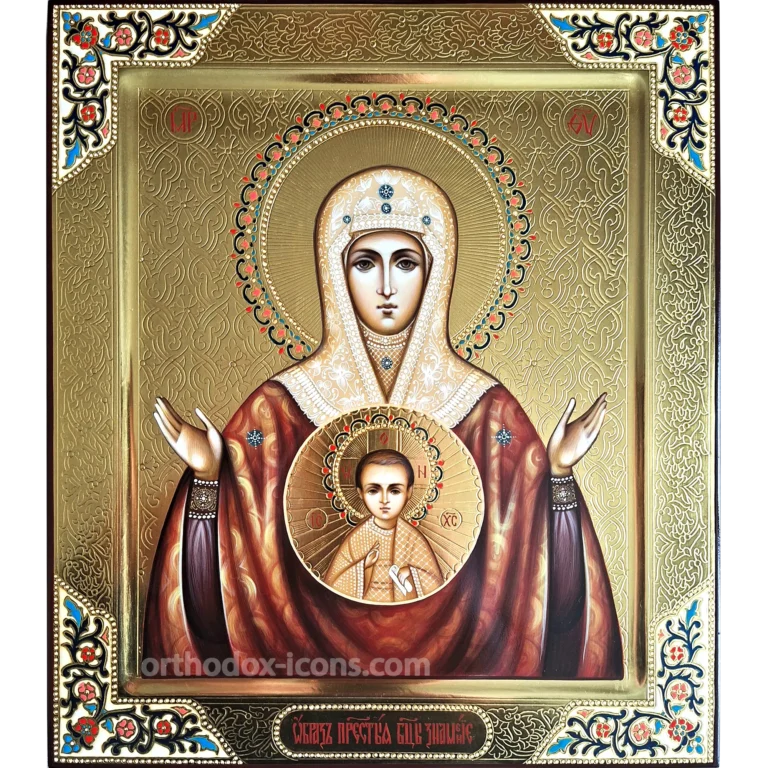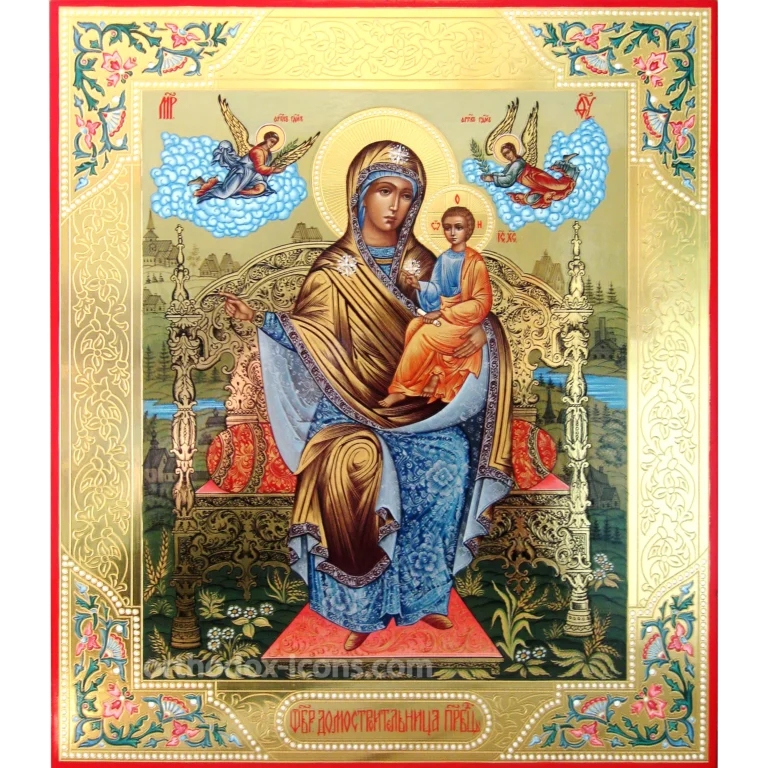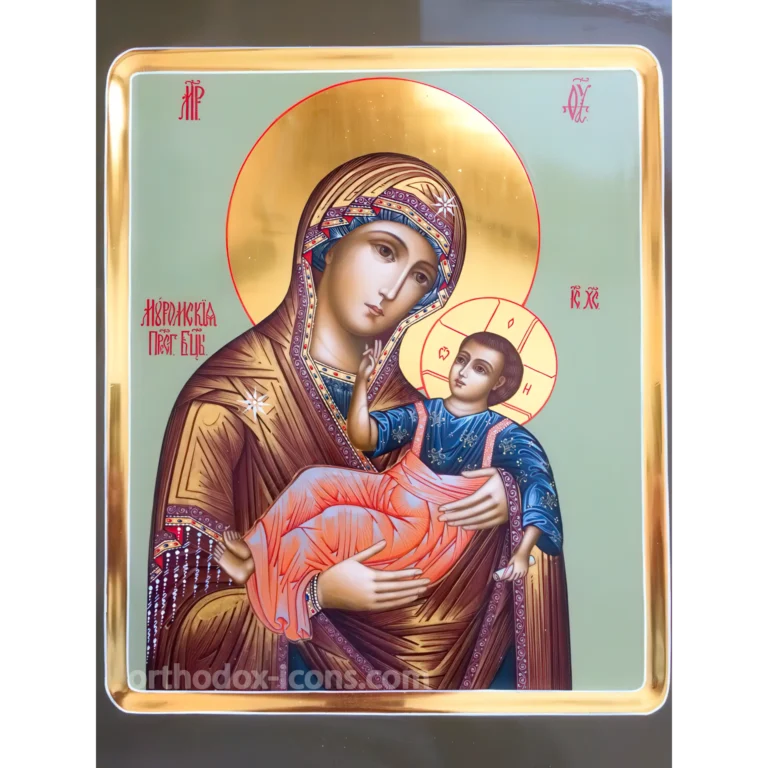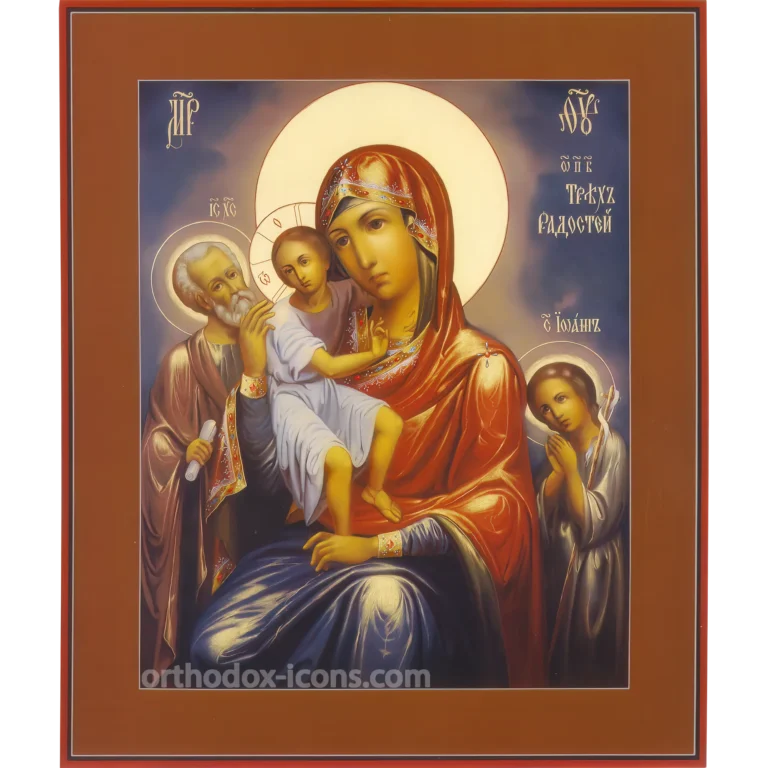
Paramythia Orthodox Icon
Price range: $750 through $2250
Available sizes: 17×21 cm (6.7×8.3 in), 20×24 cm (7.9×9.4 in), 27×31 cm (10.6×12.2 in), 30×40 cm (11.8×15.7 in).
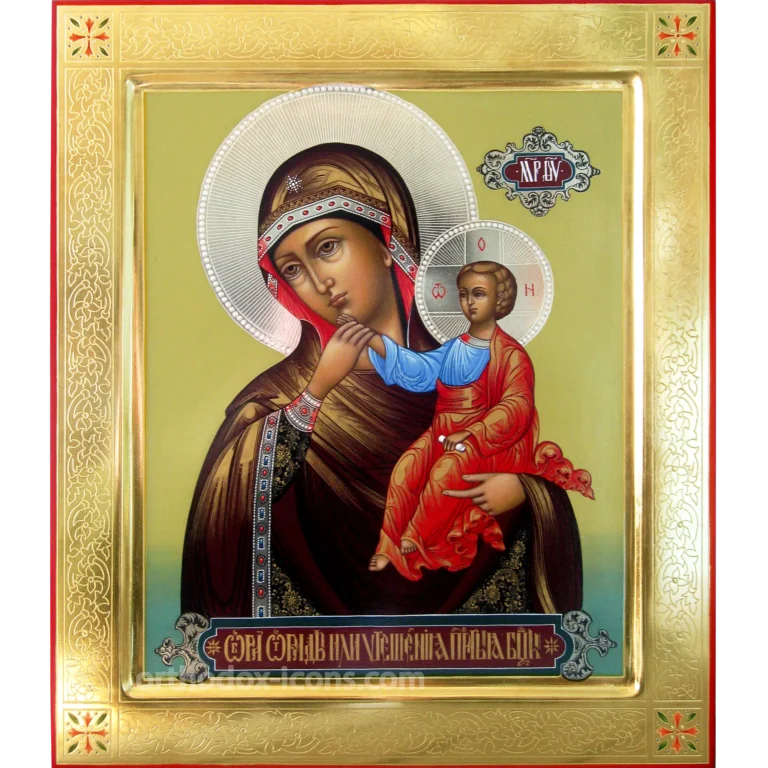
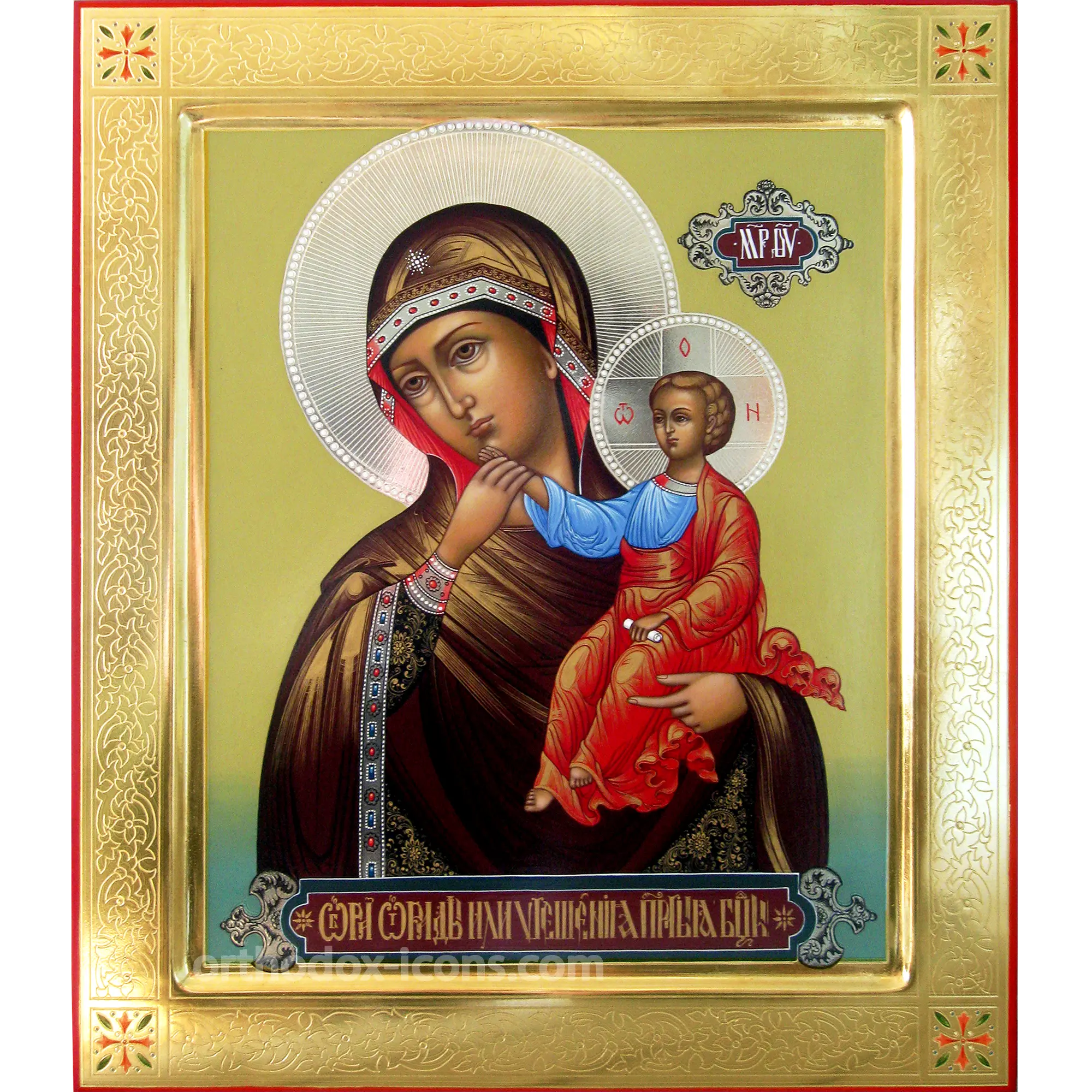
Paramythia Orthodox Icon, also known as the Mother of God Joy and Consolation, is a hand-painted Athonite icon based on the miracle at Vatopedi Monastery. The Theotokos moves the hand of Christ away from her mouth so she can warn the monks of danger, showing the power of maternal mercy and intercession.
This version is painted on a linden board with mineral egg tempera, a fully gilded background and borders, relief floral ornament worked in gesso, graphic ray halos, and a dark blue cartouche with the Church Slavonic name of the icon. Free international shipping is included, with payment due upon delivery.
It is possible to paint an image in any size to order
Free shipping worldwide
Paramythia Orthodox Icon is a hand-painted Athonite icon of the Mother of God known as Joy and Consolation. Its history is inseparable from the miracle at Vatopedi Monastery on Mount Athos, where the Theotokos warned the monks of sudden danger. For this reason, the icon is venerated as an image of protection, consolation, and merciful intercession.
This version is especially rich in its decorative treatment. The background and wide borders are covered with 23K gold leaf (960 purity), and the border ornament is worked in relief in the gesso before gilding. The result is a solemn icon with a strong liturgical presence, suitable for home prayer, a family icon corner, or a church setting.
Paramythia Orthodox Icon – Joy and Consolation
The full name of the icon is the Mother of God Joy and Consolation. In Greek tradition it is called Paramythia, meaning consolation or comfort. The icon is closely connected with Vatopedi Monastery on Mount Athos, where the original image is venerated.
According to tradition, in the year 807 a group of raiders landed near Vatopedi and hid outside the monastery walls. They planned to wait until the gates were opened in the morning, then attack the monastery and kill the monks. After the morning service, the abbot remained in the church and heard the Mother of God speak from the icon, warning him not to open the gates but to go to the walls and drive the raiders away.
The Miracle Preserved in the Gesture
At that moment, the figures on the icon changed. Christ stretched out His hand and covered the mouth of His Mother, saying that the monks should be punished for their sins and carelessness. The Mother of God, moved by maternal mercy, gently moved His hand away from her face and repeated the warning.
The abbot gathered the brethren, and the monks went to the walls. They found the raiders waiting outside and escaped the planned attack. From that time the icon remained in the altered form, preserving the moment of the miracle. The gesture is the heart of the image: divine justice is real, yet the intercession of the Mother of God gives people time for repentance, protection, and salvation.
Iconography of Mercy and Judgment
The Theotokos is shown with her head slightly inclined. Her face is full of compassion and intercessory love. With her right hand she gently but firmly moves the hand of the Christ Child away from her mouth, so that she may speak the saving warning.
The Christ Child is shown with an unusually stern expression. He is not presented only as a tender infant, but as Emmanuel, the eternal God and righteous Judge. In His left hand He holds a scroll, a sign of divine teaching and judgment. His right hand reaches toward the mouth of His Mother, while her gesture expresses mercy on behalf of the human race.
The Mother of God wears a deep dark cherry-brown maphorion, symbolizing her human nature and maternal suffering. Its borders are decorated with gold fringe, imitation precious stones, and pearl-like details. Christ is clothed in a bright blue tunic and a cinnabar-red himation enriched with gold assist, emphasizing His royal dignity.
Gold Background, Relief Ornament, and Ray Halos
The background and wide fields of this icon are fully gilded with 23K gold leaf (960 purity). Before gilding, the iconographer works a fine floral ornament into the gesso, creating a raised relief pattern that imitates a precious riza or oklad. Red and green accents in the corners add depth to the gilded ornament.
The halos are treated in an unusual way. Because the background itself is gold, the halos are not simply painted as separate gold circles. They are marked by fine graphic carving and silver-white ray-like painting, made of many small lines and points. This creates a living, trembling light around the heads of the Mother of God and Christ.
At the lower part of the icon, a dark blue ornamental cartouche carries the Church Slavonic name of the image. This detail gives the icon a formal and traditional finish while keeping the focus on the miraculous gesture.
Prayer Before the Paramythia Icon
Because the miracle at Vatopedi saved the monastery from a sudden attack, Orthodox Christians pray before this icon for the protection of the home, church, monastery, and family. It is associated with prayer against theft, violence, deception, fire, natural disasters, and unexpected danger.
The name Joy and Consolation also makes the icon especially close to people who are grieving. People pray before it after loss, betrayal, deep depression, illness, or spiritual exhaustion. The Mother of God is asked to bring comfort, peace, and the strength to continue.
The icon is also connected with prayers for healing, the softening of anger, deliverance from unjust hostility, and help during legal or personal persecution. It is an icon of protection, but also an icon of repentance, reminding the faithful that mercy gives time to change.
Materials and Technique
This icon is painted by hand on a seasoned linden board. Oak braces are set into the back of the board to protect it from warping. The front surface is covered with linen cloth and layers of natural chalk gesso, then polished smooth for painting and gilding.
The faces, garments, and inscriptions are painted with mineral egg tempera. Natural pigments are ground into fine powder and mixed with an egg-based emulsion, giving the colors depth and durability. The background and borders are gilded with 23K gold leaf (960 purity), and the relief ornament is worked into the gesso before the gold is applied.
Available Sizes
Available sizes: 17×21 cm (6.7×8.3 in), 20×24 cm (7.9×9.4 in), 27×31 cm (10.6×12.2 in), and 30×40 cm (11.8×15.7 in). Larger church and iconostasis formats may be discussed individually before the icon is made. Free international shipping is included, with payment due upon delivery.
Icon Characteristics
| Name | Paramythia Orthodox Icon |
| Traditional name | Mother of God Joy and Consolation Vatopedi icon |
| Origin | Vatopedi Monastery, Mount Athos |
| Composition | The Mother of God moves Christ’s hand away from her mouth to warn the monks |
| Distinctive details | Fully gilded background and fields, relief floral ornament in gesso, graphic ray halos, lower blue cartouche |
| Board | Linden wood, linen cloth, natural gesso, oak braces |
| Painting | Mineral egg tempera |
| Gold | 23K gold leaf (960 purity) on the background and borders |
| Available sizes | 17×21, 20×24, 27×31, and 30×40 cm |
| Main prayer themes | Protection of the home, consolation in grief, deliverance from danger, healing, softening of anger, repentance |
Questions and Answers
What does Paramythia mean?
Paramythia means consolation or comfort. The icon is also known as the Mother of God ‘Joy and Consolation’ and is connected with prayer for protection and spiritual comfort.
Where did the Paramythia miracle happen?
The miracle took place at Vatopedi Monastery on Mount Athos in the year 807, when the Mother of God warned the abbot that raiders were waiting outside the monastery gates.
Why does Christ have a stern expression?
In this icon Christ represents righteous divine judgment. According to the tradition, He wished to let the careless monks be punished, while His Mother interceded for them.
What does the gesture of the Mother of God mean?
The Mother of God gently moves Christ’s hand away from her mouth so she can speak and warn the monks. The gesture shows her merciful intercession for sinners.
What is special about the decoration of this icon?
This version has a fully gilded background and borders, relief floral ornament worked in the gesso, red and green accents, and graphic ray halos rather than simple painted gold halos.
What is written in the lower cartouche?
The dark blue lower cartouche carries the Church Slavonic name of the icon, identifying it as the Mother of God ‘Joy and Consolation.’
What do people pray for before this icon?
People pray for protection of the home, deliverance from sudden danger, consolation in grief, healing, softening of anger, and help during unjust persecution.
What materials are used for this icon?
The icon is painted on a linden board prepared with linen cloth and gesso. The painting is made with mineral egg tempera, and the gilding uses 23K gold leaf (960 purity).
Is this icon suitable as a housewarming gift?
Yes. Because the icon is associated with protection of a monastery from raiders, it is a meaningful Orthodox gift for a new home and for the protection of a household.
What sizes are available?
The icon is available in 17×21, 20×24, 27×31, and 30×40 cm. Larger church or iconostasis formats may be discussed individually before the icon is made.
| Dimensions | 17x21cm (6.7×8.3 in), 20x24cm (7.9×9.4 in), 27x31cm (10.6×12.2 in), 30x40cm (11.8×15.7 in) |
|---|---|
| Name | Mary |