Jerusalem Icon of the Mother of God
$1250
Available size: 27×31 cm (10.6×12.2 in).
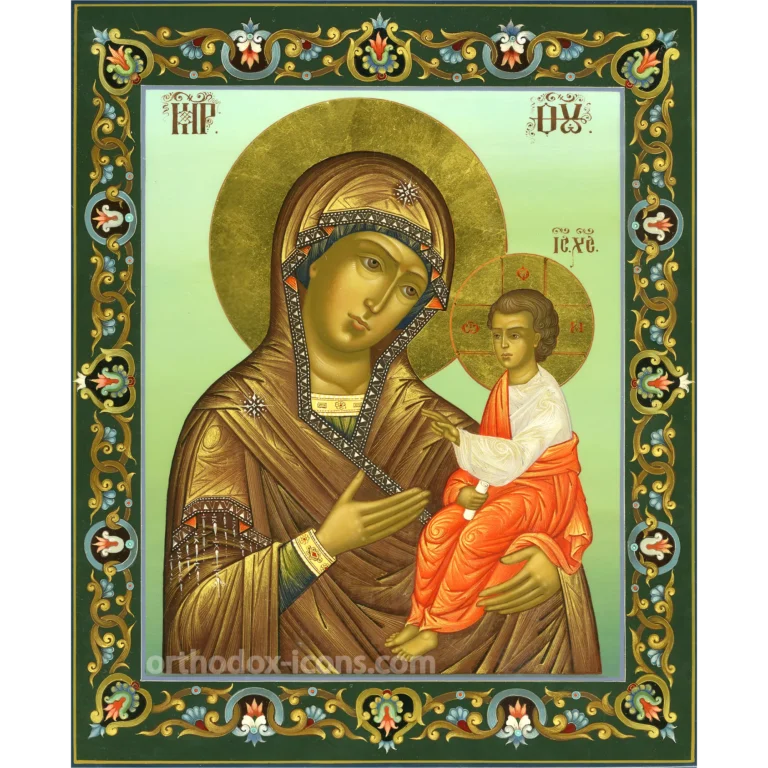
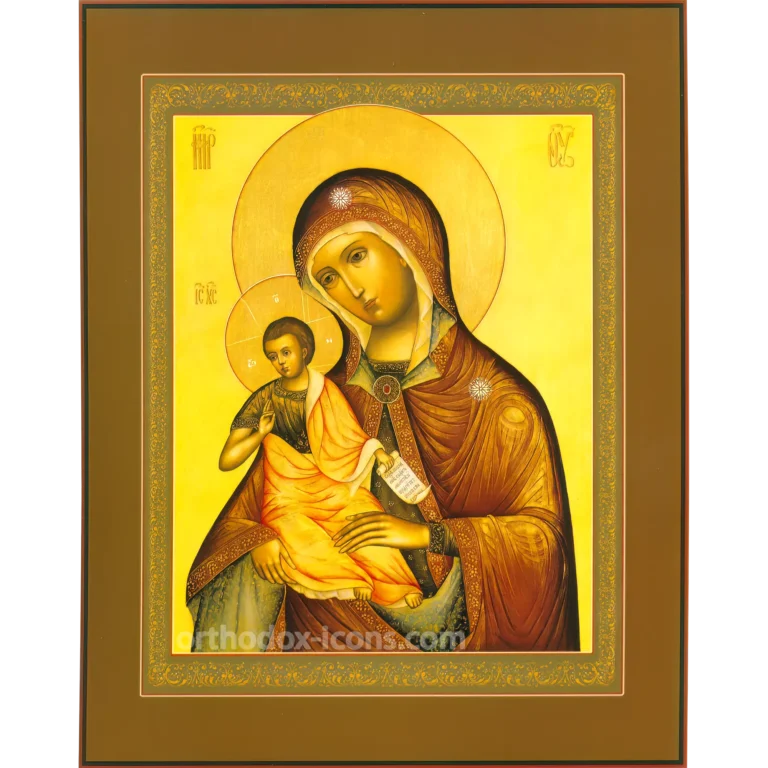
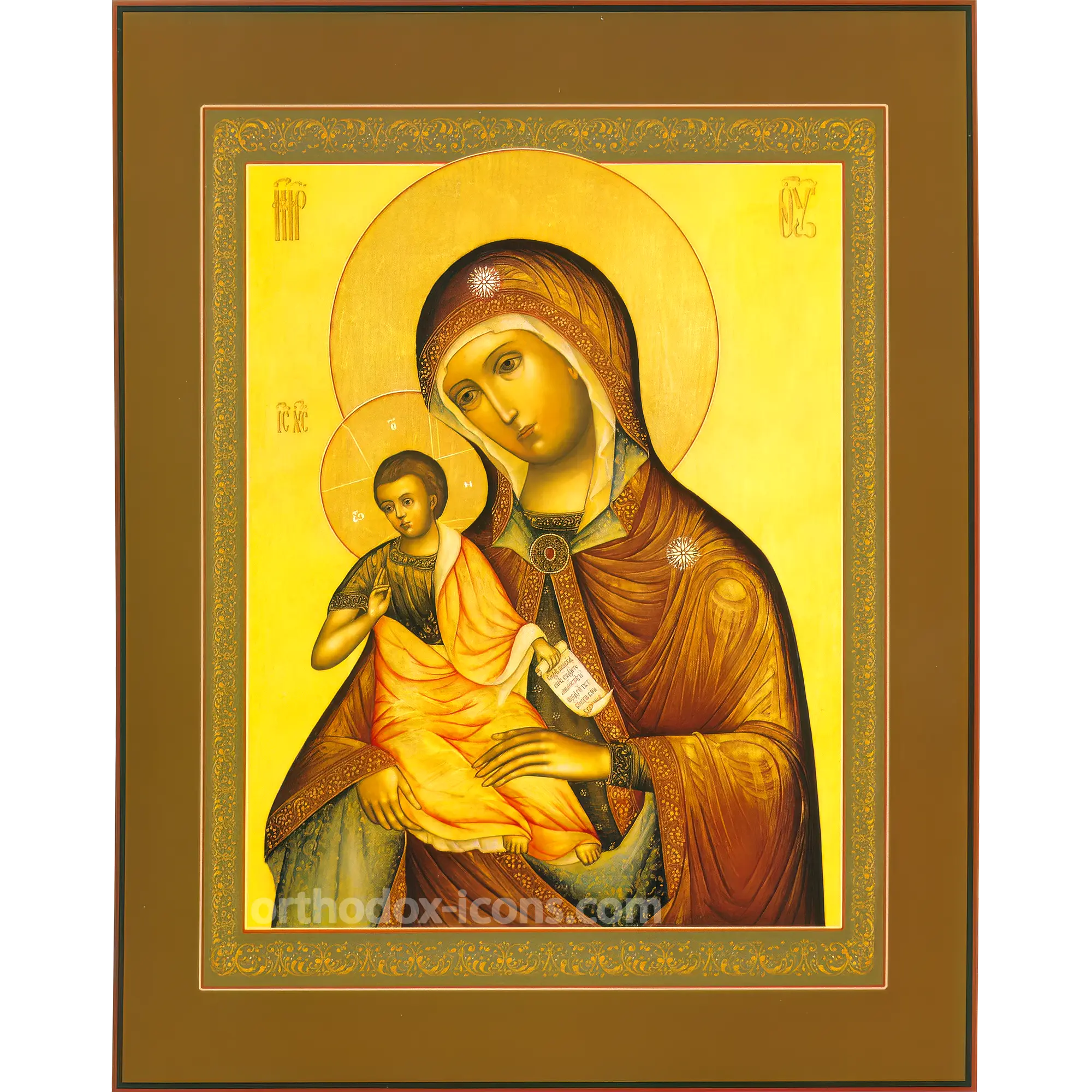
The Jerusalem Icon of the Mother of God is one of the most ancient and revered Orthodox icons of the Theotokos. According to Church tradition, the prototype was painted by Saint Luke in Gethsemane around AD 48 and later traveled from the Holy Land to Constantinople, Chersonesus, Kiev, Novgorod, and Moscow. This hand-painted Hodegetria-Dexiokratous icon shows the Christ Child on the right arm of the Mother of God, turned toward her, holding a scroll and blessing the world. The icon is painted with mineral egg tempera on a linden board with kovcheg, 23K gold leaf, and hand-tooled gold ornament on the fields. Free international shipping is included; payment is due upon delivery.
It is possible to paint an image in any size to order
Free shipping worldwide
Among the many wonder-working icons of the Mother of God known in Christian history, the Jerusalem Icon of the Mother of God holds a place of exceptional importance. This image is revered not only as a prayerful icon of the Theotokos, but also as a living link with the apostolic age, the Holy Land, and the early centuries of the Church.
According to Church tradition, the prototype was painted by Saint Luke the Evangelist in Gethsemane, at the foot of the Mount of Olives, around AD 48, the fifteenth year after the Ascension of Christ. The icon is counted among the earliest images of the Mother of God made during her earthly life. Its later history passes through Jerusalem, Constantinople, Chersonesus, Kiev, Novgorod, and Moscow, connecting the image with some of the most important events in Orthodox memory.
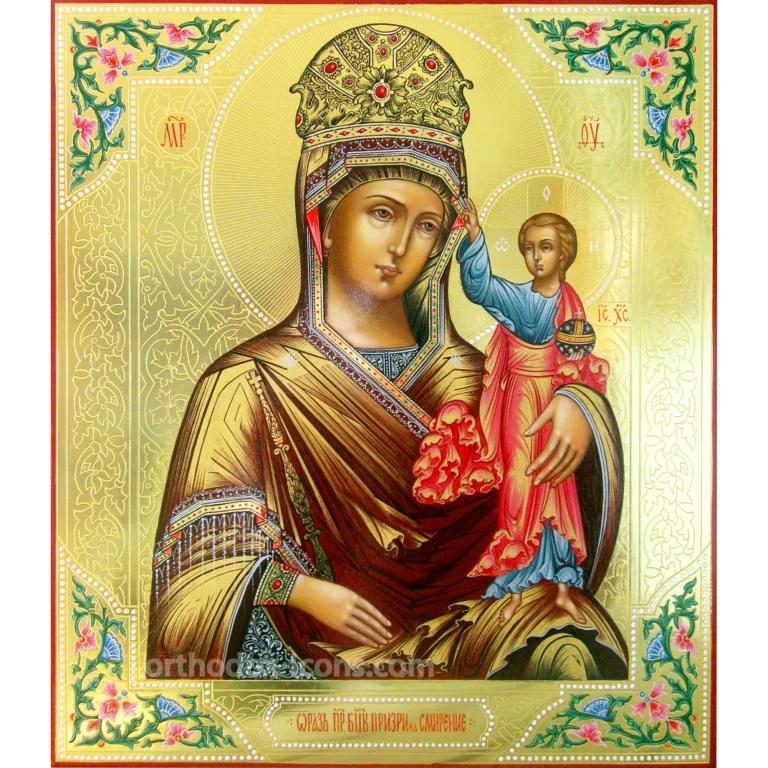
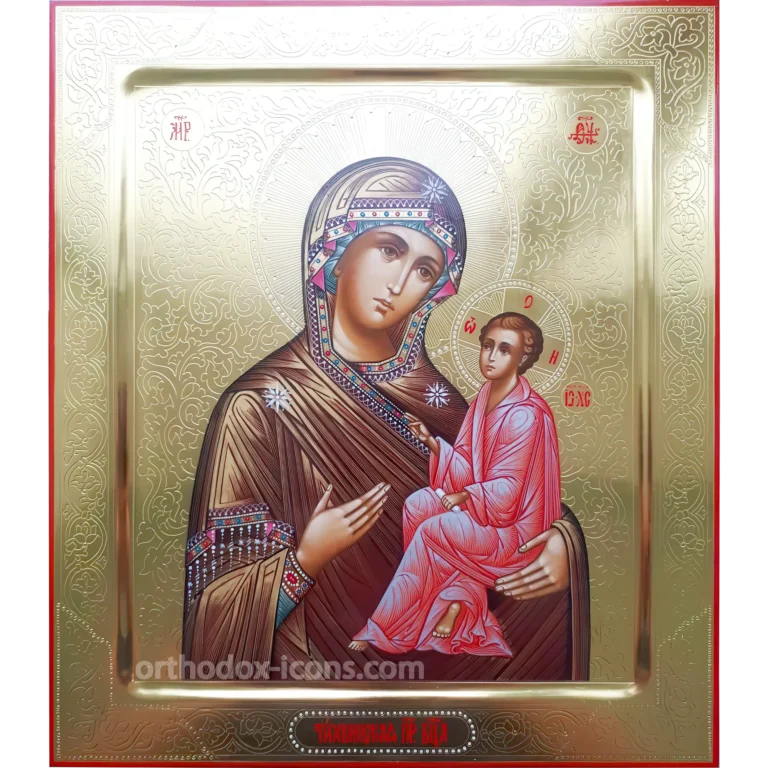
This hand-painted Mstyora version preserves the strict Byzantine Hodegetria character of the Jerusalem icon while emphasizing its distinctive feature: the Christ Child is seated on the right arm of the Mother of God. The icon is painted with mineral egg tempera on a linden board with kovcheg, 23K gold leaf, and finely tooled gold ornament on the wide fields.
Jerusalem Icon of the Mother of God – A Journey Through Orthodox History
The history of the Jerusalem Icon is remarkable for its scale. Tradition says that for several centuries the holy image was kept by the Christian community in Jerusalem. In 463, during the reign of the Byzantine emperor Leo I, the icon was solemnly transferred to Constantinople and placed in the Church of the Mother of God of the Life-Giving Spring.
In Constantinople, the Jerusalem icon was associated with protection of the city and the Byzantine people. According to tradition, prayers before this icon helped repel attacks by nomadic peoples, including the Scythians. The icon therefore became known not only as a Marian image, but as a sign of divine protection over cities and Christian communities.
At the end of the tenth century, around 988, the icon was brought to Chersonesus, or Korsun, in Crimea. There Saint Vladimir, Equal-to-the-Apostles, received holy baptism. As a great spiritual gift, Vladimir took the wonder-working image with him to Kiev. Later, when the people of Great Novgorod accepted Christianity, he gave the Jerusalem icon to the Novgorodians as a blessing.
For more than four hundred years, the icon remained in the Cathedral of Holy Wisdom in Novgorod, becoming one of the chief holy objects of the Russian North. Many healings and acts of help were associated with it. In 1571, Tsar Ivan the Terrible transferred the Jerusalem icon to the Dormition Cathedral of the Moscow Kremlin. There it remained until the events of 1812, when the original image was either taken away during the French occupation or replaced by an ancient exact copy, according to different accounts.
Iconography: Hodegetria with Christ on the Right Arm
The Jerusalem Icon belongs to the Hodegetria type, the Mother of God who shows the Way. In this type, the Theotokos directs the faithful toward Christ, the only path to salvation. The Jerusalem version, however, has a clear distinguishing feature: the Christ Child is seated not on her left arm, as in many Hodegetria icons, but on her right arm. This form is sometimes described with the term Dexiokratous.
The Mother of God is shown half-length. Her face is filled with quiet sorrow and deep spiritual attention, as if she already foresees the future Passion of her Son. Her gaze is directed toward the person praying. Christ, meanwhile, is turned almost fully toward His Mother, looking at her with a tender and serious expression. This gives the icon a special inner movement and intimacy.
In His left hand, resting near His knee, the Christ Child holds a rolled white scroll. The scroll symbolizes divine teaching, the Word of God, and the Gospel brought into the world for salvation. His right hand is raised in a traditional blessing gesture.
Garments and Theological Details
The Virgin Mary wears a deep dark cherry or terracotta maphorion, falling freely in heavy folds over her head and shoulders. The borders of the maphorion are decorated with gold fringe and ornament. Golden stars shine on her forehead and shoulder, symbols of her ever-virginity before, during, and after the Nativity of Christ; the third star is hidden by the figure of Christ.
With her free hand, the Mother of God gently supports the feet of the Christ Child or indicates Him to the faithful. The gesture strengthens the Hodegetria meaning of the icon: the Theotokos does not draw attention to herself alone, but leads the person praying toward Christ.
An interesting iconographic note is that the Georgian Icon of the Mother of God is often described as a mirror-like counterpart to the Jerusalem image. The poses are similar, but in the Georgian icon Christ is seated on the left arm of the Virgin Mary.
Gold Background, Kovcheg, and Tooled Ornament
This hand-painted version has a rich and solemn finish. The entire background is covered with 23K gold leaf, which in Orthodox iconography signifies divine, uncreated light and the reality of the Kingdom of Heaven. The wide fields are decorated with a delicate plant ornament tooled by hand into the gilded surface.
The linden board includes a kovcheg, a recessed central area that forms raised borders around the painted image. The kovcheg is often understood as an opening into the sacred world, setting the holy image apart from ordinary space. Together with the gold and ornament, it gives the icon the appearance of a precious shrine.
Prayer Before the Jerusalem Icon
Over many centuries, the Jerusalem Icon of the Mother of God has been associated with healing, protection, consolation, and safe travel. People pray before it for the healing of serious illnesses, including eye diseases and blindness, and for help in moments when ordinary human strength seems insufficient.
Because of its long historical journey from Jerusalem to Constantinople, Chersonesus, Kiev, Novgorod, and Moscow, the icon is especially loved as a protector of travelers and pilgrims. Before journeys, business travel, relocation, or pilgrimage, the faithful may ask the Mother of God for a safe road and protection from danger, accidents, theft, and unexpected obstacles.
The icon is also approached in prayers for protection of the home from fire, theft, enemies, and destructive forces. Families pray before it for peace between generations, help in raising children in the Orthodox faith, and the gift of a long-awaited child.
Materials and Mstyora Technique
The icon is made according to traditional methods of the Mstyora icon-painting school. The base is a seasoned linden board, chosen for stability and durability. Oak braces are inserted into the back of the board to help protect it from warping. The front has a kovcheg and is covered with linen, then with 10 to 15 layers of natural chalk gesso.
After careful polishing, the background is gilded with 23K gold leaf. The ornament on the fields is then tooled by hand into the gold. The faces and garments are painted with mineral egg tempera. The pigments are prepared from natural mineral colors and mixed with egg emulsion, giving the painting depth, durability, and a soft, noble surface.
Available Size
The available size is 27×31 cm (10.6×12.2 in). This is the classic and recommended format for this icon, allowing the faces, folds of the maphorion, Christ’s scroll, the kovcheg, and the tooled gold ornament to be read clearly. Larger 30×40 cm (11.8×15.7 in) and church formats can be discussed individually.
Free international shipping is included; payment is due upon delivery.
Icon Characteristics
| Feature | Description |
|---|---|
| Iconographic type | Hodegetria, Jerusalem Mother of God, Dexiokratous type with Christ on the right arm |
| Main details | Christ turned toward His Mother, rolled scroll, blessing hand, dark cherry maphorion |
| Board | Linden wood with kovcheg, linen, natural gesso, and inserted oak braces |
| Painting | Mineral egg tempera in the Mstyora tradition |
| Gold and decoration | 23K gold leaf background with hand-tooled plant ornament on the fields |
| Available size | 27×31 cm (10.6×12.2 in), with larger formats by agreement |
| Prayer use | Safe travel, healing, consolation in sorrow, protection of the home, gift of children |
The Jerusalem Icon of the Mother of God carries the memory of the Holy Land and the apostolic Church. It is a strong Orthodox icon for prayer, protection, travel, healing, and the quiet guidance of the Theotokos toward Christ.
Questions and Answers
Who painted the first Jerusalem Icon of the Mother of God?
According to Church tradition, the first Jerusalem icon was painted by Saint Luke the Evangelist in Gethsemane around AD 48, during the earthly life of the Mother of God.
How is this icon connected with the Baptism of Rus?
Tradition says the icon was brought to Chersonesus, where Saint Vladimir was baptized, and then taken by him to Kiev as a great blessing.
What is distinctive about the Jerusalem iconography?
The Christ Child is seated on the right arm of the Mother of God, unlike many Hodegetria icons where He is shown on her left arm.
What does the scroll in Christ’s hand mean?
The rolled scroll symbolizes divine teaching, the Word of God, and the Gospel brought into the world for salvation.
What is the Georgian Icon’s relation to this image?
The Georgian Icon of the Mother of God is often described as a mirror-like counterpart, with a similar pose but with Christ seated on the left arm of the Virgin Mary.
What are people accustomed to pray for before this icon?
People pray before the Jerusalem Mother of God for healing, safe travel, protection of the home, consolation in sorrow, family peace, and the gift of children.
What is a kovcheg?
A kovcheg is a recessed central area in the icon board, forming raised borders around the image and symbolizing an opening into the sacred world.
What materials are used?
The icon is painted on a linden board with linen, natural gesso, mineral egg tempera, 23K gold leaf, and hand-tooled ornament.
What size is available?
The available size is 27×31 cm (10.6×12.2 in). Larger 30×40 cm and church formats can be discussed individually.
When is the Jerusalem icon commemorated?
In the Russian Orthodox calendar, the Jerusalem Icon of the Mother of God is commemorated on October 25 according to the new calendar, October 12 according to the old calendar.
| Dimensions | 27x31cm (10.6×12.2 in) |
|---|---|
| Name | Mary |