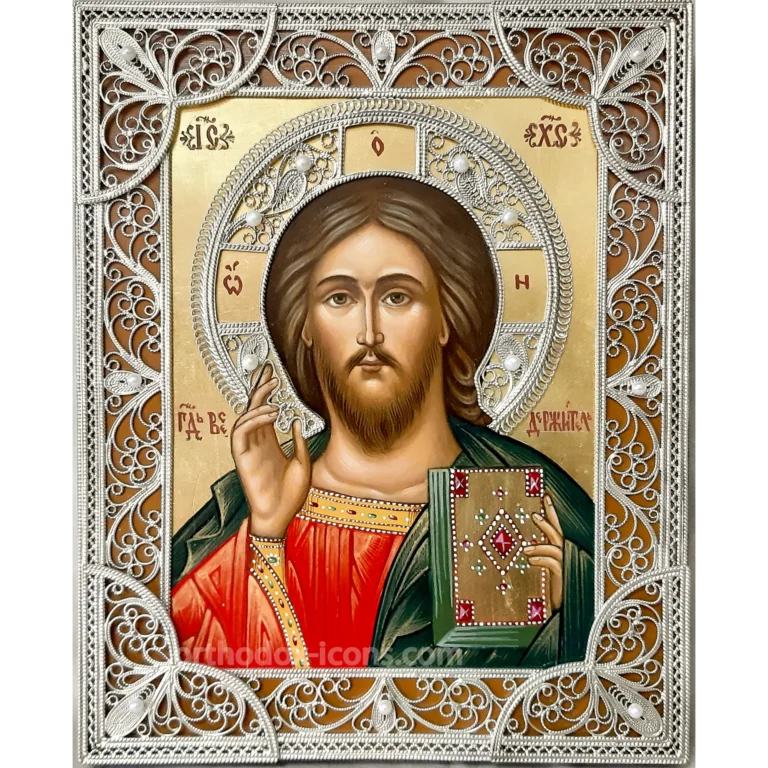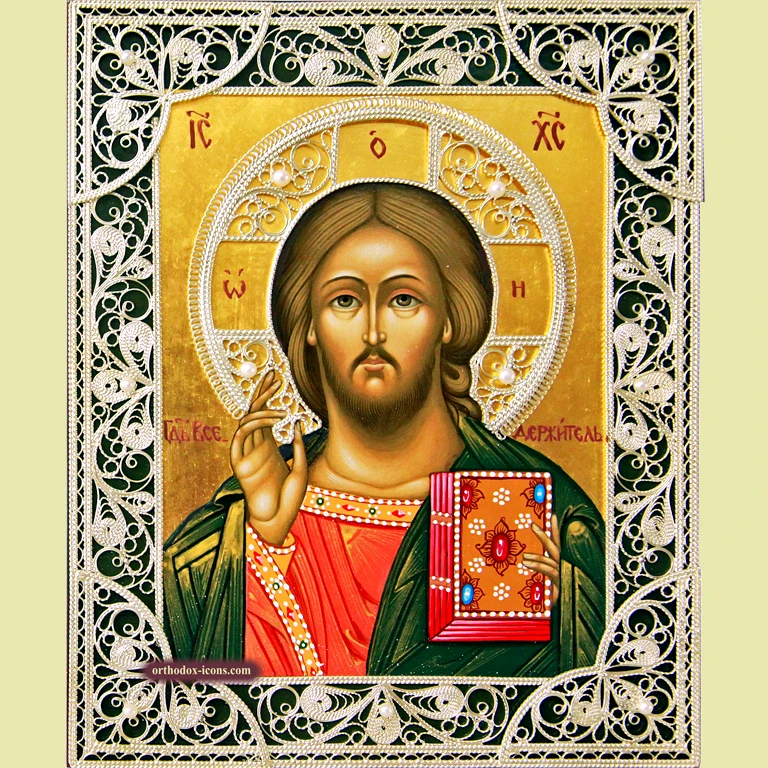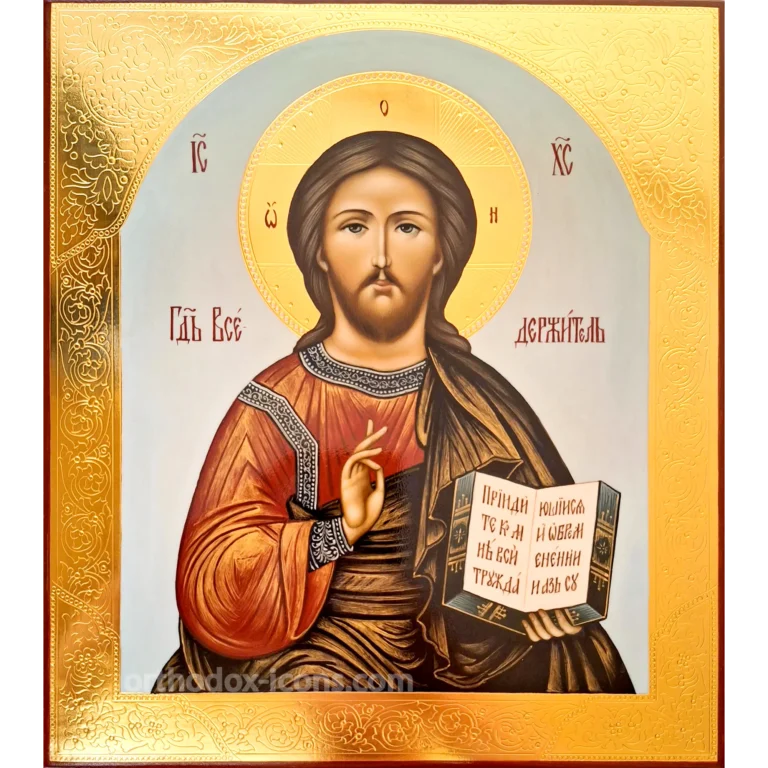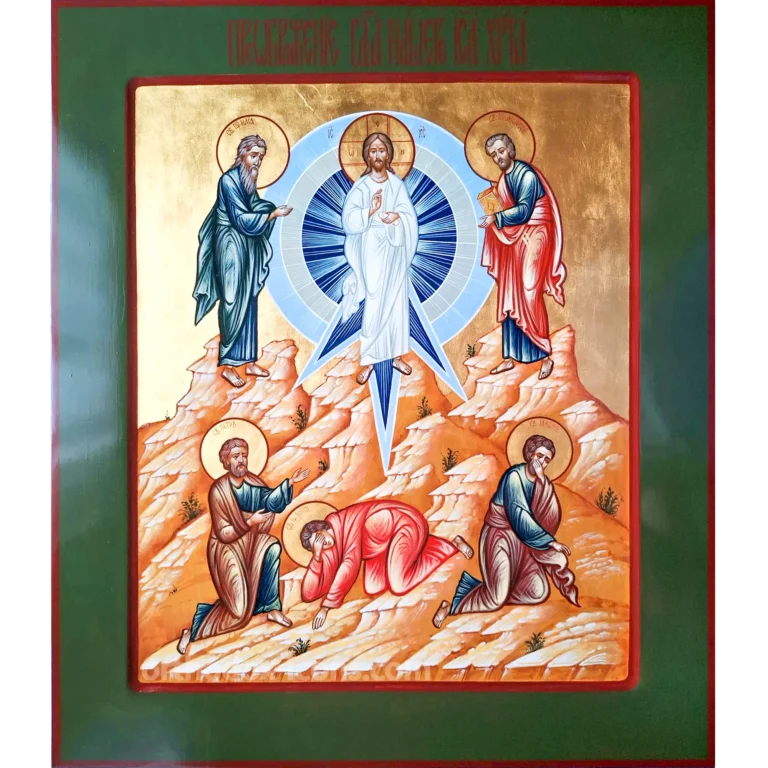
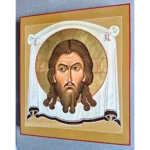
Orthodox Icon of The Holy Face
Price range: $600 through $1600
Available sizes: 17×21 cm (6.7×8.3 in), 20×24 cm (7.9×9.4 in), 27×31 cm (10.6×12.2 in), 30×40 cm (11.8×15.7 in). Iconostasis sizes by request.
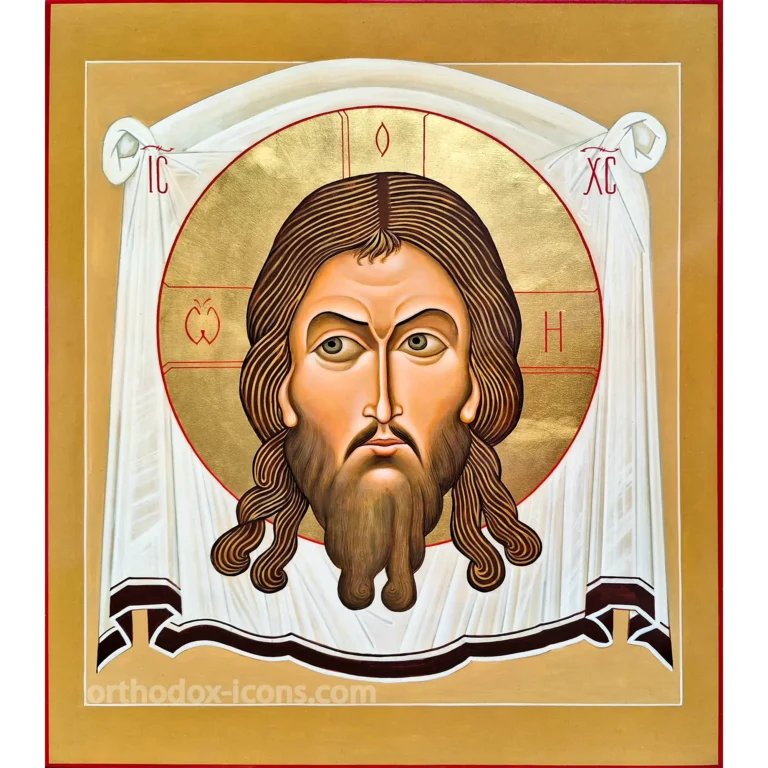
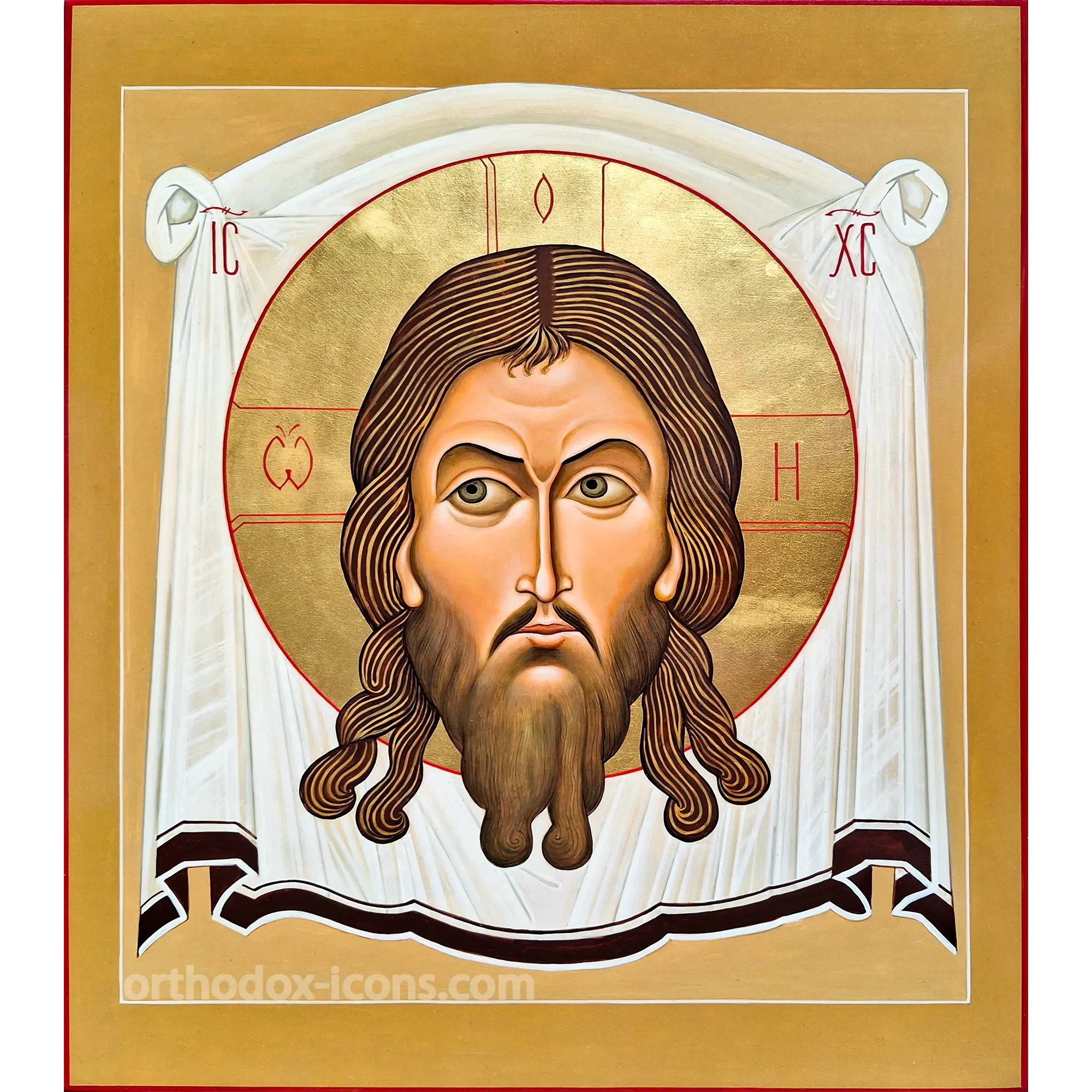
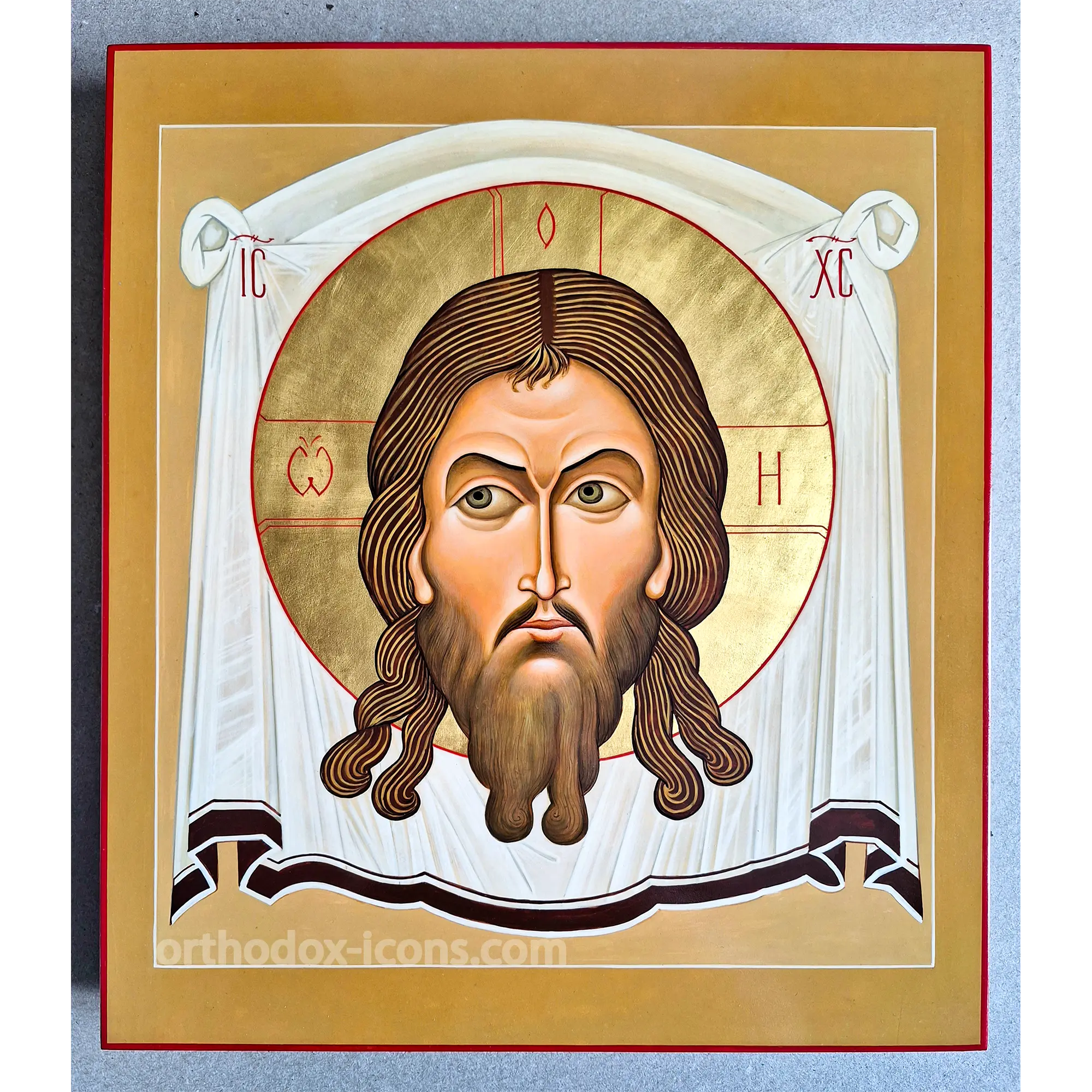
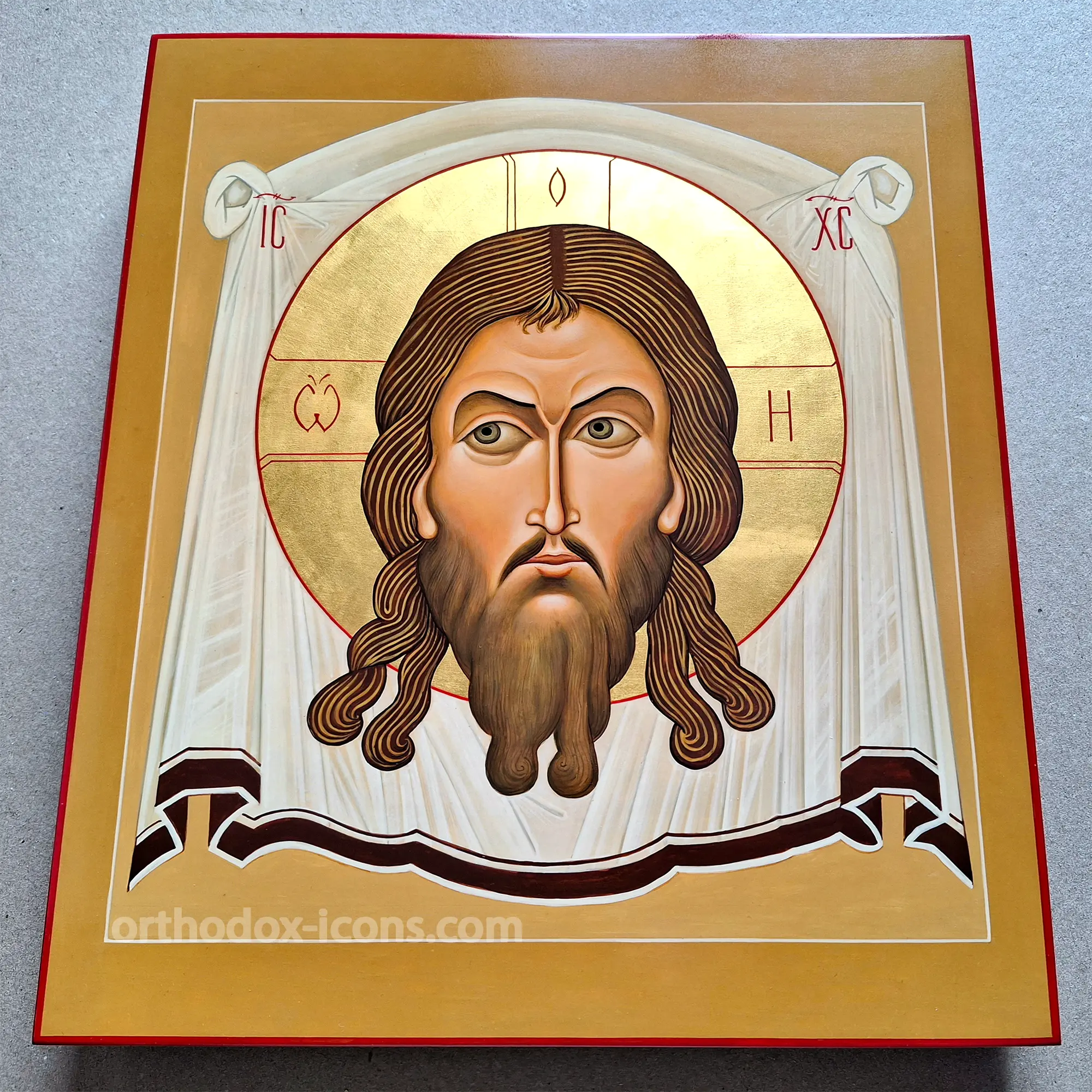
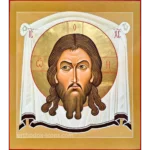
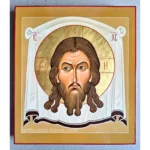
Orthodox Icon of The Holy Face is a hand-painted Holy Face icon of Christ on the white cloth, the Image Not Made by Hands.
Painted in the Mstyora tradition on a linden wood board with oak splines, gesso, mineral egg tempera, and 960-grade gold leaf on the background and halo. Free international shipping. Payment after receiving.
It is possible to paint an image in any size to order
Free shipping worldwide
Orthodox Icon of The Holy Face is a hand-painted Orthodox icon of the Holy Face of Christ on the white cloth, also known as the Image Not Made by Hands. The icon shows only the face of the Savior on the ubrus, without shoulders, hands, Gospel, or narrative details. Everything is concentrated on the face, the direct gaze, and the mystery of the Incarnation.
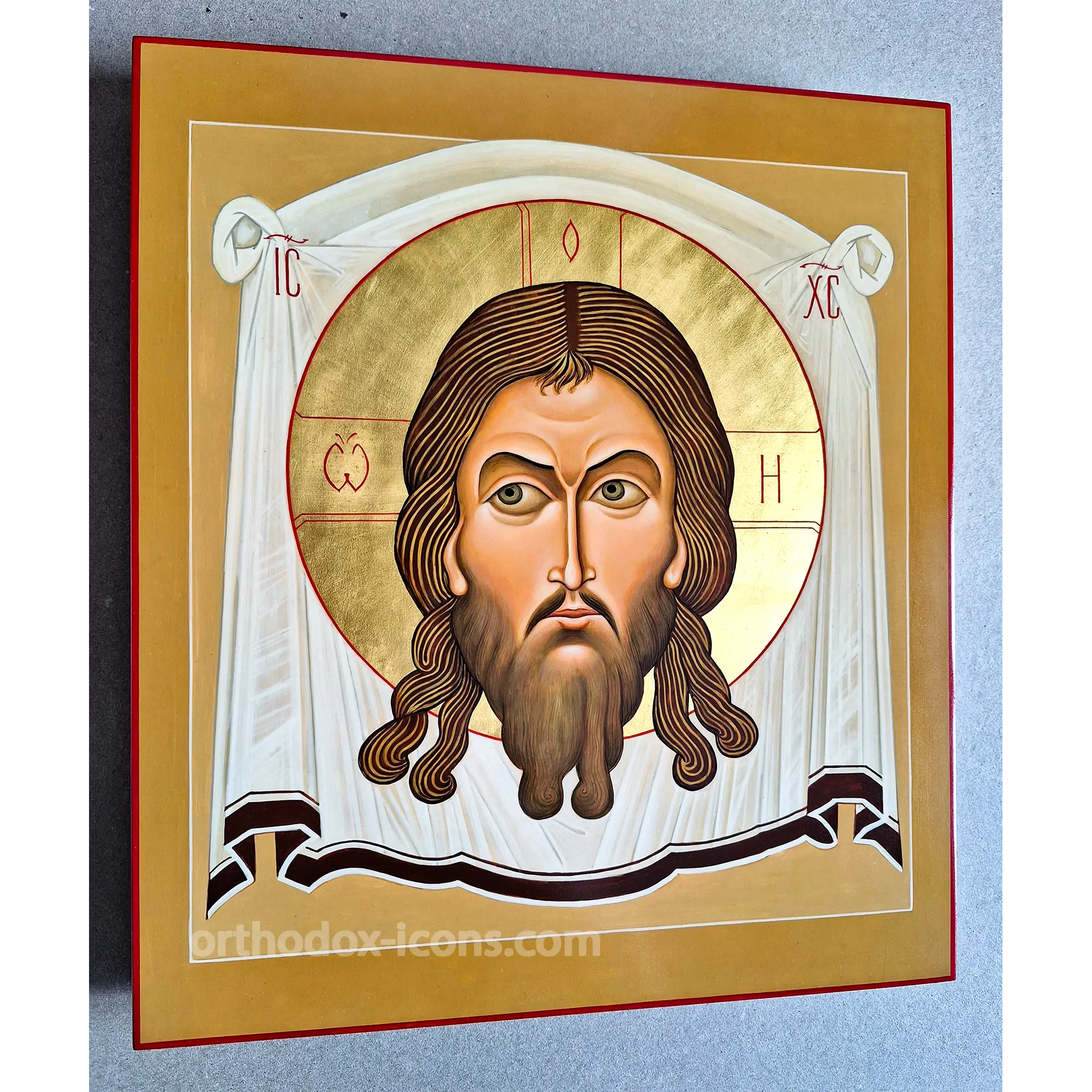
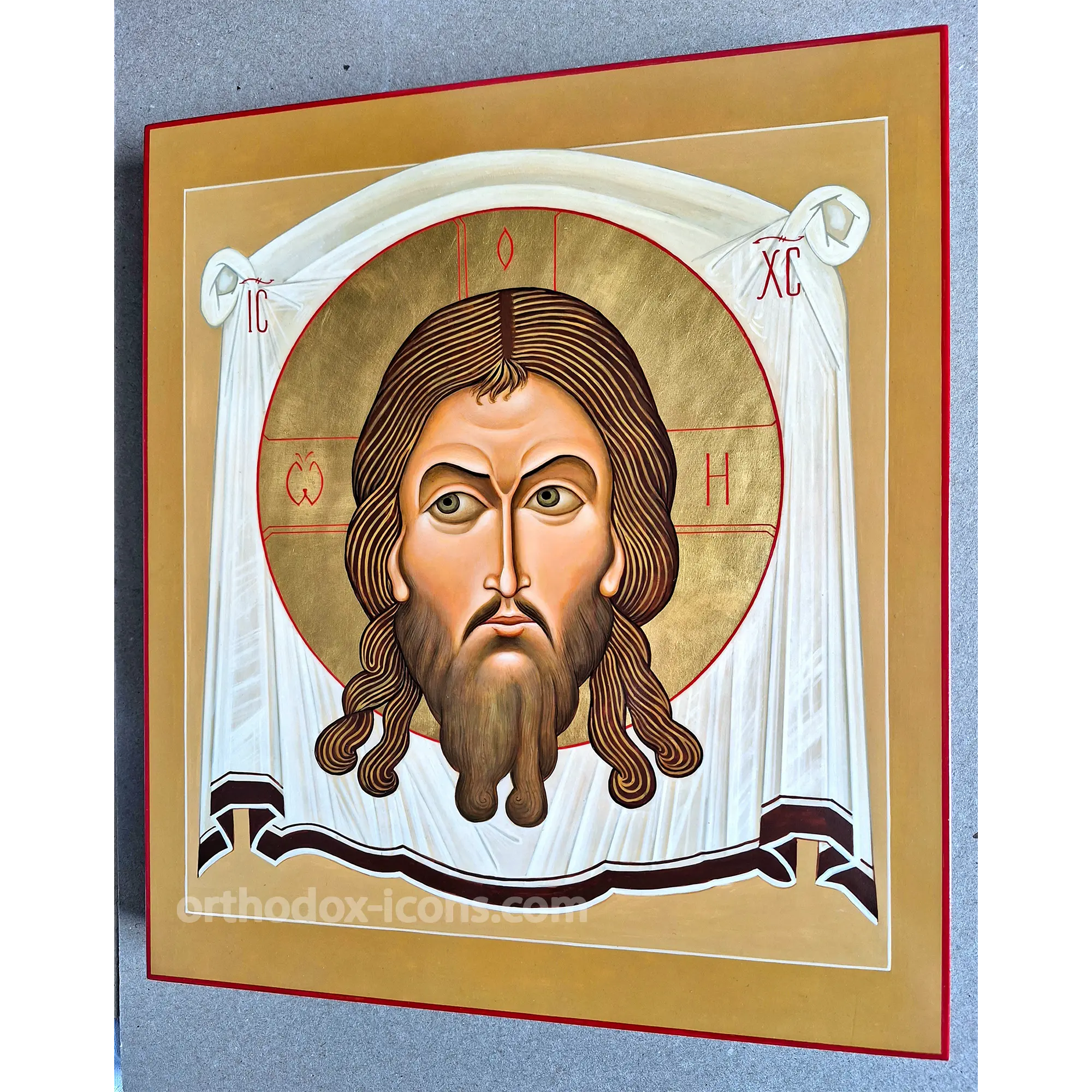
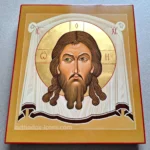
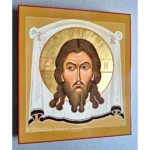
This icon is a restrained Mstyora icon with the face of Christ on a snow-white cloth with soft folds, a gold cross halo, a warm gold background, and a dark burgundy border along the cloth. It is painted on a linden wood board with oak splines, gesso, mineral egg tempera, and genuine 960-grade gold leaf.
Meaning of Orthodox Icon of The Holy Face
The Holy Face occupies an exceptional place in Orthodox iconography. Church tradition sees this image as one of the foundations of icon painting, because it witnesses that God did not only give humanity teaching, but revealed His visible face in the incarnate Christ.
Unlike icons with gestures, books, or narrative scenes, this image brings the person praying face to face with Christ. There is only the face, the cloth, the halo, and the gaze. The icon calls the believer to quiet prayer, repentance, and honest standing before God.
The image is also called the Savior on the Cloth and the Image Not Made by Hands. It is a visual confession that the Son of God truly became Man, and that matter itself can become a bearer of divine grace.
From Edessa to Rus’
The history of the Holy Face is connected with the city of Edessa and King Abgar, who was seriously ill. According to ancient tradition, Abgar sent the painter Ananias to Christ, asking for healing and for a portrait of the Savior. The painter could not depict Christ because of the dazzling light shining from His face.
Then Christ asked for water and a clean cloth. After washing His face, He wiped it with the cloth, and His face was miraculously impressed on it without human hands. When Abgar received the cloth, he was healed. The holy image became known as the Mandylion.
In 944, the Mandylion was brought with honor to Constantinople. In Rus’, copies of the Holy Face appeared very early and became a powerful protective image. The face of Christ was placed on banners, over gates, and in homes as a sign of divine protection.
Theological Meaning and Iconography
During the iconoclastic controversies, the Holy Face became one of the strongest arguments for the Orthodox defense of icons. If the invisible God truly became Man, then He can be depicted. If Christ Himself left His visible face on cloth, then matter can be sanctified and used for holy images.
The icon belongs to the type of the Savior on the Ubrus. The face is strictly frontal and symmetrical. The hair is parted and falls in separate strands, and the beard is traditionally forked. The gaze is directed toward the person praying, calm and searching, without anger or sentimental softness.
The cross halo bears the letters meaning He Who Is, the divine name revealed to Moses. The white cloth is painted with folds and knots at the edges, emphasizing its material reality and recalling the tradition of the miraculous imprint.
Artistic Features of This Icon
This icon is painted in the strict and warm manner of the Mstyora school. It is not overloaded with ornament. Its expressiveness comes from careful work with color, form, and the face of Christ.
The face is built through layered highlighting over a darker base tone, giving the skin a quiet inner luminosity. Warm brown and ocher tones of the face and hair harmonize with the even glow of the 960-grade gold leaf background and halo.
The white cloth is painted in light, almost pearl-like tones, with fine shadows in the folds. The dark burgundy border of the cloth gives the composition visual weight, while the red edge of the icon board traditionally recalls Paschal joy and the sacrificial blood of the Savior.
Traditional Materials and Technique
The icon is painted on a well-dried linden wood board. Linden is valued in icon painting because it has a soft, even structure and is less prone to cracking. Oak splines are inserted on the back of the board to help hold its shape as humidity changes.
The surface is covered with gesso, a natural chalk ground made with glue. It is applied in thin layers and polished to a smooth, almost porcelain-like surface. The image is painted with mineral tempera, using natural pigments mixed with an egg-based emulsion.
The background and halo are gilded with genuine 960-grade gold leaf and polished. The completed icon is protected with natural drying oil or a professional icon-painting lacquer to deepen the colors and protect the surface from dust and humidity.
Prayer Before the Holy Face
The Holy Face is an icon before which a person stands in deep silence. Because the first miraculous cloth brought healing to King Abgar, this image is traditionally associated with prayer for healing and protection.
Before This Icon, Believers Pray:
- for healing from serious bodily illness and weakness;
- for deliverance from anxiety, despondency, and despair;
- for forgiveness of sins and sincere repentance;
- for protection of the home and family;
- for strengthening of faith during doubt or spiritual crisis;
- for courage, sobriety, and peace before the face of Christ.
Who This Icon Is Suitable For
- For a home iconostasis: as a central icon of Christ in the prayer corner.
- For a new home: as a traditional protective image for the household.
- As a gift for a man: the Holy Face has long been connected with protection, courage, and responsibility.
- For a wedding or family blessing: as a foundation of the future family iconostasis.
- For a church or chapel: larger formats are suitable for a local or Deisis row by request.
Icon Characteristics
| Name | Orthodox Icon of The Holy Face |
| Iconographic type | Holy Face of Christ, Image Not Made by Hands, Savior on the Cloth |
| Main spiritual meaning | Incarnation, visible face of Christ, healing, protection, repentance, and prayerful attention |
| Board | Well-dried linden wood |
| Board reinforcement | Oak splines |
| Ground | Gesso |
| Painting | Mineral egg tempera with natural pigments |
| Gilding | 960-grade gold leaf on the background and halo |
| Available sizes | 17 x 21 cm, 20 x 24 cm, 27 x 31 cm, 30 x 40 cm, and iconostasis sizes by request |
| Purpose | Home iconostasis, prayer corner, Orthodox gift, new home, church, chapel, and iconostasis |
Ordering, Shipping, and Payment
The icon is available in several standard sizes and larger iconostasis formats by request. Free international shipping is included, and payment is made after receiving the icon.
Questions and Answers
What does Orthodox Icon of The Holy Face mean?
It is the image of Christ’s face on the cloth, the Image Not Made by Hands, witnessing to the real Incarnation of the Son of God.
Why is the face of Christ shown on a cloth?
According to Church tradition, Christ’s face was miraculously impressed on the cloth given for the healing of King Abgar of Edessa.
How is the Holy Face different from Christ Pantocrator?
The Holy Face shows only the head and face of Christ on the cloth, without shoulders, hands, Gospel, or blessing gesture.
What do the letters in Christ’s halo mean?
The letters mean He Who Is, confessing Christ as true and eternal God.
Where can this icon be placed at home?
It can be placed in the center of a home iconostasis or prayer corner, and is also traditionally placed near the entrance for protection.
Do Orthodox Christians pray before this icon for healing?
Yes. Because the first Holy Face is connected with the healing of Abgar, believers pray before it for bodily and spiritual healing.
Why is this icon often chosen as a gift for men?
In Russian tradition, the Holy Face was used on military banners and became associated with protection, courage, and responsibility.
What materials are used for this icon?
The icon is painted on a linden wood board with oak splines, gesso, mineral egg tempera, and genuine 960-grade gold leaf.
Which sizes are available?
Available sizes are 17 x 21 cm, 20 x 24 cm, 27 x 31 cm, and 30 x 40 cm. Iconostasis sizes can be discussed by request.
How should this icon be cared for?
Keep it away from direct sunlight, humidity, and sudden temperature changes. Clean only with a very soft dry cloth or brush.
| Dimensions | 17x21cm (6.7×8.3 in), 20x24cm (7.9×9.4 in), 27x31cm (10.6×12.2 in), 30x40cm (11.8×15.7 in) |
|---|---|
| Name | Jesus |