Jesus Christ Orthodox Art
Price range: $700 through $2250
Available sizes: 17×21 cm (6.7×8.3 in), 20×24 cm (7.9×9.4 in), 27×31 cm (10.6×12.2 in), 30×40 cm (11.8×15.7 in).
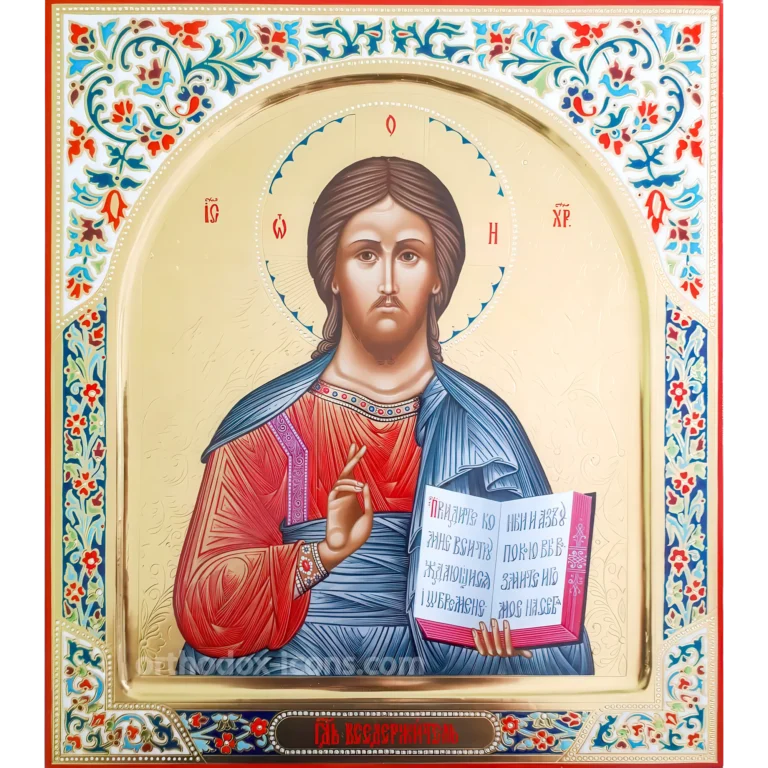
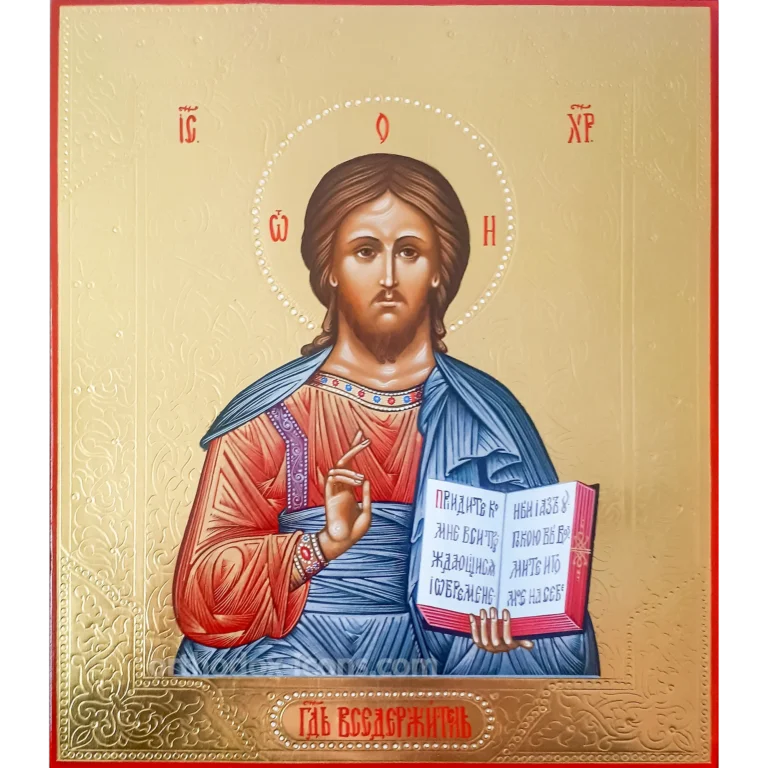
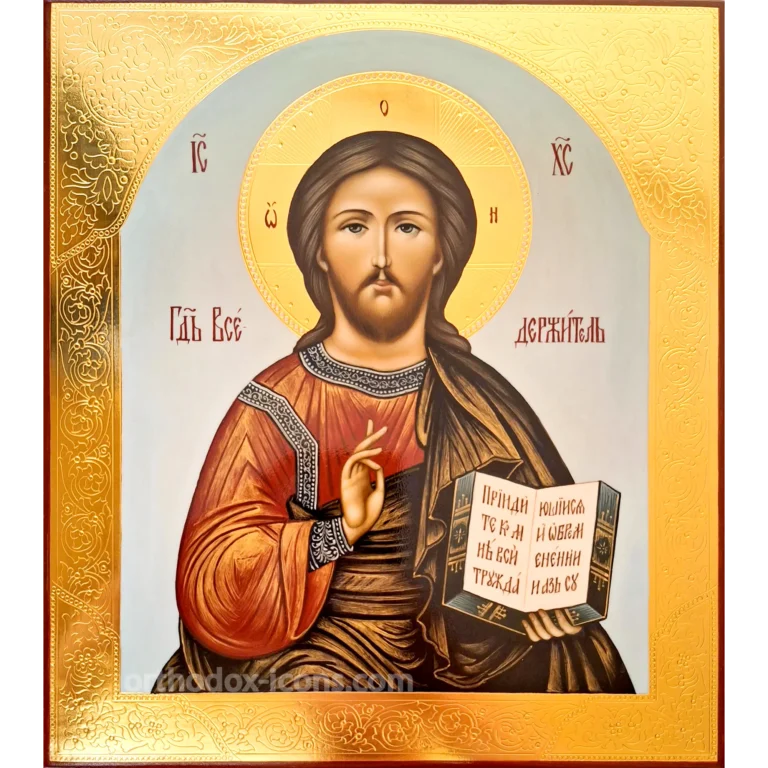
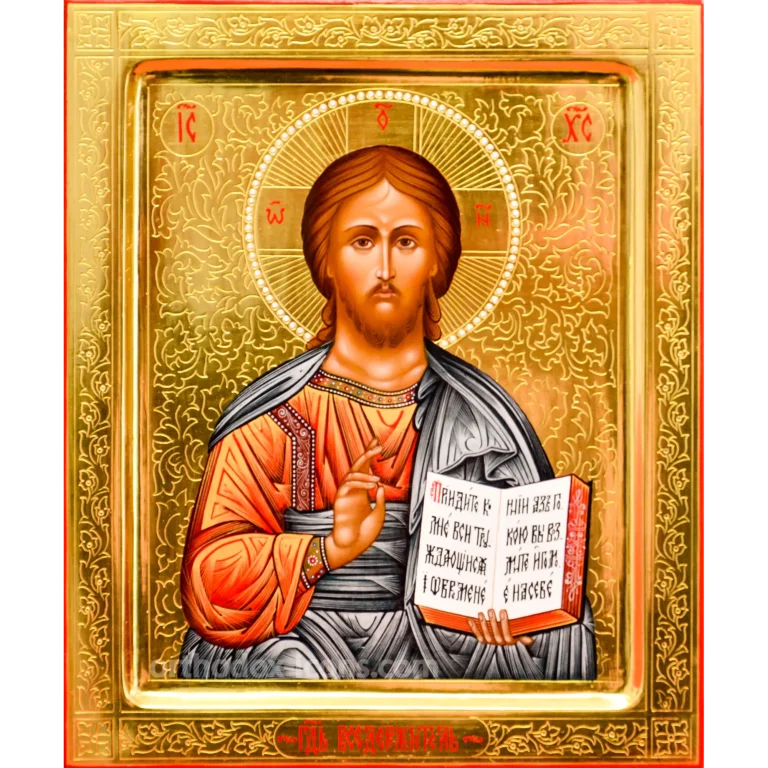
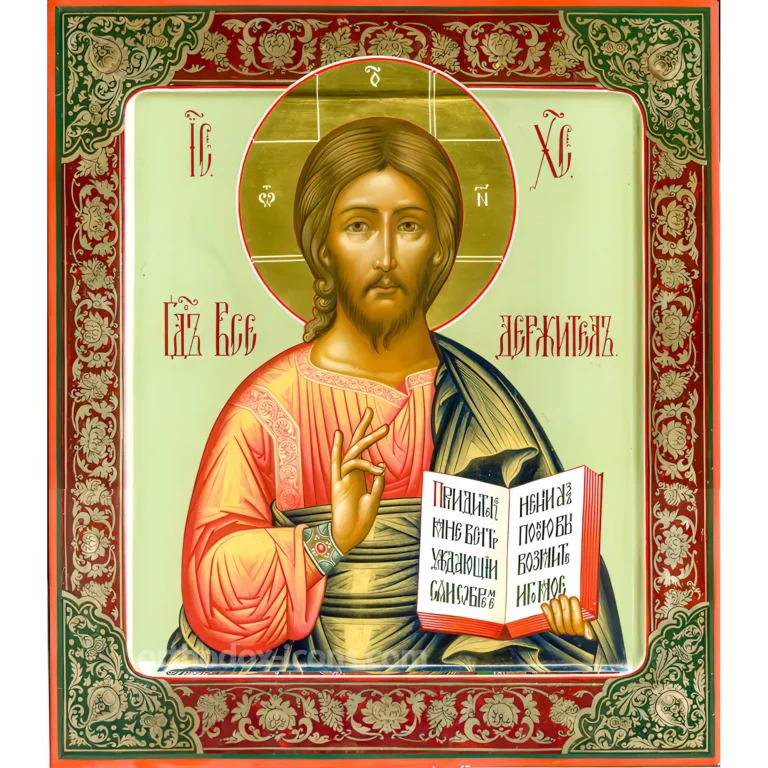
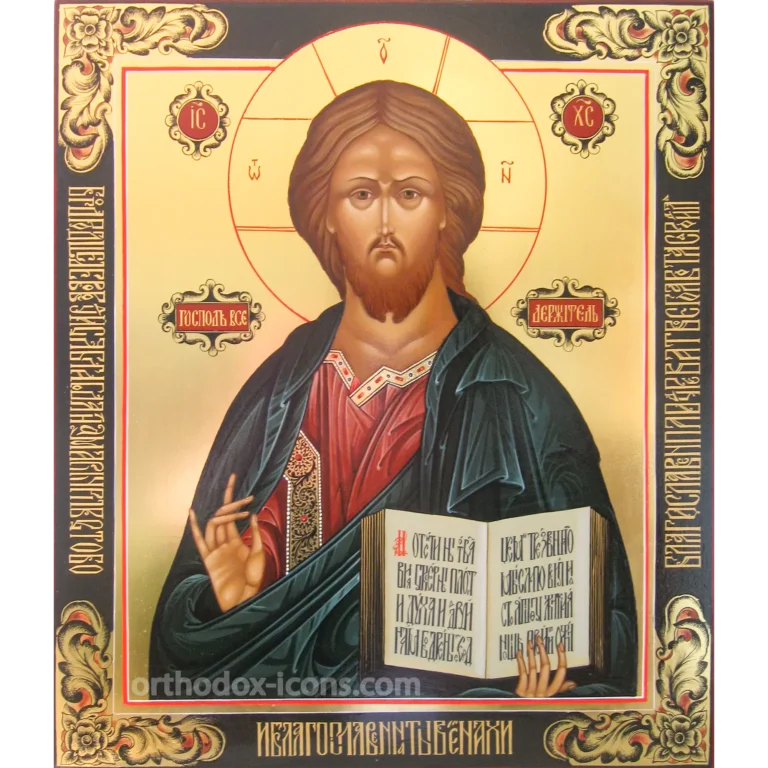
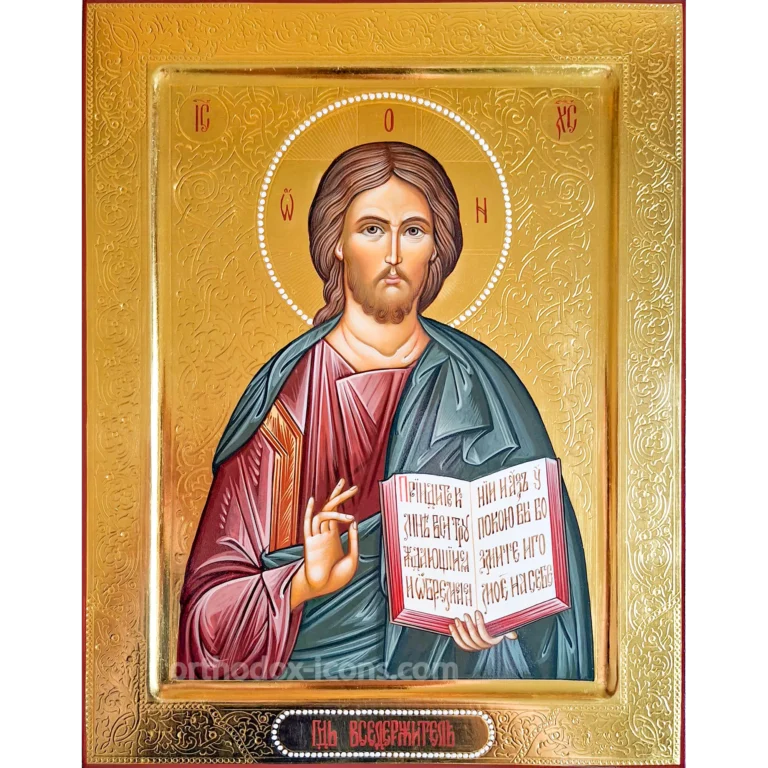
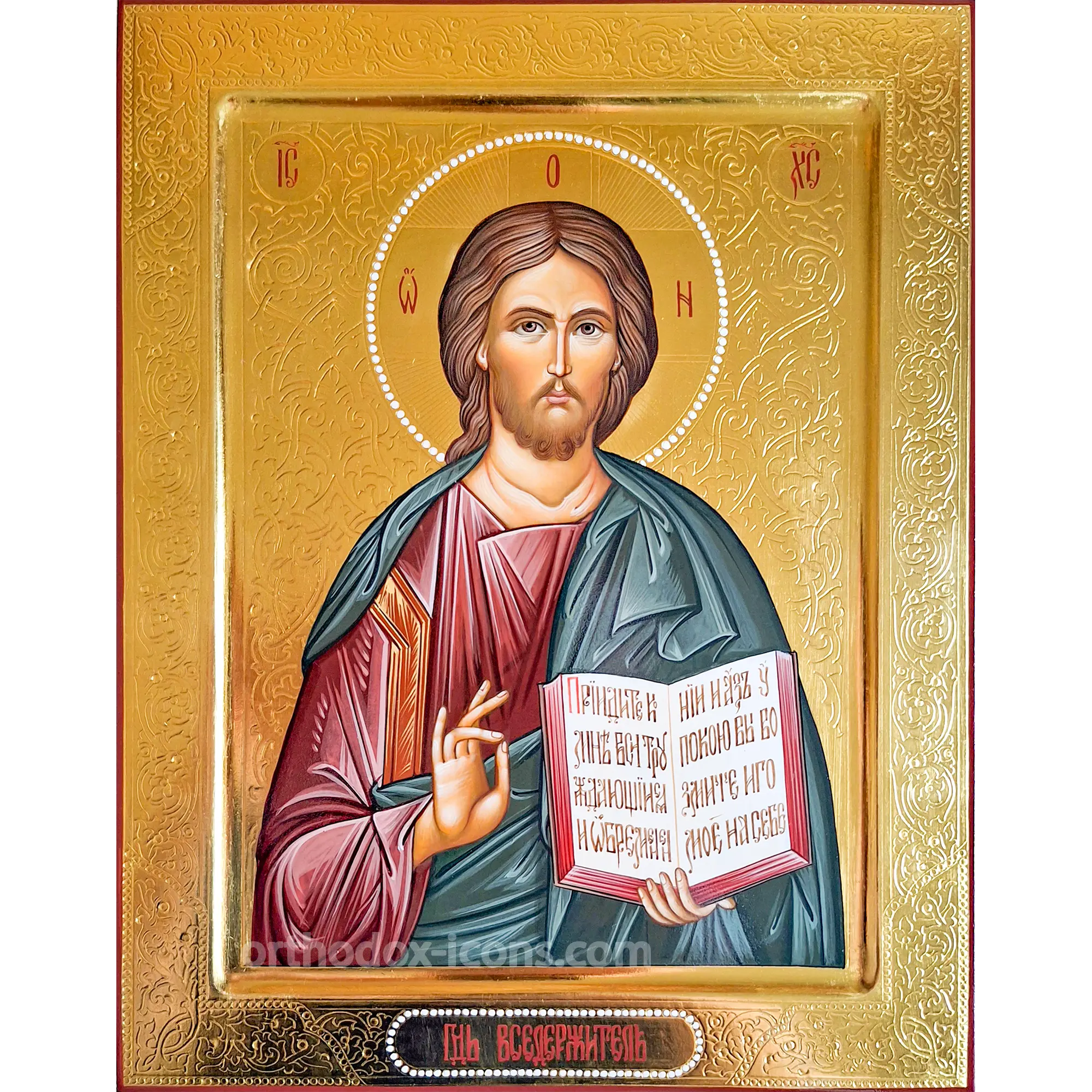
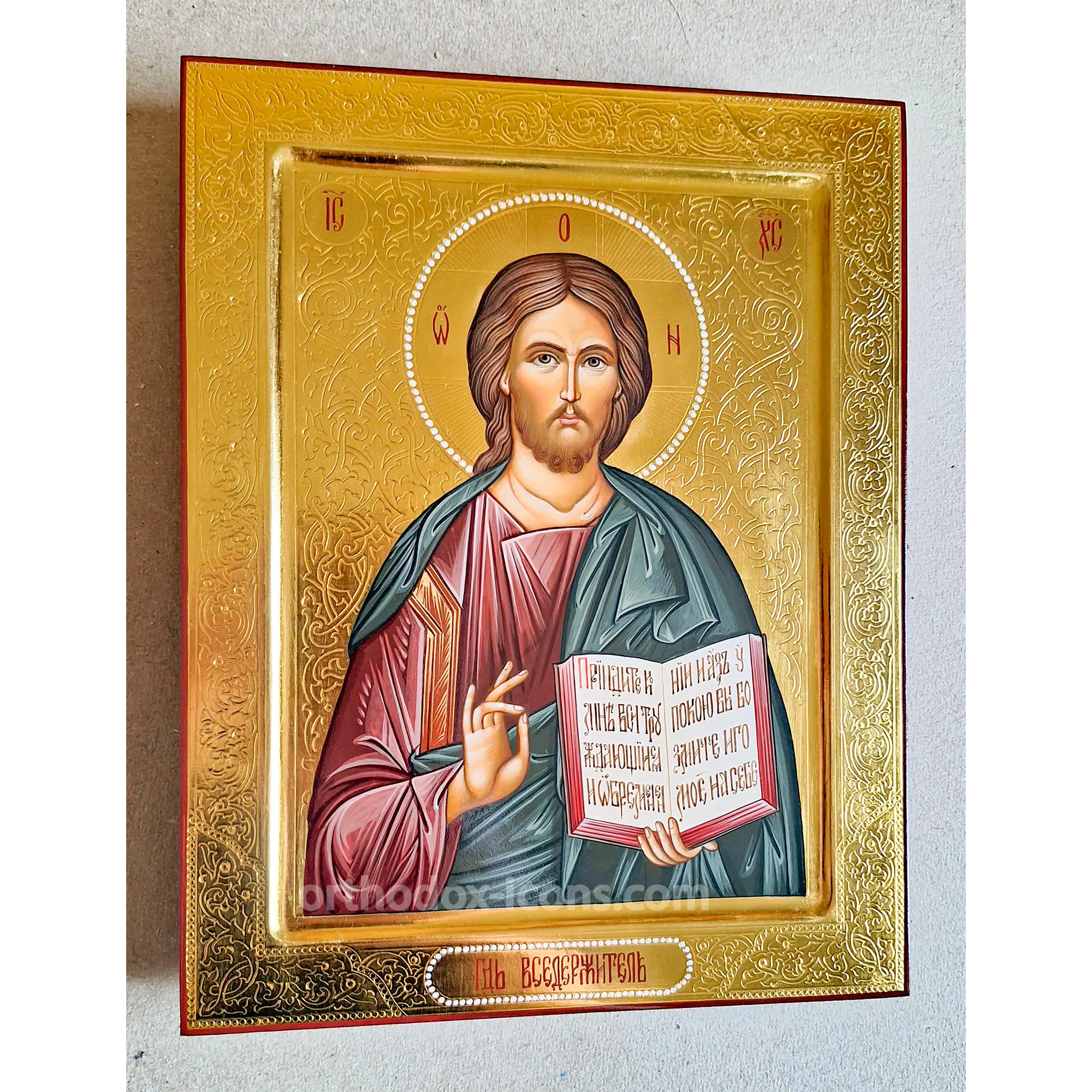
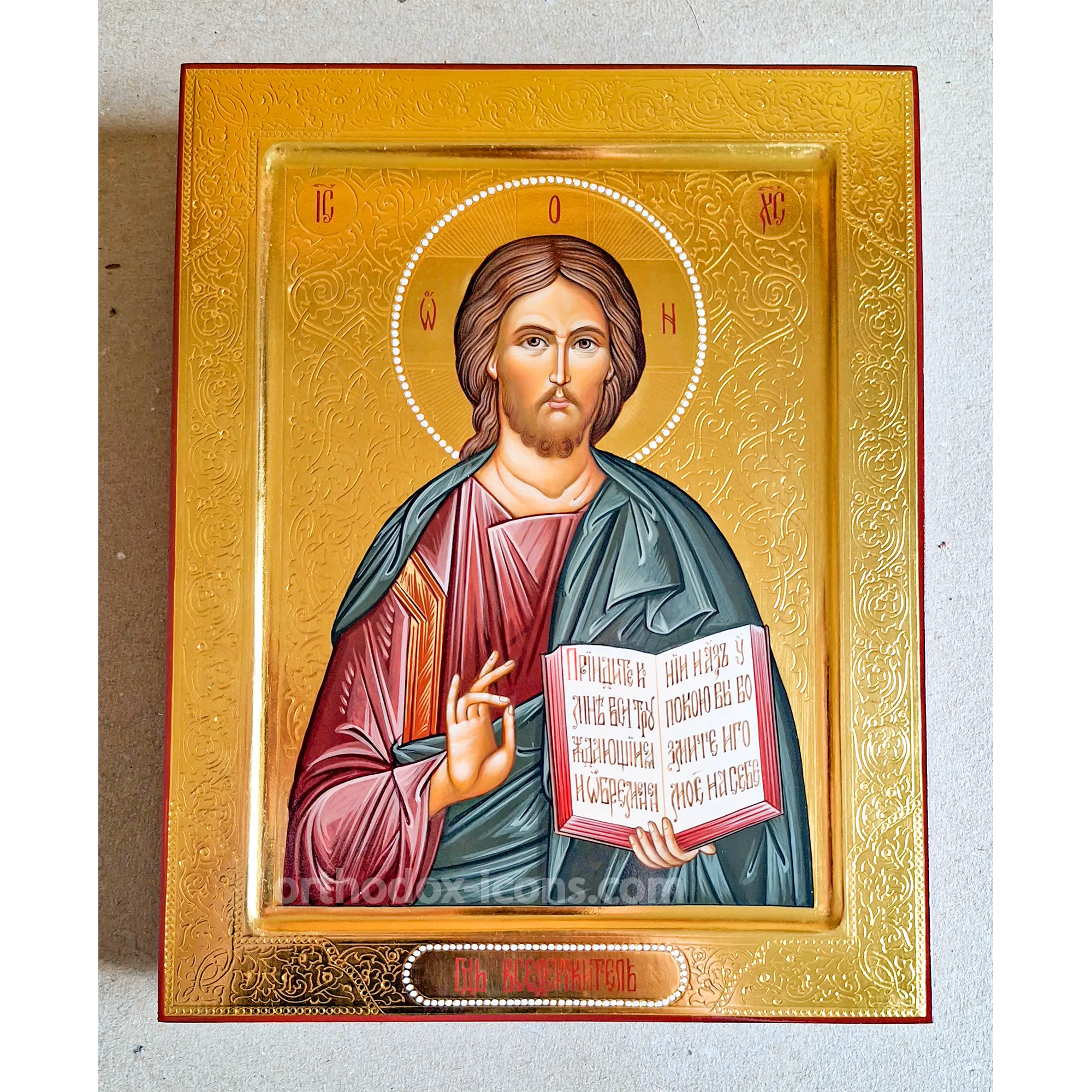
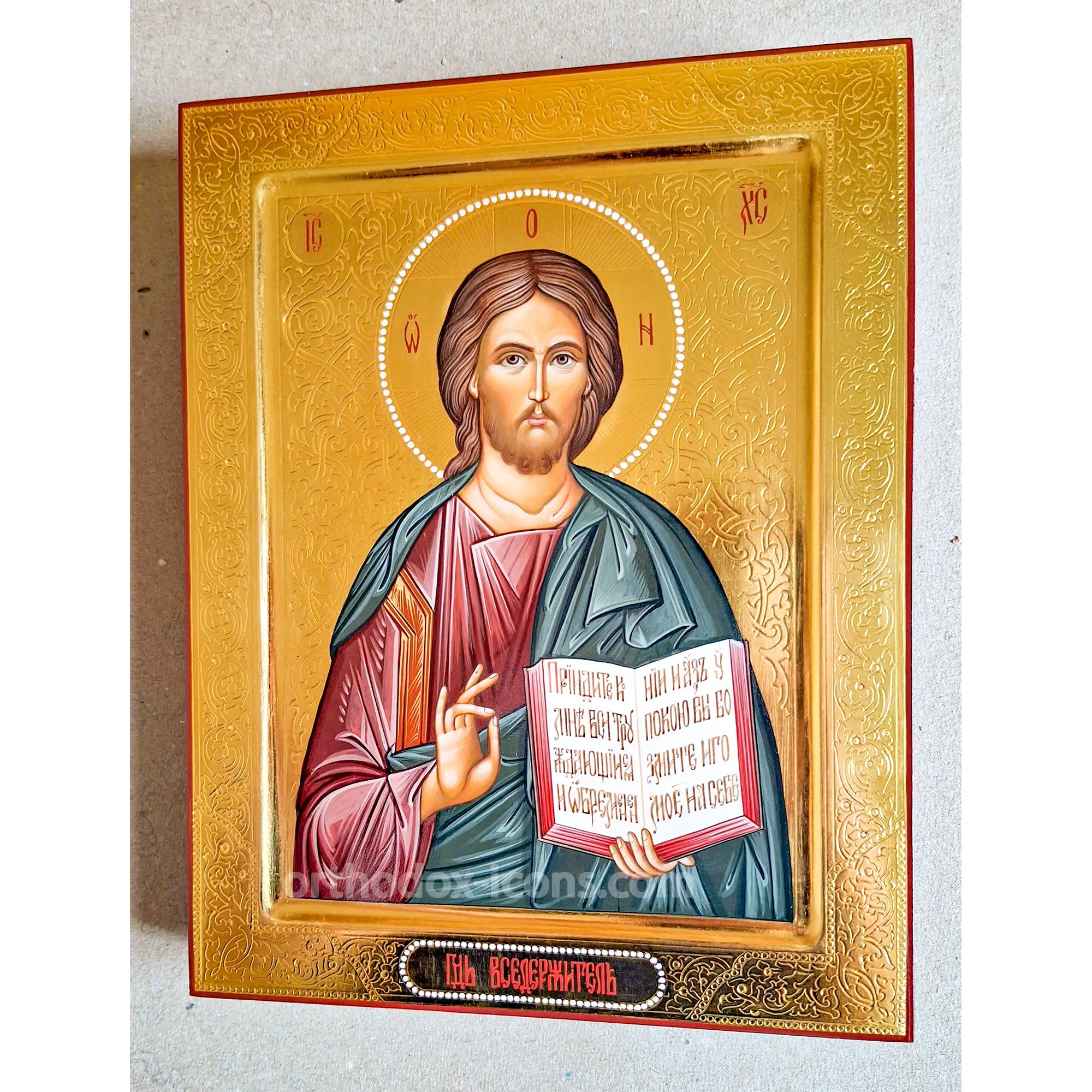
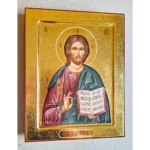
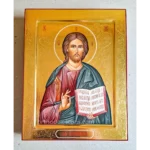
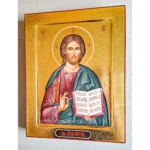
Jesus Christ Orthodox Art is a hand-painted icon of Jesus Christ Pantocrator in academic Orthodox style, with a warm realistic face, blessing hand, and open Gospel.
Painted on a linden wood board with oak splines, pavoloka, chalk gesso, mineral egg tempera, genuine 23K gold leaf (960 purity), and relief hand chasing over gesso. Larger church formats can be discussed individually. Free international shipping. Payment after receiving.
It is possible to paint an image in any size to order
Free shipping worldwide
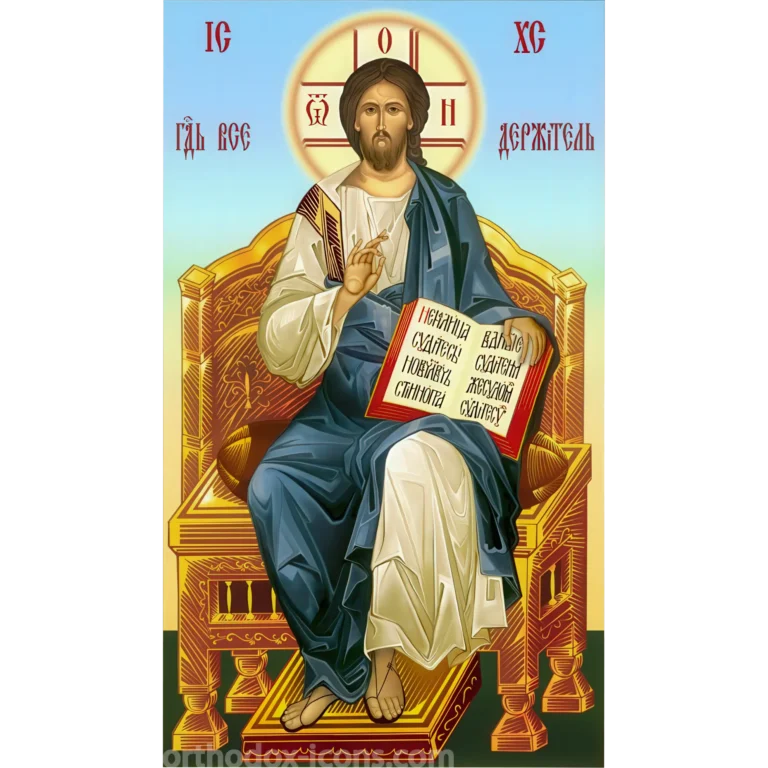
Jesus Christ Orthodox Art presents Jesus Christ in the iconographic type of Christ Pantocrator, the Savior Almighty. This hand-painted icon unites Russian academic icon painting with a richly gilded and hand-chased ornamental surface, creating a solemn image for prayer, blessing, and long-term devotional use.
Christ Pantocrator is the spiritual foundation of Orthodox iconography: the visible image of the Heavenly King, the all-powerful Creator, and the just yet infinitely loving Judge. The icon is suitable for a home iconostasis, a wedding blessing pair, a baptism or anniversary gift, a new home, a chapel, a parish church, or a larger iconostasis format.
Briefly About the Icon
- Page title: Jesus Christ Orthodox Art
- Iconographic subject: Jesus Christ Pantocrator, the Savior Almighty
- Painting style: academic Orthodox painting with realistic modeling and warm expression
- Decoration: 23K gold leaf (960 purity) with hand relief chasing over gesso
- Available sizes: 17 x 21 cm, 20 x 24 cm, 27 x 31 cm, 30 x 40 cm, and larger church formats by request
Academic Orthodox Painting
This icon is painted in the academic, or pictorial, style that became widespread in Russian church art in the eighteenth and nineteenth centuries. Unlike the stricter and more ascetic Byzantine manner, academic icon painting uses direct perspective, natural proportions, realistic modeling, and deeper light and shadow.
The face of the Savior is painted with layered glazes, slowly built from transparent tempera layers. The iconographer models the face with soft transitions from cooler shadows to warmer light, carefully working the flowing hair and the calm, compassionate gaze. The result is a face that feels close and living, while still remaining sacred, restrained, and prayerful.
The garments are also painted with strong texture and volume. The red chiton expresses Christ’s human nature and His redeeming blood shed on Golgotha. The blue-green himation points to His divine and heavenly nature. Together these colors confess the union of true God and true Man in the one Person of Jesus Christ.
Gold Leaf and Relief Chasing
The most striking decorative feature of this icon is the gilded and hand-chased surface. The wide borders and background are covered with genuine 23K gold leaf (960 purity). In Orthodox theology, gold is not only precious decoration; it expresses divine glory, uncreated light, eternity, and the heavenly realm.
Before gilding, the master works the thick chalk gesso with small tools, pressing and cutting a relief plant ornament into the surface. After the relief is formed, thin sheets of gold leaf are laid over it and polished. Raised elements catch the light, while recessed lines remain quieter and more matte. This creates the impression of a precious gold oklad, although the decoration is made directly on the icon board.
The plant ornament carries symbolic meaning. Vines, flowers, and interlacing leaves recall Paradise, the Tree of Life, eternal spiritual flowering, and the Gospel words of Christ: “I am the true vine.” The halo of the Savior and the lower inscription panel are emphasized with fine white dot painting that imitates pearl edging, a traditional symbol of purity and the preciousness of the Kingdom of Heaven.
Prayer Before the Icon
Christ Pantocrator is the Alpha and the Omega, the beginning and the end, and the principal address of Orthodox prayer. Believers come before this image with joy, sorrow, thanksgiving, repentance, and every serious need of the heart.
Before the icon of the Savior, people pray for consolation in grief, deliverance from despair, forgiveness of sins, cleansing of conscience, and strength to correct the path of life. In periods of illness, Christ is asked for healing of the body and strengthening of the spirit. Regular prayer before the icon is also a request for protection of the home and family from evil, envy, harm, and spiritual danger.
Believers also ask the Lord’s blessing before important life events: entering marriage, expecting a child, beginning new work, moving home, or setting out on a long journey.
A Status Gift and Wedding Blessing Icon
A hand-painted icon of Jesus Christ in such a rich gold-chased setting is a serious and meaningful Orthodox gift. It is not a casual decorative object, but a sacred image intended for a person whose spiritual life matters deeply.
First of all, it is a traditional wedding blessing icon for the groom. The icon of the Savior, paired with an icon of the Most Holy Theotokos, is used in the Orthodox sacrament of marriage to bless the newlyweds. A richly gilded hand-painted icon can become the first and strongest spiritual foundation of the new family’s icon corner.
This icon is also appropriate for a major anniversary, baptism, house blessing, or as a sign of deep gratitude and spiritual support. Its gold decoration makes it suitable for a formal classical interior, but its true purpose remains prayer.
Mstyora Materials and Traditional Technique
Although the painting style is academic, the construction of the icon board and the preparation of the surface follow traditional Russian icon-painting methods. The base is a solid board of well-dried linden wood, a material long valued for icon painting because it does not release resin, has an even structure, and takes gesso well.
Oak splines are inserted on the reverse side to help protect the board from warping as humidity and temperature change. Linen pavoloka is applied to the front, followed by ten to fifteen thin layers of natural chalk gesso. The relief ornament for the gilding is worked into this gesso surface.
The face and garments are painted with high-quality egg tempera made from natural mineral pigments such as ochers, lazurite, cinnabar, and glauconite, ground by hand and mixed with fresh egg emulsion. These pigments are known for strong lightfastness and durability.
Icon Characteristics
| Iconographic type | Christ Pantocrator, Jesus Christ the Savior Almighty, half-length image |
| Painting style | Academic Orthodox painting with multilayer glazes and realistic modeling |
| Background | Genuine 23K gold leaf (960 purity); smooth central background |
| Borders | Deep hand relief chasing over gesso with floral ornament and gilding |
| Halo decoration | Fine white dot painting imitating pearl edging |
| Board material | Linden wood, kovcheg, linen pavoloka, chalk gesso, inset oak splines |
| Paint | Natural mineral egg tempera |
| Available sizes | 17 x 21 cm, 20 x 24 cm, 27 x 31 cm, 30 x 40 cm; larger church and iconostasis formats by request |
| Care recommendation | Keep away from humidity changes and cleaning products; dust relief chasing only with a dry soft brush; a glass-fronted kiot is recommended |
Care for the Icon
An icon with relief chasing and gold leaf must be treated carefully. Do not use water, wet wipes, alcohol, or household cleaning products. Dust the relief only with a dry, very soft natural brush. A glass-fronted wooden kiot is strongly recommended to protect the icon from dust, drafts, humidity changes, candle soot, and accidental contact.
Ordering, Shipping, and Payment
The icon is available in standard home sizes and larger church formats by individual agreement. Free international shipping is included, and payment is made after receiving the icon.
Key Features
- Jesus Christ Pantocrator in academic Orthodox painting;
- warm, realistic face with preserved sacred restraint;
- red chiton, blue-green himation, blessing hand, and open Gospel;
- 23K gold leaf (960 purity) with relief hand chasing over gesso;
- linden board, oak splines, pavoloka, chalk gesso, and mineral egg tempera;
- suitable for wedding blessing, home iconostasis, baptism, anniversary, or church use.
Questions and Answers
What is the iconographic subject of this Jesus Christ Orthodox Art?
The iconographic subject is Jesus Christ as Pantocrator, the Savior Almighty, shown as Heavenly King, merciful Redeemer, and Judge.
What makes this icon visually special?
It combines warm academic painting of Christ’s face with a 23K gold leaf (960 purity) background and deep hand relief chasing on the borders.
What is academic icon painting?
Academic icon painting uses realistic modeling, soft light and shadow, and careful anatomy while preserving the sacred and prayerful character of the icon.
What does the gold background symbolize?
Gold symbolizes divine glory, uncreated light, eternity, and the heavenly realm where there is no ordinary earthly shadow.
What is relief chasing over gesso?
It is a decorative technique in which the master cuts and presses a raised ornament into the gesso before covering it with gold leaf.
What does the vine ornament mean?
The vine and plant ornament can symbolize Paradise, the Tree of Life, spiritual flowering, and Christ’s words: I am the true vine.
Is this icon suitable as a wedding blessing gift?
Yes. An icon of Christ Pantocrator is traditionally used as the wedding blessing icon for the groom and can be paired with an icon of the Theotokos.
What materials are used?
The icon is painted on a linden wood board with oak splines, linen pavoloka, chalk gesso, mineral egg tempera, and genuine 23K gold leaf (960 purity).
What sizes are available?
Available sizes are 17 x 21 cm, 20 x 24 cm, 27 x 31 cm, and 30 x 40 cm. Larger church formats can be discussed individually.
Do you offer international shipping and when is payment made?
Yes. Free international shipping is included, and payment is made after receiving the icon.
| Dimensions | 17x21cm (6.7×8.3 in), 20x24cm (7.9×9.4 in), 27x31cm (10.6×12.2 in), 30x40cm (11.8×15.7 in) |
|---|---|
| Name | Jesus |