Almighty God Orthodox Icon
Price range: $500 through $1600
Available sizes: 17×21 cm (6.7×8.3 in), 20×24 cm (7.9×9.4 in), 27×31 cm (10.6×12.2 in), 30×40 cm (11.8×15.7 in).
Almighty God Orthodox Icon is listed under this English title, while the iconographic subject is Jesus Christ in the type of Christ Pantocrator, the Savior Almighty.
Hand-painted in the Mstyora tradition on a linden board with oak splines, linen pavoloka, chalk gesso, egg tempera, natural mineral pigments, a 23K gold leaf (960 purity) halo, and gold assist on the garments. Larger iconostasis formats can be discussed individually. Free international shipping. Payment after receiving.
It is possible to paint an image in any size to order
Free shipping worldwide
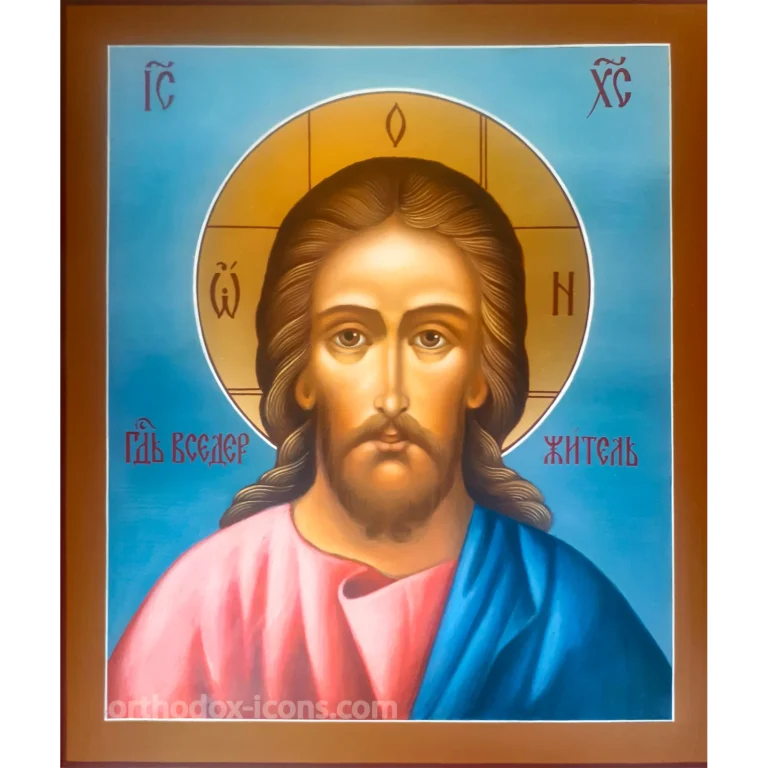
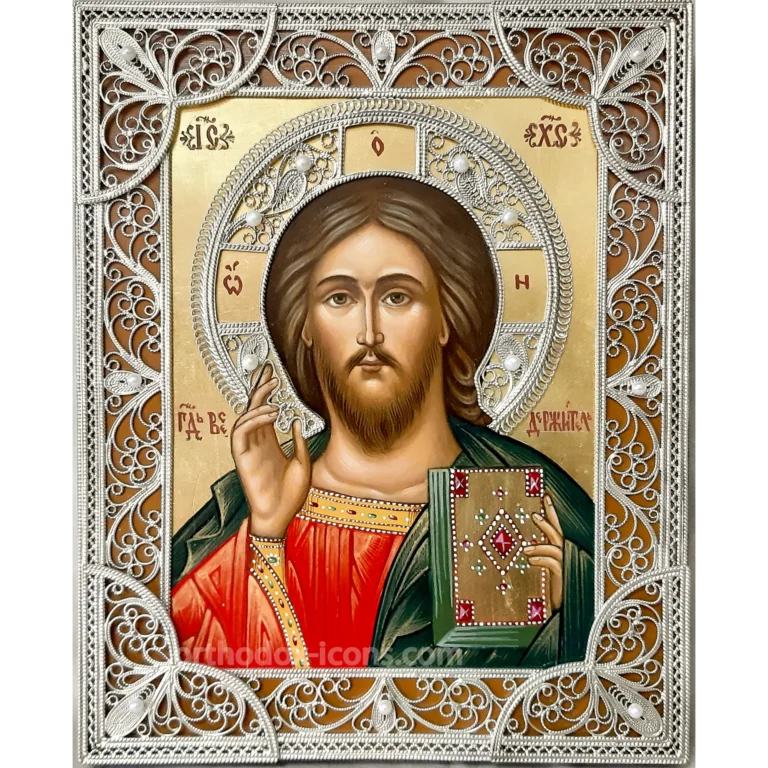
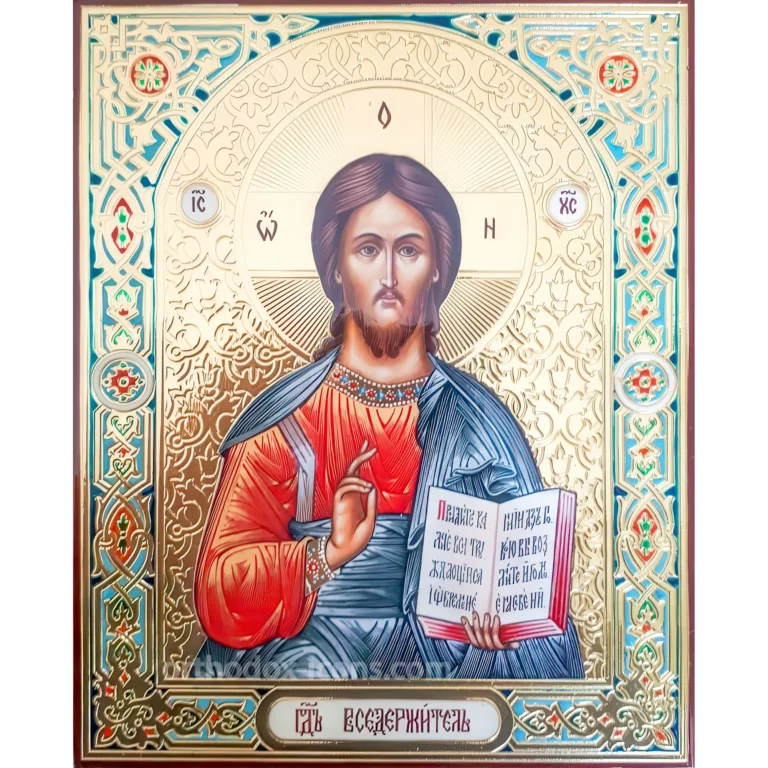
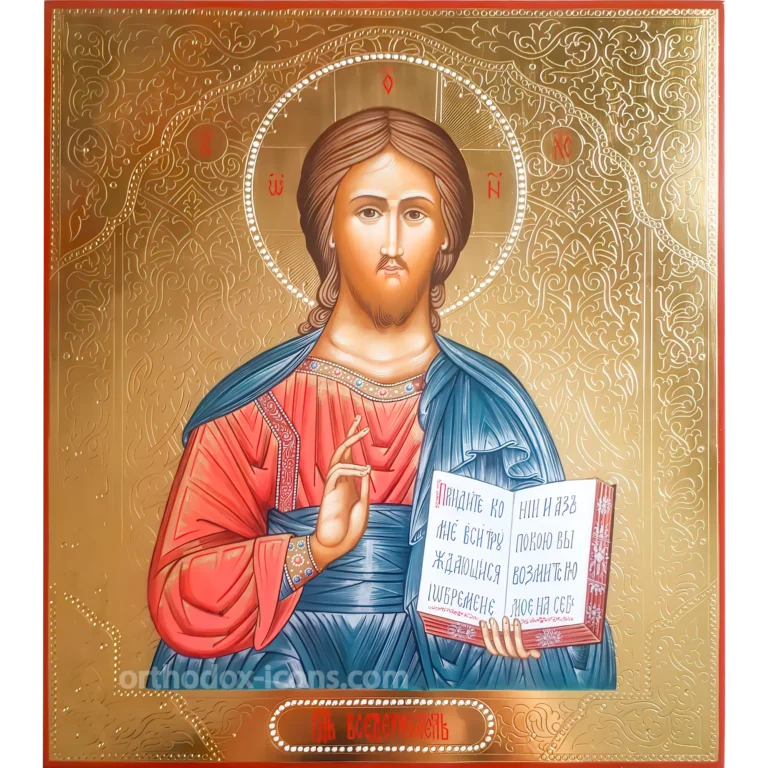
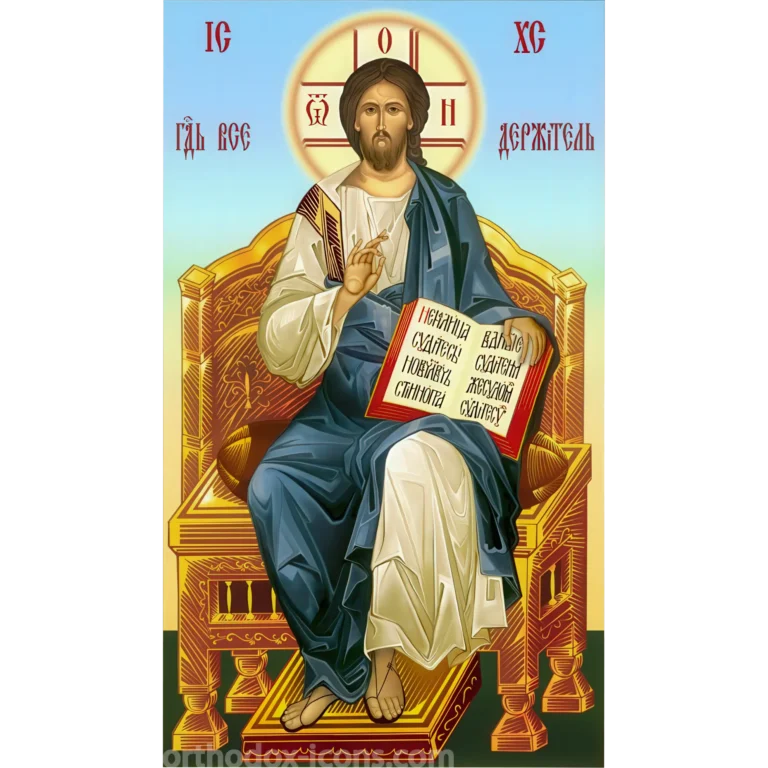
This hand-painted Orthodox icon presents Jesus Christ in the type of Christ Pantocrator, the Savior Almighty. This is one of the principal images of Orthodox tradition, before which believers pray for healing, forgiveness of sins, protection from evil, and consolation in sorrow.
The icon is painted in the strict canon of the Mstyora school on a linden wood board with oak splines. It uses egg tempera made from natural mineral pigments, a gold halo with genuine 23K gold leaf (960 purity), and traditional gold assist on the garments. The available sizes are 17 x 21 cm, 20 x 24 cm, 27 x 31 cm, 30 x 40 cm, with larger iconostasis formats by request.
Briefly About the Icon
- Page title: Almighty God Orthodox Icon
- Iconographic subject: Jesus Christ, Christ Pantocrator, the Savior Almighty
- Spiritual meaning: Christ as Almighty Lord, merciful Redeemer, Teacher, and Judge
- Available sizes: 17 x 21 cm, 20 x 24 cm, 27 x 31 cm, 30 x 40 cm, and larger iconostasis formats by request
- Technique: Mstyora hand painting, linden board, oak splines, linen pavoloka, gesso, egg tempera, mineral pigments, 23K gold leaf (960 purity), and gold assist
Meaning of Christ Pantocrator
The Greek word Pantocrator, translated in the Orthodox tradition as Almighty or Lord of all, means the One who holds all things. This title expresses a central Christian confession: the omnipotence of the invisible God is revealed in the visible human incarnation of Jesus Christ.
The icon of Christ Pantocrator is not simply a portrait-like image of the Savior during His earthly ministry. It is theology expressed through color and form. It bears witness that the Heavenly King and Judge is also the merciful Redeemer who took human flesh for the salvation of every person.
History of the Iconographic Type
The iconographic type of Christ Pantocrator developed in early Christian Byzantine art from the fourth to the sixth centuries. During the first centuries of persecution, Christians often represented Christ through hidden symbols such as the fish, the sacrificial lamb, the vine, or the Good Shepherd. As the Church reflected more deeply on the mystery of the Incarnation, a direct image of the God-Man in heavenly glory became necessary.
One of the oldest surviving examples is the famous encaustic icon of Christ Pantocrator from Saint Catherine’s Monastery on Mount Sinai, dated to the middle of the sixth century. In that Sinai image, the essential features of the type are already present: the half-length figure, blessing right hand, Gospel in the left hand, cross halo, and direct gaze turned toward the one who prays.
This iconographic canon came to Rus’ after the Baptism of Rus’ in 988. Greek masters painted large images of the Pantocrator in the domes of the first churches, and later the image became central in panel icons for home and church prayer. The Mstyora school developed this tradition with refined layered painting, soft color transitions, careful detail, and skilled use of gold.
Iconographic Details
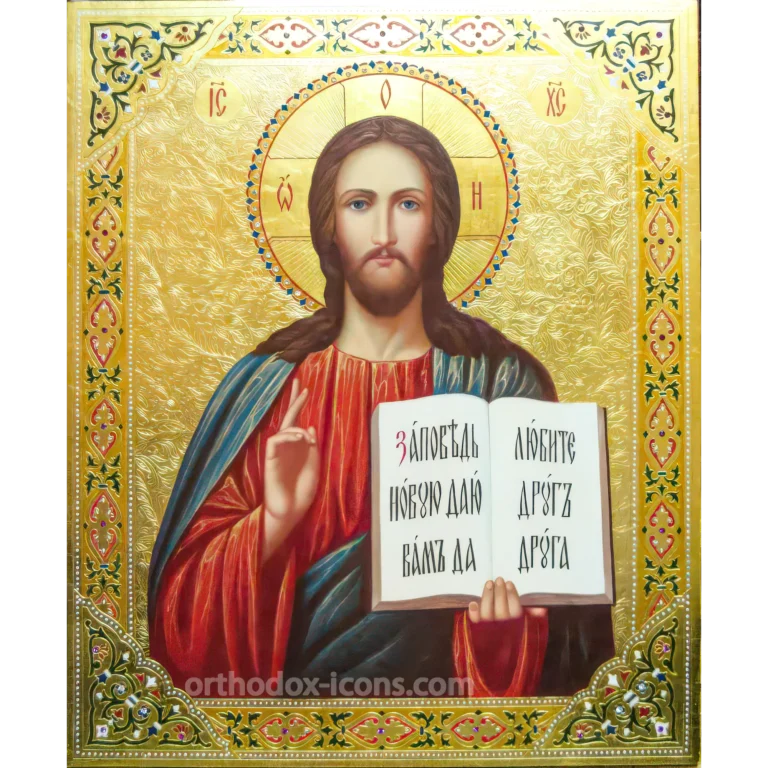
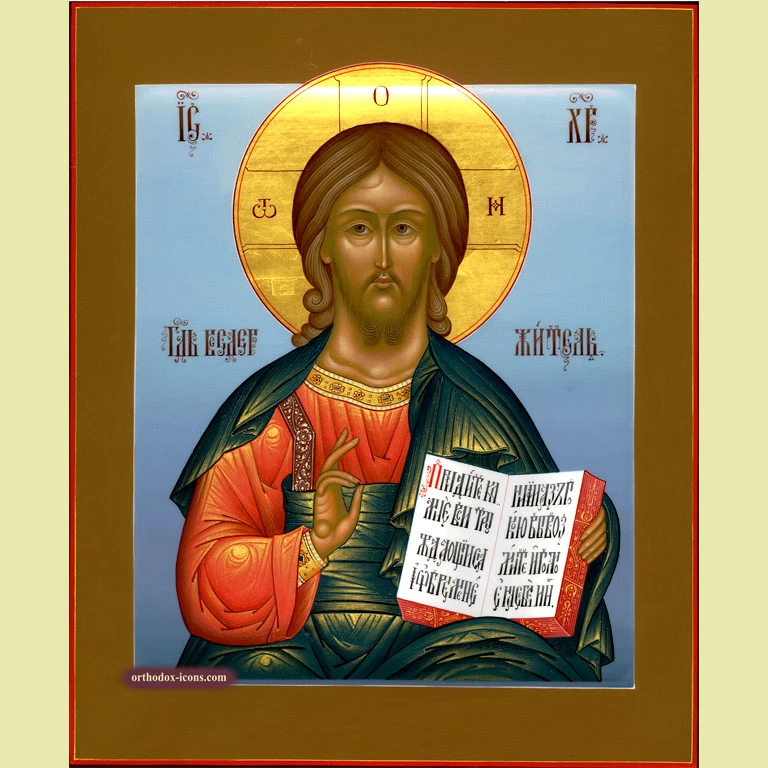
In this hand-painted icon, the Lord Jesus Christ is shown half-length, with a calm and penetrating gaze directed toward the believer. The face is painted with layered transitions from deeper underpainting to warm ocher highlights and subtle living tones. This gives the image a quiet inner luminosity rather than an external theatrical brightness.
The garments of Christ follow the Orthodox canon. The lower garment, or chiton, is painted in warm red-brown tones. Red expresses royal dignity, life, and the sacrificial blood voluntarily shed by the Savior on the Cross. The outer garment, or himation, is painted in deep dark blue-green tones, pointing to Christ’s divine and heavenly nature.
The right hand of the Lord is raised in the name-sign blessing. The fingers form the traditional monogram IC XC, meaning Jesus Christ. This gesture is not a decorative pose; it is a sign of divine grace, protection, and healing. In the left hand, Christ holds the open Gospel, the Book of Life, with words of truth addressed to all people.
The cross halo above the Savior’s head is one of the most important dogmatic symbols in the icon. The Greek letters in the halo mean “He Who Is”, the sacred name revealed to Moses at the Burning Bush. This is a direct confession that Christ is eternal and divine.
Prayer Before the Icon
The icon of the Savior is the primary image for prayerful turning to God. Believers may come before Christ with any need, in joy or in grief, in thanksgiving or repentance. No sorrow, illness, or burden is outside the mercy of the Lord.
- Healing: believers pray for help in serious illness, strength for the sick, wisdom for doctors, and recovery for themselves or loved ones.
- Forgiveness and repentance: before this strict yet merciful image, a person asks forgiveness for sins, harmful thoughts, pride, anger, and spiritual carelessness.
- Protection from evil: prayer before Christ asks for protection of the home, family, and loved ones from deception, slander, cruelty, temptation, and sudden misfortune.
- Consolation in sorrow: in grief, despair, or loss, prayer to the Savior helps the believer seek hope, peace of heart, and strength to continue.
- Blessing for important work: before this image, believers ask blessing for honest work, travel, study, building a home, and serious life decisions.
A Meaningful Orthodox Gift
A hand-painted icon of Jesus Christ is a universal and deeply significant gift for an Orthodox Christian. Together with an icon of the Mother of God, most often Kazan or Vladimir, the icon of Christ Pantocrator forms a traditional wedding blessing pair. These two icons can become the visual and spiritual center of a family iconostasis.
The icon of the Savior is also appropriate for baptism, an anniversary, a house blessing, a name day, or as a sign of spiritual support for a person passing through difficult circumstances. A hand-painted Mstyora icon is not a printed reproduction; it is a sacred image made through careful work, traditional materials, and prayerful attention.
Mstyora Materials and Technique
Each hand-painted icon of Jesus Christ is made through a long and carefully regulated traditional process. The base is a natural linden wood board, valued in icon painting for its even structure and ability to receive gesso well. Oak splines are inserted on the reverse side to help keep the board stable and reduce warping over time.
Linen pavoloka is applied to the front of the board. Over it, the iconographer applies multiple layers of natural chalk gesso and sands the surface to prepare it for painting. The image is painted in egg tempera from natural mineral pigments ground by hand and mixed with egg-yolk emulsion.
The halo is gilded with genuine 23K gold leaf (960 purity). Gold assist is used on the garments to express the presence of divine light. These materials give the icon durability, depth, and the restrained brilliance proper to Orthodox sacred art.
Care for a Hand-Painted Icon
- Cleaning: remove dust only with a dry, very soft natural brush or clean velvet cloth.
- Temperature and humidity: avoid sudden changes, direct sunlight, heating radiators, fireplaces, humidifiers, and drafts.
- Protective case: a glass-fronted wooden kiot is the best protection against dust, candle soot, accidental scratches, and environmental damage.
Icon Characteristics
| Page title | Almighty God Orthodox Icon |
| Iconographic subject | Jesus Christ, Christ Pantocrator, the Savior Almighty |
| Base material | Natural dried linden wood with oak splines on the reverse |
| Board preparation | Linen pavoloka and multi-layer natural chalk gesso |
| Painting technique | Layered Mstyora painting, egg tempera, hand-ground natural mineral pigments |
| Gilding | Genuine 23K gold leaf (960 purity) on the halo and gold assist on the garments |
| Icon-painting school | Traditional Mstyora school |
| Available sizes | 17 x 21 cm, 20 x 24 cm, 27 x 31 cm, 30 x 40 cm, and larger iconostasis formats by request |
Ordering, Shipping, and Payment
The icon is available in standard home sizes and larger iconostasis formats by individual agreement. Free international shipping is included, and payment is made after receiving the icon.
Key Features
- Jesus Christ in the iconographic type of Christ Pantocrator;
- traditional Mstyora hand painting with layered egg tempera;
- linden wood board with oak splines, linen pavoloka, and chalk gesso;
- natural mineral pigments, gold halo, and gold assist on garments;
- available in 17 x 21, 20 x 24, 27 x 31, and 30 x 40 cm;
- suitable for home prayer, wedding blessing pair, baptism gift, and iconostasis formats.
Questions and Answers
What does Pantocrator mean?
Pantocrator means Almighty or Lord of all. In Orthodox iconography it refers to Christ as the Savior, King, Teacher, and Judge of the world.
What prayers are offered before this icon?
Believers pray before this icon for healing, forgiveness, protection from evil, consolation in sorrow, blessing for important decisions, and strength in faith.
What do the letters IC XC mean?
IC XC is the traditional Greek abbreviation of the name Jesus Christ, used on Orthodox icons of the Savior.
What can be written in the open Gospel?
The Gospel text may vary. It often contains words of consolation, the call to follow Christ, or the commandment of love.
Why is 23K gold leaf (960 purity) used?
High-grade gold leaf gives the halo a lasting, luminous surface and symbolizes divine light in traditional Orthodox icon painting.
What wood is used for the icon board?
The icon is painted on a natural linden wood board, a traditional material valued for its even structure and suitability for gesso and tempera.
Why are oak splines used on the back?
Oak splines help strengthen the wooden board and reduce the risk of warping as natural wood reacts to changes in humidity.
Can this icon be used as a wedding blessing gift?
Yes. An icon of Christ Pantocrator can be paired with an icon of the Mother of God as a traditional Orthodox wedding blessing pair.
What sizes are available?
Available sizes are 17 x 21 cm, 20 x 24 cm, 27 x 31 cm, and 30 x 40 cm. Larger iconostasis formats can be discussed individually.
Do you offer international shipping and when is payment made?
Yes. Free international shipping is included, and payment is made after receiving the icon.
| Dimensions | 17x21cm (6.7×8.3 in), 20x24cm (7.9×9.4 in), 27x31cm (10.6×12.2 in), 30x40cm (11.8×15.7 in) |
|---|---|
| Name | Jesus |