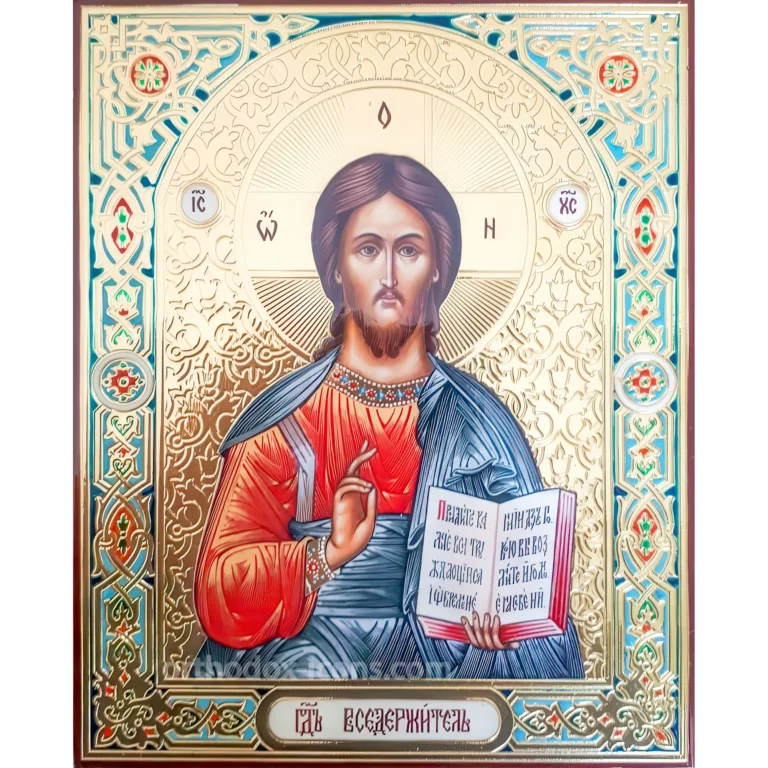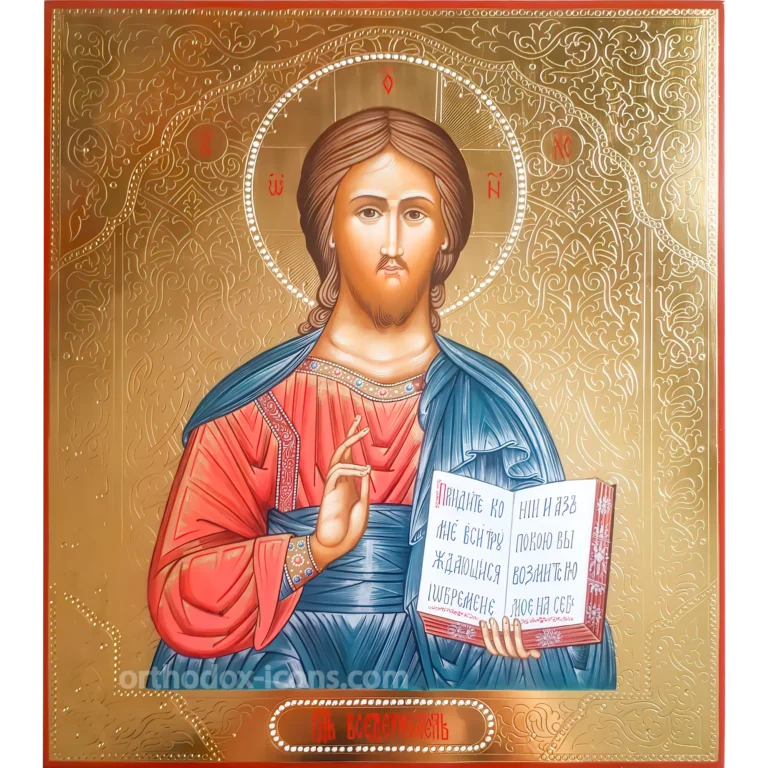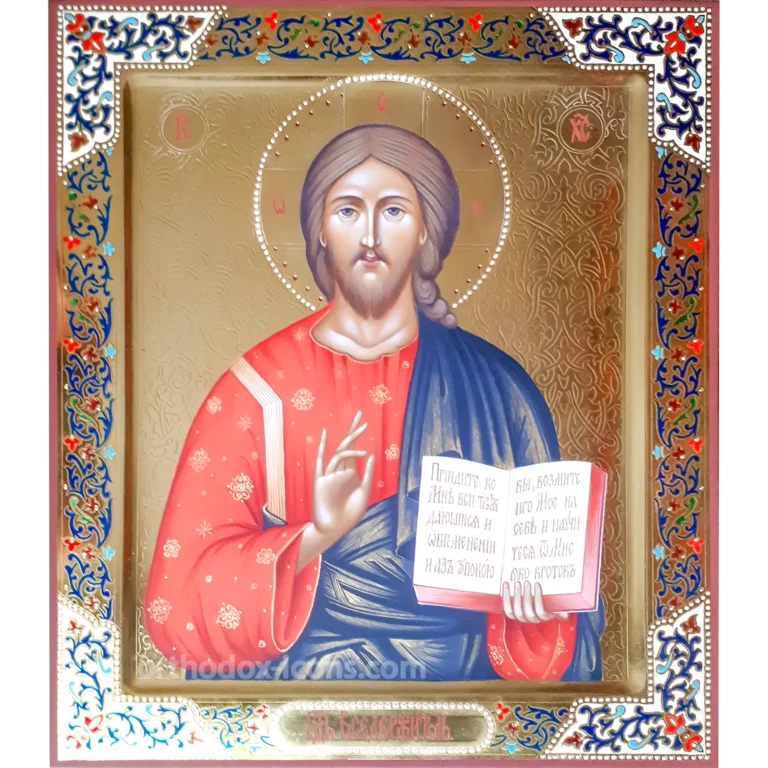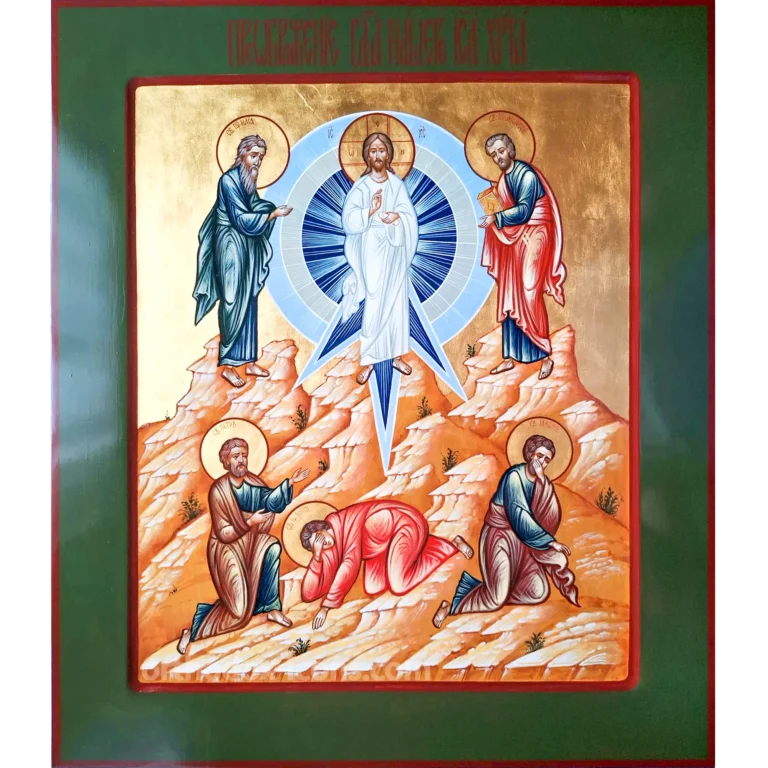
Holy Mandylion of Edessa
Price range: $700 through $2250
Available sizes: 17×21 cm (6.7×8.3 in), 20×24 cm (7.9×9.4 in), 27×31 cm (10.6×12.2 in), 30×40 cm (11.8×15.7 in). Iconostasis sizes by request.
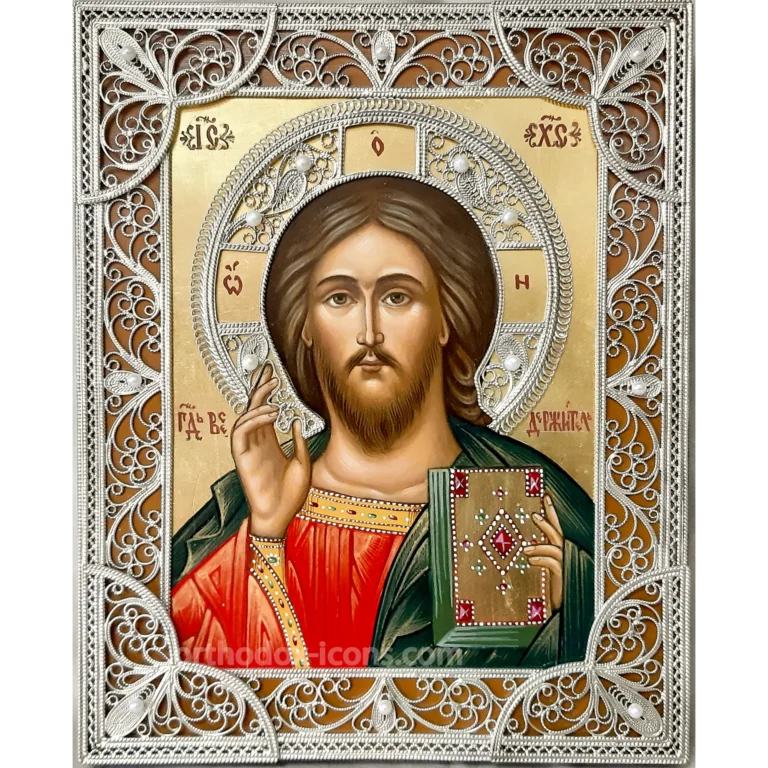
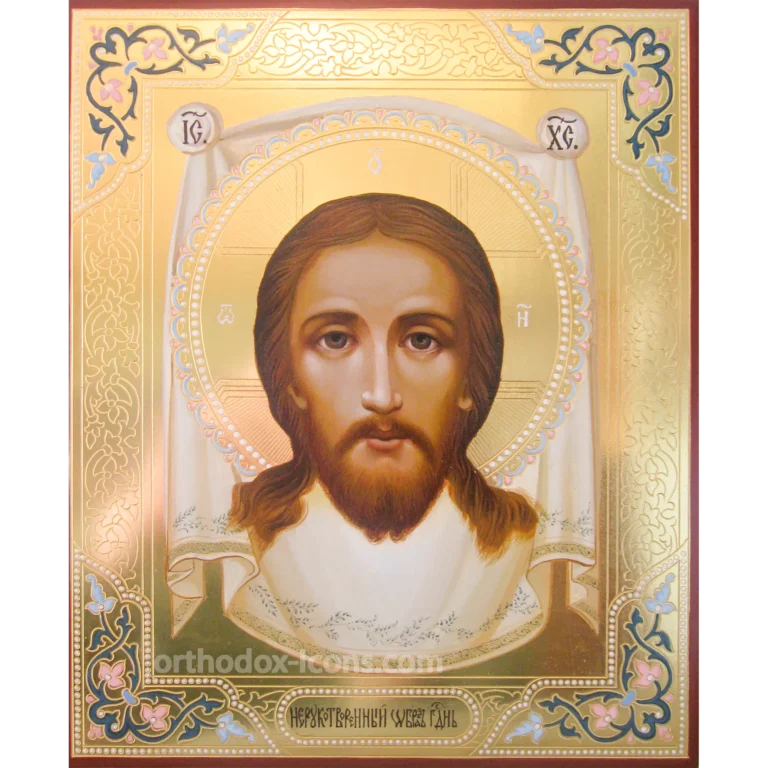
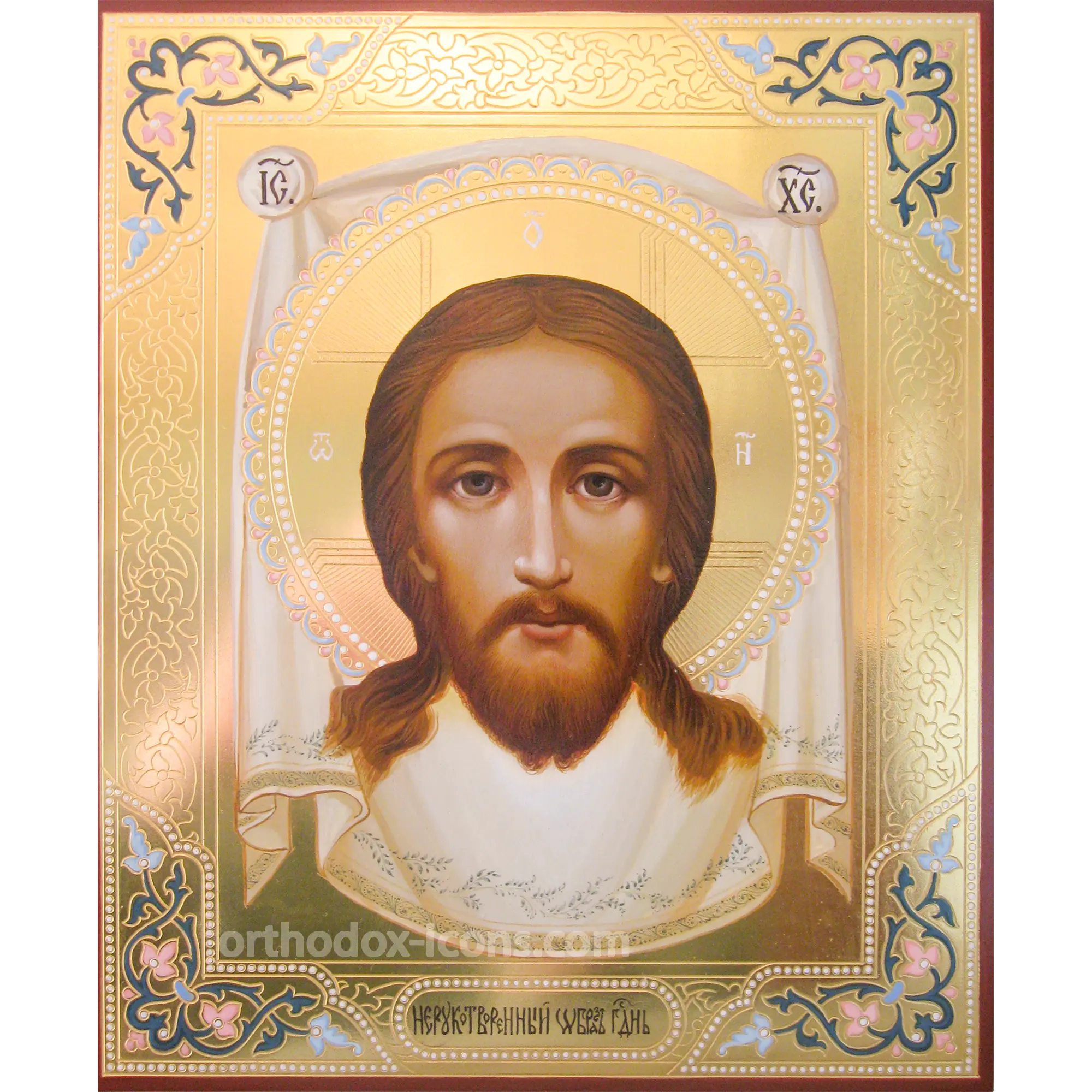
Holy Mandylion of Edessa is a hand-painted Orthodox icon of the Holy Face of Christ, the Image Not Made by Hands, shown on the white cloth.
Painted on a linden wood board with oak splines, gesso, mineral egg tempera, 23K gold leaf (960 purity), rich gold ornamental background, radiant halo, and floral corner motifs. Free international shipping. Payment after receiving.
It is possible to paint an image in any size to order
Free shipping worldwide
Holy Mandylion of Edessa is a hand-painted Orthodox icon of the Holy Face of Christ, also known as the Image Not Made by Hands. The icon shows the face of the Savior on the white cloth, or ubrus, without a half-length figure, Gospel, blessing hand, or narrative setting. Its strength is concentrated in the face of Christ and His direct, quiet gaze.
This Mstyora-style icon has a rich gold ornamental background, a white cloth with delicate edging, a radiant halo, and graceful floral decoration in the corners. It is painted on a natural linden wood board with oak splines, gesso, mineral egg tempera, and genuine 23K gold leaf (960 purity).
Meaning of the Holy Mandylion of Edessa
The Holy Mandylion of Edessa is one of the oldest and most revered images of Christ in Orthodox tradition. It is connected with the ancient Church tradition of the miraculous imprint of the face of Christ on a cloth. This is why the icon is called Not Made by Hands.
The image is especially important because it witnesses to the reality of the Incarnation. The Son of God did not remain distant and invisible; He became Man, and His human face could be seen. Therefore the icon is not a religious fantasy, but a confession that God truly entered visible human life.
In this icon there is no action or story to follow. The person praying stands before the face of Christ. The image helps the heart become quiet, attentive, and honest before God.
History of the Image Not Made by Hands
According to Church tradition, King Abgar of Edessa suffered from a serious illness and heard about Christ. He sent a messenger to the Savior, asking Him to come and heal him. The messenger could not paint the face of Christ because the Savior’s face was full of extraordinary light and spiritual power.
Then Christ washed His face, wiped it with a cloth, and His image was miraculously imprinted on the fabric. The cloth was brought to Abgar, who received healing and believed in Christ. This holy cloth became known as the Mandylion.
For the Church, the Mandylion became a powerful witness in defense of holy icons. If Christ Himself revealed His image, then the holy icon is not an idol, but a window to the prototype and a witness to the truth of the Gospel.
Theological Meaning
The Holy Mandylion speaks first of all about the Incarnation. If God became Man, then the face of Christ can be shown and venerated. The image is therefore one of the most important Orthodox witnesses to Christ as true God and true Man.
The absence of narrative details is part of the icon’s theological strength. There is no book, no architectural background, no gesture, and no landscape. There is only the face. The believer is invited into a silent meeting with Christ.
The gaze of Christ is calm, direct, and filled with truth. It is not cold or severe, yet it allows no self-deception. Before this face, a person can ask for help in earthly needs, but also for deeper gifts: faith, repentance, purity of heart, and inner peace.
Artistic Features of This Icon
This icon has a noble and festive character. The gold plays a leading role, creating a feeling of light, glory, and solemnity. At the same time, the rich ornamental background does not overwhelm the image; it emphasizes the purity and stillness of the Holy Face.
The white cloth is painted delicately, with soft folds and a fine ornamental edge. Behind it opens a gold background with plant ornament. The round halo is richly developed, with a decorative border and a luminous circle that strengthens the sense of heavenly glory.
In the corners and upper field are graceful floral motifs in blue, rose, and dark blue tones. These accents give the icon a festive beauty while keeping the face of Christ as the spiritual and visual center.
Traditional Materials and Technique
The base of the icon is a natural linden wood board. Linden is one of the traditional materials for icon painting because of its stable structure, even surface, and ability to receive ground and paint well. Oak splines strengthen the board and help preserve its shape over time.
The surface is prepared with gesso, the traditional multi-layer ground that gives the painting a bright and durable base. The image is painted with mineral tempera on an egg-based emulsion, a classical Orthodox icon-painting technique valued for noble color and long life.
The gilding is made with genuine 23K gold leaf (960 purity). In this icon, gold forms the main decorative field, the halo, and the luminous atmosphere of the image. It symbolizes divine light, the glory of the Kingdom of Heaven, and the incorruptible radiance of holiness.
Prayer Before the Mandylion
Before the Holy Mandylion, Orthodox Christians pray for peace of soul, strengthening of faith, wisdom, help in difficult circumstances, protection of the home, healing of spiritual sorrows, and blessing of the family.
Before This Icon, Believers Pray:
- for spiritual strengthening and preservation of faith;
- for peace of heart and freedom from anxiety;
- for protection of the home and family;
- for help in difficult life circumstances;
- for wisdom and a good decision;
- for repentance and cleansing of conscience;
- for blessing to live according to the Gospel.
Who This Icon Is Suitable For
- For a home iconostasis: one of the principal images of Christ for family prayer.
- For personal prayer: especially when quiet, focused prayer before the face of Christ is needed.
- For an Orthodox gift: suitable for baptism, house blessing, name day, anniversary, or a church gift.
- For a chapel or church: appropriate for a kiot, local row, or iconostasis setting.
- For iconostasis projects: larger sizes can be discussed by request.
Icon Characteristics
| Name | Holy Mandylion of Edessa |
| Iconographic type | Holy Face of Christ, Image Not Made by Hands, Savior on the Cloth |
| Main spiritual meaning | Incarnation and the living presence of Christ the Savior |
| Board | Natural linden wood |
| Board reinforcement | Oak splines |
| Ground | Gesso |
| Painting | Mineral egg tempera |
| Gilding | 23K gold leaf (960 purity) |
| Available sizes | 17 x 21 cm, 20 x 24 cm, 27 x 31 cm, 30 x 40 cm, and iconostasis sizes by request |
| Purpose | Home iconostasis, prayer corner, Orthodox gift, chapel, church, and iconostasis |
Ordering, Shipping, and Payment
The icon is available in standard home sizes and larger iconostasis formats by request. Free international shipping is included, and payment is made after receiving the icon.
Questions and Answers
What is the Holy Mandylion of Edessa?
It is the Holy Face of Christ on the cloth, the Image Not Made by Hands, connected with the ancient tradition of King Abgar of Edessa.
Why is this image called Not Made by Hands?
According to Church tradition, Christ’s face was miraculously imprinted on the cloth and was not created by human painting.
What does the Mandylion show?
It shows only the face of Christ on the white cloth, without a half-length figure, Gospel, blessing hand, or narrative scene.
What do Orthodox Christians pray for before this icon?
They pray for peace of soul, strengthening of faith, help in sorrows, protection of the home, wisdom, repentance, and family blessing.
Why is the Mandylion important in Orthodox theology?
It witnesses to the Incarnation: the Son of God truly became visible as Man, and His face can be venerated in an icon.
What makes this icon visually distinctive?
It has a rich gold ornamental background, white cloth, radiant halo, soft face of Christ, and delicate floral decoration in the corners.
What materials are used for this icon?
The icon is painted on a natural linden wood board with oak splines, gesso, mineral egg tempera, and 23K gold leaf (960 purity).
Which sizes are available?
Available sizes are 17 x 21 cm, 20 x 24 cm, 27 x 31 cm, and 30 x 40 cm. Iconostasis sizes can be discussed by request.
Is this icon suitable for a home iconostasis?
Yes. The Mandylion is one of the most appropriate images of Christ for a home prayer corner and family iconostasis.
Can this icon be given as an Orthodox gift?
Yes. It is suitable for baptism, house blessing, name day, anniversary, church gift, or a meaningful family blessing.
| Dimensions | 17x21cm (6.7×8.3 in), 20x24cm (7.9×9.4 in), 27x31cm (10.6×12.2 in), 30x40cm (11.8×15.7 in) |
|---|---|
| Name | Jesus |