The Icon of Nicholas the Wonderworker
Price range: $500 through $1600
Available sizes: 17×21 cm (6.7×8.3 in), 20×24 cm (7.9×9.4 in), 27×31 cm (10.6×12.2 in), 30×40 cm (11.8×15.7 in), with larger church and iconostasis sizes available by individual order.
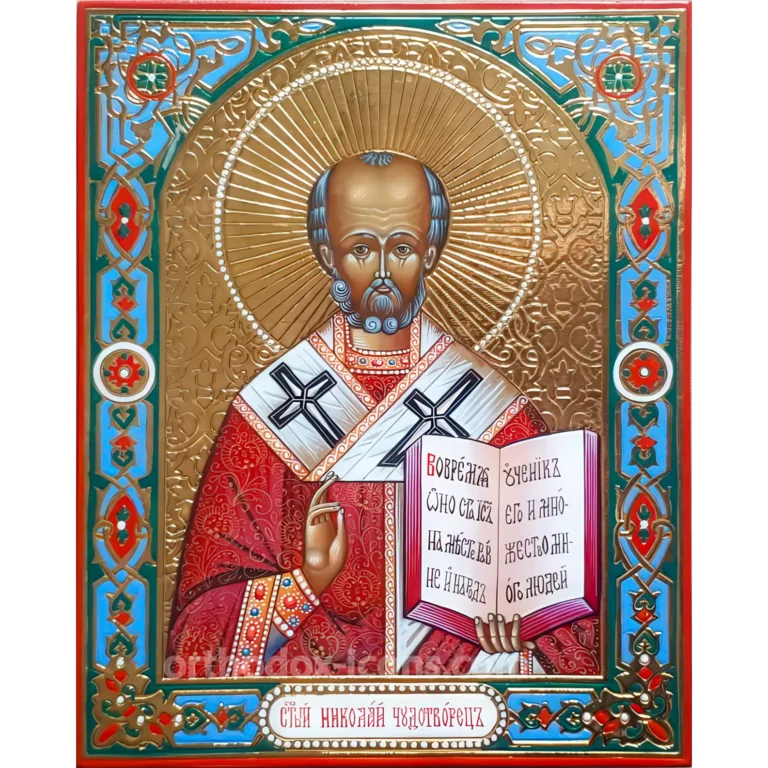
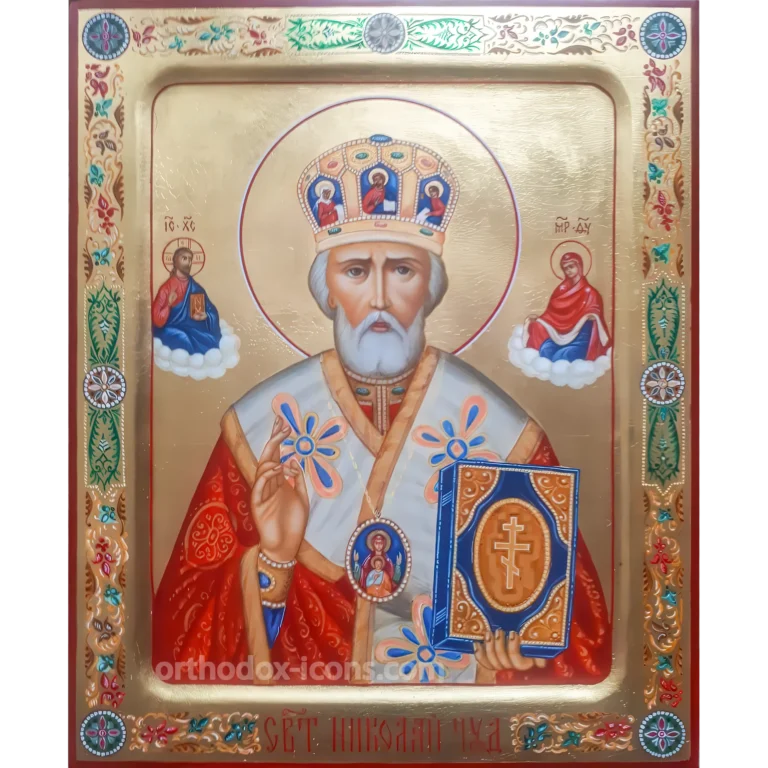
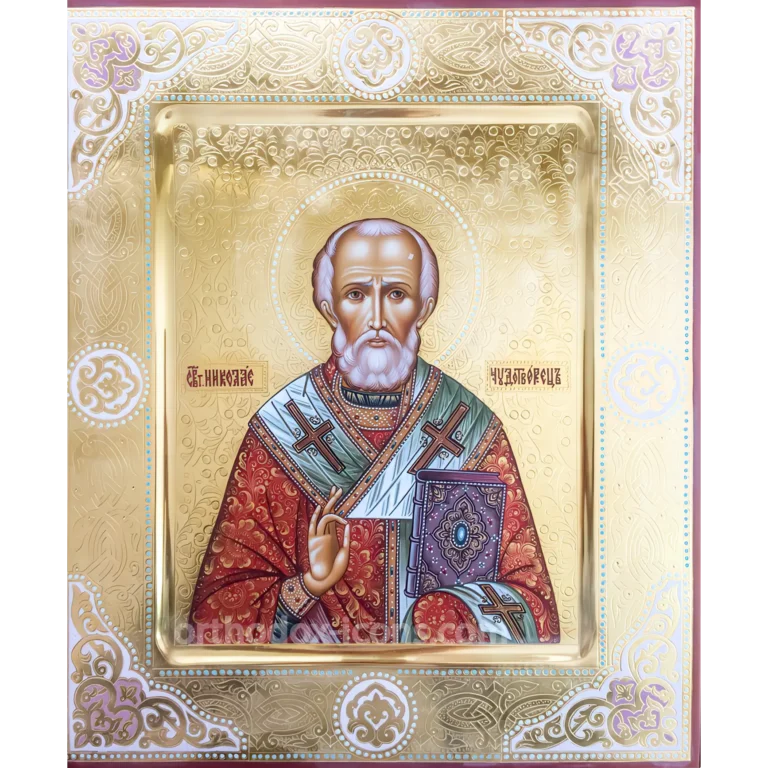
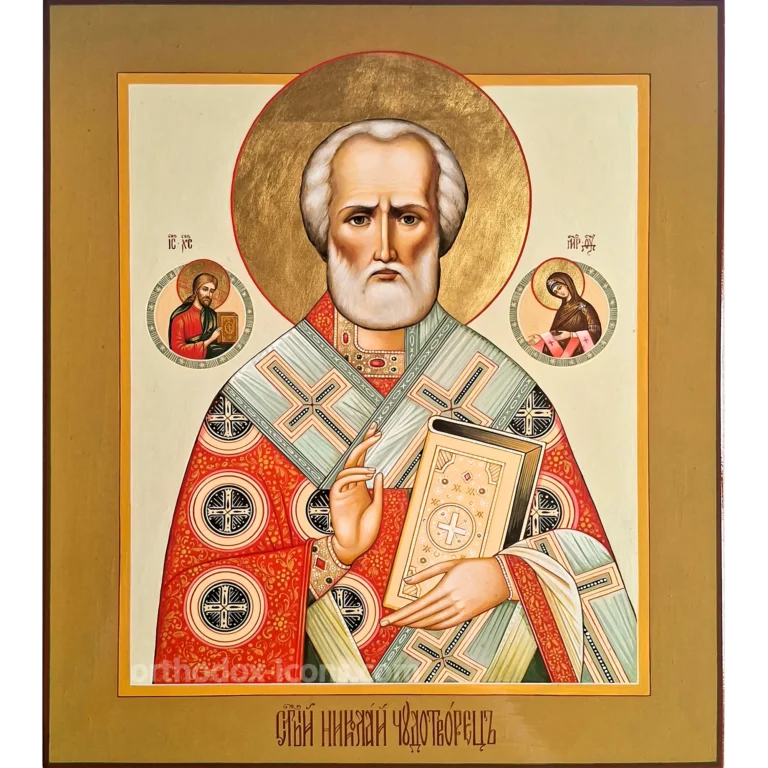
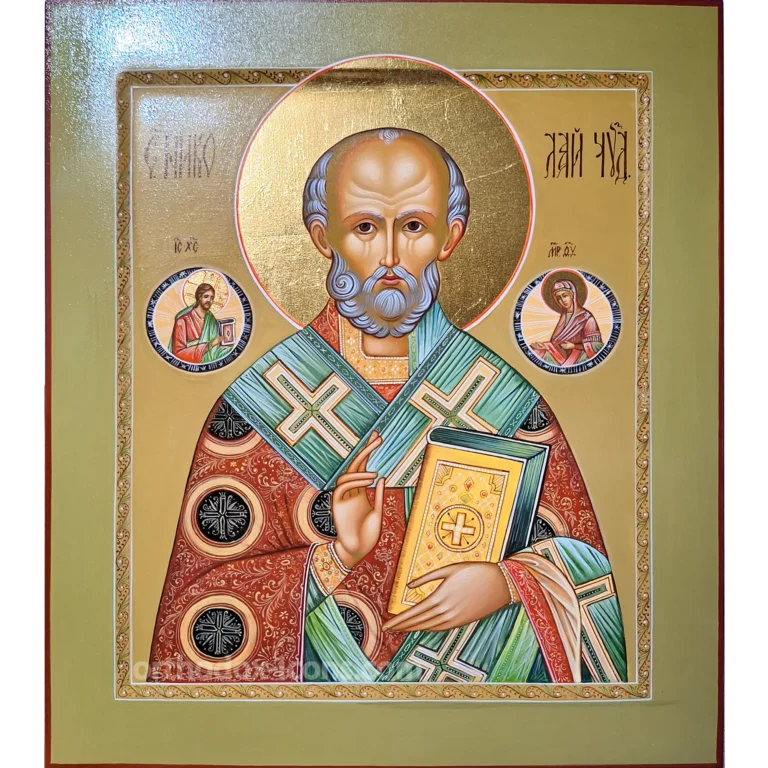
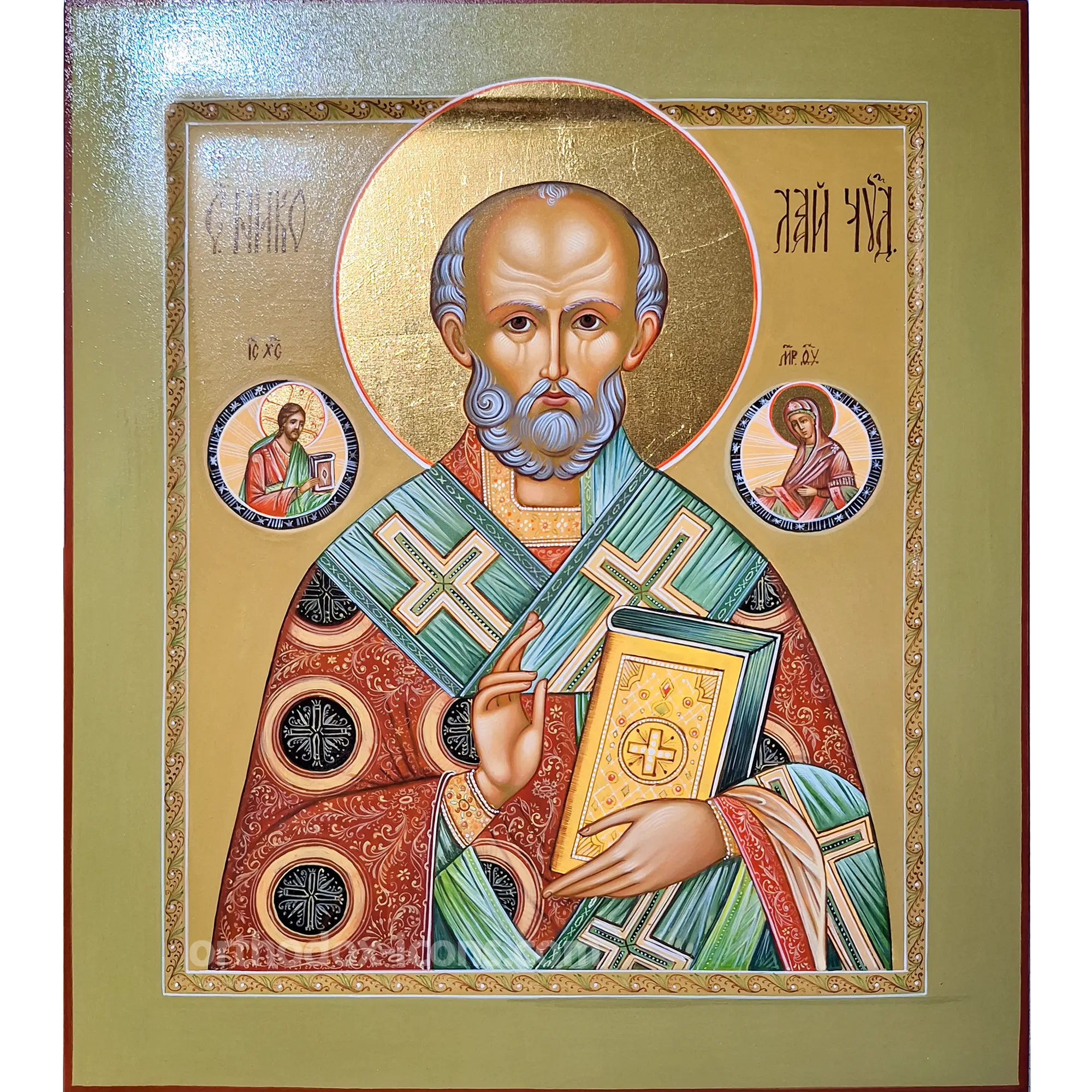
The Icon of Nicholas the Wonderworker is a hand-painted waist-length icon of Saint Nicholas of Myra, one of the most beloved saints in the Orthodox Church. He is shown blessing with his right hand and holding the Gospel in his left, wearing a red episcopal phelonion with gold ornament and an emerald omophorion.
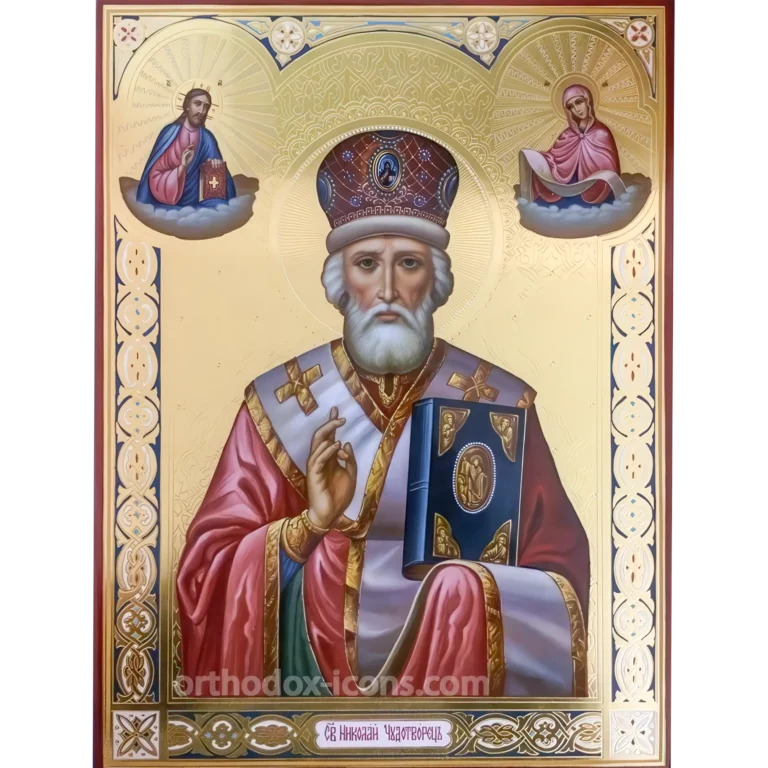
Iconographic feature: the medallions beside the saint show Christ and the Mother of God, referring to the Miracle of Nicaea and the restoration of Saint Nicholas’ episcopal dignity.
Prayer focus: travelers, sailors, drivers, children, family needs, protection from danger, help in hardship, justice, and spiritual support in difficult decisions.
Materials: linden wood board, oak splines, pavoloka, chalk gesso, egg tempera, 23K gold leaf (960 purity), gold ornament on the vestments, and protective finish.
It is possible to paint an image in any size to order
Free shipping worldwide
The Icon of Nicholas the Wonderworker is a hand-painted icon of Saint Nicholas of Myra, archbishop, wonderworker, and one of the most deeply loved saints in the Orthodox Church. In Orthodox homes, Saint Nicholas is often honored with special warmth as a merciful intercessor, a protector of travelers, a helper in danger, and a defender of those who suffer injustice.
This image is painted in the traditions of the Mstyora icon-painting school. It is distinguished by the warmth of the saint’s face, harmony of color, and careful work in every detail. Saint Nicholas is shown waist-length, blessing with his right hand and holding the Gospel in his left. His red episcopal vestment is decorated with fine gold ornament, and the emerald-green omophorion rests over his shoulders.
A special feature of this version is the depiction of the Miracle of Nicaea: small medallions on both sides of the saint show Christ and the Mother of God. The warm ocher background, shining gold halo, pistachio-green border fields, and delicate ornamental frame give the icon a calm, luminous, and prayerful character.
Icon Characteristics
| Holy image | Saint Nicholas, Archbishop of Myra in Lycia, the Wonderworker |
| Iconography | Waist-length blessing image with the Gospel and the Miracle of Nicaea medallions |
| Board | High-quality linden wood board, oak splines, pavoloka, and chalk gesso |
| Painting technique | Egg tempera with natural mineral pigments |
| Gold work | Smooth gold halo and gold ornament on the vestments, made with 23K gold leaf (960 purity) |
| Color palette | Ocher-sand background, olive-pistachio borders, red vestments, and emerald omophorion |
| Available sizes | 17×21 cm (6.7×8.3 in), 20×24 cm (7.9×9.4 in), 27×31 cm (10.6×12.2 in), 30×40 cm (11.8×15.7 in), with larger church formats by individual order |
Who This Icon Is For
An icon of Saint Nicholas the Wonderworker is one of the most universal and beloved Orthodox gifts. After icons of Christ and the Mother of God, the image of Saint Nicholas is among the most common in Orthodox homes. His intercession is not connected with only one narrow need; the faithful turn to him in many circumstances of life.
This icon is especially suitable for a home icon corner, for a young family, for a housewarming, or for a wedding gift. Saint Nicholas is traditionally honored as a protector of the home and a merciful helper in family concerns. The icon can also be given at the birth of a child, to someone named Nicholas, or to a person beginning an important stage of life.
Saint Nicholas has long been venerated as a patron of travelers. For this reason, a smaller icon of Saint Nicholas is often chosen for drivers, sailors, pilots, long-distance workers, military personnel, and anyone setting out on a long or dangerous journey. The image is also meaningful for children and for those who need comfort, protection, and practical help.
Prayer Before Saint Nicholas
Orthodox Christians pray before the icon of Saint Nicholas in many needs: safe travel, protection from danger, help in hardship, family peace, children, justice, and the wise resolution of difficult life circumstances. The saint is remembered as a merciful pastor who did not pass by human suffering.
The faithful ask Saint Nicholas for protection on the road, at sea, in the air, and in dangerous work; for healing and consolation during illness; for support in family and financial hardship; for help when facing false accusation or injustice; and for strength to act with mercy, honesty, and faith.
Prayer before an icon is not a mechanical way to force a result. It is an appeal to God through the intercession of a saint. In praying before Saint Nicholas, a person asks not only for outward help, but also for a merciful heart, courage, gratitude, and trust in God’s providence.
Life and Miracles of Saint Nicholas
Saint Nicholas lived in the third and fourth centuries in Asia Minor. From his youth he devoted himself to God, and after the death of his wealthy parents he distributed his inheritance to the poor. Later he became Archbishop of Myra in Lycia. His life is remembered as a continuous stream of mercy, hidden charity, and wonderworking help.
One of the best-known stories tells how Saint Nicholas saved three sisters from disgrace. Their impoverished father, in despair, was preparing to send them into a sinful life. Saint Nicholas secretly threw bags of gold into the house at night, providing a dowry for the daughters and preserving the family from ruin.
Another famous miracle concerns three unjustly condemned officers. Saint Nicholas appeared in a dream to Emperor Constantine and warned him to release the innocent men. The emperor, struck by the vision, obeyed. The life of the saint also preserves accounts of sailors saved from storms and people rescued from danger through his prayers.
Feast Days of Saint Nicholas
The Orthodox Church commemorates Saint Nicholas several times during the year, but two feasts are especially widely celebrated. December 19 according to the civil calendar, or December 6 according to the old calendar, commemorates the repose of the saint. May 22 according to the civil calendar, or May 9 according to the old calendar, commemorates the transfer of his relics from Myra in Lycia to Bari in 1087.
If this icon is intended as a gift for one of these feasts, it is best to order several weeks in advance. A hand-painted icon in egg tempera, with gold leaf and careful drying of layers, requires time and should not be rushed.
Features of This Icon
The presented icon is a waist-length image of Saint Nicholas, filled with calm and fatherly warmth. The iconographer carefully conveys the traditional features of the saint: a high wise forehead, expressive and slightly sorrowful eyes, and a short gray beard. The face is attentive and compassionate, inviting prayer rather than distant admiration.
The most striking visual element is the rich episcopal vestment. Saint Nicholas wears a dark red, terracotta-toned phelonion. Its surface is covered with intricate gold ornament, suggesting precious brocade, and decorated with dark circular cross forms. Over his shoulders lies a wide emerald-green omophorion, a sign of episcopal ministry and also a reminder of the shepherd who carries the lost sheep.
A delicate ornamental frame separates the central ocher-sand background from the gray-olive border fields. This light floral ornament gives the icon a finished and festive appearance without overloading the composition.
Iconography: Miracle of Nicaea, Gospel, and Blessing
The right hand of Saint Nicholas is raised in blessing, with the fingers forming the traditional Christogram gesture. In his left hand he holds a closed Gospel in a large gold cover. The hand is covered by the edge of the omophorion, an ancient sign of deep reverence before the Word of God.
The main iconographic feature of this version is the pair of small medallions beside the saint’s halo. On one side Christ extends the Gospel to Saint Nicholas; on the other, the Most Holy Theotokos offers the omophorion. This refers to the tradition known as the Miracle of Nicaea.
According to this tradition, at the First Ecumenical Council in Nicaea Saint Nicholas opposed the blasphemy of Arius with fiery zeal. Afterward he was deprived of episcopal rank and placed in prison. During the night, many bishops had a vision: Christ and the Mother of God restored to Nicholas the signs of his episcopal dignity, showing that his zeal had been for the truth of the faith.
Materials, Gold Leaf, and Custom Options
The creation of this icon is a careful, multi-stage process based on traditional Russian icon-painting techniques. The foundation is a dried linden wood board. Oak splines are set into the back to help the board remain stable through changes in humidity. The front is covered with linen pavoloka and several layers of chalk gesso.
The painting is made in egg tempera. The iconographer grinds natural mineral pigments by hand and mixes them with egg emulsion, producing deep, luminous color. The halo of the saint and the brocade-like ornament on the vestment are made with fine 23K gold leaf (960 purity). The finished icon receives a protective finish.
For an individual order, the size, level of decorative detail, color harmony, kiot, or larger church format can be discussed. Free international shipping is included. Payment is made after you receive and approve the icon.
How to Choose the Size
The 17×21 cm (6.7×8.3 in) format is compact. It is a good choice for a car, ship cabin, study, small prayer shelf, or a valuable travel gift for someone close.
The 20×24 cm (7.9×9.4 in) size is a classic universal format and one of the most convenient choices for a home iconostasis.
The 27×31 cm (10.6×12.2 in) size is a larger gift or analoy format. In this size the fine gold lines on the phelonion and the faces in the medallions become more visible. It is well suited for a wedding, church blessing, or significant family occasion.
The 30×40 cm (11.8×15.7 in) format is more solemn and monumental. It is suitable for a large room, a central place in a home iconostasis, a chapel, or a parish donation. Larger church and iconostasis formats can be discussed individually.
Blessing and Care
A newly painted icon may be blessed in an Orthodox church before it is placed in the home icon corner or given to a loved one. You may bring the icon to your parish for blessing after receiving it.
A hand-painted icon needs simple but careful treatment. Do not wipe it with a wet cloth, alcohol, or chemical cleaners. Dust should be removed only with a dry soft natural-bristle brush. The wooden board should be protected from direct sunlight, radiators, drafts, and sudden changes of humidity or temperature.
For maximum preservation, especially when the icon has gold leaf, a glazed wooden kiot is recommended. It protects the holy image from dust, candle smoke, accidental scratches, and unstable air conditions.
Questions and Answers
What makes Saint Nicholas the Wonderworker especially beloved?
Saint Nicholas is venerated as a swift helper and merciful intercessor in many circumstances of life, especially in danger, travel, family needs, poverty, injustice, and distress.
What is the Miracle of Nicaea shown in the medallions?
The medallions refer to the tradition that Christ and the Mother of God restored to Saint Nicholas the Gospel and omophorion, the signs of his episcopal dignity, after the events connected with the First Ecumenical Council.
Why does Saint Nicholas hold the Gospel through a vestment?
Covering the hand with the edge of the vestment or omophorion is an ancient sign of reverence before the Word of God and the holiness of the Gospel.
What does the red vestment of Saint Nicholas mean?
The dark red or terracotta phelonion points to sacrificial love, divine life, and the solemn dignity of the saint. The gold ornament emphasizes his heavenly glory.
How is a hand-painted icon different from a printed icon?
A hand-painted icon is created by an iconographer through careful manual work, using natural materials such as wood, gesso, egg tempera, mineral pigments, and gold leaf. It is made for prayer and long-term devotional use.
What are oak splines on the back of the board?
Oak splines are wooden supports set into the back of the linden board. They help the board remain stable as wood naturally reacts to changes in humidity and temperature.
Can an icon of Saint Nicholas be given to someone who is not baptized?
An icon is a holy image for prayer, not simply a decoration. It is usually given to Orthodox Christians, but it may be given respectfully to someone who honors Christianity and may be moving toward faith.
Is a kiot required for this icon?
A kiot is not required, but it is recommended. A glazed wooden kiot helps protect the painting and gold leaf from dust, smoke, accidental scratches, and changes in the surrounding environment.
What do the letters IC XC and MP TH mean?
They are traditional Greek abbreviations. IC XC means Jesus Christ, and MP TH means Mother of God. They are placed near the corresponding images in the medallions.
Where should an icon of Saint Nicholas be placed at home?
It is usually placed in the home prayer corner together with icons of Christ and the Mother of God. Saint Nicholas is often placed near or slightly below the central icons.
| Dimensions | 17x21cm (6.7×8.3 in), 20x24cm (7.9×9.4 in), 27x31cm (10.6×12.2 in), 30x40cm (11.8×15.7 in) |
|---|---|
| Name | Nicholas |