Saint Nicholas Orthodox Icon
$4750
Available size: 30×40 cm (11.8×15.7 in) and larger. Custom iconostasis sizes can be discussed before painting.
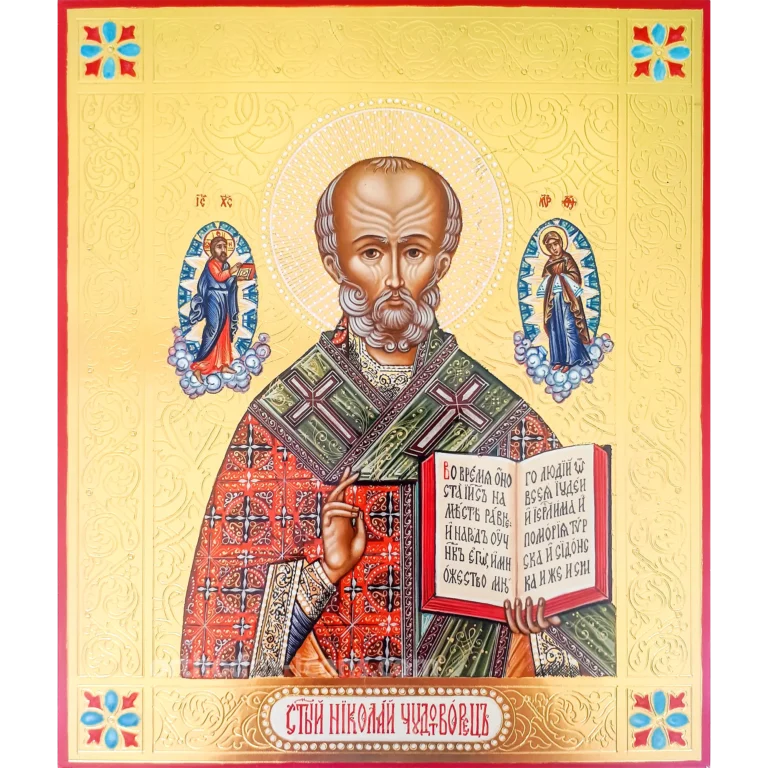
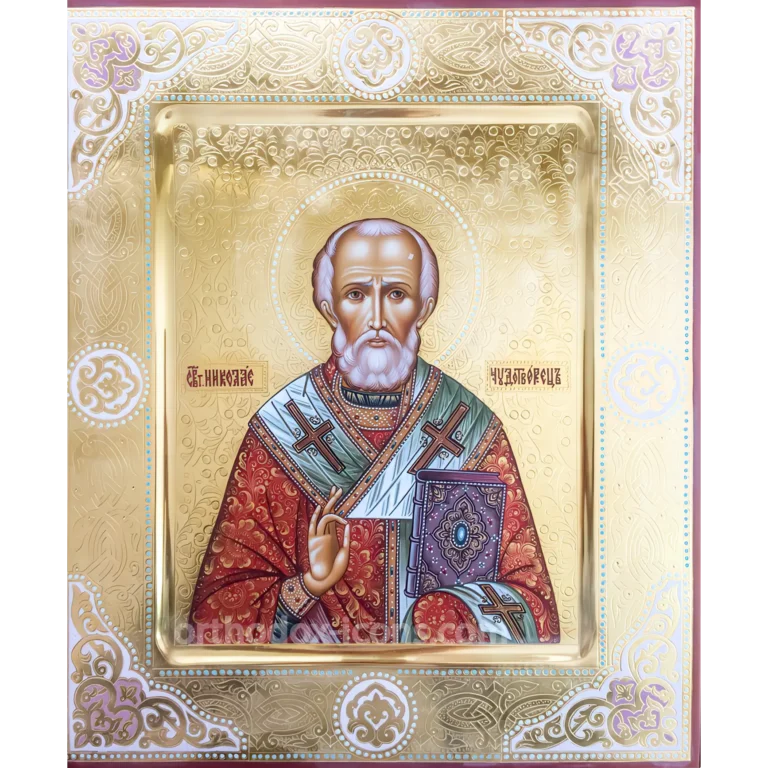
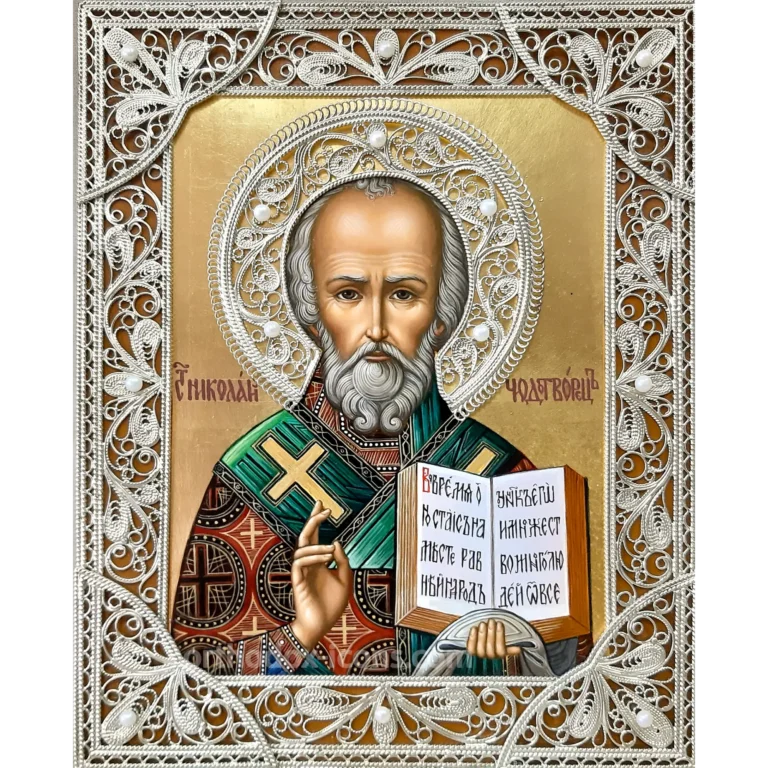
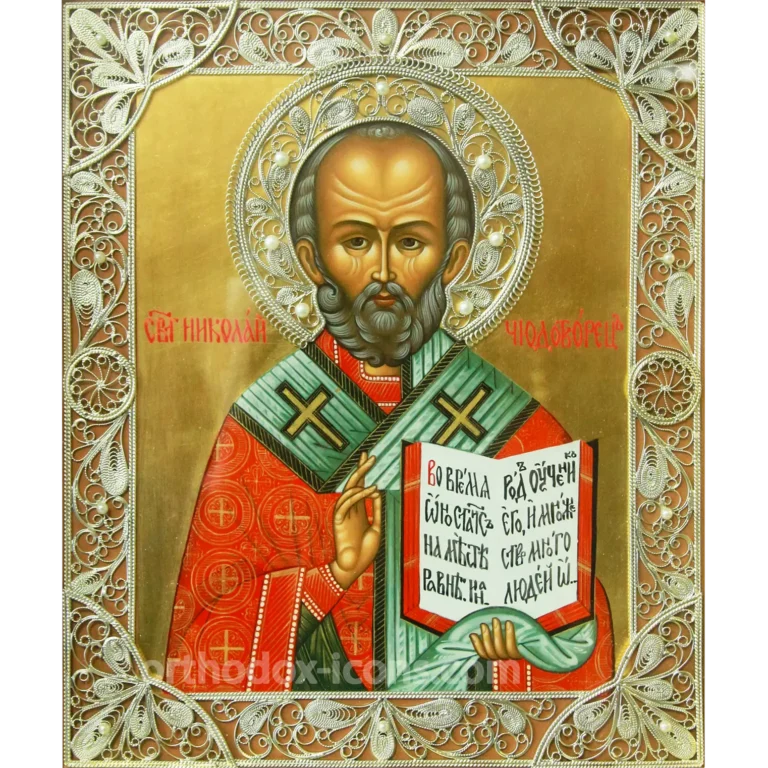
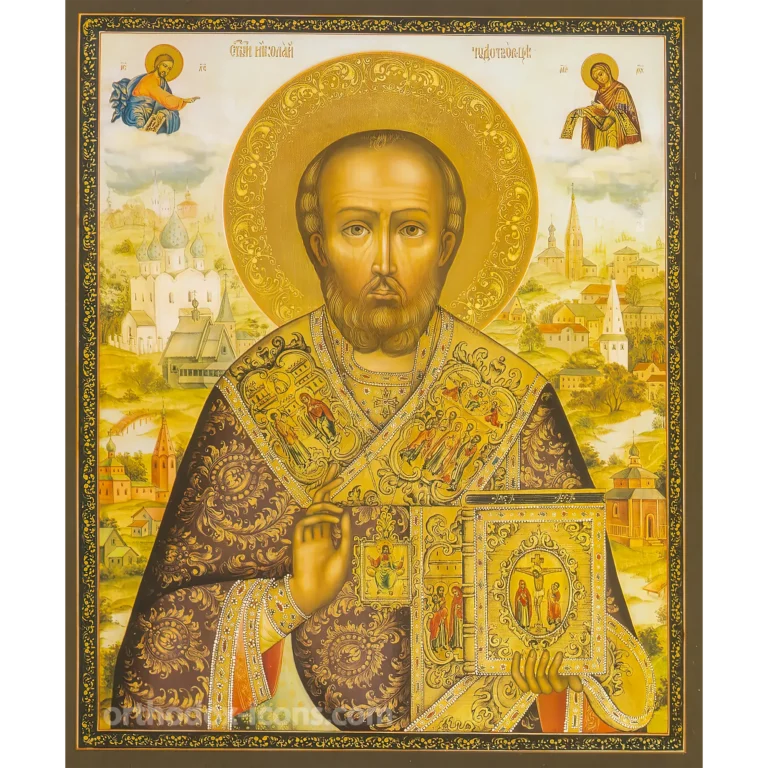
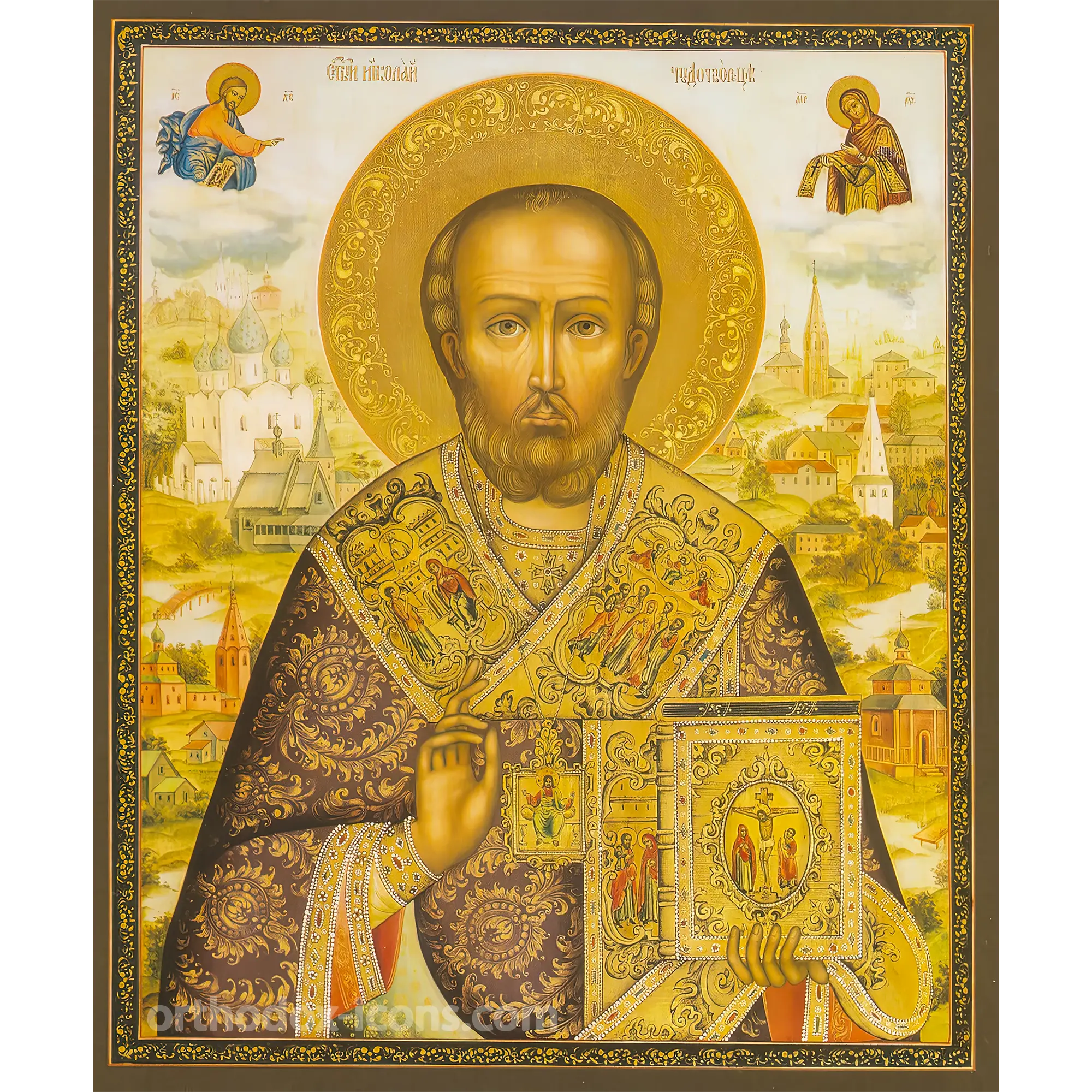
Saint Nicholas Orthodox Icon is a hand-painted icon of Saint Nicholas the Wonderworker, Archbishop of Myra in Lycia. The saint is shown half-length in episcopal vestments, blessing with his right hand and holding the Gospel in his left hand, against a church architectural background.
- Prayer focus: help in travel, protection of family, support for children, healing according to God’s will, relief in need, fair resolution of difficult matters, and strengthening of faith.
- Materials: linden board, oak splines, chalk gesso, egg tempera, mineral pigments, gold leaf, and protective finish.
- For whom it is suitable: a home icon corner, church, chapel, family prayer space, or gift for Nicholas, travelers, sailors, drivers, children, doctors, leaders, and families.
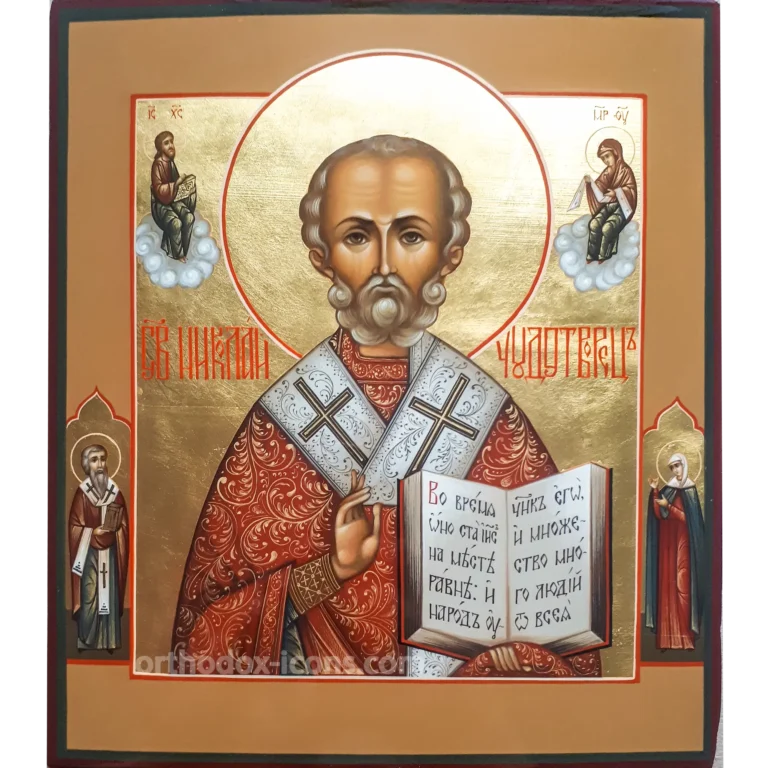
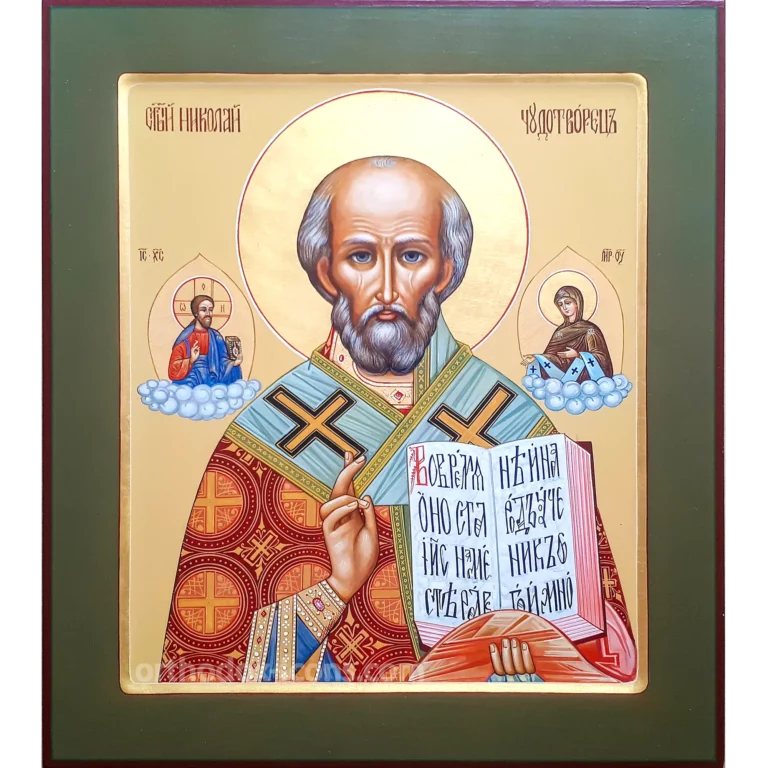
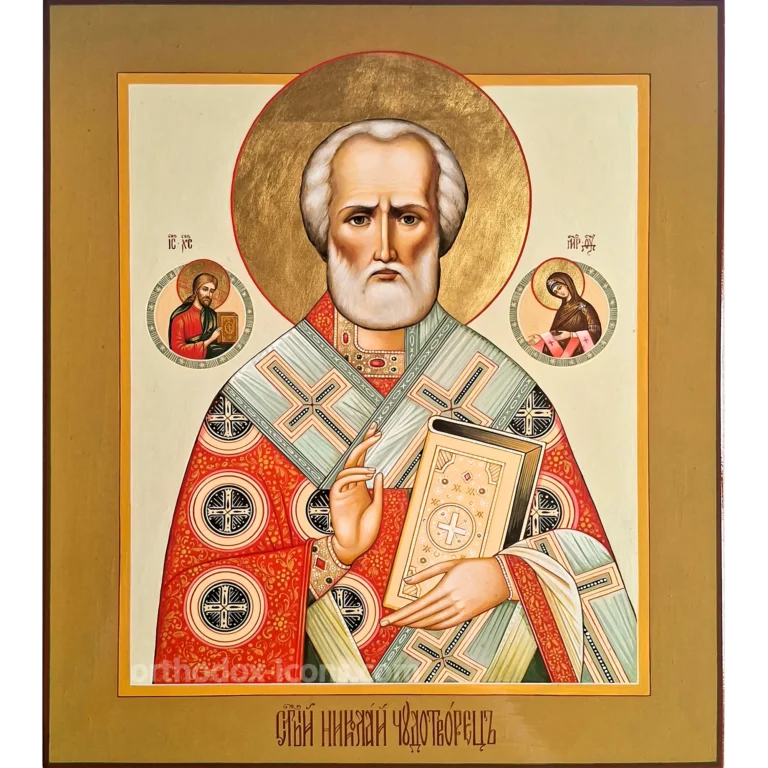
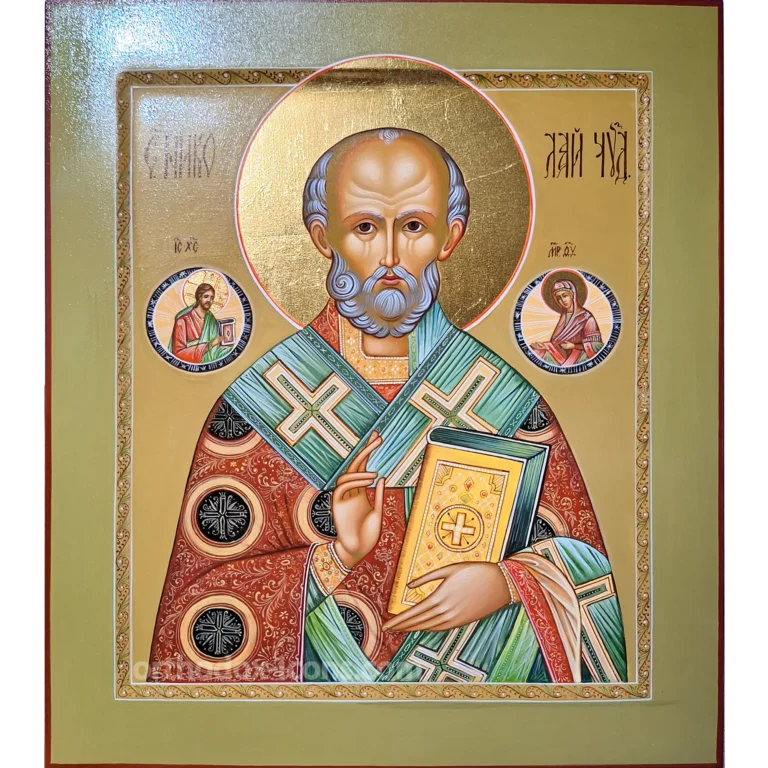
- Iconographic features: half-length bishop image, blessing hand, Gospel book, large gilded ornamental halo, Christ and the Mother of God above, and church architecture in the background.
It is possible to paint an image in any size to order
Free shipping worldwide
Hand-painted Saint Nicholas Orthodox Icon presents Saint Nicholas the Wonderworker, Archbishop of Myra in Lycia, one of the most beloved saints of the Orthodox Church. He is honored as a quick helper in troubles, protector of travelers, helper of the poor, patron of children, defender of the wronged, and intercessor for family peace.
In this icon, Saint Nicholas is shown half-length in episcopal vestments, with a large gilded halo. His right hand is raised in blessing, and his left hand holds the Gospel. The saint’s face is direct, attentive, and spiritually serious, combining pastoral authority with compassion and readiness to help those who turn to God in faith.
The indicated size is 30×40 cm (11.8×15.7 in) and larger. This format allows the face, gilded halo, Gospel, vestments, blessing hand, images of Christ and the Mother of God above, and the architectural background to be seen clearly.
Features of This Saint Nicholas Icon
The main feature of this icon is the solemn episcopal image of Saint Nicholas with rich gilding and a church architectural background. He is not shown against a plain abstract field, but in a composition where the architecture, halo, vestments, Gospel, and upper figures all reveal his dignity as a bishop of the Church.
The large golden halo, ornamented with a fine plant pattern, forms the visual center around the saint’s face. The face itself is painted with care: high forehead, attentive eyes, short beard, and calm frontal pose. Saint Nicholas appears as a wise shepherd who sees human need but also looks deeper than outward circumstances.
His right hand is raised in blessing, reminding the viewer that Saint Nicholas was an archpastor who served the Church in the name of Christ. In his left hand he holds the Gospel with a richly decorated cover. The Gospel points to his faithfulness to the word of God and to his pastoral ministry.
The episcopal vestments are painted with fine detail. The omophorion, phelonion, cuffs, crosses, ornamental inserts, and golden lines create the sense of solemn liturgical clothing. These details are not decorative for their own sake; they serve the image of Saint Nicholas as bishop, intercessor, and defender of the Orthodox faith.
Christ and the Mother of God Above
In the upper corners of the icon are images of Christ and the Mother of God on clouds. This is an important theological and iconographic detail. It refers to the tradition that Christ returned the Gospel to Saint Nicholas and the Theotokos returned the omophorion, confirming his episcopal dignity.
These figures do not merely decorate the composition. They explain the spiritual meaning of Saint Nicholas’s ministry. In the center stands the saint, but above him are the Lord and the Most Holy Theotokos, from whom his service in the Church receives its blessing and confirmation.
Iconography of Saint Nicholas the Wonderworker
Saint Nicholas is most often shown in episcopal vestments, holding the Gospel and blessing with his right hand. This type emphasizes his ministry as bishop of Myra in Lycia. He was not only a wonderworker, but also a pastor, defender of the faith, participant in the life of the Church, and a man who joined spiritual firmness with active mercy.
On this icon, the saint is shown close to the viewer, without unnecessary distance. His figure occupies the central space, and the great golden halo makes his face the main spiritual focus. Such an image is well suited for daily prayer because the saint’s gaze helps the person praying gather inwardly and turn to God honestly.
The architectural background may be read as an image of the Church and of earthly life for which Saint Nicholas prays before God. Churches, towers, domes, and city forms recall real people, families, homes, roads, parishes, and communities. This makes the icon especially close to those who pray for family, children, travel, work, home, and neighbors.
Prayer Before Saint Nicholas
Orthodox Christians pray before Saint Nicholas in many life circumstances. He is often called a quick helper because generations of believers have turned to him in distress and found consolation and help through his intercession. Prayer to Saint Nicholas is always prayer directed to God, with the saint standing before the Lord on behalf of those who seek help with faith and repentance.
People ask Saint Nicholas for protection during travel, help for sailors, drivers, and those on the road, support for children, family peace, relief in poverty and debt, fair resolution of difficult legal or work matters, protection from slander and false accusation, help for the sick, the elderly, and lonely people, strengthening of faith, and the welfare of men and boys named Nicholas.
His life is full of examples of merciful help: he defended the innocent, helped the poor, rescued travelers from danger, and supported those who had no one else to defend them. For this reason, prayer before his icon is often simple, direct, and trusting.
Who This Icon Is For
The Saint Nicholas Orthodox Icon is suitable for almost every Orthodox home. It can be placed in a family icon corner near icons of Christ, the Mother of God, the Guardian Angel, and patron saints of the family. It is also appropriate for a church, chapel, prayer room, office, or separate kiot.
This icon is a meaningful gift for someone named Nicholas, for a child, family, traveler, sailor, driver, doctor, leader, or anyone who bears responsibility for others. Because Saint Nicholas is so widely loved, his icon is often chosen as a central family image and a lasting spiritual gift.
In a church, the icon may be placed in a side chapel, near a prayer place, in a row of revered saints, or in a space where people pray for travel, children, health, and help in difficult circumstances. Custom iconostasis sizes can be discussed individually.
Short Life of Saint Nicholas
Saint Nicholas was born in Lycia, in the city of Patara, to a devout Christian family. From youth he was known for love of God, mercy, and attention to people in need. After the death of his parents, he distributed his inheritance to the poor and devoted his life to the service of the Church. Later he became Archbishop of Myra in Lycia.
One of the best-known stories from his life tells how he secretly helped a poor man and his daughters by providing what they needed for a dignified future. Saint Nicholas did good in secret, without seeking praise, because true Christian mercy is done before God.
He is also remembered as a defender of the innocent. According to tradition, he saved people who had been unjustly condemned, boldly intervening on their behalf. This is why his image is especially close to those who face slander, injustice, unfair judgment, or abuse of power.
Many miracles of Saint Nicholas are connected with help for travelers and sailors. From ancient times, people at sea and on journeys have called upon him as a swift intercessor in danger.
The main feast days of Saint Nicholas are December 19, the day of his repose, and May 22, the translation of his relics to Bari, according to the civil calendar. In Russian tradition, August 11 is also honored as the Nativity of Saint Nicholas.
Materials, Gilding, and Ornament
The icon is painted on a linden board prepared with traditional icon gesso. Oak splines may be used to strengthen the wooden base. The face, hands, Gospel, episcopal vestments, architectural background, images of Christ and the Mother of God, inscriptions, and ornament are painted in egg tempera with mineral pigments.
Gold leaf plays an important role in this icon. The large halo is gilded and decorated with a delicate plant ornament. Gold also supports the solemn quality of the vestments, Gospel, inscriptions, and decorative details. In Orthodox icon painting, gold is connected with divine light, heavenly glory, and holiness.
The Gospel in the saint’s hand is also worked in detail. Its cover is a meaningful element connected with the teaching and pastoral ministry of Saint Nicholas. The architecture in the background, the upper holy images, the blessing hand, and the rich vestments all require a larger format to remain clear and dignified.
Choosing the Size
The indicated size is 30×40 cm (11.8×15.7 in) and larger. This format is well suited to the icon because the composition contains many important details: face, inscriptions, ornamented halo, architectural background, blessing hand, Gospel, and the images of Christ and the Mother of God above.
For a home, the best size depends on the prayer space and viewing distance. A 30×40 cm icon works well for a spacious home icon corner or separate kiot. Larger versions can be made for a chapel, prayer room, or church. Iconostasis sizes are discussed individually according to the proportions, lighting, and surrounding icons.
Placement, Blessing, and Care
The icon of Saint Nicholas can be placed in a home icon corner near icons of Christ, the Mother of God, the Guardian Angel, and family patron saints. A large icon may also be placed in a separate glazed kiot. In a church, it is appropriate in a chapel, a row of beloved saints, or a prayer place for travelers, children, the sick, and those seeking help in life difficulties.
The icon can be blessed in an Orthodox church before shipping. Free international shipping is included. Payment is made after you receive and approve the icon.
A hand-painted icon should be protected from direct sunlight, dampness, overheating, soot, and sudden temperature changes. Do not wipe the painted or gilded surface with wet cloths, alcohol, household chemicals, or rough fabric. Dust should be removed gently with a soft dry brush. A glazed wooden kiot is recommended, especially for a large icon with rich gilding and architectural detail.
Questions and Answers
Who is shown on this icon?
The icon shows Saint Nicholas the Wonderworker, Archbishop of Myra in Lycia, one of the most venerated saints of the Orthodox Church.
Why does Saint Nicholas hold the Gospel?
The Gospel points to his episcopal ministry, faithfulness to the word of God, and pastoral care for the Church.
What does the blessing hand mean?
The blessing gesture reminds us that Saint Nicholas was a bishop who served and blessed the faithful in the name of Christ.
Why are Christ and the Mother of God shown above Saint Nicholas?
This motif refers to the iconographic tradition of Christ returning the Gospel to Saint Nicholas and the Mother of God returning the omophorion, confirming his episcopal dignity.
What do Orthodox Christians pray to Saint Nicholas for?
They pray for help in travel, protection of family, support for children, healing according to God will, relief in need, just resolution of difficult matters, and strengthening of faith.
For whom is this icon suitable as a gift?
It is suitable for someone named Nicholas, a child, family, traveler, sailor, driver, doctor, leader, or anyone who especially venerates Saint Nicholas.
What size is indicated for this icon?
The indicated size is 30×40 cm (11.8×15.7 in) and larger. Custom iconostasis sizes can also be discussed before painting.
Why is a larger size good for this icon?
A larger format makes the face, gilded halo, Gospel, architectural background, upper images of Christ and the Mother of God, inscriptions, and ornament clearly readable.
When are the feast days of Saint Nicholas?
The main feast days are December 19 and May 22 according to the civil calendar. In Russian tradition, August 11 is also kept as the Nativity of Saint Nicholas.
How should a hand-painted icon be cared for?
Keep it away from moisture, direct sunlight, heat, soot, and damage. Dust should be removed with a soft dry brush; a glazed kiot is recommended.
| Dimensions | 30x40cm (11.8×15.7 in) |
|---|---|
| Name | Nicholas |