Saint George Orthodox Icon
$3000
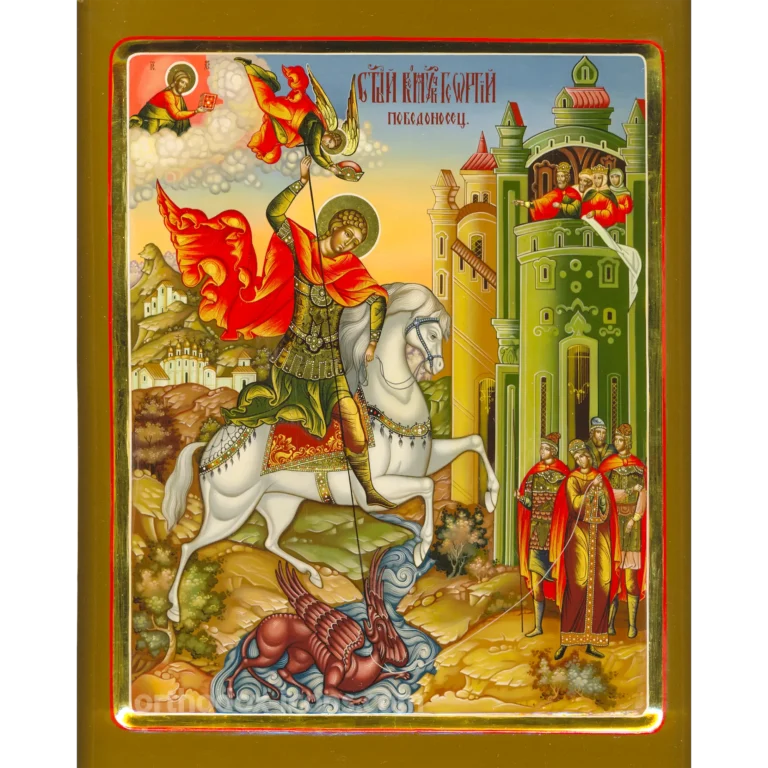
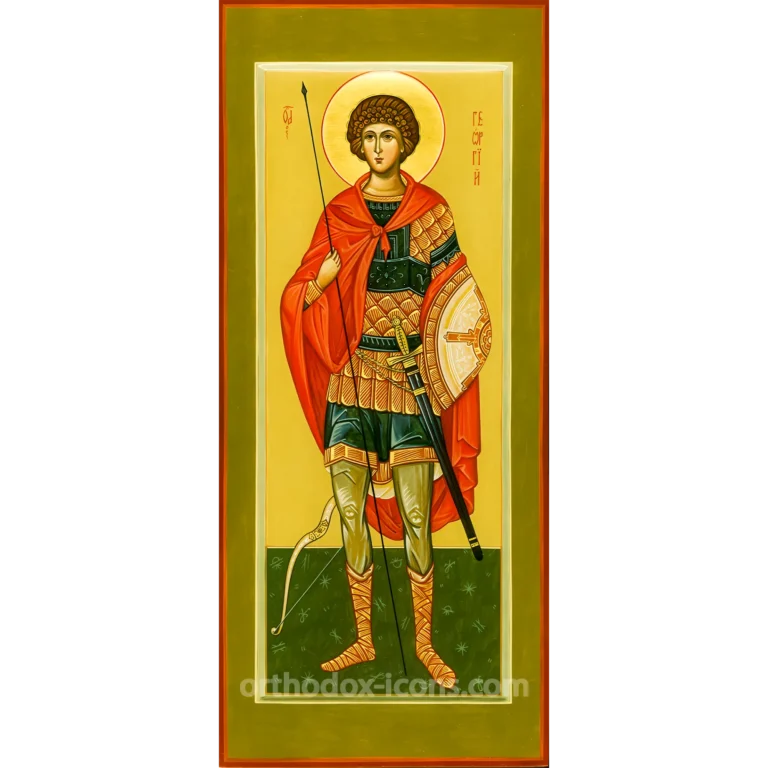
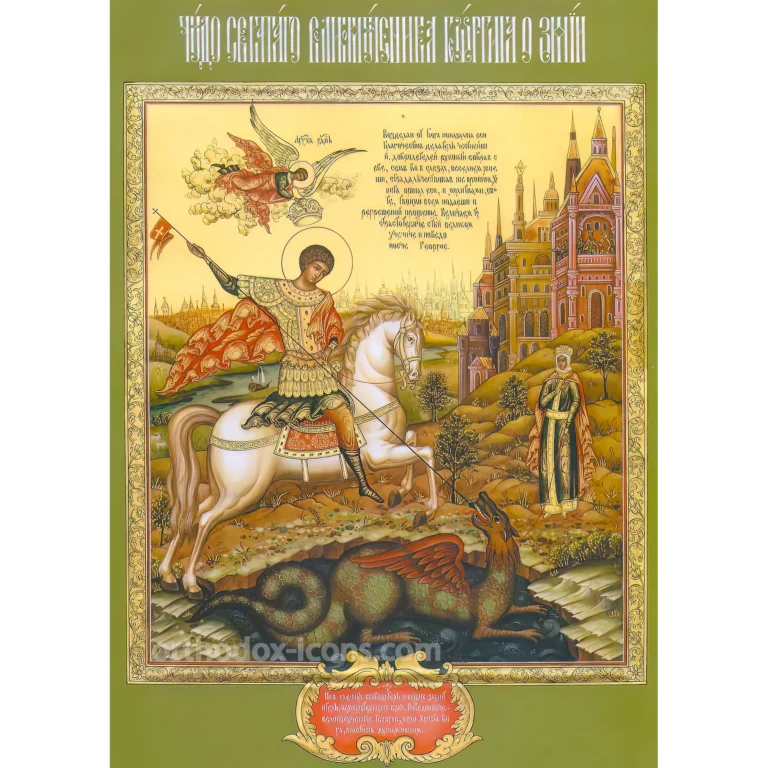
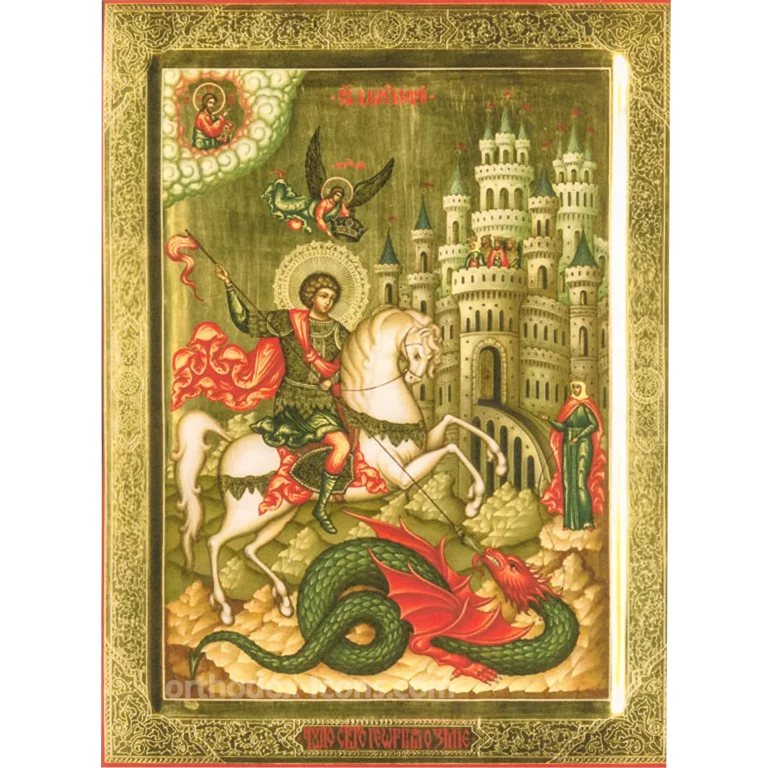
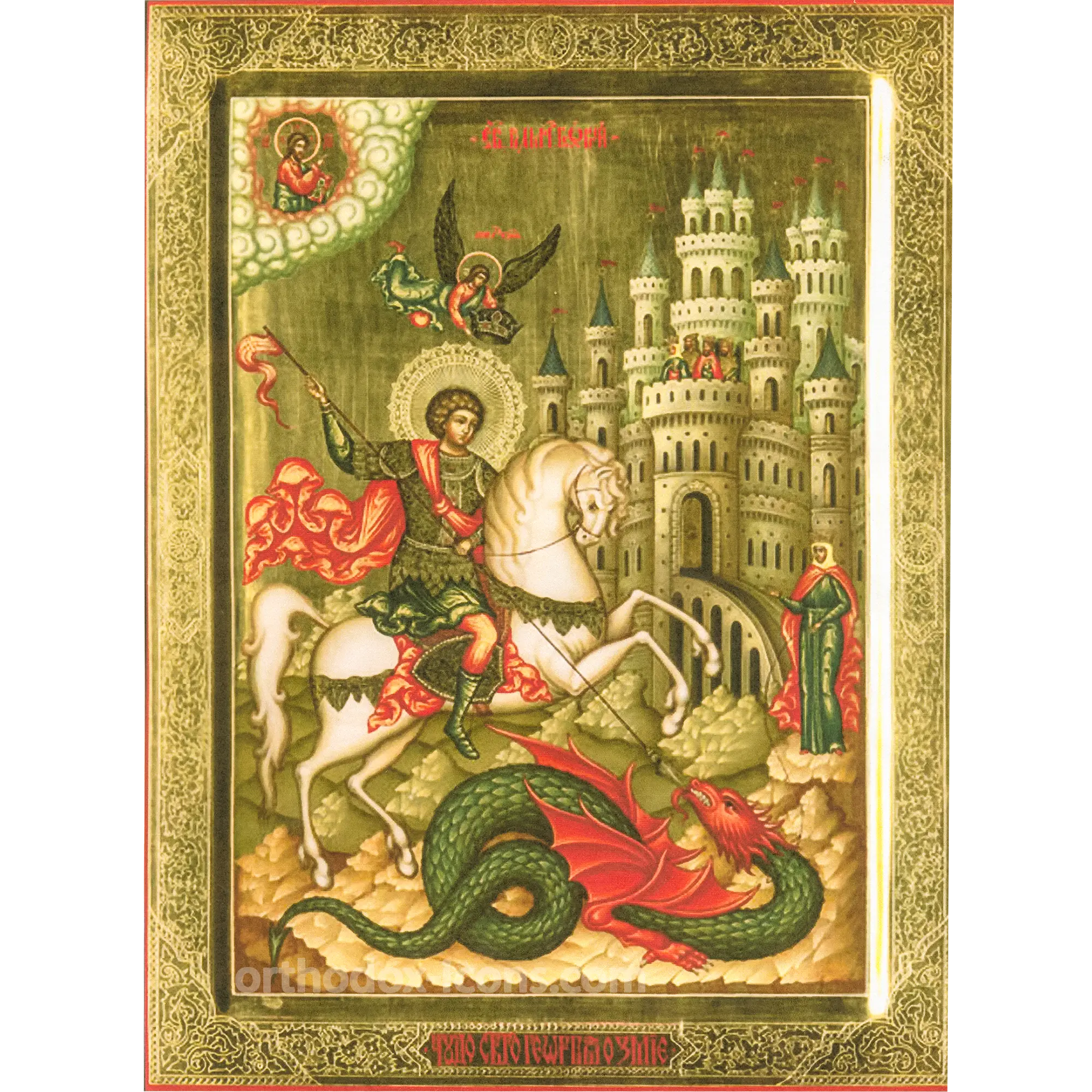
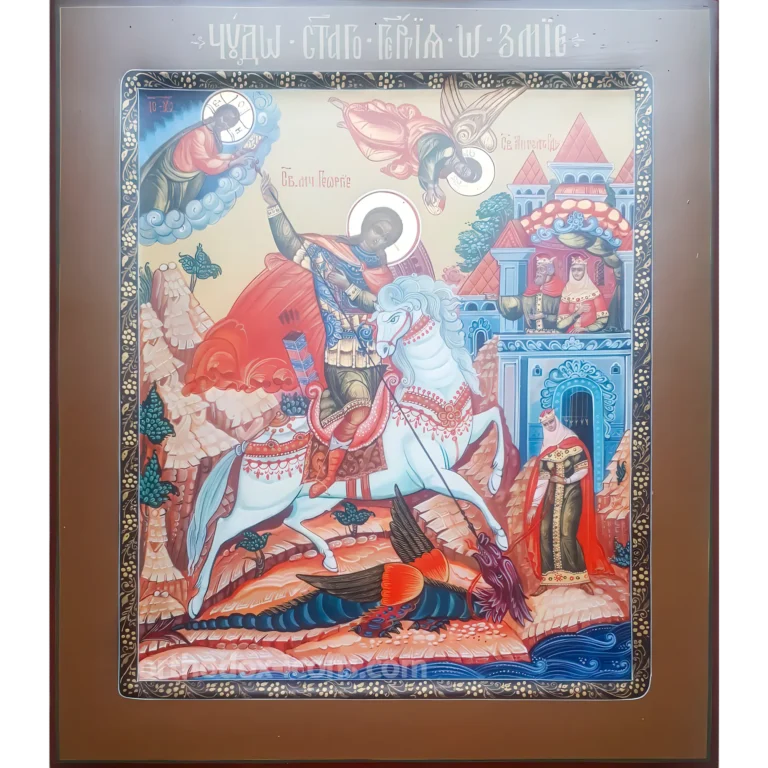
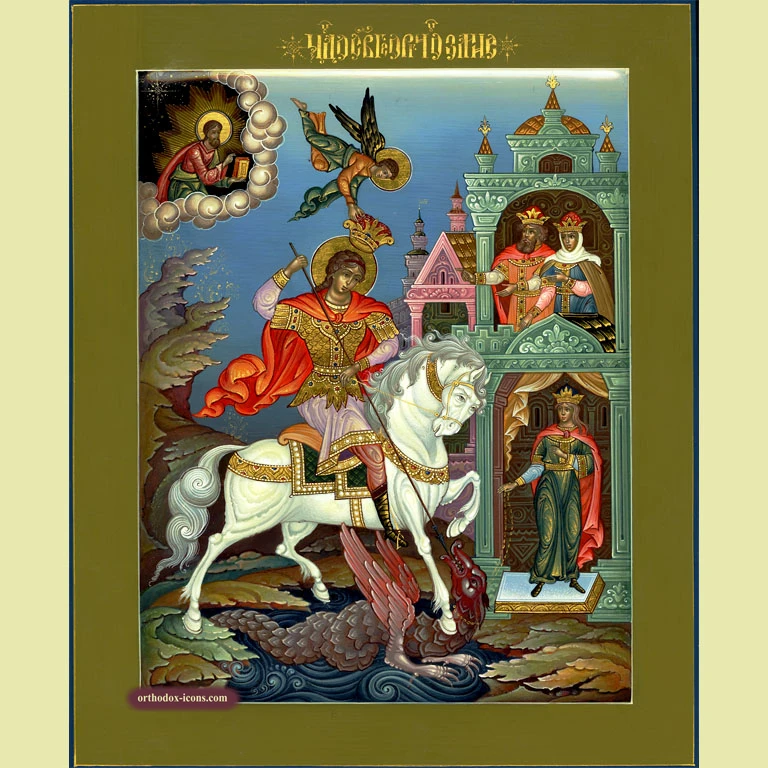
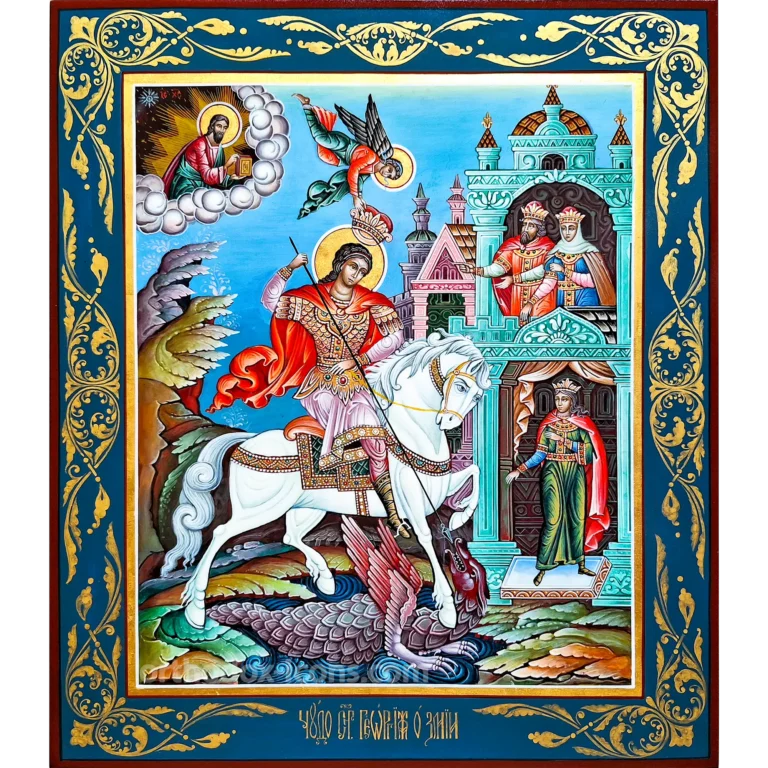
Saint George Orthodox Icon is a hand-painted icon of the Holy Great Martyr George in the Miracle of Saint George and the Dragon. Saint George rides a white horse and strikes the dragon with a spear; nearby are the princess, city walls, Christ blessing from heaven, and an angel with a crown.
The standard size of this icon is 30×50 cm (11.8×19.7 in). Larger and iconostasis sizes can be made by agreement.
The icon is painted on a linden board with egg tempera, natural gesso, oak splines, 23K gold leaf (960 purity), ornamental gilding, and a protective finish. Free international shipping is included. Payment is made after you receive and approve the icon.
It is possible to paint an image in any size to order
Free shipping worldwide
Saint George Orthodox Icon is a hand-painted icon of the Holy Great Martyr George the Victory-Bearer in one of the most famous and theologically rich scenes of Orthodox iconography: the Miracle of Saint George and the Dragon. The saint is shown riding a white horse and striking the dragon with a spear, freeing the princess and the city from mortal danger. Above the scene, Christ blesses from a heavenly segment, while an angel brings a crown, pointing to the martyr’s glory and the victory of faith over fear.
This image is especially expressive in the large 30×50 cm (11.8×19.7 in) format and larger sizes. The narrative composition needs space: the figure of Saint George, the white horse, the dragon, the princess, the city architecture, the heavenly segment, the angel, the banner, the landscape, and the ornamental gilded border all matter. In a larger size, the icon is not perceived as a simple portrait of the saint, but as a full spiritual story about protection, courage, faithfulness to Christ, and victory over the destructive power of sin.
The icon of Saint George is suitable for a home icon corner, church, chapel, military chapel, office, family prayer space, or a meaningful gift for someone named George. It is especially appropriate where people pray for protection, steadfastness, courage, honest service, spiritual collectedness, and help in difficult circumstances.
Icon Characteristics
| Name | Saint George Orthodox Icon |
| Saint | Holy Great Martyr George the Victory-Bearer |
| Iconographic scene | Miracle of Saint George and the Dragon |
| Composition | Saint George on a white horse striking the dragon, with princess, city, Christ blessing from heaven, and an angel with a crown |
| Feast day | May 6 / April 23 Old Calendar; November 16 / November 3 Old Calendar, dedication of the church in Lydda |
| Visible features | White horse, dragon, spear, red cloak, princess, city towers, Christ in a heavenly segment, angel with crown, ornamental gilded border |
| Available size | 30×50 cm (11.8×19.7 in); larger and iconostasis sizes by agreement |
Who This Saint George Icon Is For
The icon of Saint George is especially suitable for men and boys baptized with the names George, Georgi, Yuri, or Egor. It is a named saint icon and may be given for baptism, name day, birthday, coming of age, entrance into service, the beginning of a responsible work, or a family anniversary. For someone who bears the saint’s name, this icon becomes a personal prayer image and a reminder of the calling to live courageously, honestly, and faithfully before Christ.
The image of Saint George is especially close to servicemen, defenders, security and rescue workers, leaders, and people who must make difficult decisions and protect others. In Orthodox tradition, the Holy Great Martyr George is venerated as a courageous confessor of the faith and a heavenly helper in the struggle against evil, fear, and falsehood. For this reason, the icon is often chosen for those whose life involves responsibility, risk, discipline, and service.
The scene of the Miracle of Saint George and the Dragon also makes the icon strong and understandable in a family prayer space. Here the saint is shown not only as a warrior, but as a liberator, protector of the innocent, and victor over destructive force. Before such an icon, people pray for preservation of the family, protection of children, help in trials, freedom from fear, strengthening of will, and spiritual sobriety.
For a church or chapel, the icon can be made in a large or iconostasis format. The narrative composition with city, horse, dragon, princess, and heavenly blessing is especially well revealed in a larger size, where architectural details, gestures, garment folds, ornament, and gilding remain readable.
Prayer Before Saint George the Victory-Bearer
Before the icon of Saint George, Orthodox Christians pray for protection, courage, help in danger, strengthening of faith, and endurance through trials. His image reminds the faithful that Christian victory is not only outward triumph over an enemy, but above all faithfulness to God, the ability not to retreat from truth, and the refusal to let fear rule the soul.
Prayer before Saint George may include requests for:
- protection from visible and invisible enemies;
- help for servicemen, defenders, and people in dangerous professions;
- courage, steadiness, and inward collectedness;
- overcoming fear, despondency, and confusion;
- protection of family, children, and home;
- just resolution of conflicts;
- help in honest service and responsible work;
- strengthening of faith in difficult seasons of life.
The Miracle of Saint George and the Dragon expresses the prayerful meaning of the icon with particular clarity. The dragon is not merely a legendary creature; it is an image of evil, chaos, fear, sinful bondage, and a force that threatens human life. Saint George defeats it not for earthly glory, but as a warrior of Christ acting with God’s help. Before this icon, people pray that the Lord strengthen them in the struggle against whatever destroys the soul, family, and peace.
Life of the Holy Great Martyr George
Saint George lived at the end of the third and beginning of the fourth century. He came from a Christian family and became a soldier, rising to a high position through courage, nobility, and military ability. When persecution against Christians began, Saint George openly confessed his faith before the authorities and refused to offer sacrifice to pagan gods.
For his confession of Christ, he was subjected to severe torments, yet he did not renounce the faith. His steadfastness, patience, and the wonderful help of God astonished those around him. Many people, seeing the saint’s courage, turned to Christ. George accepted a martyr’s death, remaining faithful to God to the end, and was glorified by the Church as a Great Martyr and Victory-Bearer.
The title “Victory-Bearer” is connected not only with military glory, but above all with spiritual victory. Saint George overcame fear, the temptation to deny Christ, pressure from earthly authority, and the threat of death. This is why his image became one of the most venerated in the Christian world. He has been shown on icons, banners, seals, coats of arms, and church frescoes as a sign of protection, courage, and the victory of faith.
The Miracle of Saint George and the Dragon is a special narrative in which the saint’s spiritual victory is shown through the liberation of a city and princess. In the traditional account, a terrible dragon threatened the people, and Saint George appeared as God’s helper, struck the beast, and led the people toward faith. In this scene, the saint’s courage is joined to a missionary meaning: victory over evil becomes the beginning of turning to God.
Feast Days of Saint George
The main commemoration of the Holy Great Martyr George is observed on May 6 in the civil calendar, or April 23 according to the Old Calendar. The Orthodox calendar also commemorates the dedication of the church of Saint George in Lydda on November 16 in the civil calendar, or November 3 according to the Old Calendar.
These dates are especially important for men named George, Georgi, Yuri, or Egor. The icon of Saint George may be ordered for a name day, baptism, birthday, military oath, entrance into service, family blessing, parish feast, or a memorable date. If the icon is needed for a particular day, it is best to agree in advance on the size, degree of gilding, ornamental treatment, inscriptions, protective case, and possible larger church execution.
Features of This Hand-Painted Icon
In the presented icon, Saint George is shown on a white horse moving swiftly toward the dragon. In iconography, the white horse points to purity, light, and victorious movement. The saint wears armor, his red cloak flows behind him, and his hand directs the spear toward the defeated dragon. The composition is dynamic, yet remains churchly and gathered: movement is subordinated not to outer drama, but to the meaning of spiritual victory.
The dragon is shown in the lower part of the composition, large and dark green, with red wings and open mouth. Its placement emphasizes the defeat of the power of evil. Saint George is not merely fighting; he is already acting as a victor sent by God. Above him is an angel with a crown, and in the upper left heavenly segment Christ is shown blessing. This detail is important: the saint’s victory is presented not as personal military success, but as the action of God’s help.
At the right stands the princess near the city. Her presence reminds the viewer that the deed of Saint George is directed toward the salvation of a person. The city architecture is painted in detail: towers, walls, windows, and gates create the image of a whole people awaiting deliverance. This city scene makes the icon not only an image of a personal patron saint, but also a prayer for the protection of home, family, city, and homeland.
The fields of the icon are decorated with ornamental gilding. The golden border with a fine floral pattern strengthens the solemnity of the scene and supports the festive color harmony. At the bottom is a cartouche with an inscription, while red accents – the saint’s cloak, banner, dragon’s wings, and inscription details – gather the whole composition into a vivid and unified image.
Iconography: Horse, Dragon, Princess, and City
The white horse of Saint George is one of the main symbols in this icon. It points to victorious, pure, and luminous service. Unlike an ordinary military scene, the icon shows not a simple battle, but a spiritual action: the saint appears as defender and witness of the power of God.
The dragon in the lower part of the image symbolizes evil, sin, fear, and destruction. Its defeat by the spear signifies the victory of the Christian faith over what enslaves the human person and threatens life. It is important that Saint George defeats the dragon not for personal fame, but for the salvation of the princess and the city.
The princess by the city walls reveals the theme of liberation. She is not placed at the center, yet her presence is essential for understanding the scene: the saint comes to the aid of an innocent person threatened with death. This is why the image of Saint George is often received as a prayerful sign of protection for the weak, the innocent, and those in need of intercession.
The city towers and walls show that the miracle concerns not only one person, but a whole people. The icon speaks of the protection of community, family, home, city, and the spiritual space of a person. The heavenly segment with Christ and the angel with a crown complete the meaning: true victory comes from God and leads not to earthly pride, but to faith.
Materials, Gold Leaf, and Custom Options
The icon of the Holy Great Martyr George is painted on a solid linden board with oak splines. Linden is well suited to hand-painted icons and a large vertical format: it allows the surface to be prepared evenly, preserves clarity of composition, and supports a complex narrative scene with many details. Oak splines strengthen the board and help it keep its shape during natural changes in humidity and temperature.
The painting surface is prepared with natural chalk gesso. The icon is painted in egg tempera, a traditional technique that allows detailed work on the saint’s face, white horse, armor, red cloak, dragon, princess, city architecture, heavenly segment, angel, ground, and inscriptions. This version uses 23K gold leaf (960 purity) and ornamental gilded framing, giving the scene a solemn, festive, and churchly character.
The 30×50 cm (11.8×19.7 in) size and larger formats are especially suitable for the Miracle of Saint George and the Dragon because all narrative elements can remain readable. For an individual order, the size, tone of gilding, ornament style, inscriptions, protective case, level of architectural detail, larger church execution, or iconostasis format can be discussed. For church placement, row height, viewing distance, lighting, and neighboring icons should be considered.
How to Choose the Size
The 30×50 cm (11.8×19.7 in) size is suitable for a large home icon corner, office, spacious room, parish room, or chapel. In this format, the whole scene is readable: Saint George on the horse, the dragon, the princess, the city, Christ in the heavenly segment, the angel, and the gilded border.
Larger sizes allow the narrative to be shown in greater detail: city architecture, folds of the cloak, armor, movement of the horse, shape of the dragon, ornamental details, and inscriptions. Such an icon is appropriate for a church, military chapel, iconostasis, or any place where a solemn and expressive icon of the patron saint is needed.
Iconostasis formats are agreed individually. For such an execution, the proportions of the row, compositional center, color relationship with neighboring icons, degree of gilding, and overall iconostasis style should be considered. The Miracle of Saint George and the Dragon is especially powerful in a large format, where the protective and victorious meaning of the image is fully revealed.
Blessing and Care
The icon of Saint George may be blessed in an Orthodox church after it is received, or brought to your parish for blessing. A blessed icon becomes a sacred image for prayer, thanksgiving, and turning to God through the intercession of the Holy Great Martyr.
A hand-painted icon should be placed away from direct sunlight, heaters, dampness, soot, and sudden temperature changes. Do not wipe the surface with wet cloths, alcohol wipes, household chemicals, or abrasive materials.
Dust should be removed gently with a dry soft brush or dry cloth without pressure. Special care should be taken around the gilding, ornamental border, saint’s face, horse, inscriptions, and small architectural details. For additional protection, a wooden glazed icon case can be used to protect the icon from dust, accidental touch, mechanical damage, and environmental influence.
Questions and Answers
What scene is shown on the Saint George Orthodox Icon?
The icon shows the Miracle of Saint George and the Dragon: the Holy Great Martyr George rides a white horse and strikes the dragon with a spear, freeing the princess and the city from danger.
What does the dragon symbolize in the icon?
The dragon symbolizes evil, fear, sin, destructive force, and spiritual bondage. Its defeat signifies the victory of faith and God’s help over what threatens the human person.
Why is Saint George shown on a white horse?
The white horse points to purity, light, victory, and the spiritual dignity of the saint. In the icon it is a sign of victorious service to Christ, not merely a military detail.
Who is shown beside the city?
The princess stands beside the city, recalling the traditional account in which Saint George saves her from the dragon. Her presence points to the saint’s protection of the innocent.
Why are Christ and an angel shown above Saint George?
Christ in the heavenly segment and the angel with a crown show that Saint George’s victory is accomplished with God’s help and has a spiritual, not only military, meaning.
What do Orthodox Christians pray for before Saint George’s icon?
People pray for protection, courage, help in danger, strengthening of faith, protection of family, support in service, overcoming fear, and just resolution of difficult situations.
Who is this hand-painted icon suitable for?
It is suitable for men and boys named George, Georgi, Yuri, or Egor, for servicemen, protectors, leaders, Orthodox families, churches, and chapels.
What size is listed for this icon?
The standard size of this icon is 30×50 cm (11.8×19.7 in). Larger and iconostasis sizes can be discussed individually for church or chapel placement.
What materials are used for this Saint George icon?
The icon is painted on a linden board with oak splines, natural gesso, egg tempera, 23K gold leaf (960 purity), ornamental gilding, and a protective finish.
How should a hand-painted Saint George icon be cared for?
Keep the icon away from moisture, direct sunlight, strong heat, soot, and sudden temperature changes. Dust it gently with a dry soft brush or cloth, without water, alcohol, or household cleaners.
| Dimensions | 30x50cm (11.8×19.7 in) |
|---|---|
| Name | George, Georgi |
Related products
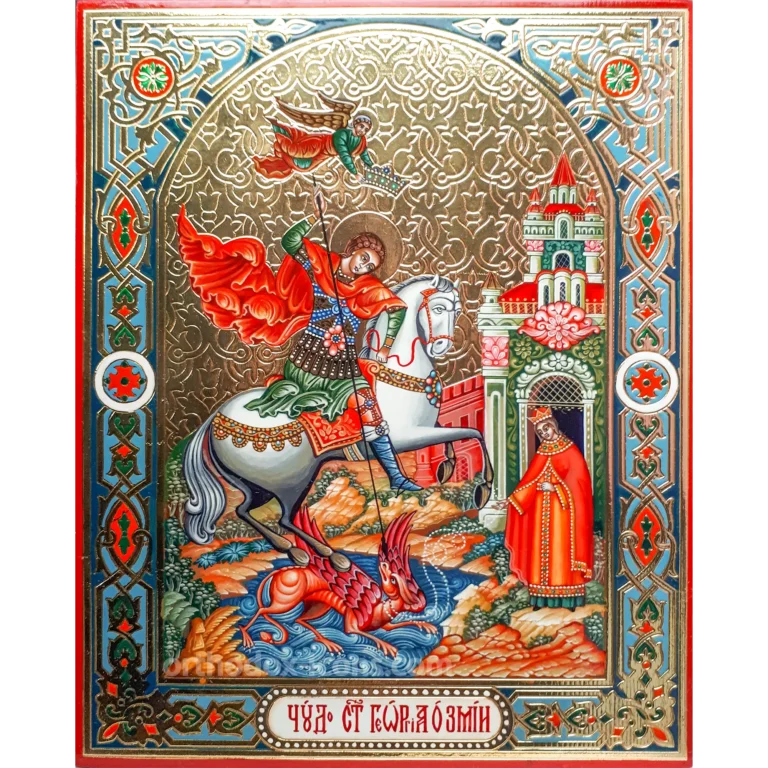
Hand-Painted Icon of Saint George the Trophy-Bearer
Available on backorder
Price range: $750 through $2250