The Icon of Alexander Nevsky
$800
Available size: 13×25 cm (5.1×9.8 in)
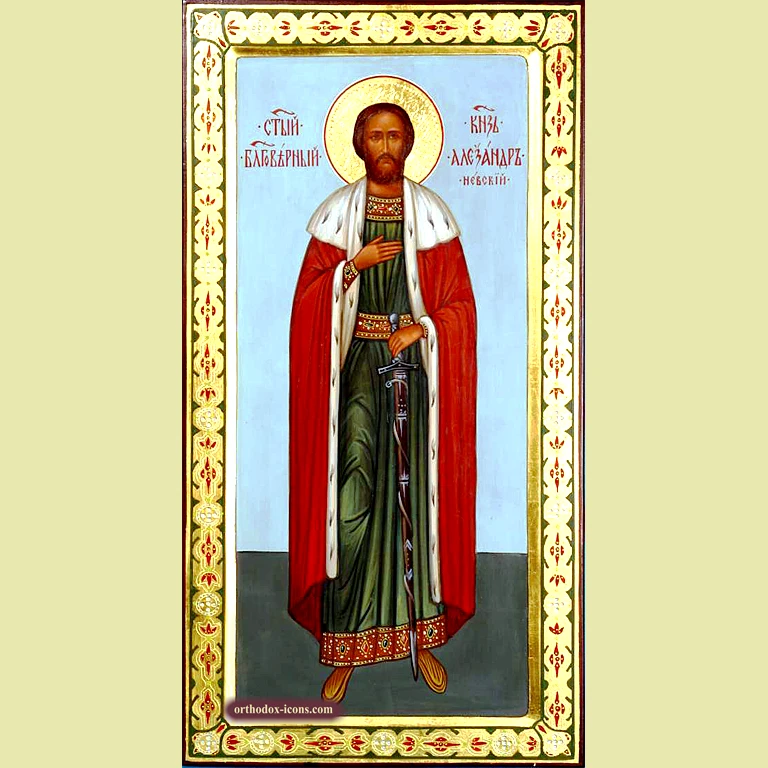
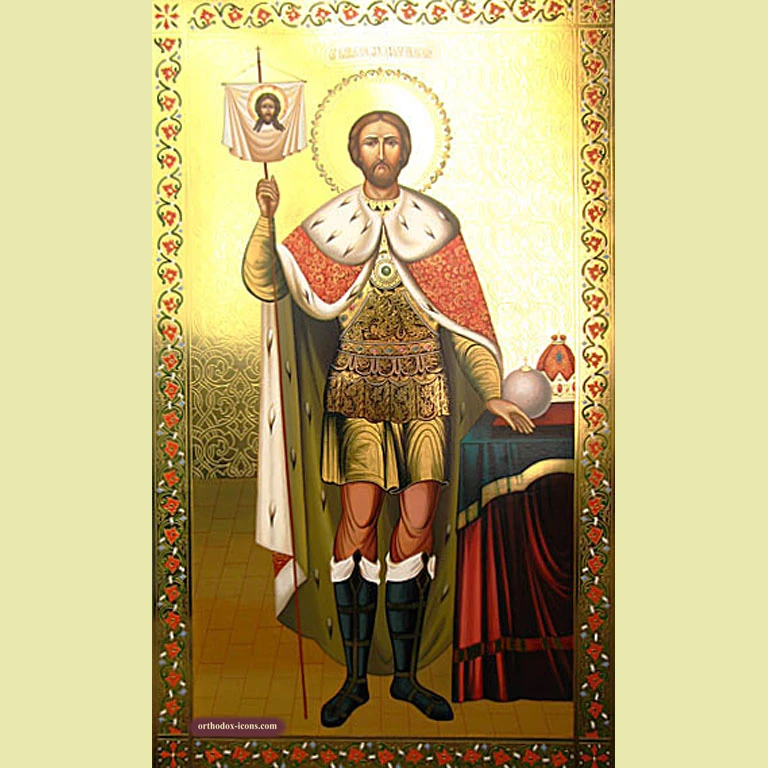
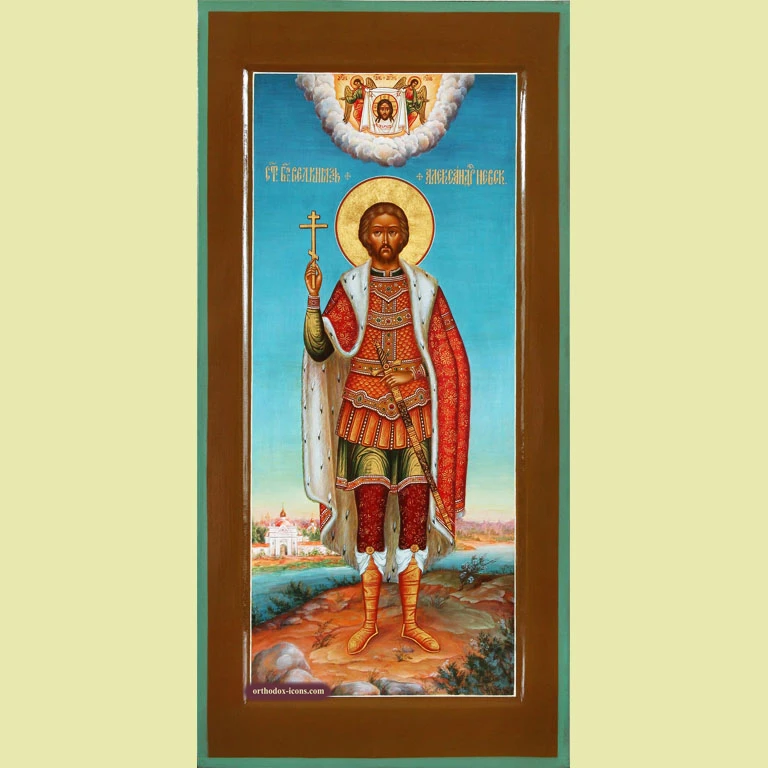
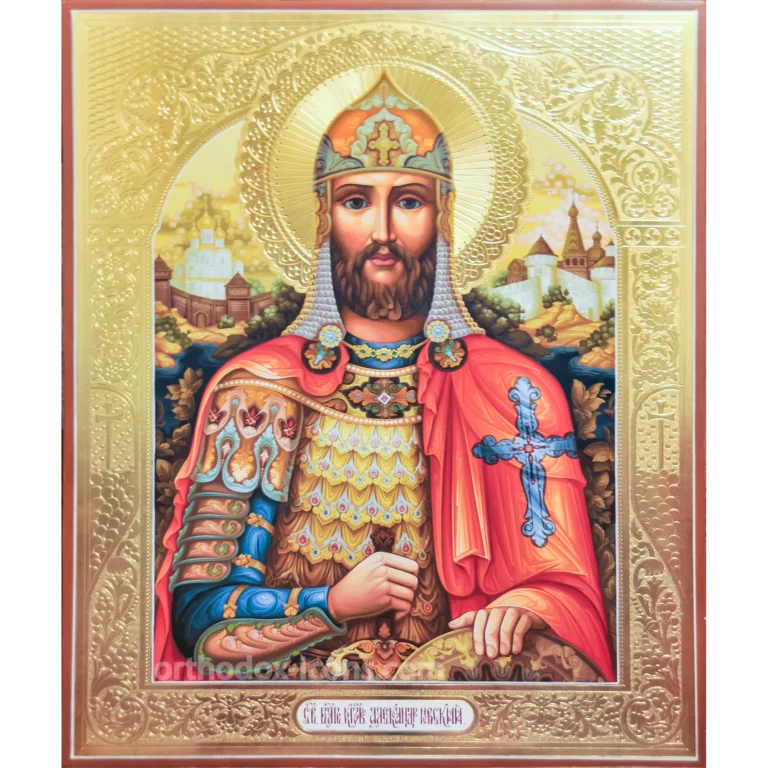
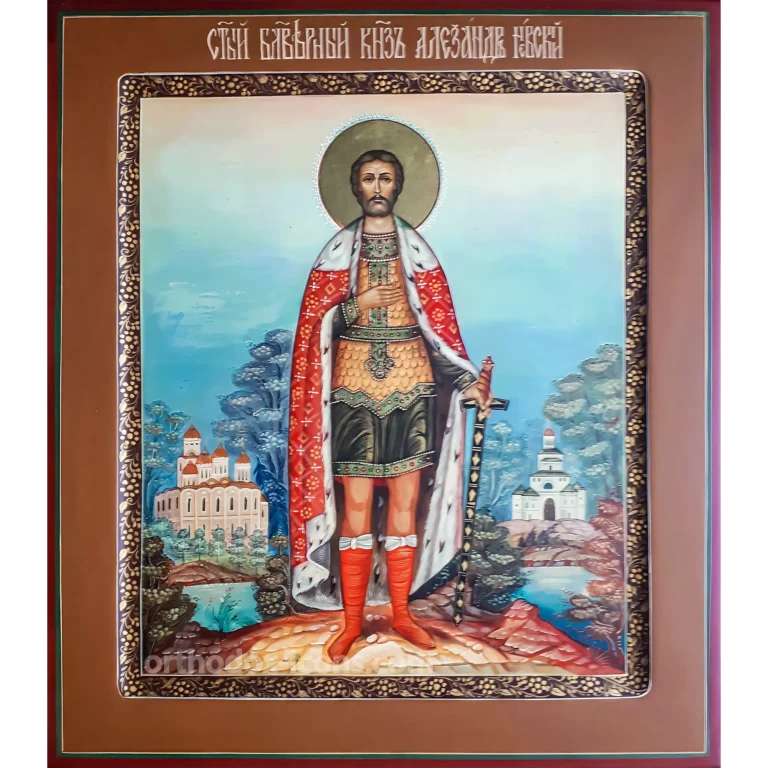
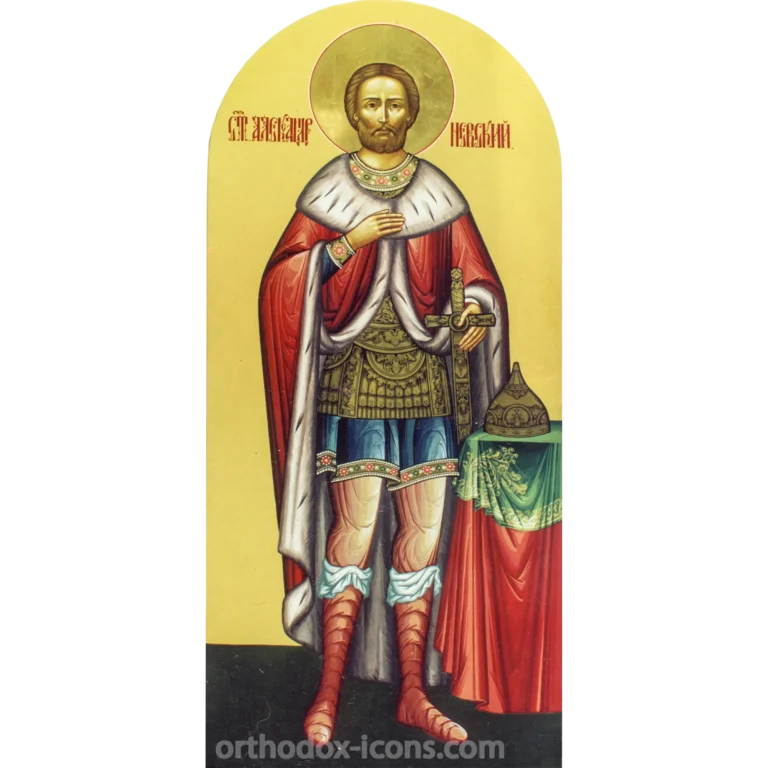
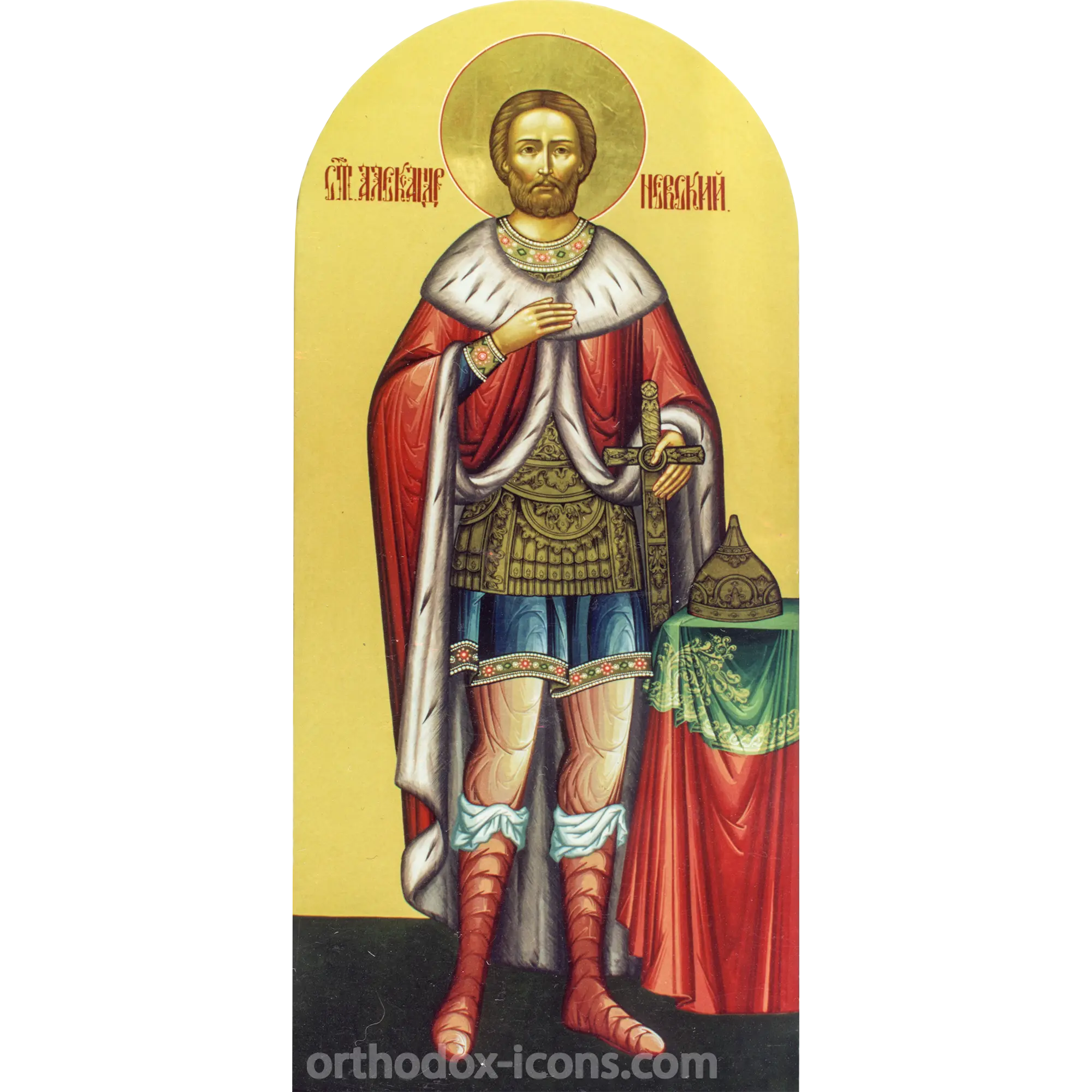
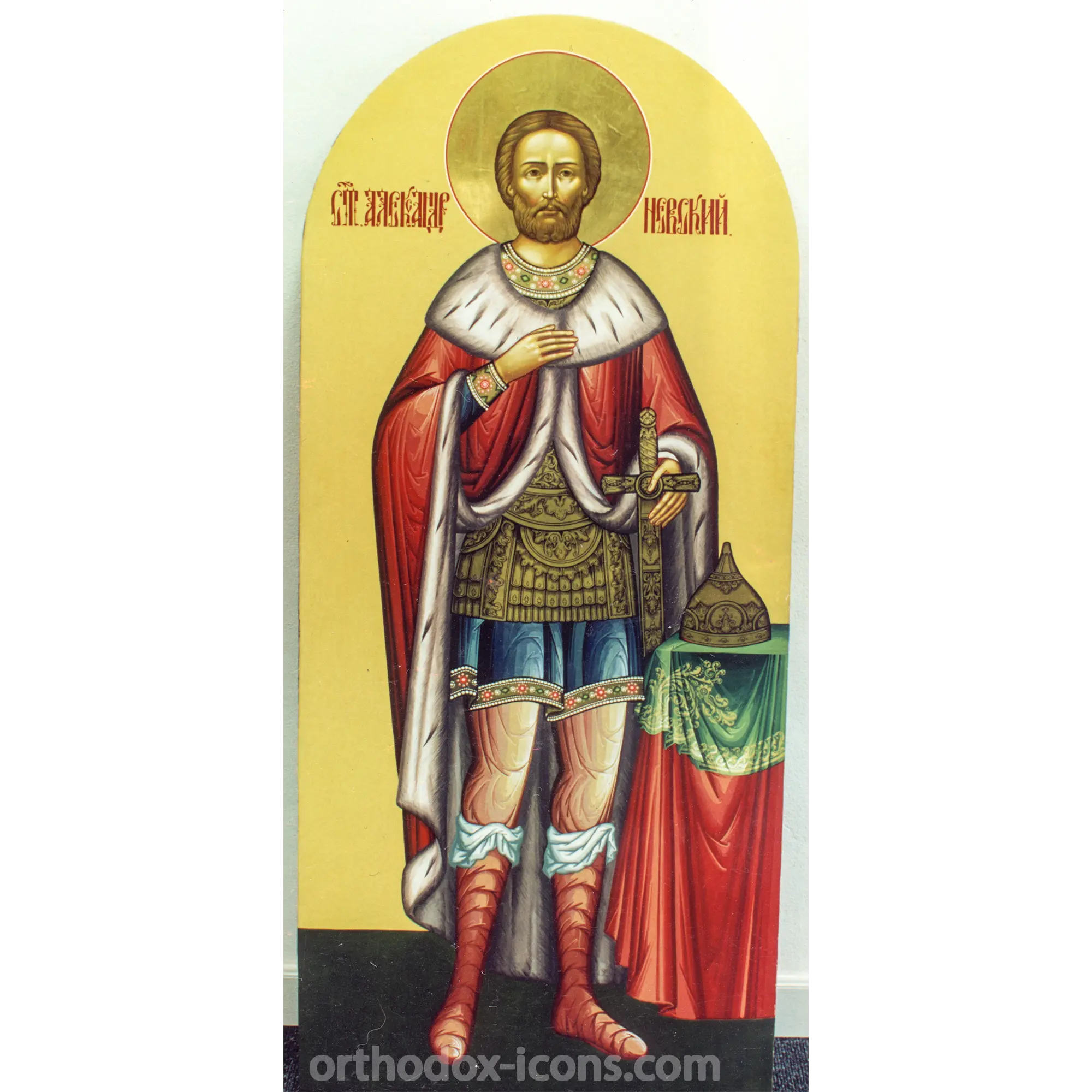
The Icon of Alexander Nevsky is a hand-painted full-length image of the holy right-believing prince, defender of Orthodoxy, and protector of his people. Saint Alexander is shown in princely and military vestments: richly ornamented golden armor, a red mantle lined with ermine, and a lowered sword held in his left hand.
His right hand is pressed reverently to his chest in a gesture of inner prayer. A traditional Russian helmet rests on the table beside him, showing that the saint is not depicted in battle, but standing before God in prayer for his people. The arched board and full gold-leaf background give the image a solemn, liturgical brightness.
This icon is suitable as a patron saint icon for men and boys named Alexander, and as a meaningful Orthodox gift for soldiers, officers, diplomats, public servants, leaders, and defenders of the homeland. Free international shipping is included. Payment is made after you receive and approve the icon.
It is possible to paint an image in any size to order
Free shipping worldwide
The Icon of Alexander Nevsky is a hand-painted full-length image of the holy right-believing great prince, one of the most beloved saints of the Russian Orthodox tradition. A gifted commander, wise ruler, and defender of the Orthodox faith, Saint Alexander devoted his life to service before God and to the protection of his people. This icon presents him in a solemn princely-warrior type, standing not in battle, but in prayerful dignity.
The icon is painted in the Mstyora tradition on an elegant arched board. Saint Alexander is shown in richly ornamented golden armor, with a red mantle lined with ermine, a lowered sword in his left hand, and his right hand pressed reverently to his chest. A traditional Russian helmet lies on a table beside him. The entire background is covered with gold leaf, emphasizing not worldly luxury, but the heavenly glory of the saint.
The listed size is 13×25 cm (5.1×9.8 in). This elongated format suits the full-length figure, arched silhouette, princely garments, lowered sword, helmet, and gold background. Larger and iconostasis formats may be discussed individually if the icon is needed for a chapel, church, or special commission.
Iconography: Warrior and Ruler
In Orthodox iconography, Saint Alexander Nevsky may be shown in two main ways: in monastic schema, which he accepted before his repose, or in princely and military garments. This icon follows the great-princely type, emphasizing his calling as ruler, defender, and servant of the Orthodox people.
The saint is depicted at the height of his earthly dignity, as a tall and noble figure. His vestments underline the high responsibility of a ruler and commander. He wears golden armor covered with delicate ornamental detail. Over the armor is a long cinnabar-red mantle lined with white ermine, a traditional sign of princely authority.
Each detail has spiritual and historical meaning. The sword is lowered and remains under control. It signifies that Alexander Nevsky took up arms only in defense of his land and people. The cross-like form of the hilt also reminds the viewer that Christian service may require sacrifice, courage, and faithfulness.
The right hand pressed to the heart expresses inner prayer, purity of intention, and submission of personal will to the will of God. The helmet resting on the table shows that this is not a battle scene. The warrior has laid aside the immediate sign of combat and stands before the Heavenly King, praying for the people entrusted to him.
The full gold-leaf background is also meaningful. In Orthodox icon painting, gold is not a sign of material wealth. It points to divine light, heavenly glory, and the Kingdom of God in which the saint is glorified.
Who This Icon Is For
The icon of Alexander Nevsky is one of the strongest patron saint images for men and boys named Alexander. The name is commonly understood as connected with protection and defense. Given for baptism, nameday, coming of age, wedding, or another important life event, the icon becomes a spiritual reminder of courage, dignity, and responsibility before God.
Saint Alexander Nevsky is also venerated as a heavenly patron for soldiers, officers, defenders, public servants, diplomats, and leaders. His image is appropriate for a home icon corner, study, military office, chapel, or parish space. It reminds those in authority that true strength is joined to justice, faith, restraint, and love for one’s people.
The icon may also be given to someone who is not named Alexander, especially if the gift is connected with military service, leadership, family responsibility, or public duty. The image speaks of courage without cruelty, authority without pride, and defense without aggression.
Prayers Before Saint Alexander Nevsky
Before the icon of Saint Alexander Nevsky, Orthodox Christians pray for protection of the homeland, preservation of soldiers, wisdom for leaders, peace in the family, strengthening of faith, and courage in difficult times. The saint’s life unites military firmness with diplomacy, restraint, and responsibility.
People may ask his intercession for the safety of sons, husbands, and relatives in dangerous service; for prudence and steadiness in leadership; for peace among relatives and reconciliation in conflicts; for protection from despair and temptation; and for the ability to stand firmly in the Orthodox faith.
Prayer before this icon is not a request for force for its own sake. The image of Alexander Nevsky teaches that Christian courage is governed by truth, conscience, and obedience to God. His lowered sword and prayerful hand show that strength must be placed under spiritual judgment.
Brief Life of the Defender of Rus
Saint Alexander was born in 1221 in Pereslavl-Zalessky, in the family of Prince Yaroslav Vsevolodovich. His rule fell during one of the most difficult periods in Russian history. From the east, the Russian lands suffered under the Mongol invasion; from the west came Swedish knights and German crusaders, threatening not only territory, but also the Orthodox faith.
Alexander showed military genius while still very young. In 1240, with a small Novgorod force, he defeated the Swedes on the Neva River and received the name Nevsky. Two years later, in 1242, he defeated the knights of the Livonian Order on the ice of Lake Peipus in the famous Battle on the Ice.
Yet Alexander’s greatness was not only military. In the east, he acted with difficult diplomatic wisdom. Understanding that Rus was exhausted and could not survive new devastation, he traveled to the Horde, negotiated, and sought to protect Russian cities from further destruction. His policy preserved the people during a tragic historical period.
At the end of his life, returning from another difficult journey, Alexander fell gravely ill. Before his repose, he accepted monastic tonsure with the name Alexy. His memory is especially connected with December 6, the day of his burial, and September 12, the translation of his relics to Saint Petersburg.
Mstyora Tradition and Traditional Materials
The value of this hand-painted icon lies not only in its rich appearance, but also in its traditional method of creation. The base is a prepared linden wood board with an arched upper edge. Linden has long been used for Russian icons because it is stable and suitable for fine painting. Oak splines are inserted into the back to help protect the board from warping.
The front of the panel is covered with cloth and multi-layer chalk gesso, then polished to a smooth surface. The painting is made in egg tempera with natural mineral pigments. This traditional technique gives depth and clarity to the face, hands, armor, mantle, sword, helmet, and ornamental details.
The background and fine highlights are gilded with 23K gold leaf (960 purity). The finished icon receives a protective coating. The result is not a printed reproduction, but a hand-painted Orthodox icon intended for prayer, veneration, and long-term use.
Size and Iconostasis Format
The listed size for this icon is 13×25 cm (5.1×9.8 in). This elegant, elongated format is suitable for a gift, a home icon corner, a study, or a personal prayer place. It preserves the full-length figure and the main iconographic details while remaining compact.
Larger sizes may be discussed individually when more space is needed for the ornamental armor, folds of the mantle, facial features, helmet, and gold background. A larger version can be appropriate for a chapel, church, military room, or a significant commemorative gift.
For an iconostasis or church commission, the board shape, proportions, degree of gilding, inscriptions, kiot, and additional decorative details may be adapted to the intended placement. Such details should be agreed in advance so the icon fits the surrounding liturgical space.
Blessing and Care
The icon may be blessed in an Orthodox church after it is received. Once blessed, it is used for prayer and veneration in a home, chapel, or church.
To preserve egg tempera and gold leaf, the icon should be kept away from direct sunlight, heaters, moisture, soot, and sudden temperature changes. The surface should not be wiped with wet cloths, alcohol, household chemicals, or furniture cleaners.
Dust should be removed only with a dry soft brush, without pressure. For long-term protection, a wooden glazed kiot is recommended. It helps protect the icon from dust, accidental touch, mechanical damage, and environmental exposure.
Questions and Answers
Why is Alexander Nevsky shown in armor rather than monastic clothing?
Alexander Nevsky may be shown either in monastic schema, which he accepted before death, or in princely military garments. This icon follows the princely-warrior type, emphasizing his service as ruler and defender.
What does the red mantle with white fur mean?
The red mantle lined with ermine is a sign of princely dignity and lawful authority. Red also points to courage, sacrifice, and readiness to serve.
Why is the sword lowered?
The lowered sword signifies restraint, justice, and readiness to defend rather than attack. It shows that the saint’s strength is governed by faith and prayer.
Why is there a helmet on the table?
The removed helmet shows that Saint Alexander is not depicted as a warrior in battle, but as a holy prince standing before God and praying for his people.
Can this icon be meaningful for diplomacy or leadership?
Yes. Alexander Nevsky is remembered not only as a military leader, but also as a wise ruler and diplomat. People may ask his intercession for patience, prudence, and sound judgment.
Can this icon be given to someone not named Alexander?
Yes. Although it is especially suitable as a patron saint icon for someone named Alexander, it may also be given to soldiers, cadets, leaders, fathers, and those who value courage and responsibility.
Is the background painted or real gold leaf?
The background is gilded with real 23K gold leaf (960 purity). In Orthodox icon painting, gold signifies divine light and the heavenly glory of the saint.
What is an arched icon board?
An arched board has a rounded upper edge rather than a straight top. This shape is often used for full-length saints and gives the icon a solemn vertical silhouette.
Do mineral pigments fade over time?
Traditional egg tempera with mineral pigments is valued for its durability and depth. With proper care, it can preserve its color for many years.
Should the icon be blessed after receiving it?
The icon may be blessed in an Orthodox church after delivery. Once blessed, it is used for prayer and veneration in the home, chapel, or church.
| Dimensions | 13x25cm (5.1×9.8 in) |
|---|---|
| Name | Alexander |