Alexander of Svir Orthodox Icon
Price range: $700 through $2250
Available sizes: 17×21 cm (6.7×8.3 in), 20×24 cm (7.9×9.4 in), 27×31 cm (10.6×12.2 in), 30×40 cm (11.8×15.7 in), and iconostasis sizes by agreement.
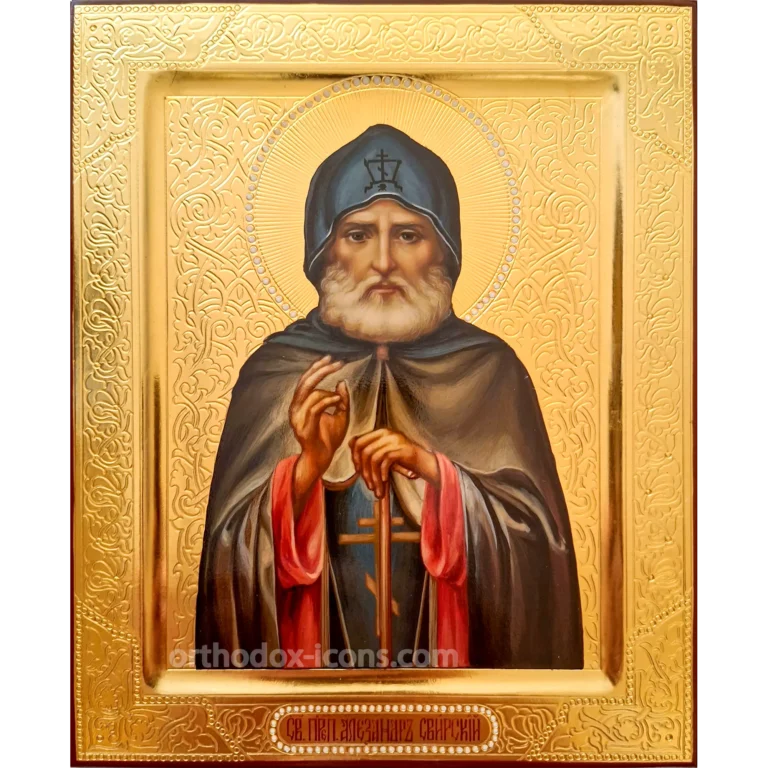
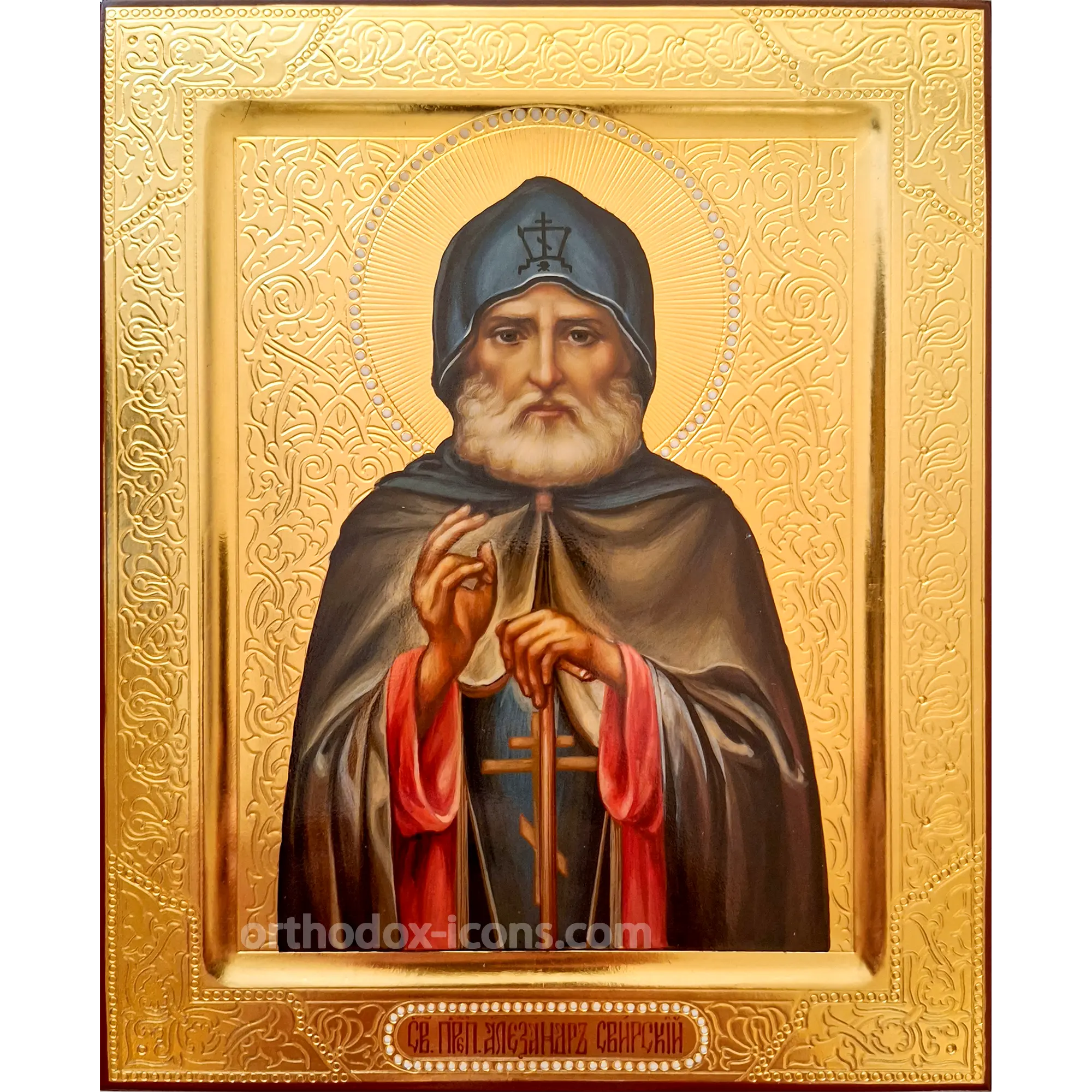
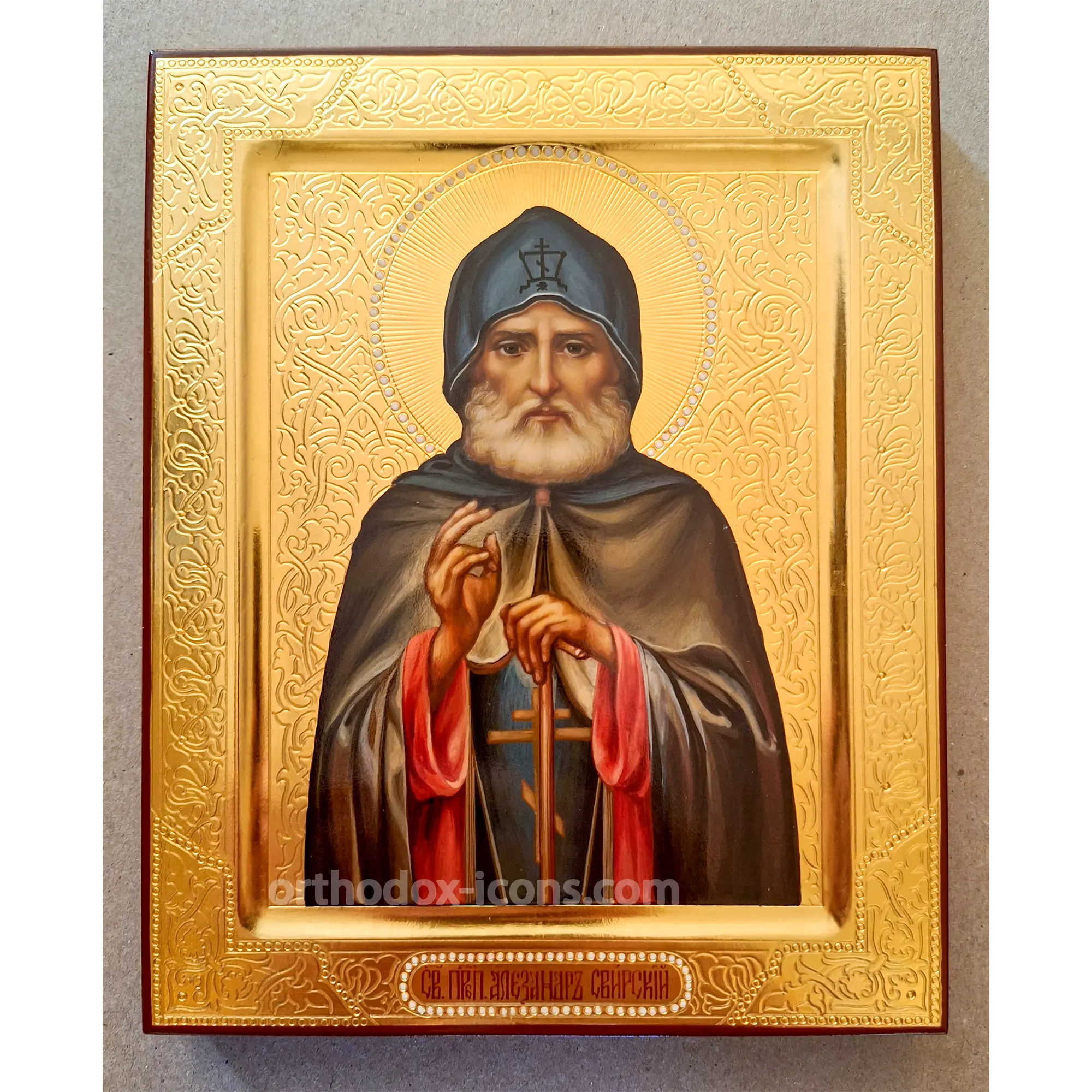
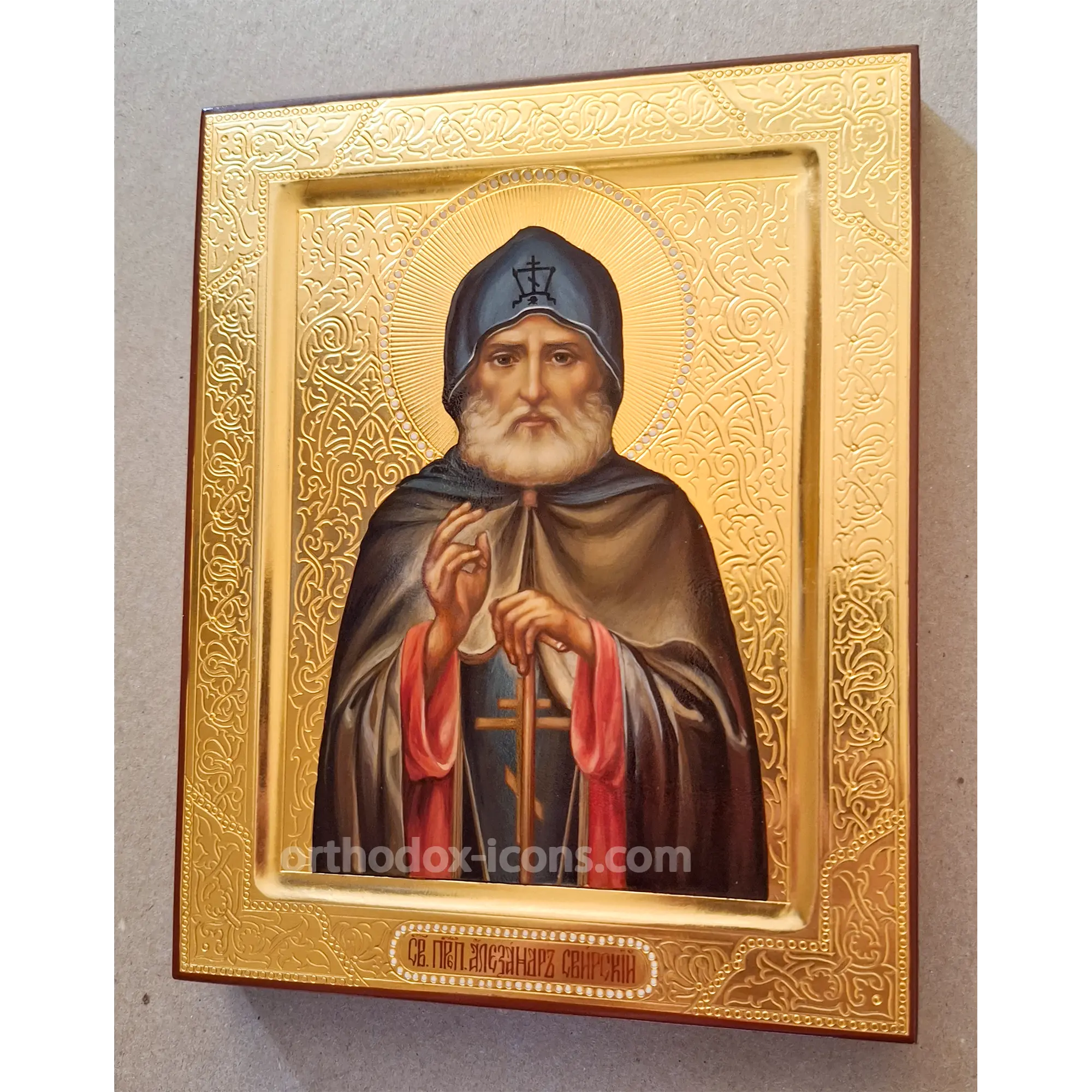
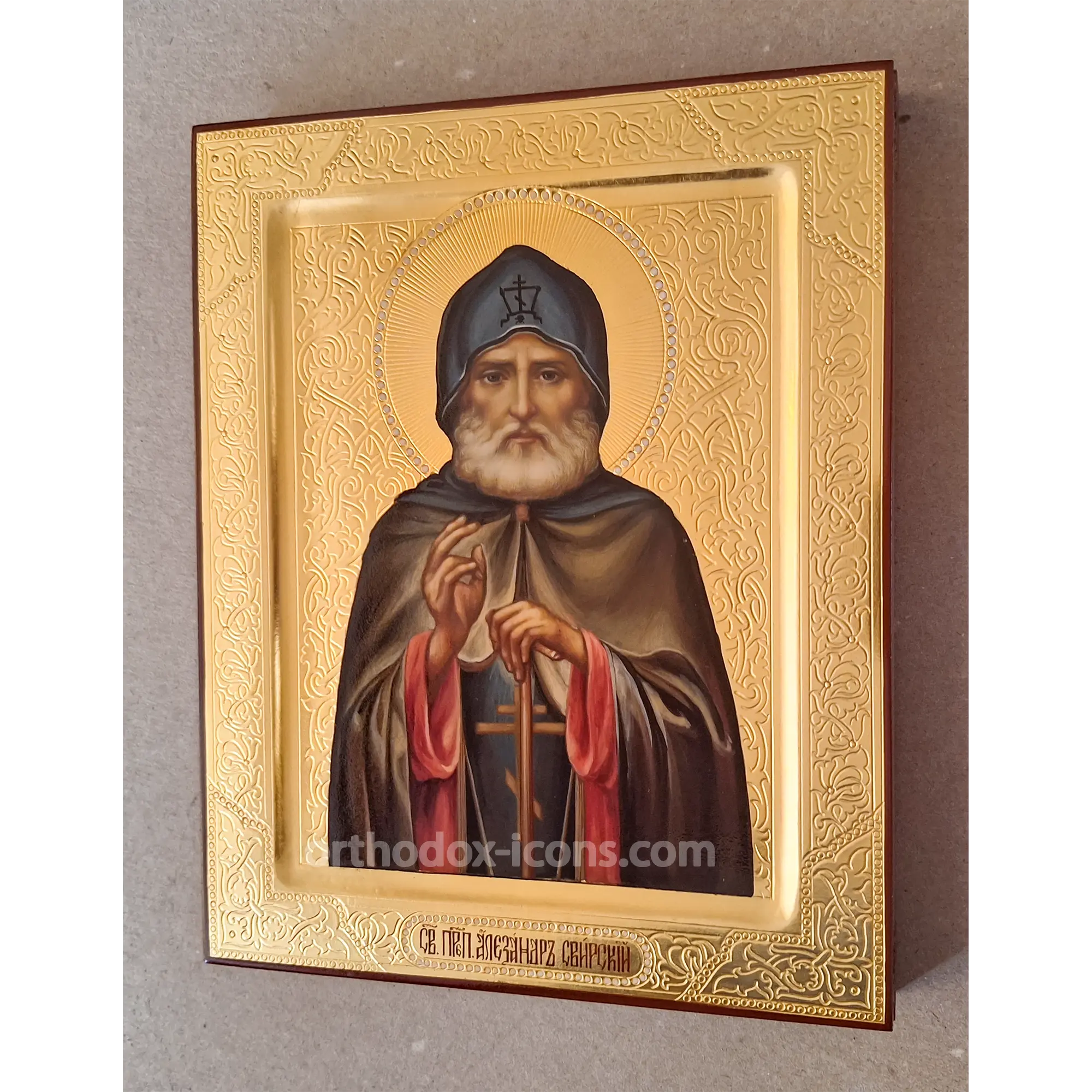
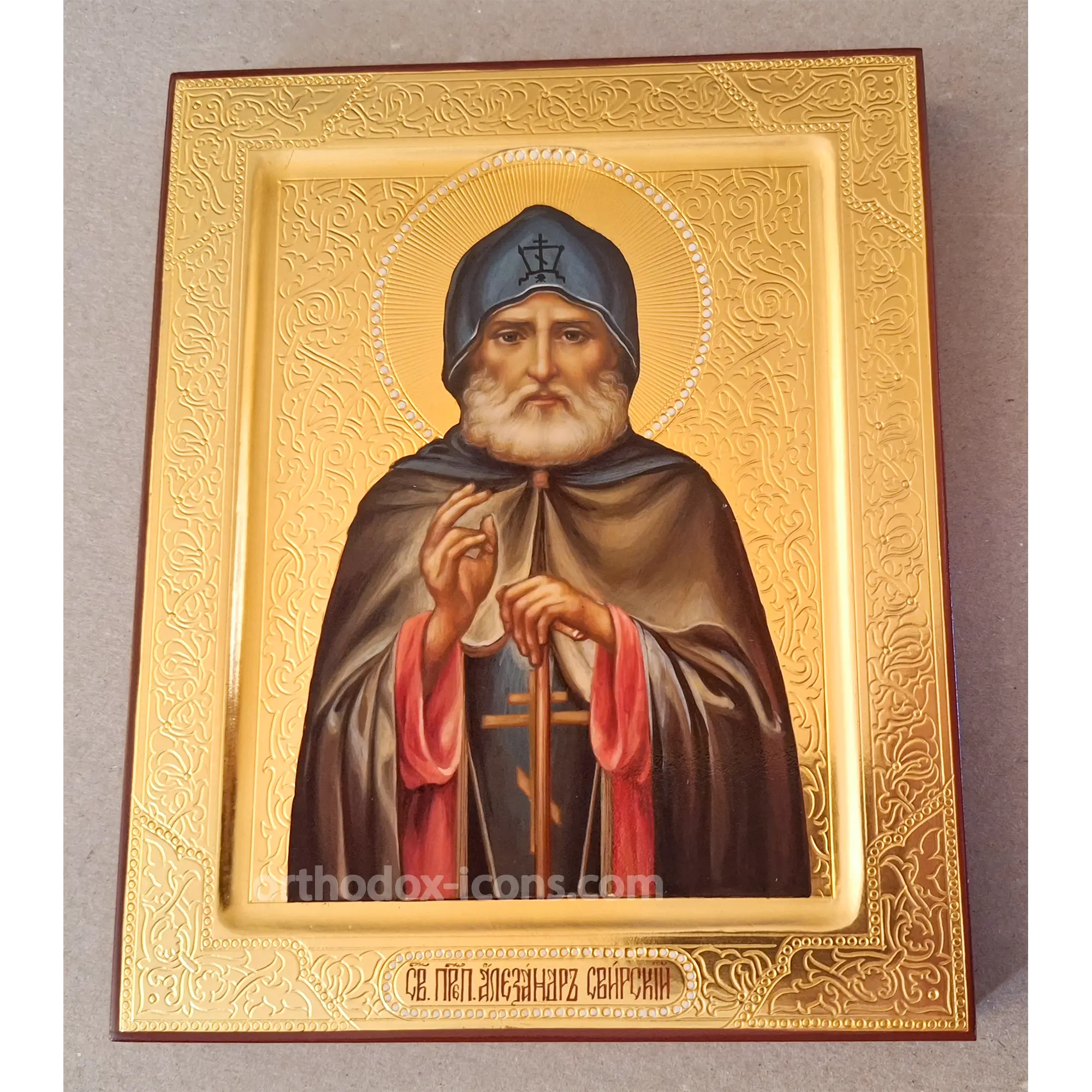
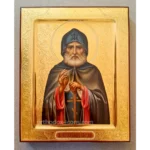
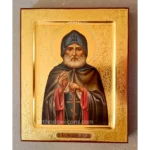
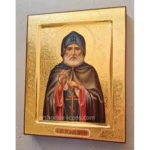
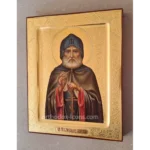
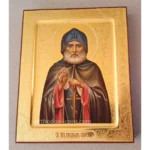
Alexander of Svir Orthodox Icon is a hand-painted icon of Saint Alexander of Svir, a revered Russian monastic saint, ascetic, prayerful elder, and founder of the Holy Trinity Alexander-Svirsky Monastery. Orthodox Christians pray before his icon for spiritual strengthening, humility, repentance, peace of soul, help in sorrows, wise decisions, and blessing for the family. The icon is painted on a natural linden board with oak splines and a kovcheg, using gesso, mineral egg tempera, and 23K gold leaf (960 purity). The golden ornamental background, dark monastic hood, grey beard, staff, and calm blessing gesture give the image a strict, prayerful, and deeply churchly character.
It is possible to paint an image in any size to order
Free shipping worldwide
Alexander of Svir Orthodox Icon is a hand-painted Orthodox icon of Saint Alexander of Svir, one of the great Russian monastic saints, remembered as an ascetic, prayerful elder, spiritual guide, and founder of a monastery. His name is especially connected with humility, watchfulness, repentance, solitude, and a rare depth of contemplative life. This icon is suitable for a home icon corner, personal prayer, a name-day gift for someone named Alexander, a monastery, chapel, church, or iconostasis.
Icon at a Glance
| Name | Alexander of Svir Orthodox Icon |
| Saint depicted | Saint Alexander of Svir |
| Main spiritual meaning | Prayer, humility, repentance, spiritual strengthening, and monastic watchfulness |
| Available sizes | 17×21 cm (6.7×8.3 in), 20×24 cm (7.9×9.4 in), 27×31 cm (10.6×12.2 in), 30×40 cm (11.8×15.7 in), and iconostasis sizes by agreement |
| Purpose | For home prayer, a patron saint gift, monastery, chapel, church, and iconostasis use |
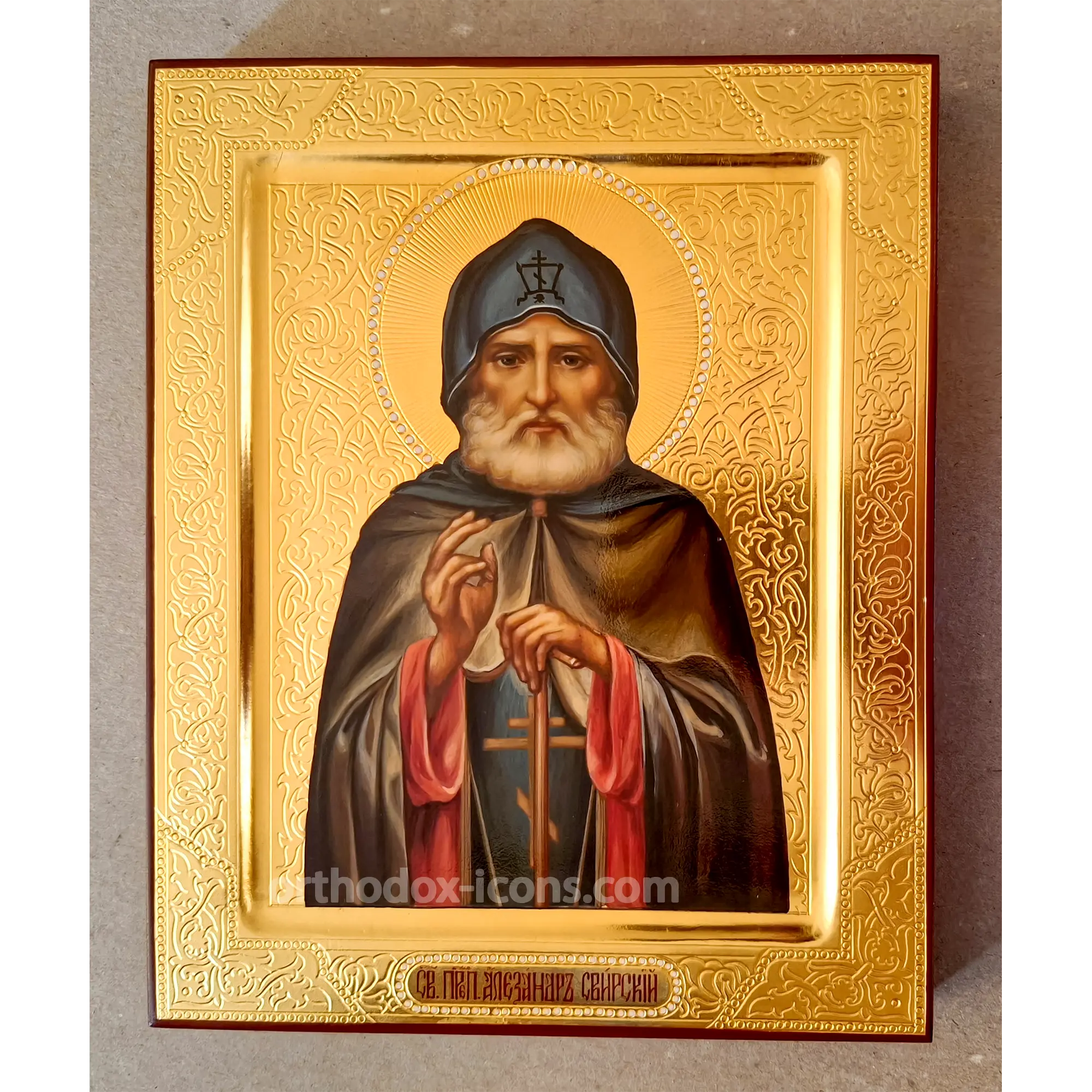
In this icon, Saint Alexander of Svir is shown in strict monastic clothing, holding a staff and offering a blessing. His face is written with deep inward concentration: the grey beard, attentive gaze, quiet mouth, and dark monastic hood create the image of an elder who has passed through prayer, fasting, solitude, and long spiritual experience. The composition avoids narrative detail and outward drama. Its strength is concentrated in the calm presence of the saint as a prayerful elder standing before God and, at the same time, turned toward the faithful as a quiet spiritual guide.
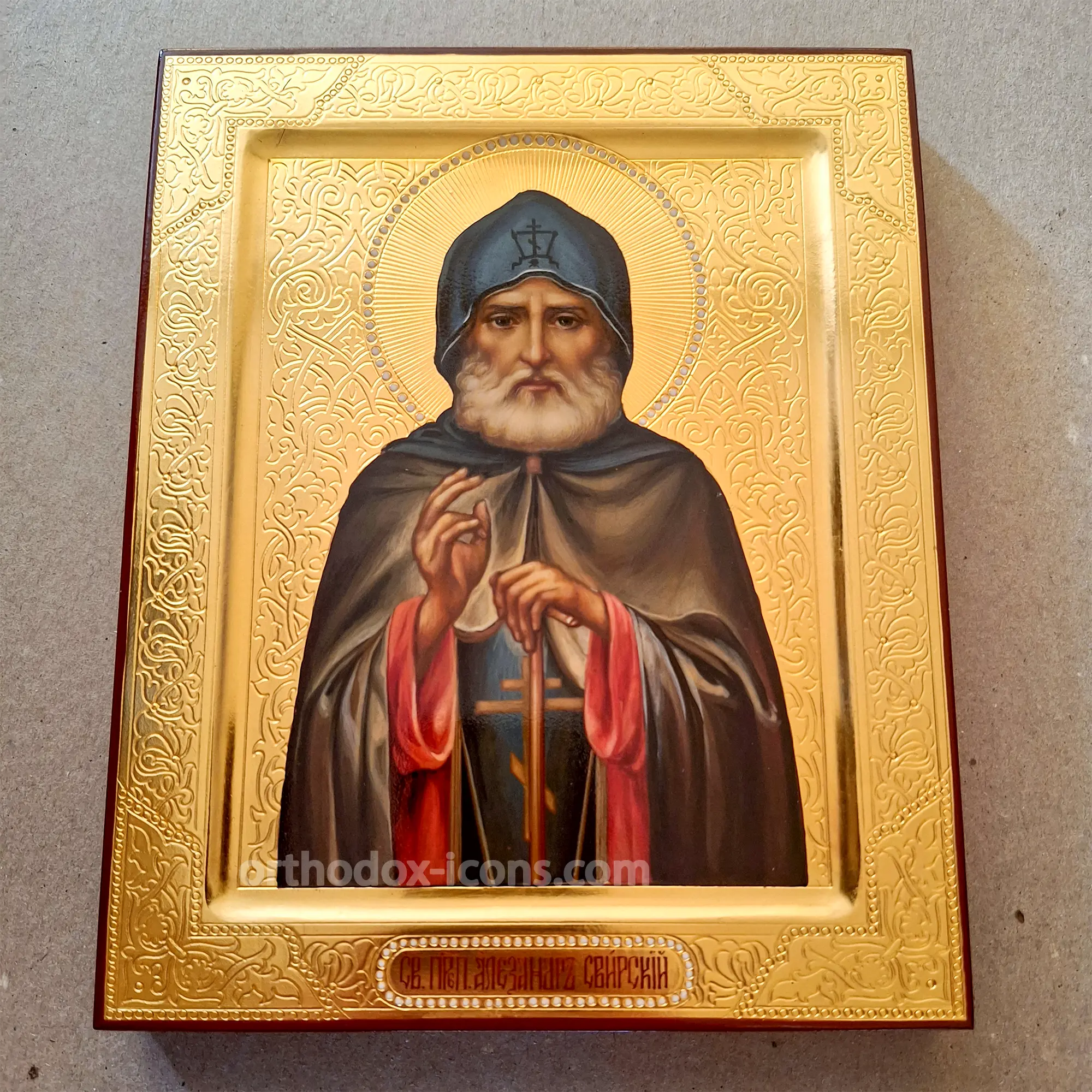
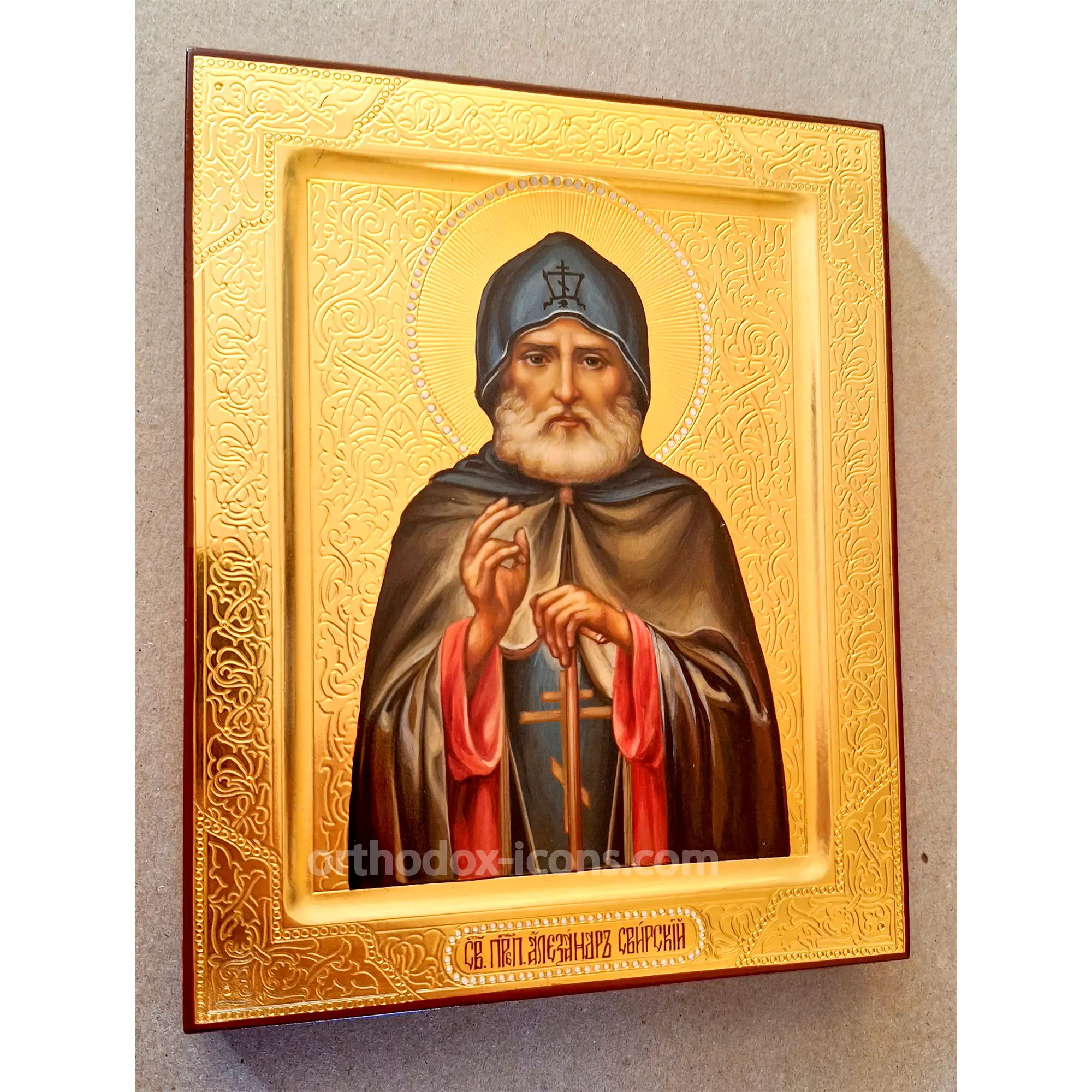
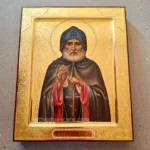
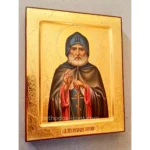
The artistic design gives the icon a solemn and deeply churchly appearance. The figure of Saint Alexander is placed within a golden space decorated with fine vegetal ornament. The kovcheg, the recessed central field of the board, is clearly visible and sets apart the sacred space of the image. Wide golden borders with rich tooled ornament frame the saint, while the round radiant halo behind his head gives the sense of spiritual light. The inscription names him as Saint Venerable Alexander of Svir. The dark monastic garments contrast with the luminous gold, and the reddish sleeves and cross on the schema add a restrained but expressive color accent.
Life and Spiritual Path of Saint Alexander of Svir
Saint Alexander of Svir is one of the great Russian saints whose life became an example of monastic labor, humility, and unceasing prayer. He was born in the fifteenth century in the Russian North and from his youth desired a life dedicated to God. Leaving worldly concerns behind, he chose the path of monasticism, solitude, and strict ascetic effort. His spiritual life was connected with Valaam and later with a wilderness place near the Svir River, where he founded the monastery later known as the Alexander-Svirsky Monastery.
In the memory of the Church, Saint Alexander holds a special place not only as a founder of a monastery and teacher of monks, but also as a saint connected with a rare spiritual event: the appearance of the Holy Trinity. This gives his icon a particular importance within the Orthodox tradition. He is venerated as a man of exceptional purity, profound humility, and spiritual maturity, to whom God revealed what cannot be grasped by ordinary human reason without divine grace.
At the same time, the veneration of Saint Alexander is not limited to the extraordinary events of his life. The heart of his image is daily faithfulness to God: prayer, labor, patience, spiritual guidance, and the ability to lead people toward repentance. His holiness is revealed not through external display, but through deep inward life. For this reason, the Alexander of Svir Orthodox Icon is especially close to those who seek silence, spiritual support, humility, sobriety of heart, and help in ordering the soul.
Why Saint Alexander of Svir Is Venerated
- He is one of the great Russian venerable saints and monastic founders.
- His life is connected with prayer, wilderness asceticism, and spiritual guidance.
- Orthodox Christians ask his intercession for humility, repentance, peace of soul, and spiritual strengthening.
- His icon is especially meaningful for monks, pilgrims, and people seeking inner silence and spiritual support.
Theological Meaning of the Icon
The central theological meaning of the Alexander of Svir Orthodox Icon is the image of a person wholly turned toward God. This is not the image of a warrior, ruler, or martyr shown through outward suffering, but of an ascetic whose victory took place in the depths of the heart. His path is the path of purification, prayerful labor, struggle against passions, spiritual discernment, and humility. The icon is important for those who wish to see in a saint not only a heavenly intercessor, but also a guide in spiritual life.
The staff in Saint Alexander’s hands has an important meaning. It is a sign of eldership, spiritual guidance, pilgrimage, and support. In Orthodox tradition, a staff held by a venerable saint is not merely an attribute of age or monastic rank. It recalls the human journey toward God, a path that may be long, difficult, and stony, requiring patience and inward steadiness. Saint Alexander seems to remind the faithful that without spiritual support, prayer, and humility, a person easily loses direction.
The blessing gesture speaks of the saint’s prayerful participation in the lives of those who turn to him. The icon does not present him as a distant historical figure. It shows him as a living intercessor before God, one who hears the prayer of the Church and helps people in spiritual struggle. The schema cross on his clothing points to monastic renunciation of the world and the complete dedication of life to Christ.
The gold background and halo carry not only decorative but theological meaning. In an Orthodox icon, gold symbolizes divine light, incorruptibility, and the glory of the Kingdom of Heaven. The dark monastic garments placed against the gold field are especially expressive: they show that the path of humility and outward simplicity leads to inward radiance. The less a person seeks earthly glory, the more fully the light of God’s grace can be revealed.
Prayers Before Saint Alexander of Svir
Before the icon of Saint Alexander of Svir, Orthodox Christians pray for spiritual strengthening, humility, repentance, peace of soul, help in the struggle against passions, healing of spiritual sorrows, guidance onto the right path, and blessing for the family. People turn to the saint when they need quietness of heart, wisdom, patience, and the ability to pass through a difficult period of life without bitterness or despair.
Prayers before this icon often ask for:
- peace of soul and freedom from anxiety;
- spiritual strengthening and preservation of faith;
- help in repentance and correction of life;
- humility, patience, and inner collectedness;
- support in illness, grief, and loneliness;
- wisdom in difficult circumstances;
- blessing for the family, home, monastic path, or spiritual life.
This icon is especially appropriate as a patron saint icon for a person named Alexander. It may also be chosen for a monastic cell, home icon corner, pilgrimage gift, church, or chapel. The image of Saint Alexander of Svir helps one remember that true spiritual life begins not with outward feats done for display, but with the quiet, honest, and constant turning of the heart toward God.
When This Icon Is Especially Appropriate
- as a patron saint or name-day icon for Alexander;
- for a home icon corner and personal prayer;
- for prayer for peace of soul, humility, and spiritual strengthening;
- as a gift for a monk, pilgrim, or person seeking spiritual support;
- for a church, chapel, monastery, or iconostasis.
Artistic Features of This Icon
This icon is distinguished by its rich golden structure and expressive face painting. There is no complex narrative background; all attention is focused on the saint. The face is painted softly, with careful modeling, while the grey beard and deep gaze convey elder-like wisdom and spiritual strictness. The dark hood and monastic mantle form a clear silhouette that reads especially well against the shining gold background.
The color design is built on contrast. The golden background and broad ornamental borders express the light of heavenly glory, while the dark monastic clothing speaks of humility and renunciation of outward luxury. The reddish sleeves and inner garment details add warmth without disturbing the ascetic character of the icon. The staff becomes a vertical center of the composition, connecting the lower part of the figure with the blessing gesture and the face.
The halo is especially expressive. It is made as a luminous circle with radiant rays and a decorative border. This detail visually opens the meaning of the icon: outwardly the saint stands in simple monastic clothing, yet his life shone with grace. The wide golden borders with vegetal ornament create the impression of a precious cover, while the icon still preserves a true hand-painted iconographic character.
How the Icon Is Made
The Alexander of Svir Orthodox Icon is painted on a natural linden board. Linden is traditionally valued in icon painting for its even structure, stability, and ability to receive the ground well. Oak splines are used to strengthen the board, helping it keep its shape and reducing the risk of deformation over time. In this icon, the kovcheg is clearly visible: the recessed central field in which the sacred image is placed.
After the board is prepared, gesso is applied in traditional layers, creating a bright, firm, and even surface for painting. This ground allows for clean lines, precise face painting, soft garment folds, and durability of the paint layer. The image is painted in mineral egg tempera, the classic technique of Orthodox iconography, valued for noble matte color, delicate transitions, depth of tone, and lasting stability.
Gilding is done with 23K gold leaf of 960 purity. Gold in an icon is not only decorative; it symbolizes divine light, heavenly glory, and the incorruptibility of the Kingdom of God. In this image of Saint Alexander of Svir, gilding is especially important for the background, halo, ornamental details, and solemn structure of the composition. The combination of linden board, oak splines, kovcheg, gesso, mineral egg tempera, and 23K gold leaf gives the icon churchly dignity, artistic depth, and long-term durability.
Icon Characteristics
| Name | Alexander of Svir Orthodox Icon |
| Saint | Saint Alexander of Svir |
| Icon type | Patron saint icon of a venerable monastic saint |
| Main meaning | Prayer, humility, repentance, spiritual strengthening, and monastic watchfulness |
| Board | Natural linden wood |
| Board reinforcement | Oak splines |
| Board construction | With kovcheg |
| Ground | Gesso |
| Painting | Mineral egg tempera |
| Gilding | 23K gold leaf (960 purity) |
| Available sizes | 17×21 cm (6.7×8.3 in), 20×24 cm (7.9×9.4 in), 27×31 cm (10.6×12.2 in), 30×40 cm (11.8×15.7 in), and iconostasis sizes by agreement |
| Use | For home prayer, a name-day gift, monastery, church, chapel, and iconostasis |
Why Choose This Icon
The Alexander of Svir Orthodox Icon is valuable because it turns the heart toward a quiet but profound ascetic path. It is an icon for those who seek spiritual support, prayerful concentration, and the intercession of a saint who walked the path of solitude, humility, and spiritual guidance. This image reminds the faithful that true Christian strength is born not from outward success, but from prayer, patience, and trust in God.
The available sizes make the icon suitable for different settings. The 17×21 cm and 20×24 cm sizes work well for a smaller home icon corner, while 27×31 cm and 30×40 cm create a more expressive prayer space. Larger iconostasis sizes are appropriate for a church, chapel, or monastic row. With its gold background, kovcheg, strict monastic image, and deep spiritual meaning, this icon can become a meaningful patron saint gift and a lasting family holy image.
Key Advantages
- a precise patron saint icon of Saint Alexander of Svir;
- especially meaningful for prayers for peace of soul, humility, repentance, and spiritual strengthening;
- suitable for home, gift, monastery, chapel, and church use;
- rich golden background, kovcheg, and strict monastic composition;
- painted according to the classic materials of Orthodox iconography;
- available in home and iconostasis sizes.
Free international shipping is included. Payment is due upon delivery.
Questions and Answers
Who is shown on the Alexander of Svir Orthodox Icon?
The icon shows Saint Alexander of Svir, a Russian monastic saint, ascetic, prayerful elder, and founder of the Holy Trinity Alexander-Svirsky Monastery.
What do Orthodox Christians pray for before Saint Alexander of Svir?
They ask for spiritual strengthening, humility, repentance, peace of soul, help in sorrows, wisdom in difficult decisions, and blessing for the family.
Why is Saint Alexander of Svir especially venerated?
He is remembered for his deep ascetic life, spiritual guidance, foundation of a monastery, and the rare tradition connected with the appearance of the Holy Trinity.
What does the staff in the saint’s hands mean?
The staff points to eldership, spiritual guidance, pilgrimage, and the steady support needed on the path toward God.
Why is the saint shown in monastic clothing?
His monastic clothing reflects renunciation of worldly vanity, prayer, fasting, humility, and complete dedication of life to Christ.
What does the gold background symbolize?
In Orthodox iconography, gold points to divine light, heavenly glory, and the incorruptible radiance of the Kingdom of God.
What is a kovcheg on this icon?
A kovcheg is the recessed central field of the icon board, visually setting apart the sacred space of the painted image.
What materials are used for this hand-painted icon?
The icon is made on a linden board with oak splines and gesso, painted in mineral egg tempera, and gilded with 23K gold leaf of 960 purity.
What sizes are available?
The available sizes are 17×21 cm, 20×24 cm, 27×31 cm, and 30×40 cm, with larger iconostasis sizes available by agreement.
Is this icon suitable as a name-day gift?
Yes. It is especially suitable as a name-day or patron saint icon for someone named Alexander, and also for a home icon corner, chapel, monastery, or church.
| Dimensions | 17x21cm (6.7×8.3 in), 20x24cm (7.9×9.4 in), 27x31cm (10.6×12.2 in), 30x40cm (11.8×15.7 in) |
|---|---|
| Name | Alexander |