Filigree Orthodox Icon of St. Xenia
$950
Available size: 17×21 cm (6.7×8.3 in). The production time for a filigree icon is about two months.
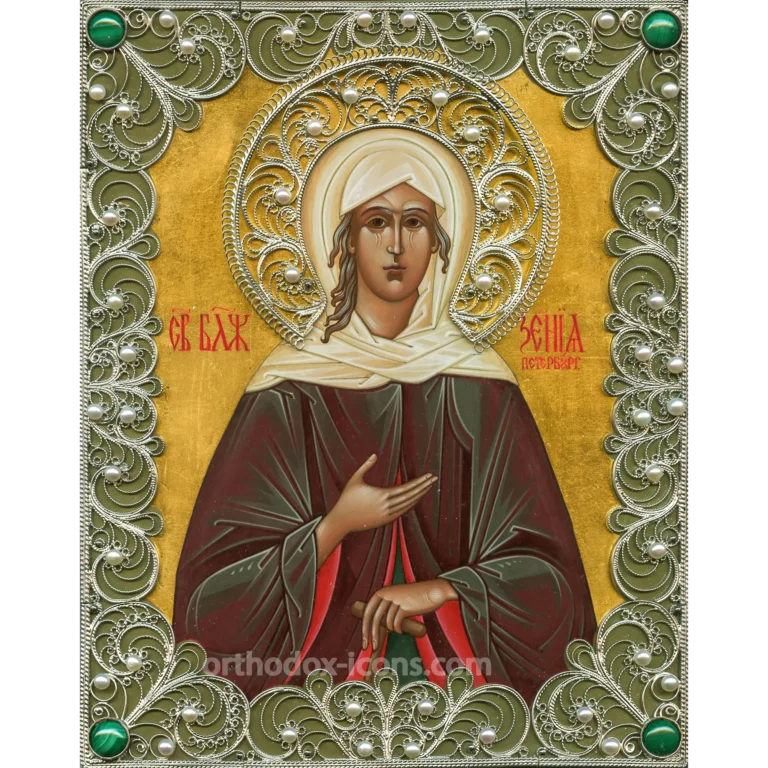
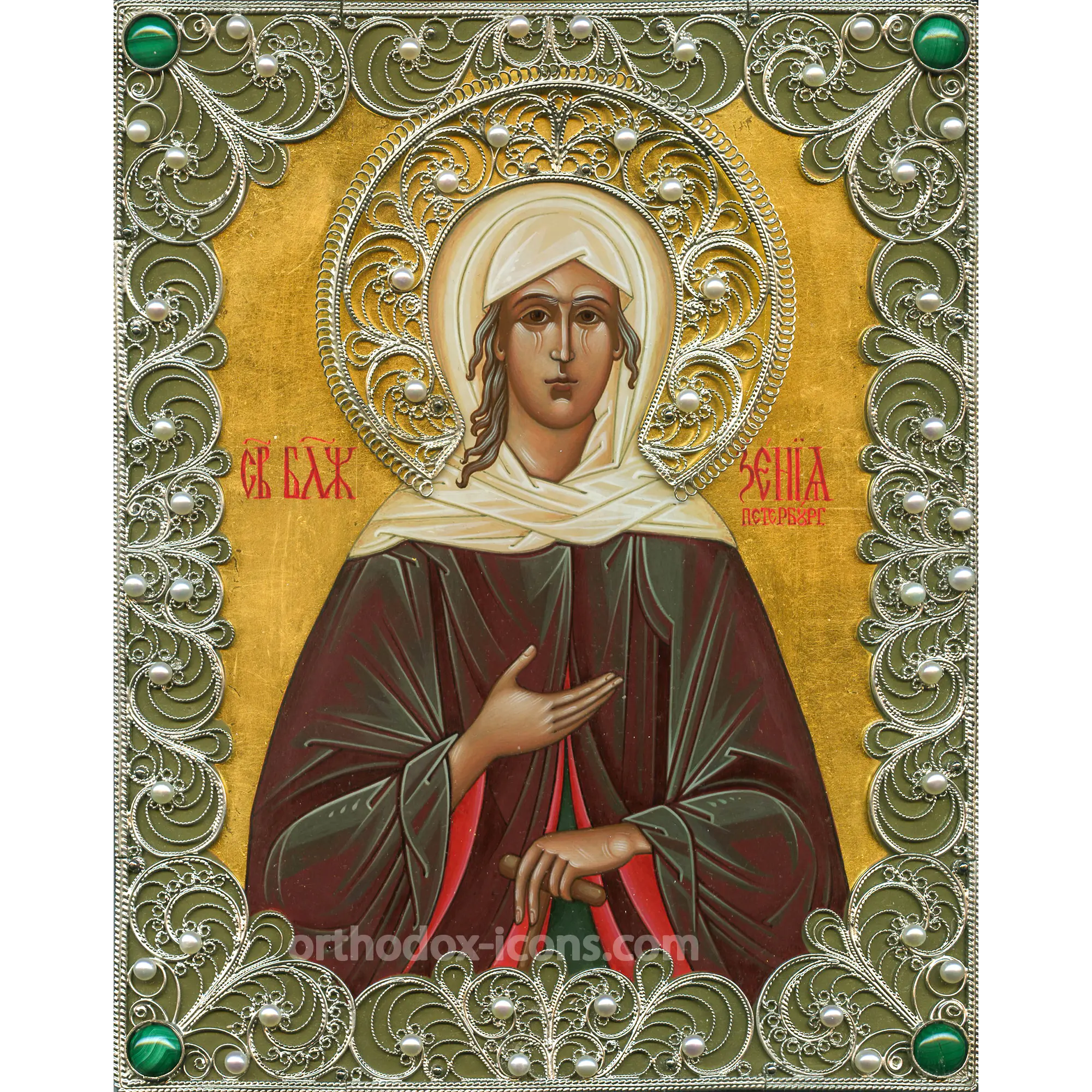
Filigree Orthodox Icon of St. Xenia is a richly decorated hand-painted icon of Blessed Xenia of Petersburg, one of the most beloved saints for prayers about marriage, family peace, children, work, housing needs, and help in difficult life circumstances. The icon is painted on a linden wood board with a 23K gold leaf (960 purity) background.
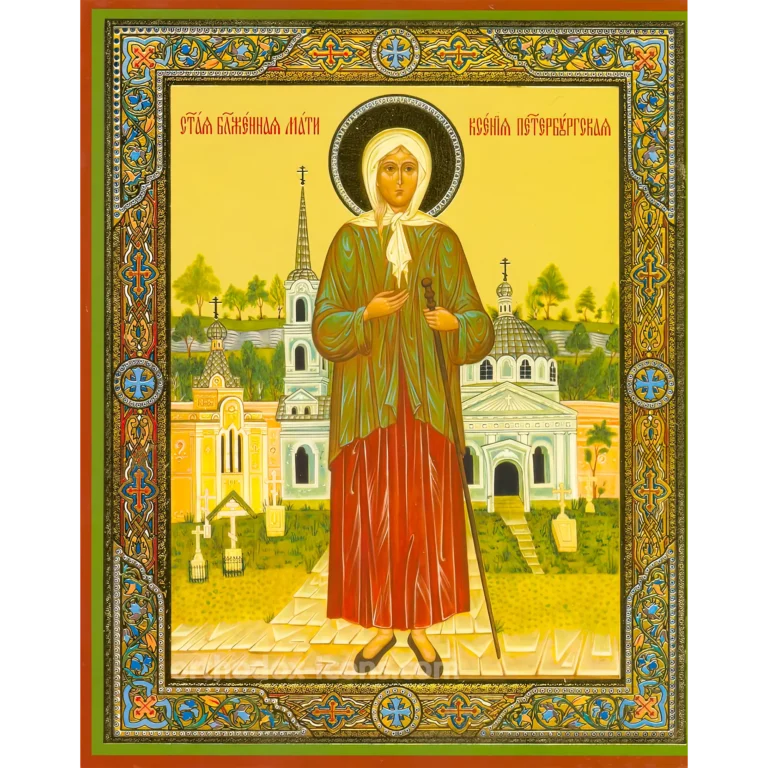
The borders and halo are covered with raised handmade silver-toned filigree, decorated with white pearl-like beads and green malachite-style inserts at the corners. Saint Xenia is shown in her traditional red and green clothing, with a wooden staff in her hand, in a warm academic style.
It is possible to paint an image in any size to order
Free shipping worldwide
Filigree Orthodox Icon of St. Xenia is a hand-painted icon of Blessed Xenia of Petersburg, richly decorated with silver-toned filigree, pearl-like beads, green malachite-style inserts, and a 23K gold leaf (960 purity) background. It unites the warmth of academic icon painting with the refined beauty of traditional jewelry-style ornament.
Blessed Xenia of Petersburg bore the difficult cross of foolishness-for-Christ after the sudden death of her husband. She gave away her possessions, accepted voluntary poverty, and spent her life in prayer, wandering, humility, and hidden works of mercy. Today Orthodox Christians turn to her with prayers for family life, marriage, children, housing needs, work, and help in difficult circumstances.
Icon at a Glance
- Name: Filigree Orthodox Icon of St. Xenia
- Saint: Blessed Xenia of Petersburg
- Icon type: waist-length image with wooden staff
- Decoration: silver-toned filigree, pearl-like beads, malachite-style green inserts
- Available size: 17×21 cm (6.7×8.3 in)
- Production time for a filigree icon: about two months
Filigree, Pearls, and Green Inserts
The main artistic feature of this icon is its rich decorative setting. The wide borders are covered with an openwork frame made in the traditional technique of filigree. A jeweler twists and joins very fine silver-toned wire into a raised lace-like ornament with flowing plant forms. The halo of Saint Xenia is decorated in the same manner, emphasizing her holiness and heavenly glorification.
White artificial pearl beads are set into the filigree ornament, adding softness and solemnity. In Christian art, pearls may suggest purity, spiritual beauty, and the Kingdom of Heaven. At the four corners of the frame are round emerald-green cabochons in a malachite-style imitation. Their color echoes the green clothing of Saint Xenia and creates a strong contrast with the silver filigree, white pearls, and gold background.
Academic Painting and the Clothing of Saint Xenia
The central field of the icon is gilded by hand with 23K gold leaf (960 purity). In Orthodox icon painting, gold is connected not with earthly luxury alone, but with divine light and the heavenly realm in which the saints live before God.
The face of Blessed Xenia is painted in a soft academic manner. The iconographer uses gentle transitions of light and shade rather than severe graphic lines. Her features are noble and delicate; her expressive eyes are filled with compassion, and strands of chestnut hair appear from beneath the modest white headscarf. The face is not severe, but attentive, merciful, and ready to hear the sorrow of those who pray.
Saint Xenia is shown in her traditional red and green clothing. After the sudden death of her husband, Colonel Andrei Petrov, she gave away her property and put on his military uniform. In iconography this is remembered through the dark green outer garment, red lining, and red belt. Her left hand is pressed to her chest in a gesture of heartfelt prayer, while her right hand rests on a simple wooden staff, a sign of her long wandering through Petersburg.
Life of Blessed Xenia of Petersburg
Xenia Grigorievna lived in the eighteenth century. Her life had been outwardly prosperous: she was married to Andrei Fedorovich Petrov, a court singer and colonel. When she was only twenty-six, her husband died suddenly. The grief was deep, and she was especially troubled that he had died without repentance and final Christian preparation.
From that moment Xenia chose a path that the world could not understand. She gave away her possessions, put on her husband’s clothing, and said that Xenia had died while Andrei Fedorovich lived. She became homeless, wandered through the streets of Petersburg, accepted mockery, and gave away even the small alms she received. At night she prayed in the fields, often in cold and harsh weather.
When the stone church was being built at the Smolensk Cemetery, Blessed Xenia secretly carried bricks at night to help the builders. Over many years of her ascetic life, people began to recognize in her a gift of spiritual insight and prayerful help. Mothers brought children to her for blessing, shopkeepers rejoiced when she entered, and many experienced help through her prayers. She reposed in peace and was buried at the Smolensk Cemetery, where her chapel remains a place of prayer.
What People Pray for Before Blessed Xenia
Because Blessed Xenia lost family happiness, home, and earthly security for the sake of Christ, Orthodox Christians especially ask her prayers in family and daily-life needs. Prayer before her icon is not a charm or guarantee of an outcome; it is a humble appeal to God through the intercession of a saint known for compassion and hidden mercy.
- for a good and faithful marriage;
- for peace between spouses and healing of family conflicts;
- for help in raising children;
- for the gift of a child and consolation in infertility;
- for help in housing needs and difficult property questions;
- for finding work and stability in life;
- for spiritual strength in grief, loneliness, and uncertainty.
Materials and Handwork
This icon is the result of the work of several skilled masters: a woodworker, an iconographer, and a jeweler. The base is a high-quality linden wood board strengthened with oak splines. The front surface is covered with cloth and chalk gesso, then polished. The iconographer gilds the background with 23K gold leaf (960 purity) and paints the face and garments in mineral egg tempera.
After the painting is completed, the jeweler creates the filigree ornament by hand from fine silver-toned nickel silver wire, adding pearl-like beads and malachite-style green inserts. The finished metal frame and halo are carefully mounted onto the painted board, and the surface is protected with a final layer of varnish.
Who This Icon Is For
This icon is a meaningful gift for a woman named Xenia, a bride, a young family, or a woman praying for marriage, children, and family peace. It may be given for a name day, wedding, house blessing, birthday, or as a prayerful gift to someone who especially venerates Blessed Xenia of Petersburg.
Icon Characteristics
| Full name | Filigree Icon of Blessed Xenia of Petersburg |
| Iconographic type | Waist-length image with wooden staff |
| Painting style | Academic, painterly realism |
| Board materials | Linden wood board, oak splines, cloth, gesso |
| Painting materials | Mineral egg tempera, protective varnish |
| Gilding | Smooth 23K gold leaf (960 purity) background |
| Filigree decoration | Silver-toned filigree, artificial pearl beads, malachite-style inserts |
| Available size | 17×21 cm (6.7×8.3 in); larger sizes by individual order |
Because the openwork filigree is made entirely by hand, every ornament is unique. Small differences in the curves of the filigree, bead placement, or green inserts are natural and confirm the handmade character of the icon.
Blessing and Care
A wooden kiot with glass is strongly recommended for a filigree icon. It protects the raised metal lace, pearl-like beads, green inserts, gilding, and painted surface from dust, smoke, scratches, humidity, and sudden temperature changes.
At the customer’s request, the icon may be blessed by an Orthodox priest before shipping, or it may be blessed later in the customer’s own parish. Free international shipping is included. Payment is made after you receive and approve the icon.
Questions and Answers
What is filigree on this icon?
Filigree is a traditional jewelry technique in which very fine silver-toned wire is twisted and joined into a raised lace-like ornament. On this icon it forms the border and halo.
What are the green stones in the corners?
The green cabochons are malachite-style inserts. Their emerald color harmonizes with Saint Xenia’s green clothing and adds a bright decorative accent.
Are real pearls used in the ornament?
The ornament uses high-quality artificial pearl beads with a clean round form and pearly shine, giving the icon a solemn look while keeping the decoration durable.
Why is Saint Xenia shown in red and green clothing?
After the death of her husband, Andrei Petrov, Saint Xenia gave away her possessions and wore his military uniform, traditionally remembered in green and red colors.
What does the staff in her hand mean?
The wooden staff recalls Saint Xenia’s voluntary homelessness and her long wandering through the streets of Petersburg as a fool-for-Christ.
What is special about the academic style?
The academic or painterly style uses soft modeling, light and shade, and warm natural tones, giving the face of Saint Xenia a gentle and compassionate expression.
Is a kiot needed for a filigree icon?
Yes. A wooden icon case with glass is strongly recommended because it protects the filigree, pearls, gilding, and painting from dust, smoke, scratches, and humidity.
Will the gold background darken over time?
The background is gilded with 23K gold leaf (960 purity). With proper care, gold leaf keeps its noble shine for many years.
Why does this icon take about two months to make?
The icon requires board preparation, gesso drying, tempera painting, gilding, hand-made filigree work, mounting of pearl-like and malachite-style inserts, and final finishing.
Can the icon be blessed?
At the customer’s request, the icon may be blessed by an Orthodox priest before shipping, or it may be blessed later in the customer’s own parish.
| Dimensions | 17x21cm (6.7×8.3 in) |
|---|---|
| Name | Xenia |