Peter and Fevronia Filigree Icon
$950
Available size: 17×21 cm (6.7×8.3 in). Larger sizes may be discussed individually. The production time for a filigree icon is about two months.
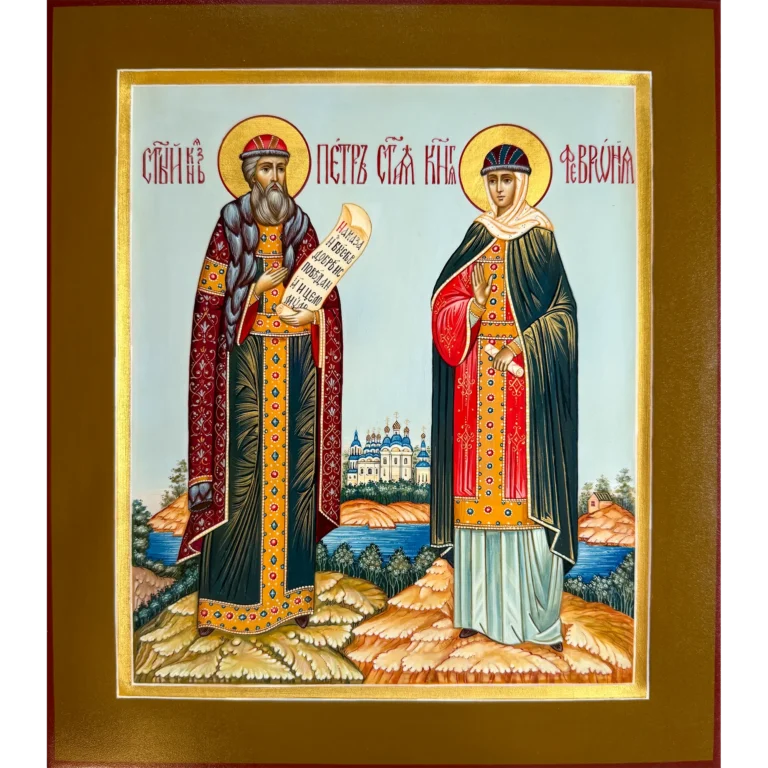
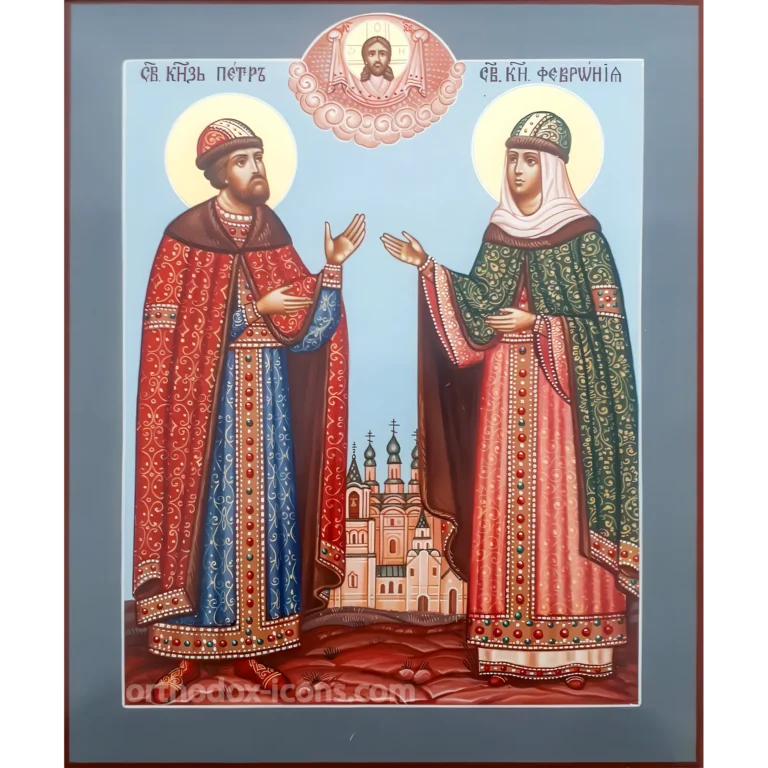
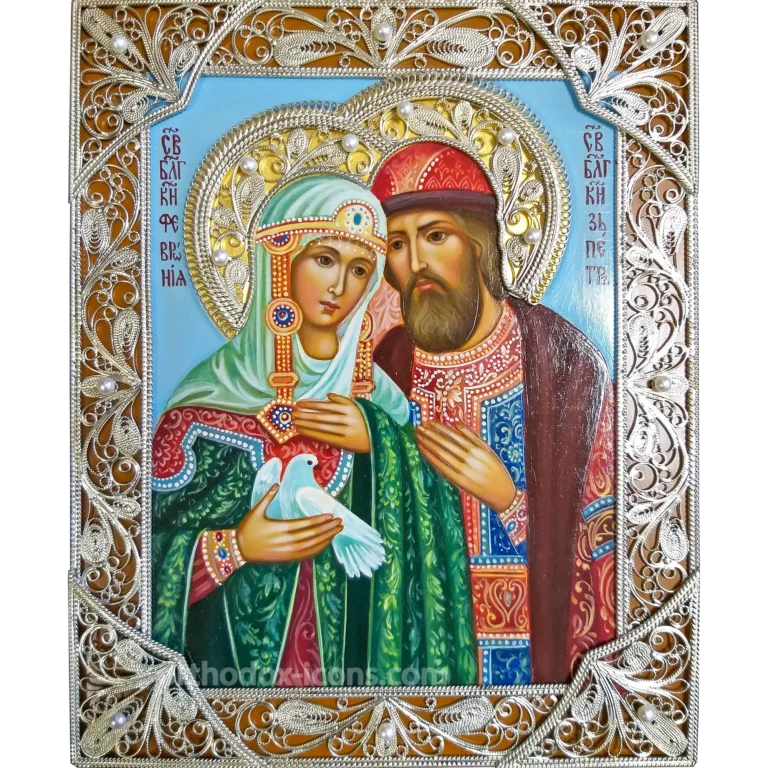
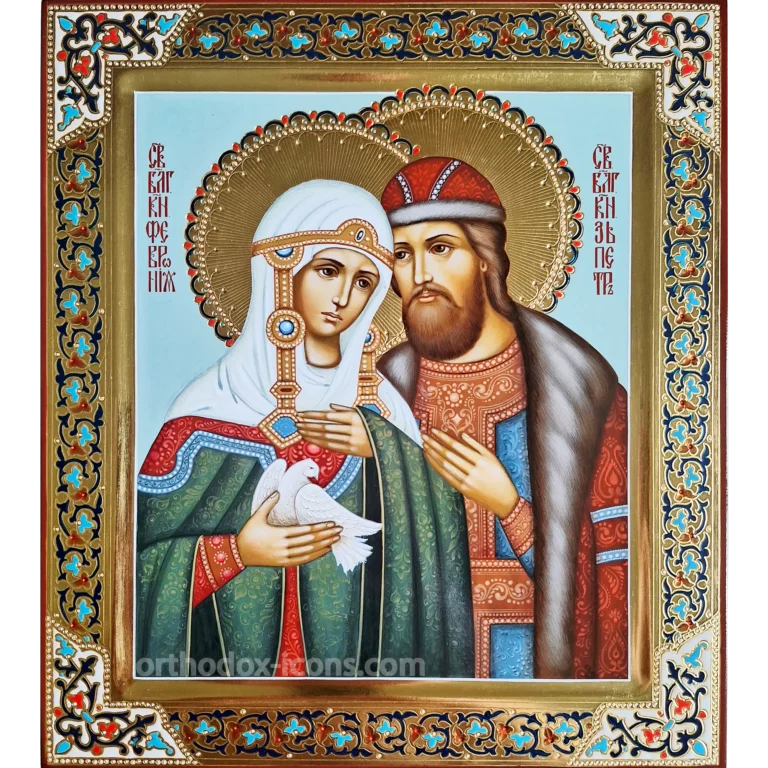
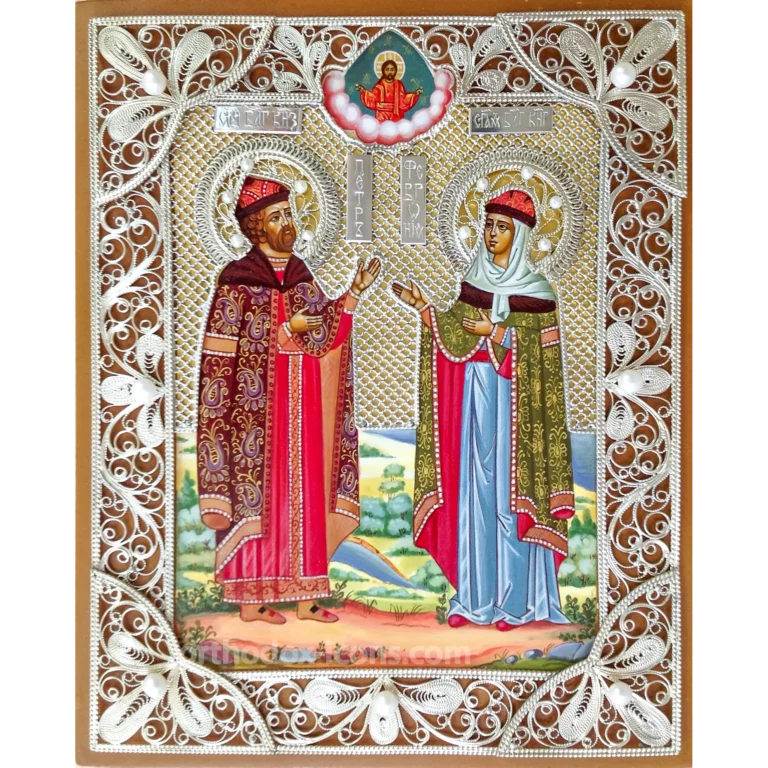
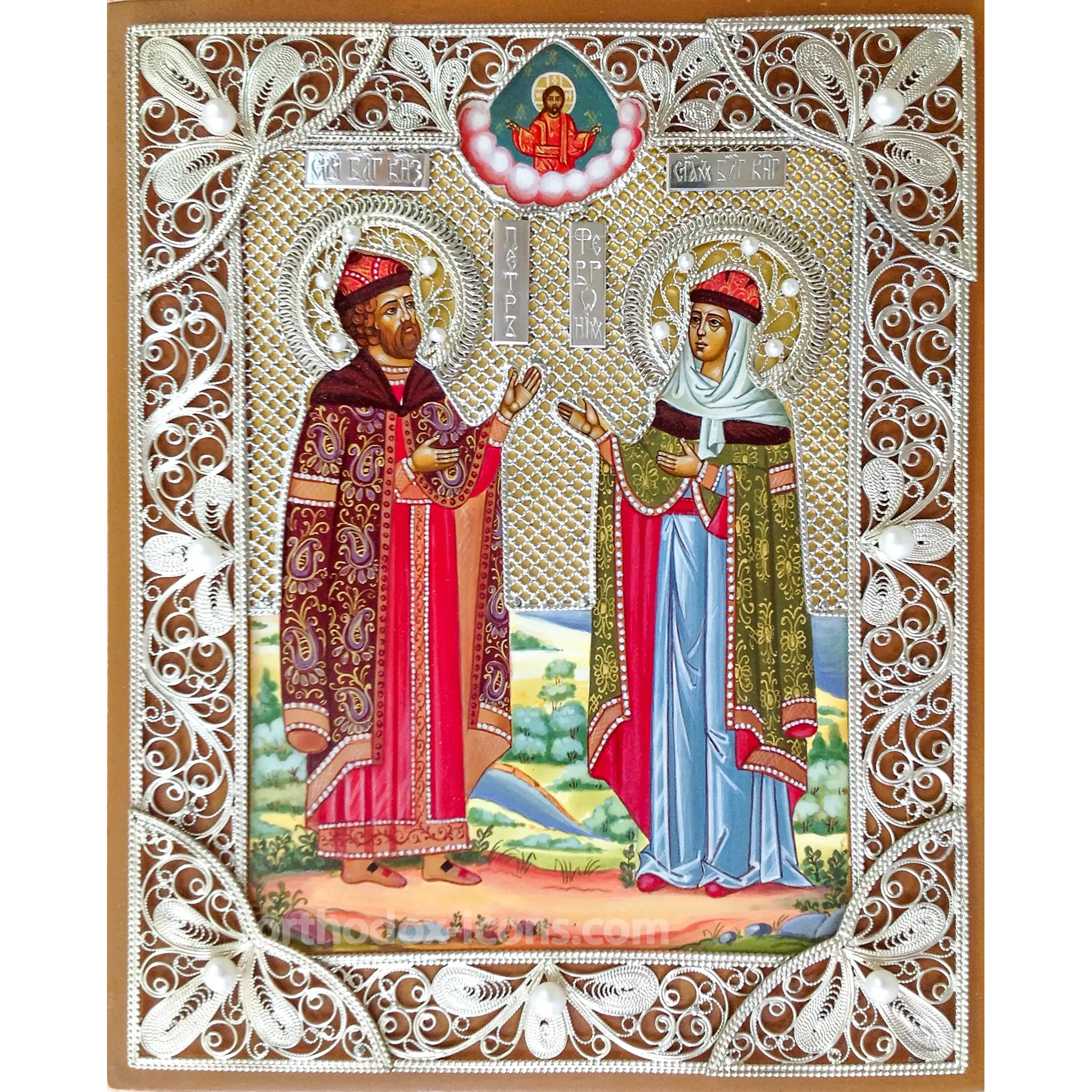
Peter and Fevronia Filigree Icon is a richly decorated hand-painted paired icon of the holy Right-Believing Prince Peter and Princess Fevronia of Murom, patrons of Orthodox marriage and family life. The icon combines academic painting, 23K gold leaf (960 purity), hand-tooled diamond relief, and silver-toned filigree with white pearl-like beads.
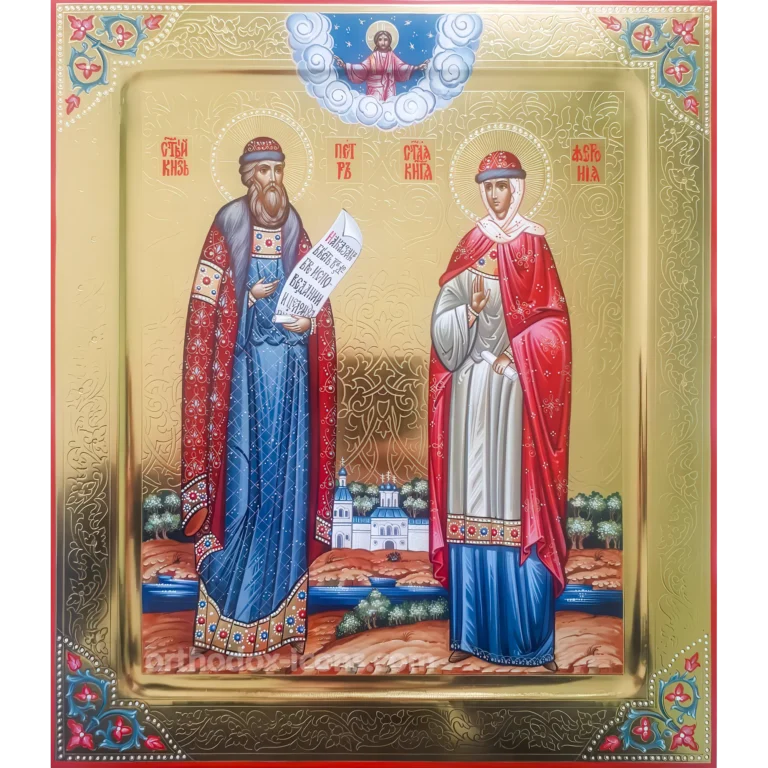
The saints stand in princely garments before a detailed river landscape, with Christ blessing them from a luminous cloud above. Orthodox Christians pray before Peter and Fevronia for a faithful spouse, a blessed wedding, peace in the family, reconciliation, the gift of children, and lifelong fidelity.
It is possible to paint an image in any size to order
Free shipping worldwide
Peter and Fevronia Filigree Icon is a hand-painted Orthodox paired icon of the holy Right-Believing Prince Peter and Princess Fevronia of Murom. It is created as a solemn family icon, joining the warmth of academic painting, the shimmer of 23K gold leaf (960 purity), hand-tooled relief, and the lightness of silver-toned filigree with pearl-like beads.
In Orthodox tradition, Saints Peter and Fevronia are among the most beloved examples of faithful married love. Their life speaks of fidelity that endures sickness, social pressure, exile, and even death. For this reason, their icon is especially meaningful for weddings, anniversaries, family prayer, reconciliation, and the blessing of a new home.
Icon at a Glance
- Name: Peter and Fevronia Filigree Icon
- Saints: Right-Believing Prince Peter and Princess Fevronia of Murom
- Icon type: full-length paired icon with Christ blessing from above
- Decoration: filigree frame and halos, pearl-like beads, tooled gold diamond background
- Available size: 17×21 cm (6.7×8.3 in); larger sizes by agreement
- Production time for a filigree icon: about two months
Filigree, Pearls, and Tooled Gold
The first impression of this icon comes from its rich decorative setting. The whole board is framed by a wide raised filigree border. This is traditional jewelry work: fine silver-toned nickel silver wire is shaped and joined by hand into an openwork floral ornament. The same filigree forms the halos of both saints.
White artificial pearl beads are set into the filigree frame and halos. In Christian symbolism, pearls can suggest purity, spiritual beauty, and, in the context of marriage, purity of intention and faithfulness. The gold background above the landscape is also carefully worked. Before gilding, the master carves a diamond pattern into the gesso; after 23K gold leaf is applied, the surface catches the light like precious golden fabric.
Composition, Landscape, and Princely Garments
This icon is painted in an academic, painterly manner with a deep landscape rather than a plain flat background. Behind the saints stretches a Russian river landscape: green hills, trees, the blue ribbon of the river, and sky passing into the tooled golden field. The river recalls the Oka and the Murom land connected with the saints’ life.
In the upper center, within a luminous blue cloud with pale white and pink edges, Christ the Savior is shown blessing Saints Peter and Fevronia. His outstretched hands signify the divine blessing of their marriage and family life.
The saints stand full-length, slightly turned toward one another. Their hands are raised in prayer, turned both toward Christ and toward each other in a gesture of spiritual harmony. They wear richly painted princely garments, decorated with golden ornament and brocade-like detail. Peter wears a long red garment and a dark cherry princely mantle. Fevronia wears a blue dress and heavy green mantle with red lining, with her hair covered by a white veil and princely headpiece. Their faces are painted with softness, humility, love, and peace.
The Story of Peter and Fevronia of Murom
The story of Saints Peter and Fevronia, who lived around the twelfth and thirteenth centuries, is a story of love overcoming pride. Prince Peter became gravely ill after a battle with a serpent. In a dream it was revealed that he could be healed by Fevronia, the wise and pious daughter of a tree-climber and beekeeper from the Ryazan village of Laskovo.
Fevronia agreed to heal him if he would marry her. Peter first hesitated because of her humble origin and did not keep his promise; the illness returned. Repenting, he came back to Fevronia, received healing again, and married her. Later, when Peter became ruler of Murom, the proud nobles refused to accept Fevronia as princess and demanded that he abandon her or lose power. Peter chose faithfulness to his wife and left the city with her.
After disorder broke out in Murom, the nobles begged them to return. Peter and Fevronia ruled justly and were loved by the people. In old age they received monastic tonsure with the names David and Euphrosyne and prayed to die on the same day. They reposed on July 8, 1228. According to tradition, although people tried to bury them separately, their bodies were miraculously found together, and they were finally buried in one tomb. Their relics are venerated in Murom.
What People Pray for Before Peter and Fevronia
Saints Peter and Fevronia are venerated as heavenly intercessors for marriage and family life. Before their icon, Orthodox Christians pray not for a sentimental idea of love, but for faithful, patient, sacrificial love rooted in Christ.
- for the gift of a faithful spouse;
- for a blessed Orthodox wedding and family life;
- for peace, reconciliation, and mutual understanding between spouses;
- for healing after quarrels, coldness, or danger of divorce;
- for protection from infidelity and destructive outside influence;
- for the gift of children and consolation in infertility;
- for wisdom in raising children in the Orthodox faith;
- for lifelong fidelity, patience, and love.
The icon is not a charm or guarantee of a particular result. Orthodox prayer before Peter and Fevronia is prayer to God through the intercession of saints whose life shows faithfulness, humility, repentance, and love.
How the Icon Is Made
Creating this icon is a long, multi-stage process involving the work of a woodworker, iconographer, engraver, and jeweler. The base is a dried linden wood board strengthened with oak splines. The board is covered with cloth and chalk gesso. After careful polishing, the diamond relief is carved into the gesso by hand, millimeter by millimeter, and the background is gilded with 23K gold leaf (960 purity).
The faces, garments, and landscape are painted in traditional mineral egg tempera. These colors are made from finely ground pigments mixed with egg emulsion and are valued for their depth and durability. After the painting is finished, the jeweler mounts the filigree frame and halos made from silver-toned nickel silver wire with pearl-like beads.
Who This Icon Is For
This richly decorated paired icon is an especially meaningful Orthodox gift for newlyweds, for a wedding or church marriage, for spouses on an anniversary, especially silver or pearl anniversaries, and for children receiving a family blessing from their parents. It may also be chosen by a husband for his wife, by a wife for her husband, or by a family that wants a prayerful image of fidelity and unity.
Icon Characteristics
| Full name | Filigree Icon of Saints Peter and Fevronia of Murom |
| Iconographic type | Full-length paired icon with Christ in a cloud above |
| Painting style | Academic, painterly realism |
| Board materials | Linden wood, oak splines, cloth, chalk gesso |
| Gilding and tooling | 23K gold leaf (960 purity), hand-tooled diamond relief in gesso |
| Filigree decoration | Silver-toned filigree frame and halos, artificial pearl beads |
| Painting materials | Mineral egg tempera, protective varnish |
| Available size | 17×21 cm (6.7×8.3 in); larger sizes by agreement |
Because the icon is entirely handmade, the tooled relief, filigree ornament, pearl placement, and painted garments may differ slightly from the photographed sample. These small differences are natural and confirm the individual handmade character of each icon.
Blessing and Care
A wooden kiot with glass is strongly recommended for an icon with filigree and tooled gold. The raised metal ornament and fine relief can collect household dust, and cleaning them safely without damaging the gold or filigree is difficult. A kiot protects the icon from dust, smoke, scratches, humidity, and sudden temperature changes.
At the customer’s request, the icon may be blessed by an Orthodox priest before shipping, or it may be blessed later in the customer’s own parish. Free international shipping is included. Payment is made after you receive and approve the icon.
Questions and Answers
What is filigree on this icon?
Filigree is raised metal lace made from very fine wire. On this icon, the wide frame and the halos of the saints are made from silver-toned filigree with pearl-like beads.
How is the diamond tooling on the gold background made?
Before gilding, the master carves a diamond pattern into the dry gesso. Gold leaf is then applied over the relief, creating a shimmering textured surface like golden fabric.
Who is shown in the cloud above Peter and Fevronia?
Christ the Savior is shown in the luminous cloud, blessing the marriage and the family life of Saints Peter and Fevronia.
Why is there a landscape instead of a plain background?
The painted landscape belongs to the academic style of this icon and recalls the Murom land, with river, trees, and earth connected to the saints’ life.
Why are Peter and Fevronia shown in princely clothing?
This icon shows them during their princely rule in Murom. Rich brocade garments emphasize their dignity. In other icons they may be shown in monastic clothing as David and Euphrosyne.
Are real pearls used in the frame and halos?
The filigree contains high-quality artificial pearl beads with a clean round form and pearly shine, giving the icon a solemn appearance while keeping it durable.
When is the feast day of Peter and Fevronia?
Their main feast day is July 8. They are also commemorated on the Sunday before September 19, connected with the translation of their relics.
Can this icon be given for a wedding?
Yes. It is one of the most meaningful Orthodox wedding gifts, because Peter and Fevronia are venerated as patrons of faithful marriage, love, and family unity.
Is a kiot needed for a filigree icon?
A kiot with glass is strongly recommended because filigree and tooled gold relief collect dust and are difficult to clean safely without damaging the decoration.
Can the icon be blessed?
At the customer’s request, the icon may be blessed by an Orthodox priest before shipping, or it may be blessed later in the customer’s own parish.
| Dimensions | 17x21cm (6.7×8.3 in) |
|---|---|
| Name | Fevronia, Peter |