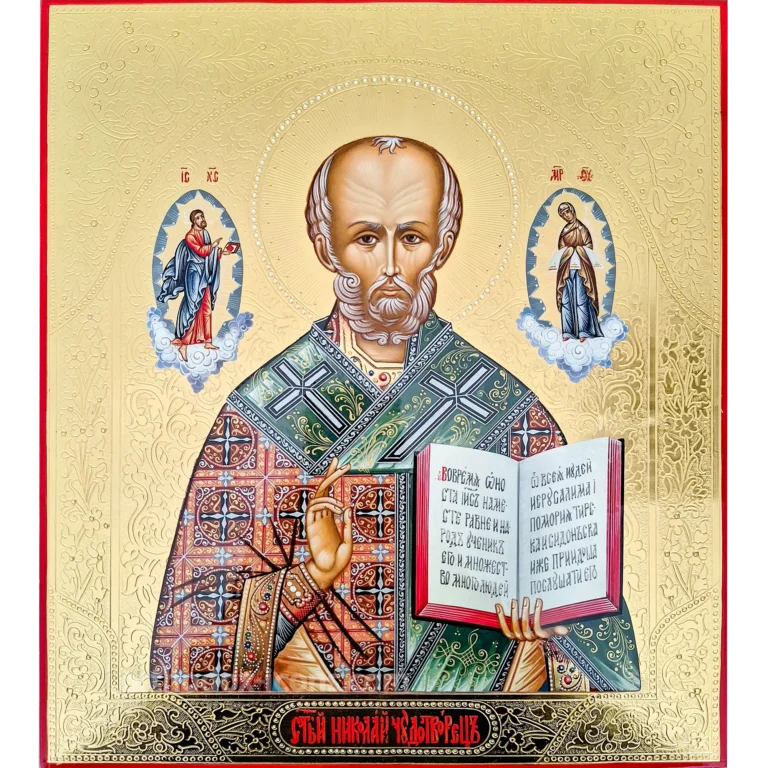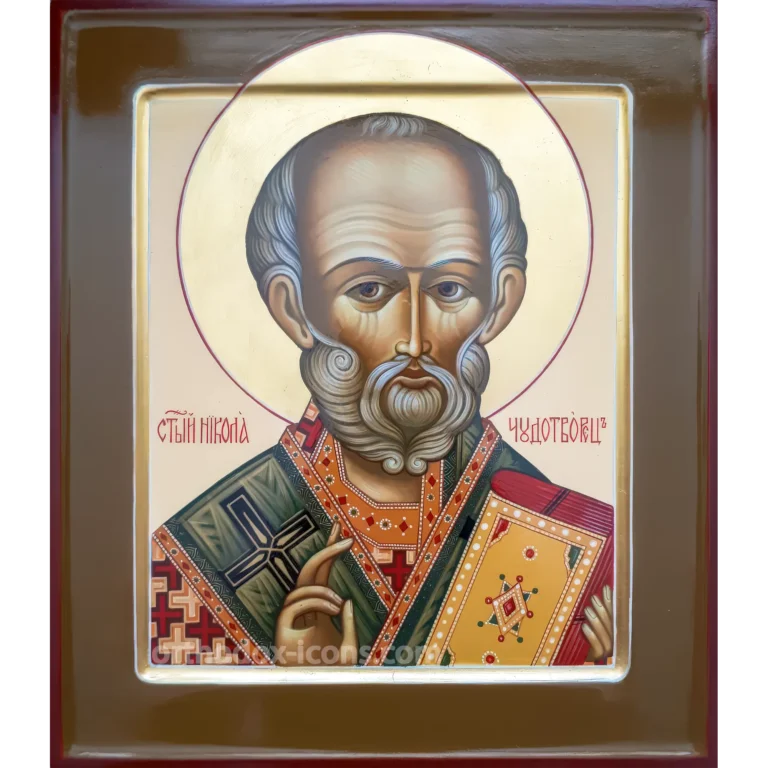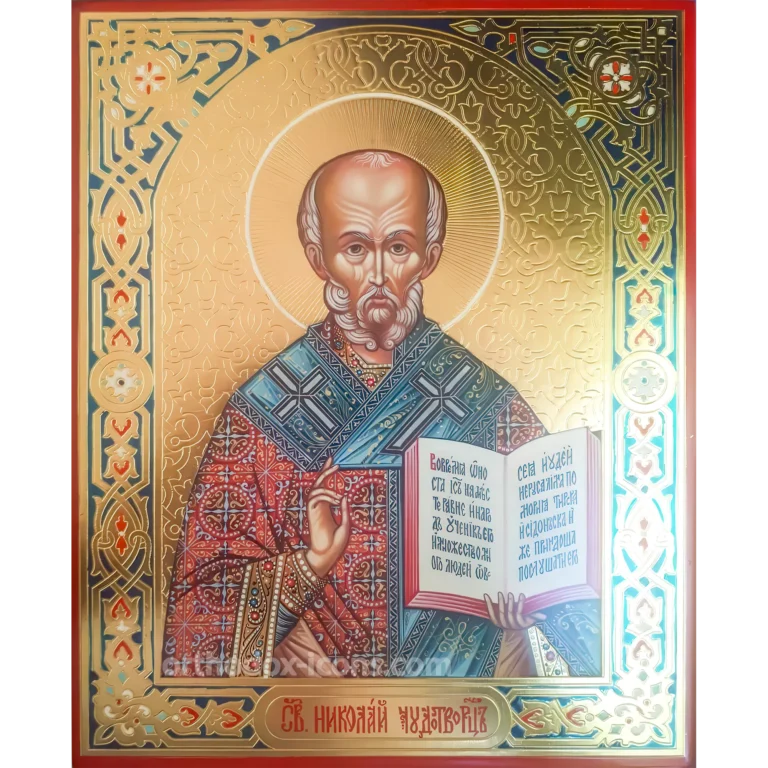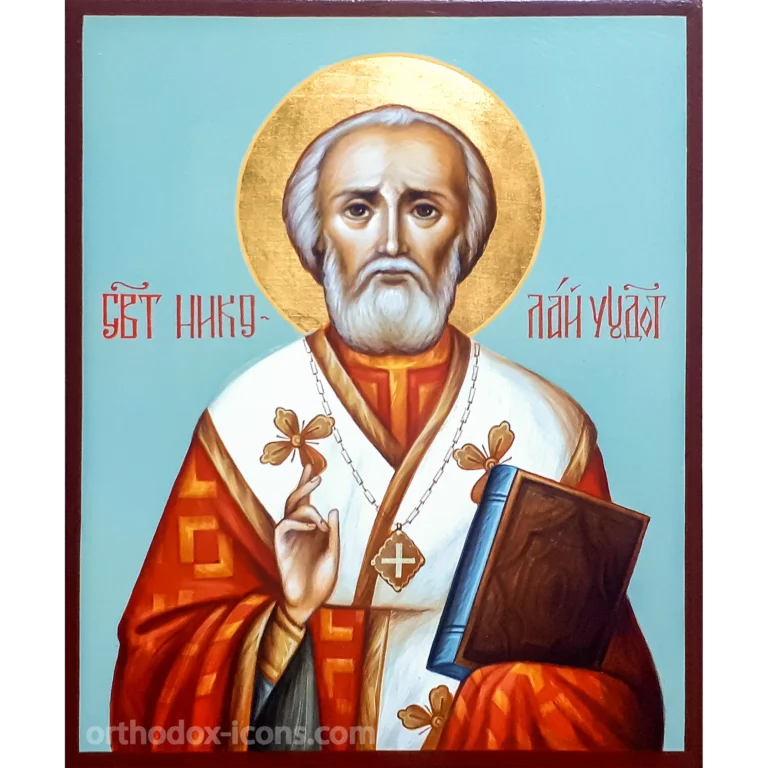
Filigree Icon of St. Nicholas
$950
Available size: 17×21 cm (6.7×8.3 in). Other sizes may be discussed individually. The production time for a filigree icon is about two months.
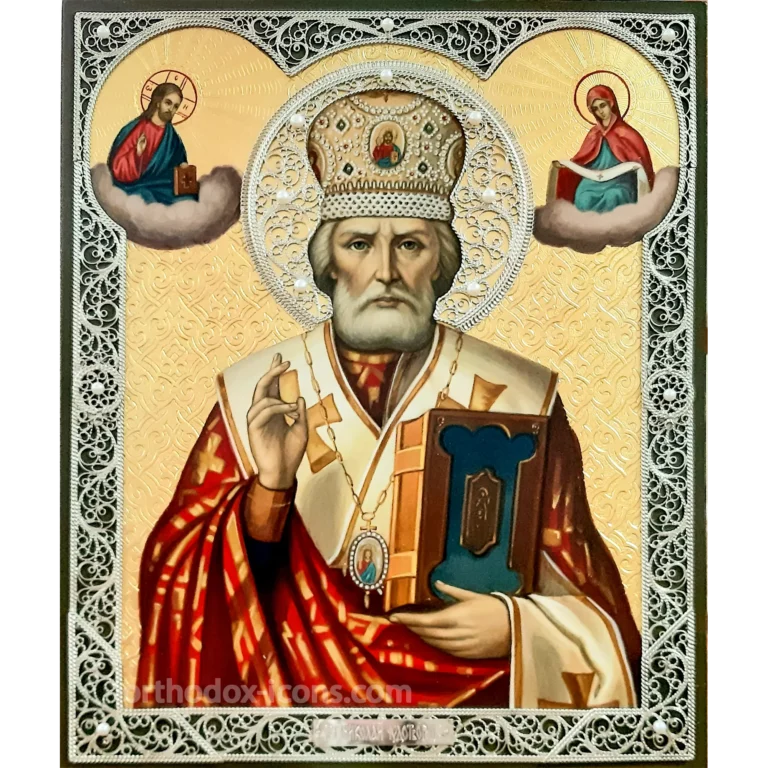
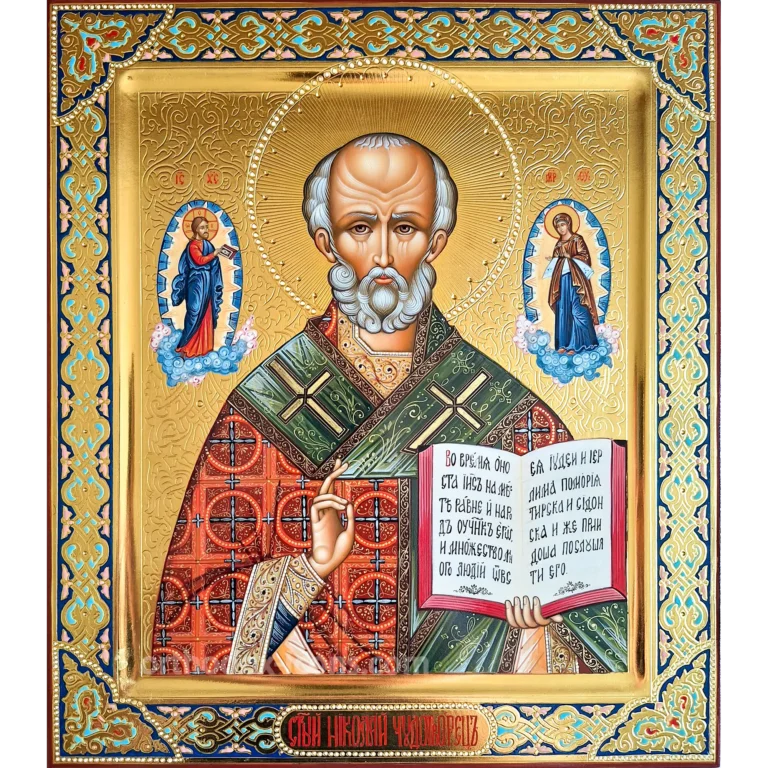
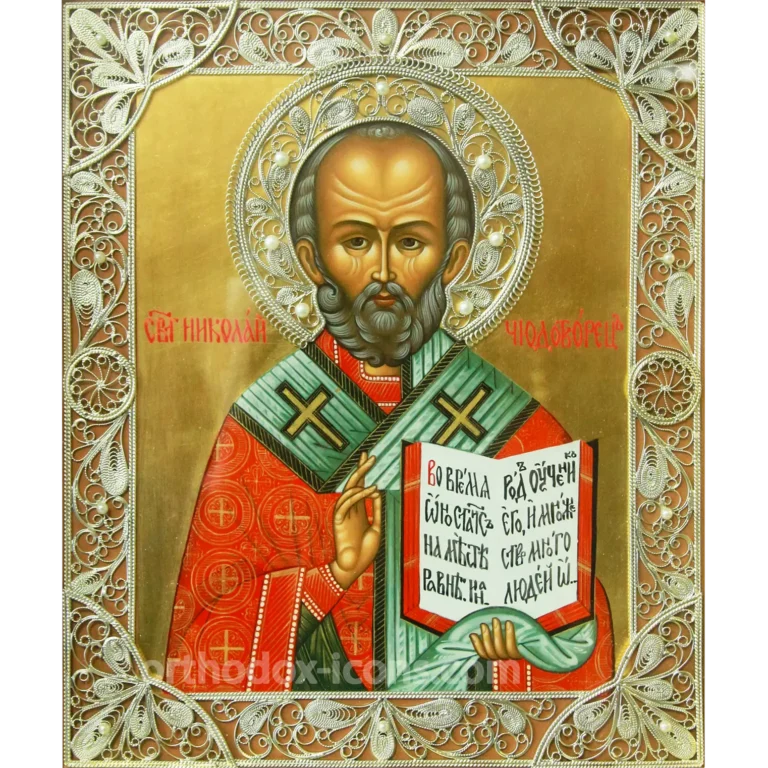
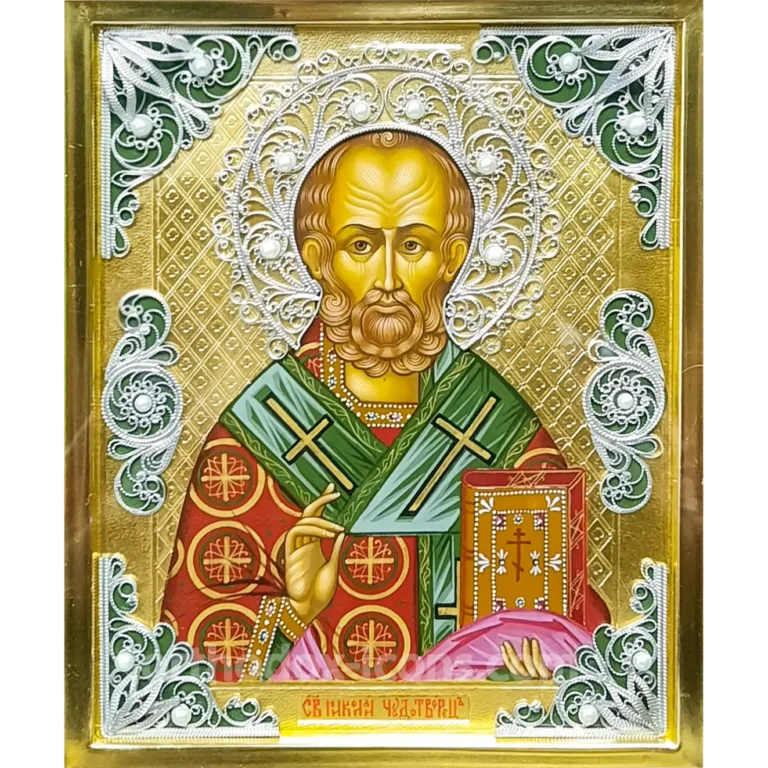
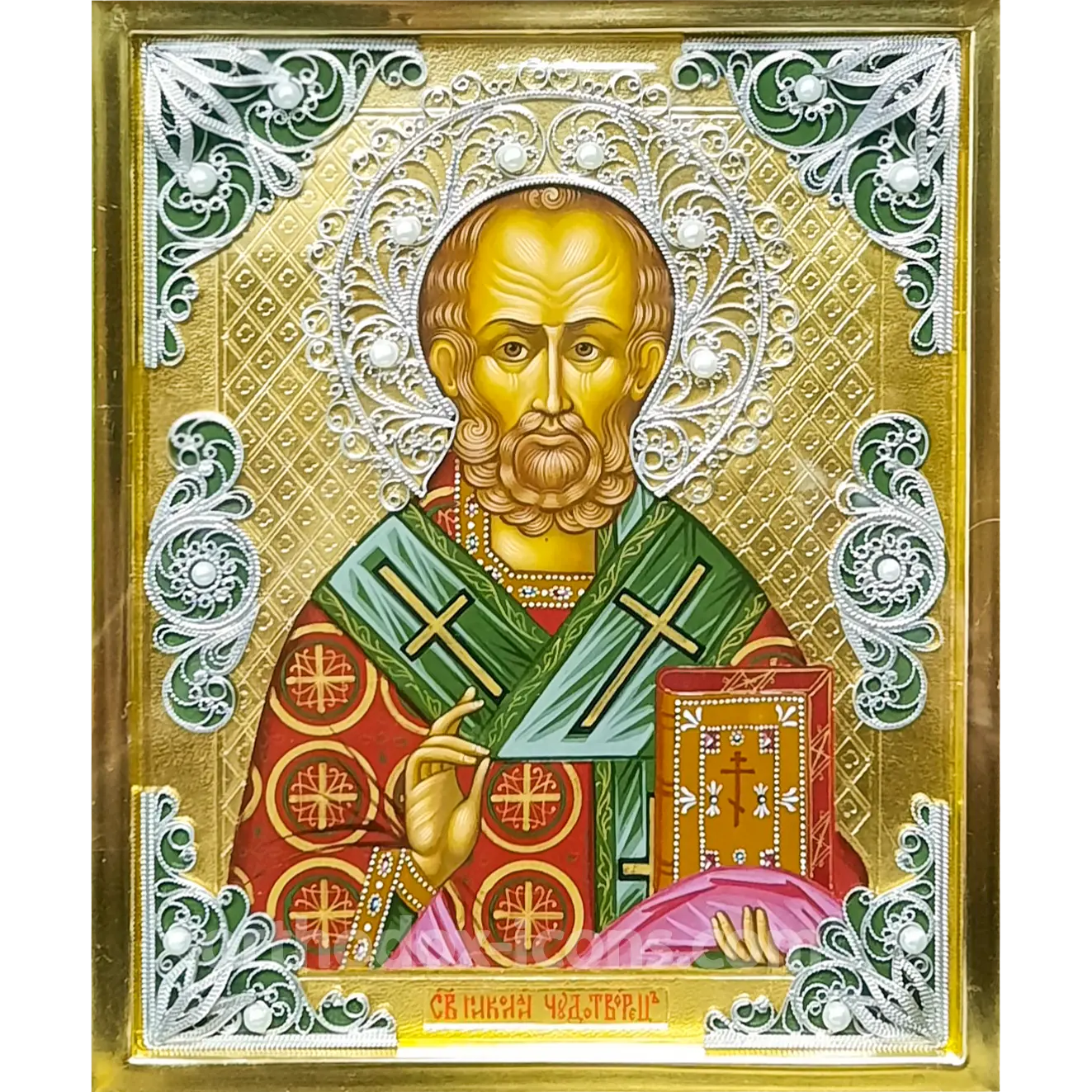
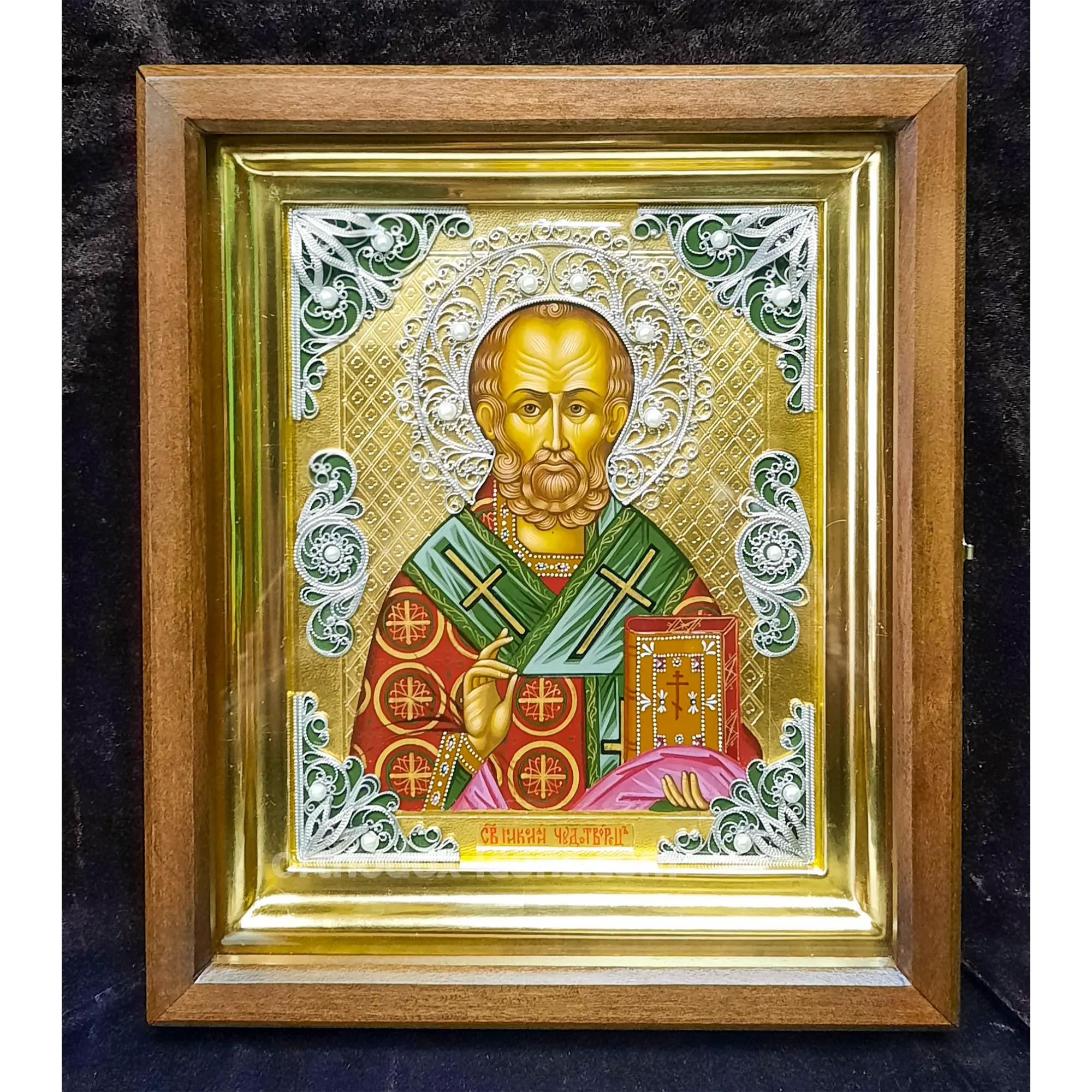
Filigree Icon of St. Nicholas is a festive hand-painted icon of Saint Nicholas the Wonderworker with three rich decorative techniques: academic painting, tooled gold relief, and jewelry-style filigree. The gold background is covered with 23K gold leaf (960 purity) and hand-tooled with a diamond pattern.
The corners and halo are decorated with raised silver-toned filigree made from nickel silver wire and white pearl-like beads. Saint Nicholas is shown in a bright red phelonion and green omophorion, blessing the faithful and holding a closed Gospel. This icon is a solemn gift for a home iconostasis, wedding, priest, spiritual mentor, traveler, or respected elder.
It is possible to paint an image in any size to order
Free shipping worldwide
Filigree Icon of St. Nicholas is a solemn hand-painted icon of Saint Nicholas the Wonderworker, created with three demanding decorative techniques: academic icon painting, hand-tooled gold relief, and jewelry-style filigree. Saint Nicholas of Myra is one of the most beloved Orthodox saints, venerated as a quick helper in travel, poverty, family needs, illness, and difficult life circumstances.
This icon is distinguished by its rich decoration: a 23K gold leaf (960 purity) background with a hand-tooled diamond pattern, raised silver-toned filigree corners, a filigree halo, and white pearl-like beads. It is intended as a prayerful sacred image and as a family shrine, not merely as a decorative object.
Icon at a Glance
- Name: Filigree Icon of St. Nicholas
- Saint: Saint Nicholas of Myra, Nicholas the Wonderworker
- Icon type: waist-length bishop icon with closed Gospel
- Decoration: tooled gold background, filigree corners, filigree halo, pearl-like beads
- Available size: 17×21 cm (6.7×8.3 in); other sizes by agreement
- Production time for a filigree icon: about two months
Gold, Tooling, and Filigree Decoration
The main feature of this icon is the density and complexity of its decorative work. The background is covered with 23K gold leaf (960 purity), but the gold is not left smooth. Before gilding, the master carves a strict diamond grid into the gesso, with small crosses and rosettes placed inside the pattern. After the gold is applied, the relief catches the light and creates the effect of precious golden fabric.
Over this shining gold background, raised filigree ornaments are mounted on the four corners of the icon. The jeweler forms the openwork pattern by hand from fine silver-toned nickel silver wire. The same metal lace decorates the halo of Saint Nicholas. White artificial pearl beads are set into the filigree, giving the icon a clean, festive, and noble appearance.
Academic Painting and Episcopal Vestments
The face of Saint Nicholas is painted in a soft academic manner. Rather than severe flat lines, the icon uses gentle light and shade, smooth transitions, and careful modeling of the face. Saint Nicholas appears as a wise elder with a high forehead, gray beard, and deep attentive eyes. His expression is not harsh; it carries fatherly love and readiness to help those who turn to him in prayer.
The saint is shown waist-length in rich episcopal vestments. He wears a bright red phelonion decorated with gold circles and crosses. Over it lies a wide green omophorion with equal-armed crosses, the sign of a bishop’s pastoral authority and care for the flock. The collar and cuffs are decorated with gold ornament imitating precious embroidery.
His right hand is raised in the traditional blessing gesture, with the fingers arranged as the monogram IC XC, blessing in the name of Christ. In his left hand, covered reverently by the edge of a pink cloth, Saint Nicholas holds a closed Gospel. The closed Gospel emphasizes his guardianship of the fullness of divine truth and his defense of the purity of faith.
Life and Help of Saint Nicholas
Saint Nicholas was born in the third century in Patara of Lycia, in a devout Christian family. From childhood he was known for love of God and compassion for people. As Archbishop of Myra in Lycia, he became famous as a defender of Orthodox faith and as a merciful shepherd.
During his life he secretly helped the father of three poor daughters, calmed storms at sea, helped sailors, defended the innocent from execution, and cared for his flock in hunger and distress. Orthodox Christians remember him as a model of faith, meekness, mercy, and timely help.
What People Pray for Before Saint Nicholas
Before the icon of Saint Nicholas the Wonderworker, Orthodox Christians pray in many needs of daily life. His intercession is especially associated with journeys, family difficulties, poverty, injustice, children, and urgent help. Prayer before his icon is not a magical guarantee, but a turning to God through the prayers of a saint known for mercy.
- for protection during travel and a safe return home;
- for sailors, drivers, pilots, and those whose work involves danger on the road;
- for daughters, marriage, and family well-being;
- for help in poverty, debt, and difficult life circumstances;
- for people imprisoned or unjustly accused;
- for healing, consolation, and strength in illness;
- for children, orphans, and families in need.
How This Icon Is Made
This icon is the result of careful work by a woodworker, iconographer, engraver, and jeweler. First, the linden wood board is prepared and strengthened with oak splines. Cloth is applied, followed by chalk gesso. The master then carves the diamond relief pattern into the dry gesso with a fine metal tool.
After the relief is finished, the background is covered with 23K gold leaf (960 purity), which follows the carved pattern. The face and vestments of the saint are painted in mineral egg tempera. At the same time, the jeweler creates the filigree decoration from nickel silver wire, forms the corner ornaments and halo, and sets the pearl-like beads. The finished metal elements are carefully mounted onto the painted board.
Who This Icon Is For
A richly decorated icon of Saint Nicholas is a solemn and meaningful gift for a respected person, a priest, spiritual mentor, newly married couple, traveler, or family that especially venerates Saint Nicholas. It may become a central icon in a home iconostasis or a treasured family shrine.
Icon Characteristics
| Full name | Filigree Icon of Saint Nicholas the Wonderworker |
| Iconographic type | Waist-length bishop icon with closed Gospel |
| Painting style | Academic, painterly realism |
| Board materials | Linden wood, oak splines, cloth, chalk gesso |
| Gilding and tooling | 23K gold leaf (960 purity), hand-tooled relief in diamond pattern |
| Filigree decoration | Filigree corners and halo, silver-toned nickel silver, artificial pearl beads |
| Painting materials | Mineral egg tempera, protective varnish |
| Available size | 17×21 cm (6.7×8.3 in); other sizes by agreement |
Because both the tooled relief and the filigree ornament are made by hand, every pattern is unique. Slight differences in the geometry of the gold tooling or the curves of the filigree are natural and confirm the handmade character of the icon.
Blessing and Care
A wooden kiot with glass is strongly recommended for an icon that combines gold relief and filigree. Dust can settle in the fine relief and metal lace, and cleaning them without damaging the delicate gold and ornament is difficult. A closed kiot helps preserve the icon’s brightness and protects it from dust, smoke, scratches, and humidity.
At the customer’s request, the icon may be blessed by an Orthodox priest before shipping, or it may be blessed later in the customer’s own parish. Free international shipping is included. Payment is made after you receive and approve the icon.
Questions and Answers
What is the tooled gold background on this icon?
The pattern is carved into the dry gesso before gilding. When 23K gold leaf is applied over the relief, the diamond pattern catches the light like textured golden fabric.
What is filigree on the corners of the icon?
Filigree is a traditional jewelry technique using fine twisted metal wire. On this icon, silver-toned filigree decorates the four corners and the halo of Saint Nicholas.
Are real pearls used in the filigree?
The filigree contains high-quality artificial pearl beads. They give a clean pearly shine and a solemn appearance while keeping the decoration durable.
Are Nicholas the Wonderworker and Nicholas the Pleaser the same saint?
Yes. These names refer to Saint Nicholas of Myra. In Slavic usage he is often called Nicholas the Pleaser, and in English he is commonly known as Saint Nicholas the Wonderworker.
Why is Saint Nicholas shown in red vestments?
The red phelonion signifies triumph, love for God and people, and the joy of life in Christ. It also gives the icon a festive and solemn character.
What does the green omophorion mean?
The omophorion is the chief vestment of a bishop. It recalls the lost sheep carried by Christ the Good Shepherd and points to Saint Nicholas’ pastoral care.
Why is the Gospel closed in his hand?
Both open and closed Gospel books are found in icons of Saint Nicholas. A closed Gospel emphasizes his guardianship of the fullness of divine truth and the purity of faith.
Is a kiot necessary for this icon?
A kiot with glass is strongly recommended because dust can settle in the fine gold relief and filigree, and cleaning them safely is difficult.
Will the silver-toned filigree darken over time?
Nickel silver may develop a light noble patina in the recessed areas. Keeping the icon in a closed kiot helps preserve its brightness.
Can the icon be blessed?
At the customer’s request, the icon may be blessed by an Orthodox priest before shipping, or it may be blessed later in the customer’s own parish.
| Dimensions | 17x21cm (6.7×8.3 in) |
|---|---|
| Name | Nicholas |