Filigree Icon of Tenderness
$950
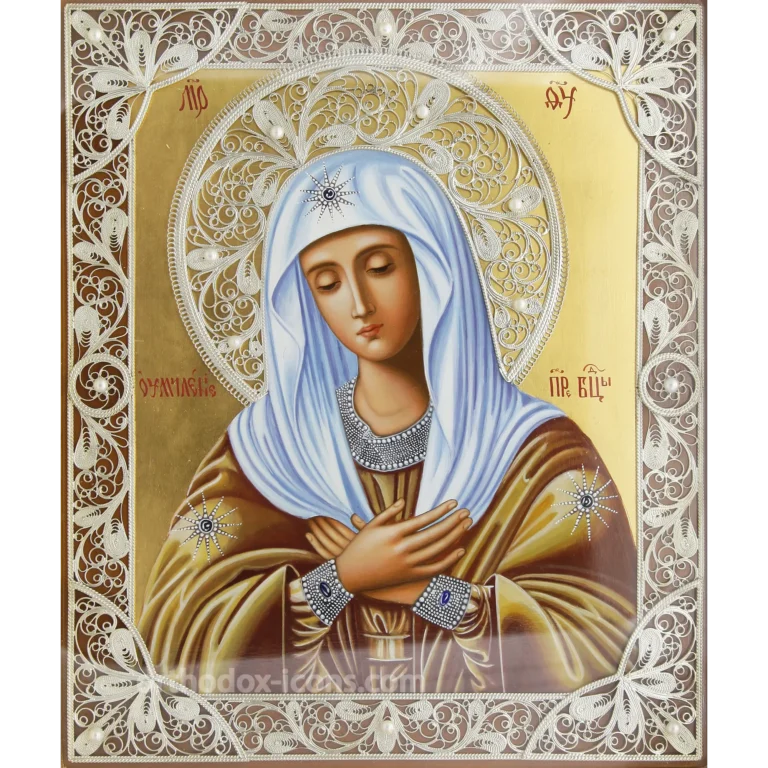
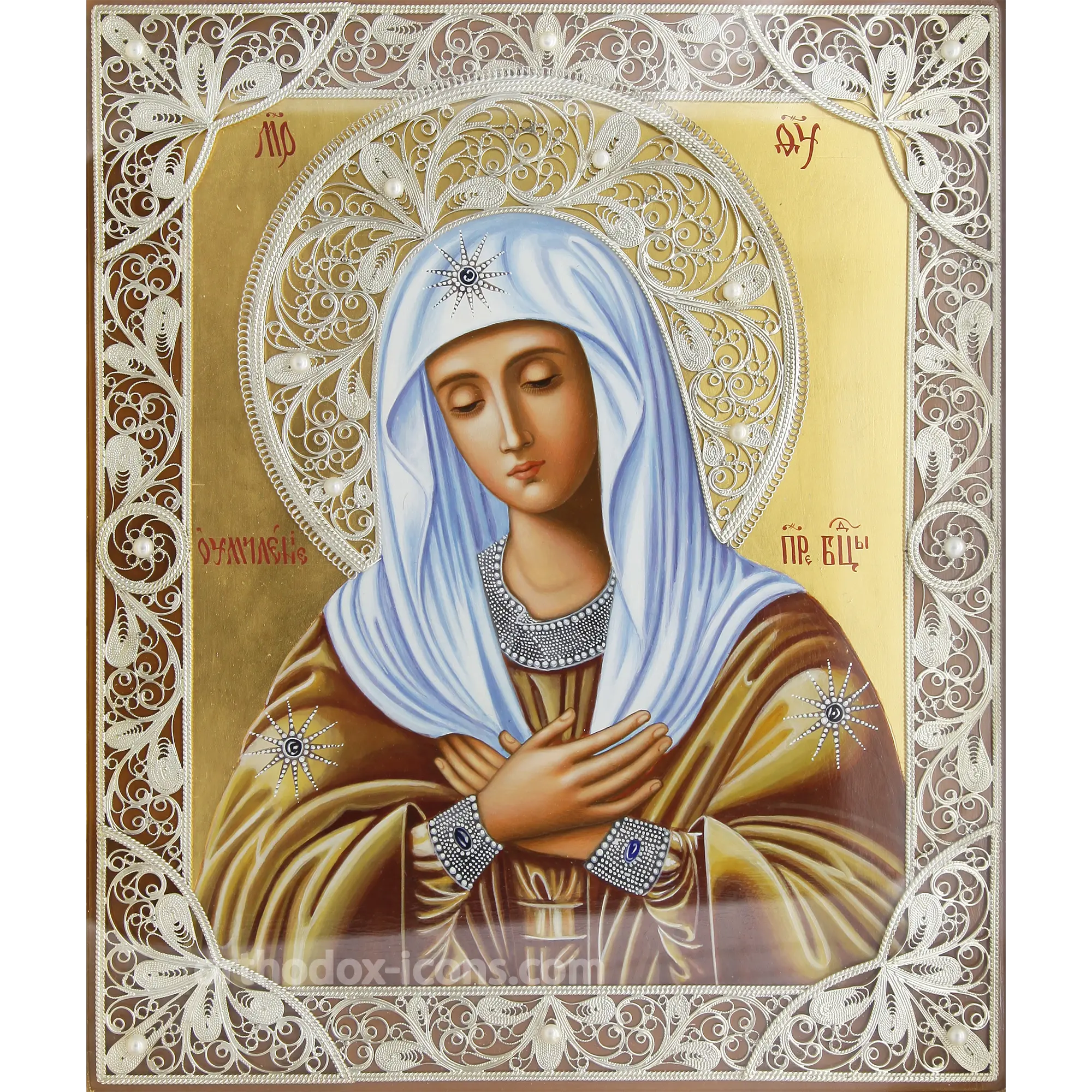
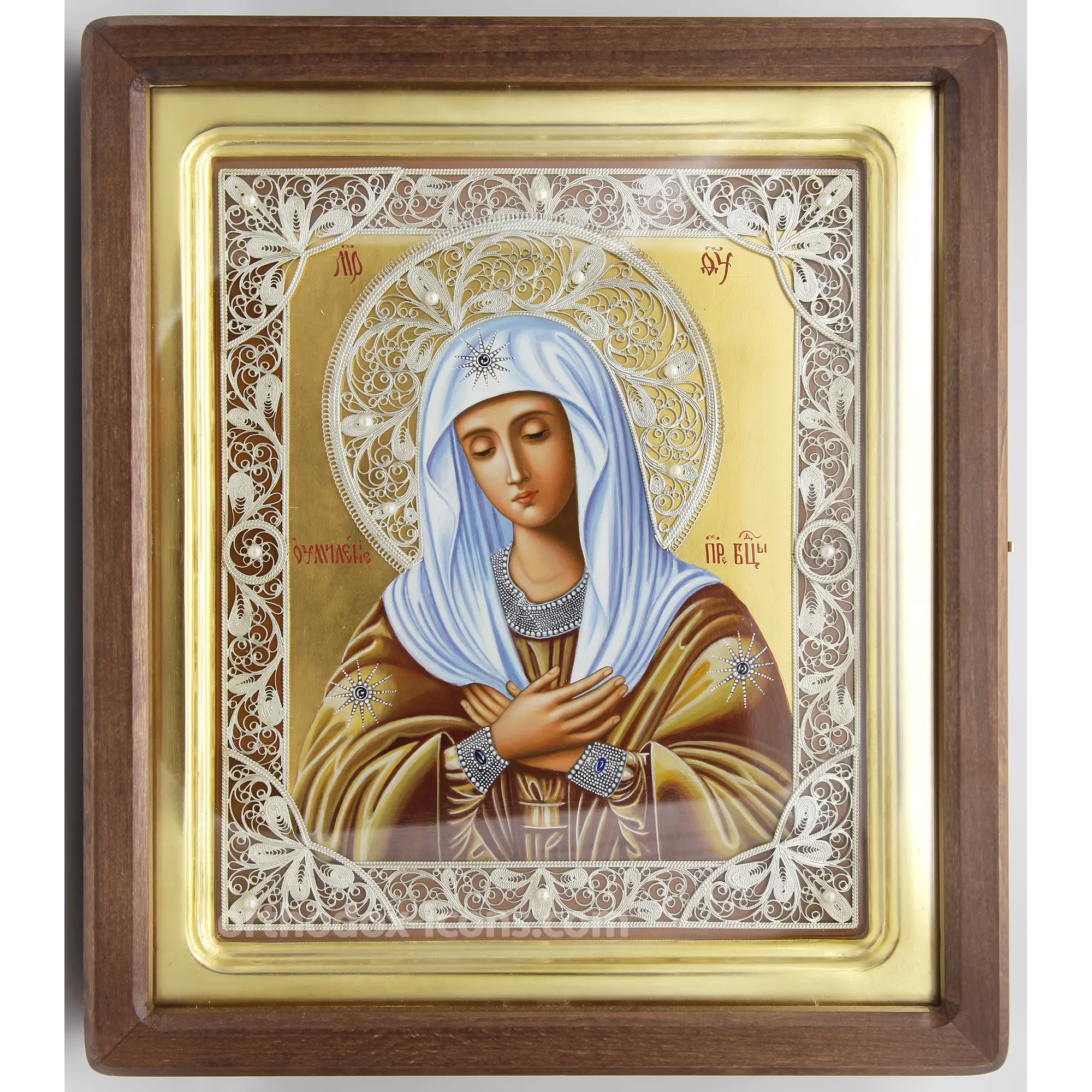
Filigree Icon of Tenderness is a hand-painted Seraphim-Diveyevo Tenderness icon of the Mother of God, also known as Joy of All Joys.
Available size: 17×21 cm (6.7×8.3 in). Larger church and iconostasis sizes may be discussed before painting.
Materials: linden board with oak braces, polished chalk levkas, mineral egg tempera, 23K gold leaf, handmade silver-tone filigree oklad, natural pearls, and blue jewelry stones.
Iconography: the Virgin Mary alone at the Annunciation, head bowed, eyes lowered, hands crossed on her breast in humility and prayer.
It is possible to paint an image in any size to order
Free shipping worldwide
Filigree Icon of Tenderness is a hand-painted Seraphim-Diveyevo icon of the Mother of God, richly finished with a handmade filigree oklad, natural pearls, and blue jewelry stones. This image is closely connected with St. Seraphim of Sarov, who lovingly called it “Joy of All Joys.”
Unlike the classical Byzantine Eleusa icon, where the Mother of God is shown with the Christ Child cheek to cheek, the Seraphim-Diveyevo Tenderness icon shows the Virgin Mary alone, in the sacred moment of the Annunciation. Her head is bowed, her eyes are lowered, and her hands are crossed on her breast in humility, prayer, and complete acceptance of the will of God.
The presented icon unites traditional painting with the ancient jewelry technique of openwork filigree. The light face of the Mother of God is surrounded by a silver-tone lacework halo and frame, enriched with natural pearls and blue stones. The listed size is 17×21 cm (6.7×8.3 in), with larger formats available by agreement.
History: Joy of All Joys
The veneration of the Seraphim-Diveyevo Tenderness icon is inseparable from the life of one of the most beloved Russian saints, St. Seraphim of Sarov. The origin of the original image is not known with certainty. Researchers believe it was painted near the end of the eighteenth century by an unknown artist on canvas, later mounted on a cypress board.
Although the iconography has Western European roots, in Russia it received a deeply Orthodox meaning. For St. Seraphim, this icon was a great spiritual treasure. It stood in his humble cell in the Sarov hermitage, and before it a lampada burned day and night.
St. Seraphim loved the image with great tenderness and called it “Joy of All Joys.” With oil from the lampada burning before this icon, he would anoint pilgrims who came to him for consolation. Through his prayers to the Most Holy Theotokos, many suffering people received help and comfort.
A well-known account tells of the healing of Mikhail Manturov, who suffered from a severe disease of the legs. When Manturov, after prayer and anointing, began to thank St. Seraphim with tears, the saint reminded him that life and healing belong to the Lord and the Mother of God, not to Seraphim himself.
St. Seraphim’s earthly life ended as it had been lived: in prayer before this beloved image. In January 1833, the brethren found him peacefully reposed on his knees before the Tenderness icon. According to his own instruction, the holy image was later given to the sisters of the Diveyevo monastery, where it became a chief shrine and protectress of the community.
Iconography of the Seraphim-Diveyevo Tenderness
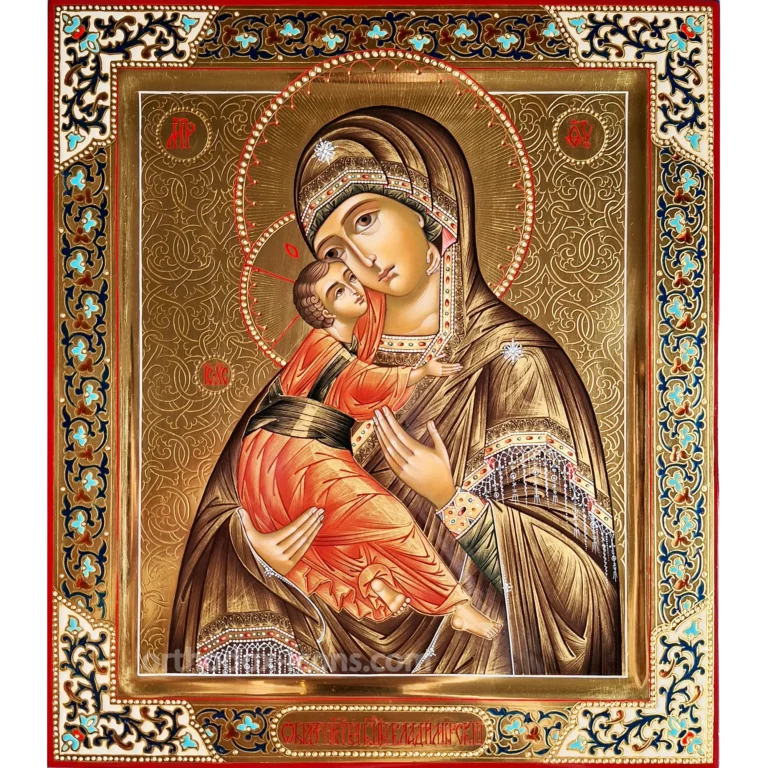
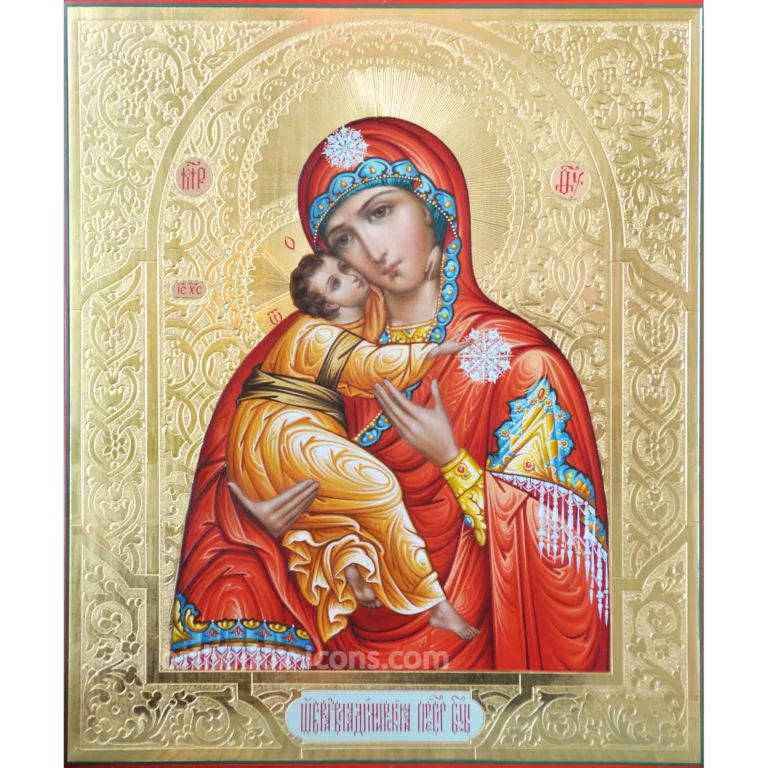
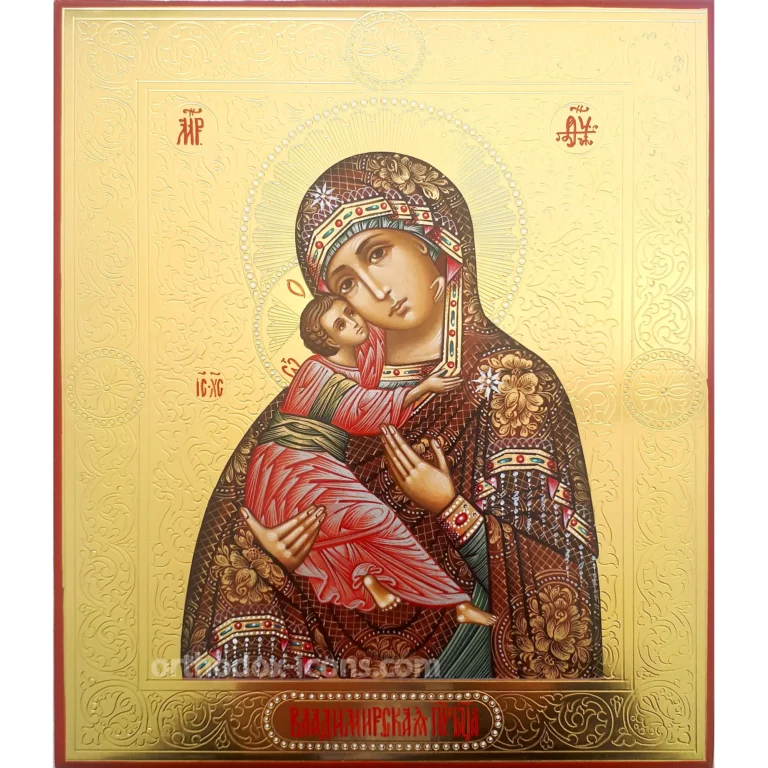
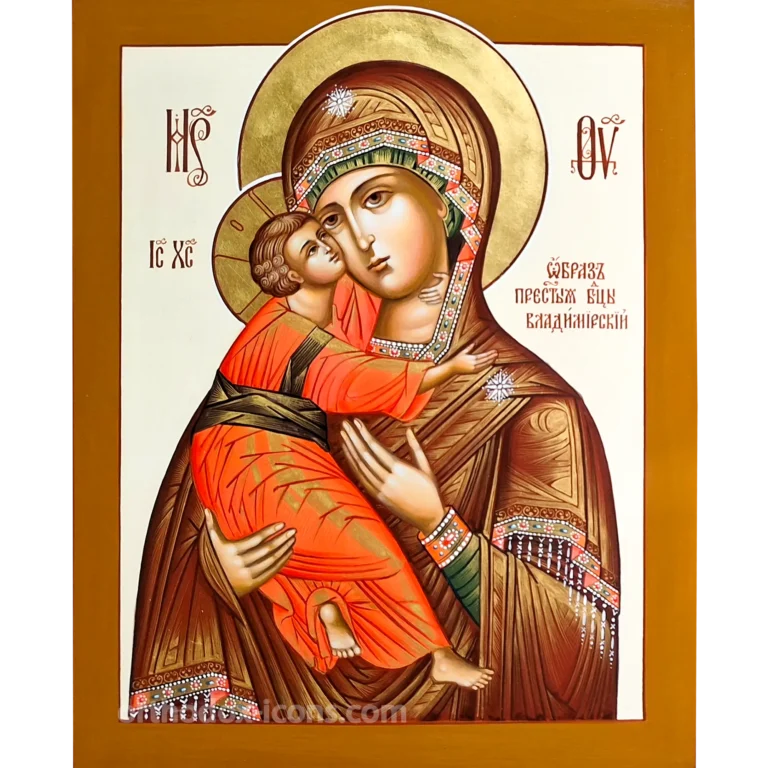
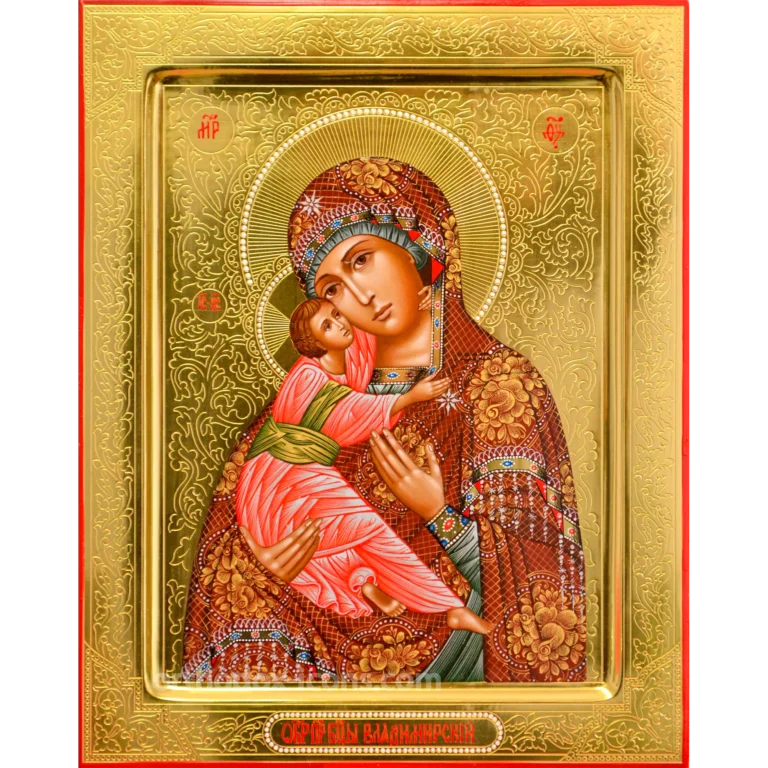
The Seraphim-Diveyevo Tenderness icon differs from the classical Eleusa, or Tenderness, type known from icons such as the Vladimir Mother of God. In the classical Eleusa, the Mother of God holds the Christ Child, whose cheek touches hers. In the Diveyevo image, the Virgin Mary is shown alone, half-length, before the birth of Christ.
The icon captures the moment when the Virgin Mary receives the message of the Archangel Gabriel. Her bowed head expresses profound humility. Her lowered eyes show reverent awe before the mystery of the Incarnation and quiet inner joy. Her crossed hands symbolize full acceptance of God’s will and prayer of the heart.
Handmade Filigree Oklad
The main artistic feature of this icon is the luxurious oklad made in the jewelry technique of filigree. Filigree is an openwork lace pattern formed from extremely fine twisted metal wire. In this case, the oklad is made with silver-tone wirework, arranged by hand into delicate floral and ornamental forms.
This technique was known in Rus from the ninth and tenth centuries and reached special refinement in monastic workshops of the eighteenth and nineteenth centuries. It cannot be replaced by ordinary machine stamping. A filigree master twists fine wire, bends it with precision, and joins small elements such as curls, petals, and rosettes.
On this Tenderness icon, openwork filigree forms the rich halo around the head of the Mother of God and the wide ornamental frame around the board. The silver lace appears light and airy, like frostwork. Natural white pearls are set into the filigree, giving the oklad a solemn and regal appearance.
In Christian symbolism, pearls are associated with purity, spiritual beauty, and the holiness of the Virgin Mary. The stars of ever-virginity on the maphorion are made of sparkling blue stones framed in filigree, creating a striking contrast with the warm gold background of the central image.
Painting and Visual Details
The painted part of the icon is executed in a soft academic manner. The face of the Mother of God is modeled with smooth tonal transitions, giving the image warmth and depth. Her maphorion falls in natural folds, and the collar and cuffs are richly decorated with dotted painting that imitates pearl edging.
The warm gold background is made with genuine 23K gold leaf. Together with the silver-tone filigree, pearls, and blue stones, the icon has a solemn but tender character. It is not merely a decorative object, but a devotional image intended for prayer, consolation, and family veneration.
Prayer Before the Tenderness Icon
The cell icon of St. Seraphim of Sarov is venerated as one of the most consoling images of the Mother of God. The faithful turn to the Tenderness icon for peace of soul, humility, strengthening in faith, help in family life, and the intercession of the Theotokos.
- For women and girls: prayer for purity, a good and faithful spouse, marriage, motherhood, and family blessing.
- For mothers: prayer for conception, childbirth, the health of infants, and protection of children.
- For consolation: help in sorrow, despondency, fear, and spiritual exhaustion.
- For humility: prayer to learn patience, meekness, and trust in the will of God.
- For family peace: the image is often chosen as a wedding gift or as an icon for a bride.
Materials and Making Process
Creating an icon with a filigree oklad is a multi-stage process involving icon painters, levkas makers, gilders, and jewelry masters. The foundation is a carefully prepared linden board with inset oak braces to protect the wood from deformation.
The board is covered with multi-layer chalk levkas and polished until smooth. The painted image is made with natural mineral egg tempera, using pigments on an egg-yolk base. The background is covered with genuine 23K gold leaf.
After the painting is completed, the filigree master creates the silver-tone lacework oklad by hand, joins the elements, and fixes the openwork frame and halo to the board. At the final stage, the oklad is inlaid with natural pearls and blue jewelry stones.
Icon Characteristics
| Name | Filigree Icon of Tenderness |
|---|---|
| Traditional title | Seraphim-Diveyevo Tenderness, Joy of All Joys |
| Iconographic type | Half-length image of the Virgin Mary alone at the Annunciation |
| Main meaning | Humility, purity, consolation, maternal intercession, and acceptance of God’s will |
| Connection | Beloved cell icon of St. Seraphim of Sarov |
| Board | Natural linden wood with inset oak braces |
| Ground and painting | Chalk levkas, mineral egg tempera in soft academic style |
| Gold | 23K gold leaf (960 purity) on the background |
| Oklad technique | Handmade openwork filigree from silver-tone wire |
| Inlay | Natural pearls and blue jewelry stones |
| Available size | 17×21 cm (6.7×8.3 in) |
| Larger formats | 20×24 cm, 27×31 cm, church and iconostasis formats by agreement |
| Production time | About two months for the filigree icon |
| Shipping | Free international shipping is included; payment is due upon delivery. |
Questions and Answers
Why is the Mother of God shown without the Christ Child?
The Seraphim-Diveyevo Tenderness icon shows the Virgin Mary at the Annunciation, before the birth of Christ. Her crossed hands express humility, prayer, and full acceptance of the will of God.
How is this icon connected with St. Seraphim of Sarov?
This image was the beloved cell icon of St. Seraphim of Sarov. He called it Joy of All Joys, prayed before it throughout his life, and reposed in prayer before this icon.
What does Tenderness mean in this icon?
Here Tenderness does not mean the usual Eleusa image of Mother and Child cheek to cheek. It expresses the humility, purity, and inner joy of the Virgin Mary at the Annunciation.
What is filigree on this icon?
Filigree is an openwork jewelry technique made from very fine twisted metal wire. On this icon it forms the ornate halo and frame around the painted image.
Are natural pearls used in the oklad?
Yes. The filigree oklad is decorated with natural cultured pearls, which traditionally symbolize purity, spiritual beauty, and the holiness of the Mother of God.
What do the blue stars on the maphorion mean?
The stars on the maphorion symbolize the ever-virginity of the Mother of God: before, during, and after the Nativity of Christ. On this icon they are made with blue jewelry stones in filigree settings.
Can this icon be given as a wedding gift?
Yes. The Tenderness icon is often chosen as a meaningful image for a bride or as a wedding gift, because it speaks of humility, purity, prayer, and the protection of the Mother of God.
What size is listed for this icon?
The listed size is 17×21 cm (6.7×8.3 in). Larger sizes may be discussed, including formats for a home shrine, church kiot, or iconostasis.
How should a filigree icon be cared for?
Do not wipe it with water or chemical cleaners. Dust should be removed gently with a soft dry brush. A glass-front wooden kiot gives the best protection for the painting, filigree, pearls, and gold.
Is free international shipping included?
Yes. Free international shipping is included; payment is due upon delivery. The icon is made to order, and filigree work requires about two months.
| Dimensions | 17x21cm (6.7×8.3 in) |
|---|---|
| Name | Mary |