Orthodox Icon of Father God
$1000
Available size: 27×31 cm (10.6×12.2 in). 30×40 cm and iconostasis formats by request.
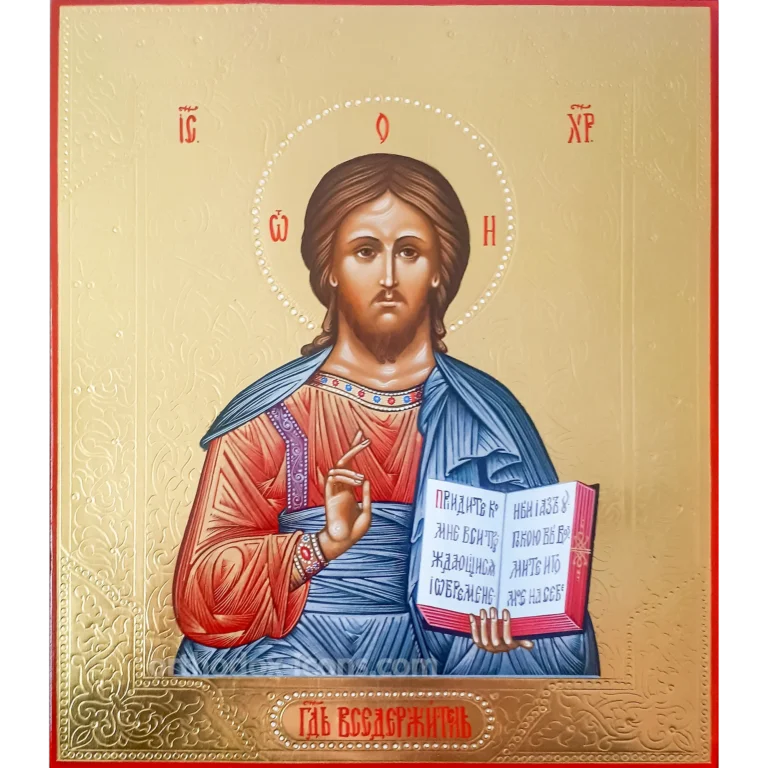
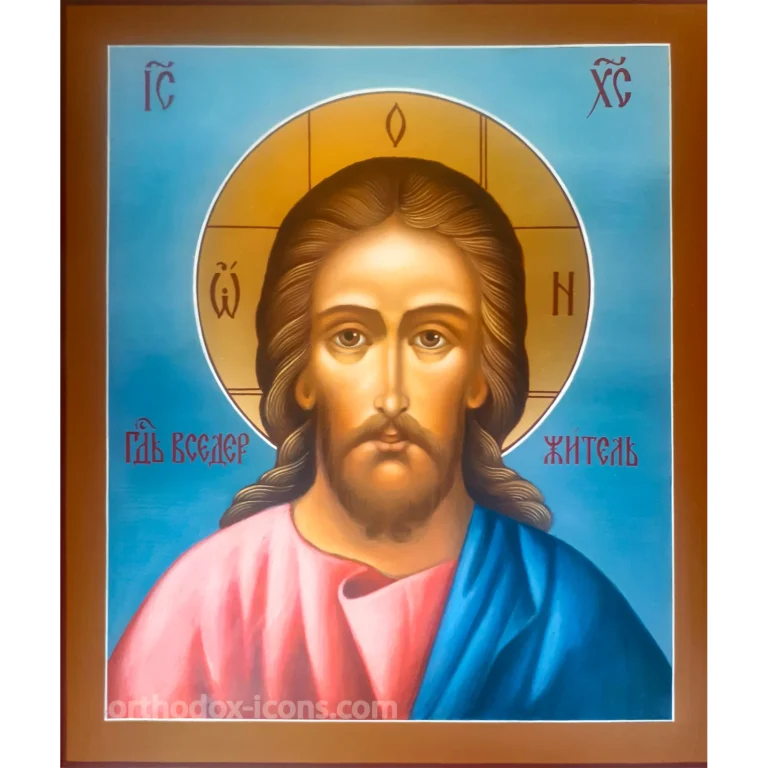
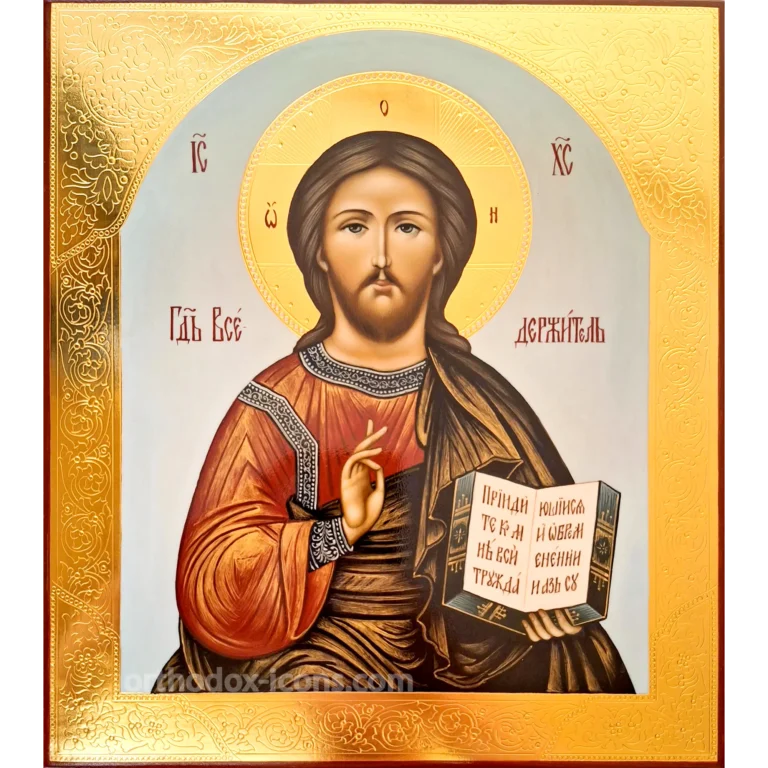
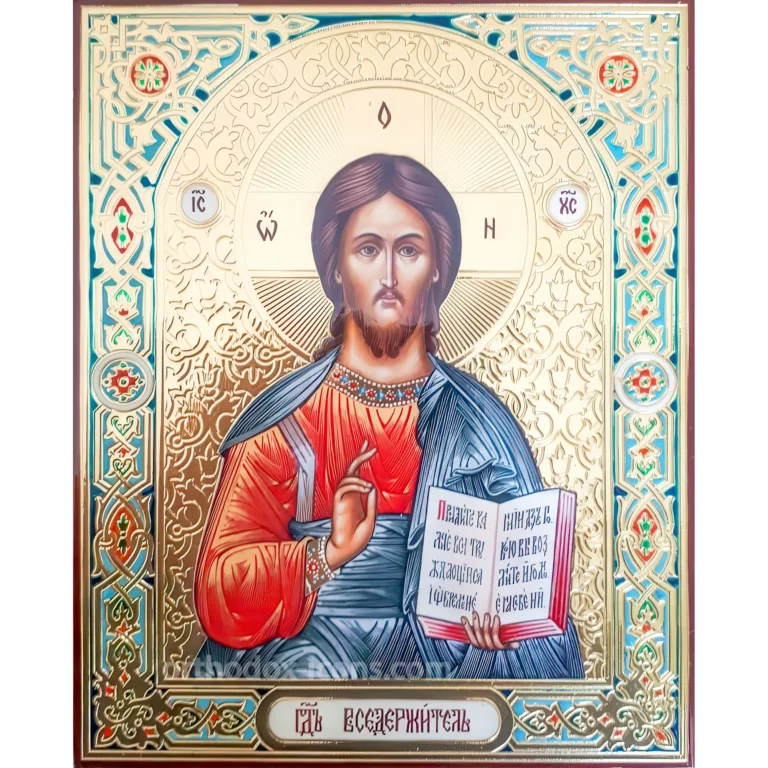
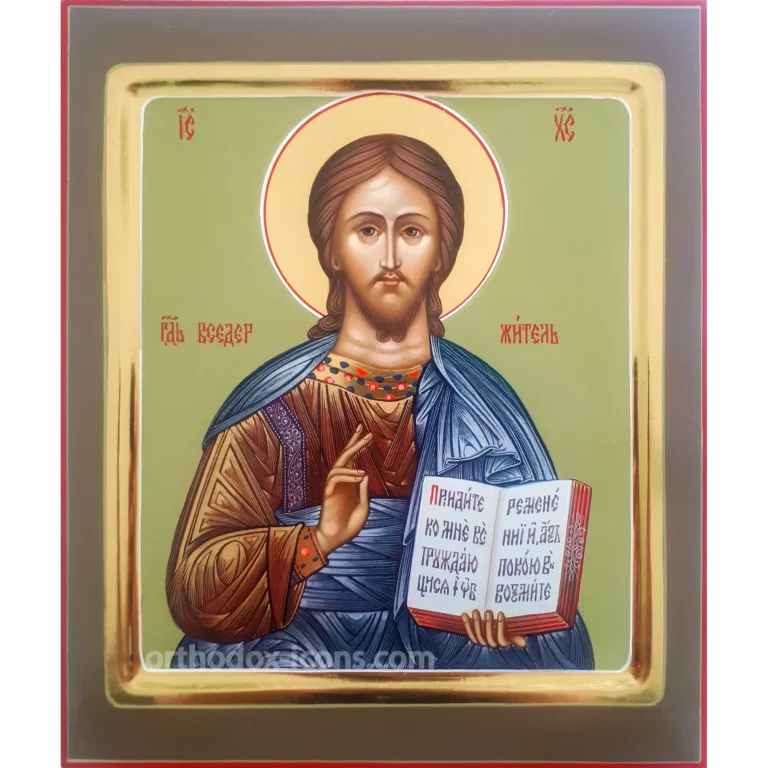
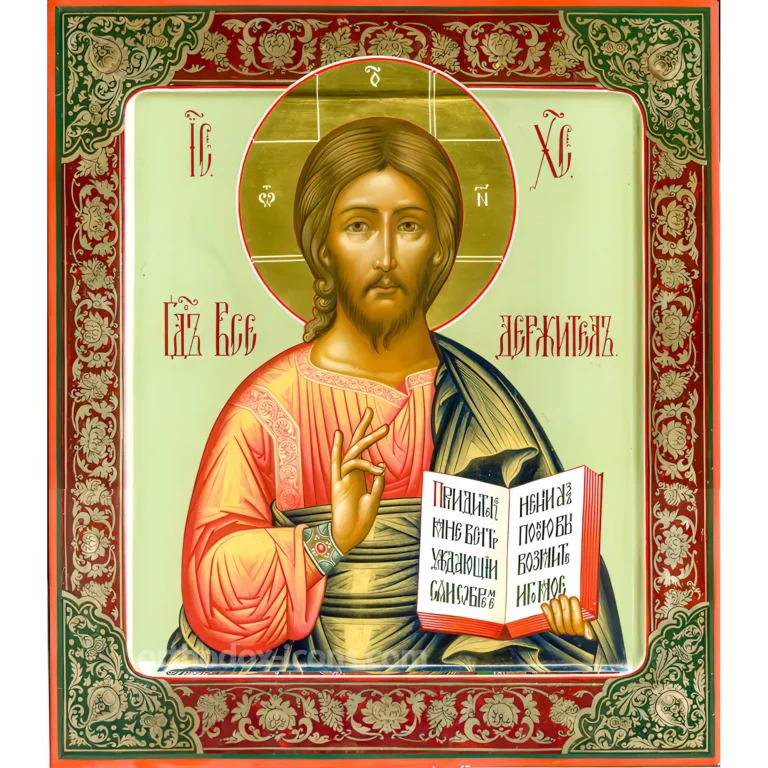
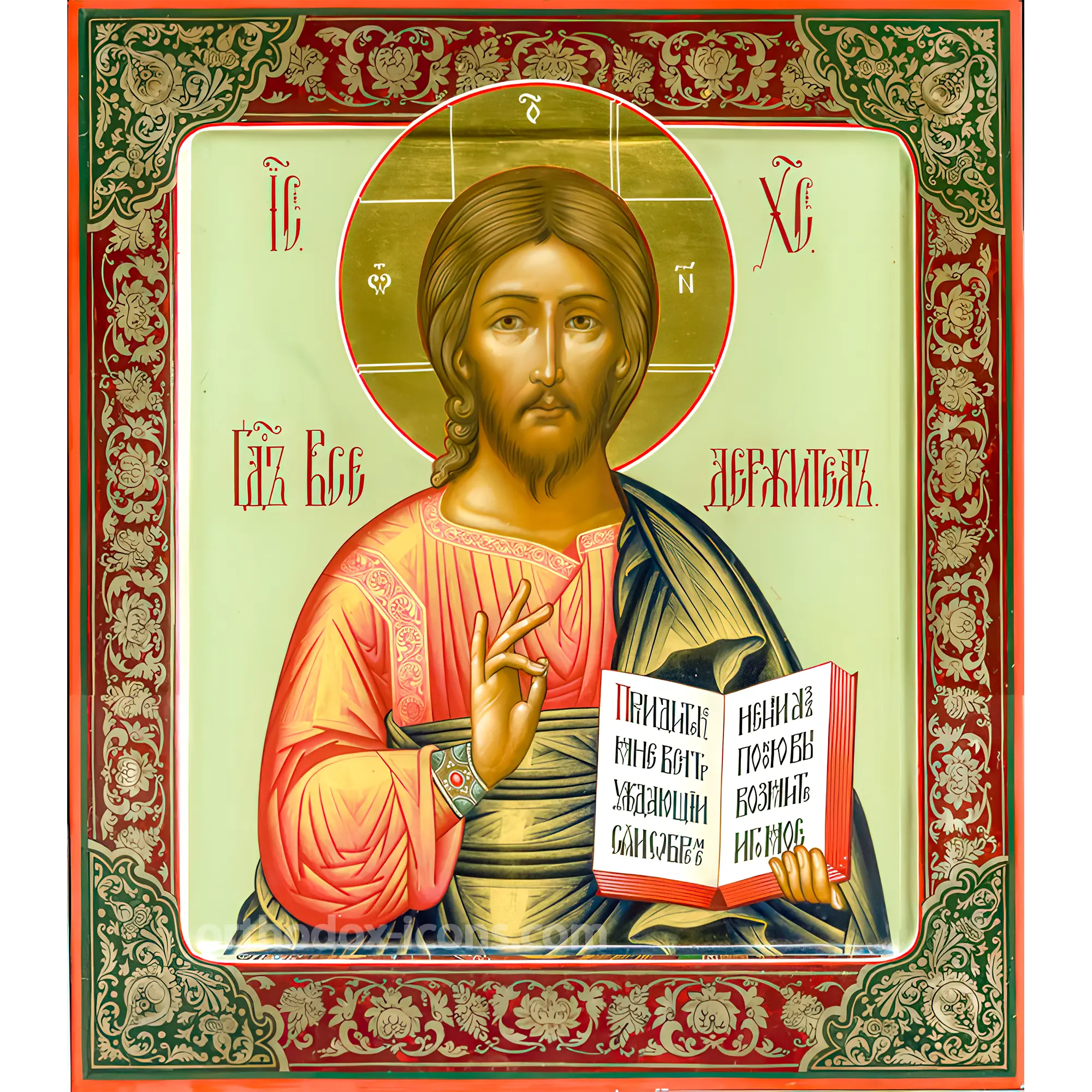
Orthodox Icon of Father God is listed under this English title, while the iconographic subject is Christ Pantocrator, the Savior Almighty, with a blessing hand and open Gospel.
Hand-painted in the Mstyora tradition on a linden board with oak splines, linen pavoloka, gesso, egg tempera, mineral pigments, and 23K gold leaf (960 purity). Free international shipping. Payment after receiving.
It is possible to paint an image in any size to order
Free shipping worldwide
This hand-painted icon presents Christ Pantocrator, the Savior Almighty. This is a fundamental and exalted Orthodox image of Jesus Christ, also known as Spas Vsedergitel, the Lord who holds all things in His care and authority.
The icon of Christ Pantocrator occupies a central place in Orthodox churches, home iconostases, and the prayer life of believers. It confesses Christ as the Heavenly King and Judge, the God-Man in whom divine and human natures are united. This hand-painted icon is suitable for a home iconostasis, daily prayer, a meaningful Orthodox gift, a chapel, a parish church, or a larger iconostasis format.
Briefly About the Icon
- Page title: Orthodox Icon of Father God
- Iconographic subject: Christ Pantocrator, the Savior Almighty
- Spiritual meaning: Christ as Heavenly King, Judge, merciful Savior, and Lord of all creation
- Available size: 27 x 31 cm; larger 30 x 40 cm and iconostasis formats may be discussed individually
- Technique: Mstyora hand painting, linden board, oak splines, linen pavoloka, gesso, egg tempera, and 23K gold leaf (960 purity)
In this icon, the Lord is shown half-length, in traditional garments: a red chiton and a blue himation. The red garment points to His human nature and the blood He shed for humanity, while the blue himation expresses His divine, heavenly, and unfathomable nature. The right hand of the Savior is raised in blessing, and in His left hand He holds the open Gospel with words calling the believer to salvation and divine love.
The halo is marked with the cross and the Greek letters meaning “He Who Is”, a confession of Christ’s divine nature and eternal being. The gold halo, rich plant ornament, and solemn frame give the icon a liturgical, noble, and prayerful character.
History and Theology of the Pantocrator Image
The origins of Christ Pantocrator iconography go back to Byzantium in the fourth to sixth centuries. One of the earliest surviving images of this type is the encaustic icon of Christ Pantocrator from Saint Catherine’s Monastery on Sinai, dated to the middle of the sixth century.
This iconographic type became one of the most exalted images of the God-Man. After the Christianization of Rus’, it spread widely as a central image in church frescoes and as a prayer icon for homes and monasteries. The title Pantocrator expresses the omnipotence of the Lord, His authority over the created world, and His care for human destinies.
The icon also reminds the believer of the Second Coming and the Last Judgment. Yet the face of Christ is not only solemn and authoritative; it is filled with mercy, love, and prayerful stillness. This union of majesty and compassion is one of the reasons the Pantocrator image has remained central in Orthodox tradition.
Prayer Before the Icon of the Savior Almighty
Prayer before an icon of Christ Pantocrator is a direct and sincere turning of the human soul to God. Believers come before this image in many circumstances, asking for mercy, protection, healing, forgiveness, and guidance on the true path.
- Healing: Christ is asked for spiritual and physical strength in illness and inner suffering.
- Consolation in sorrow: prayer before the Savior helps the believer seek peace, hope, and meaning in grief and severe trials.
- Forgiveness of sins: before Christ Pantocrator, a person brings repentance for wrong actions, harmful thoughts, and spiritual negligence.
- Protection from evil: prayer asks the Lord to guard the person and home from deception, cruelty, temptations, and unexpected troubles.
- Preservation of peace: the image helps turn the mind toward reconciliation, family harmony, and a good spiritual direction.
Mstyora Technique and Gold Leaf Decoration
The presented icon is painted in accordance with the canons of traditional Orthodox iconography and the refined methods of the Mstyora school. The base is a strong, well-dried linden wood board strengthened on the reverse with inset oak splines, which help prevent deformation of the wood over time.
Linen pavoloka is applied to the front surface, followed by several layers of natural chalk gesso polished to a smooth finish. The face and garments are painted in natural egg tempera made from finely ground mineral pigments. This traditional technique gives the icon durability, depth of color, and a quiet inner luminosity.
The garments of the Savior are also enriched with gold assist, expressing the presence of uncreated divine light. The background and halo are gilded with genuine 23K gold leaf (960 purity). The decorative border and traditional color accents give the icon a finished festive character while preserving the prayerful seriousness of the Pantocrator image.
Icon Characteristics
| Page title | Orthodox Icon of Father God |
| Iconographic subject | Christ Pantocrator, the Savior Almighty, half-length image |
| Base | Solid linden wood board with oak splines |
| Ground | Linen pavoloka and natural chalk gesso |
| Painting technique | Egg tempera with natural mineral pigments |
| Gilding | Genuine 23K gold leaf (960 purity) and gold assist on the garments |
| Decorative finish | Gold background, cross halo, painted border ornament, and traditional color accents |
| Available sizes | 27 x 31 cm; 30 x 40 cm and iconostasis sizes by request |
Why This Icon Is Chosen
This image is chosen when a person needs a principal icon of Christ for prayer, blessing, and long-term devotional use. It can become the central image of a home iconostasis, a significant Orthodox gift, or a solemn church icon for a chapel or parish space.
The icon is also valued for its decorative richness. The gold leaf, painted ornament, traditional color accents, and Mstyora egg-tempera technique make it more elaborate than a simple painted board while preserving the canonical seriousness of the Pantocrator image.
Ordering, Shipping, and Payment
The listed product size is 27 x 31 cm. A 30 x 40 cm version and larger iconostasis formats can be discussed individually. Free international shipping is included, and payment is made after receiving the icon.
Key Features
- Christ Pantocrator, the Savior Almighty, in a half-length composition;
- red chiton, blue himation, blessing hand, and open Gospel;
- cross halo with Greek letters meaning “He Who Is”;
- Mstyora hand painting on linden board with oak splines;
- egg tempera, linen pavoloka, natural chalk gesso, and mineral pigments;
- 23K gold leaf (960 purity), gold assist, painted ornament, and traditional color accents.
Questions and Answers
What does Pantocrator mean?
Pantocrator is a Greek title meaning Lord of all or Almighty. It expresses the omnipotence of Jesus Christ and His authority over the created world.
Why is Christ shown in red and blue garments?
The red chiton points to Christ’s human nature and sacrificial blood, while the blue himation expresses His divine, heavenly, and unfathomable nature.
What does the blessing hand mean?
The right hand of the Savior is formed in the traditional blessing gesture, with the fingers arranged to signify the name of Jesus Christ.
What do believers pray for before this icon?
Believers pray for healing, consolation in sorrow, forgiveness of sins, protection from evil, family peace, and guidance on the path of salvation.
Where should this icon be placed at home?
An icon of Christ Pantocrator is usually placed at the center of a home iconostasis or prayer corner, as the principal image of the Savior.
What is the icon board made of?
The icon is painted on a well-dried linden wood board strengthened with oak splines to help prevent deformation from changes in humidity.
What paints are used for the face and garments?
The icon is painted in traditional egg tempera made from natural mineral pigments mixed with egg-yolk emulsion.
What decorative features does this icon have?
The icon uses a solemn gold background, a cross halo, traditional color contrasts, and carefully painted ornamental details around the image.
Is real gold used on the icon?
Yes. The background and halo are gilded with genuine 23K gold leaf (960 purity), and the garments include gold assist.
Do you offer international shipping and when is payment made?
Yes. Free international shipping is included, and payment is made after receiving the icon.
| Dimensions | 27x31cm (10.6×12.2 in) |
|---|---|
| Name | Jesus |