Orthodox Icon of Christ
Price range: $700 through $2250
Available sizes: 17×21 cm (6.7×8.3 in), 20×24 cm (7.9×9.4 in), 27×31 cm (10.6×12.2 in), 30×40 cm (11.8×15.7 in). Iconostasis sizes by request.
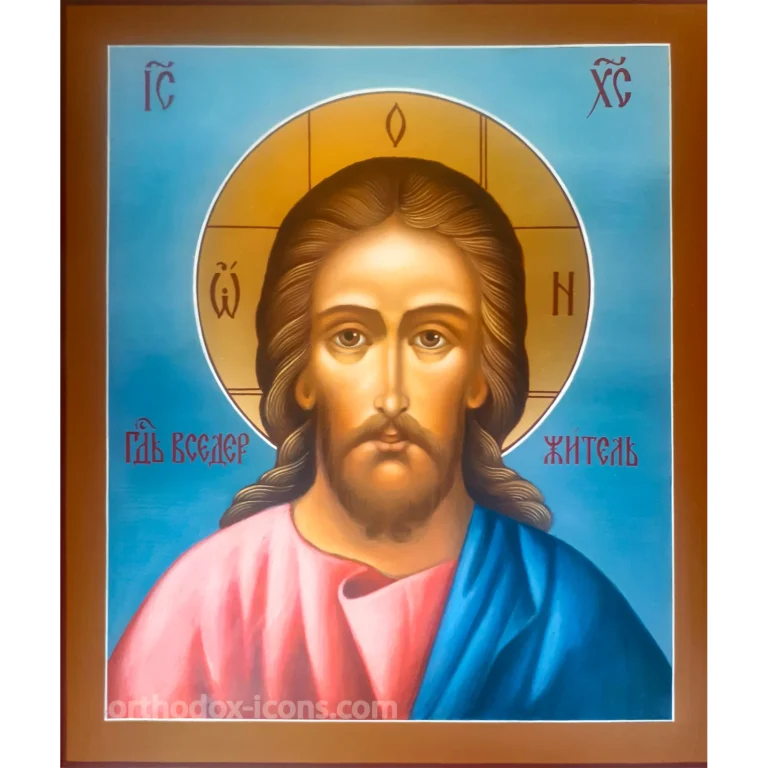
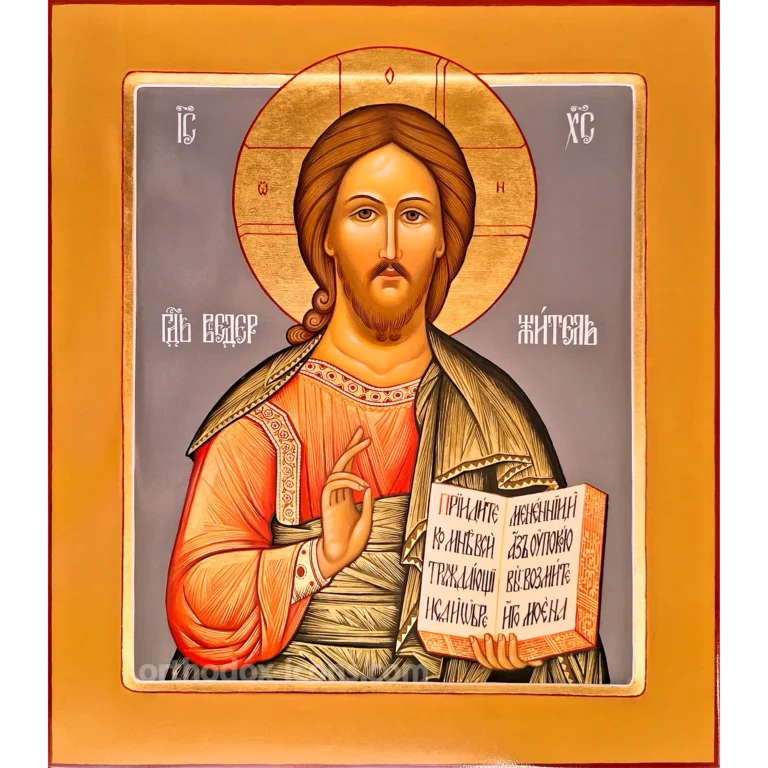
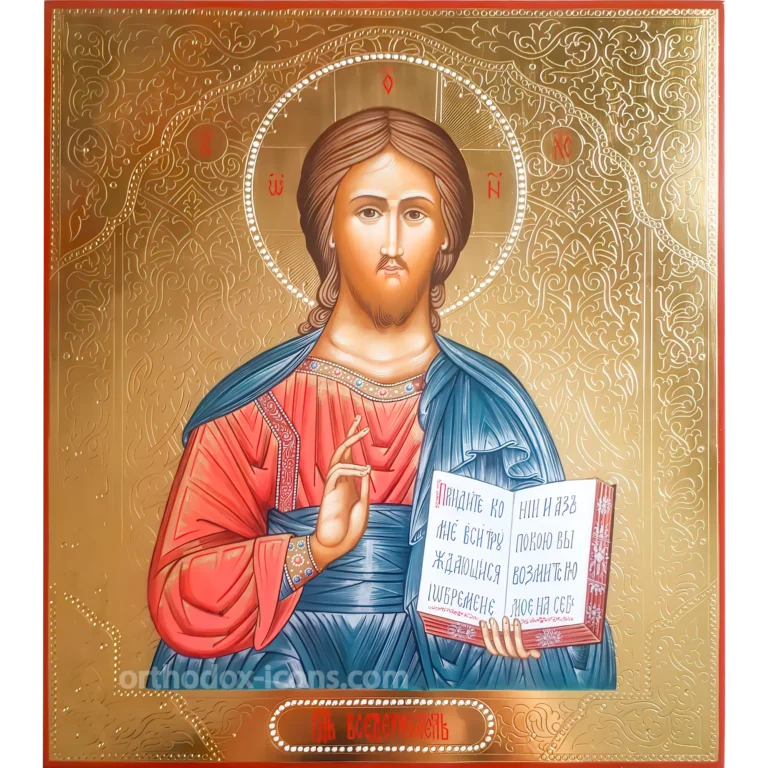
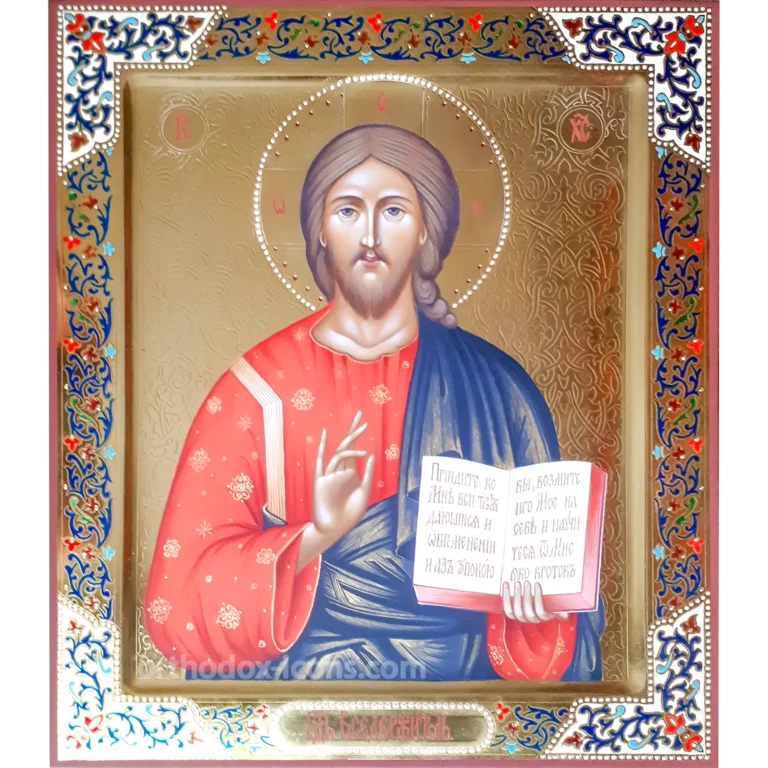
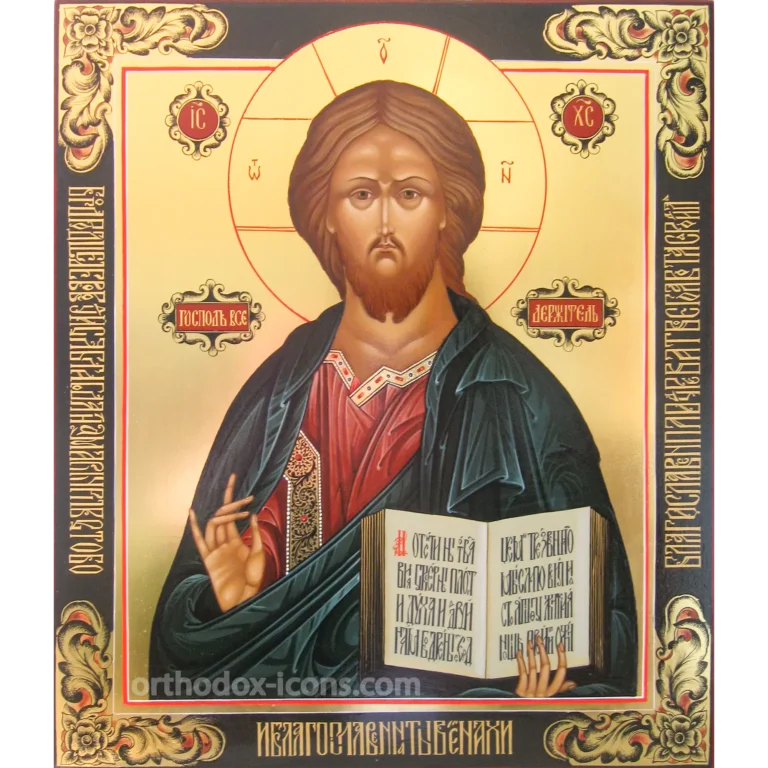
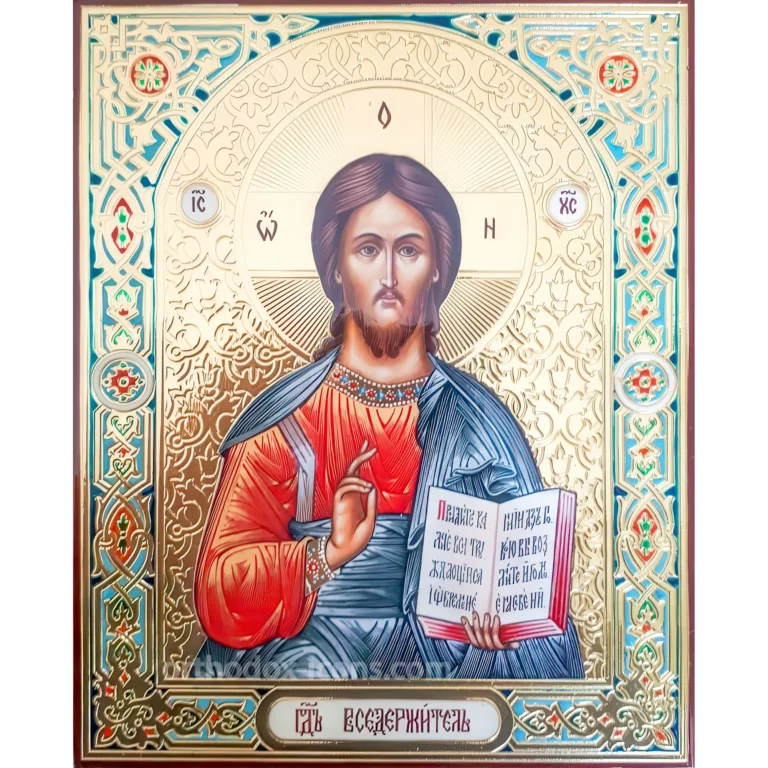
Orthodox Icon of Christ is a hand-painted Pantocrator icon of Jesus Christ in the academic Mstyora tradition.
Painted with natural mineral egg tempera on a linden wood board with oak splines, pavoloka, and gesso. The background and halo are gilded with genuine 23K gold leaf (960 purity), richly decorated with hand relief chasing over gesso and colored cold enamel. Free international shipping. Payment after receiving.
It is possible to paint an image in any size to order
Free shipping worldwide
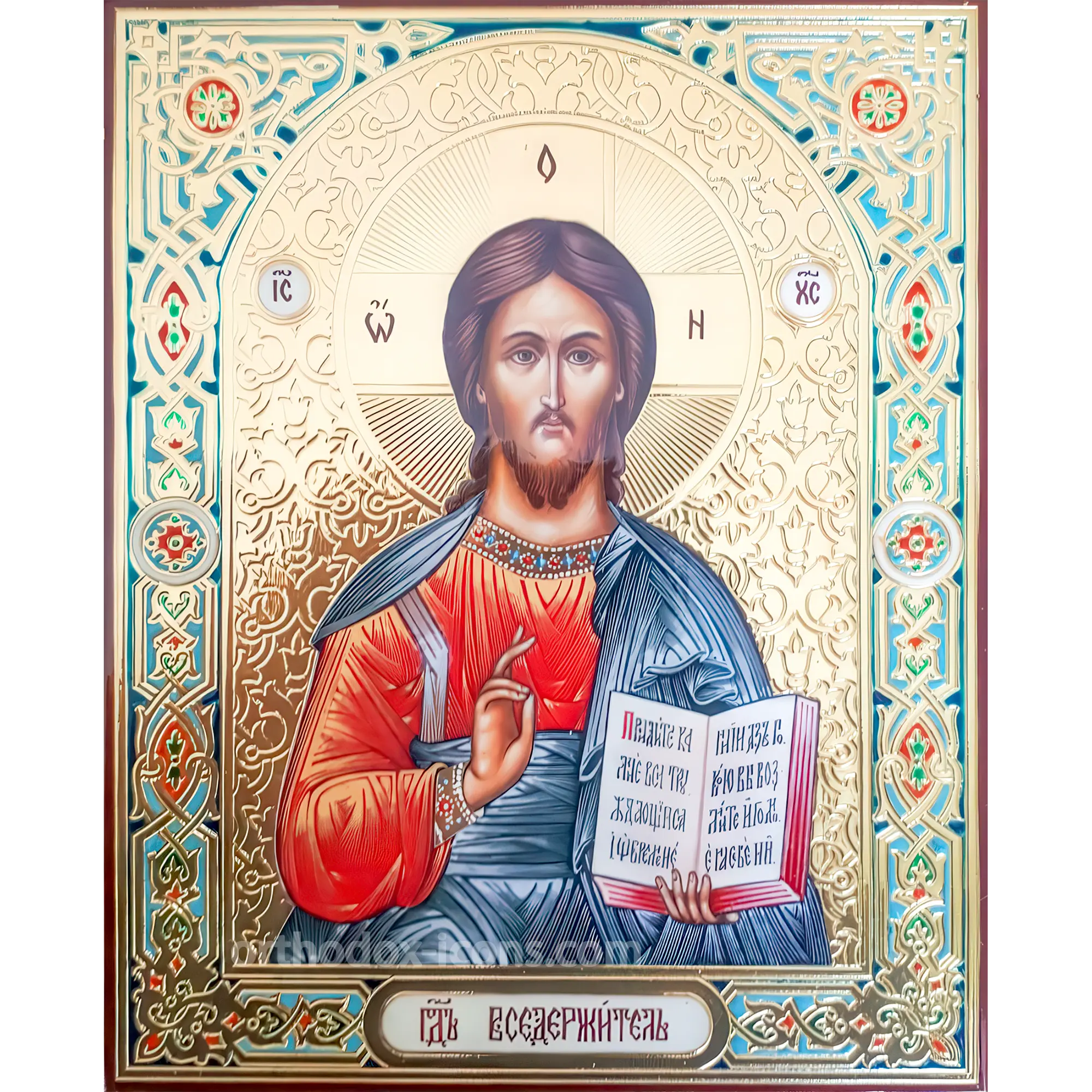
Orthodox Icon of Christ is a hand-painted image of Jesus Christ Pantocrator, the Savior Almighty, created in the academic Mstyora icon-painting tradition. This icon features a richly decorated icon with 23K gold leaf (960 purity), hand relief chasing over gesso, and colored cold enamel.
Christ appears before the faithful not only as a teacher from earthly history, but in His eternal glory: Heavenly King, Creator, providential ruler, and righteous Judge. This makes the icon a central image for home prayer, wedding blessing, Orthodox gifts, chapels, churches, and iconostasis settings.
The Historical Path of Pantocrator Iconography
Among the many forms of Orthodox church art, the Pantocrator icon holds an exceptional and leading place. The name Pantocrator means Almighty or All-Ruler. It is not merely one variation of the image of the Savior, but a fundamental dogmatic image that reveals the heart of Christian faith.
The iconography of Christ Pantocrator began to form in the early Christian period, especially from the fourth to sixth centuries. One of the most ancient surviving examples is the encaustic icon of Christ from Saint Catherine’s Monastery on Mount Sinai, dated to the sixth century.
After the end of Byzantine iconoclasm, the image of Christ Pantocrator became an essential element of Orthodox church decoration. Monumental mosaics and frescoes of Christ were traditionally placed in the central dome, where the Lord seems to look from heaven upon the created world and upon the faithful gathered in prayer.
In Russian tradition, as the high iconostasis developed, images of the Pantocrator became central in the Deisis row, while half-length icons of Christ entered home prayer corners as the main shrine of the household.
Theology of Color, Gesture, and Light
Every detail in the Pantocrator icon is canonical and carries theological meaning. The iconographer is not inventing decoration at random; he is expressing the teaching of Scripture and the Church through line, color, gesture, and light.
The Garments: The Union of Two Natures
The red chiton, or lower garment, is painted in a rich red tone. In Byzantine tradition, red or purple is associated with royal power, but in Christological meaning it also points to the human flesh of the Savior and to the blood shed on Golgotha.
The blue himation, the outer cloak, traditionally appears in blue or blue-green tones. Blue symbolizes heaven, spiritual purity, mystery, and the eternal divine nature of Christ. The blue garment over the red proclaims that divinity clothed itself in human flesh.
The Gospel and Blessing Gesture
In His left hand, Christ holds the Gospel, the Book of Life. On this icon the Gospel is open, creating a direct dialogue between God and the viewer. The text is the consoling call: “Come unto Me, all ye that labor and are heavy laden, and I will give you rest.”
The right hand of the Savior is folded in blessing. The fingers form the monogram of the name Jesus Christ, IC XC. With this gesture the Lord blesses each person who looks upon His image with faith.
The Cross Halo and the Letters O W N
A cross-shaped halo shines around the head of Christ. In Orthodox icons of Christ, the halo includes the Greek letters that mean “He Who Is,” the divine name revealed to Moses from the Burning Bush. This inscription witnesses to the pre-eternal existence of Christ as the Word of God.
Mstyora Technique: A Richly Decorated Icon
Creating a hand-painted icon of this level is a long, many-stage work requiring both artistic skill and mastery of traditional craft. The Mstyora school is known for refined painting, careful detail, and disciplined use of historic icon-making techniques.
Wood Selection and Gesso
The base is a selected linden wood board, dried for stability. Linden is well suited to icon painting because it is workable, even in structure, and does not contain resin that would rise through the paint. Oak splines are inserted on the reverse side to help prevent warping as humidity changes.
Pavoloka, a linen cloth layer, is glued to the front of the board. Over it, the master applies many layers of warm gesso made from chalk and natural glue. The final layer is polished smooth, creating a luminous and durable ground for painting.
Mineral Egg Tempera
The face and garments are painted only with natural egg tempera. Mineral pigments such as lazurite, malachite, cinnabar, glauconite, and ochre are ground finely and mixed with an egg-based emulsion. Unlike many modern factory paints, mineral tempera is valued for depth, stability, and lasting brightness.
Chasing, 23K Gold Leaf (960 Purity), and Cold Enamel
The most distinctive feature of this Orthodox Icon of Christ is the complex decoration of the background and borders. First, the master cuts an intricate plant ornament into the gesso using fine tools. This hand relief chasing requires precision, because one wrong movement can damage the prepared ground.
Then the relief is gilded with genuine 23K gold leaf (960 purity) and polished. Real gold leaf does not oxidize or darken like imitation gold. Because the gold lies over a relief surface, it catches light in different ways and gives the icon depth and solemn radiance.
The final decorative accent is colored cold enamel. The recessed areas of the chased ornament are filled with blue, red, or green enamel, which becomes hard and glossy after curing. Visually, it gives the gold background jewel-like color accents and a festive church character.
The Role of the Pantocrator Icon in the Life of a Believer
The Pantocrator icon is the alpha and omega of home prayer. No traditional Orthodox prayer corner is complete without an image of the Savior. Believers turn to Christ with every serious need because He is the source of every good gift.
- Forgiveness and repentance: before the Savior, believers bring repentance and ask for strength to struggle against sins and passions.
- Protection and salvation: they pray for deliverance from sudden death, illness, and visible or invisible enemies.
- Blessing for work: they ask Christ for help before important work, study, travel, treatment, or major decisions.
- Wedding blessing: the icon of Christ, paired with an icon of the Theotokos, belongs to the Orthodox wedding blessing pair.
Available Sizes and Custom Formats
This icon is available in several classical sizes:
- 17 x 21 cm and 20 x 24 cm: good choices for a godchild’s gift, a bedroom, a study, or a small home prayer corner.
- 27 x 31 cm: the traditional analogion size, often chosen for wedding blessing icons or as the main image for the home.
- 30 x 40 cm: a large and solemn format often chosen for spacious prayer rooms or as a church gift.
- Iconostasis formats: a larger Pantocrator image can be discussed individually for the local row of a church iconostasis.
Icon Characteristics
| Iconographic type | Savior Almighty, Christ Pantocrator, half-length image |
| Painting style | Academic Mstyora icon painting |
| Board | Solid linden wood, inset oak splines, pavoloka, chalk gesso |
| Pigments | Natural mineral egg tempera, prepared by hand |
| Gilding | Full gilding of background and halo with genuine 23K gold leaf (960 purity) |
| Decorative finish | Hand relief chasing over gesso and colored cold enamel painting |
| Available sizes | 17 x 21 cm, 20 x 24 cm, 27 x 31 cm, 30 x 40 cm; iconostasis formats by request |
Care for Gold, Chasing, and Enamel
This icon should be handled with special care because of its relief chasing, gold leaf, and enamel details. Dust should be removed only with a dry soft brush or velvet cloth. Wet wipes, chemical sprays, alcohol, stiff sponges, and rough cloths must not be used.
A wooden kiot with glass is strongly recommended for an icon with gold leaf and relief decoration. It protects the delicate surface from dust, candle soot, accidental scratches, and sudden humidity changes.
Ordering, Shipping, and Payment
The icon is available in standard sizes and larger iconostasis formats by request. Free international shipping is included, and payment is made after receiving the icon.
Questions and Answers
What does Pantocrator mean?
Pantocrator is a Greek word meaning Almighty or All-Ruler, expressing the authority of Jesus Christ over the visible and invisible world.
How does academic painting differ from Byzantine canonical painting?
Academic painting uses realistic modeling, light and shadow, and portrait-like depth, while Byzantine canonical painting is more symbolic and stylized.
What is cold enamel?
Cold enamel is a durable glossy compound placed into the recessed ornament after the relief work, giving jewel-like color accents without kiln firing.
Why is pavoloka used in icon painting?
Pavoloka is a linen cloth layer glued to the board before gesso, helping protect the ground and paint from small movements of the wood.
Will the gold background darken over time?
Genuine 23K gold leaf (960 purity) does not oxidize or darken like imitation gold, and it preserves its noble brightness when cared for properly.
Can the Gospel text be changed?
Yes. The usual text is Come unto Me, all ye that labor, but another canonical Gospel text can be discussed individually.
How should an icon with chasing and enamel be dusted?
Dust should be removed gently with a dry soft brush or velvet cloth. Wet wipes, chemical sprays, and rough sponges must not be used.
Is a kiot recommended for this icon?
Yes. A wooden kiot with glass is recommended to protect the gold leaf, enamel, and relief ornament from dust, soot, scratches, and humidity changes.
Is the 30 x 40 cm size suitable for a wedding blessing pair?
It can be used, but it is fairly large and heavy. The 27 x 31 cm size is more traditional and practical for wedding blessing icons.
Is a certificate of authenticity provided?
A certificate can confirm that the icon is hand-painted and made with traditional materials, including genuine 23K gold leaf (960 purity).
| Dimensions | 17x21cm (6.7×8.3 in), 20x24cm (7.9×9.4 in), 27x31cm (10.6×12.2 in), 30x40cm (11.8×15.7 in) |
|---|---|
| Name | Jesus |