Christ’s Resurrection Orthodox Icon
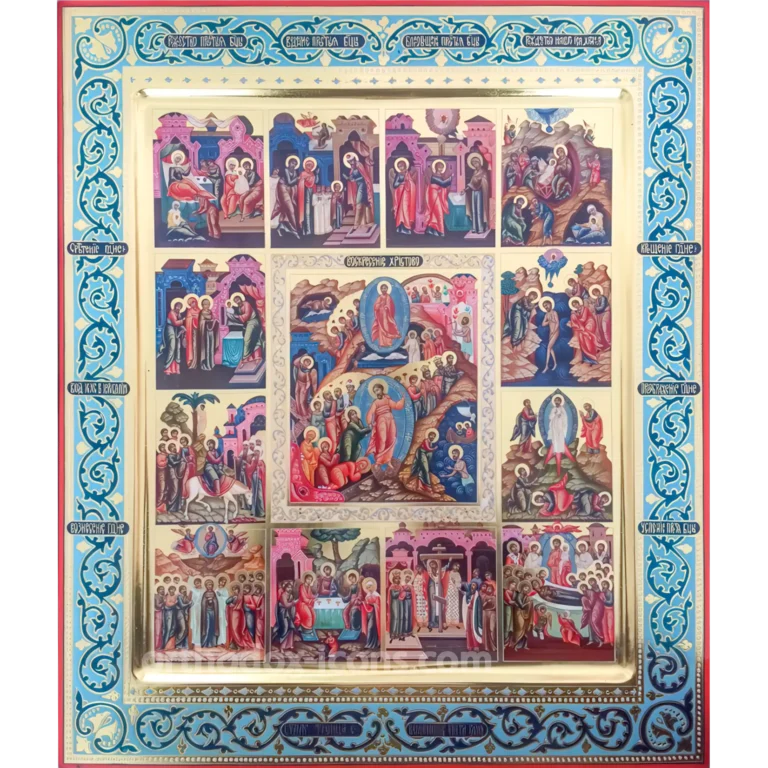
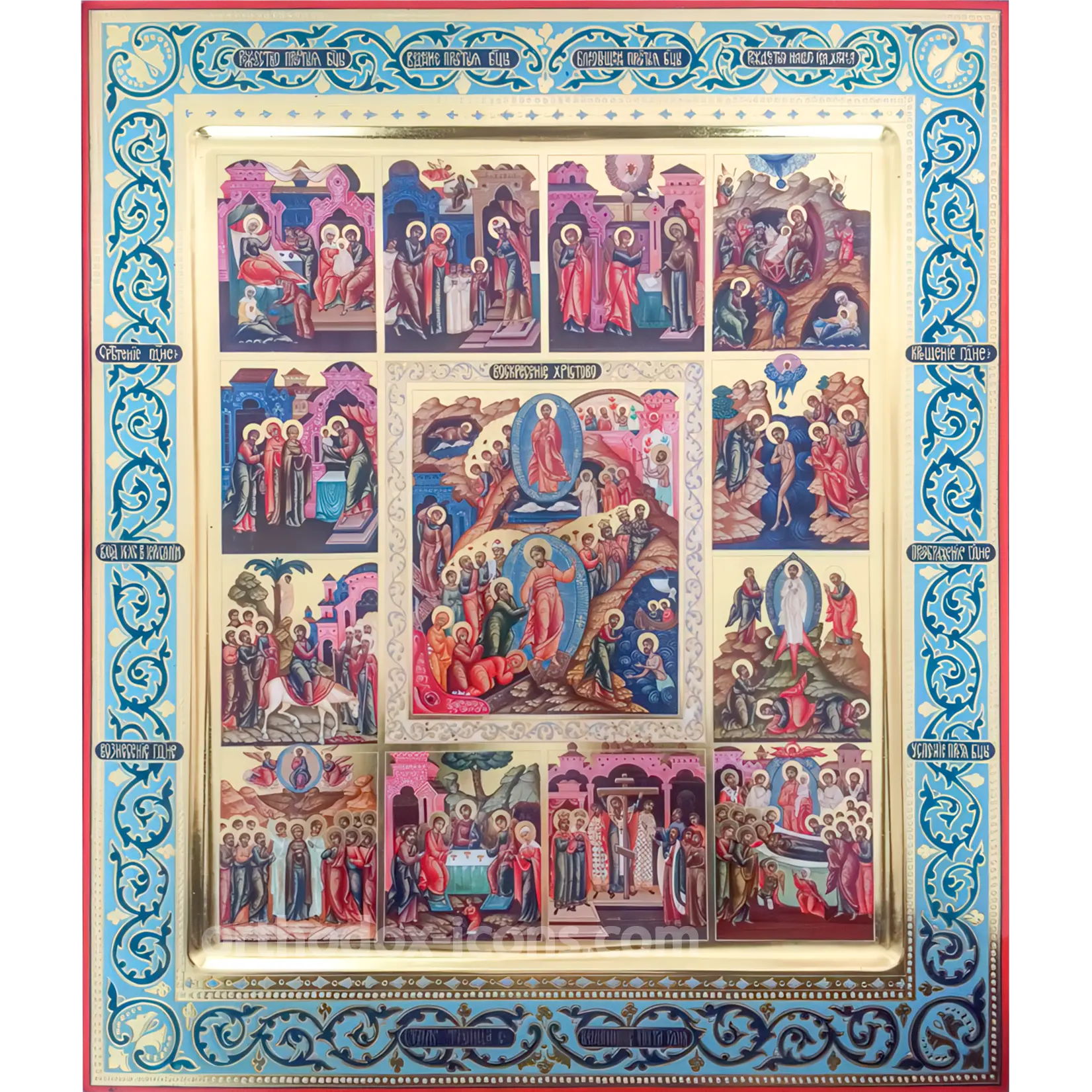
Christ’s Resurrection Orthodox Icon is painted to order as a complex Paschal icon of the Resurrection and the Descent into Hades.
Materials: linden wood board with oak splines and kovcheg, linen pavoloka, chalk gesso, egg tempera on egg yolk, natural mineral pigments, 960-grade gold leaf, cold enamels, and protective varnish.
Technique: academic hand painting on wood with gold leaf. Size, price, and painting time are agreed individually. Free international shipping. Payment after receiving.
It is possible to paint an image in any size to order
Free shipping worldwide
Christ’s Resurrection Orthodox Icon is a hand-painted Paschal icon of the greatest feast of the Orthodox Church. It reveals the triumph of Jesus Christ over death and Hades, the hope of eternal life, and the opening of salvation to all mankind.
This icon is not merely an illustration of an event. In Orthodox tradition, the Resurrection is expressed through the mystery of Christ’s Descent into Hades: the Savior breaks the gates of death and raises Adam, Eve, and the righteous of the Old Testament. A hand-painted icon of this subject can become a spiritual treasure for a home, church, chapel, or monastery.
Description of Christ’s Resurrection Orthodox Icon
What Is Shown in the Icon?
The icon of Christ’s Resurrection presents the Savior in divine glory at the moment of His victory over death. Characteristic elements of the composition include:
- The central figure of Christ: the Savior stands in glory, often holding the victorious Cross or a staff bearing the sign of the Cross
- The golden halo: a sign of eternal life and divine nature
- The mandorla: an oval radiance that reveals heavenly glory and divine dignity
- The Descent into Hades: Christ raises Adam and Eve, showing the salvation of all humanity
- The righteous of the Old Testament: figures such as Moses, Elijah, John the Baptist, and other righteous ones may stand near the Savior
- The broken gates of Hades: chains, locks, and doors beneath the feet of Christ proclaim His complete victory over death
- Rays of light: divine radiance fills the composition and penetrates the darkness
The icon is not a realistic record of something seen by human eyes. It is a symbolic and theological expression of the spiritual truth that death has been conquered and salvation is opened to all.
Theological Meaning
The Resurrection of Christ is the central event of Christian history. According to the Gospels, Jesus was crucified, buried, and rose from the dead on the third day. The angels announced to the myrrh-bearing women: “He is not here; for He is risen, as He said.”
The Apostle Paul writes: “If Christ is not risen, your faith is futile.” The Resurrection confirms the divinity of Christ, destroys the power of Hades, and gives salvation to every believer. Great Lent, Palm Sunday, Holy Week, and all the services of the Church are directed toward Pascha, the royal feast of life over death, light over darkness, and good over evil.
Iconography and Symbolism
Symbols in the Resurrection Icon
Every element of the icon carries a spiritual meaning understood by Orthodox Christians through the centuries:
| Symbol | Meaning |
|---|---|
| Golden halo | Eternal life and the divinity of the Savior |
| Mandorla | Heavenly glory and divine dignity |
| Banner or Cross | The sign of victory over death and Hades |
| Rays of light | Divine radiance entering the realm of darkness |
| Wounds of Christ | The memory of His sacrifice, now shining as signs of glory |
| Eight rays | The new world, the age to come, and the renewal of creation |
| Broken gates | The complete defeat of Hades and the powers of evil |
The Descent into Hades and the Universality of Salvation
A central feature of the Orthodox Resurrection icon is the Descent into Hades. Christ raises Adam and Eve from the realm of death, either by the hand or by the wrist, showing that salvation embraces all humanity. The righteous of the Old Testament stand nearby, witnessing that the Resurrection reaches both the ancient world and the New Covenant.
This means that Christ’s victory is not limited to one moment in history. Through His Resurrection, the way into the Kingdom of Heaven is opened for every believer.
Process of Creating the Icon in the Workshop
Natural Materials, as in Traditional Icon Painting
The icon is painted with natural materials chosen for beauty, durability, and faithfulness to Orthodox icon-painting practice:
- Icon board: linden wood strengthened with oak splines to help prevent warping
- Pavoloka: linen fabric that reinforces the surface
- Gesso: chalk ground applied by hand in multiple layers
- Egg tempera: pigments ground and bound with egg yolk
- Natural pigments: mineral colors such as ultramarine, malachite, ochre, and cinnabar
- 960-grade gold leaf: used for halos, background, and decorative elements
- Cold enamels: used where the composition requires decorative color accents
- Protective varnish: helps preserve the icon for long-term devotional use
Stages of Creating the Icon
Stage 1: Preparing the base
- Selecting and preparing the linden board
- Strengthening the board with oak splines
- Applying linen pavoloka
- Applying multiple layers of gesso
- Sanding and polishing the surface
Stage 2: Composition drawing
- Preparing the composition
- Refining figures, gestures, and proportions
- Adjusting the details before painting begins
Stage 3: Egg tempera painting
- Beginning with darker tones
- Moving gradually toward lighter highlights
- Painting faces, garments, symbolic details, and inscriptions
- Creating depth through layered painting
Stage 4: Gilding and finishing
- Applying 960-grade gold leaf to halos, background, and decorative areas
- Polishing the gold where needed
- Adding gold assist and decorative details
- Applying the final protective coating
The total making time usually depends on the size and complexity of the icon. Because this is a multi-figure Paschal composition, price and timing are agreed individually before work begins.
Advantages of Hand-Painted Work
- Uniqueness: every icon is an individual work of sacred art
- Durability: traditional materials are chosen for long-term preservation
- Spiritual depth: the image is made for prayer, not as a printed decoration
- Artistic value: the icon can become a family sacred heirloom
- Canonical faithfulness: the composition follows Orthodox iconographic tradition
Where to Place the Icon at Home
The Home Icon Corner
In Orthodox practice, icons are traditionally placed in the home icon corner, often on the eastern side of a room. This place becomes the center of family prayer and a visible reminder that the home is oriented toward the Kingdom of Heaven.
Recommended Places
- Home icon corner: the main place for prayer in the home
- Near the entrance: as a blessing for those entering and leaving
- Family prayer space: especially during Pascha and memorial prayer
- Church or chapel: in a kiot, iconostasis, or feast-icon setting
Care and Preservation
- Cleaning: dust gently with a dry soft brush or cloth
- Protection from moisture: avoid damp rooms and unstable humidity
- Protection from sunlight: direct sunlight can damage the paint over time
- Temperature: avoid sudden temperature changes and heating appliances
- Kiot or glass: a protective case may be useful in difficult conditions
- Restoration: if damaged, the icon should be examined by a professional restorer
What Do Orthodox Christians Pray for Before the Resurrection Icon?
Christ’s Resurrection Orthodox Icon is an image of universal hope. Before it, believers pray:
- For hope and consolation in sorrow, illness, and loss
- For protection of the family from division, sickness, and hardship
- For victory over sin and strength in spiritual struggle
- For deliverance from despair and remembrance that death has been conquered
- For salvation and eternal life in the Kingdom of Heaven
- For blessing of new beginnings such as moving, marriage, or the birth of children
How to Order the Icon
The icon is painted to order. Because the Resurrection composition is complex and may include many figures, the final size, level of detail, price, and making time are discussed individually. Free international shipping is included, and payment is made after receiving the icon.
- Discuss the details: size, composition, gilding, decorative elements, and timing
- Approve the composition: adjustments can be discussed before painting begins
- Follow the process: the icon is painted by hand in stages
- Final approval: the completed icon is reviewed before shipping
- Delivery: the icon is carefully packed for free international shipping
Questions and Answers
What does Christ’s Resurrection Orthodox Icon mean?
Christ’s Resurrection Orthodox Icon proclaims the victory of Jesus Christ over death and Hades. It shows that death is not the end, and that salvation is opened to all who believe in the risen Lord.
Why are Adam and Eve shown in the icon?
Adam and Eve represent all humanity. When Christ raises them from Hades, the icon shows that His Resurrection brings salvation to the righteous of all generations, from the beginning of the world.
What is the Descent into Hades?
The Descent into Hades is the Orthodox way of depicting the mystery of the Resurrection. Christ enters the realm of death, breaks its gates, and raises the captives, revealing His complete victory over death.
Where should this icon be placed at home?
It may be placed in the home icon corner or another clean, prayerful place. It is especially meaningful in a family prayer space, for Pascha, memorial prayer, and hope in the Resurrection.
How long does it take to paint this icon?
The usual making time is about three to six weeks, depending on the size, complexity, number of figures, gilding, and decorative details.
What materials are used?
The icon is painted on a linden wood board with oak splines, kovcheg, linen pavoloka, chalk gesso, egg tempera with natural mineral pigments, 960-grade gold leaf, cold enamels, and protective varnish.
How is the price determined?
The price is agreed individually because this is a complex multi-figure Paschal icon. The final cost depends on size, detail, gilding, enamel work, and painting time.
Can this icon be given as a gift?
Yes. Christ’s Resurrection Orthodox Icon is a meaningful gift for Pascha, baptism, wedding blessing, house blessing, memorial occasions, or a church interior.
How should I care for the icon?
Keep the icon away from direct sunlight, moisture, heat, and sudden temperature changes. Dust only with a dry soft brush or cloth; do not wash the surface with water.
Do you offer international shipping and when is payment made?
Yes. Free international shipping is included, and payment is made after receiving the icon.
| Name | Jesus |
|---|