Jesus Crown of Thorns Orthodox Icon
Price range: $700 through $2250
Available sizes: 17×21 cm (6.7×8.3 in), 20×24 cm (7.9×9.4 in), 27×31 cm (10.6×12.2 in), 30×40 cm (11.8×15.7 in). Iconostasis sizes by request.
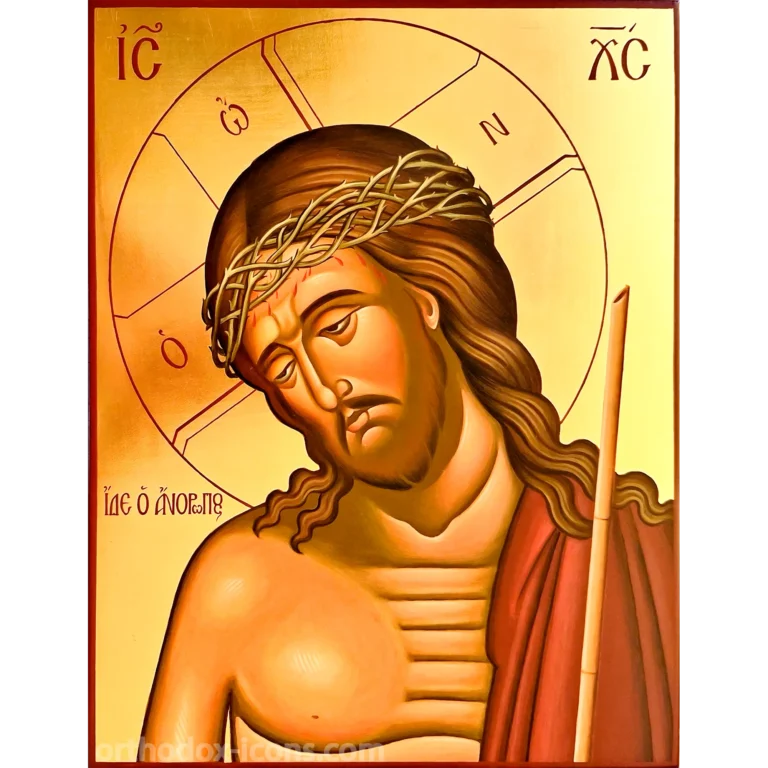
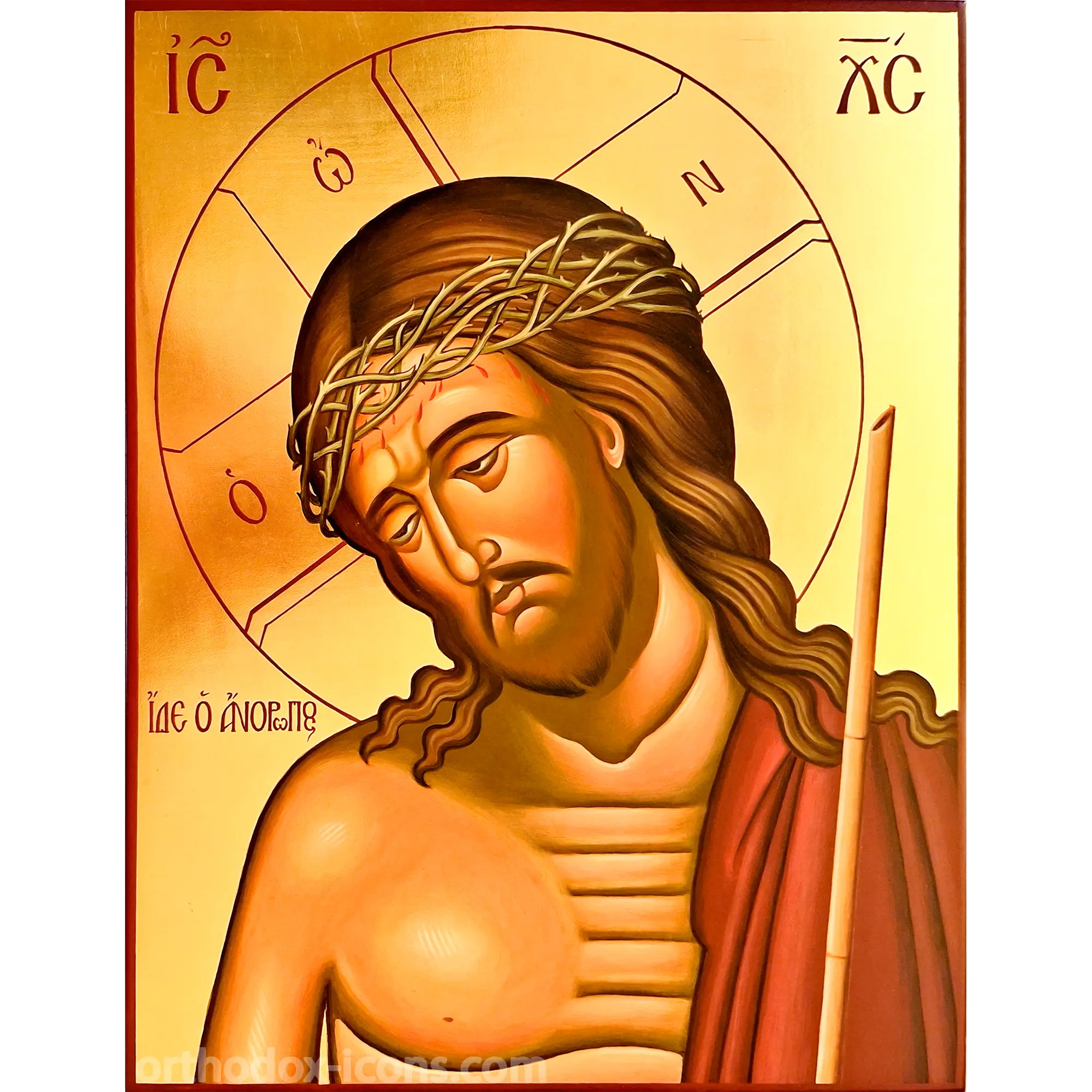
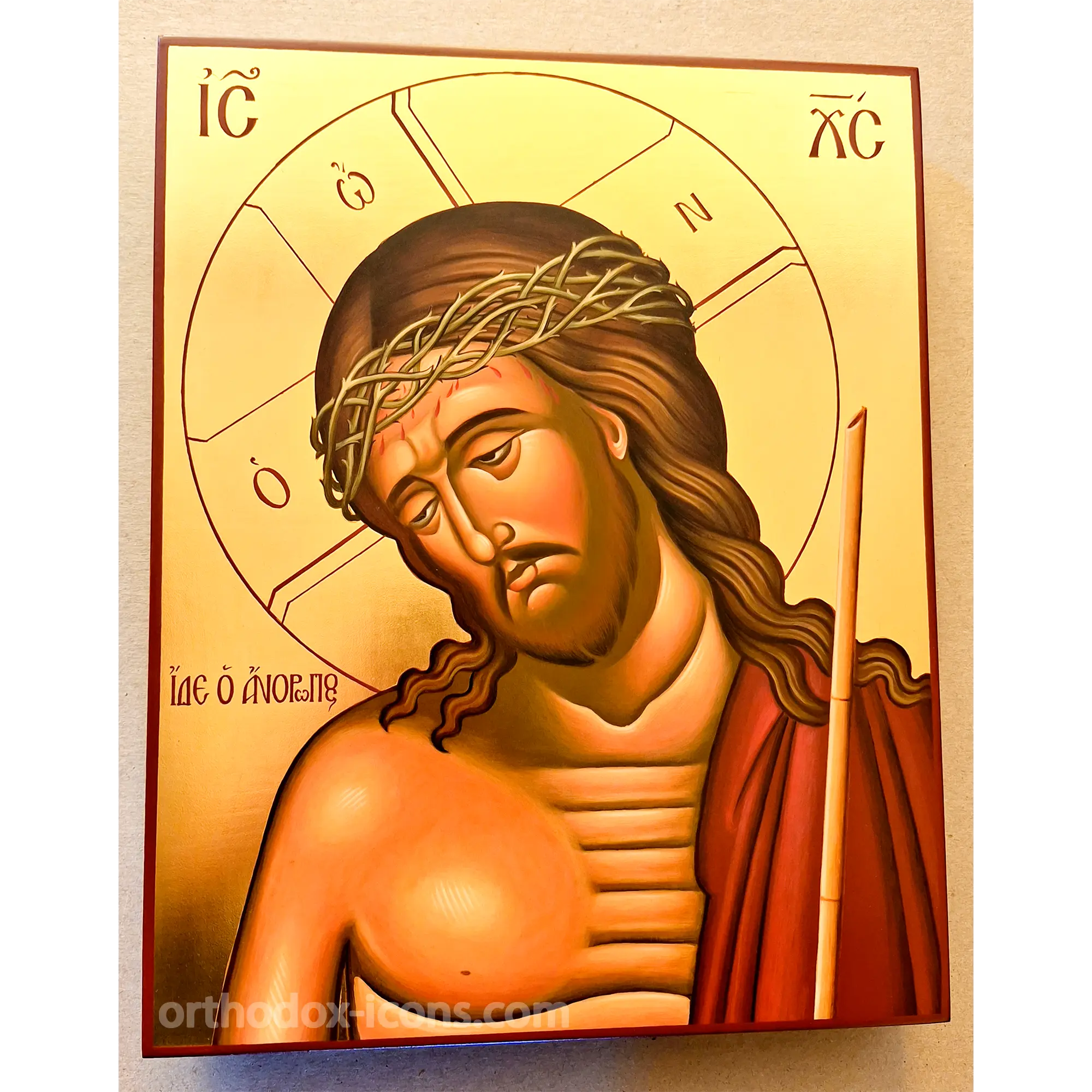
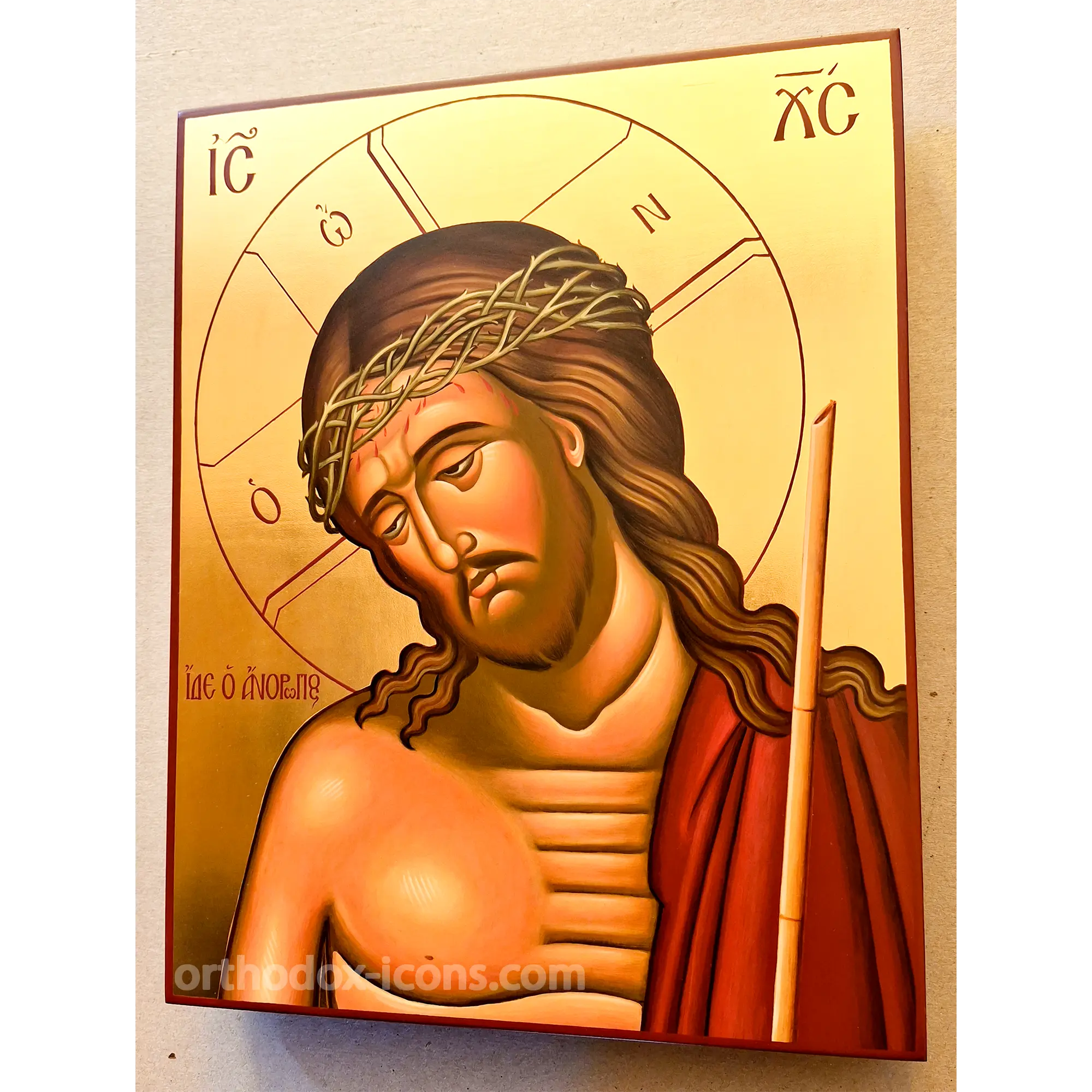
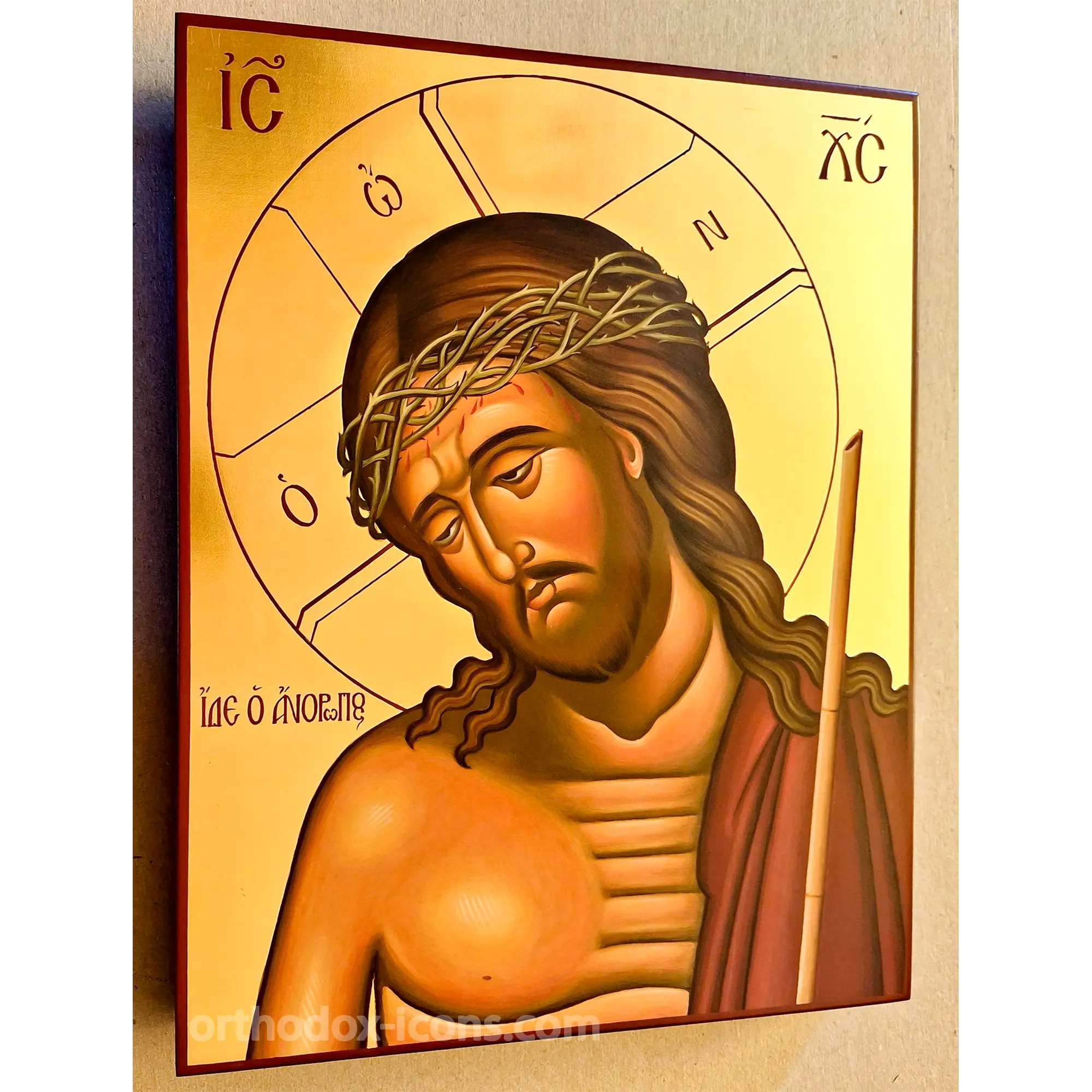
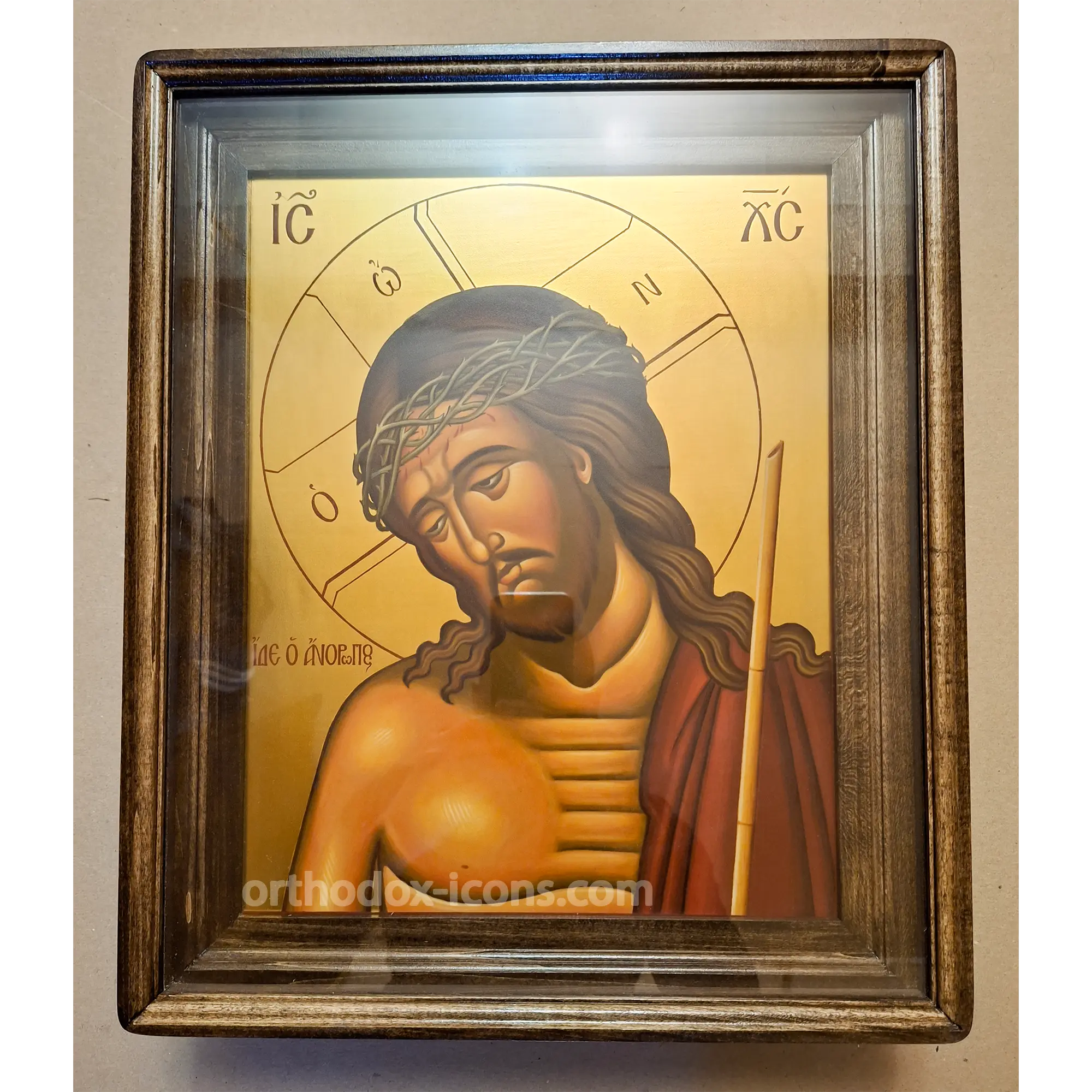
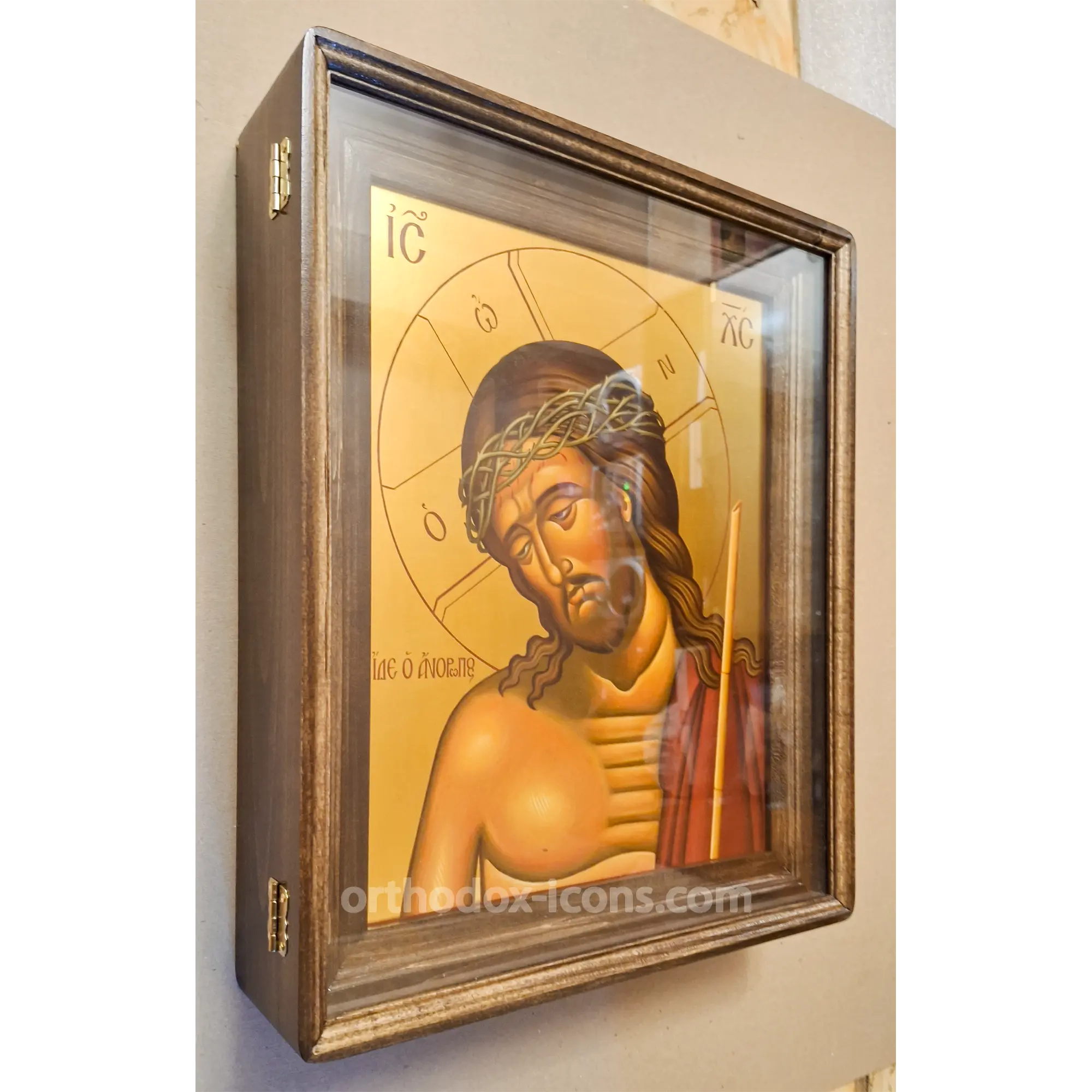
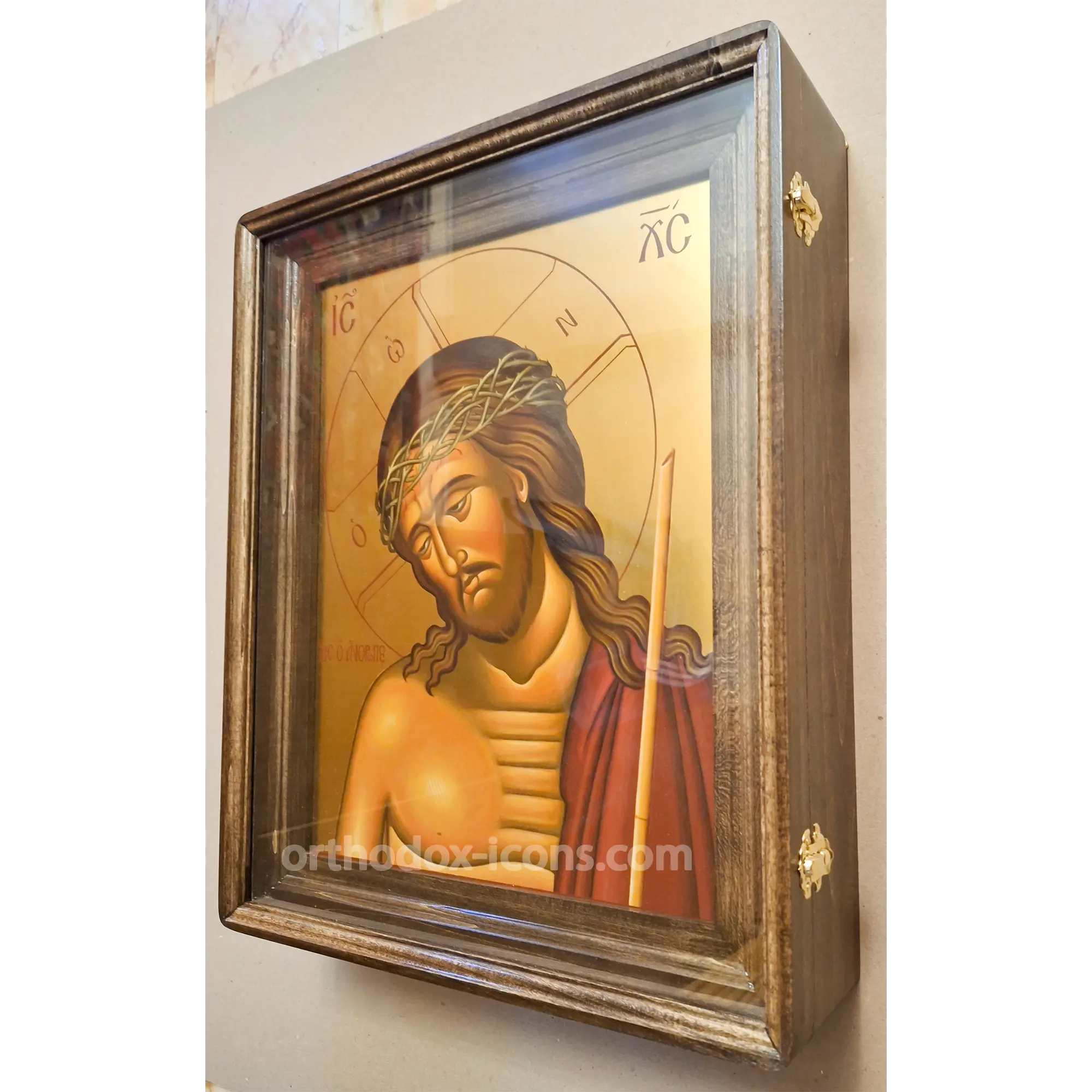
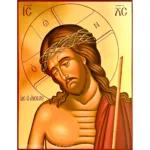
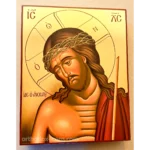
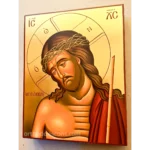
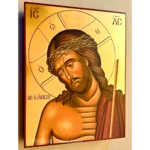
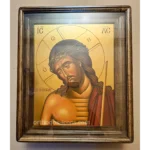
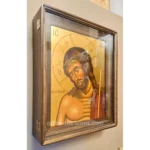
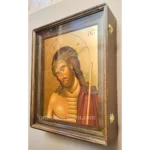
Jesus Crown of Thorns Orthodox Icon is a hand-painted Passion icon of Christ the Savior with bowed head, crown of thorns, scarlet robe, reed, gold background, and cross halo.
Painted in the Mstyora tradition on a linden wood board with oak splines, gesso, mineral egg tempera, and 23K gold leaf (960 purity). Free international shipping. Payment after receiving.
It is possible to paint an image in any size to order
Free shipping worldwide
Jesus Crown of Thorns Orthodox Icon is a hand-painted Orthodox Passion icon of Christ the Savior in the Crown of Thorns. The image shows the Lord in the moment of mockery and voluntary suffering before the Crucifixion: His head is bowed, the crown of thorns rests on His head, He wears the scarlet robe of humiliation, and He holds the reed associated with the Gospel scene of derision.
This icon is not a decorative image of sorrow, but a prayerful Orthodox icon of the suffering Savior. The gold background and cross halo confess that the humiliated Christ remains the true King of Glory. The composition is strict and concentrated, leading the eye to the face of Christ, His meekness, and His redemptive love.
Meaning of the Crown of Thorns Icon
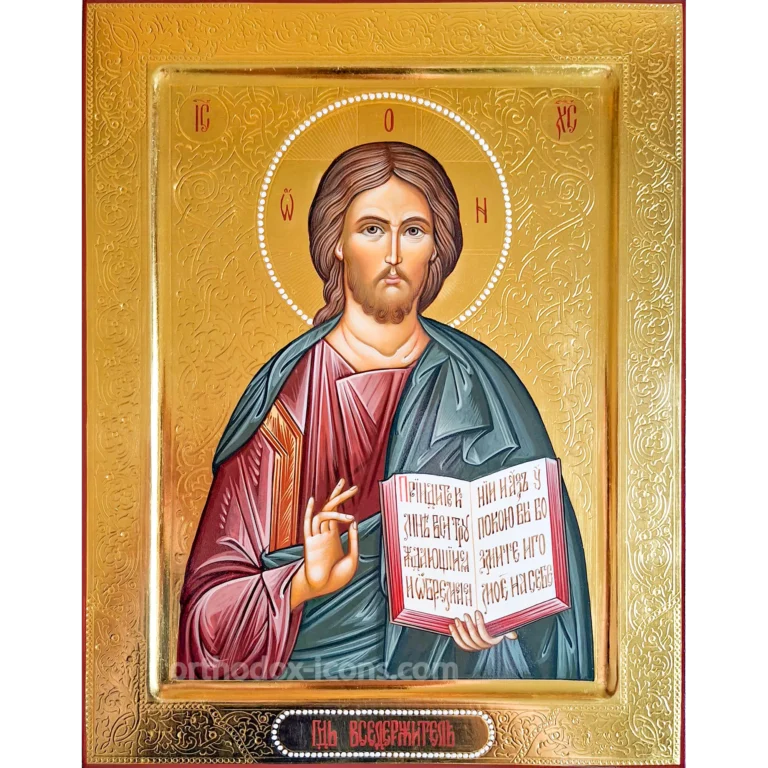
The icon of the Savior in the Crown of Thorns belongs to the Passion images of Christ, those iconographic types that direct the believer’s attention to the last days of the earthly life of the Lord. Unlike the Pantocrator icon, there is no blessing gesture and no open Gospel here. The whole meaning is centered on Christ’s voluntary humiliation, patience, and sacrifice for the salvation of the world.
The image helps the believer see the Passion of Christ not as distant history, but as a personal encounter. Before this icon, the person praying remembers the price of redemption and learns patience without bitterness, humility without despair, and love that does not answer evil with evil.
For home prayer, this icon is especially meaningful during illness, grief, family trials, repentance, and inner struggle. It does not distract with narrative detail; it leads the gaze directly to the face of Christ and to the question of how to live according to the Gospel when life is painful.
History of the Image
The iconographic motif of Christ in the Crown of Thorns is connected with the Gospel account of the mockery of the Savior by Roman soldiers. A crown of thorns was placed on His head as a mock sign of royal dignity. In Christian understanding, this crown became both a sign of suffering and a hidden sign of Christ’s true kingship.
In Russian icon painting, images of Christ in the Crown of Thorns are known from the seventeenth century and became more widespread in the eighteenth and nineteenth centuries. The type is related to the theme of Ecce Homo and to Orthodox meditation on the suffering Savior, calling the faithful to repentance and compassion.
Within Orthodox prayer, the image has its place as a serious Passion icon of Christ. It is especially close to those who seek consolation in sorrow and a reminder that no human suffering is outside the knowledge and mercy of God.
Theological Meaning
The main meaning of this icon is Christ’s free acceptance of humiliation, pain, and human cruelty for the sake of human salvation. The crown of thorns is not only an instrument of torment. It becomes an inverted royal crown: people mock Christ as king, while the Church sees the true royal dignity of the One who reigns through sacrifice and love.
The bowed head of the Savior does not express weakness. It expresses meekness. Christ does not resist outwardly because His victory is not achieved by violence, but by obedience to the Father and self-giving love. In this image, humility is revealed not as defeat, but as spiritual strength.
The reed in Christ’s hand recalls the mock royal homage of the soldiers. In iconography, the reed is read more deeply: the cruel joke of the world is transformed into a sign of the hidden Kingdom that already belongs to Christ, though the world does not understand it.
Artistic Features of This Icon
This icon is painted in a strict and concentrated manner. The composition is built around the face of Christ and His bowed head. The background is fully gold, even and bright, without complex decorative filling, so that the eye is not scattered but rests on the Savior’s face.
The cross halo is large and clear, with traditional letters indicating the divine name. The monograms of Jesus Christ stand in the upper part of the image, and the name of the icon is written below. These inscriptions keep the image within the canonical language of Orthodox iconography.
The crown of thorns is especially expressive, painted as a dense weaving of sharp branches resting heavily on the head of Christ. Yet the face is not theatrical. It remains inwardly whole, with quiet sorrow, stillness, and a gentle gaze.
The garment is laconic and meaningful. The scarlet robe recalls the mocking royal clothing placed on Christ before the Crucifixion. The exposed shoulder and chest are painted in warm ocher flesh tones, showing the real vulnerability of the incarnate Lord without excessive naturalism.
Prayer Before the Savior in the Crown of Thorns
Before this icon, Orthodox Christians pray when they need not outward enthusiasm, but inner support. The image helps a person gather the heart in sorrow, ask the Lord for strength to endure a difficult path with faith, and resist bitterness in the face of injustice or pain.
Before This Icon, Believers Pray:
- for patience in illness, spiritual fatigue, family trials, and daily burdens;
- for repentance, softening of the heart, and return to church life;
- for peace of soul after humiliation, offense, injustice, or loss;
- for help in carrying one’s own cross in work, sorrow, loneliness, and inner struggle;
- for compassion and the strength not to answer evil with evil;
- for loved ones in illness, imprisonment, severe circumstances, or spiritual crisis.
Traditional Materials and Technique
The hand-painted icon of the Savior in the Crown of Thorns is created according to the classical technology of Russian icon painting. The base is a natural linden wood board, valued for its stable structure and long life. Oak splines strengthen the board and help preserve its geometry as humidity and temperature change.
The surface is covered with gesso, a multi-layer chalk ground polished smooth before painting. The image is painted with mineral tempera on an egg-based emulsion. This technique gives the icon deep, living color and allows the face, hair, body, scarlet robe, and halo to be built in careful layers.
The gilding is made with genuine 23K gold leaf (960 purity). The gold background is not an imitation of metal paint; it gives the icon a real golden light that supports the theological meaning of the image.
Where This Icon Is Appropriate
- For a home iconostasis: as a personal Passion icon of Christ for prayer in difficult times.
- For a prayer corner: where morning and evening prayers are read with attention and repentance.
- As a serious Orthodox gift: for someone who needs prayerful support during illness, grief, or a difficult life period.
- For a chapel or church: as a Passion image of Christ in a prayer space or iconostasis row.
- For iconostasis projects: larger formats can be discussed by request.
Icon Characteristics
| Name | Jesus Crown of Thorns Orthodox Icon |
| Iconographic type | Passion image of Christ, the Savior in the Crown of Thorns |
| Main spiritual meaning | Voluntary suffering, humility, redemptive sacrifice, meekness, and love |
| Board | Natural linden wood |
| Board reinforcement | Oak splines |
| Ground | Gesso |
| Painting | Mineral egg tempera |
| Gilding | 23K gold leaf (960 purity) |
| Artistic features | Gold background, cross halo, crown of thorns, scarlet robe, reed, strict laconic composition |
| Available sizes | 17 x 21 cm, 20 x 24 cm, 27 x 31 cm, 30 x 40 cm, and iconostasis sizes by request |
| Purpose | Home iconostasis, prayer corner, Orthodox gift, chapel, church, and iconostasis row |
| Icon-painting tradition | Mstyora icon-painting tradition |
Ordering, Shipping, and Payment
The icon is available in standard home sizes and in larger iconostasis formats by request. Free international shipping is included, and payment is made after receiving the icon.
Questions and Answers
What does the Jesus Crown of Thorns Orthodox Icon mean?
It shows Christ in His voluntary suffering, humility, meekness, and redemptive love before the Crucifixion.
Is the Crown of Thorns image part of Orthodox tradition?
Yes. It is known in Russian icon painting as a Passion image of Christ, connected with the mockery of the Savior before the Crucifixion.
What do Orthodox Christians pray for before this icon?
They pray for patience in sorrow, repentance, peace of soul, softening of the heart, help in illness, and strength in trials.
Why is Christ shown without the Gospel or blessing hand?
Unlike the Pantocrator image, this icon focuses on the Passion of Christ, His humility, the crown of thorns, and His redemptive suffering.
What does the crown of thorns symbolize?
It was an instrument of mockery and pain, yet in Christian understanding it becomes a sign of Christ’s hidden kingship and victory through love.
Why does Christ hold a reed?
The reed recalls the Gospel scene of mockery, when soldiers pretended to honor Christ as king while humiliating Him before the Passion.
Where can this icon be placed at home?
It can be placed in a home iconostasis, prayer corner, or a quiet place where morning and evening prayers are read.
Is this icon suitable as a gift?
Yes. It is a deep and serious Orthodox gift for someone seeking prayerful support, repentance, or strength during difficult times.
Which sizes are available?
Available sizes are 17 x 21 cm, 20 x 24 cm, 27 x 31 cm, and 30 x 40 cm. Iconostasis sizes can be discussed by request.
What materials are used for this icon?
The icon is painted on a linden wood board with oak splines, gesso, mineral egg tempera, and 23K gold leaf (960 purity).
| Dimensions | 17x21cm (6.7×8.3 in), 20x24cm (7.9×9.4 in), 27x31cm (10.6×12.2 in), 30x40cm (11.8×15.7 in) |
|---|---|
| Name | Jesus |