Holy Face Orthodox Icon
$1600
Available size: 27×31 cm (10.6×12.2 in).
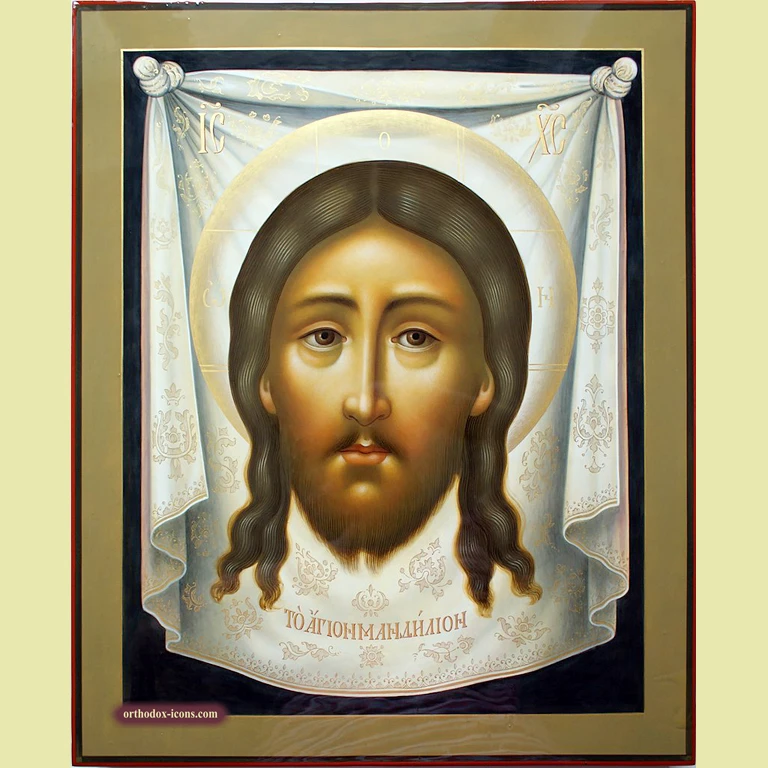
Holy Face Orthodox Icon is a hand-painted Orthodox icon of the Holy Face of Christ on the cloth, the Image Not Made by Hands.
Painted in the Mstyora tradition on a linden wood board with oak splines, pavoloka, gesso, mineral egg tempera, 23K gold leaf (960 purity), ornamented halo, and colored enamel details. Free international shipping. Payment after receiving.
It is possible to paint an image in any size to order
Free shipping worldwide
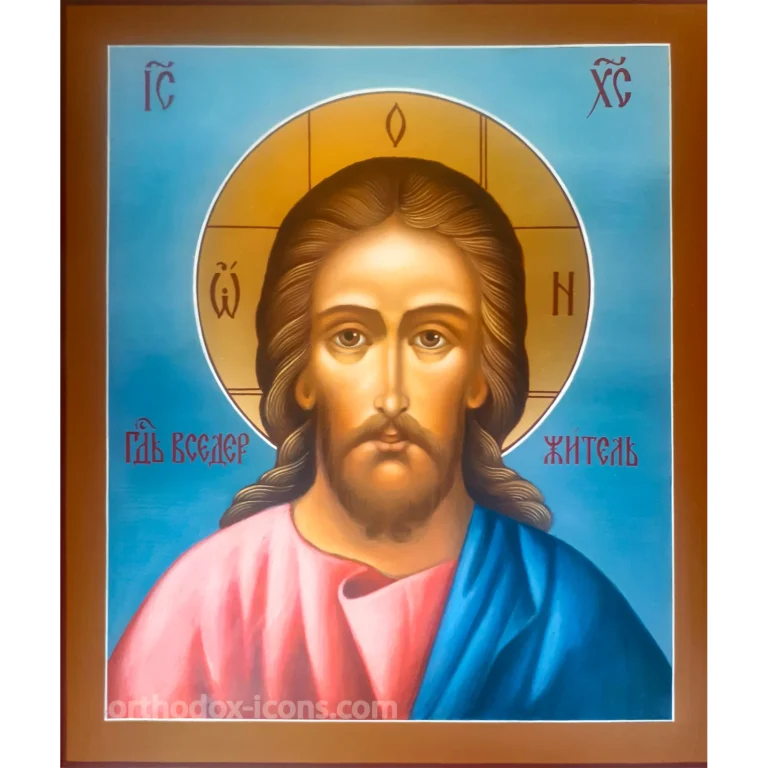
Holy Face Orthodox Icon is a hand-painted Orthodox icon of the Holy Face of Christ, also known as the Image Not Made by Hands. In this iconographic type, only the face of the Savior is shown on the cloth, or ubrus, without hands, shoulders, or a narrative scene. The image is one of the most ancient and theologically important icons of Christ.
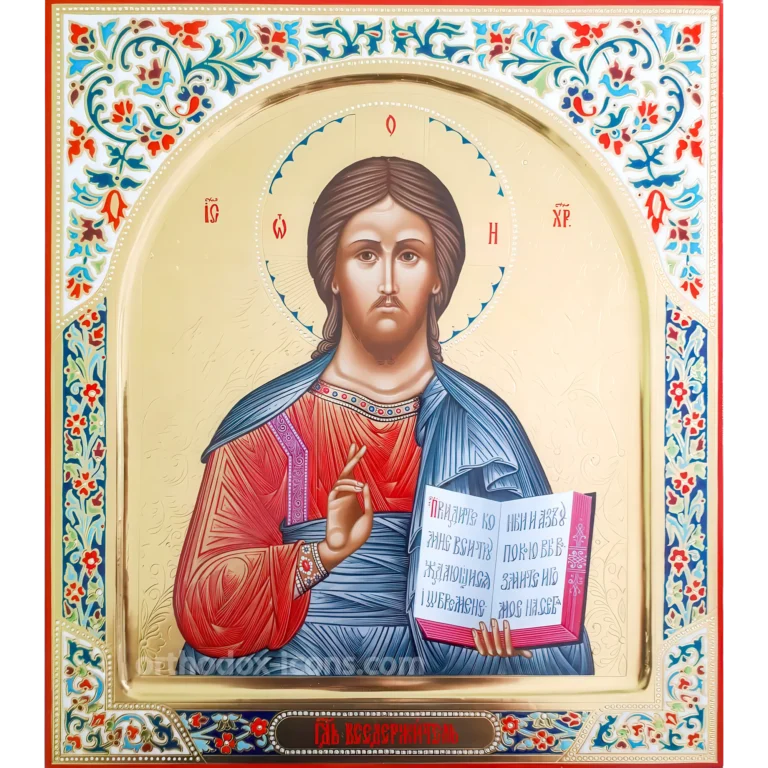
This icon is a Mstyora hand-painted work on a linden wood board with oak splines, pavoloka, gesso, mineral egg tempera, 23K gold leaf (960 purity), and colored enamel decoration. The face of Christ is calm and concentrated, set against a light gold background, with an ornate halo and richly decorated fields.
Meaning of the Holy Face Orthodox Icon
The Holy Face, or Image Not Made by Hands, is often called the icon of all icons because it stands at the beginning of the Orthodox theology of sacred images. It witnesses to the reality of the Incarnation: the invisible God became visible as Man, and the face of Christ can be shown in an icon without denying His divinity.
In this image, there is no gesture, no book, and no surrounding narrative. The whole meaning is concentrated in the face of Christ and His gaze. The icon teaches silent standing before God, attention, repentance, and trust in the mercy of the Savior.
The Holy Face belongs especially to the type known as the Savior on the Cloth. The face of Christ rests on the cloth with folds and tied ends, recalling the ancient tradition of the miraculous imprint of the Savior’s face.
History of the Image Not Made by Hands
The tradition of the Holy Face begins in the first century in the Syrian city of Edessa. According to ancient Christian tradition, King Abgar of Edessa suffered from illness and sent a painter to Christ, asking for healing or for a portrait of the Savior. The painter could not depict Christ because of the light shining from His face.
Then the Lord washed His face and wiped it with a clean cloth, and His face was miraculously impressed on the cloth without human hands. The cloth was brought to Abgar, who was healed. This sacred image became known as the Mandylion and was preserved in Edessa for centuries.
In 944, the Mandylion was solemnly brought to Constantinople. The Church commemorates this event on August 16 according to the old calendar, or August 29 according to the new calendar. In Russian Orthodox life, the Holy Face became a powerful image of protection, placed on banners, over gates, and in homes.
Theological Meaning and Symbolism
The main theological meaning of this icon is the truth of the Incarnation. If the Son of God truly became Man, then His human face can be depicted. This was one of the great arguments of the defenders of icons during the age of iconoclasm and at the Seventh Ecumenical Council.
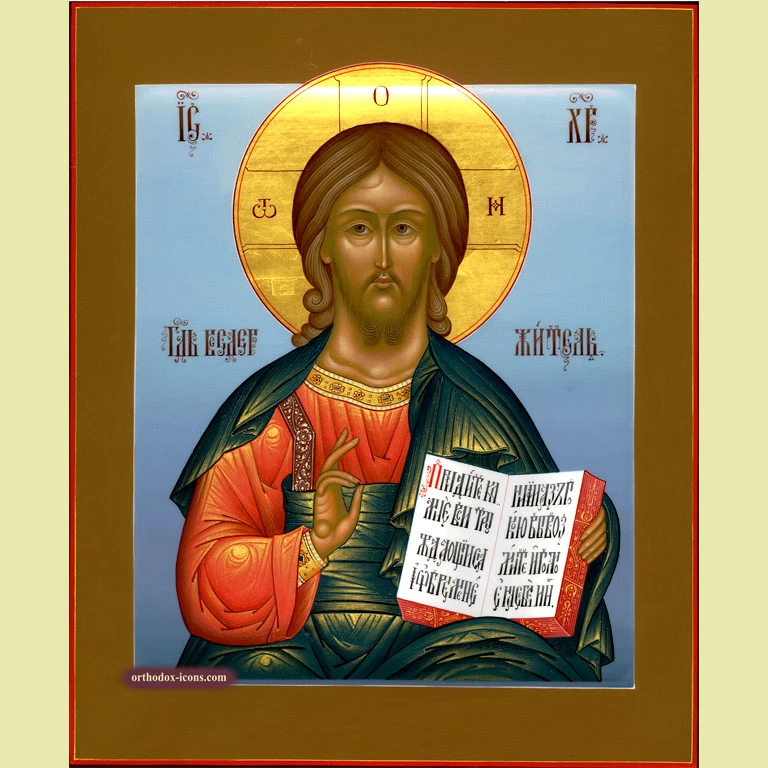
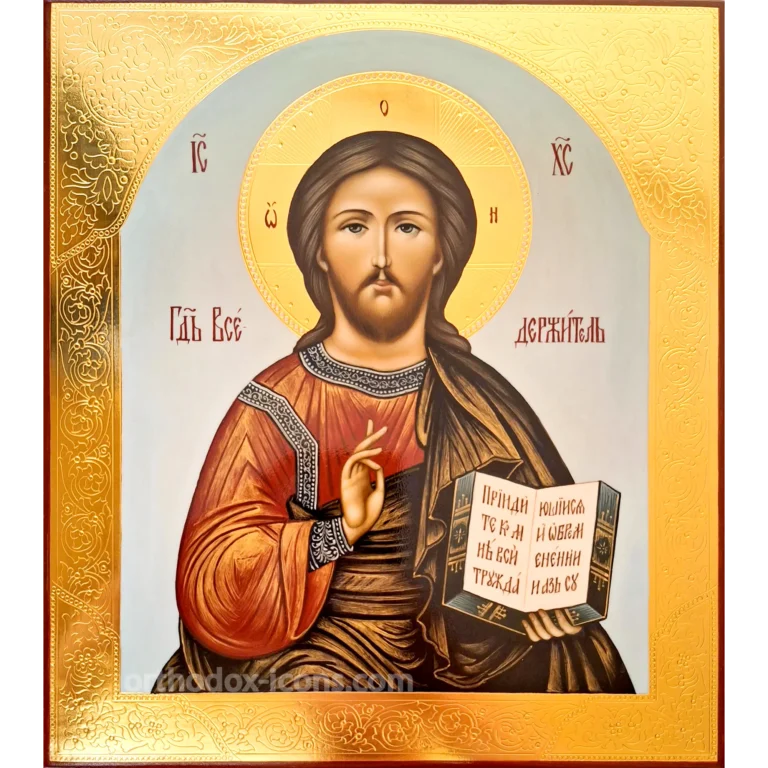
The face is shown strictly frontally and symmetrically, with the hair divided into two parts and the traditional forked beard. The cross halo bears the Greek letters meaning He Who Is, confessing Christ as true and eternal God. The monograms of Jesus Christ appear in the upper corners.
The cloth itself is not a secondary detail. It is the sign of the miraculous imprint and the material witness to Christ’s visible presence. In the icon, matter is not rejected, but becomes capable of bearing sacred meaning.
Artistic Features of This Icon
This hand-painted icon is made in the refined Mstyora tradition, where fine face painting, careful line work, and rich ornament serve the spiritual seriousness of the image. The face of the Savior is painted softly and attentively, with warm transitions of color, delicate hair details, and expressive eyes.
The background is made with smooth 23K gold leaf (960 purity), creating an effect of timeless sacred space. The halo is richly ornamented with plant patterns and colored enamel accents in red, white, blue, and turquoise tones. The same decorative language continues in the wide fields of the icon, where turquoise and gold geometric lines are combined with bright enamel details.
The light cloth is painted with folds and a gold border, emphasizing the preciousness of the material that received the divine imprint. The red edge of the board completes the composition and gives the icon a solemn, royal character.
Traditional Materials and Technique
The icon is painted on a natural solid linden wood board. Linden is light, stable, and traditionally valued for icon painting. Inset oak splines strengthen the board and help prevent deformation over time.
The surface is prepared with pavoloka and gesso, a chalk ground on animal glue, then carefully polished. The image is painted with mineral tempera on an egg-based emulsion, a traditional technique that preserves depth and brightness of color for generations.
Genuine 23K gold leaf (960 purity) is used for the background and decorative elements. The icon is enriched with hand-painted ornament and colored enamel on the halo and fields, then protected with natural drying oil or a specialized protective lacquer.
Prayer Before the Holy Face
The Holy Face is a universal and powerful prayer image. Because the tradition of the first Holy Face is connected with the healing of King Abgar, Orthodox Christians often pray before this icon for healing of bodily and spiritual illnesses.
Before This Icon, Believers Pray:
- for healing from serious or long-lasting illnesses;
- for forgiveness of sins, repentance, and spiritual sight;
- for protection of the home and family;
- for help in hopeless or difficult circumstances;
- for strengthening of faith in times of doubt and despondency;
- for courage, sobriety, and trust in the Savior.
Where This Icon Is Appropriate
- For a home iconostasis: as a central image of Christ in the prayer corner.
- For a new home: as a traditional protective image for the household.
- For a wedding or family blessing: as a sign of Christ’s presence in the domestic church.
- As an Orthodox gift: suitable for baptism, name day, wedding, house blessing, or anniversary.
- For a church or iconostasis: suitable for a kiot, local row, festal row, or larger church project by request.
Icon Characteristics
| Name | Holy Face Orthodox Icon |
| Iconographic type | The Holy Face of Christ, Image Not Made by Hands, Savior on the Cloth |
| Main spiritual meaning | The Incarnation, visible face of Christ, protection, healing, and prayerful standing before God |
| Board | Natural solid linden wood |
| Board reinforcement | Inset oak splines |
| Ground | Pavoloka and gesso |
| Painting | Mineral egg tempera |
| Gilding | 23K gold leaf (960 purity) |
| Decoration | Hand-painted ornament and colored enamel on the halo and fields |
| Size | 27 x 31 cm (10.6 x 12.2 in) |
| Purpose | Home iconostasis, prayer corner, church, kiot, iconostasis row, and Orthodox gift |
Ordering, Shipping, and Payment
This page offers the 27 x 31 cm hand-painted Holy Face icon. Free international shipping is included, and payment is made after receiving the icon.
Questions and Answers
Why is this icon called the Image Not Made by Hands?
According to tradition, the first image was not painted by an artist, but miraculously impressed by Christ’s face on a cloth.
What is shown on the Holy Face Orthodox Icon?
It shows only the face of Christ on the cloth, without hands, shoulders, or a narrative scene.
How is the Holy Face different from a Pantocrator icon?
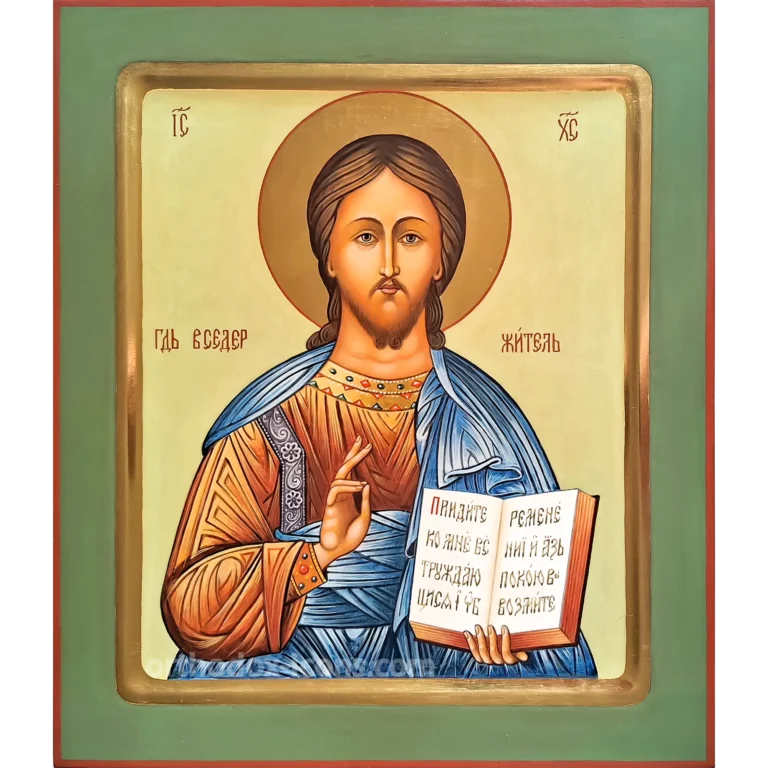
In a Pantocrator icon Christ is usually shown half-length with blessing hand and Gospel. In the Holy Face, only His face is shown on the cloth.
What is the theological meaning of this icon?
It testifies to the Incarnation: the invisible God became visible as Man, and matter can bear the image of divine presence.
What do Orthodox Christians pray for before this icon?
They pray for healing, protection of the home and family, forgiveness, strengthening of faith, and help in difficult circumstances.
Where can this icon be placed at home?
Traditionally, the Holy Face may be placed in the central or upper part of a home iconostasis, or in a prayer corner.
What do the letters in Christ’s halo mean?
The Greek letters mean He Who Is, the divine name revealed to Moses, confessing Christ as true and eternal God.
What decorative elements are used in this icon?
The icon has 23K gold leaf (960 purity), an ornamented halo, wide decorated fields, and colored enamel accents in blue, red, white, and turquoise tones.
What size is available on this product page?
This product page offers the 27 x 31 cm size, suitable for a home iconostasis, prayer corner, or church setting.
How should an icon with gold leaf and enamel be cared for?
Keep it away from direct sunlight, drafts, humidity, and sudden temperature changes. Clean only with a very soft dry brush or cloth.
| Dimensions | 27x31cm (10.6×12.2 in) |
|---|---|
| Name | Jesus |