Hand-Painted Icon of the Transfiguration of the Lord
$1750
Available size: 27×31 cm (10.6×12.2 in).
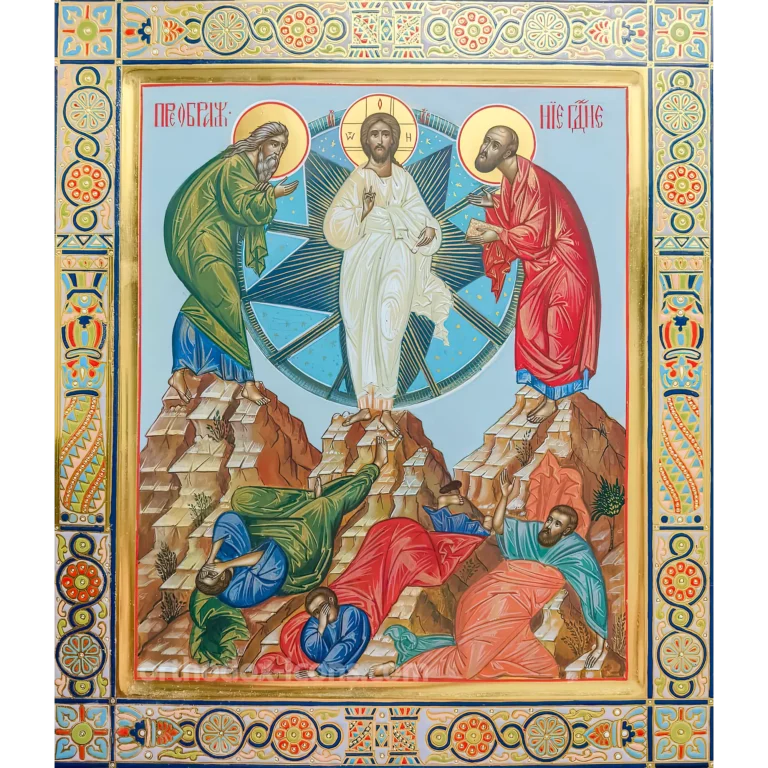
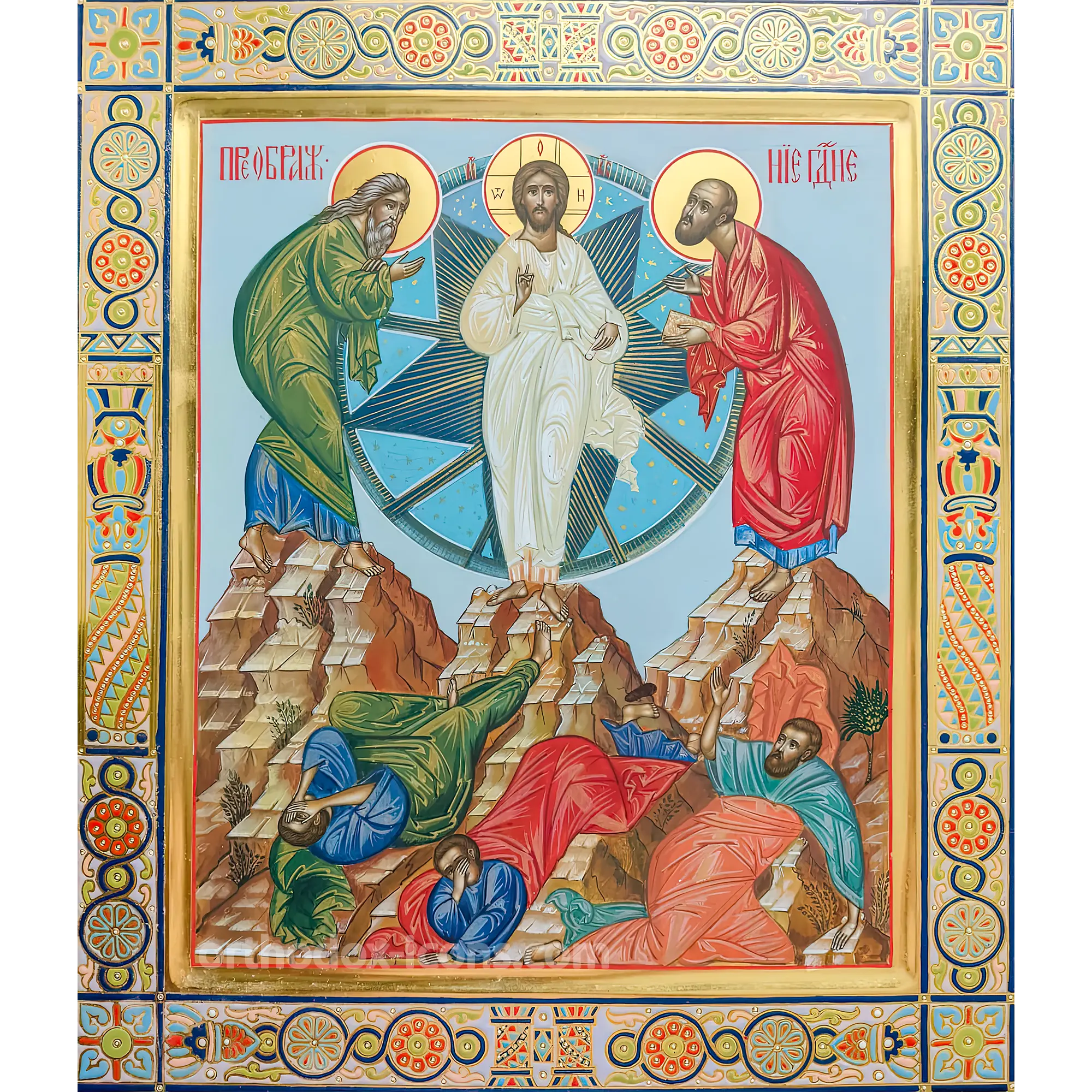
Hand-Painted Icon of the Transfiguration of the Lord is a hand-painted Orthodox festal icon of Christ’s Transfiguration on Mount Tabor, with Moses, Elijah, and the apostles Peter, James, and John.
Painted on a linden wood board with splines, pavoloka, gesso, kovcheg, egg tempera, 23K gold leaf (960 purity), hand chasing, cold enamel, and lacquer. Free international shipping. Payment after receiving.
It is possible to paint an image in any size to order
Free shipping worldwide
Hand-Painted Icon of the Transfiguration of the Lord is a hand-painted Orthodox festal icon of Christ’s Transfiguration on Mount Tabor. The image belongs to one of the Twelve Great Feasts of the Orthodox Church and reveals the divine glory of Christ, the uncreated light, and the calling of every Christian to spiritual transformation.
In the center, Christ stands in white garments within a mandorla of light. At His sides are the prophets Moses and Elijah, and below Him are the apostles Peter, James, and John, overcome by the vision of divine glory. The icon is painted in the Mstyora tradition with rich ornament, gold leaf, egg tempera, cold enamel, and careful work on every figure.
Meaning of the Transfiguration Icon
The Transfiguration of the Lord took place on Mount Tabor, when Christ revealed His divine glory to His three closest disciples before His Passion. His face shone like the sun, His garments became white as light, and the voice of the Father testified from heaven: This is My beloved Son; listen to Him.
In Orthodox theology, the Transfiguration is an event of revelation. It shows the two natures of Christ, divine and human, and gives the disciples a foretaste of the Resurrection. It also points to the future transfiguration of all creation and to the human calling to be illumined by the grace of God.
The mandorla around Christ symbolizes the uncreated divine light. Moses and Elijah represent the Law and the Prophets, both bearing witness to Christ. The apostles below show the human response to divine glory: fear, awe, and the beginning of deeper spiritual understanding.
Iconographic Composition
This icon follows the classical Orthodox composition of the feast. Christ is shown in the center, clothed in white, standing above the mountain landscape. The concentric mandorla around Him expresses the mystery of divine light, which is not ordinary earthly brightness but the radiance of the Kingdom of God.
Moses stands on one side and Elijah on the other, speaking with the Lord about His coming Passion and saving work. At the foot of the mountain, Peter, James, and John fall to the ground in amazement and holy fear. Their postures help the viewer understand that the Transfiguration is not a calm historical scene, but an overwhelming revelation of divine glory.
The Church Slavonic inscription at the top identifies the feast. The rich ornamental fields, gold tones, red and blue accents, and plant and geometric motifs give the icon a festive and liturgical character.
Prayer Before the Transfiguration Icon
Before the icon of the Transfiguration, Orthodox Christians pray for inner change, enlightenment, spiritual sobriety, and the strength to live according to Christ’s commandments. This icon is especially meaningful for those seeking spiritual renewal, theological study, preparation for church service, or help during serious changes in life.
Before This Icon, Believers Pray:
- for strengthening of faith and freedom from despondency;
- for enlightenment of the mind and heart;
- for wisdom in study, teaching, and spiritual service;
- for the transformation of one’s life according to the Gospel;
- for help during important changes and difficult choices;
- for a more pure, attentive, and prayerful Christian life.
Feast and Orthodox Tradition
The feast of the Transfiguration of the Lord is celebrated on August 19 in the Russian Orthodox Church, or August 6 according to the old calendar. In Slavic tradition, the feast is also associated with the blessing of the first fruits, especially apples and grapes, as a sign that nature and human labor are offered to God and blessed by Him.
Because of its theological depth, the Transfiguration icon is often chosen for churches dedicated to this feast, festal rows, analogion use, chapels, theological schools, and private prayer corners. It speaks of light, hope, and the possibility of real spiritual renewal.
Artistic Features of This Icon
The icon has a complex multi-figure composition that requires careful hand painting. Each figure, each fold of the garments, the mountain forms, the mandorla, and the decorative fields are worked by hand. The face painting follows the refined Mstyora manner, with soft transitions of light and shadow, a noble palette, and expressive but restrained features.
The fields are framed with rich ornamental decoration in gold, red, and blue tones, using plant and geometric motifs. The gold and ornament do not simply decorate the icon; they support the festal meaning of the image and help express the radiance of divine glory.
Special attention is given to the mandorla, the symbol of the uncreated light of the Transfiguration. Its layered form draws the eye toward Christ and makes Him the theological and visual center of the whole composition.
Traditional Materials and Technique
The icon is made on a linden wood board with inset and applied splines for stability. The board is prepared with pavoloka, a traditional cloth layer, and covered with multi-layer chalk gesso. The icon has a kovcheg, the recessed central field used in traditional icon boards.
The painting is made with tempera paints on an egg-yolk emulsion, using mineral pigments. This technique gives depth, durability, and a living surface that cannot be reproduced by printing. The icon painter works in layers, gradually bringing out the light in the faces, garments, and landscape.
Genuine 23K gold leaf (960 purity) is used for the halos, background, and ornamental elements. The gold is worked with hand chasing, and cold enamel details are added to enrich the festive fields. The finished icon is protected with lacquer.
Where This Icon Is Appropriate
- For a home iconostasis: as a major festal image for family prayer.
- For a church or chapel: for analogion use, a festal row, or an iconostasis setting.
- For theological study: as an image of spiritual enlightenment and divine revelation.
- As an Orthodox gift: suitable for a name day, wedding, house blessing, anniversary, or the feast of the Transfiguration.
- For churches dedicated to the Transfiguration: as a principal festal or temple icon.
Icon Characteristics
| Name | Hand-Painted Icon of the Transfiguration of the Lord |
| Feast | Transfiguration of the Lord, one of the Twelve Great Feasts |
| Iconographic subject | Christ transfigured on Mount Tabor with Moses, Elijah, Peter, James, and John |
| Main spiritual meaning | Divine light, revelation of Christ’s glory, spiritual renewal, and transformation in grace |
| Board | Linden wood board with inset and applied splines |
| Board construction | Pavoloka, gesso, and kovcheg |
| Painting | Egg tempera with mineral pigments |
| Gilding and decoration | 23K gold leaf (960 purity), hand chasing, cold enamel, and lacquer finish |
| Size | 27 x 31 cm (10.6 x 12.2 in) |
| Purpose | Home iconostasis, analogion, church, chapel, festal row, iconostasis, and Orthodox gift |
Ordering, Shipping, and Payment
This page offers the 27 x 31 cm hand-painted icon. Free international shipping is included, and payment is made after receiving the icon.
Questions and Answers
What does the Icon of the Transfiguration of the Lord show?
It shows Christ transfigured on Mount Tabor, with Moses and Elijah beside Him and the apostles Peter, James, and John below.
What is the meaning of the mandorla around Christ?
The mandorla represents the uncreated divine light revealed at the Transfiguration and the glory of Christ’s divinity.
What do Orthodox Christians pray for before this icon?
They pray for strengthening of faith, spiritual renewal, enlightenment of mind and heart, and help in changing one’s life according to Christ.
When is the feast of the Transfiguration celebrated?
In the Russian Orthodox calendar, the feast is celebrated on August 19, or August 6 according to the old calendar.
Is this icon suitable as an Orthodox gift?
Yes. It is suitable for a name day, wedding, house blessing, anniversary, the feast of the Transfiguration, or a spiritual gift.
Where can this icon be placed?
It can be placed in a home icon corner, on an analogion, in a chapel, church, festal row, or iconostasis setting.
What materials are used for this hand-painted icon?
The icon is made on a linden wood board with splines, pavoloka, gesso, kovcheg, egg tempera, 23K gold leaf (960 purity), cold enamel, and lacquer.
What size is available for this icon?
This product page offers the 27 x 31 cm size, which is suitable for a home iconostasis, analogion, or prayer space.
How is this icon different from a printed reproduction?
It is painted by hand in mineral egg tempera on a prepared wood board, with real gold leaf and worked ornamental details.
How should this icon be cared for?
Keep it away from direct sunlight, dampness, heat sources, and sudden temperature changes. Clean only with a soft dry cloth or brush.
| Dimensions | 27x31cm (10.6×12.2 in) |
|---|---|
| Name | Jesus |