Sacred Icon of Venerable Seraphim of Sarov
Price range: $500 through $1600
Sacred Icon of Venerable Seraphim of Sarov is a hand-painted Orthodox icon of one of the most beloved Russian saints, a monk, elder, wonderworker, and spiritual father known for his teaching on acquiring the Holy Spirit and preserving inner peace.
Available sizes: 17×21 cm (6.7×8.3 in), 20×24 cm (7.9×9.4 in), 27×31 cm (10.6×12.2 in), 30×40 cm (11.8×15.7 in).
The icon is painted to order on a linden board with egg tempera, natural gesso, oak splines, kovcheg, 23K gold leaf (960 purity), and a protective finish. Free international shipping is included. Payment is made after you receive and approve the icon.
It is possible to paint an image in any size to order
Free shipping worldwide
Sacred Icon of Venerable Seraphim of Sarov is a hand-painted Orthodox icon of one of the most beloved saints in Russian Orthodox tradition. Venerable Seraphim of Sarov is venerated as a monk, ascetic, elder, spiritual father, and wonderworker whose life revealed prayer, humility, mercy, and the joy of life in Christ.
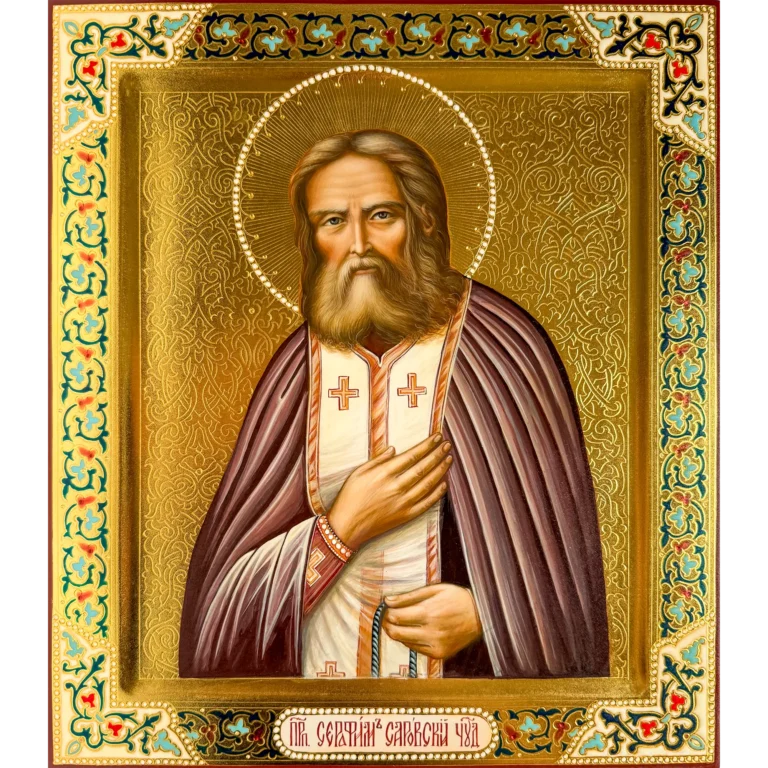
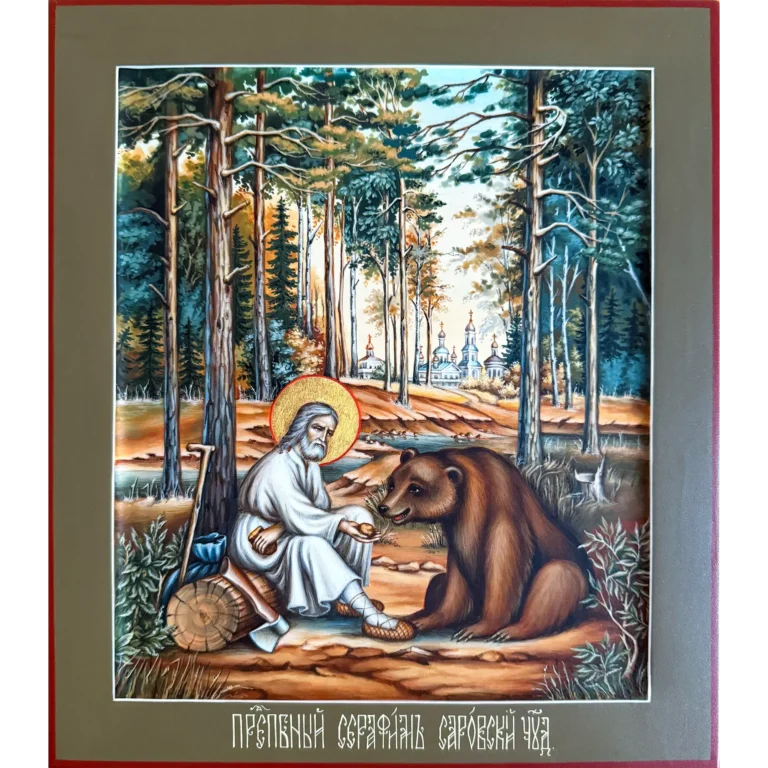
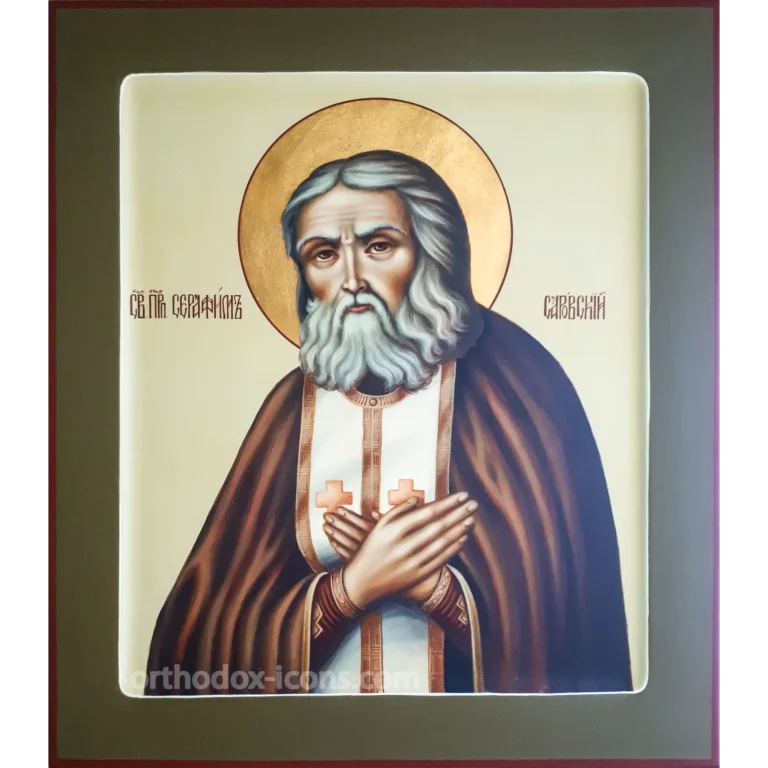
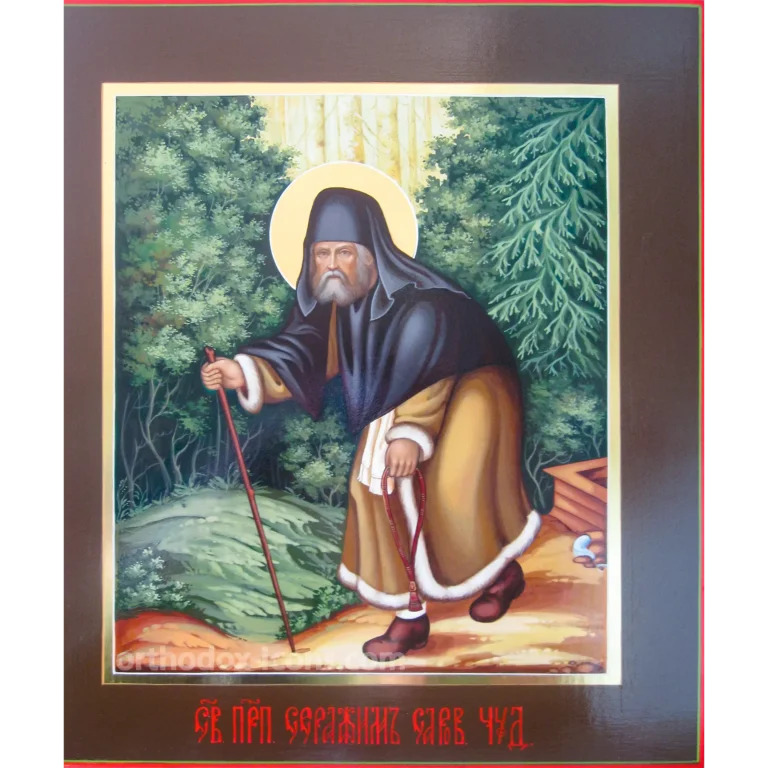
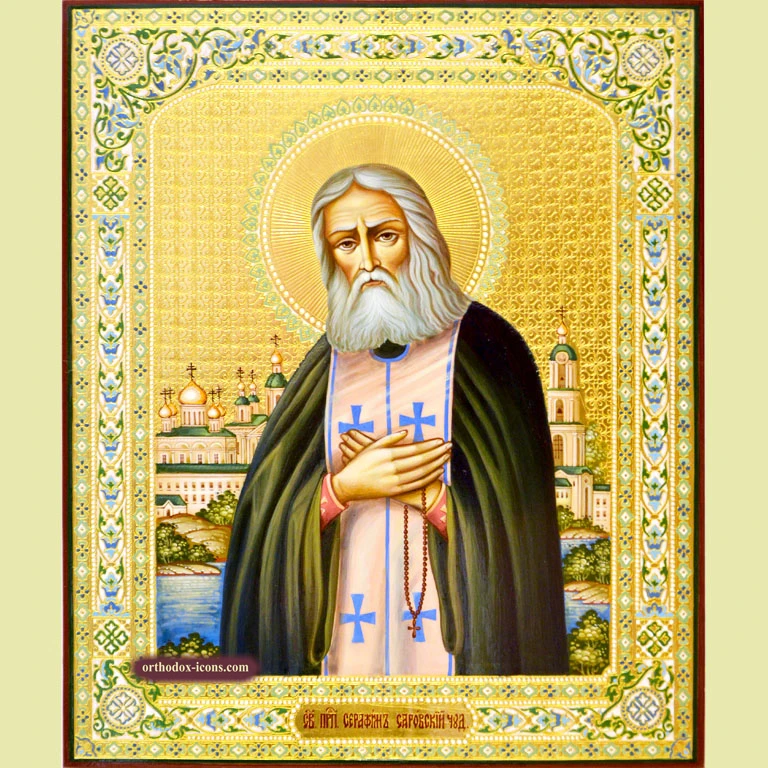
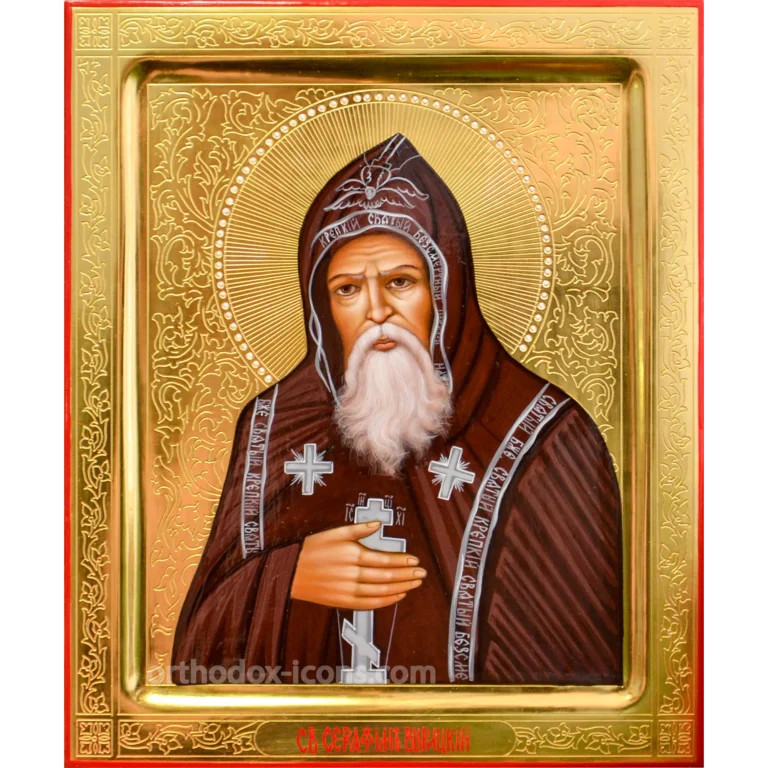
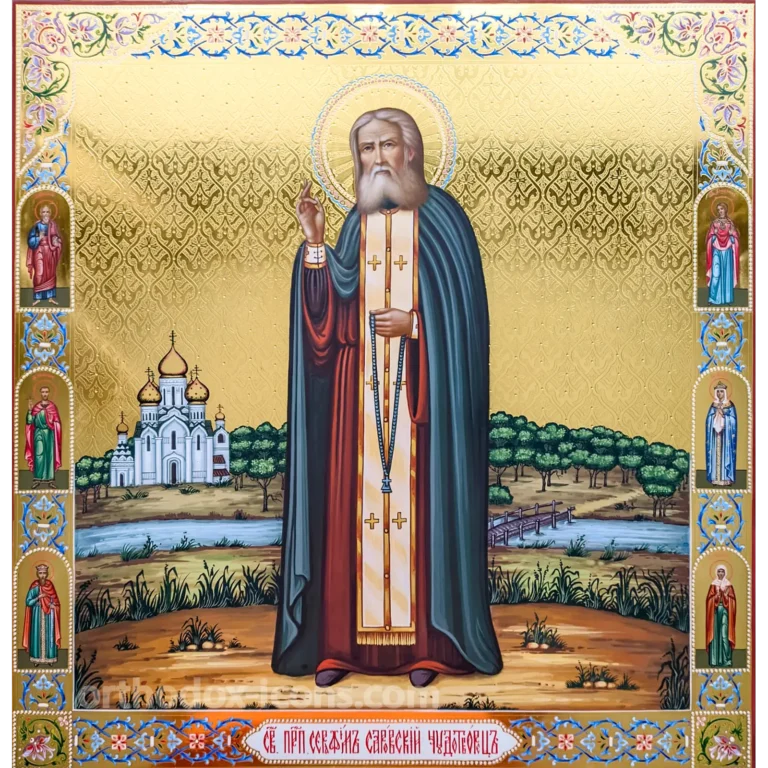
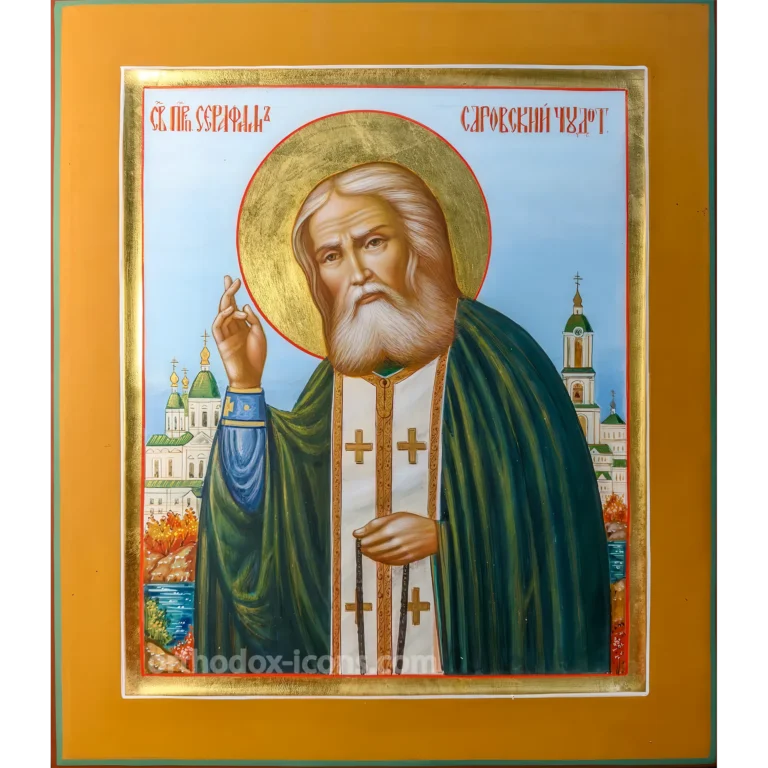
This icon is painted to order in the tradition of hand-painted Orthodox iconography. Saint Seraphim is shown in monastic clothing, with the calm face of an elder who spent his life in prayer, fasting, solitude, and pastoral love. The icon is suitable for a home icon corner, personal prayer, a monastic cell, a parish space, or as a meaningful gift for someone named Seraphim.
The available sizes are 17×21 cm (6.7×8.3 in), 20×24 cm (7.9×9.4 in), 27×31 cm (10.6×12.2 in), and 30×40 cm (11.8×15.7 in). These formats allow the face, monastic garments, prayer beads, blessing gesture, architectural background, inscriptions, and gilded halo to remain clear.
Icon Characteristics
| Name | Sacred Icon of Venerable Seraphim of Sarov |
| Saint | Venerable Seraphim of Sarov |
| Iconographic type | Monastic elder and spiritual father in traditional Orthodox iconography |
| Feast days | January 15, repose; August 1, glorification among the saints |
| Visible features | Monastic garments, blessing gesture, prayer beads, white hair and beard, gilded halo, architectural setting |
| Available sizes | 17×21 cm (6.7×8.3 in), 20×24 cm (7.9×9.4 in), 27×31 cm (10.6×12.2 in), 30×40 cm (11.8×15.7 in) |
Life of Venerable Seraphim of Sarov
Venerable Seraphim of Sarov, in the world Prokhor Isidorovich Moshnin, was born on July 30, 1754, in Kursk, into the family of the pious merchant Isidor Moshnin. From childhood he showed a strong inclination toward prayer and spiritual life. After the death of his father, his mother Agathia raised him in faith and love for God.
In his youth, Prokhor received a good education for his time, but worldly life did not attract him. In 1778, at the age of nineteen, he left his family home and went to the Sarov Hermitage. There he began a long path of spiritual formation. He passed through the stages of monastic life, became a novice, received monastic tonsure with the name Seraphim, and was later ordained hierodeacon and hieromonk.
Saint Seraphim became known for his ascetic way of life. He spent many years in seclusion, prayer, fasting, and spiritual struggle. The well-known ascetic labor of standing on a rock for a thousand days and nights, his strict fasting, and unceasing prayer formed in him deep spiritual strength and wisdom. After years of solitude, the elder began receiving pilgrims as a spiritual father, comforter, and guide.
Spiritual Gifts and Pastoral Care
Venerable Seraphim was known for spiritual insight, compassion, and the ability to comfort those who came to him in sorrow. Many people came to him for advice, blessing, and prayerful support. He greeted visitors with the words “My joy,” which became one of the most recognized expressions of his spiritual warmth.
A special place in his ministry was his care for the Diveyevo women’s monastery. He spiritually guided the sisters and called the monastery a portion of the Mother of God. For the sisters of Diveyevo he gave spiritual instruction centered on prayer, labor, humility, and mutual love.
Accounts of help received through the prayers of Saint Seraphim are numerous in Orthodox tradition. In adapting this for an English-speaking audience, it is important to keep the tone reverent and responsible: the icon is a sacred image for prayer, consolation, repentance, and trust in God, not a promise of automatic healing or a substitute for medical care.
Iconographic Features
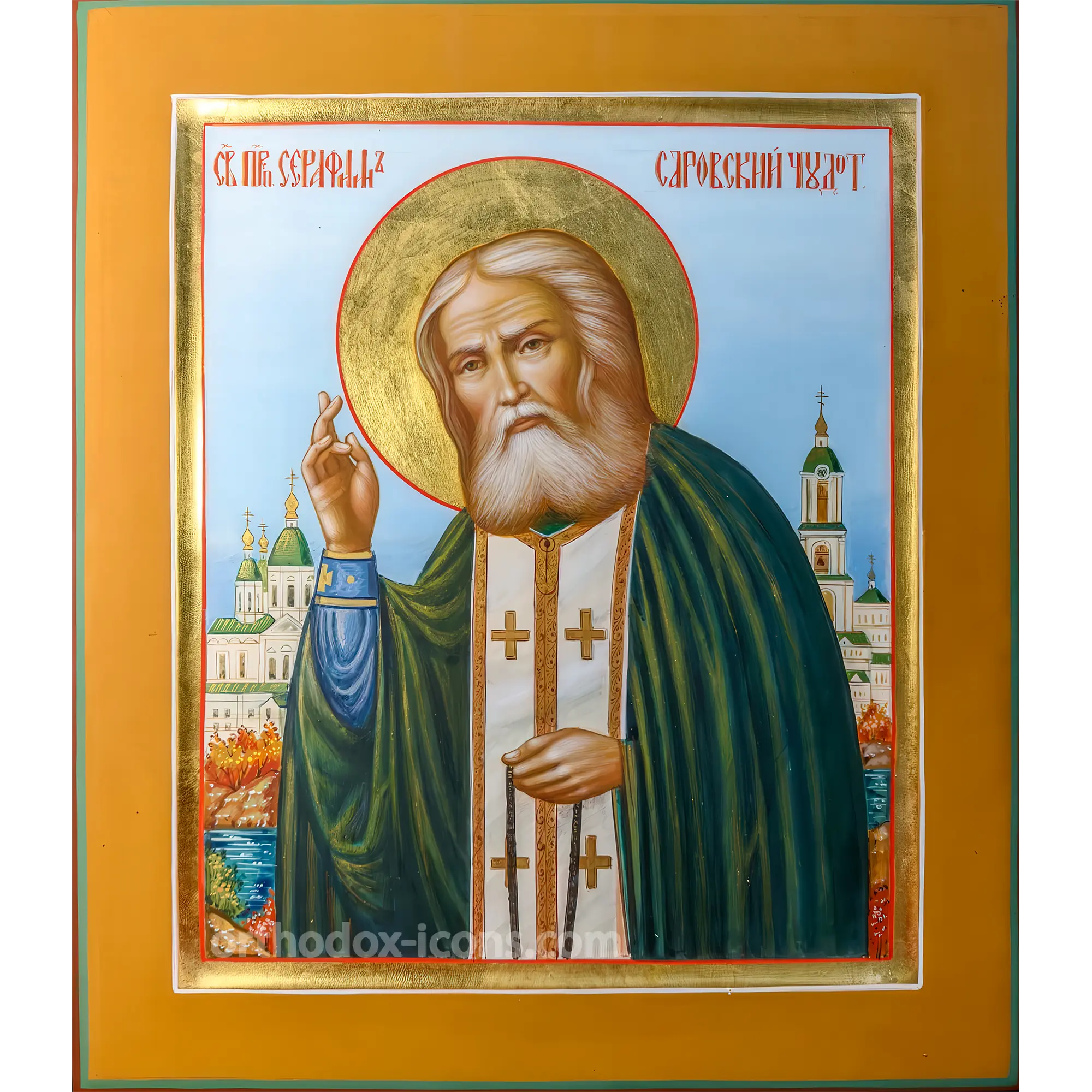
In the presented icon, Venerable Seraphim of Sarov is shown in traditional monastic clothing. The dark green mantle and light undergarment correspond to his monastic rank and ascetic way of life. The architectural surroundings recall the Sarov Hermitage, the place of his spiritual labors.
The right hand of the saint is raised in blessing, pointing to his role as a spiritual elder and guide. In the left hand he holds prayer beads, the sign of unceasing prayer, which formed the foundation of his spiritual life. The white hair and beard emphasize the wisdom acquired through many years of ascetic struggle.
The face of Saint Seraphim is central to the icon. It should convey spiritual depth, wisdom, compassion, and the quiet inner light remembered by those who knew him. The gilded halo around his head, made with 23K gold leaf (960 purity), signifies holiness and glorification in the Kingdom of Heaven.
Prayer Before Saint Seraphim of Sarov
Saint Seraphim is venerated as one of the great spiritual fathers of the Orthodox Church. People turn to his icon with prayers for spiritual guidance, strengthening of faith, consolation in sorrow, peace of heart, support in family difficulties, and help in choosing a right path.
Prayer before this icon may include requests for:
- strengthening of faith and hope in God;
- spiritual guidance and discernment;
- consolation in sorrow and inner difficulty;
- peace of heart and freedom from despair;
- help for families in difficult times;
- support for clergy, monastics, and spiritual mentors;
- humility, patience, prayer, and love for one’s neighbor;
- the grace to acquire the Holy Spirit.
Saint Seraphim’s well-known teaching, “Acquire the Spirit of Peace, and thousands around you will be saved,” remains a central spiritual word for Orthodox Christians. His icon reminds the faithful that Christian joy is not superficial optimism, but the fruit of prayer, repentance, humility, and communion with God.
Mstyora Icon Painting Tradition
The icon is painted in the Mstyora tradition, which has been known since the seventeenth century for refined work, delicacy of line, and spiritual expressiveness. In icons of Saint Seraphim, the iconographer must show not only the external likeness of the elder, but also the inner spiritual state associated with him: peace, warmth, attentiveness, and prayerful depth.
Characteristic features of the Mstyora approach include careful painting of the face, subtle handling of monastic garments, balanced color, precise gilding, and attentive work on small details such as hands, prayer beads, inscriptions, and the architectural background.
For icons of Russian saints, especially those deeply loved by the faithful, this careful approach matters. The image should remain sober, canonical, and prayerful, while still allowing the tenderness and spiritual joy of Saint Seraphim to be felt.
Diveyevo Tradition and Veneration
Venerable Seraphim of Sarov has a special connection with the Diveyevo Monastery, which he spiritually guided and called a portion of the Mother of God. His holy relics are kept at Holy Trinity Seraphim-Diveyevo Monastery in the Nizhny Novgorod region, a place of pilgrimage for Orthodox Christians from many countries.
In Diveyevo, special traditions of prayer connected with Saint Seraphim have been preserved. Pilgrims come to venerate his relics, pray for spiritual help, and remember his teaching on acquiring the Holy Spirit. The icon of Saint Seraphim in a home can serve as a prayerful connection with this living tradition of Orthodox monastic spirituality.
Feast Days and Liturgical Memory
The memory of Venerable Seraphim of Sarov is celebrated twice each year: January 15, the day of his repose, and August 1, the day of his glorification among the saints in 1903. These days are marked by special services in Orthodox churches, with hymns, readings from his life, and prayers asking his intercession before God.
The icon may be ordered as a gift for a name day, baptism, monastic profession, ordination, pilgrimage, seminary graduation, family milestone, or one of the feast days of Saint Seraphim. If the icon is needed for a particular date, it is best to agree on size and decoration in advance.
Who This Icon Is For
The icon of Venerable Seraphim of Sarov is especially meaningful for people named Seraphim. It may be given for baptism, name day, birthday, or another spiritual occasion. It is also appropriate for clergy, monastics, pilgrims to Diveyevo, Orthodox families, graduates of theological schools, and people seeking spiritual guidance.
The image is often chosen for those who need consolation, encouragement, and a reminder of Christian joy. It is also suitable for a family icon corner as one of the central icons of a beloved Russian saint.
For a church, chapel, monastery, or parish room, the icon can be ordered in a larger format. The saint’s image is especially fitting in places where people come for prayer, confession, guidance, and spiritual support.
Materials and Hand-Painted Technique
The icon is painted on a high-quality linden board with a kovcheg and oak splines. The board is prepared with cloth and natural chalk gesso, creating a smooth and durable surface for painting.
The image is painted in egg tempera on natural mineral pigments. This traditional technique allows the iconographer to work in thin layers and preserve clarity in the face, garments, hands, prayer beads, architectural details, inscriptions, and halo. The halo and decorative details are made with 23K gold leaf (960 purity).
The finished icon receives a protective finish. For an individual order, the size, color harmony, inscriptions, dedication on the reverse side, degree of gilding, decorative style, and protective icon case can be discussed before the icon is painted.
Sizes and Custom Options
The icon is available in 17×21 cm (6.7×8.3 in), 20×24 cm (7.9×9.4 in), 27×31 cm (10.6×12.2 in), and 30×40 cm (11.8×15.7 in). For personal prayer and a small home icon corner, 20×24 cm (7.9×9.4 in) or 27×31 cm (10.6×12.2 in) are especially convenient.
For church use, solemn gifts, monasteries, or parish rooms, 30×40 cm (11.8×15.7 in) and larger custom formats can be considered. Larger icons allow the face, hands, monastic garments, prayer beads, architecture, and gilded details to be shown more fully.
Possible custom options include a dedication inscription, a different decorative style, additional gilding, a wooden icon case, or adaptation for a church setting. Production time depends on the chosen size and complexity and is agreed individually.
Blessing and Care
The icon may be blessed in an Orthodox church after it is received, or brought to your parish for blessing. A blessed icon is treated as a sacred image for prayer and for turning to God through the intercession of Saint Seraphim.
A hand-painted icon should be kept away from direct sunlight, moisture, heat sources, soot, and sudden temperature changes. Do not wipe the surface with wet cloths, alcohol, household chemicals, or abrasive materials.
Dust should be removed gently with a dry soft brush or dry cloth without pressure. A wooden glazed icon case is recommended for long-term protection, especially if the icon will be kept near candles or in a place where dust and humidity may vary.
Questions and Answers
Who is shown on the Sacred Icon of Venerable Seraphim of Sarov?
The icon shows Venerable Seraphim of Sarov, a great Russian Orthodox saint, monk, elder, ascetic, spiritual father, and wonderworker.
When is Saint Seraphim of Sarov commemorated?
Saint Seraphim is commemorated on January 15, the day of his repose, and on August 1, the day of his glorification among the saints.
What is Saint Seraphim’s main spiritual teaching?
His teaching centers on acquiring the Holy Spirit, preserving inner peace, living in prayer, humility, and love for one’s neighbor.
Where are the relics of Saint Seraphim of Sarov?
The holy relics of Saint Seraphim are kept at Holy Trinity Seraphim-Diveyevo Monastery in the Nizhny Novgorod region.
What do Orthodox Christians pray for before Saint Seraphim’s icon?
People pray for strengthening of faith, spiritual guidance, consolation in sorrow, peace of heart, family help, and support during illness or inner difficulty.
Who is this hand-painted icon suitable for?
It is suitable for people named Seraphim, clergy, monastics, families, pilgrims to Diveyevo, seminary graduates, and anyone seeking spiritual encouragement.
What sizes are available for this icon?
The available sizes are 17×21 cm (6.7×8.3 in), 20×24 cm (7.9×9.4 in), 27×31 cm (10.6×12.2 in), and 30×40 cm (11.8×15.7 in).
What materials are used for the icon?
The icon is painted on a linden board with oak splines, kovcheg, cloth, natural chalk gesso, egg tempera, mineral pigments, 23K gold leaf (960 purity), and a protective finish.
Can the icon be customized?
Yes. The size, decorative style, inscriptions, dedication on the reverse side, gilding, and protective icon case can be discussed before the icon is painted.
How should a hand-painted Seraphim of Sarov icon be cared for?
Keep the icon away from direct sunlight, moisture, heat, and sudden temperature changes. Dust it gently with a dry soft brush or cloth, without water, alcohol, or household cleaners.
| Dimensions | 17x21cm (6.7×8.3 in), 20x24cm (7.9×9.4 in), 27x31cm (10.6×12.2 in), 30x40cm (11.8×15.7 in) |
|---|---|
| Name | Seraphim |