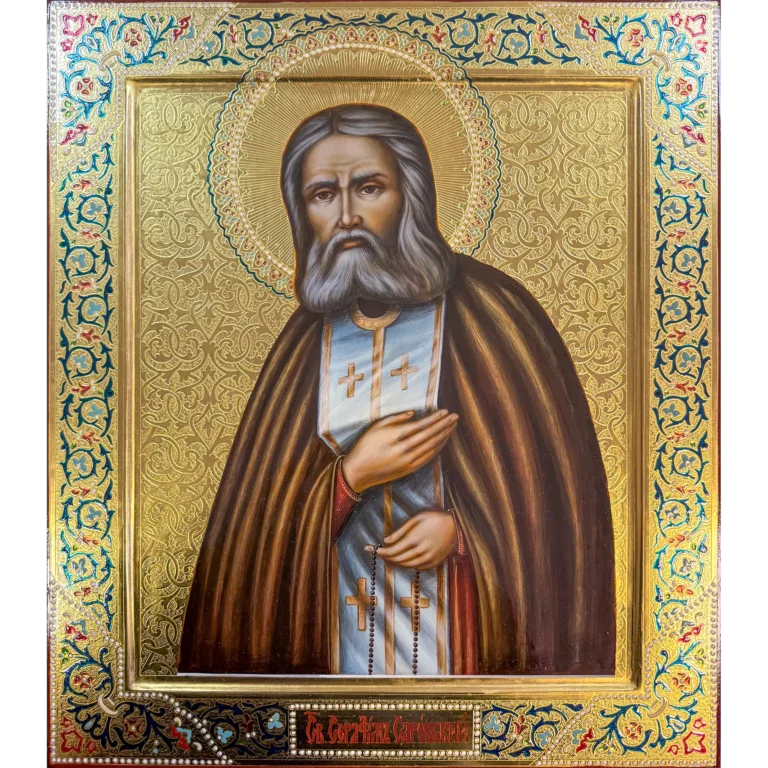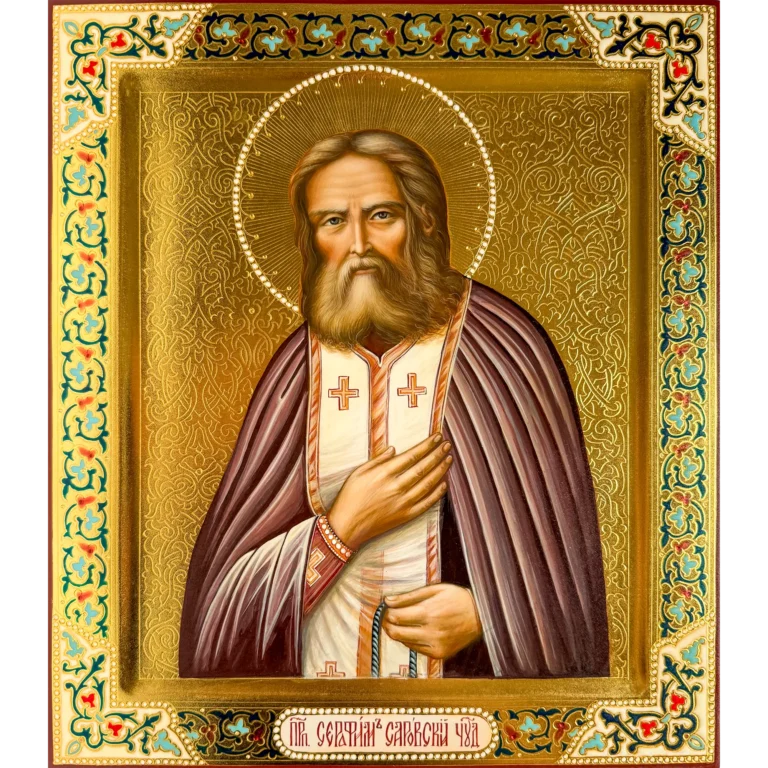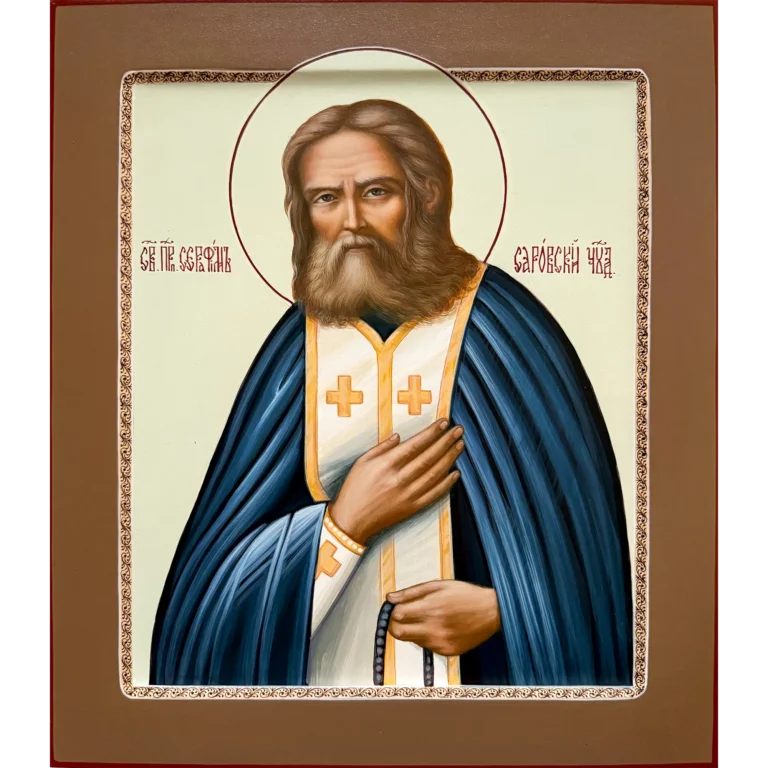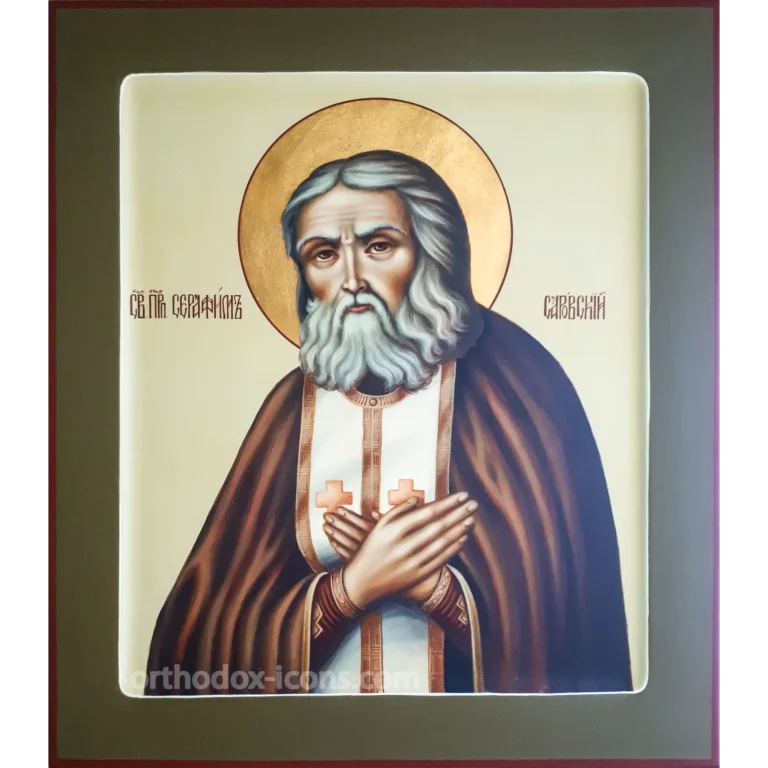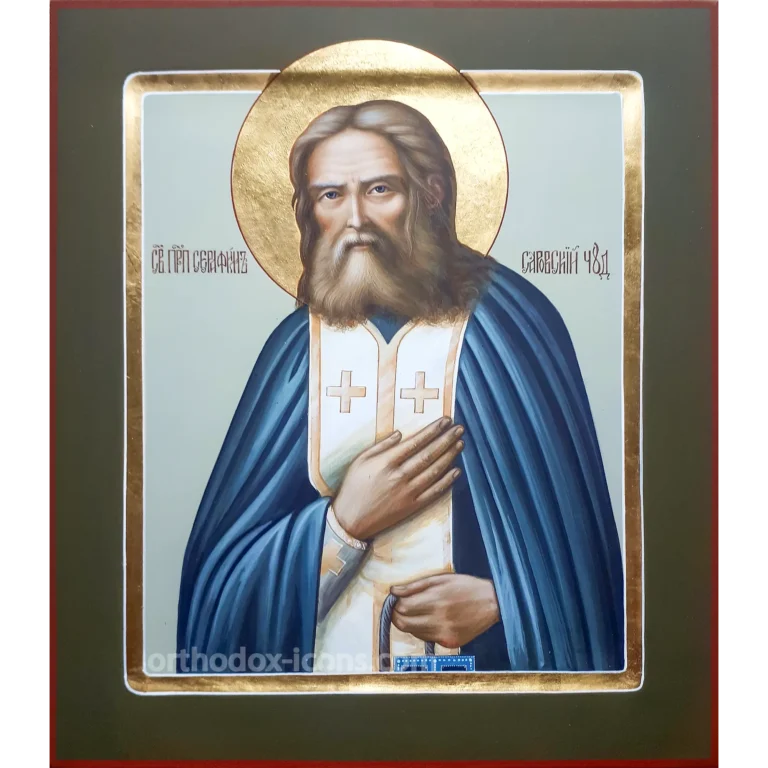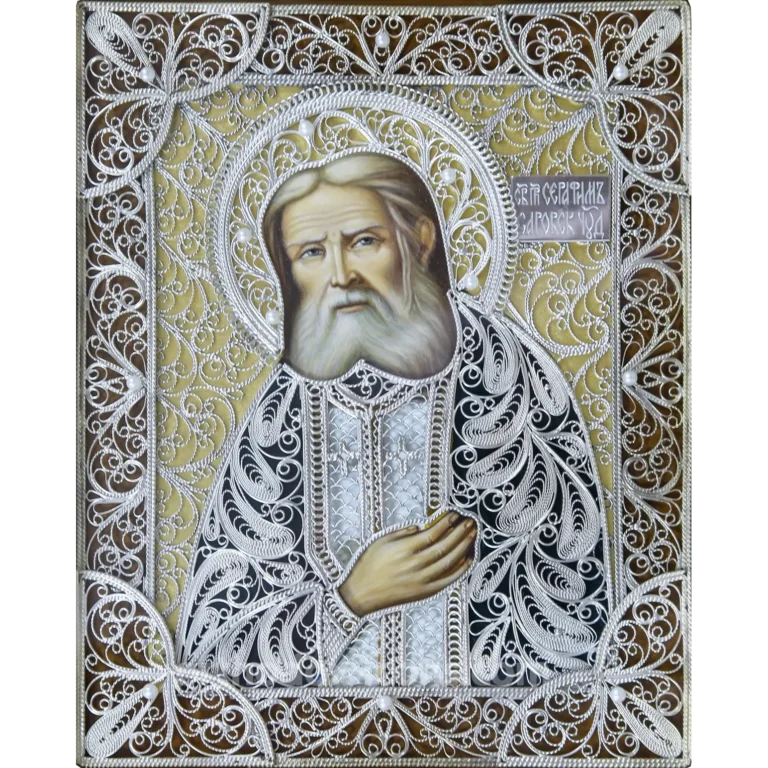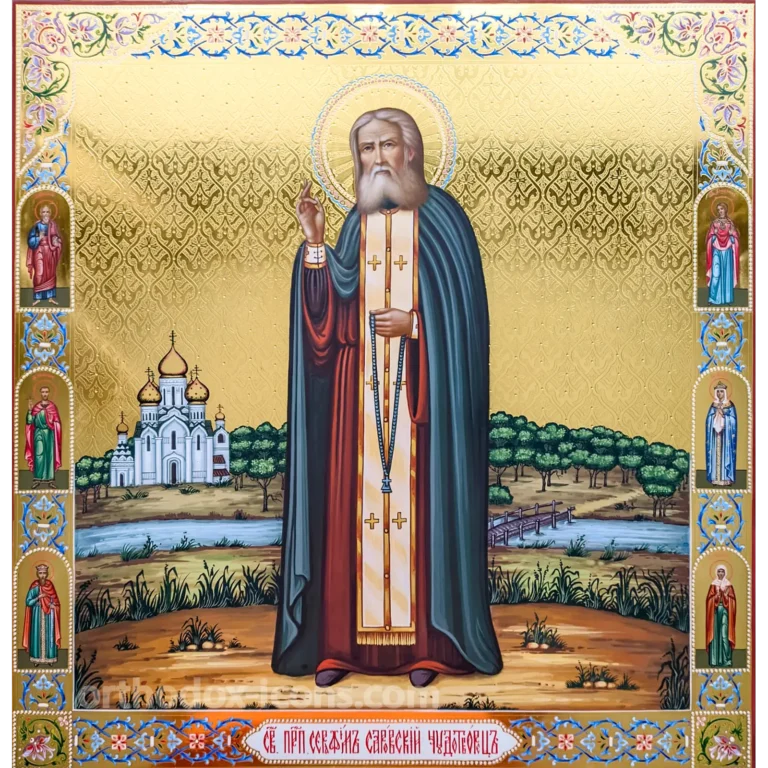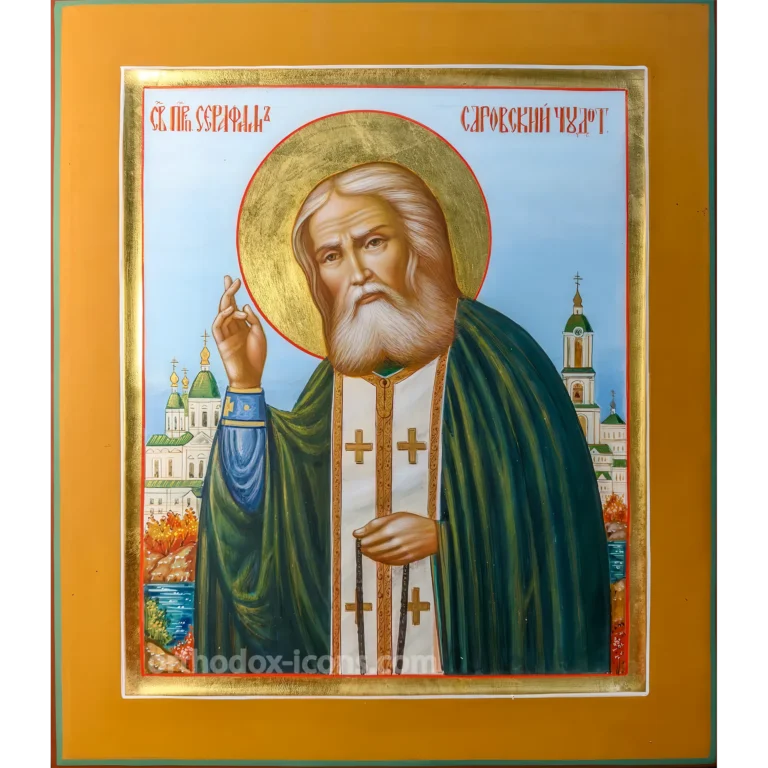
Orthodox Icon Seraphim Sarovskiy
Price range: $550 through $1600
Available sizes: 17×21 cm (6.7×8.3 in), 20×24 cm (7.9×9.4 in), 27×31 cm (10.6×12.2 in), 30×40 cm (11.8×15.7 in), with larger iconostasis sizes available by agreement.
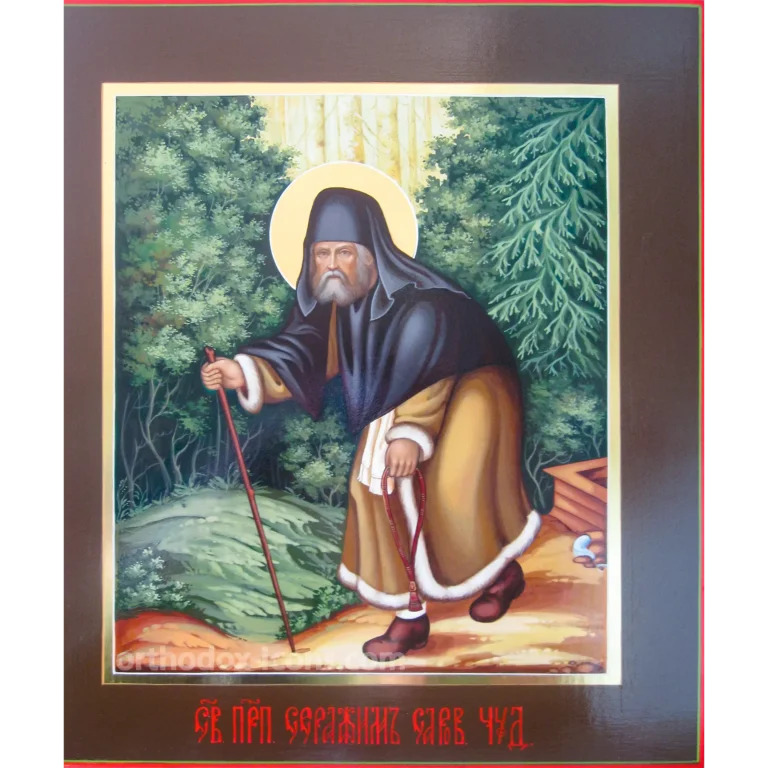
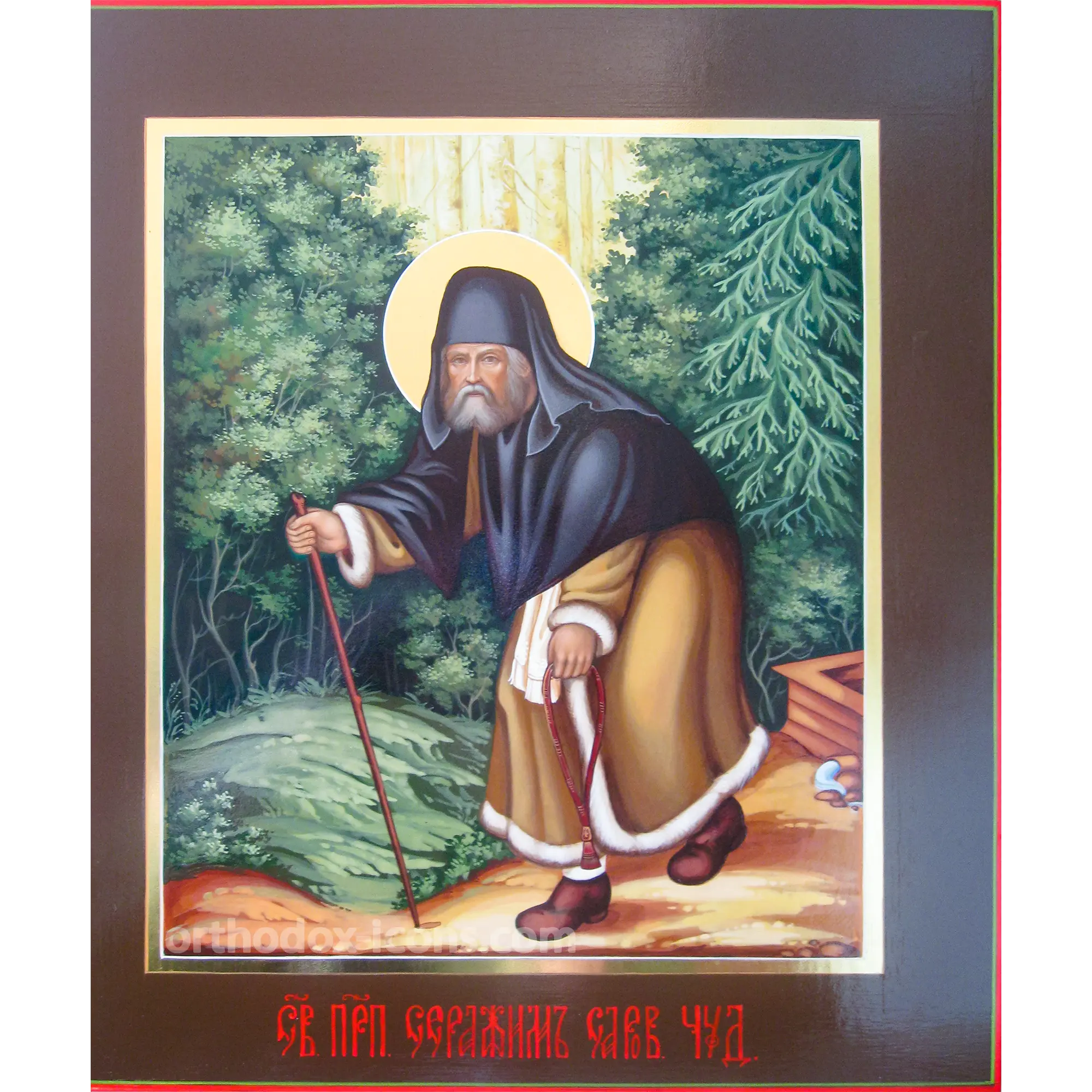
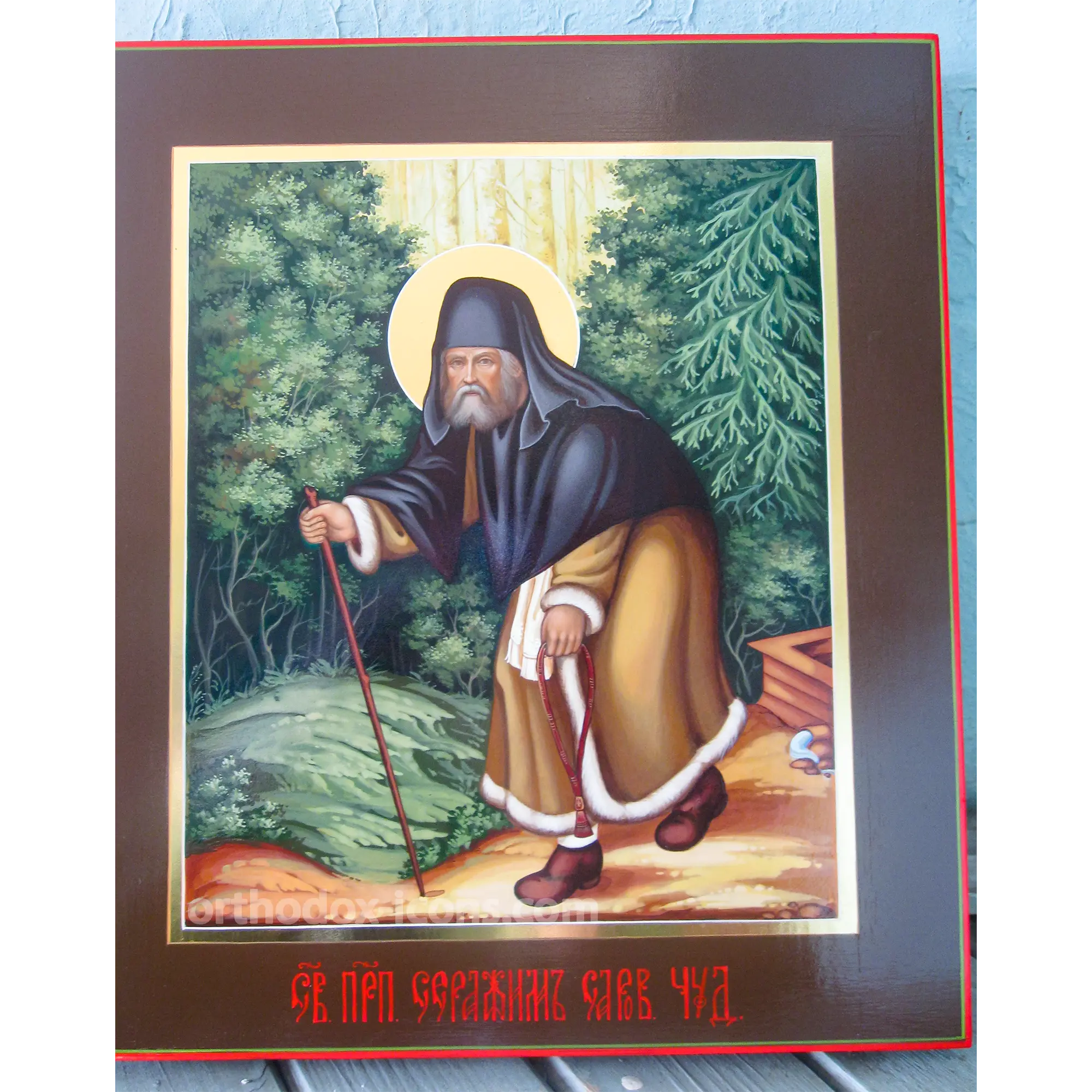
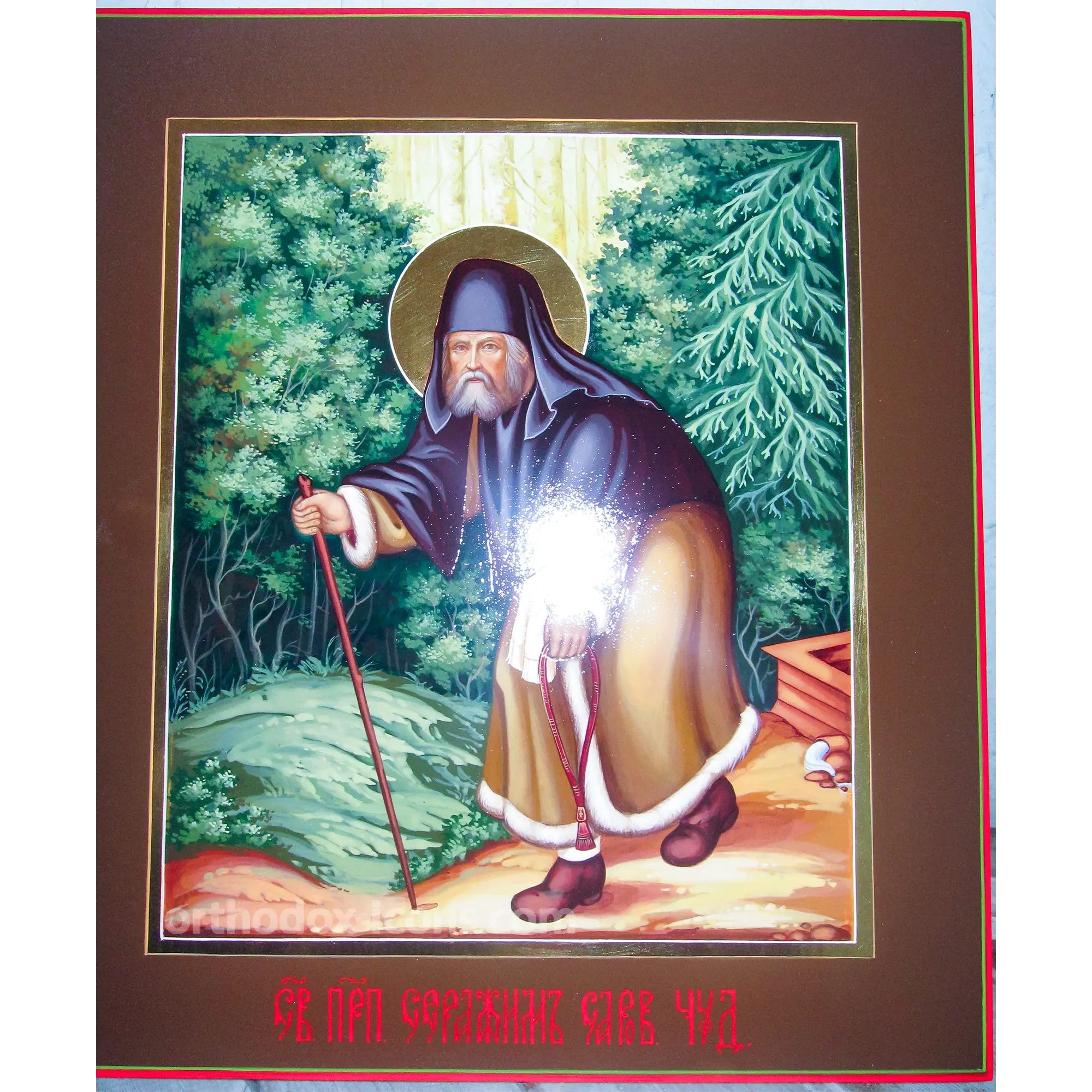
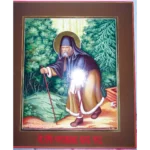
Orthodox Icon Seraphim Sarovskiy is a hand-painted full-length narrative icon of Saint Seraphim of Sarov in the forest hermitage. The saint is shown as a bowed elder walking along a path in the Sarov forest, leaning on a wooden staff and holding a red lestovka prayer rope. Behind him are deep green trees, a sunlit clearing, and the wooden frame of the holy spring.
The icon is painted on a linden board with a kovcheg, oak splines, chalk gesso, mineral egg tempera, 23K gold leaf (960 purity) on the halo and kovcheg frame, and protective varnish. The image is suitable for a home icon corner, monastery, chapel, church, or as a meaningful gift for someone who venerates Saint Seraphim.
It is possible to paint an image in any size to order
Free shipping worldwide
Orthodox Icon Seraphim Sarovskiy is a hand-painted narrative icon of Saint Seraphim of Sarov in the forest hermitage. Unlike a simple frontal image of the saint, this composition opens a whole scene from his ascetic life: the elder walks through the Sarov forest, bent by suffering yet filled with spiritual light, leaning on his staff and holding a prayer rope.
The icon is especially warm and living in character. Saint Seraphim is shown in simple hermit clothing rather than festive liturgical vestments. Around him is a detailed forest landscape with deep green trees, a sandy path, a sunlit clearing, and the wooden frame of the holy spring. The gold halo shines against the natural background, reminding the viewer that holiness can be revealed in the hidden labor of prayer, silence, humility, and love.
Composition and Forest Landscape
The main feature of this icon is its narrative depth. Behind Saint Seraphim the painter does not place a plain symbolic field, but the living landscape of the Sarov wilderness. Tall firs and leafy trees frame the scene, the ground is covered with moss and grass, and the path is painted in warm sandy tones.
The forest is not only a natural setting. It speaks of the saint’s withdrawal from worldly noise, his years of solitude, and his hidden struggle before God. At the same time, the bright clearing behind him suggests divine grace transforming even the deep wilderness into a place of prayer.
The Holy Spring
Near the path the icon painter shows a small wooden frame with blue water and a dipper. This detail refers to the spring associated with Saint Seraphim of Sarov and with the devotion of pilgrims who come to Diveyevo and the holy places connected with him.
In the icon, the spring makes the composition more than a landscape. It connects the visible forest with the saint’s spiritual labor, his care for suffering people, and the memory of pilgrims who seek prayer, consolation, and healing through God’s mercy and the saint’s intercession.
The Elder with Staff and Lestovka
Saint Seraphim is shown full-length, walking toward the viewer. His body is strongly bent. This is not decorative exaggeration, but a reference to his life: after a violent attack in the forest, the saint endured serious bodily injury and was left permanently bowed, often needing support while walking.
In his right hand he holds a tall wooden staff. In his left hand he holds a red lestovka, an Old Russian form of prayer rope used for the Jesus Prayer. These details make the icon especially concrete: it shows Saint Seraphim as a real ascetic, wounded and physically weak, yet spiritually strong and full of compassion.
Clothing of the Forest Hermit
The saint is not dressed in rich ceremonial robes. He wears the simple clothing of a hermit: an ocher-toned outer garment, a short dark monastic mantle over the shoulders, and a dark skufia-like head covering. A broad white cloth is tied at his waist, replacing a more formal belt.
The white cloth is an important visual detail. It recalls humility and service, and it may remind the viewer of the Gospel image of Christ girding Himself with a towel before washing the feet of His disciples. In this icon, the clothing tells the same truth as the saint’s posture: holiness is shown through humility, prayer, and patient bearing of the cross.
Face and Gold Halo
The face of Saint Seraphim is painted in a realistic academic manner, following the later portrait tradition associated with his iconography. The silver beard, deep lines of age, and wise gaze are written carefully, but the purpose is not ordinary portraiture. The face is meant to reveal kindness, forgiveness, and the Paschal joy for which the saint is remembered.
A smooth halo of 23K gold leaf (960 purity) shines around his head and contrasts with the dark green forest. The icon has dark chocolate-brown fields, and the saint’s name is written in red Church Slavonic lettering along the lower field. The gilded halo and restrained borders keep the narrative landscape within the language of Orthodox icon painting.
Saint Seraphim in the Sarov Forest
Saint Seraphim of Sarov, born Prokhor Moshnin in 1754, spent many years in ascetic labor connected with the Sarov forest. He lived in solitude, prayed, fasted, practiced silence, and sought the grace of the Holy Spirit. Orthodox tradition remembers his thousand days and nights of prayer on a stone and his great forgiveness after being attacked and injured.
Only after long years of hidden struggle did he receive people as an elder. Those who came to him found counsel, consolation, and prayer. His greeting, “My joy,” and his teaching on acquiring the Holy Spirit remain central to his memory in the Orthodox Church.
Prayer Before This Icon
Before an icon of Saint Seraphim, Orthodox Christians ask his intercession for spiritual peace, strength during illness, consolation in grief, help against despondency, family harmony, and guidance before important decisions. Because this icon shows him as a suffering yet joyful elder, it is especially fitting for people who need courage, patience, and hope.
The icon is not a charm or a substitute for church life. It is a sacred image that helps the believer pray with attention, turn to God, and ask for the saint’s intercession with humility and trust.
Mstyora Icon-Painting Materials
This icon is made by hand according to traditional Mstyora icon-painting methods. The base is a solid linden wood board with a carved kovcheg and oak splines on the reverse side. The board is prepared with chalk gesso, carefully polished, and painted in mineral egg tempera.
The halo and the frame of the kovcheg are gilded with 23K gold leaf (960 purity). The finished icon is protected with varnish. Since the image is painted by hand, small differences in the trees, spring, path, brown fields, facial expression, and gilded details are natural and show the individuality of each finished icon.
Available Sizes
This icon is available in 17×21 cm (6.7×8.3 in), 20×24 cm (7.9×9.4 in), 27×31 cm (10.6×12.2 in), and 30×40 cm (11.8×15.7 in). Larger church and iconostasis sizes can be discussed individually before the icon is painted.
The smaller formats are suitable for a personal prayer corner or name-day gift. The larger sizes allow the forest landscape, the spring, the staff, the lestovka, and the saint’s face to be seen with greater clarity.
Free international shipping is included. Payment is made after you receive and approve the icon.
Icon Characteristics
| Name | Orthodox Icon Seraphim Sarovskiy |
| Iconographic type | Full-length narrative icon of Saint Seraphim in the Sarov forest |
| Painting style | Academic realism within Orthodox icon painting |
| Main details | Forest landscape, holy spring, staff, red lestovka, simple hermit clothing, gold halo |
| Board | Linden wood, kovcheg, oak splines, chalk gesso |
| Painting materials | Mineral egg tempera, 23K gold leaf (960 purity), protective varnish |
| Available sizes | 17×21 cm, 20×24 cm, 27×31 cm, 30×40 cm; larger iconostasis sizes by agreement |
Questions and Answers
Why is Saint Seraphim shown bent over?
This reflects a well-known detail from his life. After he was attacked and badly injured in the forest, Saint Seraphim remained physically bent and often walked with support from a staff or tool.
What does the white cloth at his waist mean?
The white cloth recalls the humility of service. It also visually echoes the Gospel image of Christ girding Himself with a towel before washing the disciples’ feet.
What is Saint Seraphim holding in his left hand?
He holds a lestovka, an Old Russian form of prayer rope. It is connected with the Jesus Prayer and with constant remembrance of God.
What is the wooden structure near the path?
It represents the spring associated with Saint Seraphim of Sarov. In the icon it connects the forest landscape with the saint’s ascetic life and with the devotion of pilgrims.
Why does this icon have a landscape instead of a full gold background?
This is a narrative icon. The forest landscape shows the setting of Saint Seraphim’s hermit life and helps the viewer understand the historical and spiritual context of the image.
What does the gold halo mean?
The gold halo, made with 23K gold leaf, signifies the saint’s glorification in the Church and the divine light that shines through holy life.
What do Orthodox Christians ask Saint Seraphim to pray for?
They ask his intercession for spiritual peace, strength in illness, consolation in sorrow, help against despondency, family harmony, and guidance in difficult decisions.
What materials are used for this icon?
The icon is painted on a linden wood board with a kovcheg, oak splines, chalk gesso, mineral egg tempera, 23K gold leaf (960 purity), and protective varnish.
Can this icon be given as a gift?
Yes. It is suitable for a person named Seraphim, for parents or grandparents, for someone enduring illness or grief, and for a home, chapel, monastery, or parish.
How should this hand-painted icon be cared for?
Keep it away from moisture, direct sun, heat, and sudden temperature changes. Dust it gently with a dry soft cloth or brush, without rubbing the painted or gilded areas.
| Dimensions | 17x21cm (6.7×8.3 in), 20x24cm (7.9×9.4 in), 27x31cm (10.6×12.2 in), 30x40cm (11.8×15.7 in) |
|---|---|
| Name | Seraphim |