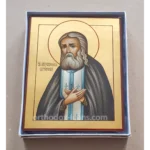
Orthodox Icon St. Seraphim Sarovskiy
Price range: $600 through $2000
Available sizes: 17×21 cm (6.7×8.3 in), 20×24 cm (7.9×9.4 in), 27×31 cm (10.6×12.2 in), 30×40 cm (11.8×15.7 in), with larger church and iconostasis sizes available by agreement.
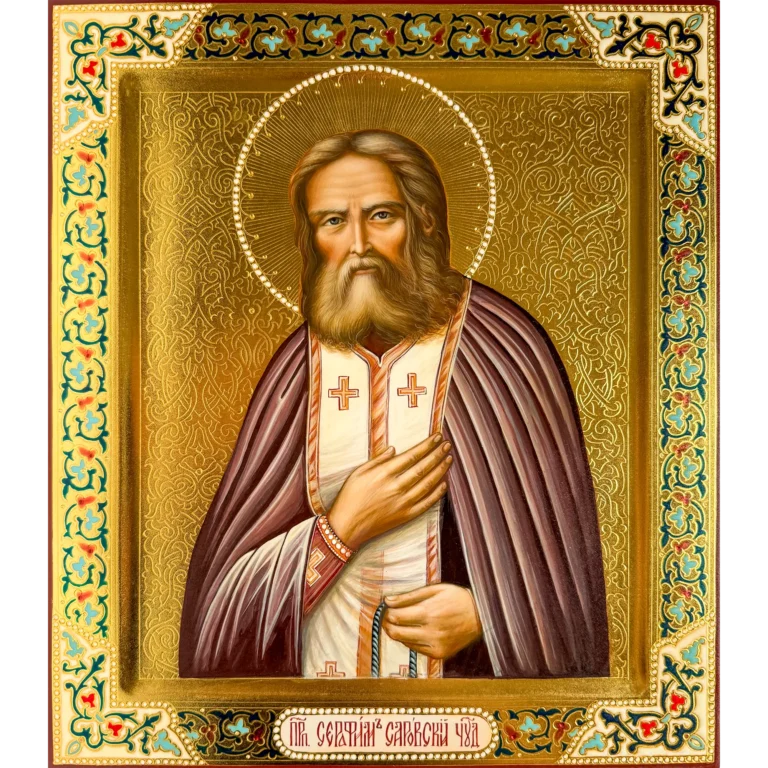
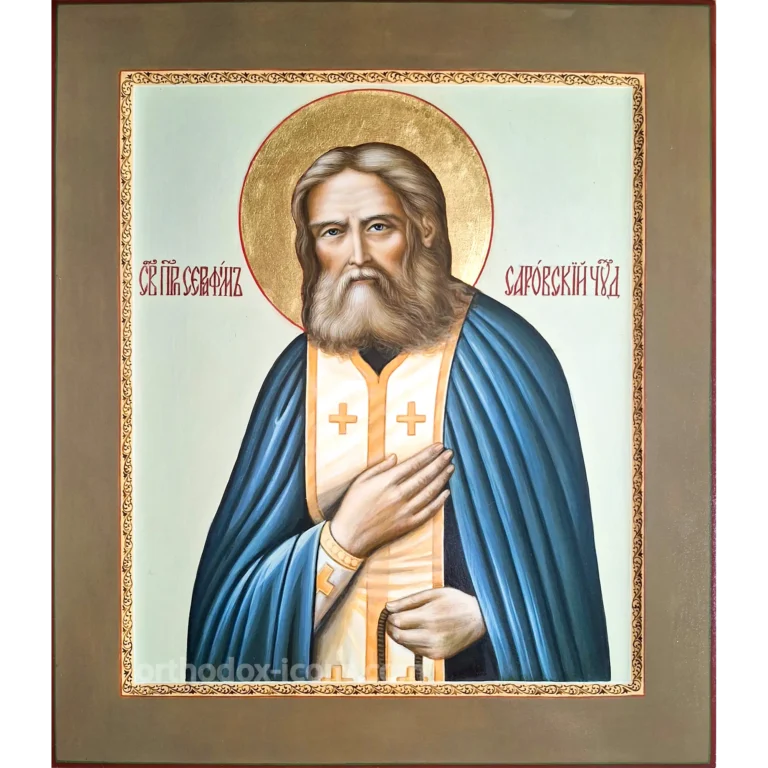
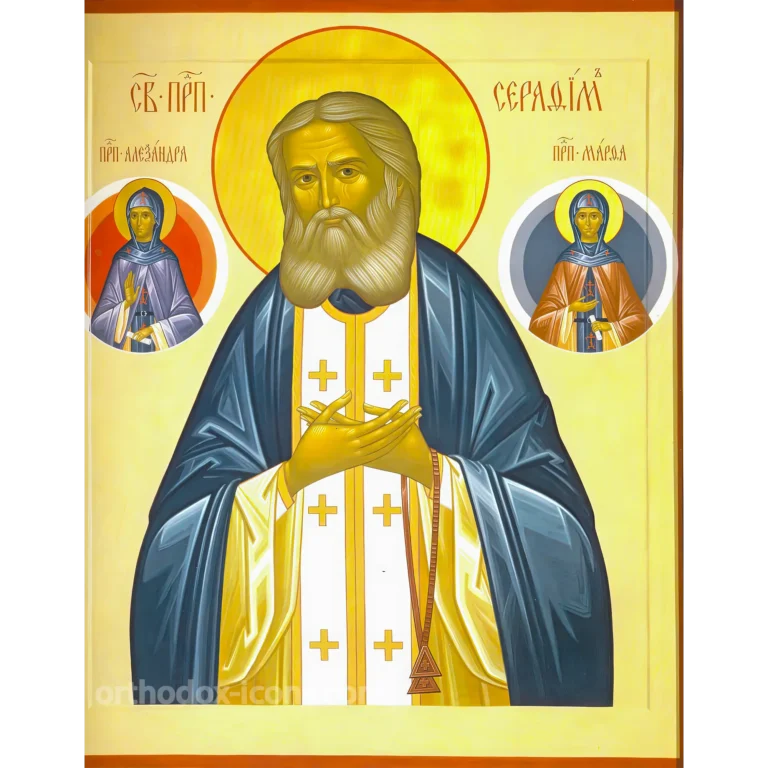
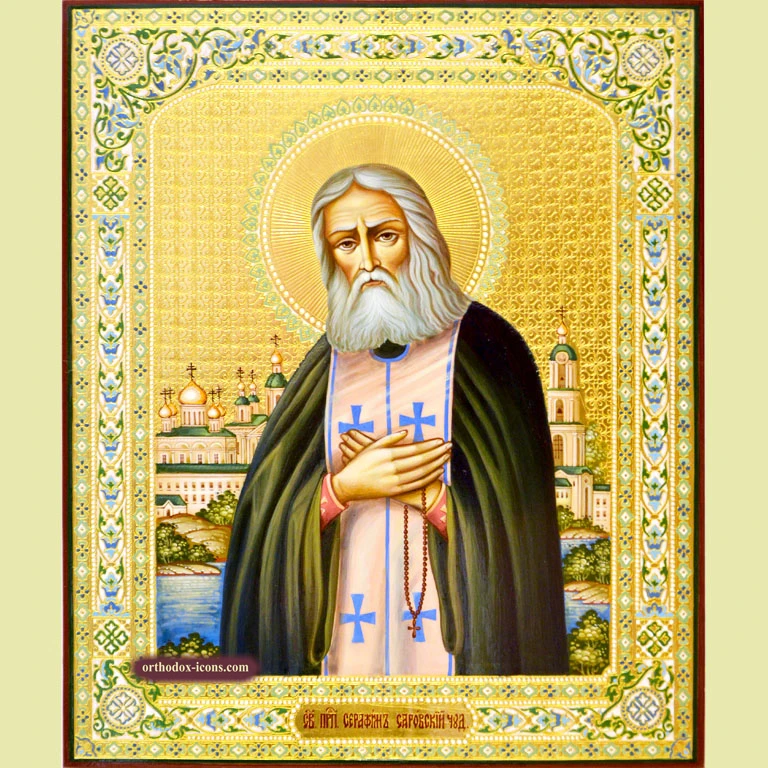
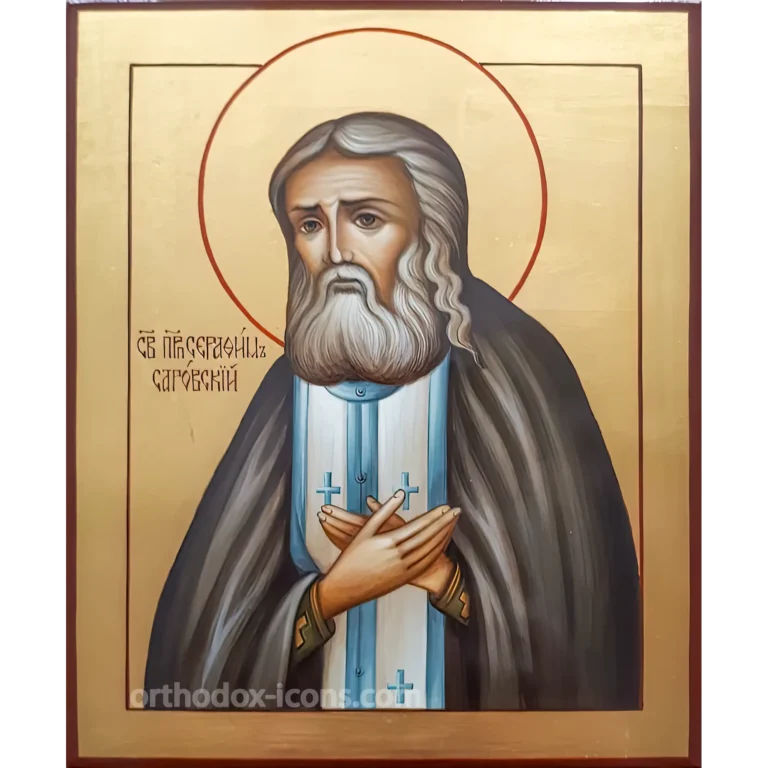
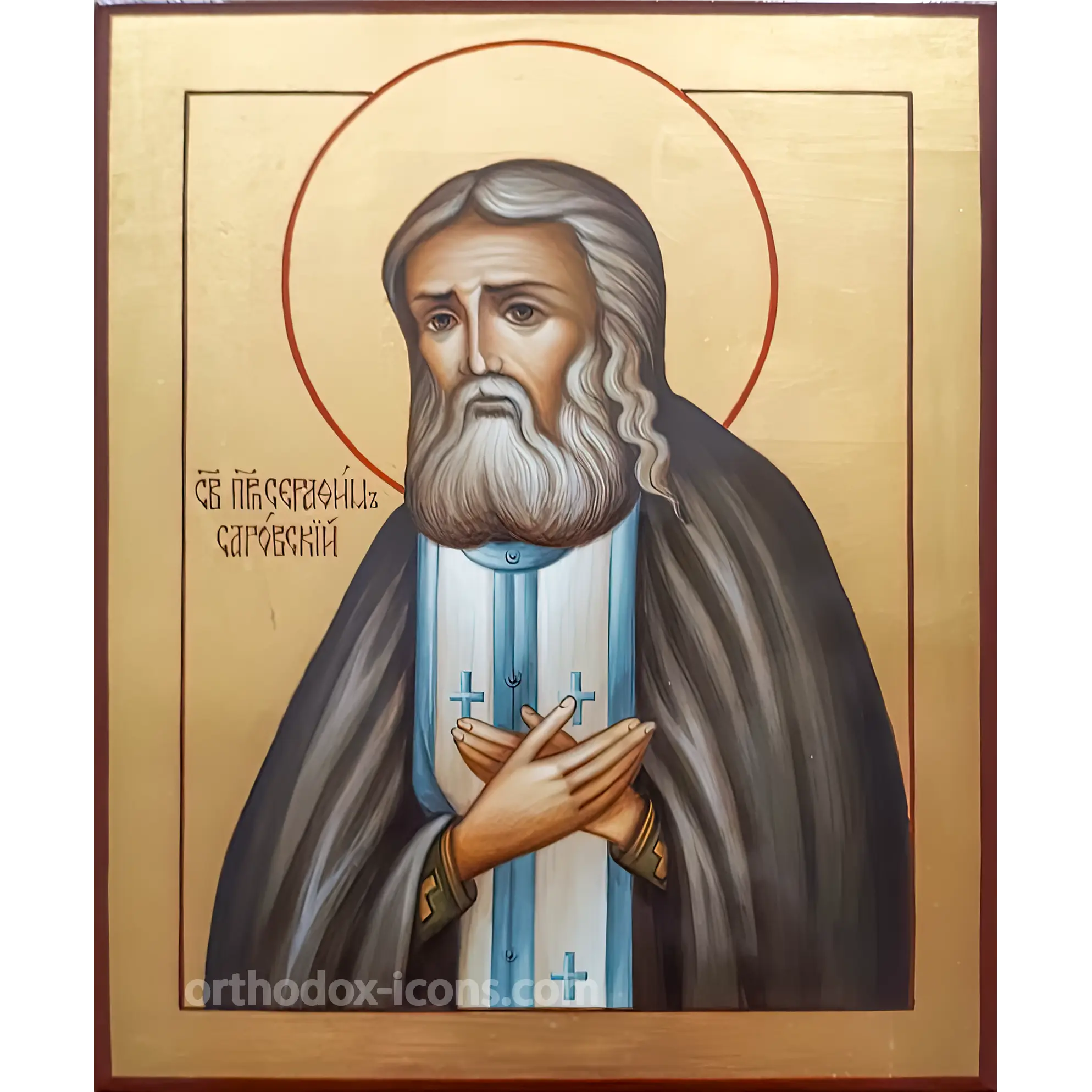
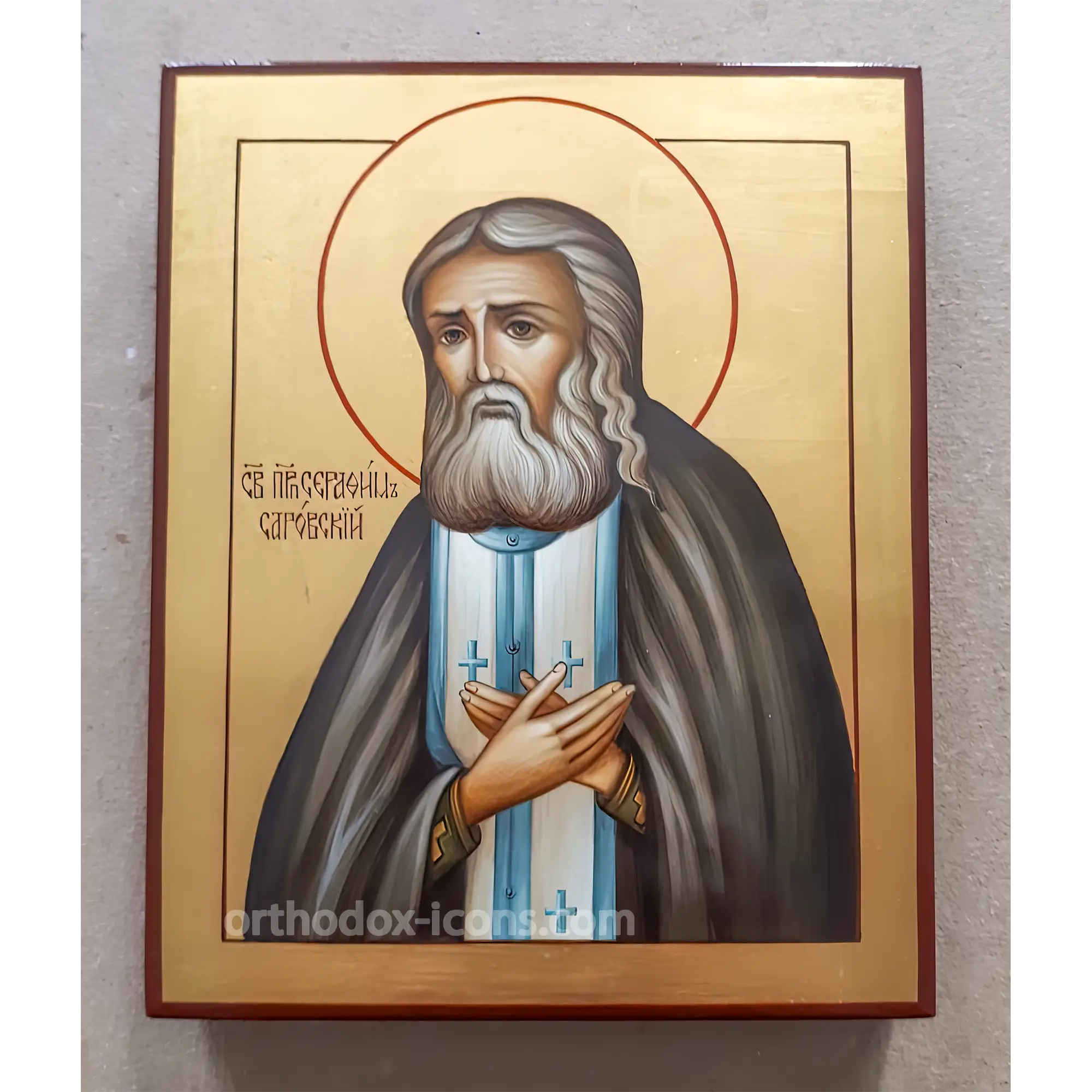
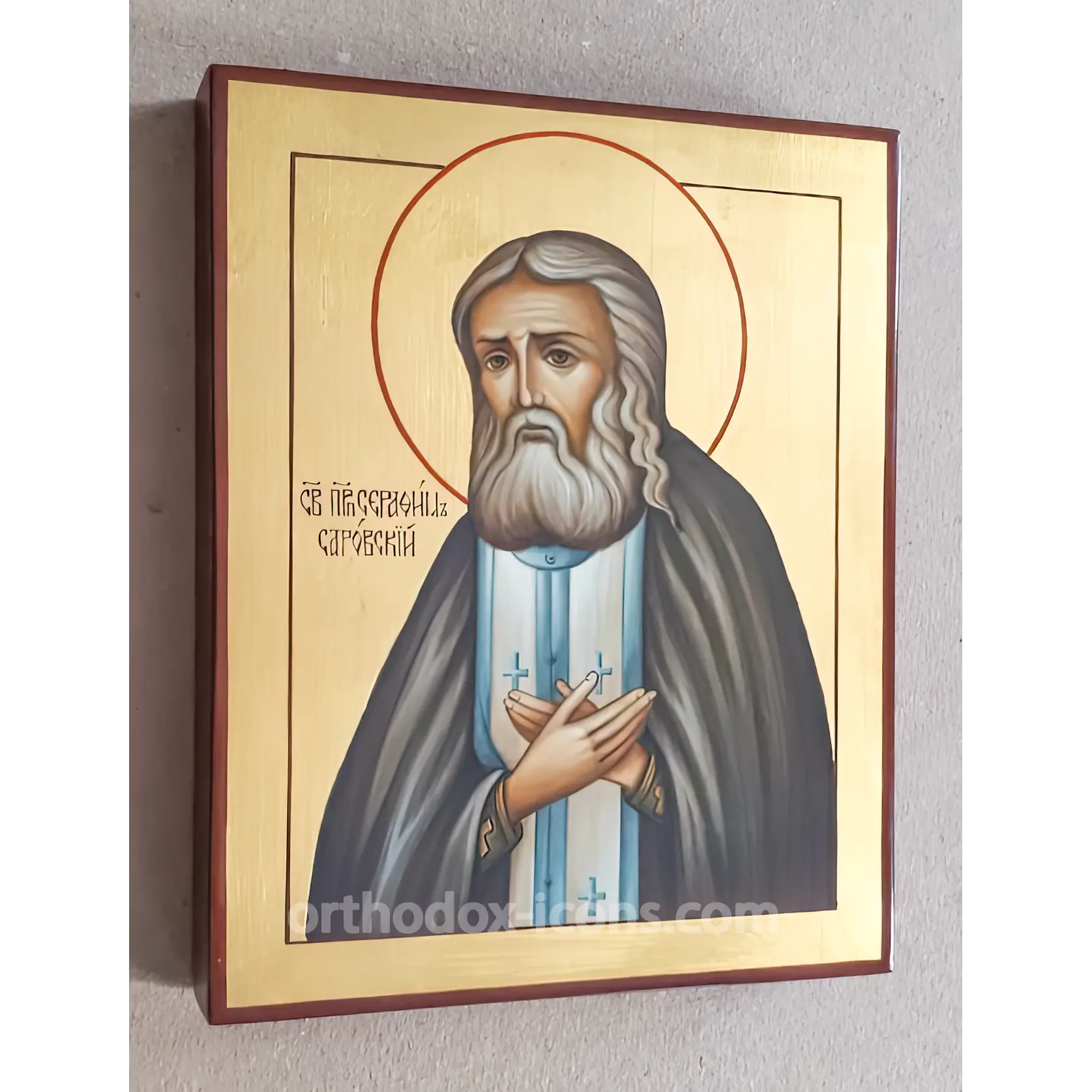
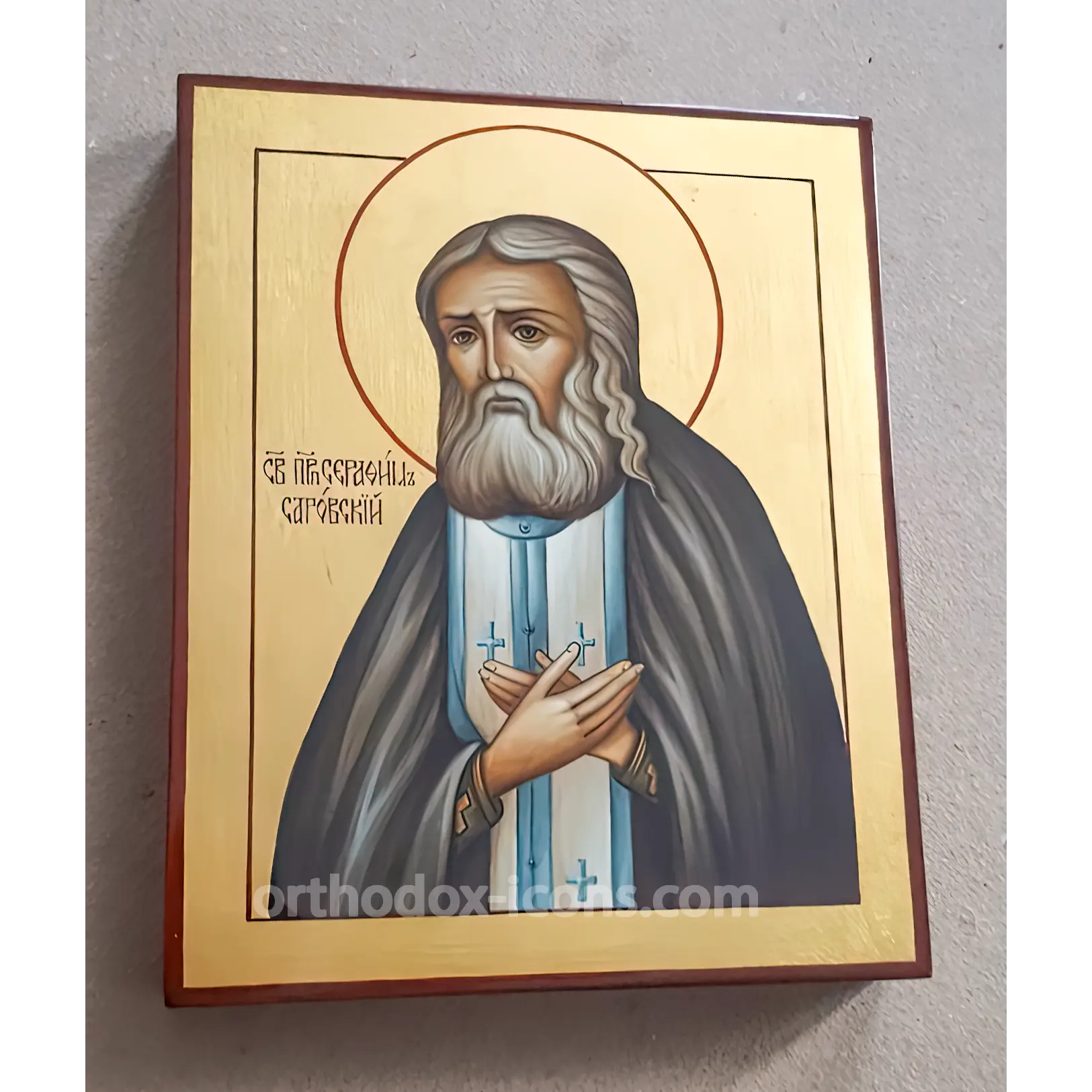
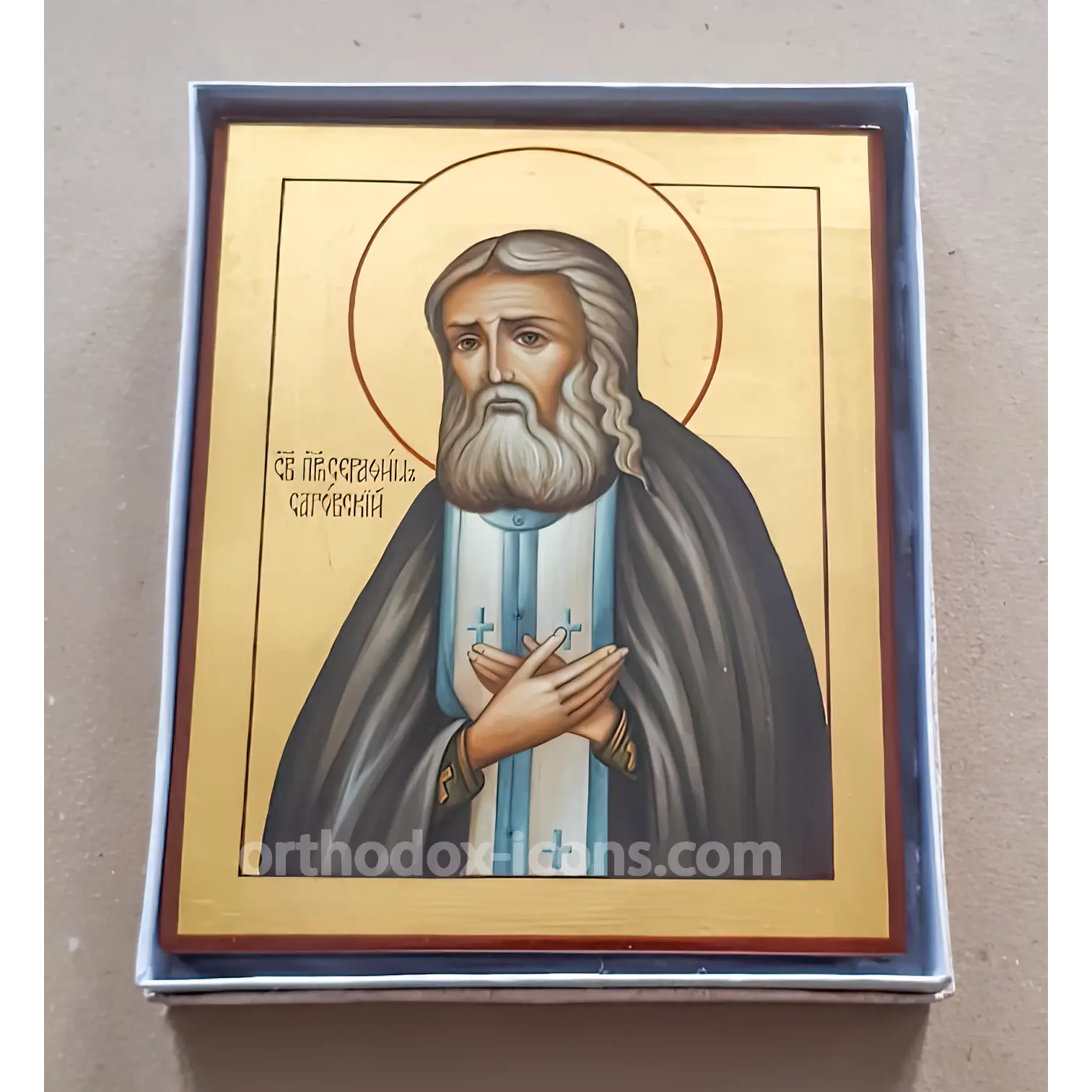
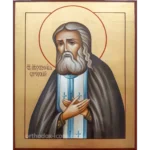
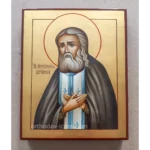
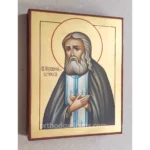
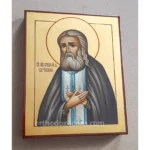
Orthodox Icon St. Seraphim Sarovskiy is a hand-painted waist-length icon of Saint Seraphim of Sarov, the beloved Russian elder, wonderworker, and comforter of the sorrowful. The saint is shown in a dark monastic mantle and a light epitrachelion with crosses, with his hands folded crosswise on his chest. The gold background, large halo, and restrained composition emphasize prayer, humility, and spiritual concentration.
The icon is painted on a linden wood board with oak splines, natural chalk gesso, egg tempera, and gold leaf on the background and halo. It is suitable for a home icon corner, a family prayer space, a chapel, a church, or as a name-day icon for someone named Seraphim.
It is possible to paint an image in any size to order
Free shipping worldwide
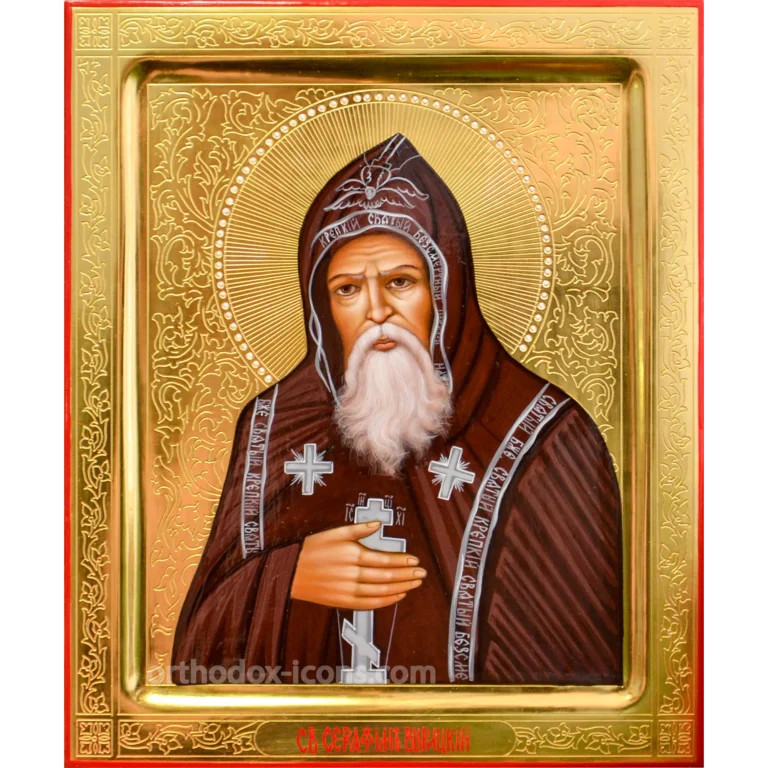
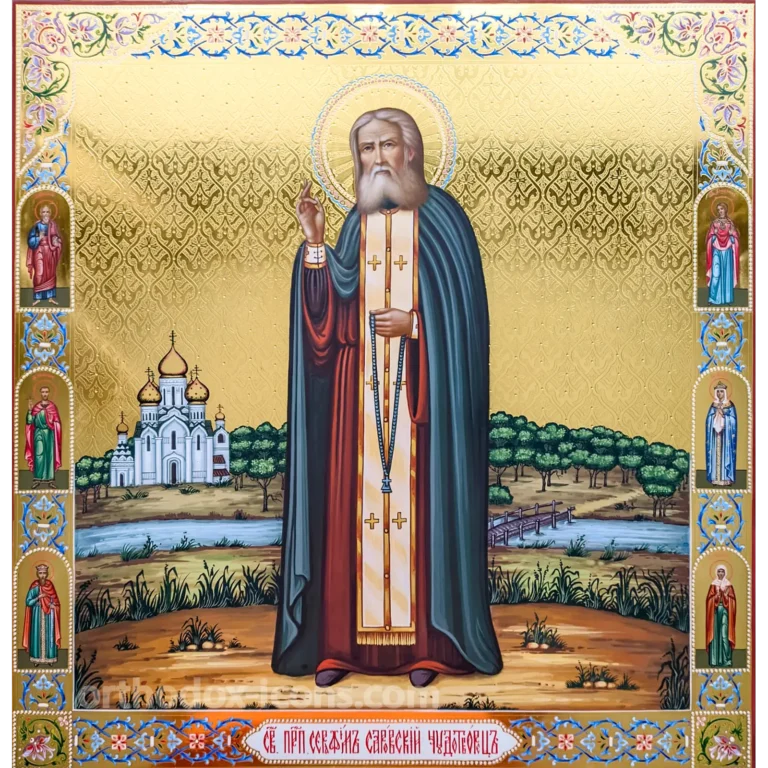
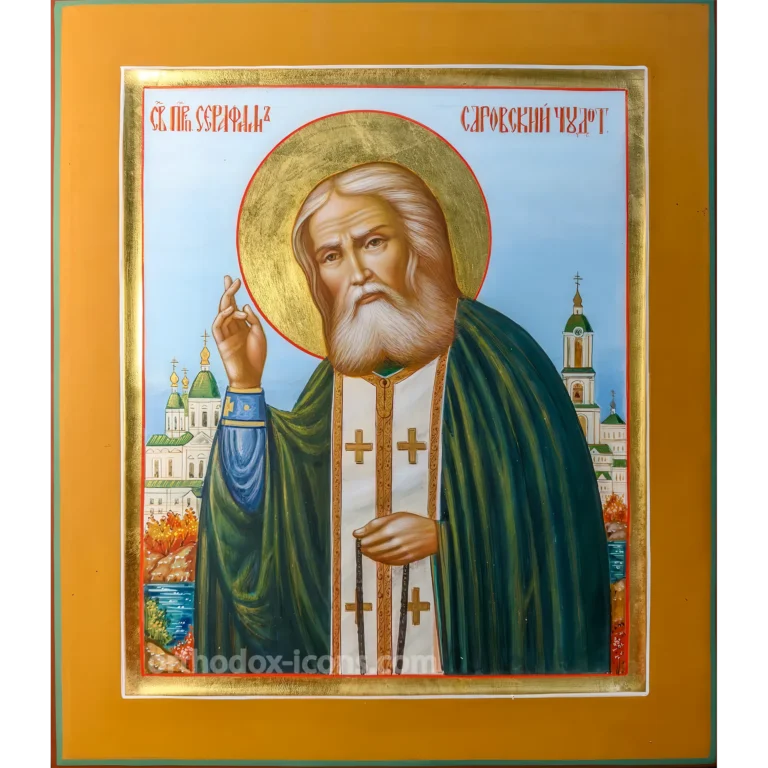
Orthodox Icon St. Seraphim Sarovskiy is a hand-painted icon of Saint Seraphim of Sarov, one of the most loved Russian Orthodox saints. He is venerated as a great elder, a monk of deep prayer, a wonderworker, and a comforter of the sorrowful. Orthodox Christians turn to him for spiritual joy, consolation in illness and grief, strengthening of faith, patience, humility, and peace within the family.
In this icon Saint Seraphim is shown waist-length, in a dark monastic mantle and a light epitrachelion with crosses. His hands are folded crosswise on his chest, and the gold background with a large halo gives the whole image a strict, prayerful, and concentrated character. The composition is restrained: the viewer’s attention is drawn to the face of the elder, his folded hands, the priestly vestment, and the quiet spiritual presence of the saint.
Icon for Prayer and Veneration
This icon is well suited for a home icon corner, a personal prayer shelf, a monastic cell, a chapel, a church, or an iconostasis row. It may be chosen for a family that prays for sick or elderly relatives, for peace at home, for children, for reconciliation, or for spiritual support in a difficult season of life.
It is also a meaningful name-day icon for a man or boy named Seraphim. The image may be given for baptism, a name day, a birthday, a jubilee, entrance into theological study, the beginning of an important life stage, or simply as a prayerful family gift.
Who Saint Seraphim of Sarov Is
Saint Seraphim of Sarov, born Prokhor Moshnin in Kursk in the eighteenth century, entered the Sarov monastery and lived a path of obedience, fasting, solitude, prayer, and spiritual labor. His life became a witness to humility, trust in God’s providence, and love for those who came to him in need.
After many years of hidden ascetic struggle, Saint Seraphim received people as an elder. They came to him for counsel, consolation, and prayer. He is remembered for his Paschal greeting, his tenderness toward the suffering, and his teaching that the purpose of Christian life is the acquisition of the Holy Spirit.
Monastic Mantle and Epitrachelion
The dark monastic mantle speaks of the saint’s renunciation of worldly vanity and his life of prayer. In this icon the dark garment does not make the image gloomy; instead, it helps the light epitrachelion, the face of the saint, and the gold background stand out more clearly.
The light epitrachelion with crosses is an important detail. It recalls Saint Seraphim’s priestly and spiritual service, his pastoral care, and his love for people who came to him for confession, consolation, advice, and prayer. The crosses on the vestment also strengthen the theme of humble service and spiritual responsibility.
Folded Hands and Prayer of the Heart
The hands folded crosswise on the chest are connected with prayer of the heart, repentance, humility, and inward attention. This gesture gives the icon a deeply personal tone. Saint Seraphim is not presented as a distant historical figure, but as a living intercessor to whom a believer may turn in sickness, anxiety, sorrow, despondency, and uncertainty.
The gesture also reminds the viewer that true spiritual help begins with the turning of the heart toward God. The icon invites quiet prayer, not superstition. It helps the believer ask for the saint’s intercession while learning peace, patience, repentance, and joy in Christ.
Gold Background and Halo
The gold background and large halo point to the saint’s glorification in the Church. In Orthodox iconography, gold is not used merely as decoration. It suggests the uncreated light of the Kingdom of God and separates the sacred image from ordinary portraiture.
Here the gold is used in a calm and strict way. It frames the saint, gives the composition solemnity, and supports the prayerful center of the icon without distracting from the face, hands, and vestments.
Materials and Hand-Painted Work
The icon is painted on a solid linden wood board strengthened with oak splines. Linden is traditionally valued in icon painting because it provides a stable, even surface for careful preparation. The painting ground is natural chalk gesso, and the image is written in egg tempera, the classic technique of Orthodox iconography.
Gold leaf is used for the background and halo. The hand-painted tempera allows the icon painter to convey the softness of the saint’s face, the depth of the dark mantle, the light tones of the epitrachelion, the clarity of the crosses, and the quiet dignity of the composition. Since each icon is painted by hand, small differences in expression, color, inscriptions, and gilding are natural.
Available Sizes
This icon is available in 17×21 cm (6.7×8.3 in), 20×24 cm (7.9×9.4 in), 27×31 cm (10.6×12.2 in), and 30×40 cm (11.8×15.7 in). Larger church and iconostasis sizes can be made by individual agreement.
The 17×21 cm size is suitable for a small prayer shelf, personal corner, bedroom, study, or compact name-day gift. The 20×24 cm size is a balanced home format. The 27×31 cm and 30×40 cm sizes work well for a family icon corner, prayer room, chapel, church, or more solemn gift.
Free international shipping is included. Payment is made after you receive and approve the icon.
Blessing and Care
If desired, the icon may be blessed in church after you receive it, according to the custom of your parish. Blessing helps the owner receive the icon not as decoration, but as a sacred image for prayer, gratitude, and remembrance of God through the intercession of Saint Seraphim.
Care for the icon gently. Keep it away from moisture, direct sunlight, heaters, humidifiers, and sudden temperature changes. Dust may be removed with a dry soft brush or a dry soft cloth, without pressure. The gilded background, halo, inscriptions, and painted surface should not be rubbed or cleaned with household chemicals.
Icon Characteristics
| Name | Orthodox Icon St. Seraphim Sarovskiy |
| Saint | Saint Seraphim of Sarov |
| Iconographic type | Waist-length image of the venerable elder in monastic vestments |
| Feast days | January 15 / January 2 old calendar; August 1 / July 19 old calendar |
| Decorative features | Gold background, large halo, dark mantle, light epitrachelion with crosses, folded hands, name inscription |
| Materials | Linden wood board, oak splines, chalk gesso, egg tempera, gold leaf |
| Available sizes | 17×21 cm, 20×24 cm, 27×31 cm, 30×40 cm; larger iconostasis sizes by agreement |
Questions and Answers
Who is shown on this icon?
The icon shows Saint Seraphim of Sarov, one of the most beloved Russian Orthodox saints: a monk, elder, wonderworker, intercessor for the sick, and comforter of those in sorrow.
What do Orthodox Christians pray for before this icon?
Orthodox Christians ask Saint Seraphim’s intercession for health, spiritual joy, consolation in sorrow, strength in faith, freedom from despondency, peace in the family, patience, humility, and help in difficult circumstances.
Why is Saint Seraphim shown in a monastic mantle?
The dark monastic mantle points to his ascetic life, prayer, solitude, humility, and complete dedication to God. It is an essential part of his iconographic image as a venerable elder.
What does the light epitrachelion with crosses mean?
The epitrachelion is a priestly vestment. In this icon it recalls Saint Seraphim’s spiritual service to people, his pastoral care, and his role as a hieromonk and elder.
Why are the saint’s hands folded on his chest?
The crosswise hands are connected with prayer of the heart, repentance, humility, and inner recollection. The gesture makes the image especially focused and personal for prayer.
Who may receive this icon as a gift?
It is suitable for Orthodox families, people named Seraphim, monks, priests, spiritual fathers, people going through illness or sorrow, and anyone who especially venerates Saint Seraphim of Sarov.
When are Saint Seraphim’s feast days?
Saint Seraphim of Sarov is especially commemorated on January 15, January 2 on the old calendar, and on August 1, July 19 on the old calendar.
What sizes are available?
The icon is available in 17×21 cm, 20×24 cm, 27×31 cm, and 30×40 cm. Larger church and iconostasis sizes can be made by individual agreement.
What materials are used?
The icon is made on a linden wood board with oak splines, natural chalk gesso, egg tempera, and gold leaf on the background and halo.
How should this hand-painted icon be cared for?
Keep it away from moisture, direct sunlight, and sudden temperature changes. Dust it gently with a dry soft brush or cloth, without pressing on the gilded or painted surface.
| Dimensions | 17x21cm (6.7×8.3 in), 20x24cm (7.9×9.4 in), 27x31cm (10.6×12.2 in), 30x40cm (11.8×15.7 in) |
|---|---|
| Name | Seraphim |