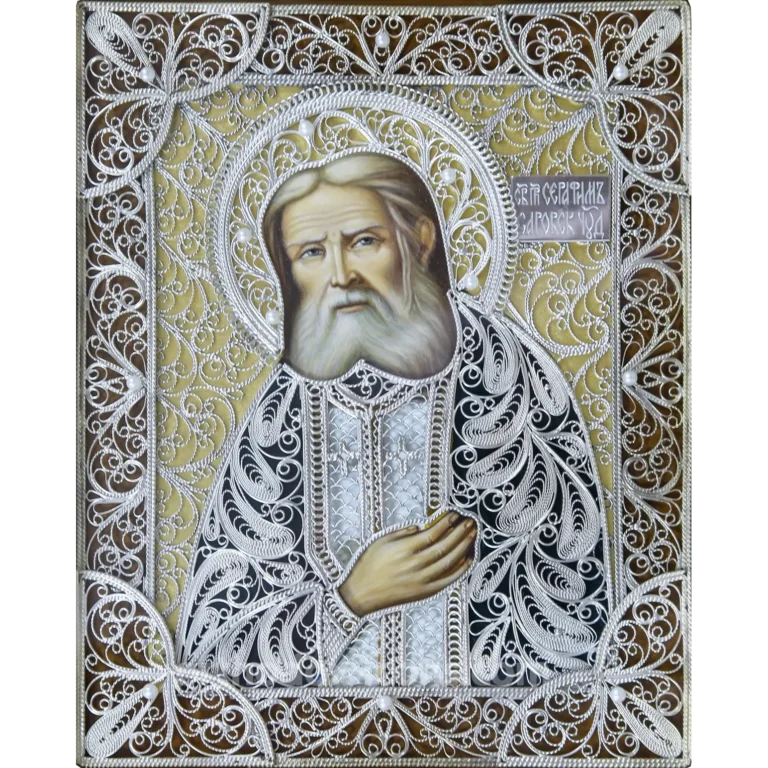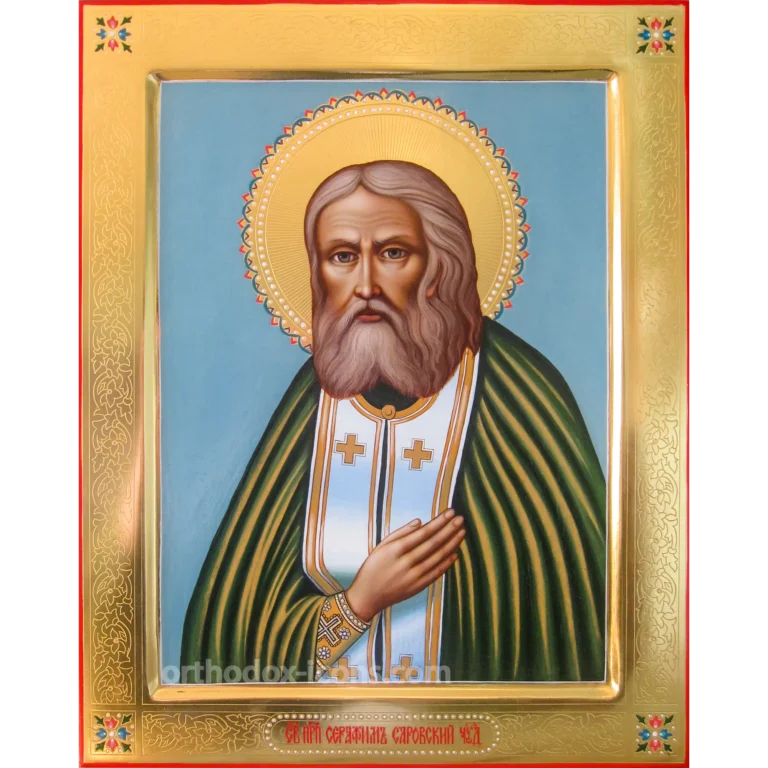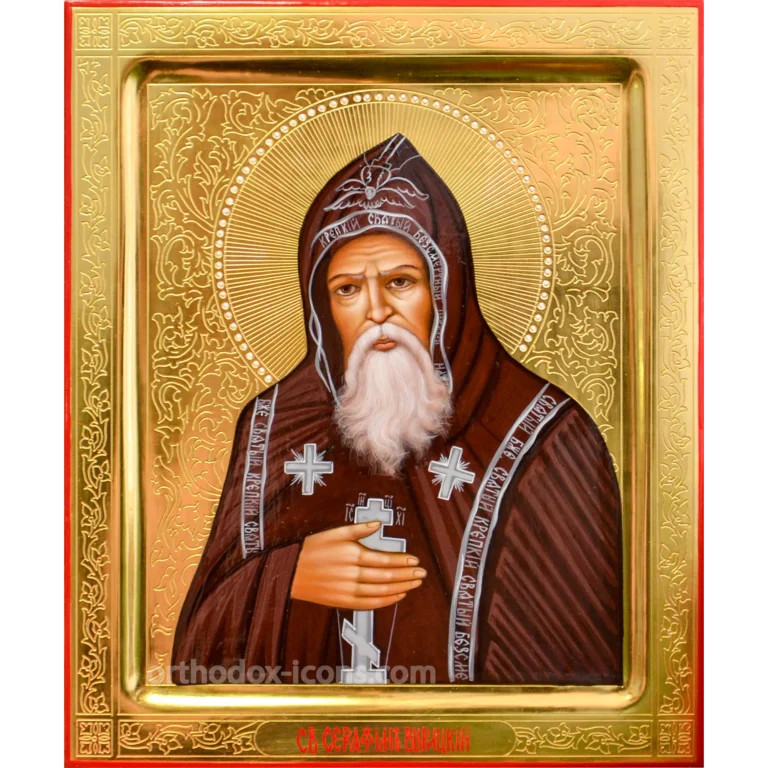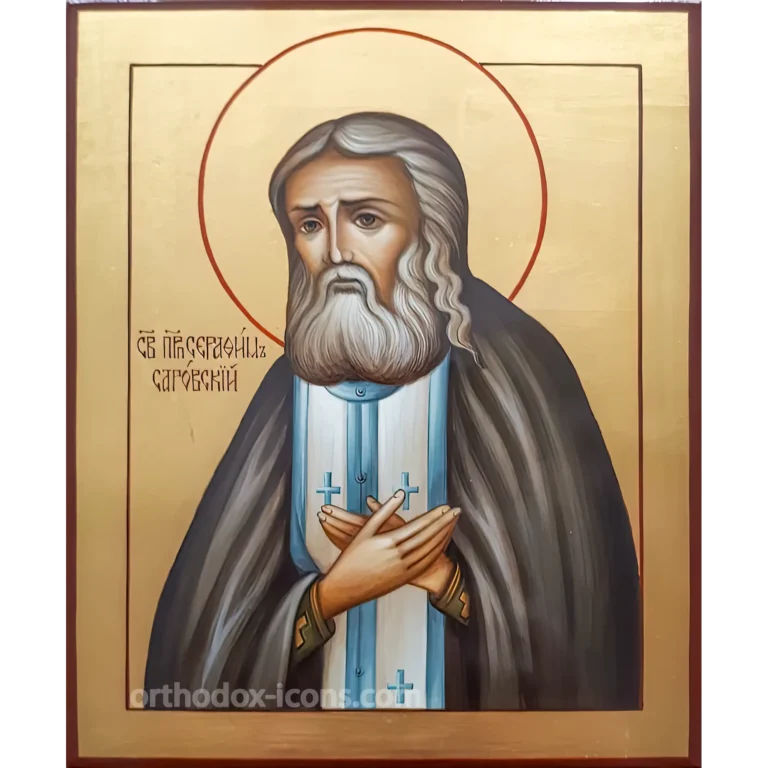
Orthodox Icon of Seraphim Sarovskiy
$1600
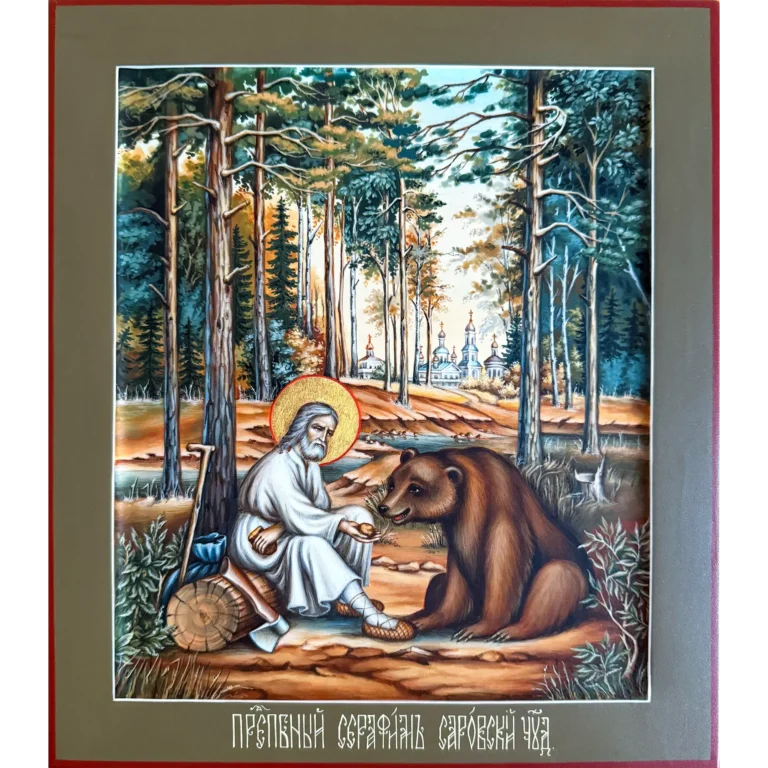
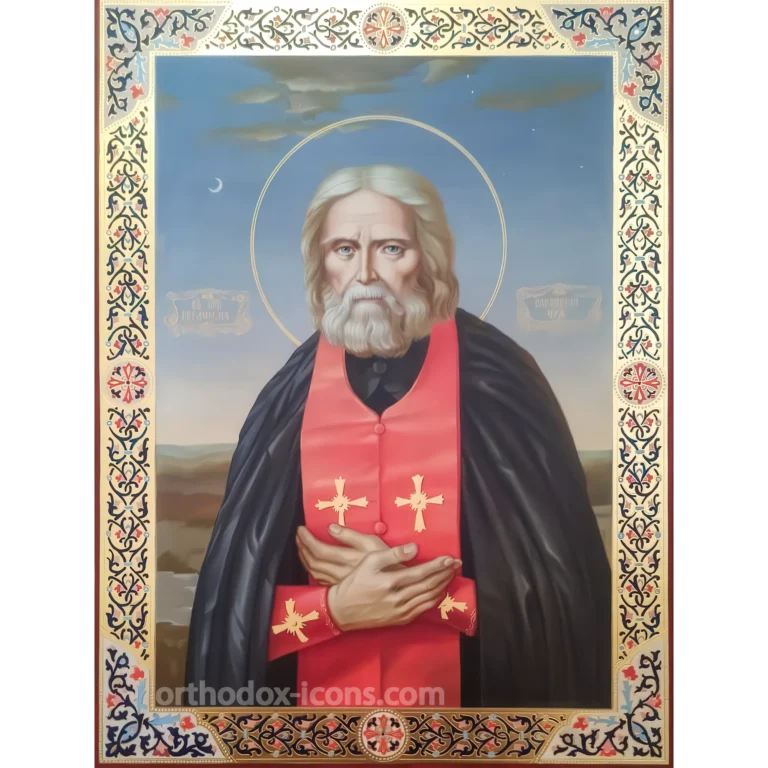
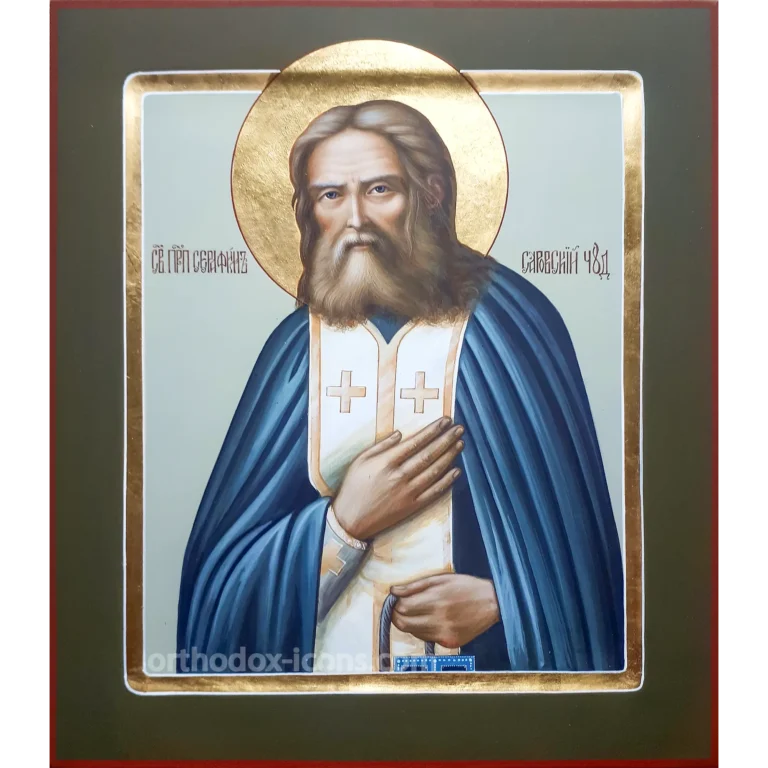
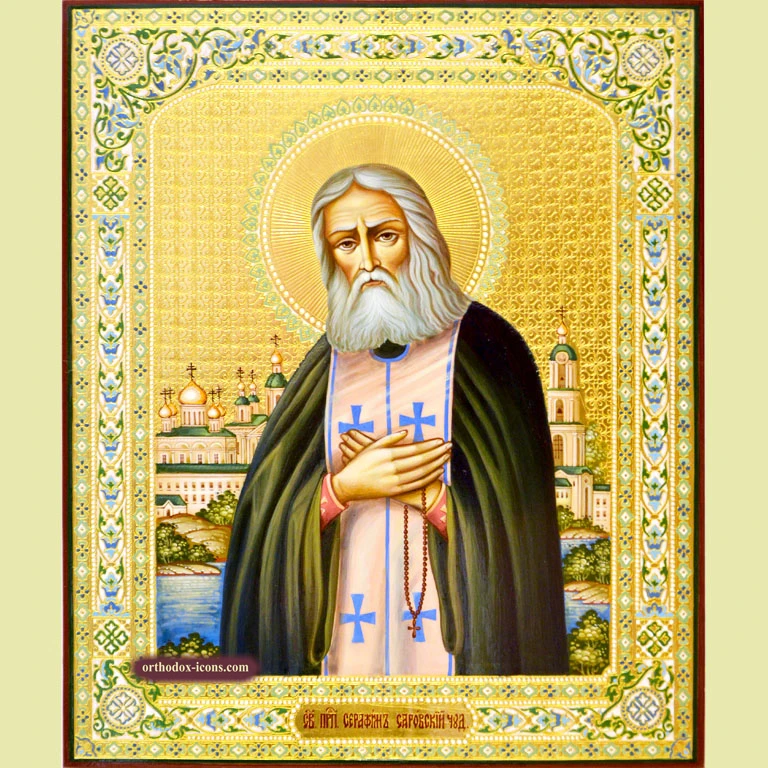
Orthodox Icon of Seraphim Sarovskiy, 27×31 cm (10.6×12.2 in), is a richly decorated hand-painted icon of Saint Seraphim of Sarov with full gold tooling and colored cold enamels. The saint is shown half-length in a black monastic mantle and white epitrachelion, with folded hands, a lestovka prayer rope, a radiant halo, and the churches of Sarov or Diveyevo in the background. The icon is painted on a linden board with mineral egg tempera, 23K gold leaf (960 purity), hand-tooled relief ornament, cold enamel details, and protective varnish. Free international shipping is included. Payment is made after you receive and approve the icon.
It is possible to paint an image in any size to order
Free shipping worldwide
Orthodox Icon of Seraphim Sarovskiy
Orthodox Icon of Seraphim Sarovskiy is a solemn hand-painted icon of Saint Seraphim of Sarov, one of the most beloved Russian Orthodox saints. This is a richly decorated version of his image, combining fine icon painting with full gold tooling, relief ornament, and colored cold enamels.
The saint is shown half-length in a black monastic mantle and a white epitrachelion with crosses. His hands are folded on his chest, and a monastic lestovka prayer rope descends from one hand. Behind him are shining church domes, recalling Sarov and Diveyevo, the two spiritual places most closely connected with his life and veneration.
The listed size is 27×31 cm (10.6×12.2 in). Larger formats may be discussed individually before ordering.
Gold Tooling and Cold Enamels
The first impression of this icon is its golden radiance. The background and broad ornamental fields are covered with 23K gold leaf (960 purity). Before gilding, the master creates a relief pattern in the prepared gesso using hand tools. After the gold is applied, the ornament gains depth, light, and the feeling of a precious handmade setting.
The fields are decorated with larger floral and scroll patterns. Colored cold enamels are placed into the recessed ornament, using blue, green, white, and related tones. These enamel details contrast with the gold and give the icon a festive, almost jewel-like character while remaining part of the sacred image.
This technique is labor-intensive and requires the work of several specialists: board maker, gesso preparer, engraver, enamel worker, and icon painter. Small differences in the relief pattern and enamel shades are natural because each icon is made by hand.
The Image of Saint Seraphim
Saint Seraphim is painted in a warm academic manner, with attention to the face, beard, posture, and spiritual expression. His slightly bent shoulders, gray beard, and attentive gaze recall an elder formed by prayer, suffering, humility, and love for all who came to him.
The black mantle expresses monastic renunciation and separation from worldly vanity. The white epitrachelion marked with crosses points to Saint Seraphim’s priestly ministry as a hieromonk. It reminds the viewer that he was not only a hermit and ascetic, but also a spiritual father who received people, prayed for them, and guided them toward repentance and peace.
The lestovka in his hand is a traditional monastic prayer rope associated with the Jesus Prayer. It quietly tells the viewer that the elder’s help and consolation flowed from continual prayer.
Radiant Halo and Sacred Light
The halo is surrounded by fine rays spreading over the gold background. This detail points to divine light, and it also recalls the famous Orthodox memory of Saint Seraphim’s conversation with Nicholas Motovilov, in which the saint spoke about the acquisition of the Holy Spirit.
In Orthodox iconography, gold is not only decoration. It signifies heavenly light and the transfigured life of the saints. In this icon the gold is abundant, but it is used to support the prayerful meaning of the image: Saint Seraphim appears not as a worldly figure, but as a holy elder illumined by grace.
Sarov and Diveyevo in the Background
The architectural landscape behind the saint shows white churches, bell towers, golden domes, green roofs, a blue river, stones, and trees. This background is not a random decorative landscape. It recalls the two great spiritual centers connected with Saint Seraphim: the Sarov monastery, where he lived the monastic and hermit life, and the Seraphim-Diveyevo monastery, which he spiritually cared for.
The landscape opens the space of the icon and connects the saint’s personal image with the wider history of Russian Orthodox monastic life, pilgrimage, and prayer.
Life of Saint Seraphim of Sarov
Saint Seraphim of Sarov was born Prokhor Moshnin in 1754 in Kursk. From childhood, according to his life, he was under the protection of the Mother of God. As a young man he entered the Sarov monastery and received the monastic name Seraphim, meaning fiery or burning.
His life included strict ascetic labor: silence, solitude, fasting, prayer, and long endurance of physical suffering. He is especially remembered for praying on a stone for a thousand days and nights, and for forgiving those who violently attacked him. Later, after years of seclusion, he received people who came for counsel, consolation, and prayer.
Saint Seraphim greeted many with the words of paschal joy and taught that the aim of the Christian life is the acquisition of the Holy Spirit. He reposed in 1833 while praying before an icon of the Mother of God.
What People Pray For Before Saint Seraphim
Orthodox Christians ask Saint Seraphim for intercession in illness, grief, despondency, family concerns, work difficulties, and spiritual confusion. The icon is not an amulet or a promise of automatic results. Prayer before an icon is prayer to God, with the saint depicted asked to intercede.
- For strength during bodily and spiritual illness
- For consolation in grief and heaviness of soul
- For help against despondency and despair
- For spiritual joy, patience, and humility
- For peace in the family and reconciliation
- For wisdom and honesty in work, trade, and responsibility
- For children, parents, and loved ones in difficult seasons
- For guidance in the Christian life
Materials and Characteristics
| Name | Orthodox Icon of Seraphim Sarovskiy |
| Saint depicted | Venerable Seraphim of Sarov |
| Iconographic type | Half-length image in hieromonk vestments, with prayer rope and monastery background |
| Painting style | Academic Orthodox icon painting |
| Board | Solid linden board with oak splines |
| Ground | Cloth and chalk gesso |
| Painting medium | Mineral egg tempera |
| Gold work | 23K gold leaf (960 purity), hand-tooled relief ornament |
| Additional decoration | Colored cold enamels in blue, green, white, and related tones |
| Finish | Protective varnish |
| Available size | 27×31 cm (10.6×12.2 in); larger formats by agreement |
A Solemn Orthodox Gift
This icon is suitable as a significant Orthodox gift for a person named Seraphim, for a family icon corner, for a benefactor, physician, leader, or believer who especially venerates Saint Seraphim of Sarov. Because of the gold tooling and enamel work, it has the character of a festive family shrine rather than a simple devotional image.
It may also be appropriate for a chapel, parish space, or a home where people pray for the sick, the sorrowful, and those who need spiritual encouragement.
Care and Blessing
An icon with relief gold tooling and enamels should be protected carefully. A glass-fronted kiot is recommended, because dust can collect in the recessed gold ornament and should not be rubbed with cloth. Do not use water, wet wipes, household cleaners, or polishing products.
The icon may be blessed before shipping if requested, or after receiving it at your own parish church. Free international shipping is included. Payment is made after you receive and approve the icon.
FAQ
What is gold tooling on this icon?
Gold tooling is a relief ornament created in the prepared gesso and then covered with 23K gold leaf, giving the background and fields a precious textured surface.
What are cold enamels?
Cold enamels are colored decorative compounds placed into the recessed gold ornament. They harden into a glossy surface resembling enamel or small jewel-like inserts.
Why is Saint Seraphim shown in black and white garments?
The black mantle points to monastic renunciation, while the white epitrachelion with crosses recalls his priestly ministry as a hieromonk.
What does Saint Seraphim hold in his hand?
He holds a lestovka, a traditional monastic prayer rope used for the Jesus Prayer.
What monastery is shown in the background?
The background is a symbolic image of churches and bell towers connected with Sarov and Diveyevo, the two spiritual centers associated with Saint Seraphim.
Why do rays come from the halo?
The rays symbolize divine light and recall Saint Seraphim’s teaching on the acquisition of the Holy Spirit.
How is this icon different from simpler versions?
This version uses 23K gold leaf over the background and fields, hand-tooled relief ornament, colored cold enamels, and detailed icon painting, making it a more elaborate work.
What size is this icon?
The listed size is 27×31 cm (10.6×12.2 in). Larger formats may be discussed individually.
Is a kiot recommended for this icon?
Yes. A glass-fronted kiot is recommended because relief gold tooling can collect dust and should not be rubbed or cleaned aggressively.
Can the icon be blessed before shipping?
Yes. Blessing before shipping can be discussed, or the icon may be blessed at your own parish church after you receive it.
| Name | Seraphim |
|---|---|
| Dimensions | 27x31cm (10.6×12.2 in) |