Orthodox Icon of Saint Nicholas
Price range: $700 through $2250
Available sizes: 17×21 cm (6.7×8.3 in), 20×24 cm (7.9×9.4 in), 27×31 cm (10.6×12.2 in), 30×40 cm (11.8×15.7 in); larger iconostasis sizes can be made by individual request.
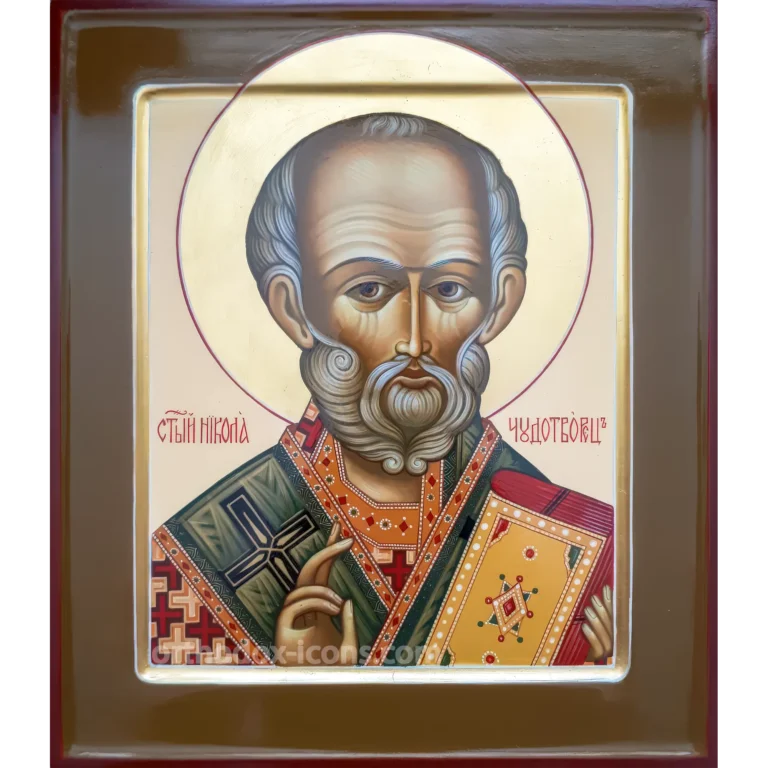
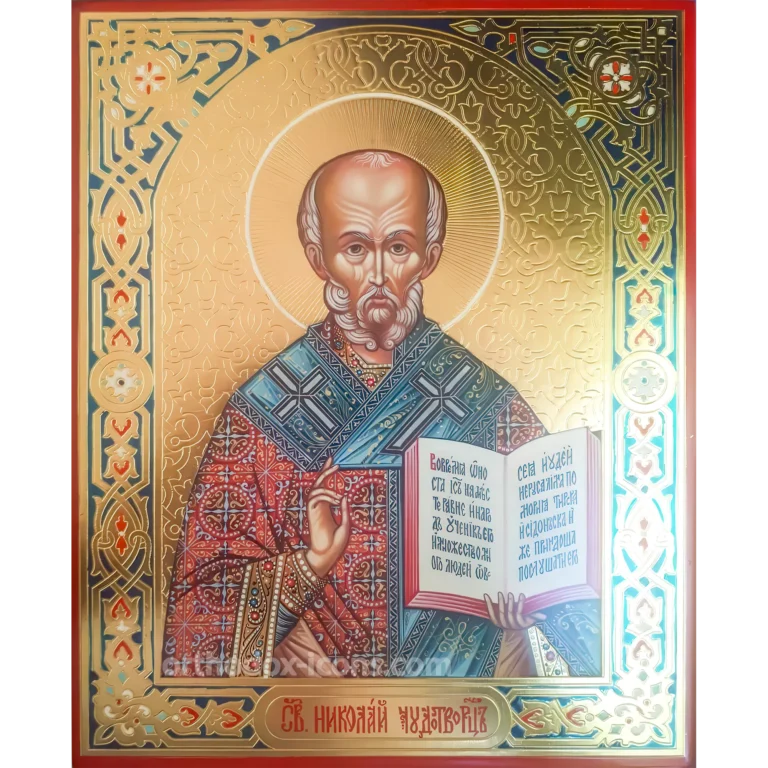
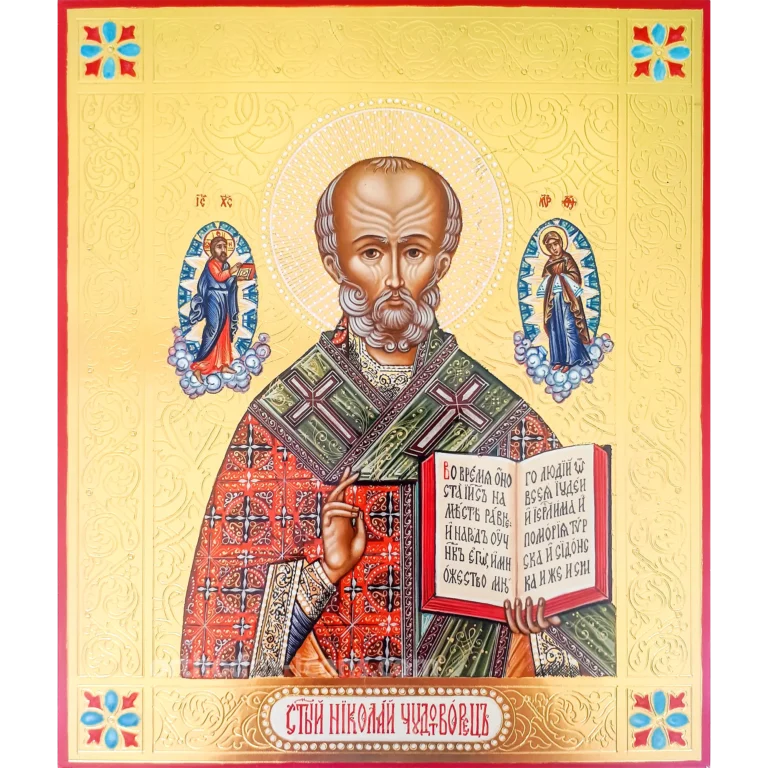
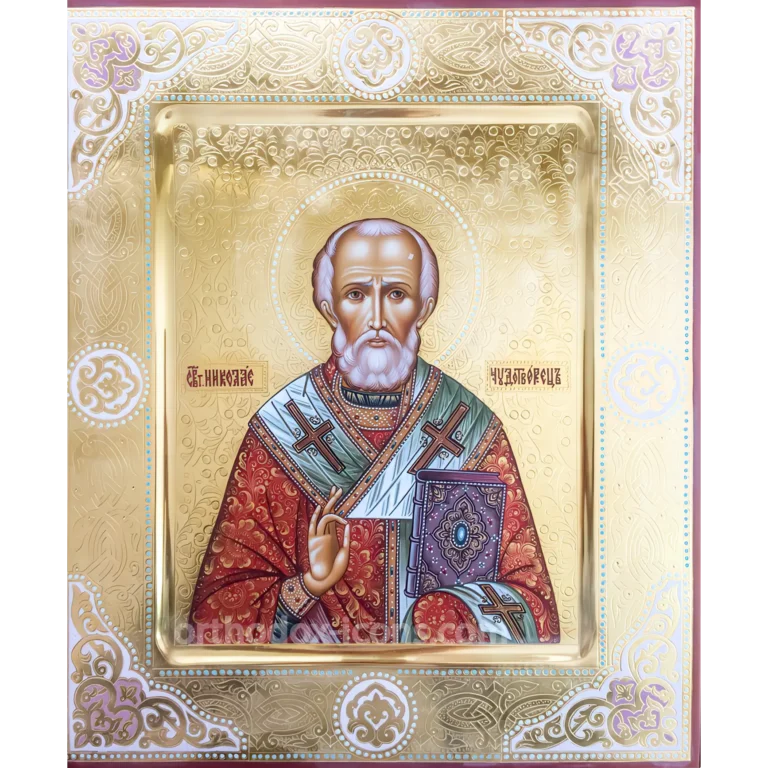
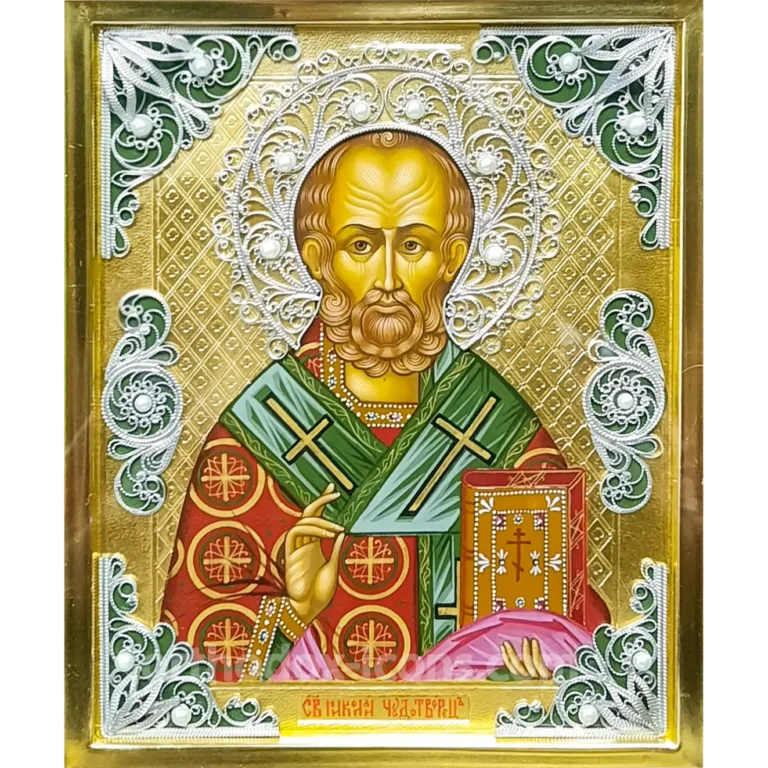
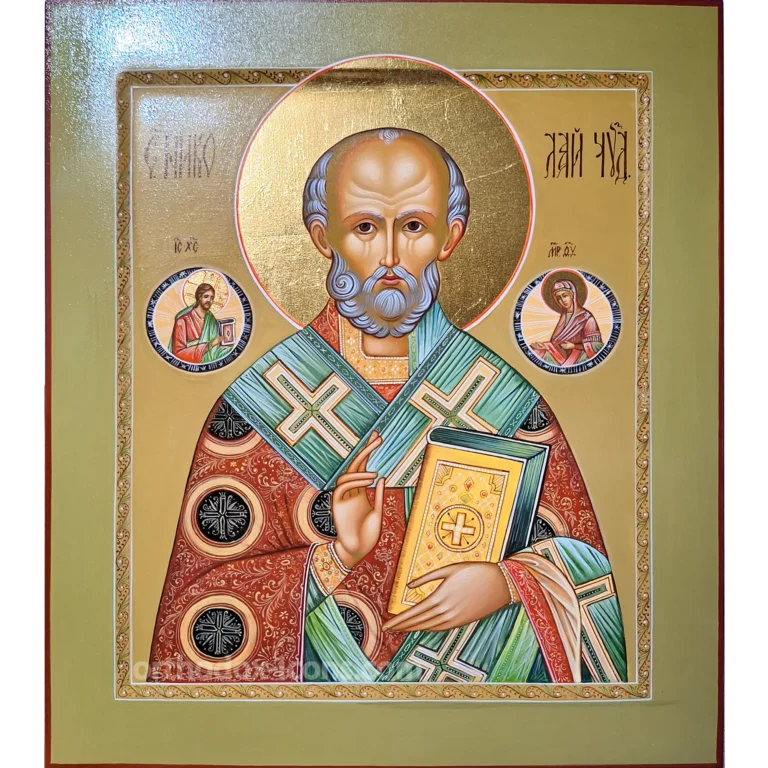
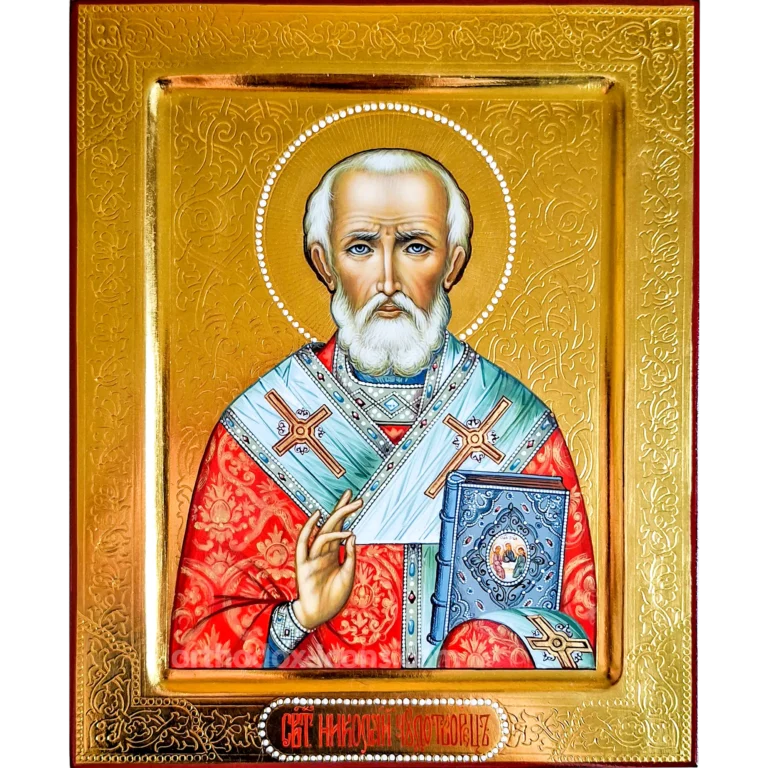
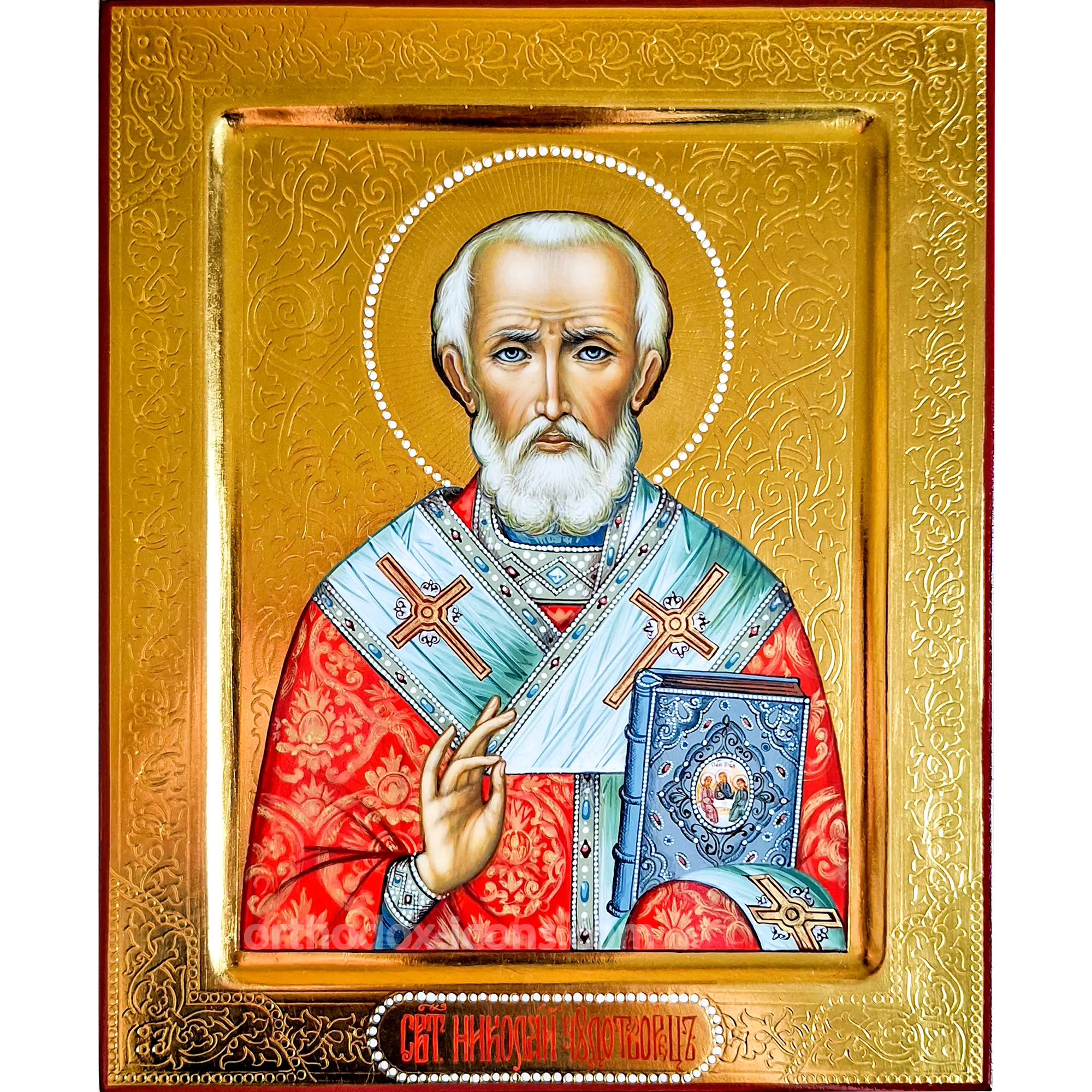
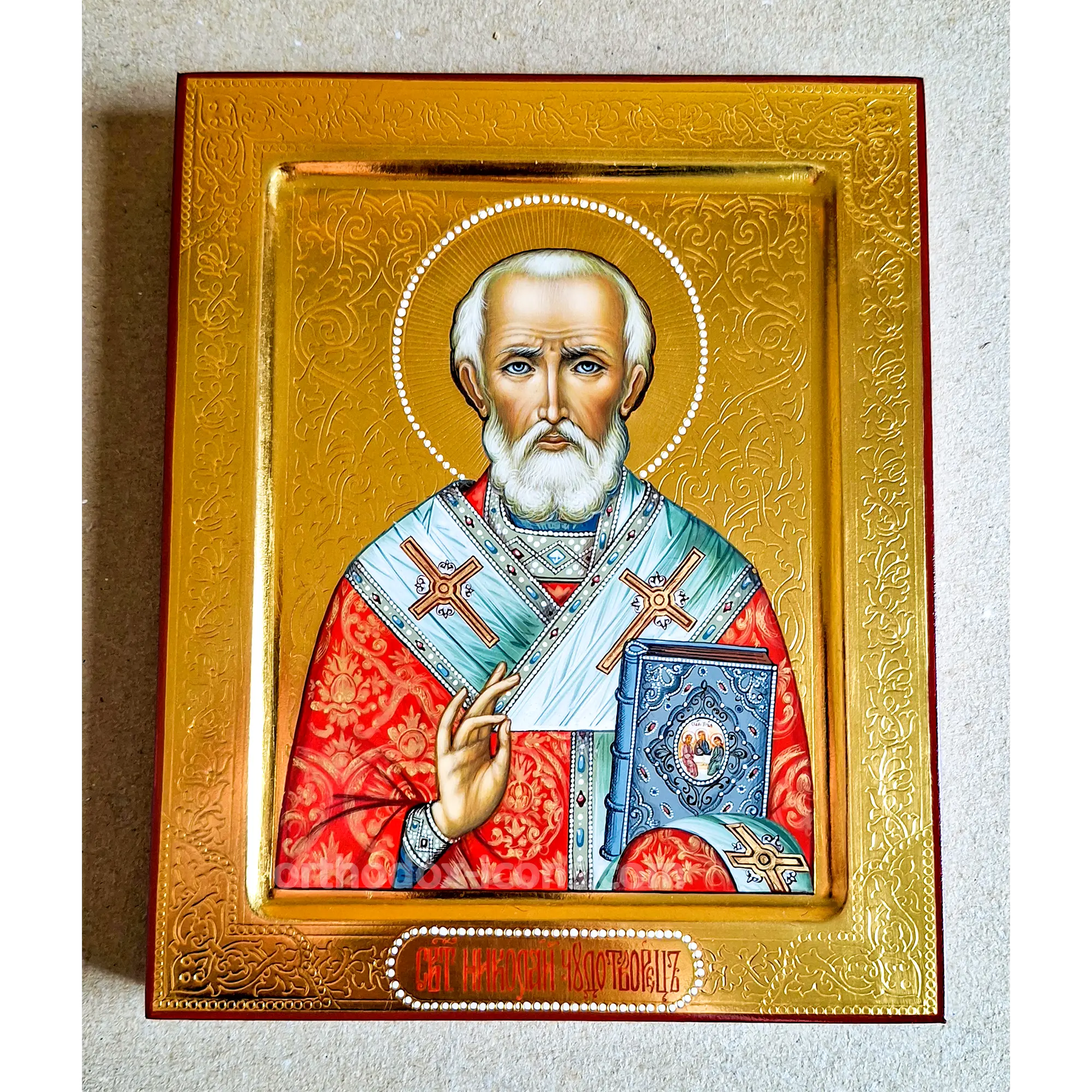
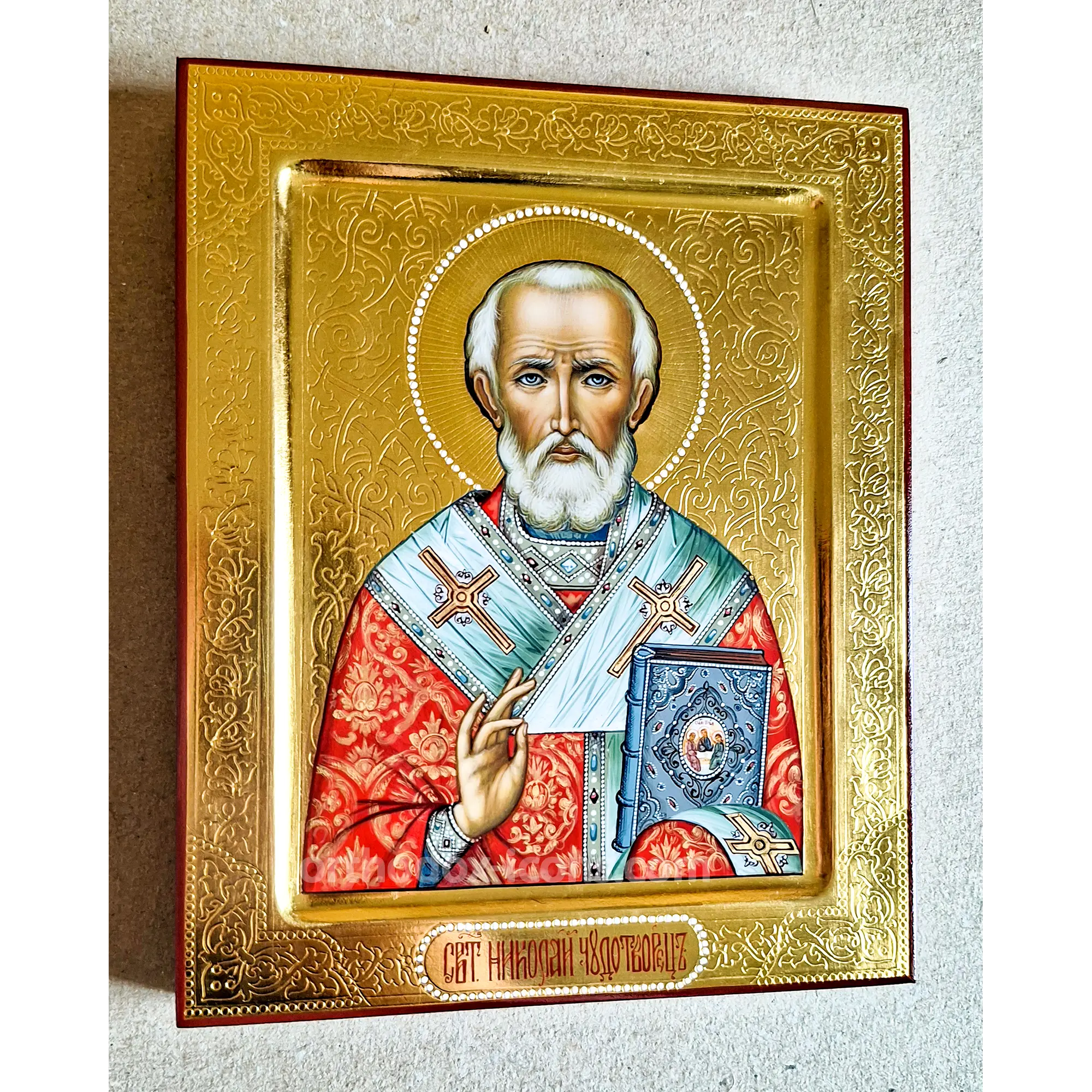
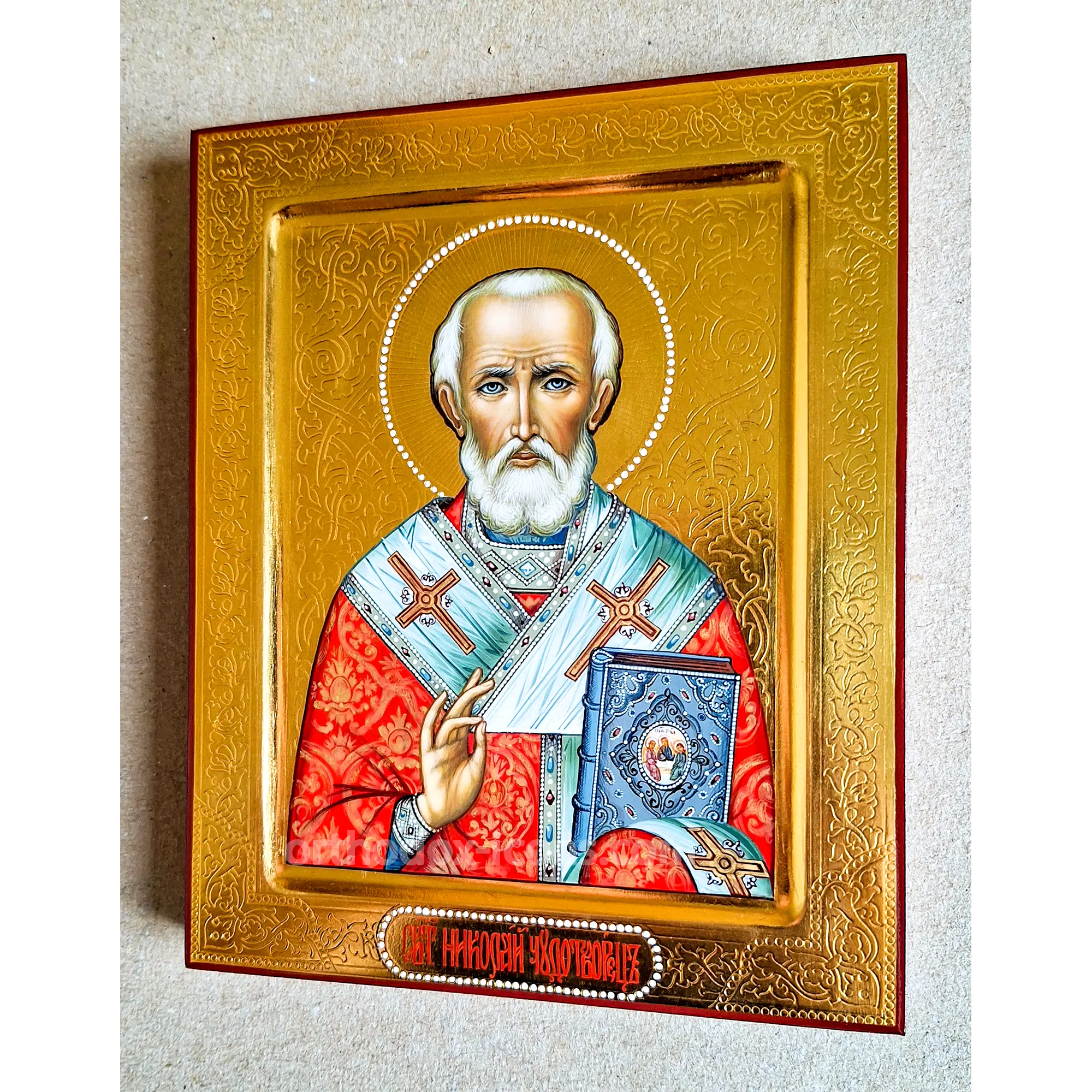
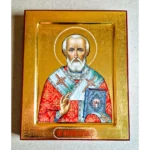
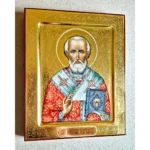
Orthodox Icon of Saint Nicholas is a hand-painted half-length icon of Saint Nicholas the Wonderworker, one of the most beloved saints in the Christian world. He is shown in richly ornamented episcopal vestments: a bright red phelonion with gold patterning and a white-blue omophorion. His right hand is raised in blessing, while his left hand reverently holds a decorated Gospel book.
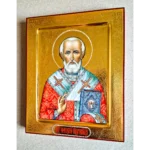
The icon is painted in a recessed kovcheg on a fully gilded background. The broad gold fields are decorated with tooled relief ornament over gesso, while the halo and name cartouche are outlined with fine pearl-like dot work.
Prayer focus: safe travel, help at sea, family well-being, healing, protection from unjust judgment, help in poverty, and support in finding honest work.
Materials: wooden board with kovcheg, oak support slats, pavoloka, chalk gesso, egg tempera, gold leaf gilding with tooled ornament, and protective coating.
It is possible to paint an image in any size to order
Free shipping worldwide
Orthodox Icon of Saint Nicholas is a hand-painted icon of Saint Nicholas the Wonderworker, Archbishop of Myra in Lycia, one of the most beloved saints in the entire Christian world. In Orthodox homes his icon often stands close to the icons of Christ and the Mother of God. Saint Nicholas is remembered as an example of meekness, mercy, pastoral courage, and firm confession of the faith.
This icon is painted in the traditions of Russian iconography with rich gilding and decorative tooled ornament. It is both a prayerful family image and a solemn spiritual gift. The saint is shown half-length, blessing with his right hand and holding the Gospel with his left. The gold background, kovcheg, red episcopal vestments, white-blue omophorion, ornamented Gospel, and tooled gold fields make the image especially festive.
Icon Characteristics
| Full name | Orthodox Icon of Saint Nicholas |
| Saint depicted | Saint Nicholas, Archbishop of Myra in Lycia, the Wonderworker |
| Iconographic type | Half-length icon with blessing right hand and closed Gospel |
| Board | Wooden icon board with kovcheg, oak support slats, pavoloka, chalk gesso |
| Painting technique | Egg tempera |
| Gilding and decor | Full gold leaf gilding, tooled relief ornament on the fields, engraved ornament on the background, pearl-like dotted halo outline |
| Available sizes | 17×21 cm (6.7×8.3 in), 20×24 cm (7.9×9.4 in), 27×31 cm (10.6×12.2 in), 30×40 cm (11.8×15.7 in); iconostasis sizes by request |
Who This Icon Is For
Saint Nicholas is so deeply loved by Orthodox Christians that his icon is given for many important moments in life. It is a foundational image for a home icon corner and is often included in a wedding pair together with an icon of the Mother of God. It is also a meaningful baptismal gift for children, as a sign of heavenly intercession throughout life.
Saint Nicholas has a special place in the hearts of those whose lives are connected with roads, travel, water, and risk. He is widely venerated as a patron of travelers, sailors, pilots, drivers, logistics workers, and those who spend much time away from home. Remembering the saint’s mercy toward the poor, his icon is also often given to business owners and people beginning serious work, so that their labor may remain honest and protected from ruinous temptation.
The icon is suitable for a family home, chapel, church, office, ship, hospital room, or a personal prayer space. It can be chosen as a gift for baptism, wedding, name day, patron saint day, birthday, jubilee, or a blessing before a long journey.
Prayer Before the Icon of Saint Nicholas
In Orthodox tradition Saint Nicholas is often called a swift helper, because believers have long experienced his intercession as close and merciful. Before his icon people pray in many situations of danger, need, illness, family concern, and moral difficulty.
Common prayer intentions before this icon include:
- safe travel, protection at sea, and help in storms or accidents;
- happy marriage for daughters and preservation of love in the family;
- help in poverty, debt, and the search for honest work;
- healing from serious bodily illness and spiritual distress;
- protection of the innocent, prisoners, and those facing unjust judgment;
- protection of children, help in study, and guidance for those who have lost their way.
An icon is not a charm or a mechanical guarantee of success. Prayer before Saint Nicholas is a turning to God through the intercession of a saint known for mercy, pastoral boldness, and love for people in distress. His image reminds the person praying to unite trust in God with compassion and responsible action.
Brief Life of Saint Nicholas of Myra
Saint Nicholas was born around the year 270 in Patara, in the province of Lycia in Asia Minor, in the territory of modern Turkey. He came from a wealthy Christian family. From youth he was known for deep faith, spending his days in church and his nights in prayer. His uncle, Bishop Nicholas of Patara, ordained him to the priesthood. After the death of his parents, the saint inherited great wealth and secretly gave it away to the poor.
One of the best-known episodes of his mercy is the rescue of three sisters. Their impoverished father, desperate because of poverty, was tempted to send them into dishonor. When Saint Nicholas learned of this, he secretly came at night and left bags of gold for the family. Because of this, the daughters were saved from disgrace and were able to marry honorably with dowries.
Later, by God’s providence, Nicholas was chosen as archbishop of the port city of Myra in Lycia. During the persecutions under Emperor Diocletian, he was imprisoned and suffered, yet continued to strengthen his flock. After the persecutions ended under Emperor Constantine, he returned to his episcopal service. Saint Nicholas became known as a defender of Orthodox faith, a participant in the First Ecumenical Council, and a great wonderworker: he calmed storms, saved ships, healed the sick, and protected the innocent from unjust death.
Saint Nicholas reposed peacefully in old age, around the year 345. His incorrupt relics long streamed myrrh in Myra. In 1087 they were translated to the Italian city of Bari, where they remain to this day and continue to be venerated by Christians.
Commemoration Days
In the Russian Orthodox tradition, Saint Nicholas is commemorated several times during the year. December 19 is the day of his blessed repose, often called Winter Nicholas. May 22 commemorates the translation of his holy relics from Myra in Lycia to Bari, known as Spring Nicholas. August 11 commemorates the Nativity of Saint Nicholas.
These dates may be considered when choosing an icon for a person named Nicholas, for a family feast, a baptismal gift, wedding gift, name day, patron saint day, or a parish donation.
Features of the Presented Icon
This hand-painted icon is distinguished by exceptional solemnity and rich decorative treatment. The composition is placed inside a recessed kovcheg, which symbolizes the distinction between the heavenly, spiritual world and ordinary earthly space. The main visual feature is full gilding: both the background inside the kovcheg and the broad outer fields are covered with gold leaf.
Over the gold background, the iconographer has added refined decorative work. Inside the kovcheg, around the saint’s figure, a light plant ornament is engraved, causing the gold to shimmer in candlelight. The broad fields are decorated with deep tooled relief ornament over gesso: a dense pattern of curling vines and leaves that gives the board the impression of a precious metal cover. The halo and the shaped name cartouche in the lower part of the icon are outlined not by a continuous line, but by an elegant dotted border of white pearl-like points.
Iconography: Vestments, Blessing, and Gospel
Saint Nicholas is shown in a traditional half-length form. His face is the classic image of a wise white-haired elder, with a high thoughtful forehead and expressive blue eyes directed toward the person praying. His gaze is strict, as a defender of truth, yet filled with fatherly mercy.
The archbishop’s vestments are painted with exceptional detail. He wears a bright red phelonion. In iconography, red can signify not only martyrdom, but also burning love for God and the triumph of the Resurrection. Across the red fabric runs a complex gold plant ornament, like brocade. Over the phelonion is the omophorion, a broad white-blue band with crosses, symbolizing the lost sheep carried on the shoulders of the Good Shepherd.
Saint Nicholas raises his right hand in blessing. His left hand, covered by the edge of the red vestment as a sign of reverence, supports the closed Gospel. The book symbolizes the divine teaching that the saint carried to the people. The Gospel cover is painted like a small jeweled object: silver-blue in tone, covered with fine filigree-like ornament, and adorned in the center with a round medallion containing a Gospel miniature.
Materials and Icon-Painting Technique
The icon is created by hand by professional iconographers according to the canons and techniques of ancient Russian sacred art. The base is a dried wooden board with a carved kovcheg. Wedge-shaped oak support slats are inserted into the back to help prevent the board from warping.
The front of the board is covered with pavoloka and several layers of chalk gesso, which is polished to a smooth ground. Before painting, the background and fields are covered with sheets of natural gold leaf. Then the ornament on the fields is hand-tooled with special tools, creating raised relief decoration.
The face and vestments are painted in egg tempera. Natural mineral pigments mixed with egg yolk give the colors clarity, depth, and durability. At the final stage the icon is covered with protective varnish or natural drying oil to help preserve the painted and gilded surface.
How to Choose the Size
The 17×21 cm (6.7×8.3 in) and 20×24 cm (7.9×9.4 in) sizes are compact formats. They are suitable for a smaller home icon corner, a study, or as a gift for a traveler, student, or person who wants a personal prayer image of Saint Nicholas.
The 27×31 cm (10.6×12.2 in) size is a classic and highly requested format, close in feeling to old Russian home and church icons. It gives the iconographer more room to work on the tooled ornament, the pattern of the phelonion, and the miniature on the Gospel. It is an excellent choice for a wedding gift, especially as part of a wedding pair, or for a jubilee.
The 30×40 cm (11.8×15.7 in) format is larger and more solemn. It is suitable for a central place in a home prayer corner or as a valuable donation to a parish church. Iconostasis sizes are made by individual request according to church measurements and the artistic order of the iconostasis.
Care for a Gilded Hand-Painted Icon
To preserve the icon of Saint Nicholas with gold leaf for many generations, it should be kept away from direct sunlight, heating radiators, drafts, and excess humidity. The painted and gilded surface must never be wiped with a damp cloth.
Dust should be removed only with light touches of a dry soft brush, such as a squirrel-hair brush, or a dry soft cloth. The best way to protect such a sacred image is to place it in a glazed wooden kiot, especially if the icon is large or kept near candles.
Free international shipping is included. Payment is made after you receive and approve the icon.
Questions and Answers
Why is Saint Nicholas called the Wonderworker?
Saint Nicholas is called the Wonderworker because the Church remembers many miracles and acts of mercy connected with his prayers and intercession.
Who is this icon commonly given to?
It is often given for weddings, baptisms, family icon corners, and as a gift for sailors, drivers, travelers, business owners, and children.
Do Orthodox Christians pray to Saint Nicholas about marriage?
Yes. This is connected with the story of Saint Nicholas secretly helping three poor sisters with dowries, saving them from disgrace and helping them marry honorably.
What does the red phelonion mean?
The bright red phelonion signifies fervent love for God, the triumph of life in Christ, and the spiritual dignity of the bishop’s ministry.
Why is Saint Nicholas’s left hand covered by the vestment?
He holds the Gospel with reverence. Covering the hand reflects an ancient Byzantine gesture of respect before the Holy Scripture.
How is the relief ornament on the gold fields made?
The ornament is tooled by hand over the gesso and gilded surface, creating a raised decorative pattern similar in effect to a precious metal cover.
What is a kovcheg on an icon board?
A kovcheg is a recessed central area of the wooden board. It frames the sacred image and symbolizes the distinction between earthly space and the spiritual world.
Can this icon be taken on trips?
This gilded tempera icon is best kept in a home icon corner. For travel, a small travel icon or folding icon is usually more practical.
What is shown on the Gospel cover?
The Gospel cover is painted like a jeweled object, often with filigree-like decoration and a central medallion showing an important Gospel scene.
Should a hand-painted icon be blessed?
Yes. After receiving the icon, it may be brought to an Orthodox church for blessing before being placed in the home for prayer.
| Dimensions | 17x21cm (6.7×8.3 in), 20x24cm (7.9×9.4 in), 27x31cm (10.6×12.2 in), 30x40cm (11.8×15.7 in) |
|---|---|
| Name | Nicholas |