Support of the Humble Icon
$1500
Available size: 27×31 cm (10.6×12.2 in); larger formats may be made by agreement.
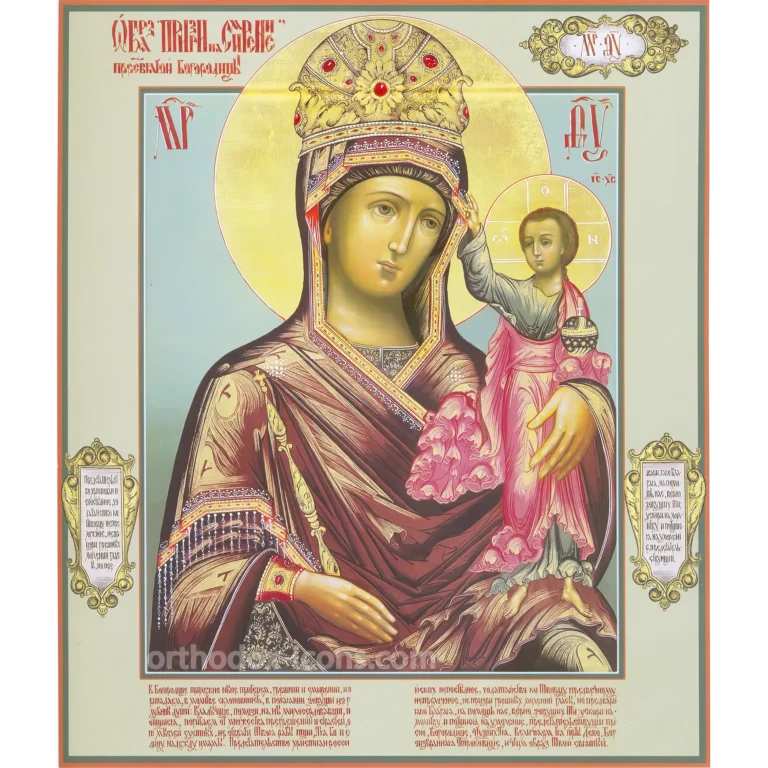
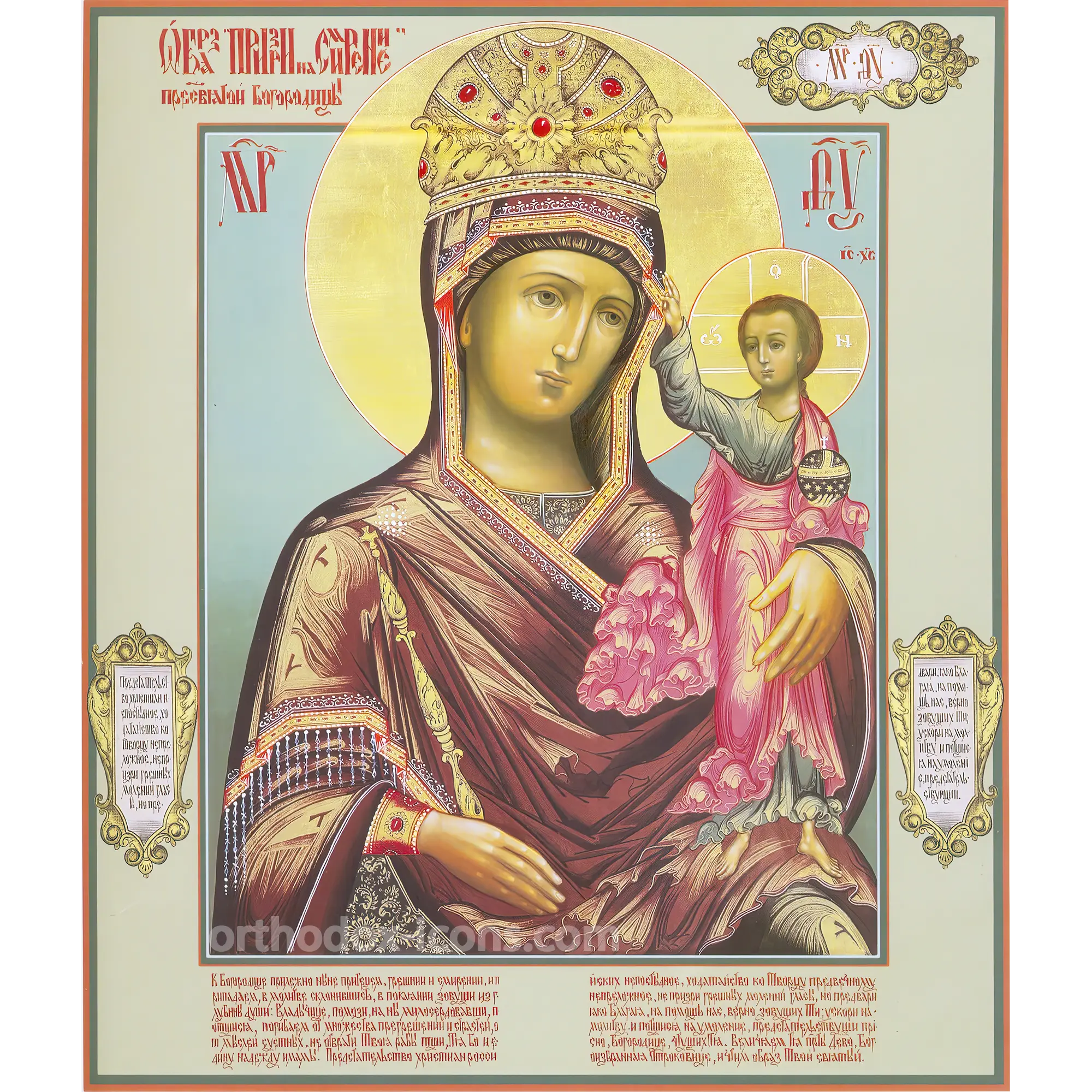
Support of the Humble Icon is a hand-painted Orthodox icon of the Mother of God known in Russian tradition as Prizri na Smirenie, or ?Look upon humility.? The Virgin Mary is shown in royal dignity, wearing a crown and holding a golden scepter, while the Christ Child stands on her left knee, touches her cheek with tender intimacy, and holds the orb as a sign of His dominion.
The icon is painted on a linden board with mineral egg tempera and 23K gold leaf (960 purity). Prayer texts are written in shaped cartouches on the side borders. Free international shipping is included, with payment due upon delivery.
It is possible to paint an image in any size to order
Free shipping worldwide
Support of the Humble Icon is a hand-painted Orthodox icon of the Mother of God known in Russian tradition as Prizri na Smirenie, often understood as ?Look upon humility? or ?Regard the humble.? The word does not mean a casual glance. It means a merciful, compassionate looking upon a person in weakness, sorrow, and need. This is the spiritual heart of the icon: the faithful ask the Queen of Heaven to look upon human humility and intercede with maternal love.
The presented icon combines royal solemnity with remarkable tenderness. The Mother of God wears a crown and holds a golden scepter, yet her face is not proud or distant. The Christ Child stands on her left knee, holds the orb in His left hand, and gently touches her cheek with His right hand. This intimate gesture gives the composition its special warmth: Christ seems to turn the merciful face of His Mother toward those who pray before the icon.
Support of the Humble Icon – Meaning of the Name
The name of the icon is connected with the words of the Virgin Mary in the Gospel of Luke: ?for He has regarded the low estate of His handmaiden? (Luke 1:48). In Church Slavonic, the phrase begins with Yako prizre na smirenie. For this reason, the icon is associated above all with humility, repentance, endurance in difficult circumstances, and trust in the mercy of God.
Before this icon, Orthodox Christians pray not only for themselves, but also for those who are spiritually lost, hardened, suffering, unjustly accused, or unable to find the strength to repent. The image is also connected with comfort for the grieving, help in illness, and protection in situations of slander, persecution, and family hardship.
History of the Icon
The history of the Support of the Humble icon reaches back to the early fifteenth century. The first wonderworking icon was revealed in 1420 in the Pskov region, in the area of Bezhanitsy, on the shore of Lake Kamennoe. The exact circumstances of the discovery have not been preserved, but the historical setting was severe. The Pskov lands were suffering from famine, epidemic disease, and invasion by the forces of the Lithuanian prince Vytautas.
According to the Pskov chronicle, on September 16 according to the old calendar, the newly revealed icon shed blood-like tears. It was then carried in a solemn procession to Pskov and placed in the main Trinity Cathedral. After fervent public prayer before the icon, the epidemic ceased and the enemy withdrew. The ancient Pskov icon was later lost, but its copies continued to be venerated by the faithful.
A new chapter in the history of this icon began in 1993 at the Vvedensky Monastery in Kiev. A parishioner donated a nineteenth-century copy of the Support of the Humble icon. Some time later, when the glass was removed from the icon case, a silver-toned image of the Mother of God with the Christ Child was found imprinted on the reverse side of the glass. Scientific examination did not give an ordinary material explanation for this phenomenon. In 1995, the Kiev icon was officially recognized as wonderworking, and it became a place of prayer for many pilgrims.
Iconography: Royal Dignity and Humble Mercy
The iconographic type is easily recognizable. The Mother of God is shown in royal dignity, usually half-length or enthroned, with a richly ornamented crown on her head. In this hand-painted icon, the crown is decorated with painted gemstones, and the Mother of God holds a golden scepter in her right hand. These details proclaim her as Queen of Heaven, yet the expression of her face remains gentle, attentive, and merciful.
The most distinctive element is the posture of the Christ Child. He does not simply sit in His Mother’s arms. He stands on her left knee, holding the orb with a cross in His left hand as a sign of His sovereign authority over the world. With His right hand, He touches the cheek of the Mother of God. This detail is deeply tender and theological at the same time: the Savior directs the compassionate gaze of His Mother toward the faithful.
The garments of the Mother of God are written in a deep cherry-colored maphorion with a gold border and fringe. The folds of the garments of both Christ and the Theotokos are enriched with fine gold assist, which symbolizes divine, uncreated light. The side borders of the icon contain shaped cartouches with a prayer written in calligraphic script. These cartouches are not merely decorative; they make the prayerful character of the icon visible on the board itself.
What People Pray For Before This Icon
The central prayer before this icon is for humility and repentance. People ask the Mother of God to help them be delivered from pride, vanity, anger, resentment, and irritability, and to learn to accept trials with faith. The icon is especially meaningful for those who are trying to overcome inner hardness and return to a quieter, more obedient life before God.
Orthodox believers also pray before this icon for loved ones who do not repent, who live in destructive habits, or who have fallen away from the faith. In Russian devotional tradition, prayers are also offered for relatives who died without a conscious repentance, asking the Mother of God to intercede with mercy.
The icon is likewise associated with protection from slander, injustice, and persecution. People who are unfairly accused, humiliated, or oppressed turn to the Mother of God for truth, patience, and protection. The Russian tradition also connects the icon with prayers for healing, especially in serious illnesses and women’s health concerns, and with help in difficult housing or family situations.
Materials and Technique
This icon is painted according to the traditional method of hand-painted Orthodox iconography. The board is made from seasoned linden wood and strengthened with oak braces. The face of the board is covered with linen cloth and several layers of natural gesso, creating a stable ground for the painting.
The image is painted in mineral egg tempera. Natural pigments are ground into fine powder and mixed with egg yolk, giving the colors their depth, durability, and quiet luminosity. The background and halos are gilded with 23K gold leaf (960 purity). Gold assist is used on the garments, especially where the iconographic form requires a sign of divine light and royal dignity.
The composition contains many fine details: the crown and its painted gemstones, the orb in the hand of Christ, the gold assist on the garments, and the prayer texts in the side cartouches. For this reason, the icon is best made in a size that allows these elements to remain clear and reverent.
Size and Ordering
Available size: 27×31 cm (10.6×12.2 in). Larger formats, including 30×40 cm and iconostasis sizes, may be made by individual agreement. Free international shipping is included, with payment due upon delivery.
Icon Characteristics
| Name | Support of the Humble Icon |
| Traditional name | Mother of God ?Prizri na Smirenie? / ?Look upon humility? |
| Icon type | Mother of God with the Christ Child |
| Composition | The Mother of God with crown and scepter; Christ standing on her left knee, holding the orb and touching her cheek |
| Distinctive details | Painted crown jewels, gold assist, and side cartouches with a prayer text |
| Board | Linden wood, linen cloth, natural gesso, oak braces |
| Painting | Mineral egg tempera |
| Gold | 23K gold leaf (960 purity), gold assist on garments |
| Available size | 27×31 cm (10.6×12.2 in); larger sizes by agreement |
| Main prayer themes | Humility, repentance, help for the spiritually lost, protection from slander, healing, consolation in hardship |
Questions and Answers
What is the Support of the Humble Icon?
It is an Orthodox icon of the Mother of God known in Russian as Prizri na Smirenie, meaning ‘Look upon humility.’ The name recalls the words of the Virgin Mary in Luke 1:48 and expresses a prayer for her merciful attention and help.
When is the feast day of this icon?
The feast of the icon is celebrated on September 29, which corresponds to September 16 in the old calendar. This date is connected with the translation of the icon to Pskov in 1420.
What is known about the first appearance of the icon?
The first known wonderworking icon appeared in 1420 in the Pskov region, near Lake Kamennoe, during a time of famine, epidemic, and military danger. According to tradition, the icon shed bloody tears and was carried in procession to Pskov.
What happened with the Kiev copy of the icon in 1993?
In 1993, a nineteenth-century copy was given to the Vvedensky Monastery in Kiev. When the glass was removed from its case, a silver-toned image of the Mother of God and Christ Child was found imprinted on the reverse side of the glass.
Why does the Christ Child touch the cheek of the Mother of God?
This tender gesture is one of the distinctive details of the icon. It is understood as Christ gently turning the merciful face of His Mother toward the people who pray before her.
What do the crown and scepter mean?
The crown and golden scepter point to the royal dignity of the Mother of God as Queen of Heaven. At the same time, her face remains gentle and humble, which is central to the meaning of the icon.
What does the orb in Christ’s hand signify?
The orb, crowned with a cross, is a sign of Christ’s authority over the world. In this icon it is held by the Child while He stands on His Mother’s left knee.
What are the cartouches on the side borders?
The shaped cartouches on the left and right borders contain a prayer traditionally addressed before the Support of the Humble icon, written in a decorative calligraphic style.
What materials are used for this icon?
The icon is painted on a linden board prepared with linen cloth and natural gesso. The painting is made with mineral egg tempera, and the background and halos are gilded with 23K gold leaf (960 purity).
Why is this icon usually not made in a very small size?
The composition includes many fine details: the jeweled crown, the orb, gold assist on the garments, and the prayer text in the side cartouches. A larger board helps keep these details clear and reverent.
| Dimensions | 27x31cm (10.6×12.2 in) |
|---|---|
| Name | Mary |