The Seven Arrows Icon of the Virgin Mary
$950
Available size: 17×21 cm (6.7×8.3 in).
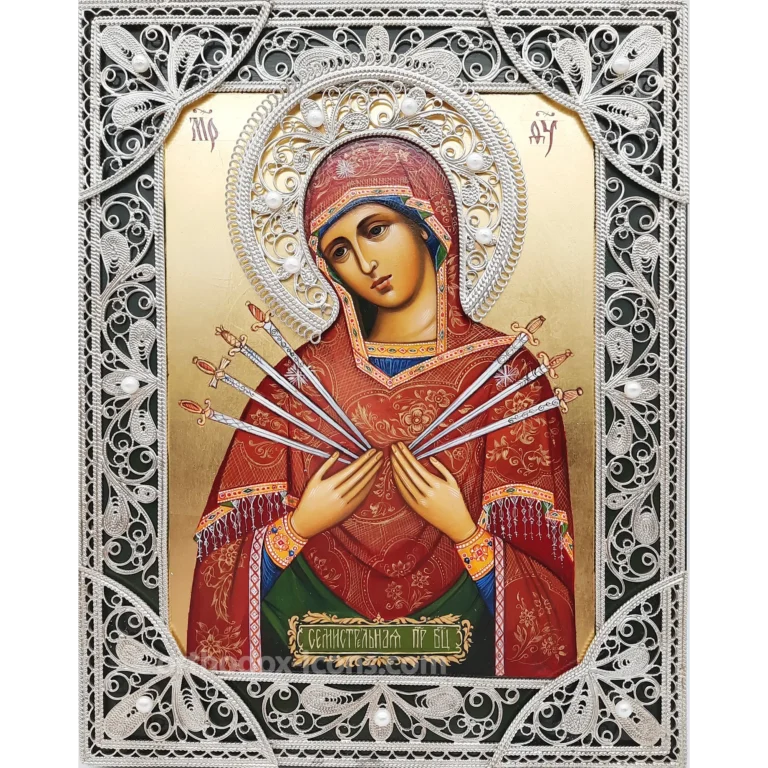
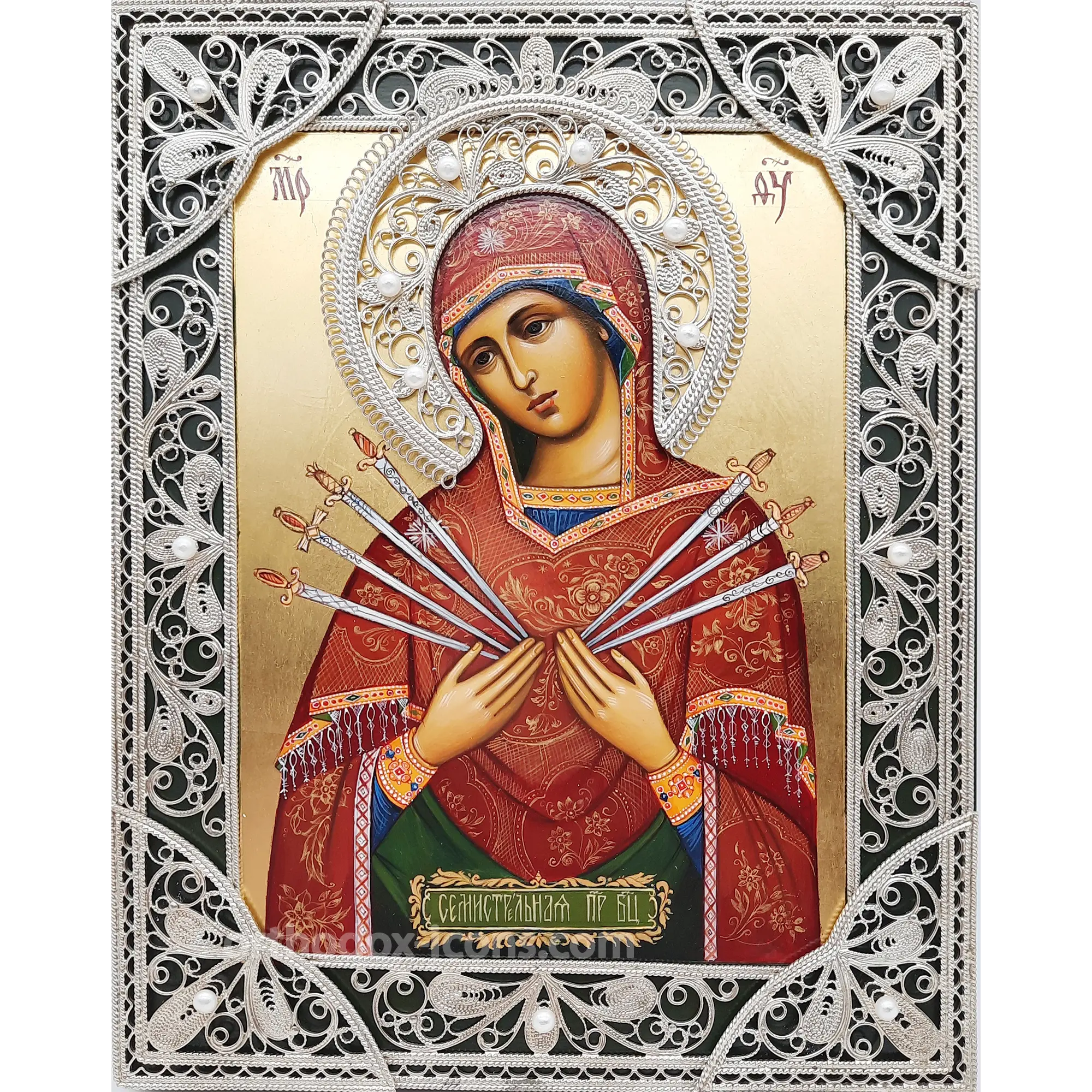
The Seven Arrows Icon of the Virgin Mary is a hand-painted Orthodox icon in a silver-white filigree setting. The Mother of God is shown without the Christ Child, with seven symbolic swords piercing her heart: four on one side and three on the other. This image is especially associated with prayer for peace, reconciliation, protection from anger and enmity, and the softening of hardened hearts.
The painted part is made on a linden board with gesso, mineral egg tempera, and 23K gold leaf (960 purity). The openwork setting is handmade from nickel silver filigree and decorated with white imitation pearls. Free international shipping is included, with payment due upon delivery.
It is possible to paint an image in any size to order
Free shipping worldwide
Among the many Orthodox icons of the Mother of God, The Seven Arrows Icon of the Virgin Mary has a particularly piercing and sober beauty. The image is quiet, restrained, and full of compassion: the Theotokos is shown without the Christ Child, her heart wounded by seven swords. For Orthodox Christians, this icon is connected with prayer for mercy, repentance, peace in the home, reconciliation between people, and protection from hatred and enmity.
This version is a hand-painted Seven Arrows icon in a handmade filigree setting. The warm, living surface of mineral egg tempera is surrounded by a silver-white lace of nickel silver filigree, with white imitation pearls worked into the ornament. The contrast between the painted face of the Mother of God and the airy metalwork gives the icon a solemn, ceremonial character while preserving the prayerful seriousness of the image.
The Seven Arrows Icon of the Virgin Mary – Meaning and Origin
The Seven Arrows icon is venerated in the Orthodox Church as an image of the suffering and compassionate heart of the Mother of God. Its feast day is celebrated on August 26 (August 13 according to the old calendar). The story of the icon’s glorification is traditionally connected with northern Russia, near Vologda, where a sick peasant received a dream calling him to find an icon of the Mother of God in the bell tower of the Church of Saint John the Theologian on the Toshna River.
According to the tradition, the clergy at first did not believe him and refused to allow him into the bell tower. Only after repeated requests was he permitted to search there. The icon was found in a shocking condition: it had been used as a step, with the holy image turned downward, because no one had recognized it as a sacred object. The icon was cleaned, a service of thanksgiving was offered, and the sick man received healing after prayer before it.
The Seven Arrows icon later became especially known in 1830, during a cholera epidemic in Vologda. The faithful carried the icon in procession around the city, and the epidemic was believed to have ceased through the prayers of the Mother of God. This history explains why the icon is often associated not only with personal sorrow and repentance, but also with protection, deliverance from danger, and peace for a whole household or community.
Iconography of the Seven Swords
On this icon, the Mother of God is shown alone, without the Christ Child. Her head is humbly inclined, her hands are folded upon her breast, and seven swords pierce her heart: four from one side and three from the other. This arrangement is the characteristic sign of the Seven Arrows type.
The image is rooted in the prophecy of the righteous elder Simeon, spoken when the infant Christ was brought to the Temple: “and a sword will pierce through your own soul also” (Luke 2:35). The swords therefore point first to the fullness of the Mother of God’s sorrow at the Passion and Crucifixion of her Son. She stands before the mystery of Christ’s suffering with perfect love, obedience, and compassion.
There is also a moral and spiritual meaning. In Orthodox teaching, the seven swords may be understood as the passions and sins that wound the human soul and grieve the loving heart of the Theotokos. The icon does not encourage fear or superstition. It calls the person who prays before it to put aside anger, envy, slander, resentment, and cruelty, and to seek repentance and mercy.
Seven Arrows and Softener of Evil Hearts
The Seven Arrows icon is closely related to the icon known as Softener of Evil Hearts, also called Simeon’s Prophecy. Their theological meaning is very close, and in everyday devotion the names are sometimes used together. The difference is mainly iconographic. In the Seven Arrows type, the swords are usually placed four on one side and three on the other. In the Softener of Evil Hearts type, three swords are placed on each side, and one sword comes from below.
Because of this meaning, the Seven Arrows icon is often chosen for prayer where there is tension, anger, conflict, or a need for reconciliation. It is a strong and serious image for a home prayer corner, for a family seeking peace, or as a meaningful Orthodox gift for a new home.
Filigree Setting, Gold, and Pearls
The distinctive feature of this icon is its handmade filigree setting. Filigree is a demanding jewelry technique in which thin metal wire is twisted, shaped, and soldered into openwork patterns. On this icon, the ornament is made from nickel silver, an alloy with a bright silver-white appearance. It is valued here because it keeps its noble shine well and gives the icon a refined, lace-like frame.
The filigree covers the wide borders of the board and forms a raised ornamental halo around the head of the Mother of God. White imitation pearls are set into the metal lace, especially around the nimbus and decorative elements. They soften the visual impression of the metal and add a ceremonial, luminous quality without changing the prayerful restraint of the image.
The painted part is made in the traditional technique used for hand-painted Orthodox icons. A linden board is prepared with linen cloth and gesso. The image is painted with mineral egg tempera, and the gold ground is made with 23K gold leaf (960 purity). After the painting is completed and protected, the filigree setting is mounted onto the board.
Prayer Use and Placement
Orthodox Christians pray before the Seven Arrows icon for protection of the home, for reconciliation between spouses and relatives, for peace with neighbors or colleagues, and for deliverance from anger, envy, slander, and violence. It is also a fitting icon for prayer during times of social unrest, war, or family conflict, asking the Mother of God to intercede before Christ and to soften hardened hearts.
By pious tradition, the icon is sometimes placed near the entrance of a home or opposite the door, as a prayerful sign that evil, anger, and ill will should not enter the household. It may also be placed in the family icon corner together with other icons of Christ, the Mother of God, and the saints.
Size and Ordering
Available size: 17×21 cm (6.7×8.3 in). Larger formats, including more ceremonial sizes for a home icon corner or an iconostasis, may be discussed individually before the icon is made. Free international shipping is included, with payment due upon delivery.
Icon Characteristics
| Name | The Seven Arrows Icon of the Virgin Mary |
| Icon type | Seven Arrows Mother of God, also associated with Softener of Evil Hearts |
| Composition | The Mother of God without the Christ Child; seven swords piercing her heart, four on one side and three on the other |
| Board | Linden board, linen cloth, gesso, oak braces |
| Painting | Mineral egg tempera |
| Gold | 23K gold leaf (960 purity) |
| Decorative setting | Handmade nickel silver filigree with white imitation pearls |
| Available size | 17×21 cm (6.7×8.3 in) |
| Main prayer themes | Peace in the home, reconciliation, protection from enmity, repentance, softening of hardened hearts |
Questions and Answers
What does the Seven Arrows Icon of the Virgin Mary represent?
It represents the sorrow of the Mother of God, shown without the Christ Child and pierced by seven swords. The image recalls Simeon’s prophecy that a sword would pierce her soul and calls the faithful to repentance, mercy, and peace.
Why are there seven swords on this icon?
In Orthodox interpretation, the seven swords signify the fullness of the Mother of God’s suffering at the Passion of Christ. They are also understood as a reminder of the sins and passions that wound the human heart and bring sorrow to the Theotokos.
How is the Seven Arrows icon different from Softener of Evil Hearts?
The two icons are closely related in meaning. In the Seven Arrows icon, the swords are usually arranged four on one side and three on the other. In the Softener of Evil Hearts type, three swords are placed on each side and one comes from below.
What is the filigree setting made from?
The openwork setting is handmade from nickel silver wire. Nickel silver has a bright silver-white appearance, keeps its noble shine well, and is used here to create a lace-like ornamental frame around the painted icon.
Are the pearls natural?
No. This icon is decorated with white imitation pearls, which are set into the nickel silver filigree to give the icon a soft, ceremonial appearance.
What materials are used for the painted icon?
The icon is painted on a linden board prepared with linen cloth and gesso. The image is painted in mineral egg tempera, with a gold background made with 23K gold leaf (960 purity).
Where is the Seven Arrows icon often placed in a home?
By pious tradition, this icon is often placed near the entrance to the home or in the family prayer corner, as a prayerful reminder of peace, protection, and reconciliation.
What do Orthodox Christians pray for before this icon?
People pray before this icon for peace in the family, reconciliation between enemies, protection from anger, envy, slander, and violence, and help in overcoming their own irritation and hardness of heart.
When is the feast day of the Seven Arrows Icon?
The feast of the Seven Arrows Icon of the Mother of God is celebrated on August 26, which corresponds to August 13 in the old calendar.
Can this icon be ordered in a larger size?
The listed size is 17×21 cm, but larger formats and iconostasis sizes may be discussed individually before the icon is made.
| Dimensions | 17x21cm (6.7×8.3 in) |
|---|---|
| Name | Mary |