Paramythia Icon
$1000
Available size: 27×31 cm (10.6×12.2 in); larger formats may be made by agreement.
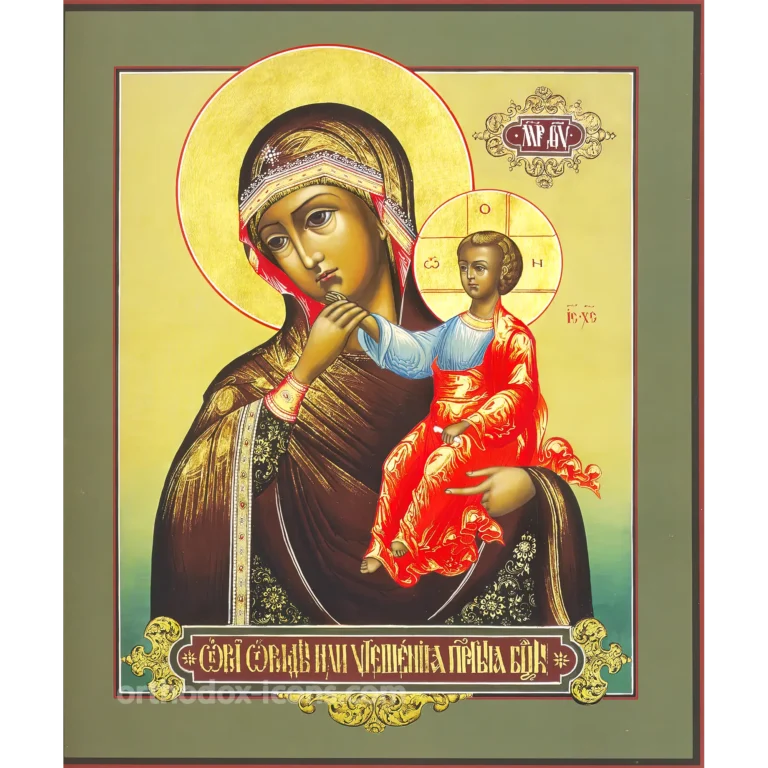
Paramythia Icon, also known as the Vatopedi icon of the Mother of God ?Joy and Consolation,? is a hand-painted Orthodox icon based on the miracle at Vatopedi Monastery on Mount Athos. The image shows the living dialogue between divine justice and the merciful intercession of the Theotokos.
The icon is painted on a linden board with mineral egg tempera and 23K gold leaf (960 purity). It includes gold halos, a warm gilded background, gold assist on Christ’s garments, and decorative cartouches with the Church Slavonic name of the icon. Free international shipping is included, with payment due upon delivery.
It is possible to paint an image in any size to order
Free shipping worldwide
Paramythia Icon is the Vatopedi icon of the Mother of God known in Russian tradition as ?Joy and Consolation.? This hand-painted Orthodox icon is one of the most striking images of the Theotokos because it does not show a still pose only. It preserves a living dialogue: Christ as righteous Judge, and His Mother as merciful intercessor for people in danger.
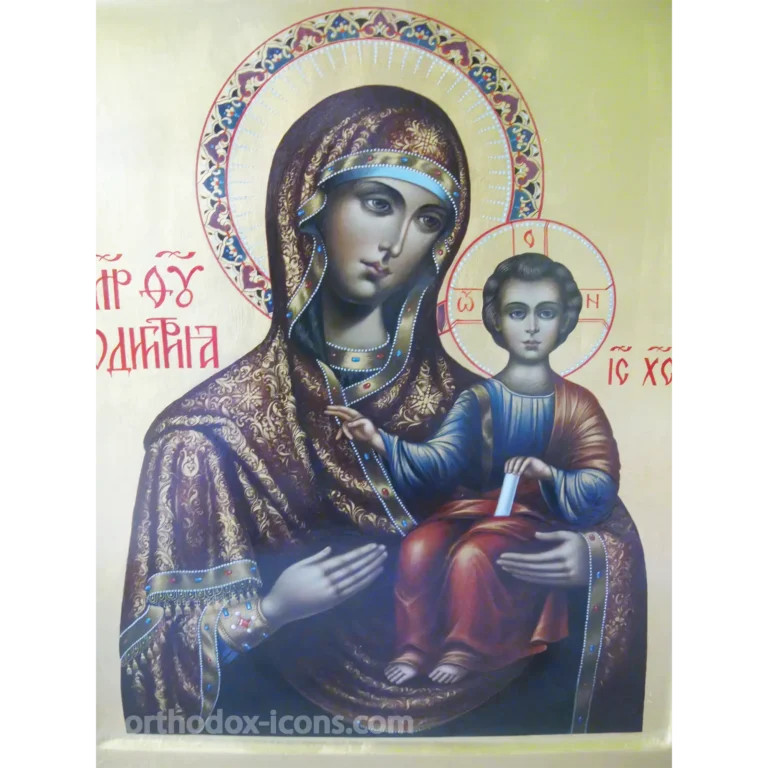
In the icon, the Christ Child reaches toward the mouth of the Mother of God, while she gently moves His hand aside and turns to warn the monks of Vatopedi Monastery. The meaning is deeply Orthodox: divine justice is real, but the maternal prayer of the Theotokos gives sinners a chance for repentance, protection, and salvation.
Paramythia Icon – Vatopedi Joy and Consolation
The original Paramythia icon is connected with Vatopedi Monastery on Mount Athos. In Greek tradition, the name Paramythia means consolation or comfort. The icon is loved as a sign of the protection of the Mother of God over those who turn to her in sorrow, danger, and spiritual exhaustion.
The miracle associated with the icon is traditionally dated to the year 807. At that time, Athonite monasteries were often threatened by sea raiders. One morning, pirates landed near Vatopedi and hid outside the monastery, waiting for the gates to open so they could enter, kill the monks, and plunder the church.
After the morning service, the monks returned to their cells, and only the abbot remained in the church for prayer. Suddenly he heard the voice of the Mother of God coming from the old wall image: she told him not to open the gates that day, but to go up onto the monastery walls and drive away the attackers.
The Miracle and the Living Gesture
When the abbot looked up, he saw that the figures on the icon had changed. The Christ Child, sitting in the arms of His Mother, looked sternly at her and stretched out His hand to cover her mouth, saying that the monks should be punished for their sins and carelessness. But the Mother of God, filled with compassion, gently turned her head and moved His hand away so she could repeat her warning.
The abbot gathered the brethren at once. The monks went up onto the walls and found the pirates hidden outside the monastery. Through the warning of the Theotokos, the attack was prevented and Vatopedi was saved. Since then, the icon has been venerated as ?Joy and Consolation,? and the altered gesture of the image has remained as a sign of the miracle.
Iconography and Theological Meaning
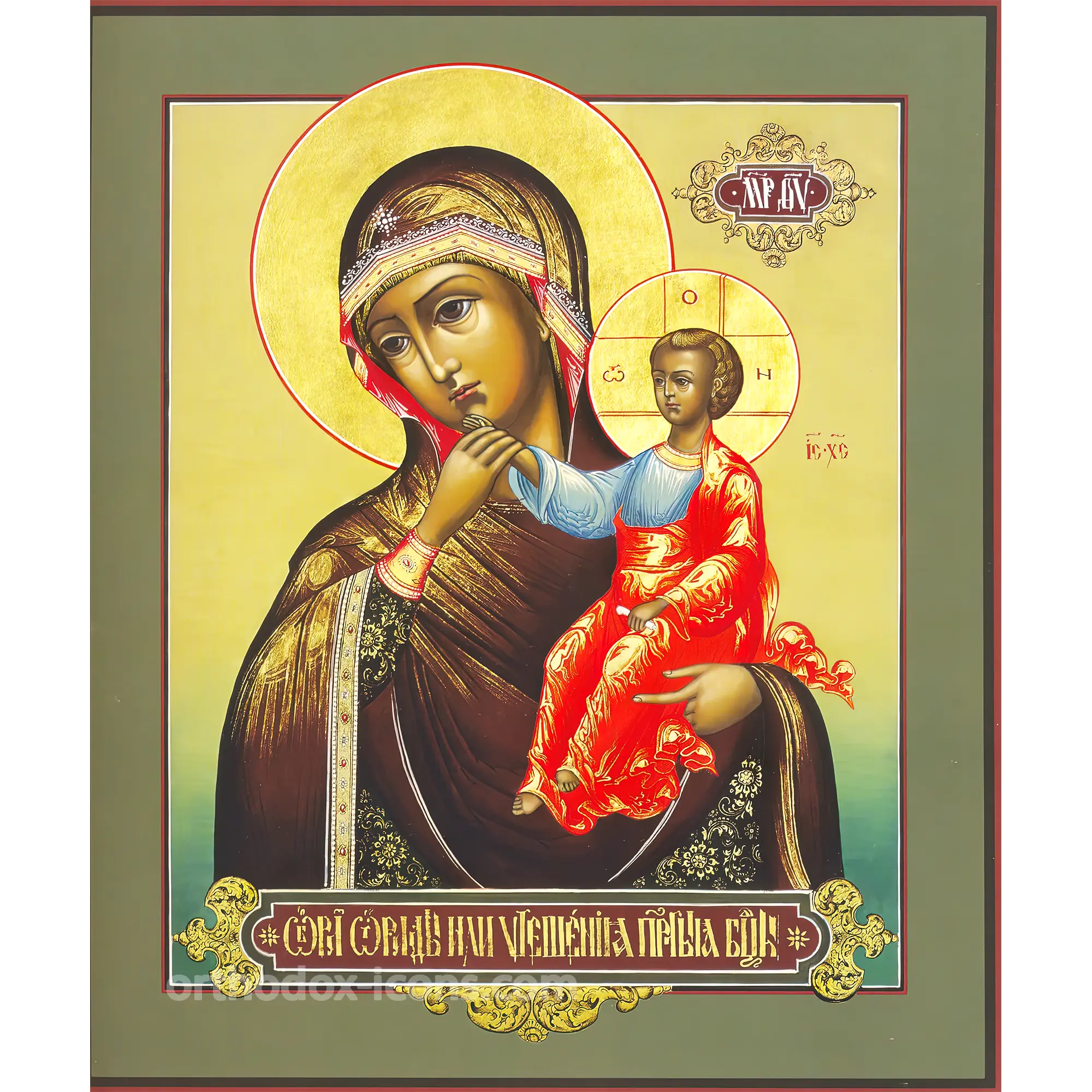
The Paramythia icon is unlike many more static icons of the Mother of God. Its whole meaning is carried by movement and gesture. The face of the Theotokos is full of compassion, tenderness, and sorrow over human sin. Her right hand restrains the hand of Christ, not in opposition to Him, but as a maternal plea for mercy.
The Christ Child is shown with unusual seriousness. He is not portrayed only as a tender infant, but as Emmanuel, the eternal God and Judge. His hand over the mouth of His Mother expresses divine justice. The gesture of the Mother of God expresses intercession, mercy, and the hope that punishment may become an opportunity for repentance.
In this particular hand-painted icon, the Mother of God wears a deep cherry-brown maphorion with gold fringe and the traditional stars of ever-virginity. Christ wears a light tunic and a rich scarlet himation, written with gold assist. The warm gold background places the figures in the light of the Kingdom of Heaven.
Gold Cartouches and Decorative Details
A distinctive feature of this icon is the lower field with decorative gold cartouches. Inside the central cartouche, the Church Slavonic name of the icon is written in ornamental script: the Mother of God ?Joy and Consolation.? These cartouches give the image a solemn and finished character while preserving its traditional Athonite meaning.
The green fields, gold ornament, halos, and gilded background create a rich but prayerful appearance. The gold does not serve as luxury for its own sake. In Orthodox iconography, gold points to divine light, heavenly reality, and the sacredness of the image.
Prayer Before the Paramythia Icon
People pray before the Paramythia icon for consolation in deep sorrow, for help during grief, for deliverance from despair, and for renewed spiritual strength when human strength seems exhausted. The title ?Joy and Consolation? expresses this main spiritual character of the icon.
Because the miracle at Vatopedi involved the protection of a monastery from attackers, the icon is also associated with prayer for the protection of a home, family, church, or monastery from danger, theft, violence, fire, and evil intentions.
Believers also turn to this icon in repentance, asking the Mother of God to intercede before Christ, to help them return from sin, and to receive the mercy needed for a new beginning. The image is therefore especially meaningful when a person needs both protection and correction.
Materials and Mstyora Technique
This icon is painted by hand in the Mstyora tradition. The board is made from seasoned linden wood and strengthened with oak braces. The front surface is covered with linen cloth and natural chalk gesso, polished smooth for the painting.
The image is painted with mineral egg tempera. Natural pigments are ground and mixed with an egg-based emulsion, creating deep and durable color. The background, halos, and decorative details are gilded with 23K gold leaf (960 purity), and gold assist is used on the garments of Christ. The completed icon is protected with traditional varnish or oil finish.
Size and Ordering
Available size: 27×31 cm (10.6×12.2 in). Larger formats, including 30×40 cm, 40×50 cm, and church or iconostasis sizes, may be discussed individually before the icon is made. Free international shipping is included, with payment due upon delivery.
Icon Characteristics
| Name | Paramythia Icon |
| Traditional name | Mother of God ?Joy and Consolation,? Vatopedi icon |
| Origin | Vatopedi Monastery, Mount Athos |
| Composition | Christ covers the mouth of the Mother of God; the Theotokos moves His hand aside and warns the monks |
| Distinctive details | Gold background, green fields, decorative lower cartouches with Church Slavonic inscription |
| Board | Linden wood, linen cloth, natural gesso, oak braces |
| Painting | Mineral egg tempera |
| Gold | 23K gold leaf (960 purity), gold assist on Christ’s garments |
| Available size | 27×31 cm (10.6×12.2 in); larger sizes by agreement |
| Main prayer themes | Consolation in sorrow, protection of the home, deliverance from danger, healing, repentance, forgiveness |
Questions and Answers
What is the Paramythia Icon?
Paramythia means Joy and Consolation. It is the Vatopedi icon of the Mother of God, connected with a miracle on Mount Athos in which the Theotokos warned the monks of danger.
Where is the original Paramythia icon?
The original wonderworking image is kept at Vatopedi Monastery on Mount Athos in Greece. It is one of the most revered Athonite icons of the Mother of God.
What miracle is connected with this icon?
According to tradition, in 807 the Mother of God warned the abbot not to open the monastery gates because pirates were waiting outside. The monks were saved after they went to the walls and discovered the ambush.
Why does Christ cover the mouth of the Mother of God?
In the icon, Christ is shown as the righteous Judge, wishing to allow the careless monks to be punished. His hand over His Mother’s mouth expresses divine justice.
Why does the Mother of God move Christ’s hand away?
The Theotokos gently but firmly moves His hand away so she can warn the monks. This gesture expresses her maternal mercy and intercession for sinners.
What does the icon teach spiritually?
The icon shows that divine justice is real, but the merciful intercession of the Mother of God gives people a chance to repent, be protected, and return to God.
What do people pray for before the Paramythia icon?
People pray for consolation in sorrow, protection of the home, deliverance from danger, healing, forgiveness, and help in moments of despair or spiritual weakness.
What are the cartouches at the bottom of the icon?
The decorative cartouches on the lower field contain the Church Slavonic name of the icon, ‘Joy and Consolation,’ written in a traditional calligraphic style.
What materials are used for this icon?
The icon is painted on a linden board prepared with linen cloth and gesso. The painting is made with mineral egg tempera, with 23K gold leaf for the background, halos, and decorative details.
Can this icon be ordered in a larger size?
The listed size is 27×31 cm. Larger 30×40 cm, 40×50 cm, and church or iconostasis formats may be discussed individually before the icon is made.
| Dimensions | 27x31cm (10.6×12.2 in) |
|---|---|
| Name | Mary |