Image Not Made by Hands Orthodox Icon
$850
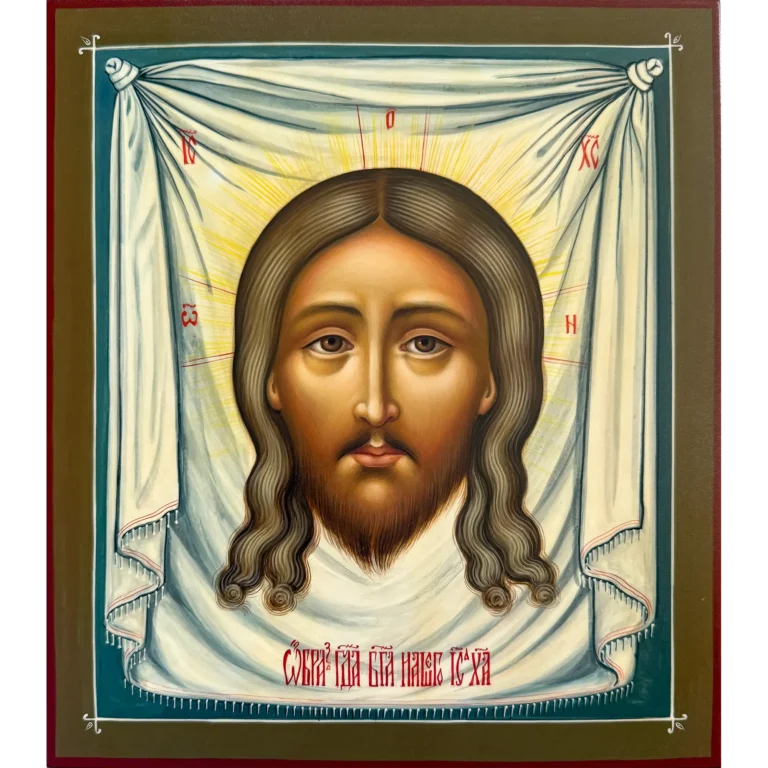
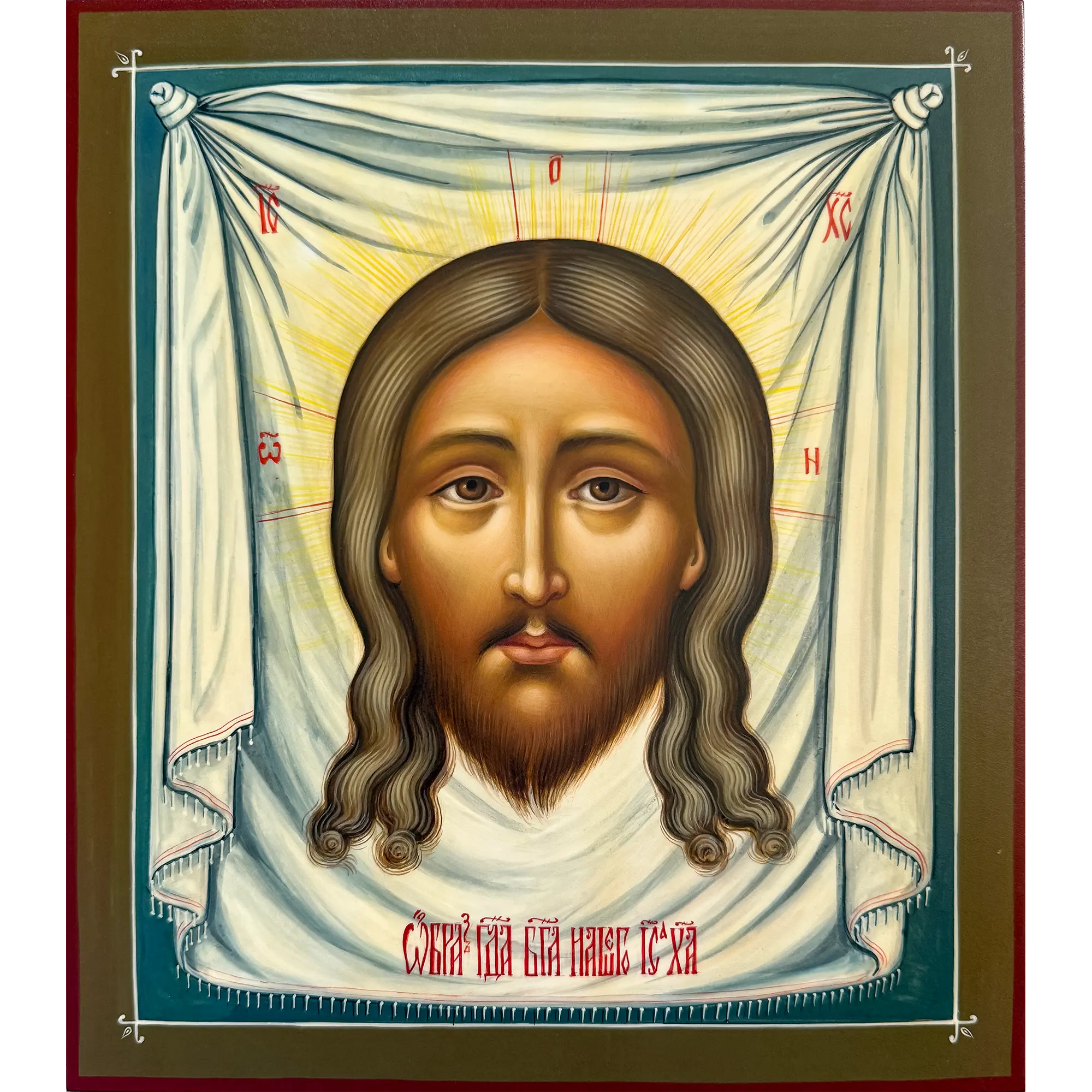
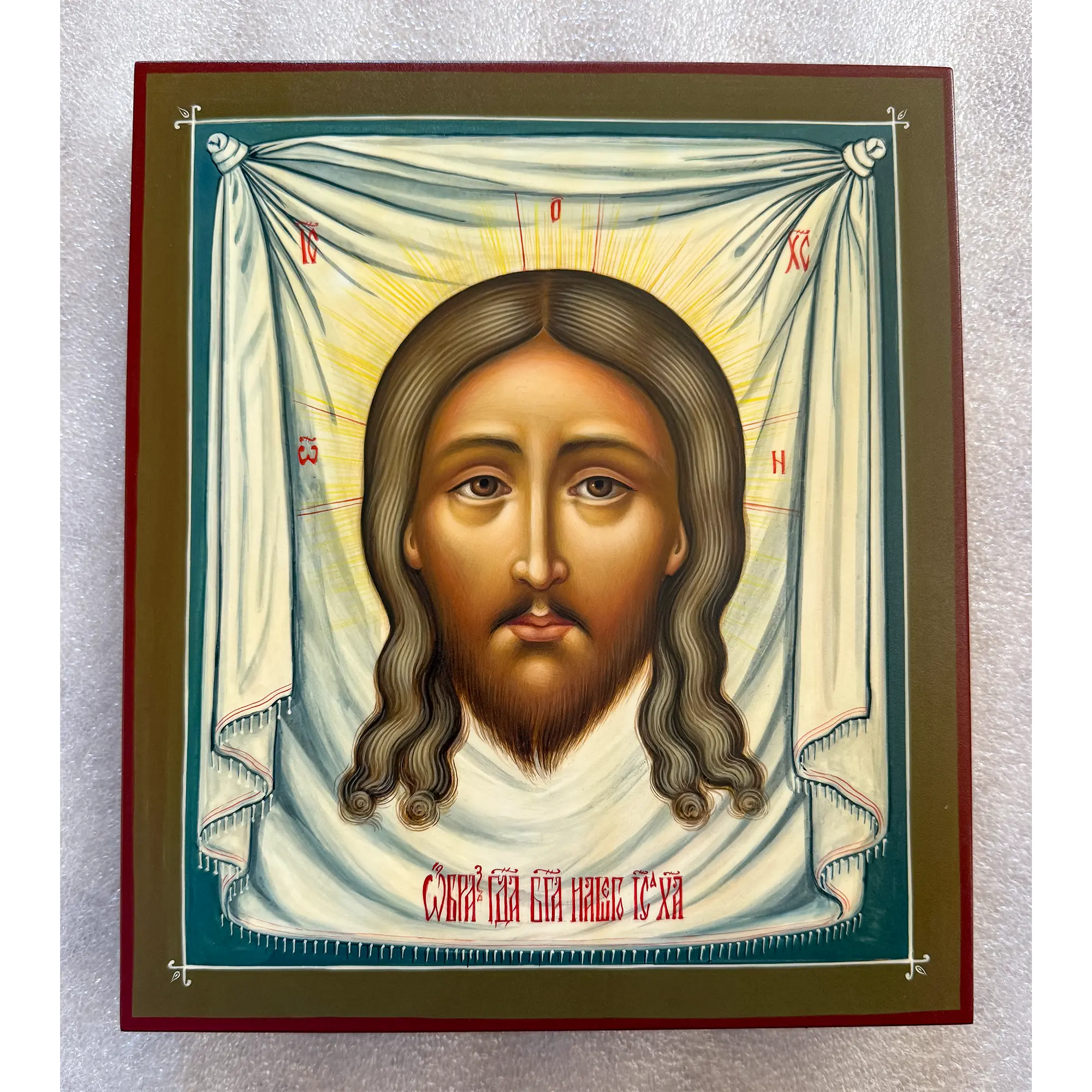
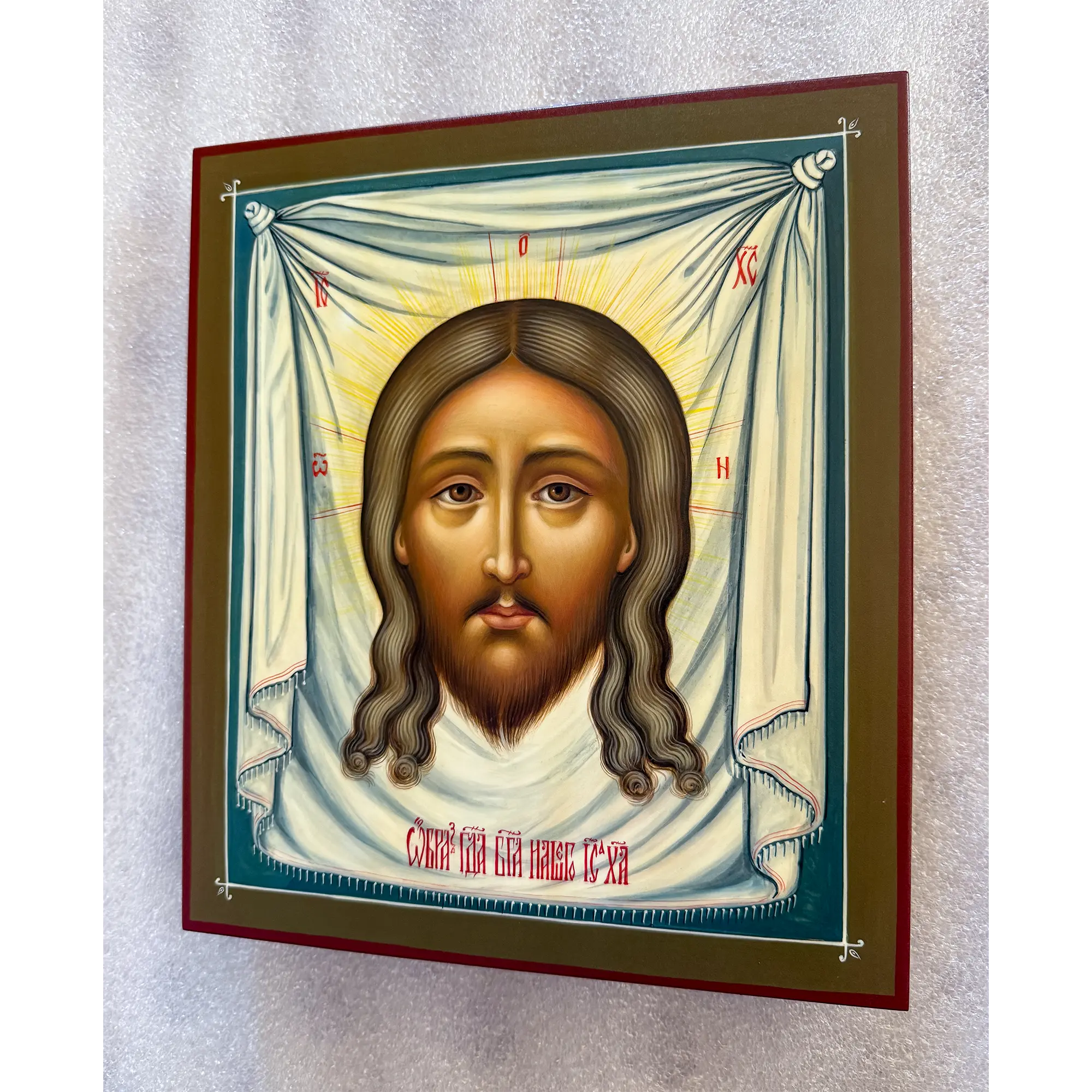
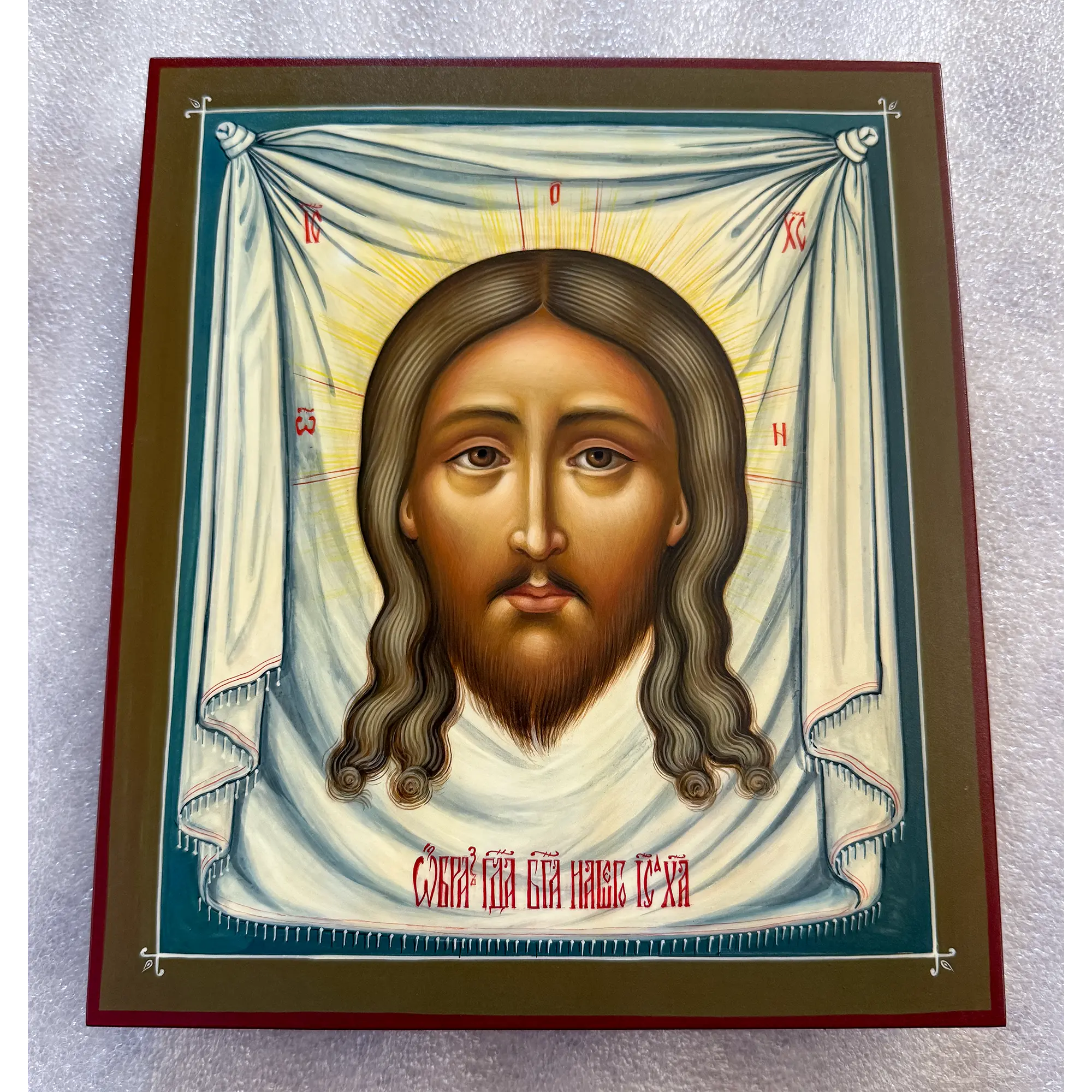
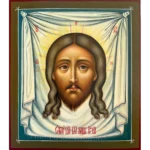
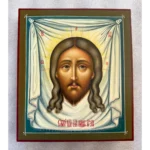
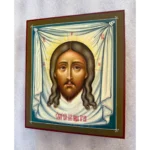
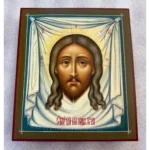
Image Not Made by Hands Orthodox Icon is a hand-painted icon of the Holy Face of Christ on the Mandylion, also known as the Holy Face or Savior Not Made by Hands. The face of Christ is shown on a white cloth with a radiant cross halo and Church Slavonic inscription.
Available size: 27×31 cm (10.6×12.2 in).
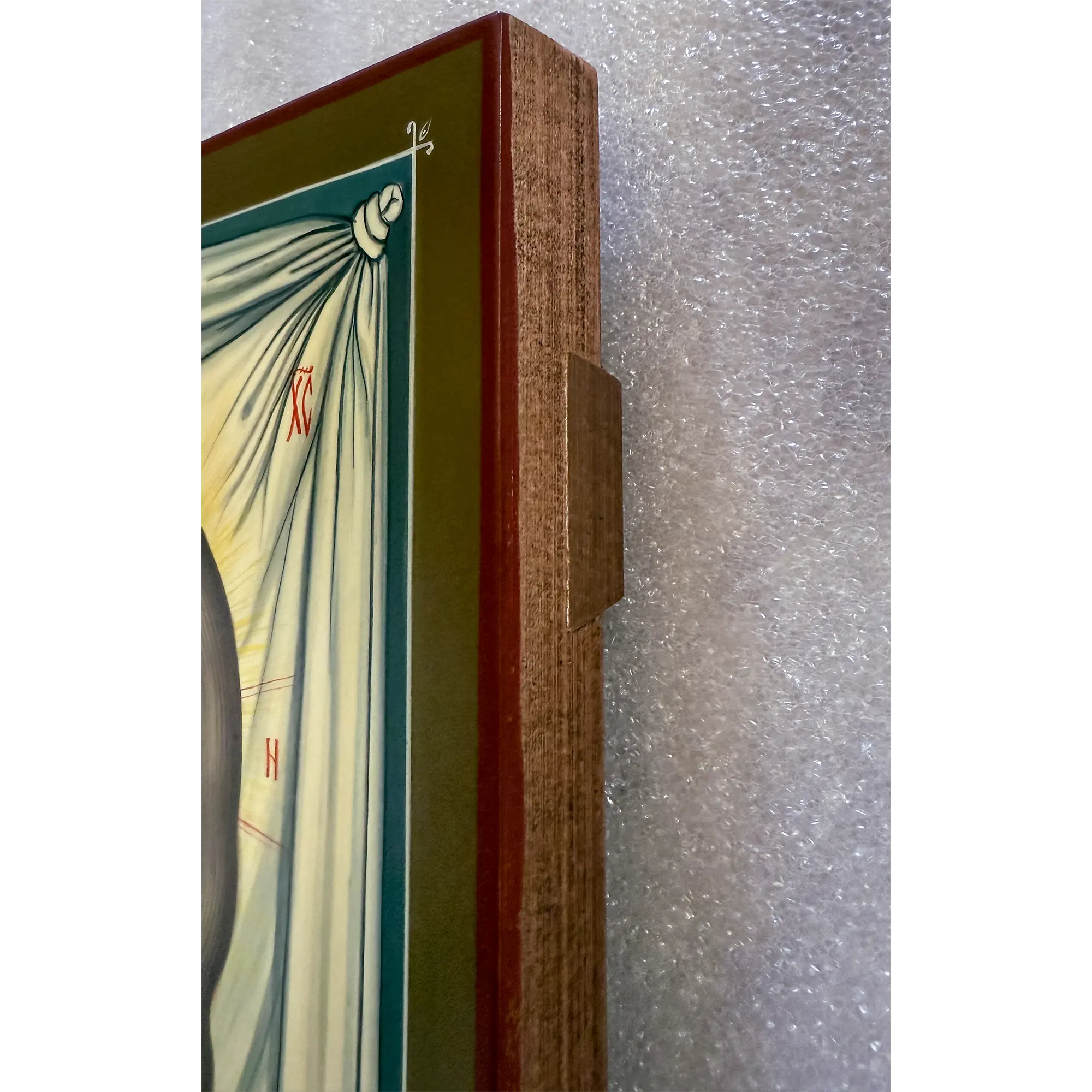
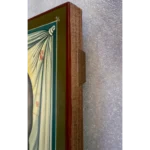
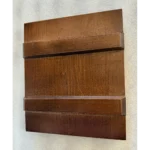
Materials: linden wood board with splines, linen cloth, chalk gesso, egg tempera, gold leaf on the halo and rays, and protective varnish. Board without kovcheg.
Technique: traditional hand-painted icon on wood.
It is possible to paint an image in any size to order
Free shipping worldwide
The Image Not Made by Hands Orthodox Icon occupies a foundational place in Orthodox iconography. It is not simply one image of Christ among many, but a sacred type connected with the very beginning of Christian icon veneration. In Orthodox tradition, this image is also called the Holy Face, the Mandylion, or the Savior Not Made by Hands.
The theological meaning of the icon is especially important. The invisible and incomprehensible God truly became man in Jesus Christ; therefore His human face can be shown in a holy image. The icon does not attempt to replace the living Lord. It bears witness to the Incarnation and turns the gaze of the believer toward Christ Himself.
This hand-painted version is made in the Mstyora icon-painting tradition. It shows the face of the Savior on a white cloth, with a radiant cross halo, red Christograms, soft blue-gray folds, and a solemn dark olive border. The composition is restrained, direct, and prayerful: there are no narrative figures or distracting details, only the face of Christ looking toward the person who prays.
History of the Holy Face and the King of Edessa
The tradition of the Image Not Made by Hands is connected with Abgar V, the ruler of Edessa in Syria. According to Church tradition, Abgar suffered from a grave illness and, having heard about Jesus Christ and His miracles, sent a letter asking the Savior to come and heal him. He also sent the painter Ananias, hoping that if Christ could not come in person, an image of His face might be brought back to Edessa.
Ananias came to Jerusalem but could not draw the face of Christ. The crowd was large, and the divine radiance of the Savior made the task impossible. Seeing the painter’s effort and knowing the faith of Abgar, Christ asked for water and a linen cloth. He washed His face and wiped it with the cloth, and His face was miraculously impressed upon it.
This cloth, known as the Mandylion, was taken to Abgar together with the Lord’s reply. The king received the holy image with reverence and was healed. The image was later placed above the gates of Edessa as a protector of the city. In time, during persecution, it was hidden in a niche and sealed with tile and brick. When the place was later opened, tradition says that the cloth was preserved and that a second imprint appeared on the tile that had covered it.
In 944 the holy image was solemnly transferred from Edessa to Constantinople. The Orthodox Church commemorates this event on August 16 according to the church calendar, August 29 on the civil calendar. Although the original Mandylion was lost after the sack of Constantinople in 1204, many copies of this iconographic type spread throughout the Orthodox world.
Iconography of This Image Not Made by Hands
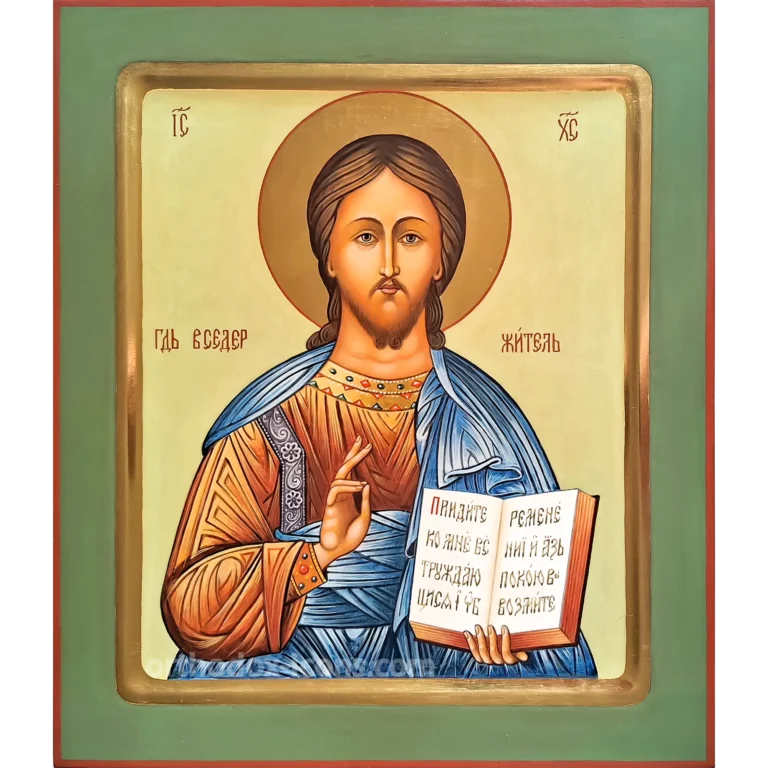
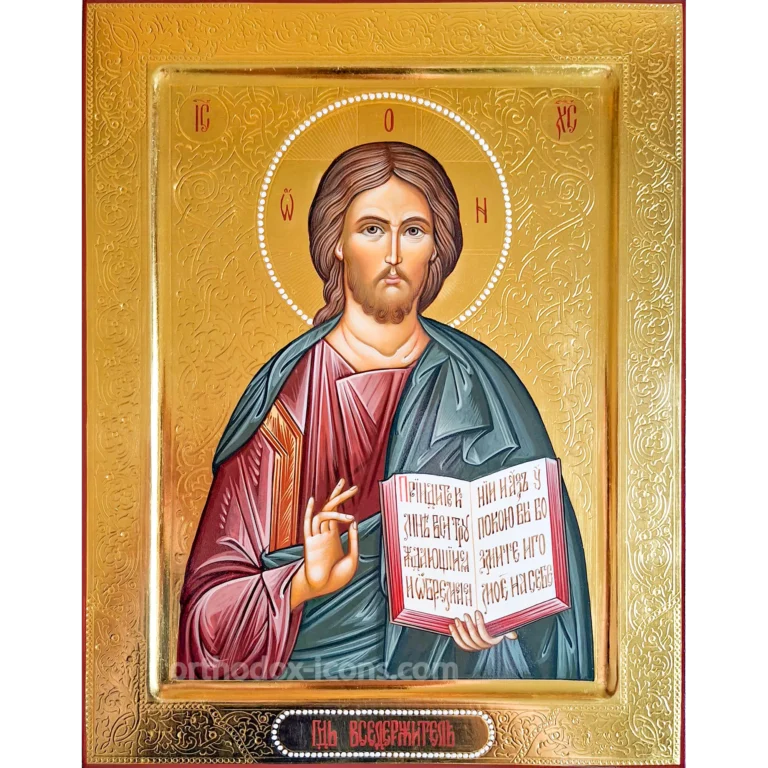
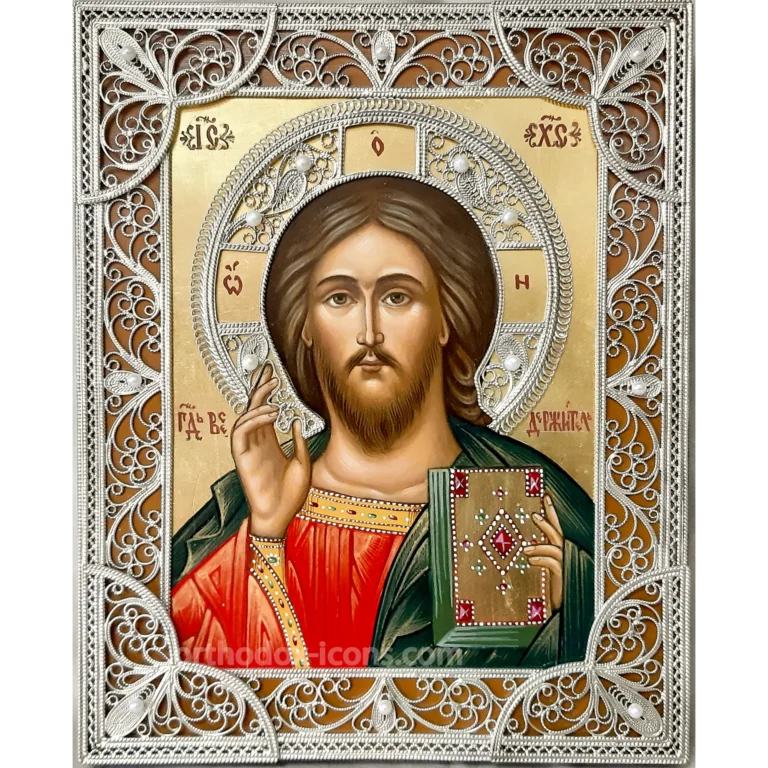
This icon belongs to the classic type known as Christ on the cloth, or Savior on the ubrus. Its strength lies in its simplicity. Unlike the Pantocrator icon, where Christ may hold the Gospel and bless with His right hand, this image shows only the face of the Savior on the cloth. The result is a direct, concentrated encounter with the mystery of the Incarnate Word.
The face of Christ is painted with careful symmetry and calm spiritual intensity. The high forehead recalls divine wisdom; the large eyes look directly toward the viewer; the nose, lips, beard, and hair are rendered with restraint and balance. The expression is not sentimental. It contains sorrow for human sin, the solemnity of the Judge, and the mercy of the Savior who came for the life of the world.
The hair of Christ is parted in the middle and falls in separate locks. The beard is divided into narrow strands, a detail traditionally connected with the story that the face was wiped with a cloth after washing. These separate locks give the image the characteristic appearance often called the wet-beard type in Russian iconographic terminology.
The white cloth is shown as a folded and suspended veil. Blue-gray shadows shape the folds and give the cloth a living, airy presence. The lower edge is decorated with fringe, while the red Church Slavonic inscription identifies the image. The dark olive field around the cloth gives the icon a noble, quiet depth and makes the light face and halo stand out more strongly.
The cross halo bears the Greek letters that mean He Who Is. In Orthodox iconography, this inscription confesses the divinity of Christ. The one whose human face is shown on the cloth is not merely a prophet or teacher, but the eternal Son of God, Lord of heaven and earth.
Mstyora Painting Technique and Materials
This icon is painted according to the traditions preserved by Mstyora iconographers. The Mstyora school is known for fine drawing, delicate color transitions, careful detail, and a quiet luminous quality. Such a manner is especially appropriate for the Holy Face, where the entire spiritual force of the image depends on the expression of the eyes, the modeling of the face, and the harmony of the cloth.
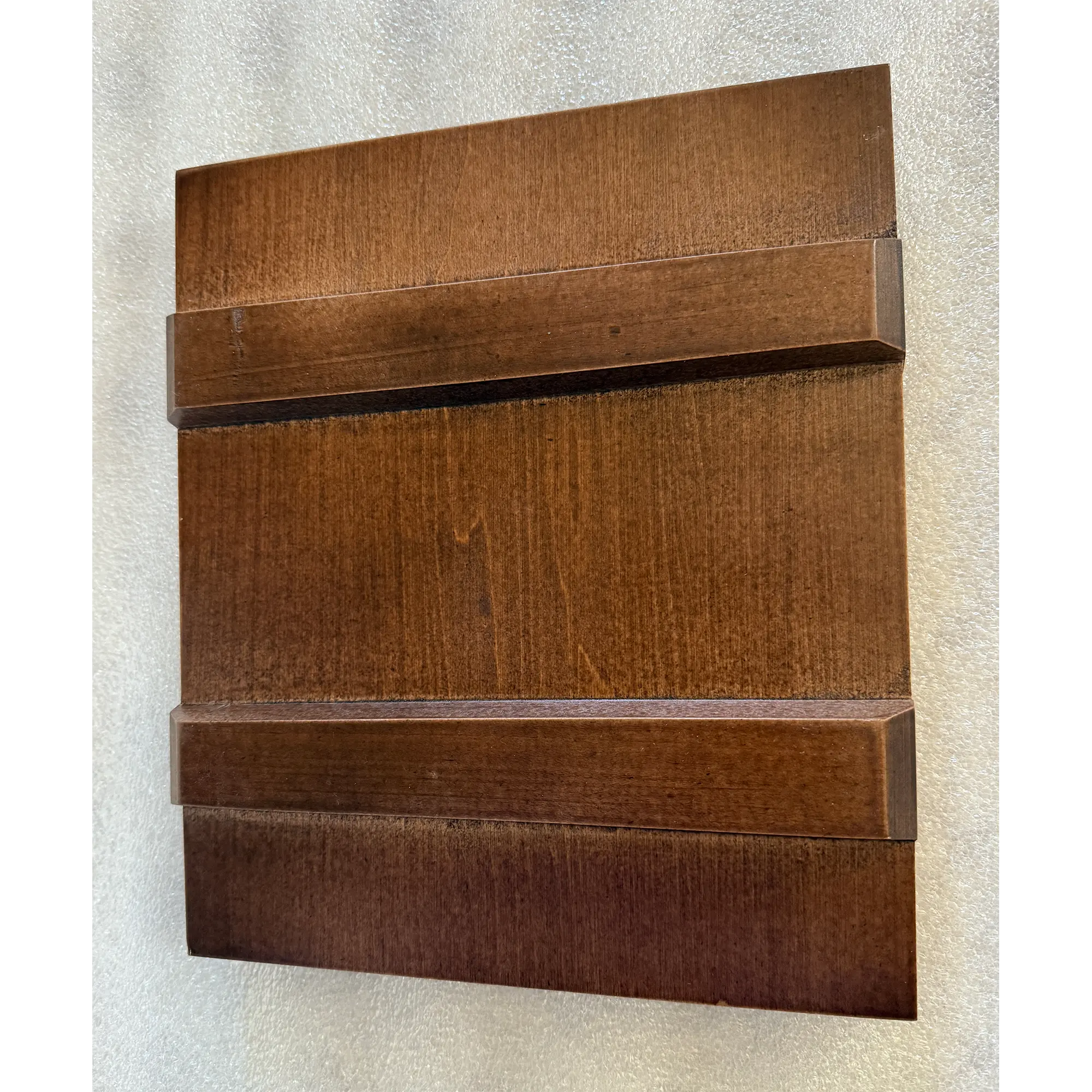
The icon is painted on a solid linden wood board. The board is strengthened with splines to help prevent warping. Linen cloth is applied to the surface, followed by layers of natural chalk gesso. The prepared ground allows the iconographer to work with fine lines and smooth transitions.
The painting is executed in egg tempera with natural mineral pigments. The face is built through successive translucent layers, moving from darker tones toward light. This method gives the image depth without losing the sacred restraint of Orthodox icon painting.
Gold leaf is used on the halo and rays of light. The finished icon is protected with natural drying oil or high-quality restoration varnish. The board is made without a kovcheg, which matches the flat format of this ready hand-painted icon.
Prayer and Spiritual Meaning
The Image Not Made by Hands is a universal icon of Christ. Before it, Orthodox Christians pray for forgiveness, repentance, healing of soul and body, protection, peace in the family, help in travel, and strength in difficult circumstances. Its meaning is not limited to one narrow request, because the prayer is addressed directly to the Savior.
The tradition of Abgar’s healing gives this icon a special association with prayer in illness and suffering. For this reason it is often given as a sign of prayerful support to a person facing sickness, surgery, fear, or another serious trial. Such a gift should be understood reverently: the icon points the person toward Christ, prayer, confession, and hope in God’s mercy.
The strict gaze of the Savior also makes the icon especially suitable for repentance. It invites a person to stand honestly before God, to remember the Gospel, and to ask for a clean heart. At the same time, the image is deeply consoling: the face of Christ is not remote or abstract, but present, visible, and merciful.
When This Icon Is Given
A hand-painted Image Not Made by Hands icon is a strong central image for a home icon corner. It may be given for a wedding, anniversary, house blessing, birthday, name day, or as a meaningful gift to a person who carries responsibility for others.
It is also appropriate as a gift to a church, monastery, chapel, or prayer room. The icon can serve as a spiritual center of a space because the Holy Face of Christ naturally gathers the attention of prayer. In a home, it may be placed with icons of the Mother of God, patron saints, and other family prayer images.
Free international shipping is included, and payment is made after you receive and approve the icon.
Icon Characteristics
| Icon name | Image Not Made by Hands Orthodox Icon |
| Traditional names | Holy Face, Mandylion, Savior Not Made by Hands |
| Composition | Face of Christ on the white cloth with cross halo and Church Slavonic inscription |
| Available size | 27×31 cm (10.6×12.2 in) |
| Board | Linden wood board with splines, without kovcheg |
| Ground | Linen cloth and natural chalk gesso |
| Painting | Egg tempera with natural mineral pigments |
| Gold | Gold leaf on the halo and rays |
| Finish | Natural drying oil or protective restoration varnish |
| Shipping | Free international shipping; payment after receiving and approving the icon |
Care and Preservation
A hand-painted wooden icon should be protected from direct sunlight, moisture, sudden temperature changes, and heating devices. It should not be cleaned with water, alcohol, polish, or household chemicals. Dust may be removed with a dry soft brush or cloth.
If the surface ever shows serious cracking, flaking, or darkening, restoration should be entrusted to a professional icon restorer. The icon should not be varnished, retouched, or repaired at home.
Questions and Answers
What is the Image Not Made by Hands?
The Image Not Made by Hands is the Orthodox icon of the Holy Face of Christ on the cloth, or Mandylion. According to Church tradition, the face of the Savior was miraculously impressed on a linen cloth during His earthly life.
How is this icon different from Christ Pantocrator?
Christ Pantocrator usually shows the Savior half-length or enthroned, with the Gospel and a blessing gesture. The Image Not Made by Hands shows only the face of Christ on the cloth, concentrating attention on the mystery of the Incarnation.
What is shown on this particular icon?
This icon shows the face of Christ on a white cloth with blue-gray folds, a radiant cross halo, red Christograms, a dark olive border, and a Church Slavonic inscription along the lower part of the cloth.
What does the cloth mean?
The cloth, called the ubrus or Mandylion, recalls the tradition of the miraculous imprint of Christ’s face. It also shows that the Son of God truly became visible in human flesh.
What do the letters in the halo mean?
The Greek letters in the cross halo mean He Who Is. They confess that Jesus Christ is true God, eternal and uncreated, the same Lord who revealed His name to Moses.
What materials are used for this icon?
The icon is painted on a linden wood board with splines, linen cloth, natural chalk gesso, egg tempera, gold leaf on the halo and rays, and a protective varnish. The board is made without a kovcheg.
What size is available?
This icon is available in 27×31 cm (10.6×12.2 in). Other sizes may be discussed individually before ordering.
Is this icon suitable for a home icon corner?
Yes. The Image Not Made by Hands is one of the central icons of Christ and is suitable for a home icon corner, prayer room, chapel, or parish interior.
How should this hand-painted icon be cared for?
Keep the icon away from direct sunlight, moisture, heating devices, and sudden temperature changes. Dust it only with a dry soft brush or cloth.
Do you offer international shipping?
Yes. Free international shipping is included, and payment is made after you receive and approve the icon.
| Dimensions | 27x31cm (10.6×12.2 in) |
|---|---|
| Name | Jesus |