The Lazarus Icon
Price range: $500 through $1600
Available sizes: 17×21 cm (6.7×8.3 in), 20×24 cm (7.9×9.4 in), 27×31 cm (10.6×12.2 in), 30×40 cm (11.8×15.7 in); church formats can be made by individual request.
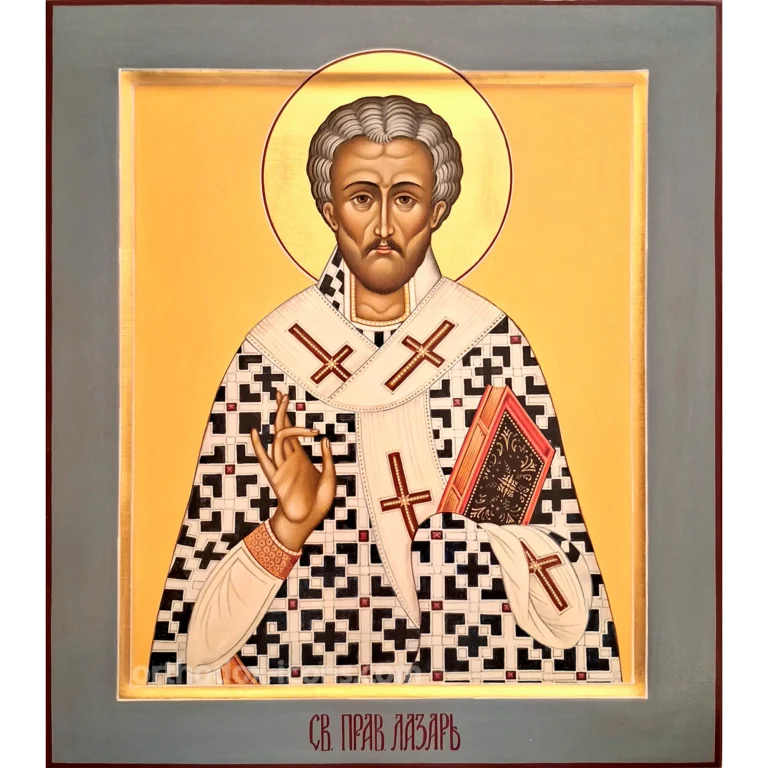
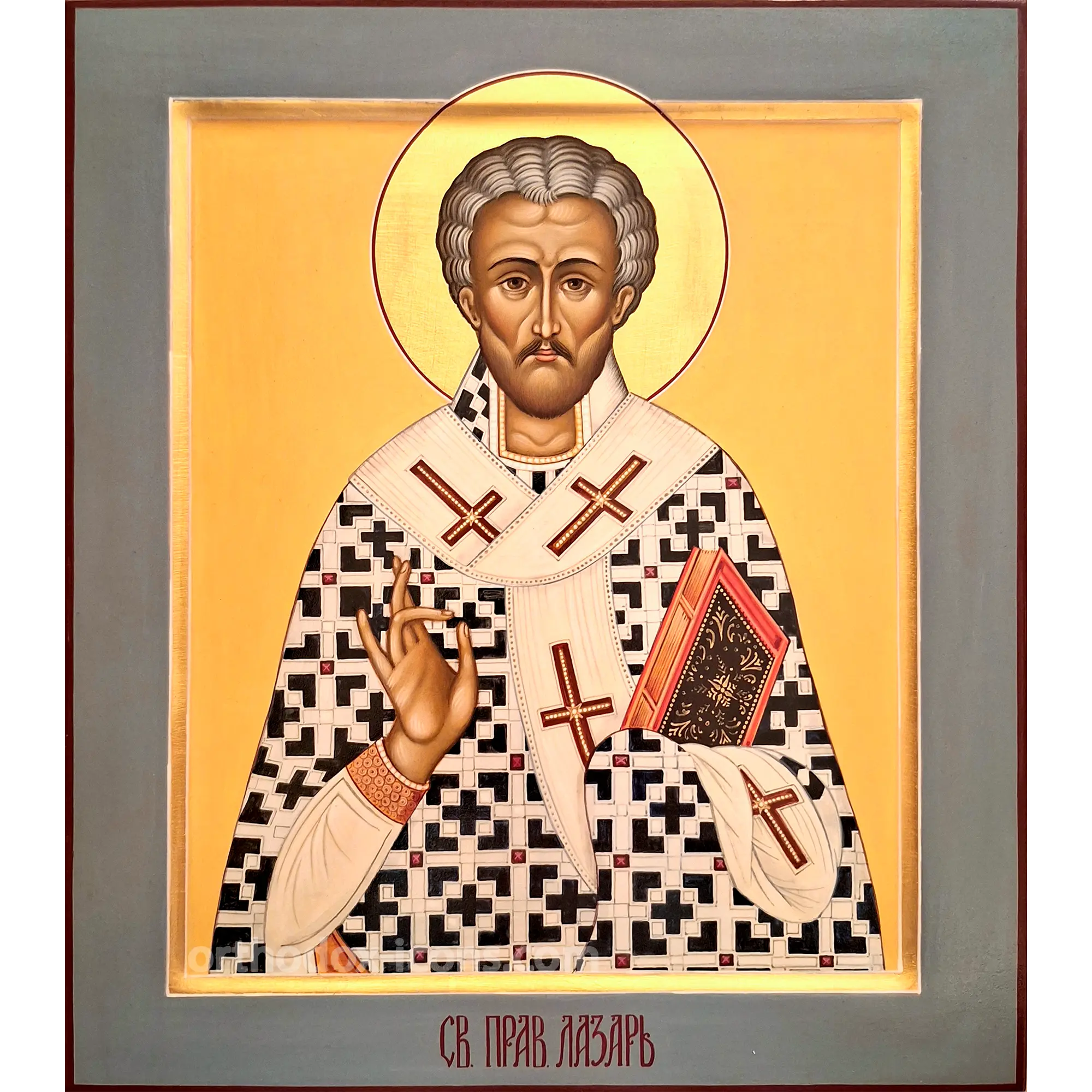
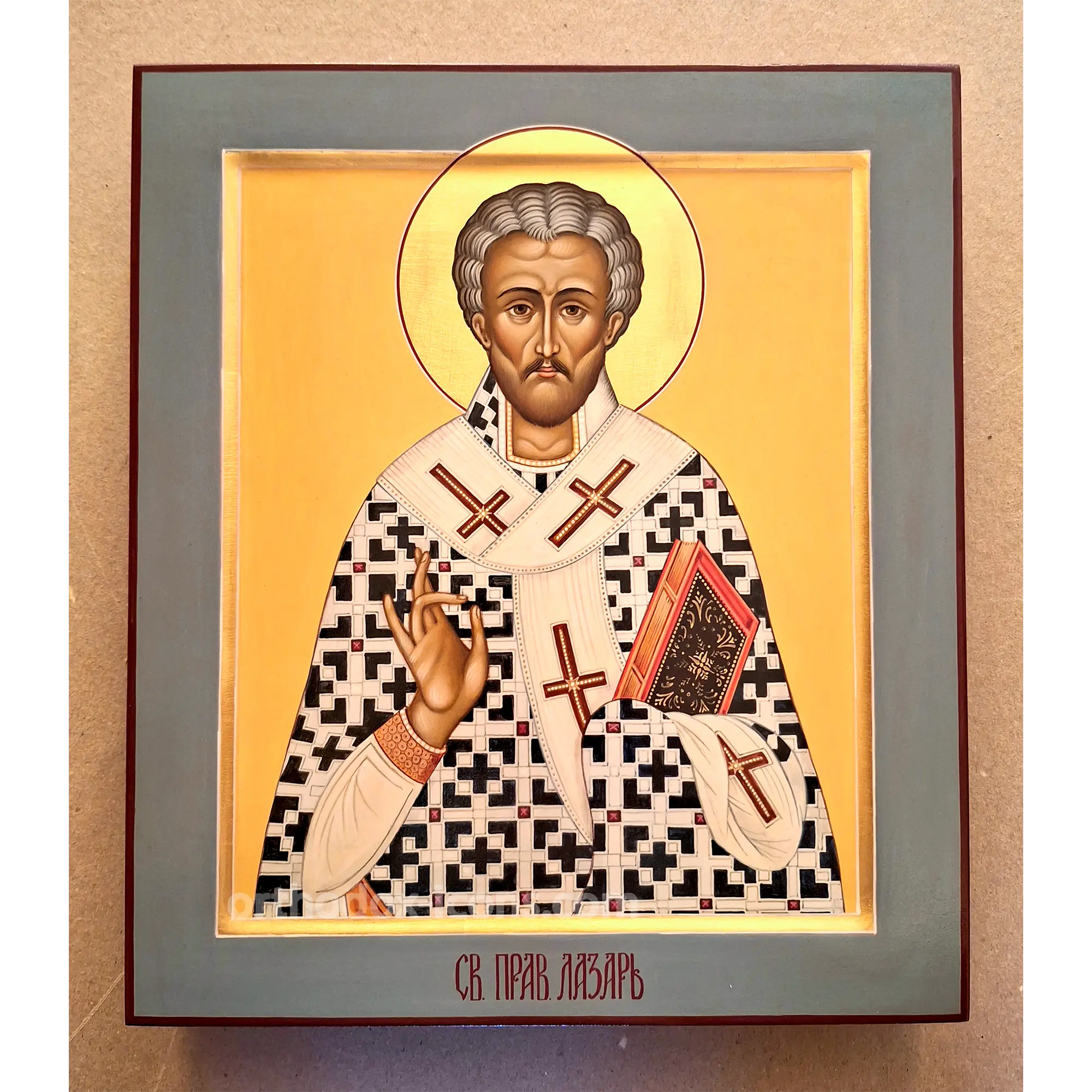
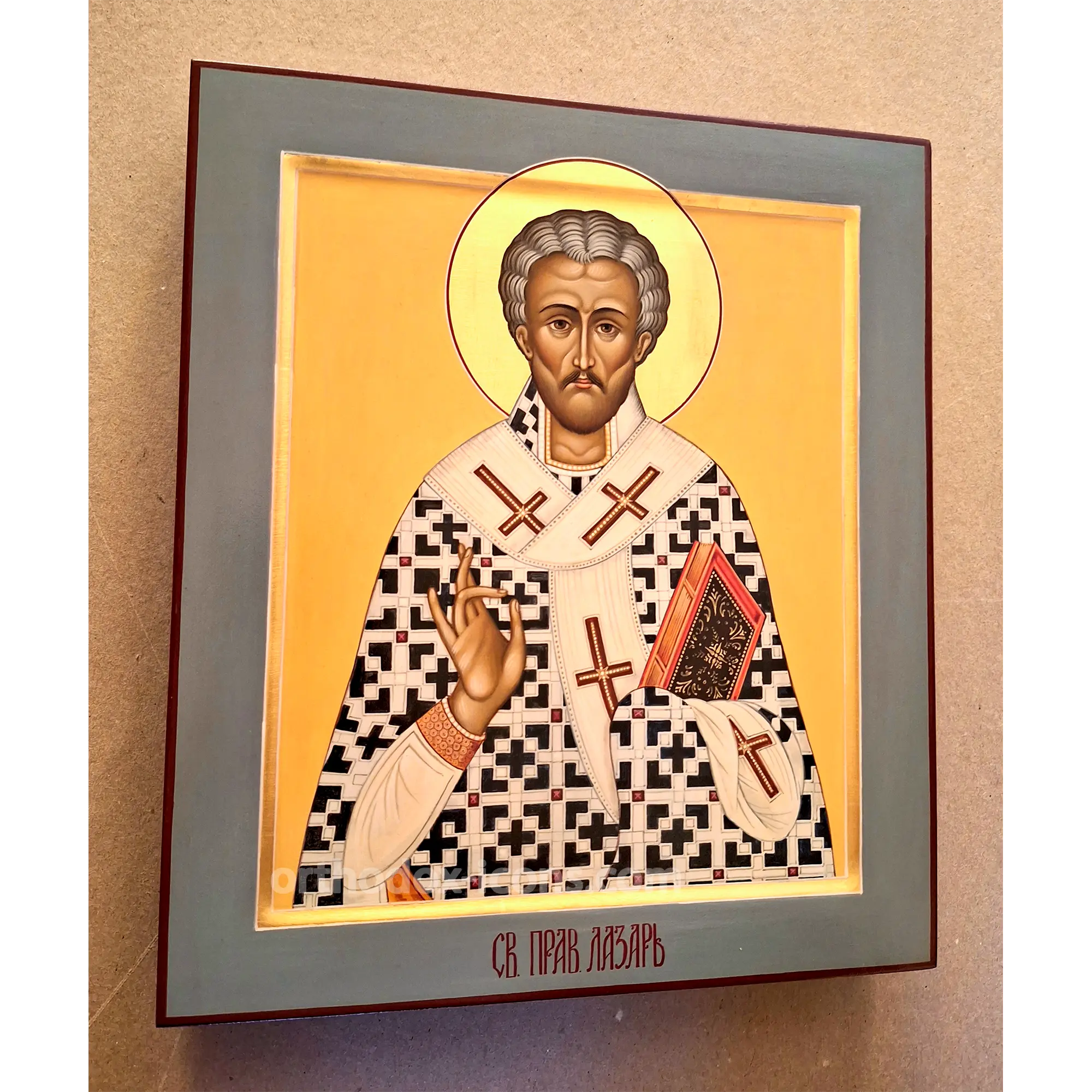
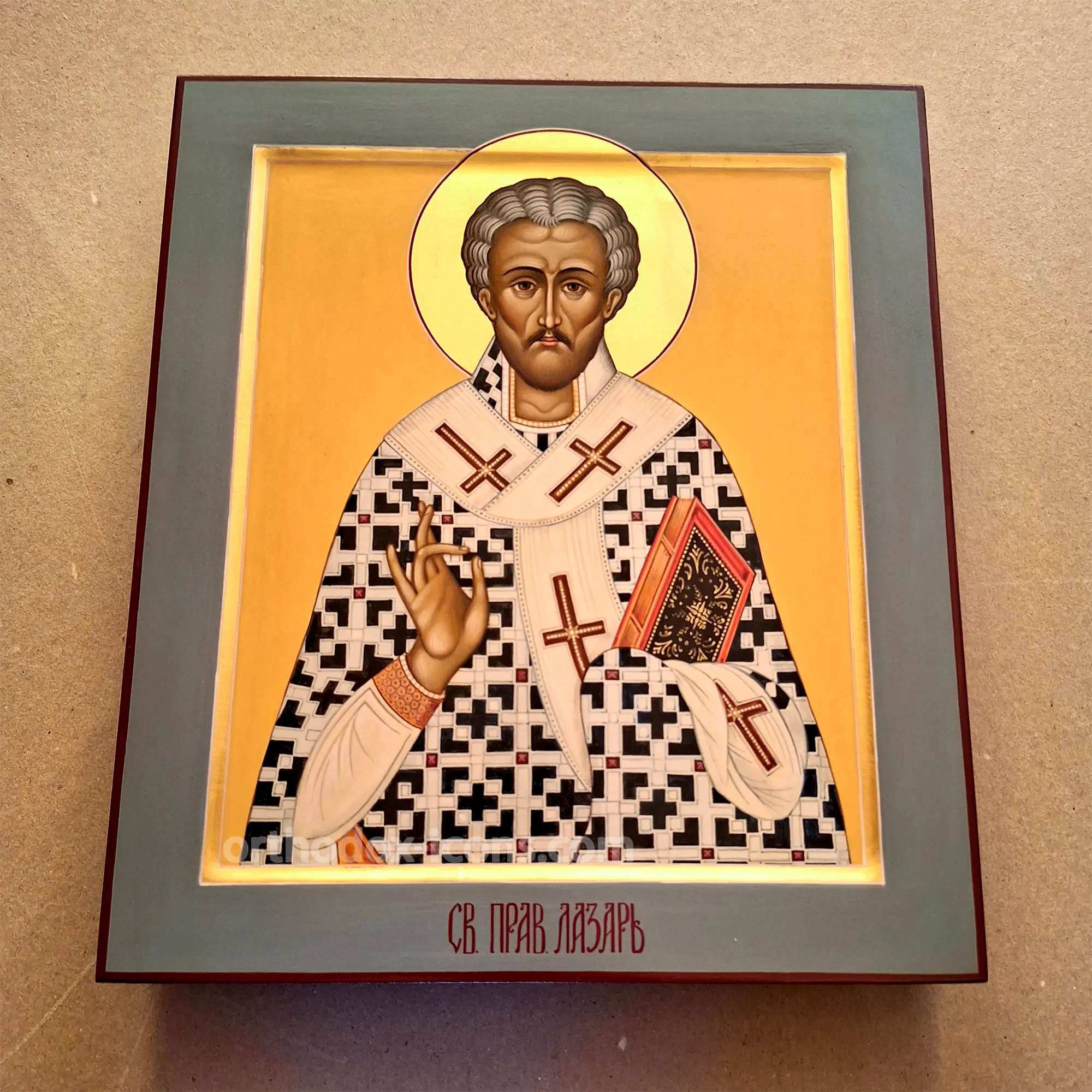
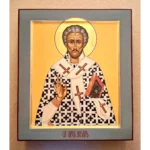
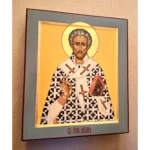
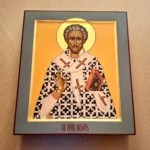
The Lazarus Icon is a hand-painted icon of Righteous Lazarus the Four-Days-Dead, Bishop of Kition, the friend of Christ whom the Savior raised from the dead. This icon shows Lazarus not in burial cloths, but as a bishop on Cyprus after his return to life.
The saint is shown half-length in episcopal vestments, blessing with one hand and holding the Gospel with the other. The icon is painted in egg tempera on wood with gold leaf halo, ocher background, and matte gray-blue fields. Free international shipping is included. Payment is made after you receive and approve the icon.
It is possible to paint an image in any size to order
Free shipping worldwide
The Lazarus Icon is a hand-painted Orthodox icon of Righteous Lazarus the Four-Days-Dead, a unique saint whose life became a living witness to Christ’s victory over death. Called in the Gospel the friend of Christ, Lazarus was raised by the Savior on the fourth day after his death. This icon does not show the moment of the miracle itself; it reveals the later service of Lazarus as a bishop on the island of Cyprus.
The image is painted according to Orthodox tradition in noble restrained colors: ocher, gold, and gray-blue. It carries the meaning of hope in eternal life and the all-conquering mercy of God. Saint Lazarus is shown not as a figure emerging from the tomb, but as a hierarch of the Church, holding the Gospel and blessing the faithful.
Icon Characteristics
| Holy image | Righteous Lazarus the Four-Days-Dead, Bishop of Kition |
| Iconography | Half-length image in episcopal vestments with the Gospel |
| Panel | Solid linden wood, oak splines, pavoloka, and levkas |
| Painting | Egg tempera with natural mineral pigments, canonical style |
| Gilding | Gold leaf halo and gold line around the inner panel |
| Color scheme | Yellow-ocher inner background and matte gray-blue fields |
| Available sizes | 17×21 cm (6.7×8.3 in), 20×24 cm (7.9×9.4 in), 27×31 cm (10.6×12.2 in), 30×40 cm (11.8×15.7 in) |
What People Pray for Before Saint Lazarus
Saint Lazarus passed through the gates of death and was returned to life by the divine word of Christ. For this reason, Orthodox Christians turn to him in prayer in situations that feel especially heavy or hopeless. His icon is connected with the hope of resurrection, the overcoming of fear, and trust in the power of God.
- For people in serious illness: prayers are offered for strength, consolation, and God’s help during long, chronic, or life-threatening sickness.
- For deliverance from fear of death: the image of Lazarus points to the hope of the general resurrection and the victory of Christ over death.
- For those in deep sorrow or despair: the saint’s story speaks to souls weighed down by grief, loss, or spiritual exhaustion.
- For strengthening of faith: the raising of Lazarus witnesses that nothing is impossible for God.
Prayer before the icon should not be understood as a replacement for medical care or responsible action. In Orthodox life, prayer, repentance, pastoral guidance, medical help, and practical support belong together.
Life of Lazarus: Friend of Christ and Bishop of Cyprus
Righteous Lazarus lived with his sisters Martha and Mary in Bethany, near Jerusalem. The Savior often visited their home and, according to the Gospel, loved this family. When Lazarus became seriously ill, his sisters sent word to Jesus. Christ delayed His arrival, saying that the sickness was not unto death, but for the glory of God.
When the Savior came to Bethany, Lazarus had already been dead for four days and was buried in a cave. Christ approached the tomb, wept, commanded the stone to be removed, and cried out: “Lazarus, come forth.” The dead man came out alive, still bound in burial cloths. This greatest miracle became a foreshadowing of Christ’s own Resurrection and of the general resurrection of the dead.
The miracle also provoked the anger of the chief priests, who resolved to kill not only Jesus but Lazarus as well, in order to hide the living witness of the miracle. According to tradition, Lazarus left Judea and went to Cyprus. There the apostles Paul and Barnabas ordained him bishop of Kition, now Larnaca. He lived about thirty more years in strict restraint and then reposed again on Cyprus.
In the ninth century his relics were found in Larnaca in a marble tomb with the inscription: Lazarus the Four-Days-Dead, friend of Christ.
Iconography: Lazarus as Bishop
Orthodox tradition has two main ways of depicting Saint Lazarus. One shows the Gospel event of the Raising of Lazarus, with the saint wrapped in burial cloths and coming out of the tomb. The other shows him as a bishop after his return to life. This icon belongs to the second, portrait-like type and emphasizes his later service to the Church.
Lazarus is shown half-length, facing forward in a strict frontal position. His face is painted with deep seriousness: gray curly hair, a gray beard, and a calm, penetrating gaze of someone who has known the mystery of life and death. His expression is not harsh, but concentrated and grave.
His right hand is raised in blessing, while his left hand, partly covered by the edge of the omophorion, carefully holds a closed Gospel book. The Gospel is richly decorated, with red page edges and a dark cover ornamented in gold. This detail points to the wealth and life-giving power of the word of God.
Vestments: Phelonion and Omophorion
The iconographer gives special attention to the saint’s episcopal vestments. Lazarus wears a broad cross-patterned phelonion, decorated with a complex black-and-white geometric design. This ornament, resembling a chessboard or repeated crosses, is often used in icon painting for ancient bishops and emphasizes their connection with apostolic times.
Over the phelonion rests a wide white or light cream omophorion with large crosses. A beautiful tradition is connected with this vestment: while Lazarus was bishop on Cyprus, the Most Holy Theotokos is said to have visited him and given him an omophorion sewn by her own hands. The omophorion on his shoulders recalls this blessed gift to the friend of Christ.
Ocher Background and Gray-Blue Fields
The color of this icon is especially restrained and noble. The saint’s head is surrounded by a smooth radiant halo of genuine gold leaf, outlined with a fine red contour. The inner background behind Lazarus is not fully gilded, but painted in a warm yellow-ocher, almost sandy tone. In icon painting, ocher is a color of light, quieter and more earthly than the solemn brilliance of gold.
The most expressive design feature is the wide field around the inner image. It is painted in a deep matte gray-blue, or olive-gray, tone. This cool and severe color creates a beautiful contrast with the warm ocher background and gold halo. It may also recall the stone of the tomb from which Lazarus came forth and the strictness of his ascetic life on Cyprus.
A fine gold line marks the transition from ocher to the gray-blue fields. On the lower field, the name of the righteous saint is written in red lettering, fitting naturally into the restrained design.
Materials and Technique
The icon is painted by hand on a solid linden wood panel reinforced with oak splines. Pavoloka and chalk levkas prepare the surface for painting. The image is written in egg tempera with natural mineral pigments. The halo is gilded with gold leaf, and the inner panel is framed by a fine gold line.
This is not a printed reproduction. A hand-painted icon has living tempera texture, individual work in the face and vestments, real gilding, and a prayerful presence suitable for Orthodox veneration. The image may be chosen for a home icon corner, church, chapel, memorial prayer space, or as a named icon for someone named Lazarus.
Care for the Icon
A hand-painted icon on wood should be protected from direct sunlight, heaters, excessive humidity, and sudden temperature changes. Dust may be removed only with a soft dry brush or cloth, without pressure. Do not use water, alcohol, household cleaners, wet wipes, or abrasive materials. A wooden glazed kiot is recommended for long-term protection.
Shipping and Payment
Free international shipping is included. The icon is packed carefully for safe transport. Payment is made after you receive and approve the icon.
Questions and Answers
Who is shown on this icon?
The icon shows Righteous Lazarus the Four-Days-Dead, the friend of Christ, later venerated as Bishop of Kition on Cyprus.
Why is Lazarus called the Four-Days-Dead?
This title recalls that Lazarus had been dead and buried for four days before Christ raised him from the tomb.
Why is Lazarus shown as a bishop?
After his raising from the dead, according to tradition, Lazarus went to Cyprus and was ordained Bishop of Kition by the apostles Paul and Barnabas.
Why is he not shown in burial cloths here?
This icon belongs to the episcopal type of Lazarus iconography, showing his later service to the Church rather than the Gospel scene of the miracle.
What does the Gospel in his hand mean?
The Gospel points to his episcopal ministry and to the life-giving word of Christ, who called Lazarus from the tomb.
What does the black-and-white vestment pattern mean?
The cross-patterned phelonion recalls ancient episcopal vestments and emphasizes his connection with apostolic times.
What sizes are available?
The icon is available in 17×21 cm, 20×24 cm, 27×31 cm, and 30×40 cm.
What materials are used?
The icon is painted on a linden wood panel with oak splines, pavoloka, levkas, egg tempera, natural mineral pigments, and gold leaf on the halo.
When is Saint Lazarus commemorated?
Lazarus Saturday is celebrated before Palm Sunday, and the translation of his relics is commemorated on October 30 / October 17 Old Style.
How is the icon shipped and paid for?
Free international shipping is included, and payment is made after you receive and approve the icon.
| Dimensions | 17x21cm (6.7×8.3 in), 20x24cm (7.9×9.4 in), 27x31cm (10.6×12.2 in), 30x40cm (11.8×15.7 in) |
|---|---|
| Name | Lazarus |