St. Boniface Orthodox Icon
Price range: $500 through $1350
Available sizes: 17×21 cm (6.7×8.3 in), 20×24 cm (7.9×9.4 in), 27×31 cm (10.6×12.2 in), 30×40 cm (11.8×15.7 in); larger and iconostasis sizes can be made by agreement.
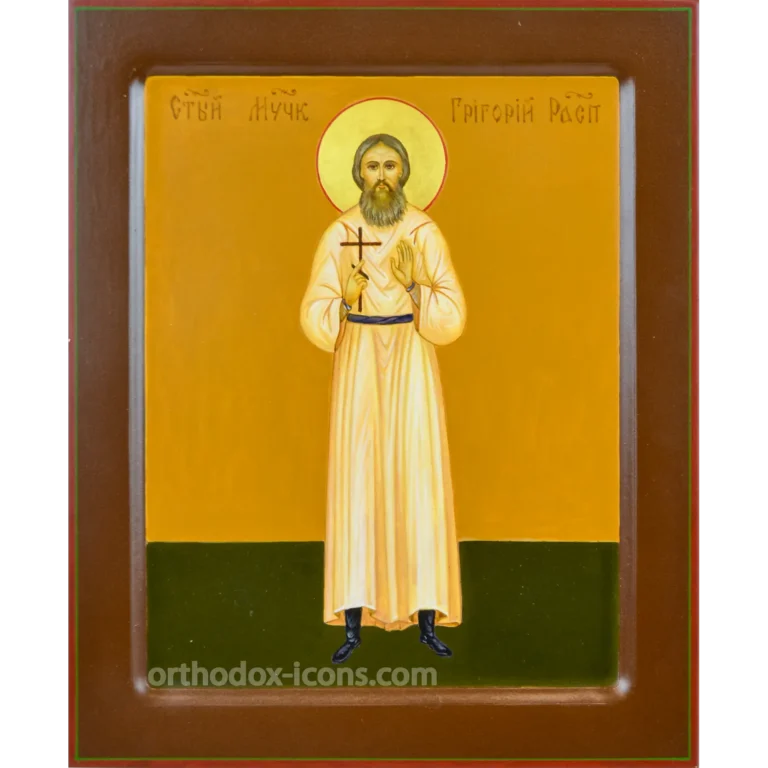
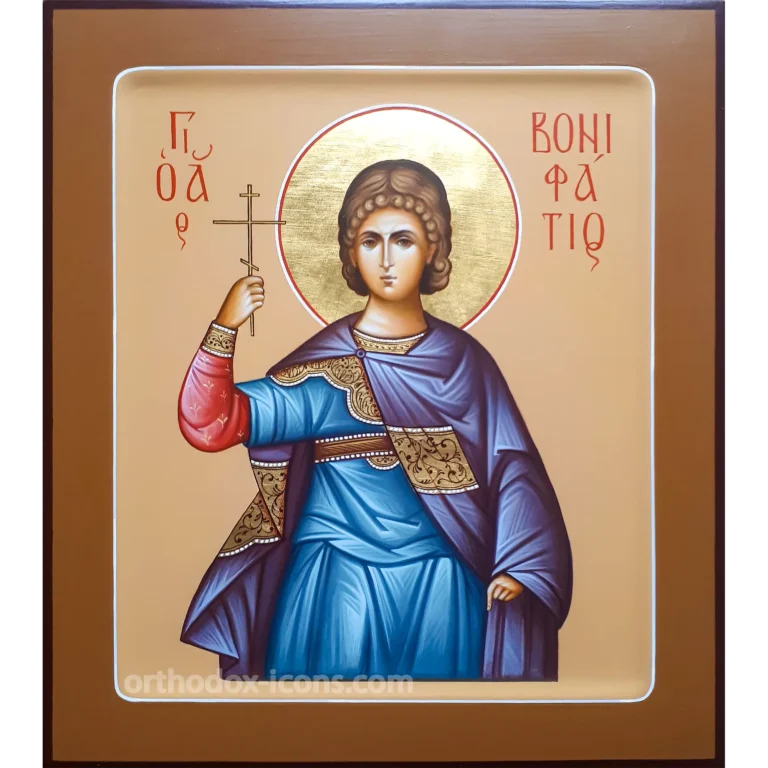
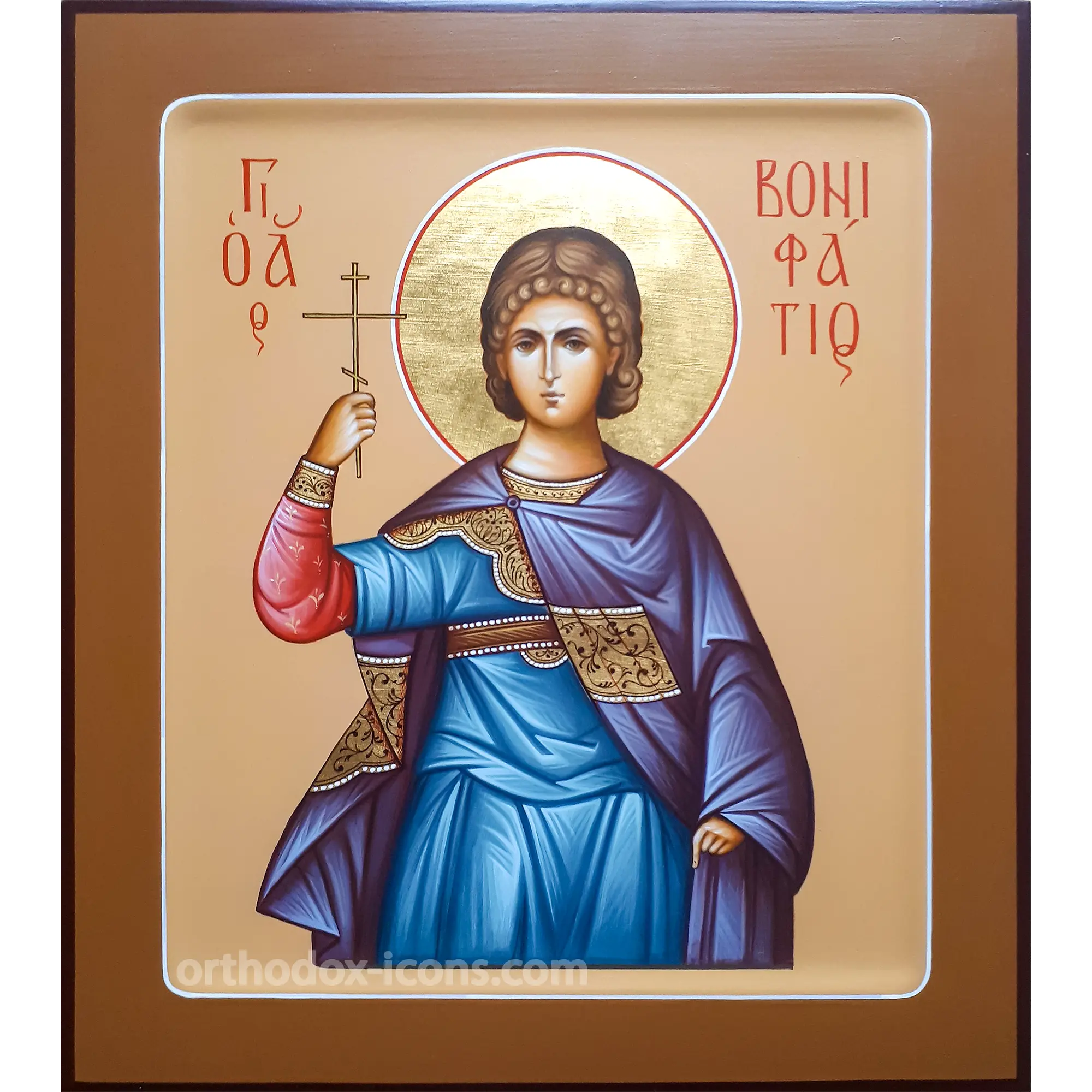
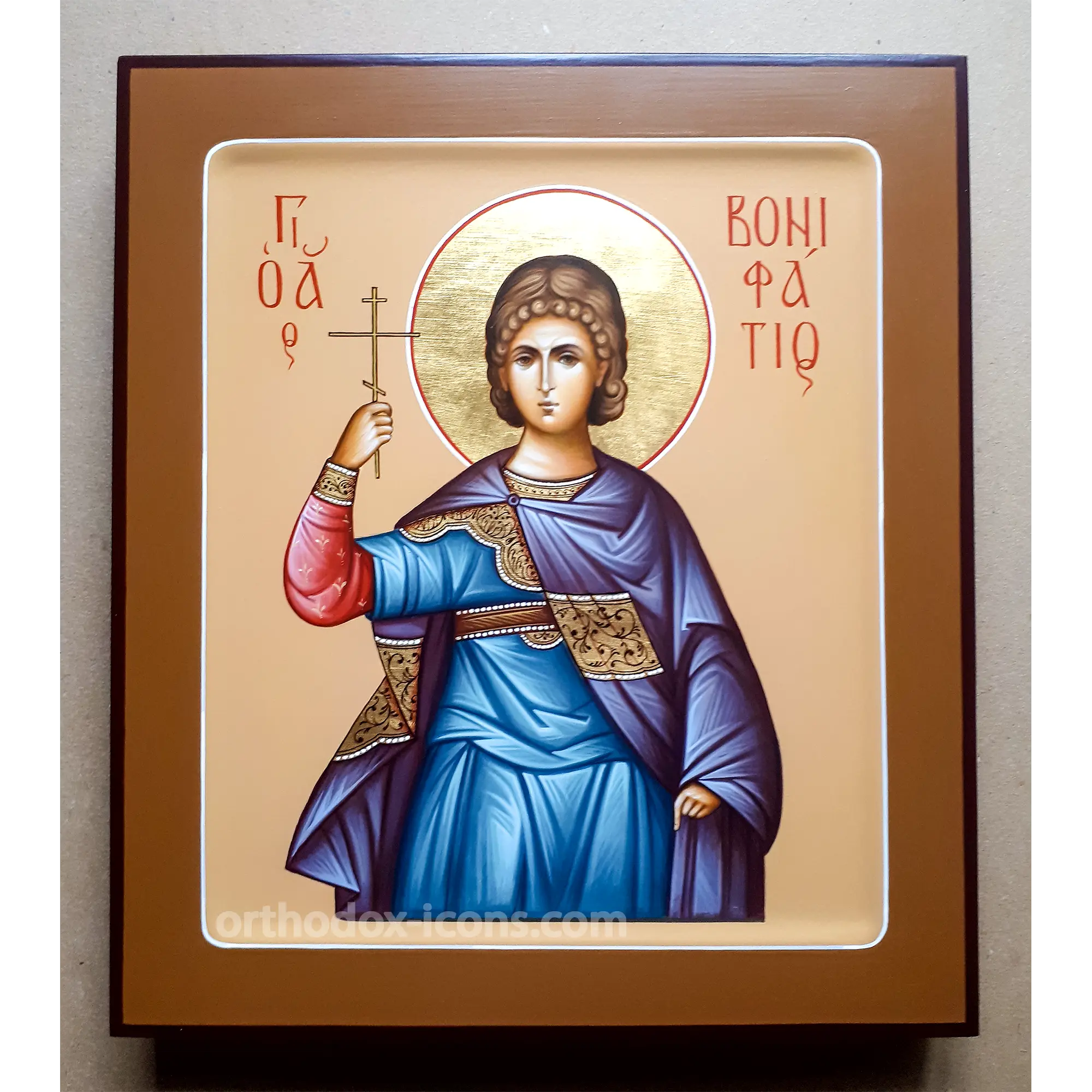
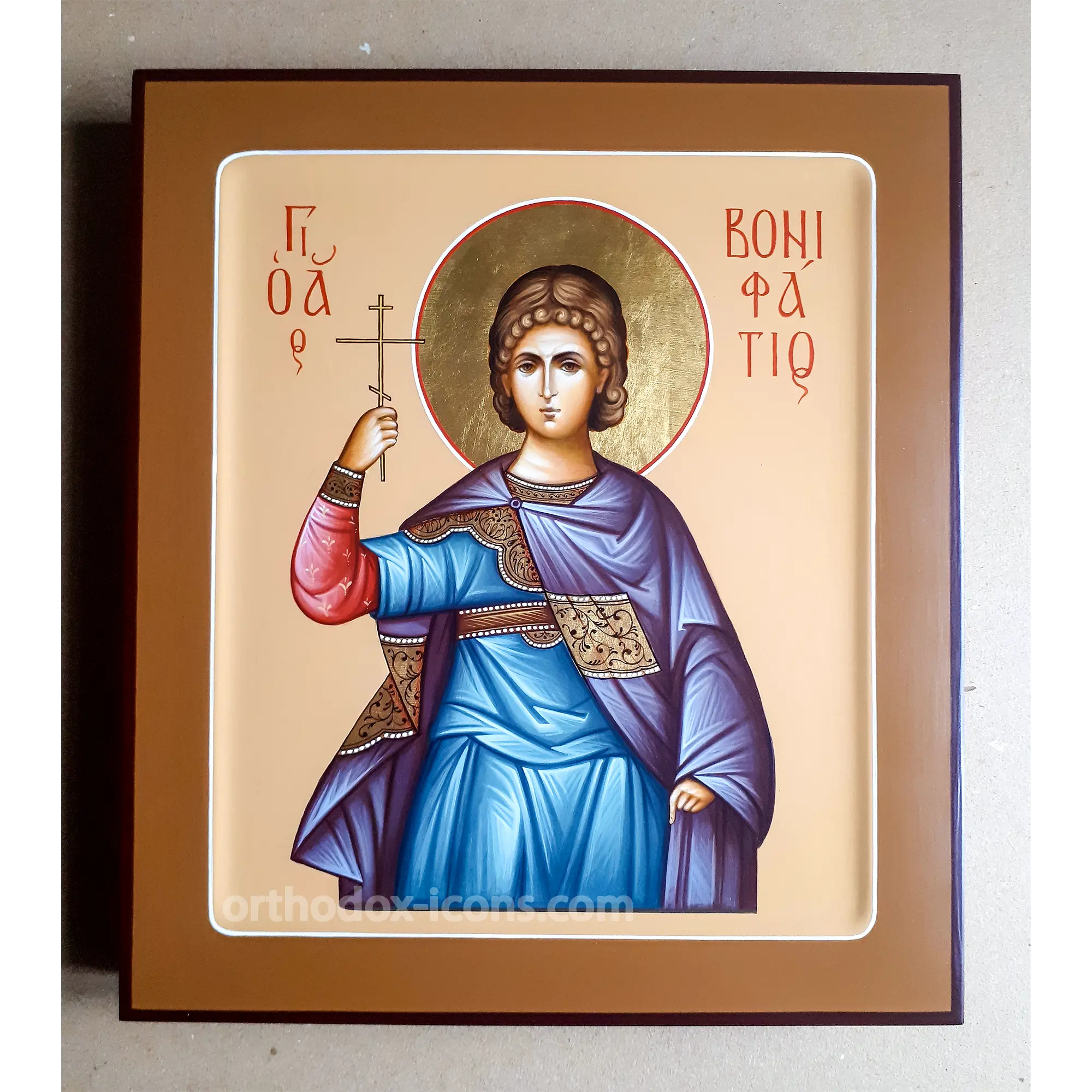
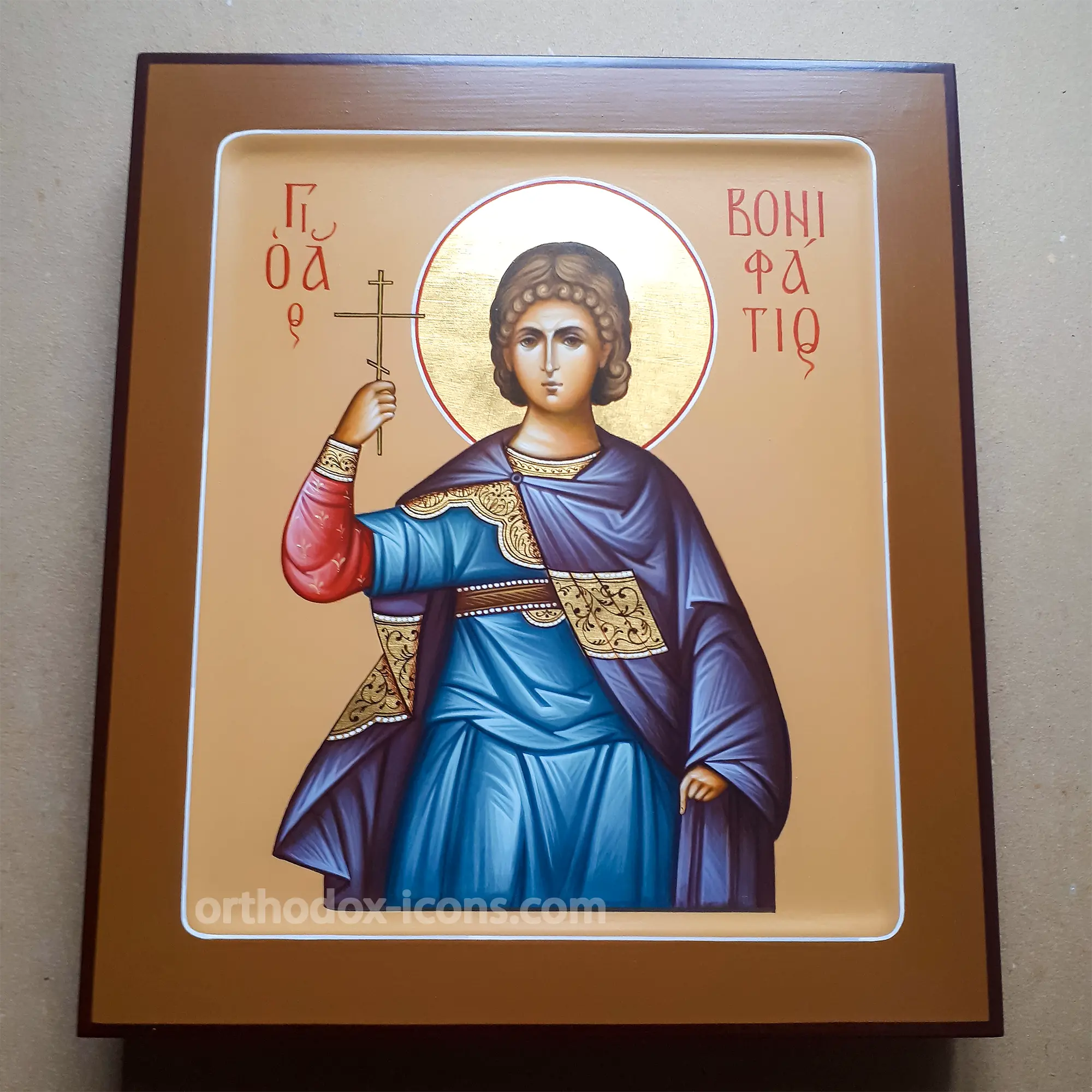
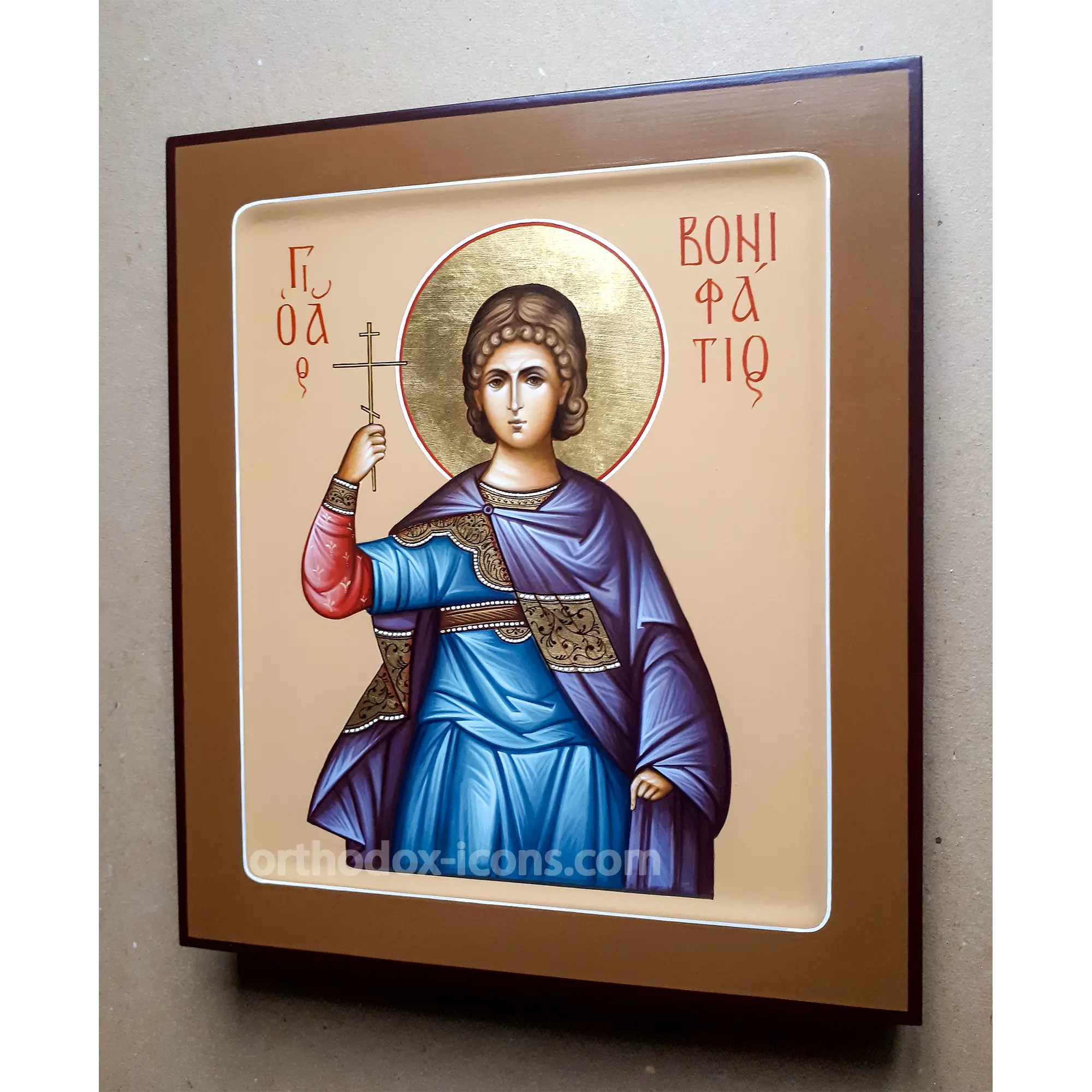
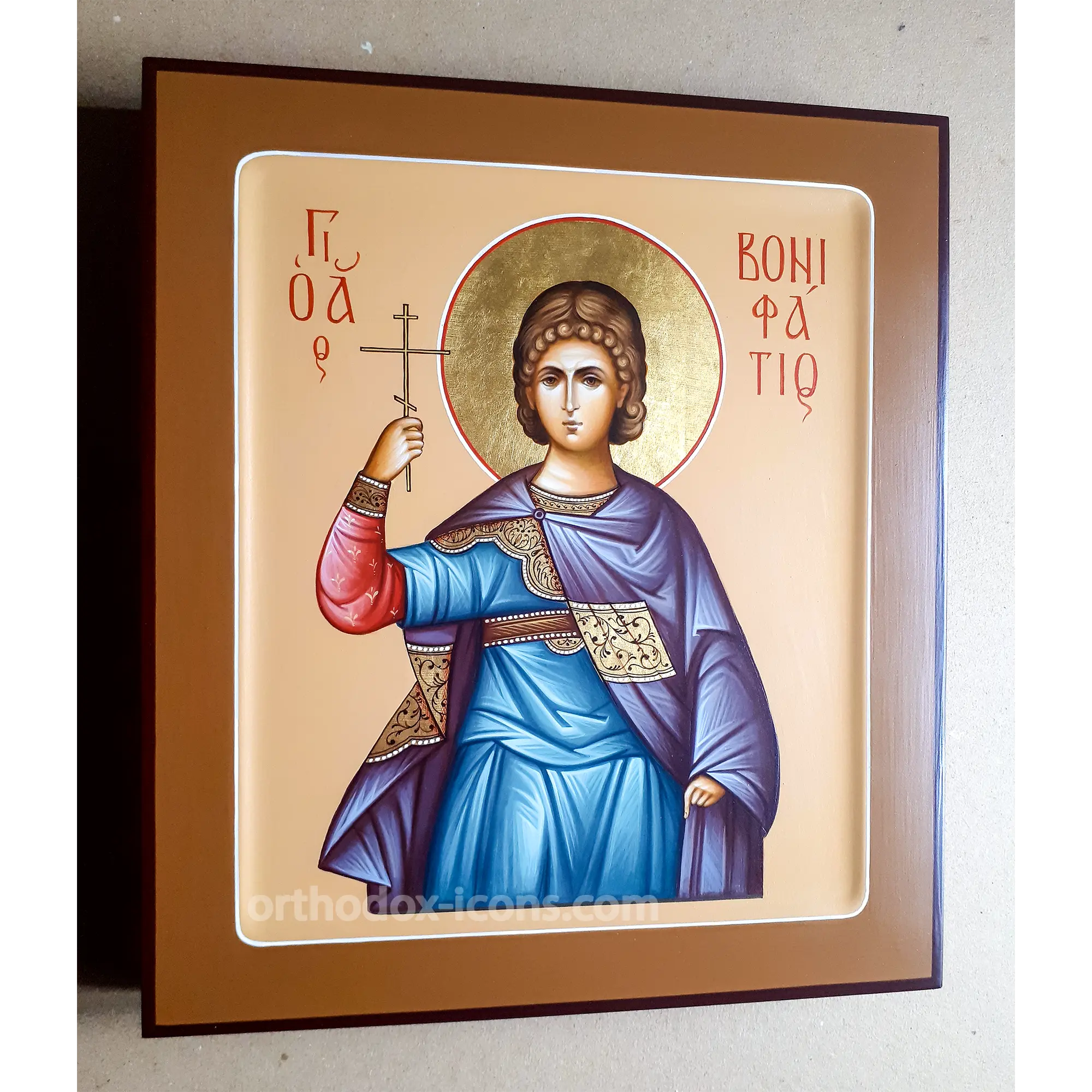
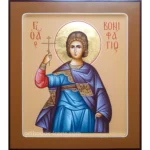
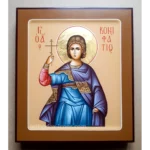
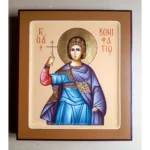
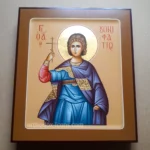
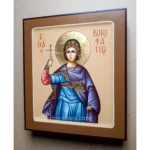
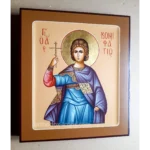
St. Boniface Orthodox Icon is a hand-painted icon of the Martyr Boniface, venerated in the Orthodox Church as a helper in prayer against drunkenness, addictions, passions, and spiritual weakness. The saint is shown frontally, holding the martyr’s cross, in noble blue and purple garments, with a gold halo, calm gaze, light background, and ancient Greek inscriptions.
- Prayer: for help in overcoming alcohol addiction, strengthening of will, repentance, freedom from destructive habits, return to church life, peace in the family, and inner renewal.
- Materials: linden wood board, linen cloth, chalk gesso, egg tempera, 23K gold leaf (960 purity), hand painting, protective finish.
- Suitable for: a home icon corner, name icon, gift for a loved one, prayer for relatives suffering from addictions, and church or monastery use.
It is possible to paint an image in any size to order
Free shipping worldwide
St. Boniface Orthodox Icon is a hand-painted icon of the holy Martyr Boniface, a saint especially venerated by Orthodox Christians as a helper in the struggle against heavy addictions, drunkenness, destructive passions, and spiritual weakness. St. Boniface is remembered not only for his martyrdom, but also for his striking path of repentance. For this reason his image has a special place among the saints to whom people turn when a person needs not only comfort, but a deep inward change of life.
In the presented icon, the saint is shown frontally, in a calm and solemn pose. In his right hand he holds a cross, the traditional sign of martyrdom and faithfulness to Christ. His face is painted softly and with concentration. The gaze is direct and peaceful, without harshness, yet with inner collectedness. This iconography helps the viewer perceive St. Boniface not as a distant historical figure, but as a living intercessor and prayerful helper.
The garments receive special attention in this image. The lower tunic is painted in deep blue tones, while the outer mantle has a rich purple-blue color with gold ornament. In Orthodox icon painting, such colors help express both human nature and spiritual dignity. Blue is associated with purity and the movement of the soul toward God, while the darker purple mantle gives the image nobility and inward strength.
The background is painted in light warm tones, so the figure of the saint appears clear and calm. The gold halo symbolizes divine light and holiness. Red Greek inscriptions on both sides of the image preserve the ancient church character of the icon and connect the contemporary hand-painted image with Orthodox canonical tradition.
The icon of St. Boniface is suitable for a home icon corner, family prayer place, personal prayer, or gift for a loved one. It is especially often chosen for prayer for relatives suffering from alcohol addiction, destructive habits, spiritual weakness, or difficult life circumstances. Yet the meaning of his veneration is wider: St. Boniface reminds a person that repentance, spiritual correction, and return to God are always possible.
St. Boniface and His Spiritual Meaning
The holy Martyr Boniface lived in the third century. According to Church tradition, he was connected with the household of the wealthy Roman woman Aglaida and at first lived far from the Christian ideal. He was under the power of passions, drunkenness, and sinful habits. Yet even in such a life, compassion toward Christians and respect for faith remained alive in him.
Later Boniface traveled to the East to seek relics of the martyrs. This journey became the turning point of his life. Seeing Christians suffer for their faith, he openly confessed Christ and refused to sacrifice to pagan gods. For this he was tortured and put to death. Thus a man who had once lived in spiritual weakness became a martyr and saint of the Church.
This story makes St. Boniface especially close to people struggling with addictions, passions, and inward falls. His life reminds us that even a deeply entangled person can change, repent, and come to God. Therefore people pray before his icon not only for deliverance from drunkenness, but for spiritual strengthening in general.
Features of This Icon
The presented image is painted in a strict Byzantine manner. The composition is concise and concentrated entirely on the figure of the saint. There is no complex narrative scene and no abundance of decorative details. The whole iconography is directed toward prayerful perception of the holy martyr.
St. Boniface is shown half-length, with a slight turn of the body and a calm blessing quality in his gaze. The cross in his hand is the main symbol of martyrdom. In the iconography of martyrs, the cross does not mean suffering for its own sake, but the victory of faith over fear and sin.
The combination of colors is especially expressive. The blue tunic looks bright and pure, while the dark mantle creates a sense of depth and inward concentration. Gold ornament on the clothing adds solemnity without overloading the image. Because of this, the icon preserves prayerful restraint.
The background is light and quiet, without active ornament. This choice helps concentrate attention on the face of the saint. The gold halo is traditional and symbolizes the presence of divine grace. The upper part of the icon includes Greek inscriptions with the saint’s name, an important element of Orthodox iconography and canonical identity.
Prayer Before the Icon of St. Boniface
St. Boniface is especially known as a helper for people suffering from alcohol addiction. Orthodox tradition, however, understands his help more deeply. The matter is not only a physical habit, but the spiritual struggle of a person against destructive passions.
- for deliverance from alcohol addiction and drunkenness;
- for help to relatives suffering from addictions;
- for strengthening of will;
- for overcoming passions and harmful habits;
- for spiritual correction and repentance;
- for a return to church life;
- for peace and agreement in the family;
- for protection from despair and spiritual weakness;
- for help in difficult life circumstances;
- for inner renewal and strengthening of faith.
It is important to understand that Orthodox prayer is not magic. The icon of St. Boniface reminds a person of the need for inward labor, repentance, struggle against passions, and hope in God’s help. The saint helps those who seek a path of correction and do not want to remain in spiritual downfall.
Available Sizes and Custom Options
Available sizes are 17×21 cm (6.7×8.3 in), 20×24 cm (7.9×9.4 in), 27×31 cm (10.6×12.2 in), and 30×40 cm (11.8×15.7 in). Larger and iconostasis sizes can also be made by agreement for churches, chapels, and large home icon corners.
The 17×21 cm size is suitable for personal prayer, a small home icon corner, or a gift. The 20×24 cm format looks more expressive and allows the details of the painting and gold halo to be seen more clearly.
The 27×31 cm and 30×40 cm sizes are especially suitable for a spacious room, family prayer corner, or church use. In a larger format the saint’s face, folds of the garments, gold halo, and fine work with color are perceived more fully. For an individual order, the degree of gilding, border design, board thickness, braces, kiot, and other details can be discussed.
Materials and Technique
The icon of St. Boniface is painted by hand in the traditional technique of Orthodox iconography. The base is a linden wood board, a stable material long used in church art. Linen cloth is applied to the board, then several layers of chalk gesso are prepared. After the base is ready, the icon painter draws the image and begins painting in egg tempera.
23K gold leaf (960 purity) is used for the halo. All stages of the work are done by hand. Because of this, each icon has a living character of painting and keeps a connection with the ancient tradition of Orthodox iconography.
The final protective finish helps preserve the painting and gilding for many years. With proper care, a hand-painted icon can be kept in the family and passed to the next generations.
Placement, Blessing, and Care
The icon of St. Boniface can be placed in a home icon corner near icons of Christ, the Mother of God, St. Nicholas, the Guardian Angel, and other venerated saints. Often the image is placed in a separate prayer corner where daily prayer for loved ones is offered.
After receiving the icon, it is appropriate to have it blessed in an Orthodox church. A blessed icon becomes part of the prayer life of the family and helps a person concentrate on spiritual struggle and hope in God’s help.
A hand-painted icon should be protected from moisture, sudden temperature changes, direct sunlight, and mechanical damage. Dust should be removed gently with a soft dry brush, without pressure. For long-term protection of the painting and gilding, a glazed kiot is recommended.
Questions and Answers
Who is St. Boniface the Martyr?
St. Boniface is an early Christian martyr of the third century, venerated in the Orthodox Church as a helper in the struggle against drunkenness, addictions, and destructive passions.
What do Orthodox Christians pray for before this icon?
People pray before this icon for freedom from alcohol addiction, strengthening of will, spiritual correction, peace in the family, repentance, and help for loved ones.
Why is St. Boniface considered a helper against addictions?
His life is remembered as a path of repentance and spiritual change, so Orthodox Christians ask his prayers for people struggling with passions and destructive habits.
What does the cross in St. Boniface’s hand mean?
The cross symbolizes his martyr witness, faithfulness to Christ, and the victory of faith over fear, sin, and spiritual weakness.
What sizes are available?
Available sizes are 17×21, 20×24, 27×31, and 30×40 cm. Larger and iconostasis sizes can be made by agreement.
Is this icon suitable as a gift?
Yes. An icon of St. Boniface is often chosen as a prayerful gift for a loved one, especially when spiritual support is needed in a difficult life situation.
Can the icon be ordered in a larger format?
Yes. Larger sizes can be made for a home icon corner, chapel, church, analogion, or iconostasis row.
What materials are used for this icon?
The icon is painted on a linden wood board with linen cloth, chalk gesso, egg tempera, 23K gold leaf (960 purity), and a protective finish.
Should the icon be blessed after receiving it?
Yes. After receiving the icon, it is appropriate to have it blessed in an Orthodox church.
How should a hand-painted icon be cared for?
Keep the icon away from moisture, direct sun, heat, and sudden temperature changes. Dust should be removed gently with a soft dry brush, and a glazed kiot is recommended for protection.
| Dimensions | 17x21cm (6.7×8.3 in), 20x24cm (7.9×9.4 in), 27x31cm (10.6×12.2 in), 30x40cm (11.8×15.7 in) |
|---|---|
| Name | Boniface |