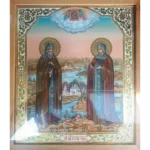
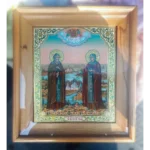
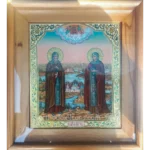
St. Peter and Fevronia Icon
$1600
Available size: 27×31 cm (10.6×12.2 in) and larger iconostasis sizes by request.
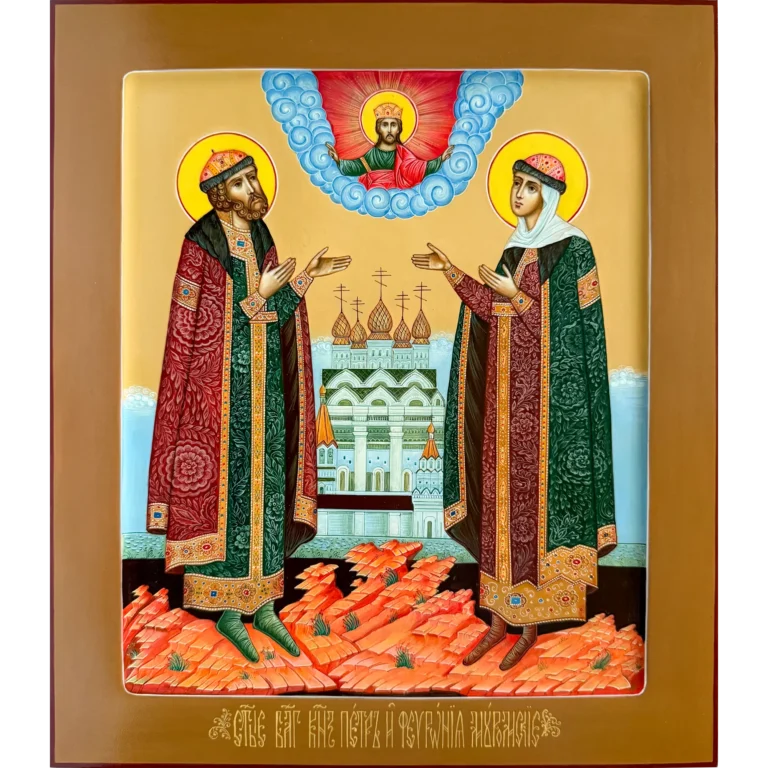
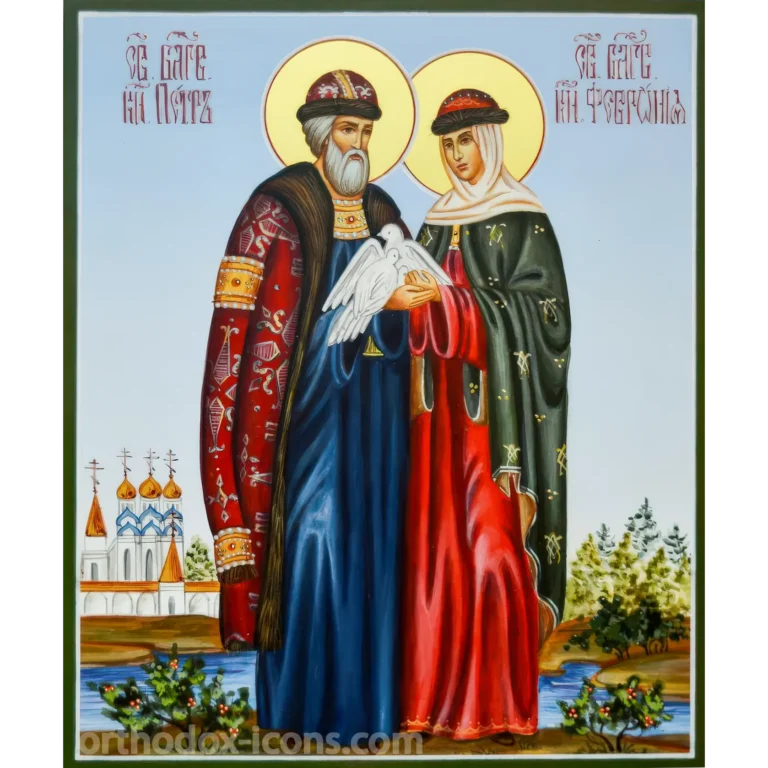
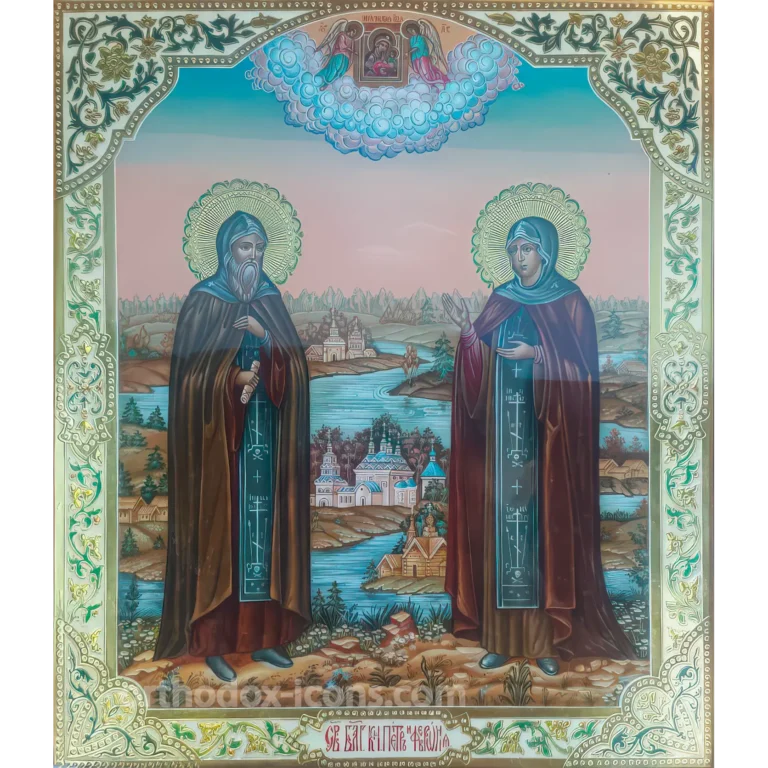
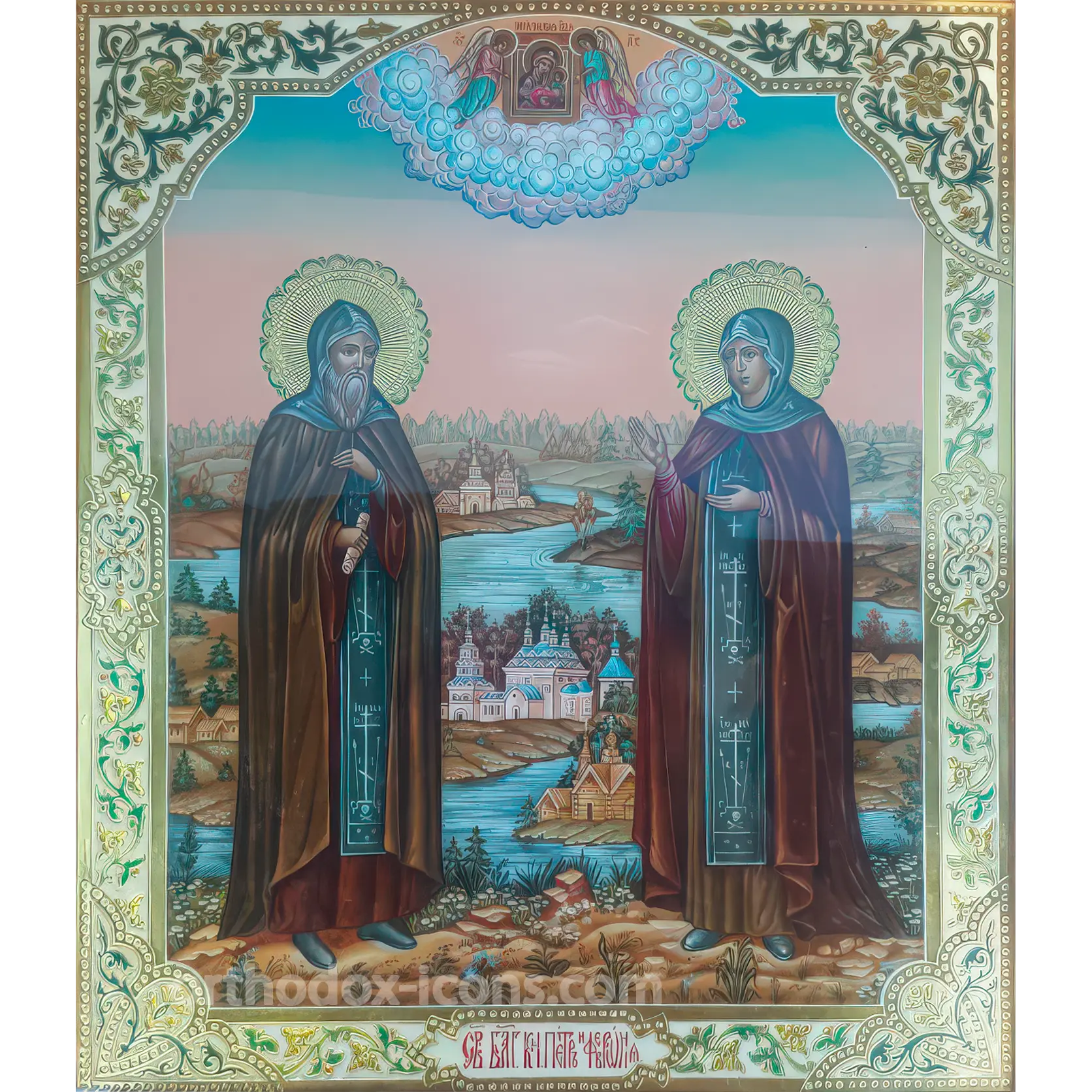
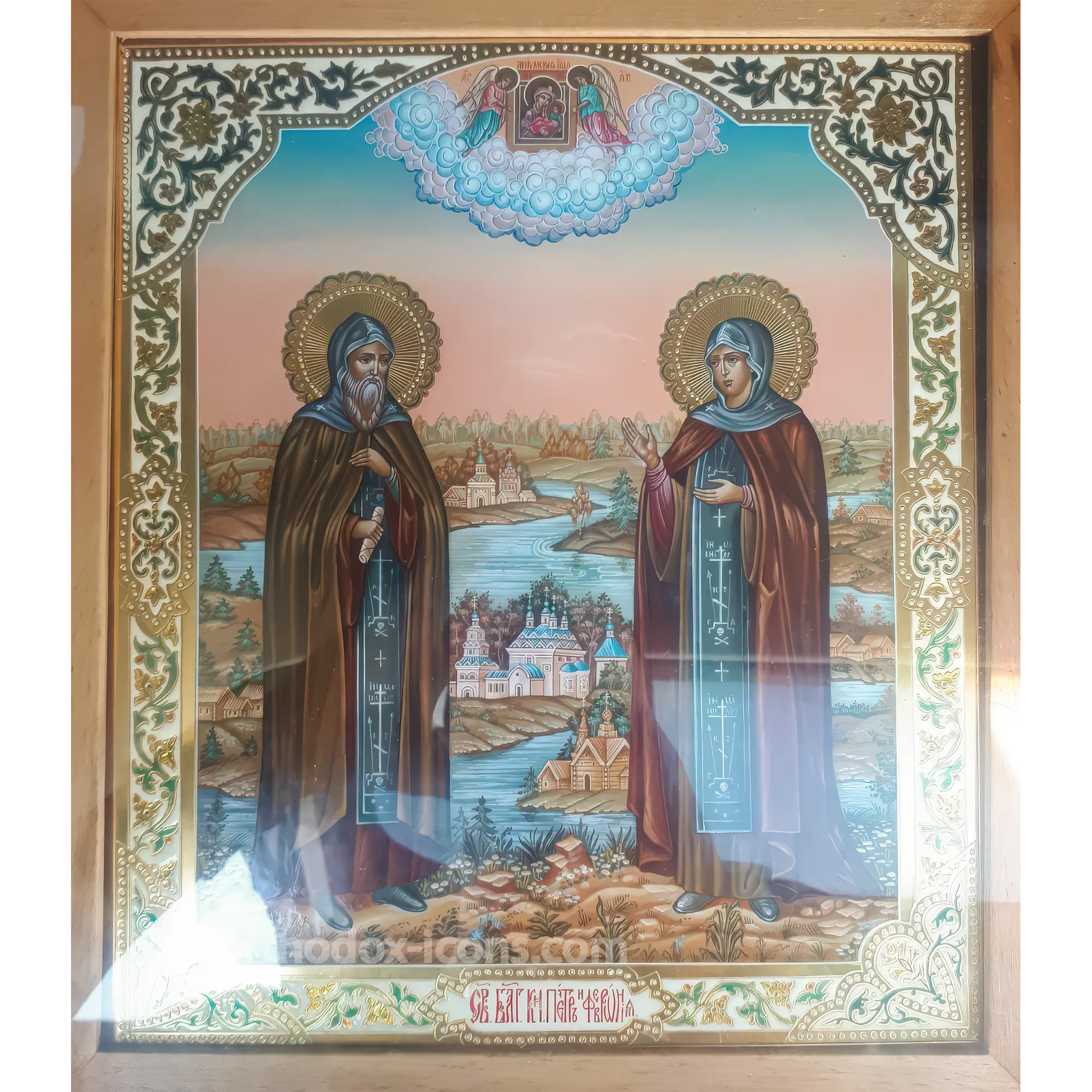
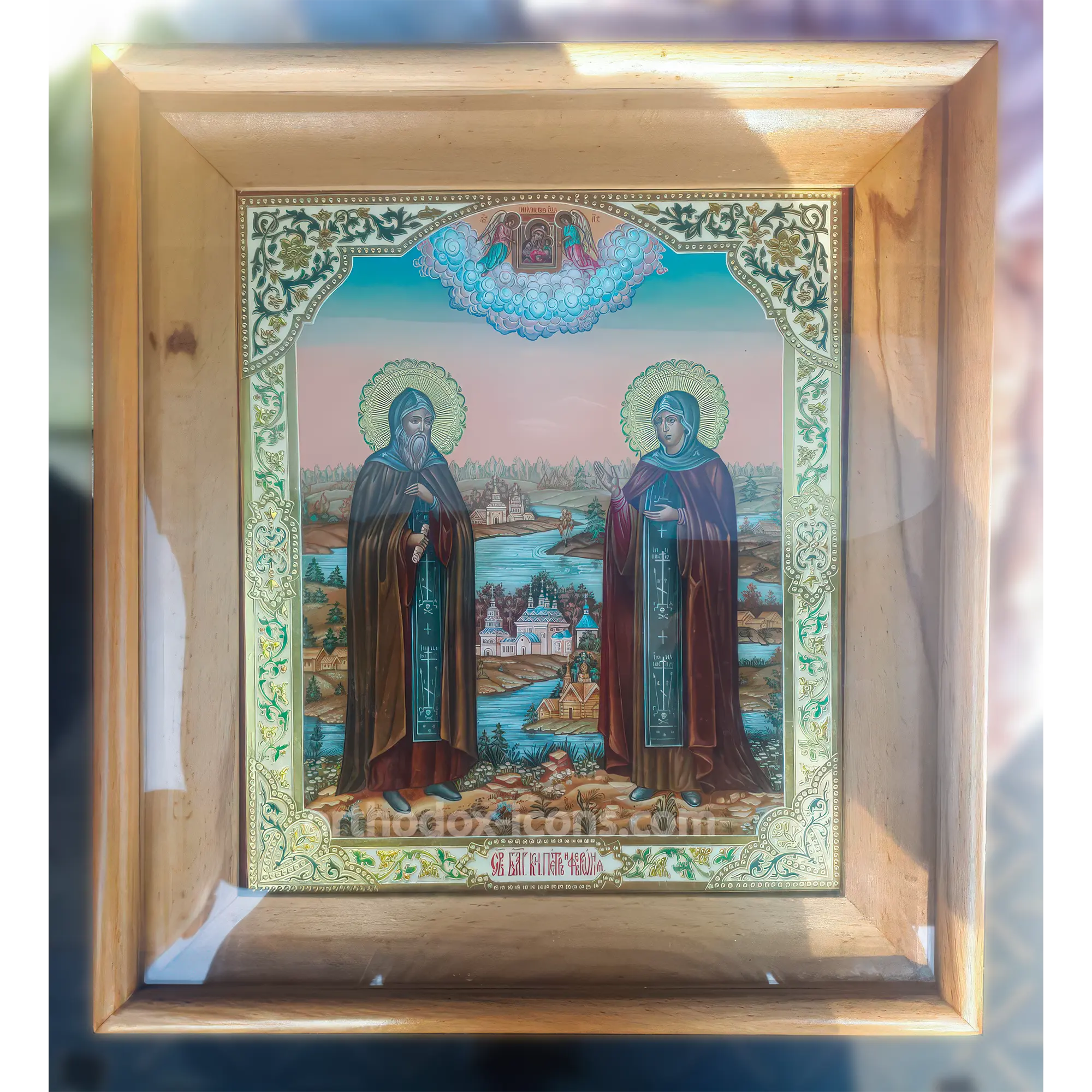
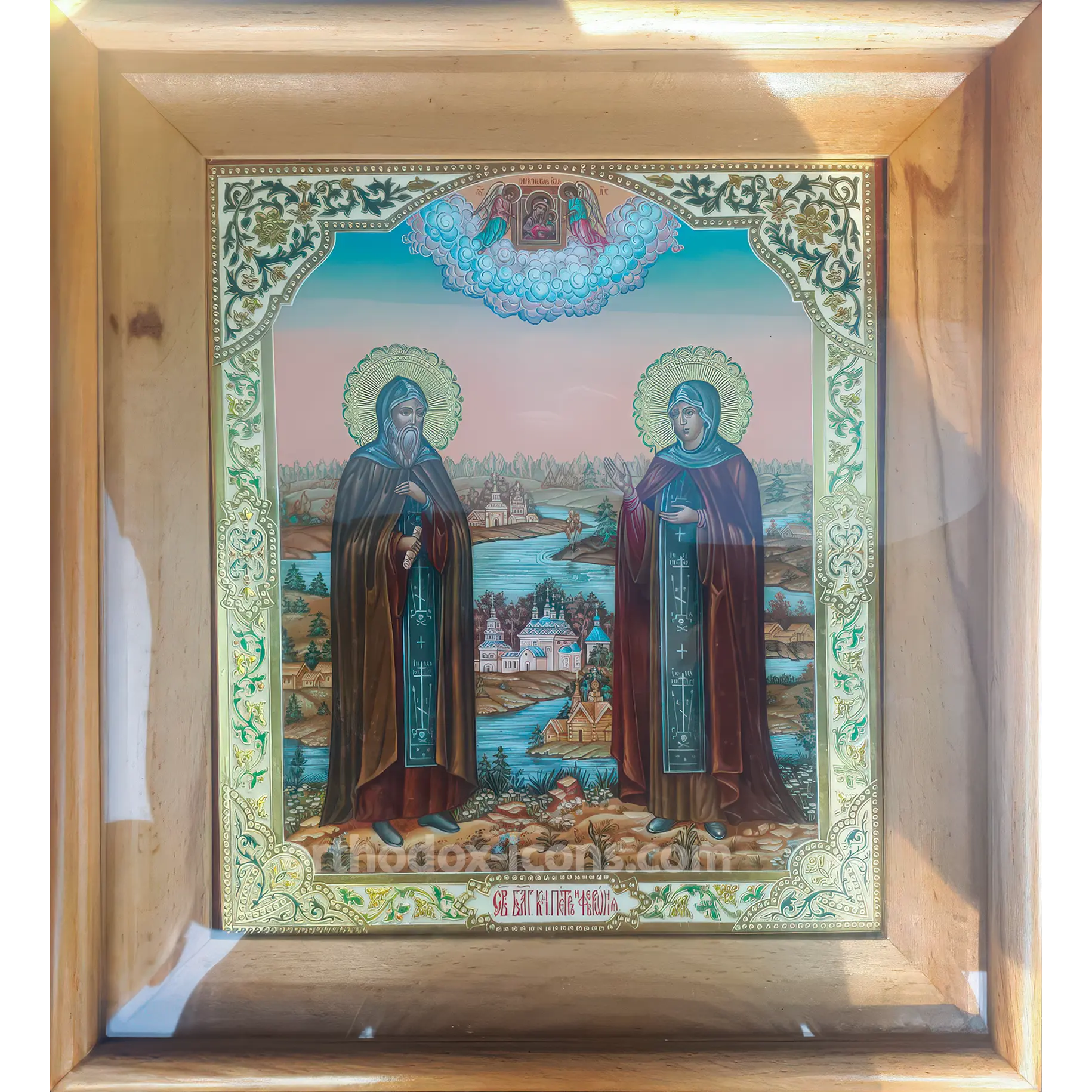
This hand-painted icon of Saints Peter and Fevronia of Murom presents the Orthodox patrons of marriage, family peace, fidelity, and spiritual unity in a contemplative monastic version. The saints are shown not in princely ceremonial garments, but in monastic robes, recalling the end of their earthly life when they received monastic tonsure with the names David and Euphrosyne.
The figures stand before a broad landscape with rivers, churches, monastery buildings, and northern scenery. In the upper part of the composition is a heavenly image of the Mother of God with angels, emphasizing prayerful protection over the family path.
Materials: linden wood panel, oak support battens, gesso ground, egg tempera, gold leaf according to the selected version, and protective finish.
Free international shipping is included. Payment is made after you receive and approve the icon.
It is possible to paint an image in any size to order
Free shipping worldwide
This hand-painted icon of Saints Peter and Fevronia of Murom is a deep family image of the Orthodox patrons of marital fidelity, peace, love, and Christian marriage. Saints Peter and Fevronia are honored as an example of a family in which fidelity proved stronger than earthly power, human pressure, and difficult circumstances. Their life reminds the faithful that true marriage rests not only on feeling, but also on spiritual responsibility, patience, mutual support, and the willingness to walk toward God together.
In this icon, Peter and Fevronia are shown in a special prayerful and contemplative version. They do not appear in festive princely garments, but in monastic robes: dark mantles, schema-like elements with crosses, and restrained coverings recall the end of their earthly life, when the holy spouses received monastic tonsure with the names David and Euphrosyne. This gives the image a mature spiritual emphasis. The icon presents not only patrons of marriage and family, but saints who completed their earthly path in humility, prayer, and faithfulness until the last day.
The background opens into a broad landscape with rivers, banks, churches, monastery buildings, and northern nature. This landscape helps the viewer understand that the life of Peter and Fevronia was not an abstract legend, but was connected with a real land, city, people, and church memory. In the upper part of the composition is a heavenly image of the Mother of God with angels on the clouds. This detail strengthens the prayerful character of the icon: the family witness of the holy spouses is shown not only as an earthly story of love, but as a path sanctified by the grace of God.
The size 27×31 cm (10.6×12.2 in) and larger is well suited to this complex composition. The faces, monastic clothing, blessing and prayerful gestures, landscape details, church architecture, heavenly scene, and ornamental border all need enough space to remain readable. For a home icon corner, the 27×31 cm size is suitable; for a spacious prayer place, church, chapel, or large icon case, a larger or iconostasis format may be discussed by request.
Features of This Peter and Fevronia of Murom Icon
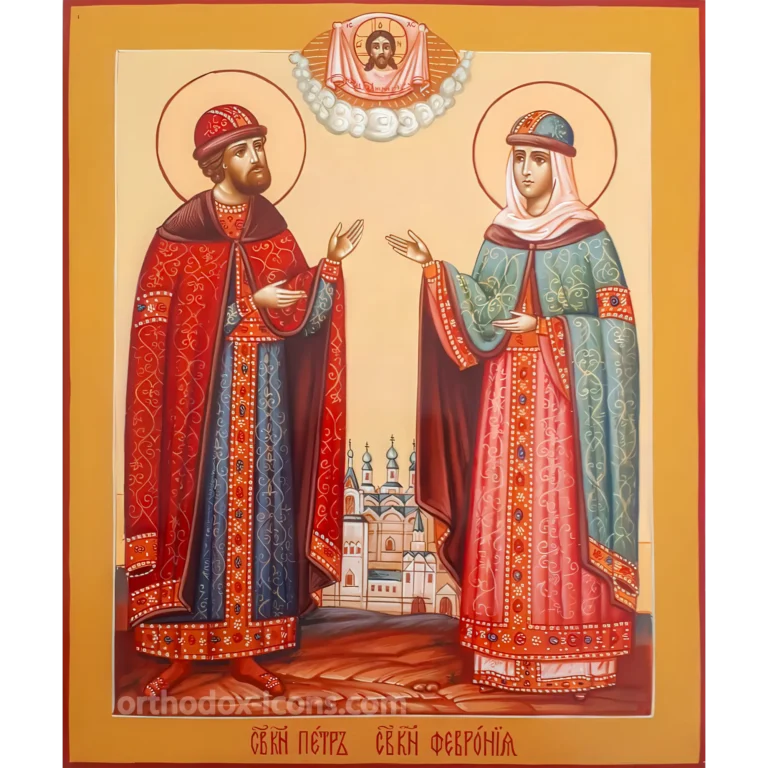
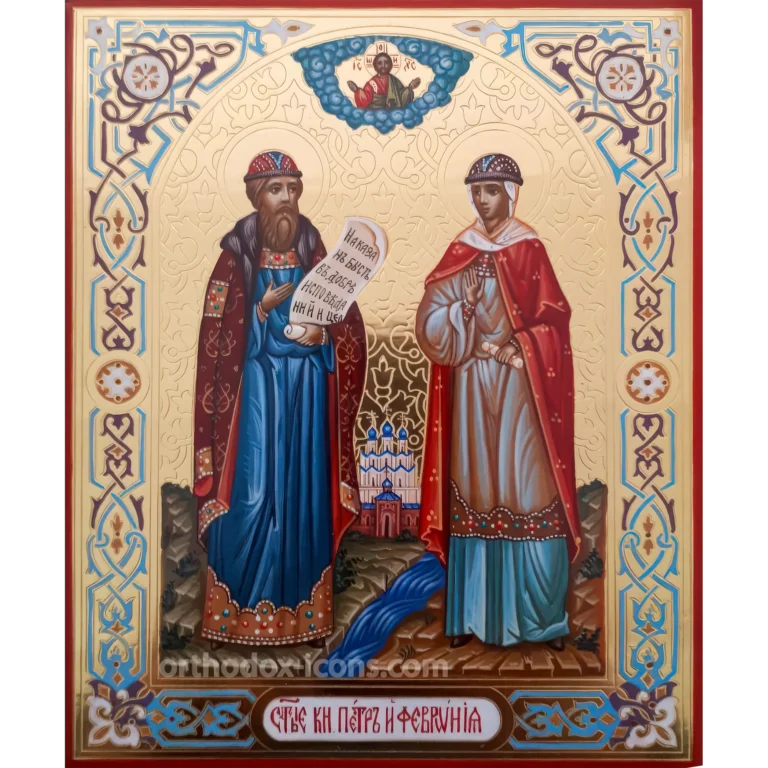
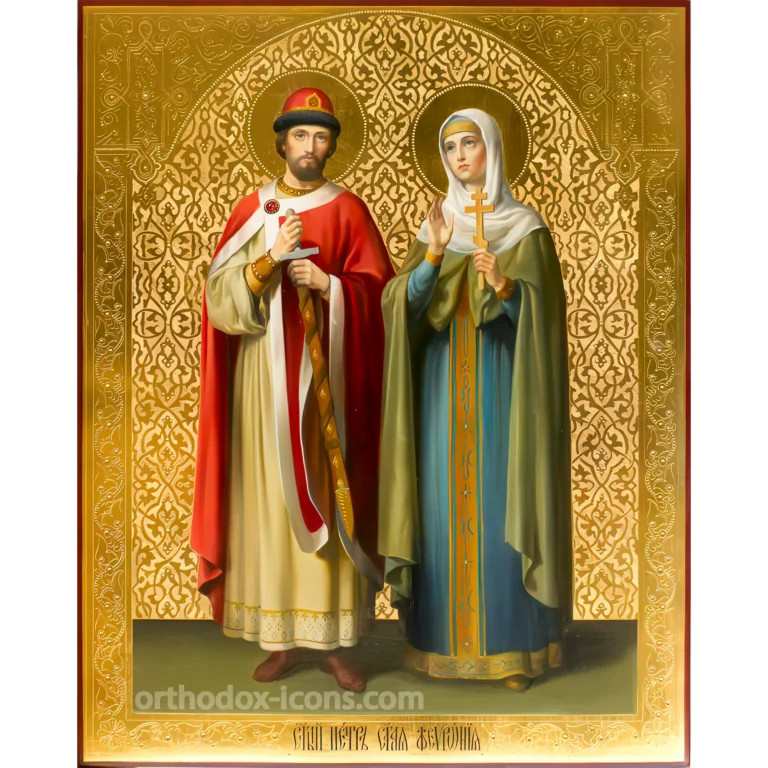
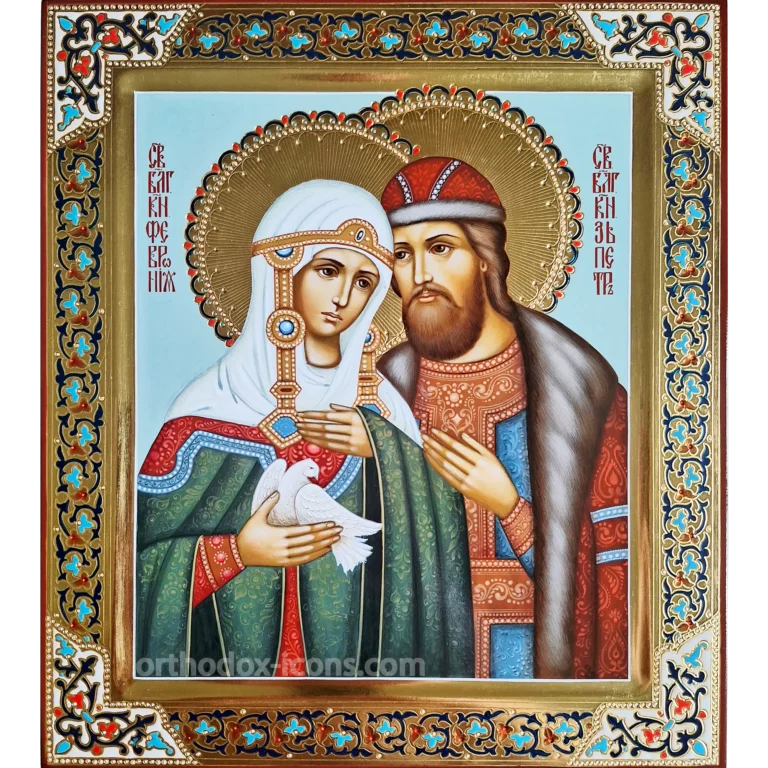
The main feature of this image is the depiction of the holy spouses in monastic form. In more familiar family and wedding icons, Peter and Fevronia are often painted in princely garments, with crowns, against the background of Murom, in paired standing before Christ, or in the narrative boat scene. Here a different emphasis is chosen: Peter and Fevronia stand as saints who passed through marriage, power, trials, service to people, and completed their lives in monastic prayer.
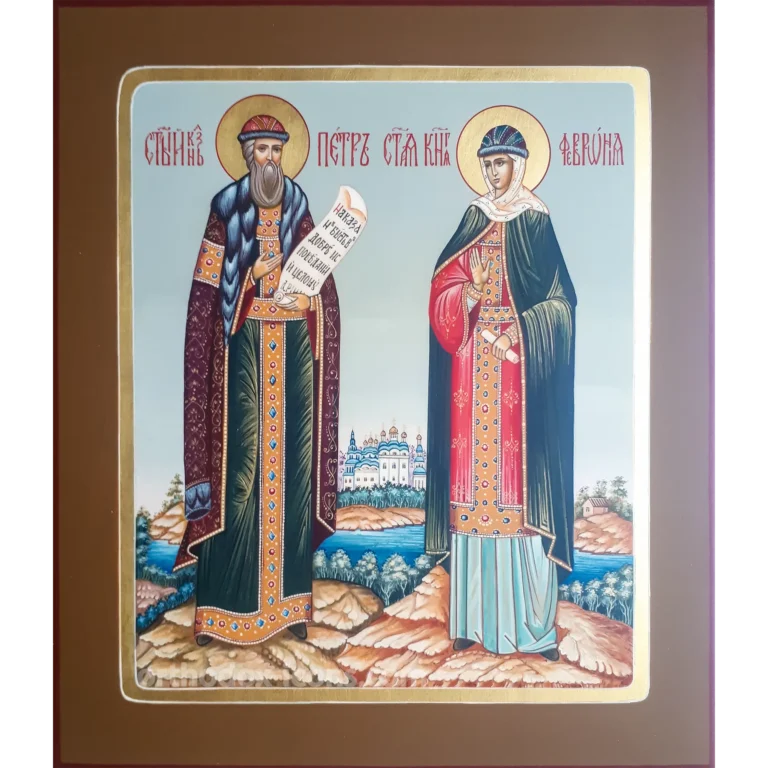
Saint Peter is shown on the left. His figure is restrained and solemn: the dark monastic mantle, deep tones of the clothing, schema-like crosses, and blessing gesture reveal spiritual maturity. A scroll in his hand points to spiritual instruction, prayerful experience, and the Christian meaning of married life. His face is turned toward Fevronia, but there is no ordinary emotional drama in it; the expression is calm, attentive, and reverent.
Saint Fevronia is shown on the right, also in monastic clothing, with a dark veil and cross-marked garment. Her hand is raised in prayer, and her gaze is turned toward Saint Peter and inward into the composition. Her appearance unites meekness, wisdom, and spiritual strength. In her life, Fevronia often appears as a bearer of quiet but firm discernment. Her humility is not passive; it preserves love, peace, and fidelity.
The composition is not a scene of sentimental closeness, but a prayerful standing of two saints united by one spiritual path. Between them opens a landscape with a river, churches, and settlements. In the lower part are plants, stones, and earth; in the middle are water and banks; above are church buildings and distant open space. This many-layered background makes the icon especially meaningful: the family fidelity of Peter and Fevronia is shown against the whole land they served.
Iconography: The Monastic Image of the Holy Spouses
The iconography of Peter and Fevronia of Murom has several established forms. In some icons they are shown as rulers of Murom in princely garments. In others, they are shown in a boat, recalling the episode when Prince Peter refused to abandon his wife and left the city with her. In still others, they are shown in monastic form, connected with the completion of their earthly life. This icon belongs to that deeper, contemplative direction.
The monastic clothing does not cancel the family meaning of the image; it reveals it more fully. Peter and Fevronia are venerated not only because they loved one another, but because their love was faithful, chaste, responsible, and spiritually mature. Their monastic tonsure at the end of life is understood not as a break in the marital path, but as its completion in prayer. For this reason, the monastic version is especially fitting for those who see family life not only as earthly happiness, but as a path of salvation.
The scrolls and hand gestures emphasize the spiritual character of the icon. Saint Peter’s hand is formed in a blessing gesture, while Saint Fevronia’s hand is opened in prayer. Together they create a quiet dialogue of the holy spouses before God. There is no outward display of princely power here; instead there is spiritual stillness, inward discipline, and mature witness: fidelity in marriage should lead not to pride or self-sufficiency, but to humility, prayer, and love.
The heavenly scene with the Mother of God and angels strengthens the theological meaning of the icon. The Mother of God is perceived as a heavenly intercessor to whom families turn in sorrow, trials, illness, discord, and difficult decisions. Her presence above the landscape and the saints reminds the faithful that family life needs the protection of God, and that prayer for marriage is inseparable from prayer for humility, patience, and purity of heart.
Landscape, Churches, and Ornamental Border
The landscape plays an important role in this icon. Between Peter and Fevronia are rivers, banks, small islands, churches, monastery buildings, and a distant horizon. This is not simply background decoration. It is an image of the land where the service of the saints took place. The water can be understood as a sign of life’s path, trials, and change, while the churches show that true order in family and city is possible only when people turn toward God.
The architectural motifs recall Murom and the church memory connected with the holy spouses. In their life, the personal union of Peter and Fevronia also affected the city. When they were forced to leave, disorder began; when they returned, order was restored. For this reason, churches and settlements are meaningful in the icon. A Christian family is not isolated from the world; it can become a source of peace, mercy, and good order for those around it.
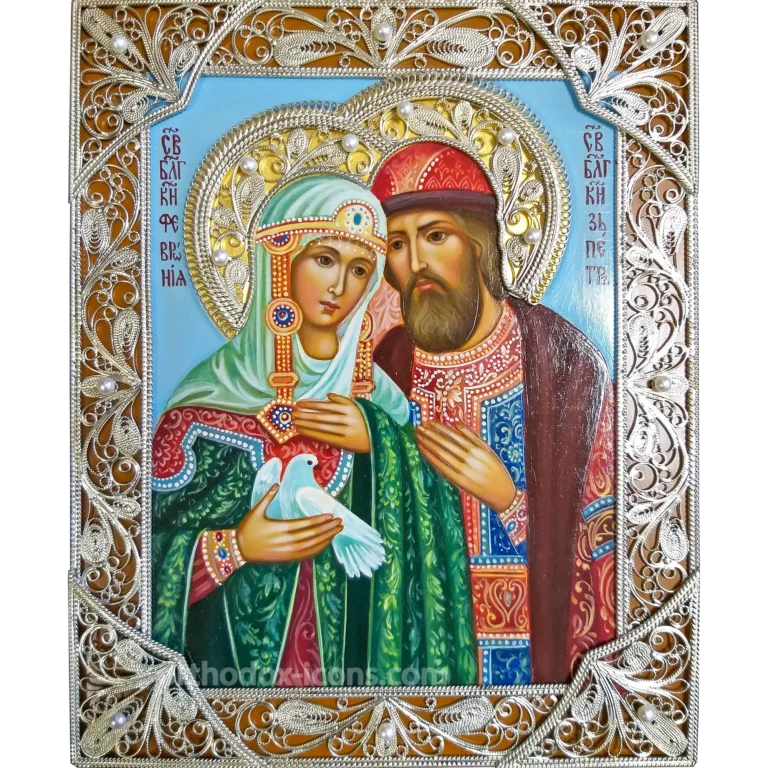
The borders of the icon are richly ornamented. Along the edges are plant patterns, decorative scrollwork, bright elements resembling precious adornment, and rhythmic dots around the perimeter. This border gives the icon a festive character and makes it expressive in a larger format. The ornament does not compete with the central composition; it gathers the whole image into a solemn frame.
The color harmony is built on cool blue, turquoise, green, brown, and golden tones. The light landscape with rivers and distant banks contrasts with the dark monastic garments, so the figures of Peter and Fevronia remain central. The halos are painted with fine radiant and ornamental detail, making the faces of the saints especially visible.
Prayer Before the Icon of Peter and Fevronia
Before the icon of Saints Peter and Fevronia of Murom, Orthodox Christians pray for family, marriage, love, fidelity, and peace between spouses. These saints are especially close to those who want to build family life not only on emotion, but also on trust, responsibility, patience, and prayer. Their image reminds the faithful that Christian marriage is a path where spouses learn to preserve faithfulness, avoid destroying trust, seek reconciliation, and support one another before God.
People ask Saints Peter and Fevronia for the preservation of love and fidelity in marriage; peace between husband and wife; reconciliation after family quarrels; help in overcoming resentment, distrust, and coldness; strength to form a stable Christian family; blessing for church marriage and married life; mutual understanding between spouses; patience, humility, and the ability to forgive; help in raising children; and protection of the family from division.
Prayer before this icon does not replace the personal work of spouses: honest conversation, responsibility, keeping one’s word, willingness to listen, willingness to yield, and readiness to forgive. But the image of Peter and Fevronia helps the family see marriage as a shared spiritual path before God.
Who This Icon Is Suitable For
This icon is suitable for married couples, newlyweds, couples preparing for church marriage, Orthodox families, and people named Peter or Fevronia. It may be chosen for a family icon corner, home prayer space, church, chapel, or family chapel. It is also a thoughtful gift for a wedding, church wedding, anniversary, new home, reconciliation after a difficult period, or another important family date.
Because this version shows the saints in monastic clothing, it has a more contemplative and mature tone than many wedding icons. It is especially appropriate when the desired emphasis is not only the beginning of married life, but the whole path of fidelity: love, trials, mutual support, repentance, humility, prayer, and spiritual completion.
For newlyweds, the icon can become a reminder that family begins not only with celebration, but with the promise to keep faithfulness in joy and difficulty. For spouses with many years of family life, it may become a sign of gratitude to God for years lived together, children, home, shared memory, and mutual support.
In a church setting, this icon is appropriate where believers pray for family, marriage, reconciliation of spouses, and the upbringing of children. Iconostasis sizes should be selected individually, taking into account height, lighting, neighboring icons, and the readability of the figures, landscape, monastic details, heavenly scene, and ornamental border.
Brief Life of Saints Peter and Fevronia
The holy right-believing Prince Peter and Princess Fevronia of Murom entered church memory as an example of Christian marriage. Tradition tells that Prince Peter was healed by the wise maiden Fevronia, who was known for piety, discernment, and humility. After his healing, their union passed through trials, misunderstanding, and resistance from others.
Fevronia was not of noble birth, which caused resentment among the boyars. They did not want to see her as princess and demanded that Peter abandon his wife. But the prince would not destroy his marriage for the sake of power. He chose to leave Murom together with Fevronia, preserving fidelity to marriage and to God’s commandment.
This episode is often shown in iconography through the boat scene, where the spouses depart from the city. In this icon, however, a different version is chosen: the saints are presented in monastic robes against a landscape of land, churches, and rivers, with the heavenly image of the Mother of God above.
After Peter and Fevronia left, disorder and conflict began in Murom. The people then asked the prince and princess to return. The saints came back and ruled the city, seeking to live as Christians, with wisdom, mercy, and care for the people. Their life shows that fidelity, humility, and love are stronger than pride, social prejudice, and the struggle for power.
At the end of their lives, Peter and Fevronia received monastic tonsure with the names David and Euphrosyne. According to tradition, they departed to the Lord on the same day, which became a sign of their spiritual unity. This is why the monastic form in the icon is important: it recalls the completion of their family path in prayer, humility, and full devotion to God.
The memory of Saints Peter and Fevronia of Murom is celebrated on July 8 in the civil calendar. The translation of their relics is also commemorated on September 19. These dates are often remembered when choosing a family icon, wedding gift, anniversary gift, named icon, or another important family gift.
Materials, Gold Leaf, and Versions
The icon of Peter and Fevronia of Murom is painted on a linden wood panel prepared with a traditional icon ground. Oak support battens may be used for stability. Gesso is applied to create an even surface for egg tempera painting. The faces, hands, monastic garments, landscape, churches, inscriptions, heavenly scene, and ornamental elements are painted by hand.
The complexity of the composition is important in this image. The icon includes not only the two saints, but also landscape depth, rivers, monastery buildings, a distant horizon, the heavenly image of the Mother of God, and decorative framing. In the size 27×31 cm (10.6×12.2 in) and larger, these details can be painted clearly enough for the image to remain whole while preserving the intimacy of a home icon.
Gold leaf may be used in the halos, decorative elements, and selected details according to the chosen version. Gold in an icon is connected not only with beauty, but also with the symbolism of divine light. Together with fine ornament, a light landscape, and dark monastic clothing, it helps reveal the spiritual center of the composition.
For an individual order, the size, degree of detail, border design, icon case, home or church format, and iconostasis version may be discussed in advance. For a larger image, the place of installation should be considered beforehand so that the composition with two figures, landscape, churches, and heavenly scene can be perceived harmoniously.
Choosing the Size of the Icon
The size 27×31 cm (10.6×12.2 in) is a good choice for a home icon corner when a meaningful family image with a developed composition is needed. In this format, not only the faces of Peter and Fevronia are readable, but also the monastic garments, landscape, rivers, churches, halos, and ornamental border. As a family gift, this size looks solemn without requiring too much space.
A larger format is worth choosing for a spacious home, separate icon case, chapel, or church. The larger the icon, the more fully the landscape and architectural details, heavenly image of the Mother of God, fine halo work, and ornamental framing can be shown.
Iconostasis sizes are discussed separately. In that case, the proportions of the row, installation height, lighting, neighboring icons, and overall artistic character of the space should be considered. For this icon, it is important to preserve the readability of the two figures, landscape background, and upper heavenly scene, so a larger format is especially appropriate where the image will be viewed from a distance.
Placement, Blessing, and Care
The icon of Saints Peter and Fevronia may be placed in a home icon corner near the icons of Christ, the Mother of God, Saint Nicholas, the Guardian Angel, and the patron saints of the family. It is also appropriate in a family prayer area or in the room of a married couple, provided the place is chosen reverently and the icon is not treated as ordinary interior decoration.
After receiving the icon, it may be blessed in an Orthodox church. A blessed icon is intended for prayer, thanksgiving to God, and turning to Saints Peter and Fevronia as heavenly patrons of family life.
A hand-painted icon should be protected from direct sunlight, moisture, overheating, soot, and sudden temperature changes. The surface should not be wiped with wet cloths, alcohol, household cleaners, or rough fabric. Special care is needed around the faces, gilded halos, landscape details, fine ornaments, inscriptions, and decorative border.
Dust should be removed with a dry soft brush, without pressure. To protect the painting and gilding, a wooden glazed icon case is recommended. It is especially helpful if the icon is placed in a home where candles or lamps are often used, or if the image is made in a larger format with many fine details.
Icon Characteristics
| Name | St. Peter and Fevronia Icon |
| Saints | Saints Peter and Fevronia of Murom, monastic names David and Euphrosyne |
| Icon type | Family icon in a contemplative monastic version |
| Visible details | Monastic robes, scroll, blessing and prayerful gestures, landscape with rivers and churches, Mother of God with angels above |
| Available size | 27×31 cm (10.6×12.2 in); larger iconostasis sizes by request |
| Technique | Hand-painted egg tempera on a prepared linden wood panel |
| Decoration | Gold leaf according to the selected version, ornamental border, protective finish |
| Purpose | Family prayer, marriage blessing, anniversary gift, church wedding gift, home or church icon corner |
| Shipping | Free international shipping; payment after receiving and approving the icon |
Questions and Answers
Who is depicted on this Saints Peter and Fevronia icon?
The icon depicts Saints Peter and Fevronia of Murom, Orthodox patrons of family life, marital fidelity, peace, and Christian marriage.
Why are Peter and Fevronia shown in monastic robes?
This version recalls the end of their earthly life, when the holy spouses received monastic tonsure with the names David and Euphrosyne.
What do Orthodox Christians pray for before this icon?
People pray for peace in the family, preservation of marriage, fidelity, mutual understanding, blessing for married life, patience, and help in raising children.
Is this icon suitable as a church wedding gift?
Yes. It is suitable for a church wedding, marriage, anniversary, or family gift, especially when the spiritual maturity of marriage is emphasized.
Is there a boat scene on this icon?
No. This icon shows the saints in monastic form before a landscape with rivers and churches. The boat scene belongs to another narrative version of their life.
What does the landscape with rivers and churches mean?
The landscape recalls the land, city, and church memory of the holy spouses, and points to their service, family fidelity, and spiritual responsibility.
What is shown in the upper part of the icon?
The upper part shows a heavenly image of the Mother of God with angels, emphasizing prayer, protection, and divine help for family life.
What size is this icon?
The listed size is 27×31 cm (10.6×12.2 in). Larger and iconostasis sizes can also be discussed for a custom order.
When are Saints Peter and Fevronia commemorated?
Their main feast is celebrated on July 8 in the civil calendar, and the translation of their relics is commemorated on September 19.
How should this hand-painted icon be cared for?
Keep it away from direct sunlight, moisture, heat, soot, and harsh cleaners. Dust it gently with a dry soft brush, and use an icon case when possible.
| Dimensions | 27x31cm (10.6×12.2 in) |
|---|---|
| Name | Fevronia, Peter |