Luke of Simferopol Orthodox Icon
Price range: $700 through $2250
Available sizes: 17×21 cm (6.7×8.3 in), 20×24 cm (7.9×9.4 in), 27×31 cm (10.6×12.2 in), 30×40 cm (11.8×15.7 in). Larger church and iconostasis sizes can be made by individual commission.
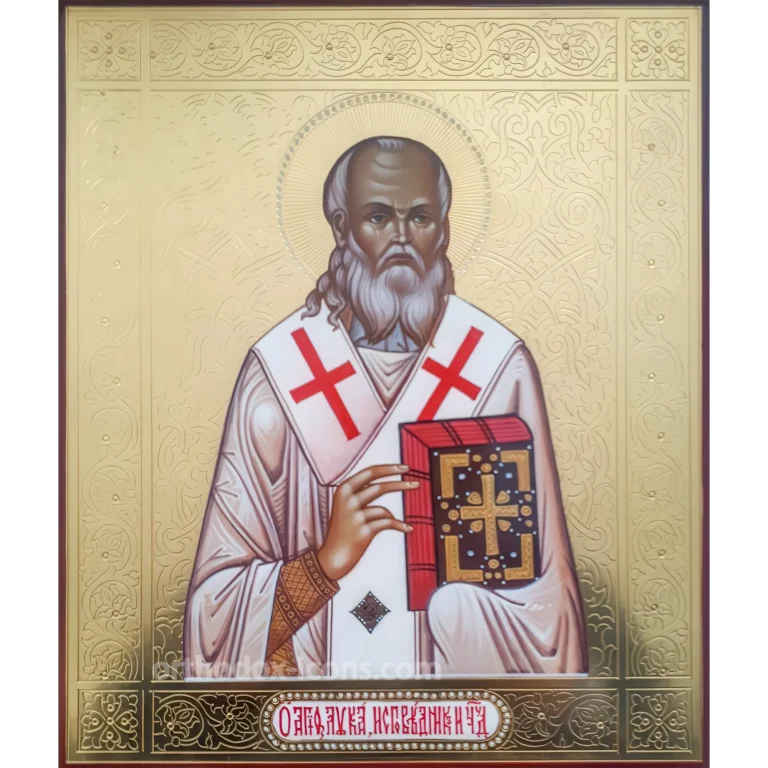
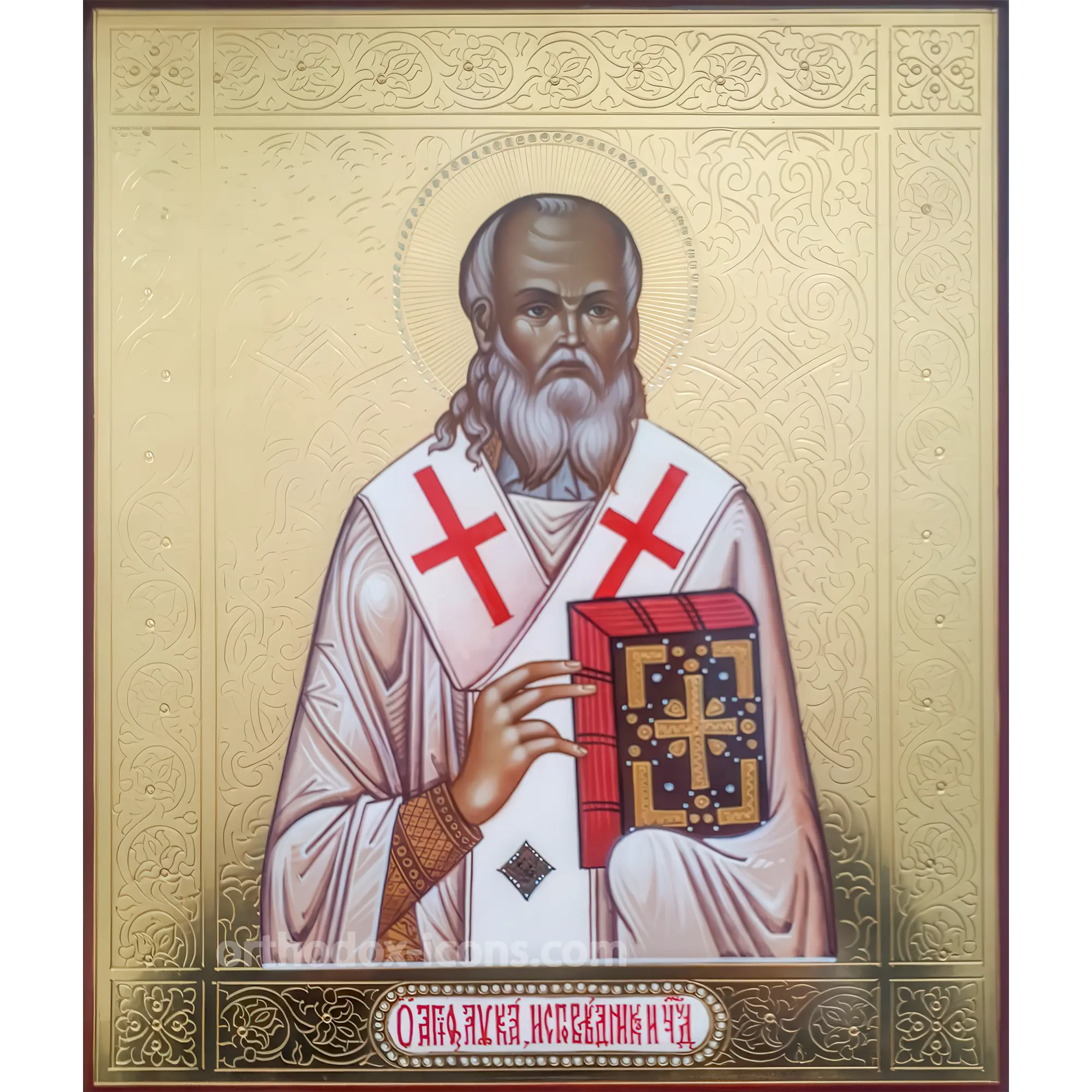
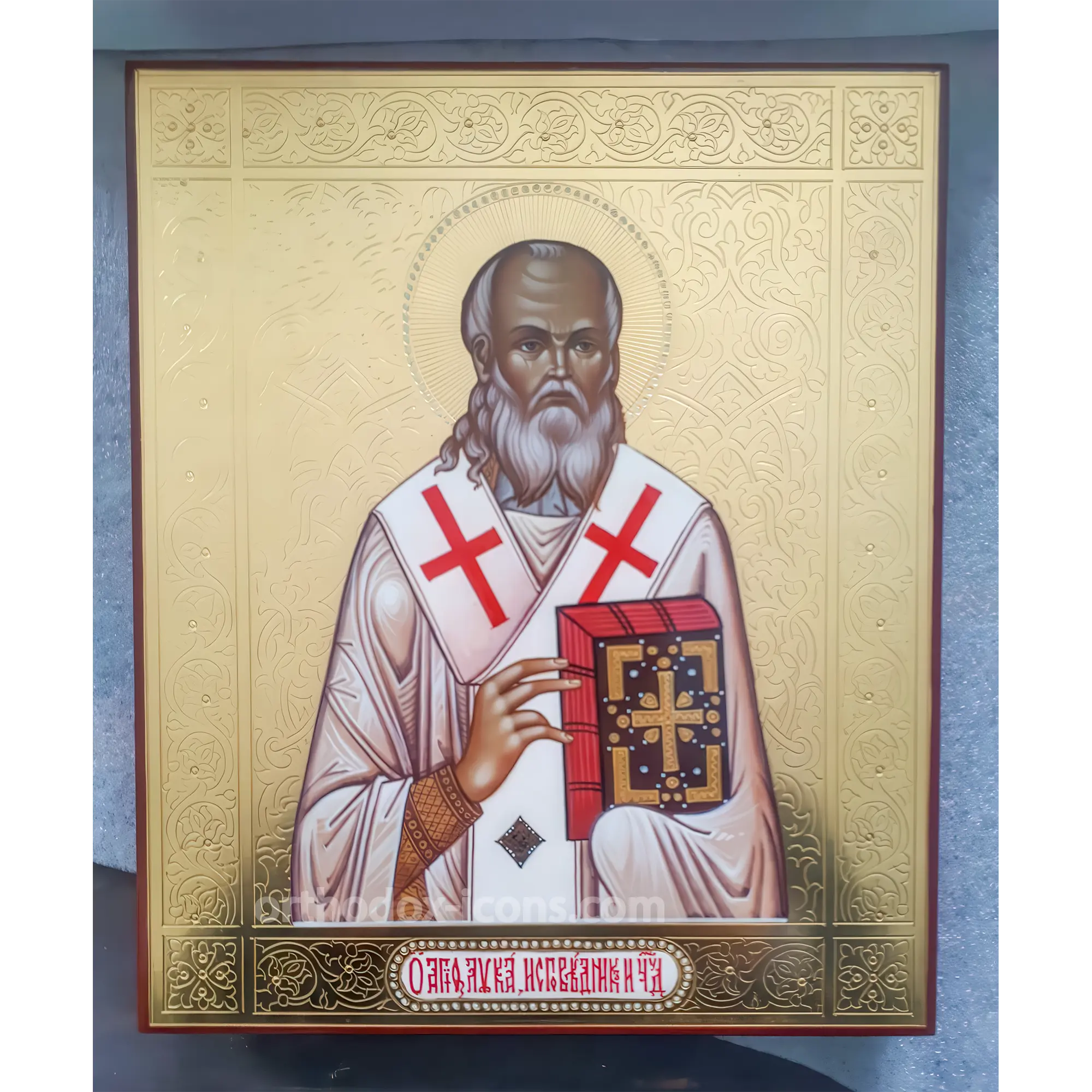
Luke of Simferopol Orthodox Icon is a hand-painted icon of Saint Luke of Crimea, also known as Valentin Voyno-Yasenetsky, a holy bishop, surgeon, scientist, and confessor of the faith. The saint is shown half-length in episcopal vestments, holding a richly decorated Gospel, with a blessing hand, gold kovcheg and borders, hand-tooled basma-style ornament, and white enamel accents imitating pearls around the halo.
Materials: solid linden wood board, oak splines, chalk gesso, mineral egg tempera, 23K gold leaf (960 purity), hand-tooled gold ornament, white enamel, and natural oil finish. Free international shipping is included. Payment is made after you receive and approve the icon.
It is possible to paint an image in any size to order
Free shipping worldwide
Luke of Simferopol Orthodox Icon is a hand-painted icon of Saint Luke of Crimea, also known as Valentin Felixovich Voyno-Yasenetsky. He is venerated as a holy bishop, surgeon, scientist, teacher, and confessor of the Orthodox faith. This image presents him not in a medical scene, but in episcopal vestments, holding a richly decorated Gospel and blessing the faithful.
The icon combines a serious, compassionate portrait of the saint with a richly worked traditional background. The kovcheg and broad borders are covered with 23K gold leaf (960 purity), and the gold is finished with deep hand-tooled basma-style floral ornament. Around the halo, white enamel drops imitate pearls, giving the icon a festive and reverent appearance while keeping the focus on the face of Saint Luke.
Luke of Simferopol Orthodox Icon – Saint, Physician, and Confessor
Saint Luke of Crimea was born Valentin Felixovich Voyno-Yasenetsky. In his civil life he became a brilliant surgeon, professor of medicine, and author of important medical works. At the same time, he chose the path of Orthodox faith and Church service during a period when public confession of Christ demanded great courage.
In 1921 he received monastic tonsure with the name Luke, after the holy Apostle and Evangelist Luke, who is also remembered as a physician. He was later ordained a bishop. For his firm faith, Saint Luke endured arrests, imprisonment, and harsh exile. Even in severe conditions, he continued to help the sick, operate when possible, teach, and serve those who suffered.
His life is unique in Orthodox history: an archbishop of Simferopol and Crimea, a confessor of the faith, and at the same time a renowned medical scientist. This is why his icon speaks both to the sick and to those who care for them. It reminds doctors that their work can become service to God, and it reminds patients that illness can be met with prayer, courage, and hope.
Iconography and Meaning
In this icon Saint Luke is shown half-length and without the white monastic klobuk. The uncovered head gives the image a special openness and directness. His face is painted with the gravity of age, experience, compassion, and spiritual endurance. The gaze is attentive and penetrating, yet not harsh; it carries the memory of suffering and the mercy of a physician-pastor.
- Episcopal vestments. Saint Luke wears light episcopal vestments with gold assist and a broad white omophorion marked with red crosses. The omophorion points to his rank as bishop and to pastoral care for the flock.
- The Gospel. In his left hand he holds a closed altar Gospel in a rich gold cover with jewel-like details and red page edges. It signifies his preaching of the Word of God, which he did not abandon in prison, exile, or episcopal ministry.
- Blessing hand. His right hand rests near the Gospel and is formed in a blessing gesture. The hands of a surgeon who saved human lives are shown here as the hands of a saint blessing those who pray.
- Pearl-like halo border. The gold halo is framed with white enamel drops imitating pearls, a traditional sign of honor and reverence for a sacred image.
- Gold kovcheg and basma-style ornament. The gilded kovcheg and borders are finished with a hand-tooled floral pattern, giving the icon the appearance of a precious liturgical shrine.
Prayer Before Saint Luke of Crimea
Saint Luke of Crimea is especially loved by those who pray in illness, before surgery, during treatment, and in recovery. People ask his intercession for a correct diagnosis, the wisdom and steadiness of doctors, a successful operation, relief from pain, patience in suffering, and strength for the family of the sick person.
Orthodox Christians also ask Saint Luke for help in times of deep discouragement, injustice, slander, and false accusation. This is connected with his own life: he passed through arrests, exile, and suffering without abandoning Christ or his service to people.
Prayer to Saint Luke does not replace medical care. Rather, it brings medical care into a life of faith. The saint himself was a physician, so devotion to him naturally joins trust in God, respect for skilled medicine, and compassion for the suffering person.
Feast Days and Gift Occasions
The Orthodox Church commemorates Saint Luke of Crimea on June 11, the day of his blessed repose, and on March 18, the day associated with the finding of his relics. These dates are often considered when choosing an icon for a name day, a thanksgiving gift to a doctor, or a special commission for a parish, chapel, or medical institution.
Because this icon includes deep hand-tooled gold ornament and fine painted details, it requires careful work by the icon painter and gilder. If the icon is intended for a specific date, it is best to allow enough time for the board preparation, gesso, gilding, painting, ornament, enamel details, and protective finish.
Where to Place This Icon
This richly decorated icon may become an important part of a home prayer corner or family iconostasis. It may be placed with icons of Christ, the Mother of God, and holy healers such as Saint Panteleimon. The image is also suitable for a doctor’s office, medical center, hospital chapel, parish space, or a room where a sick person is cared for.
Because the icon uses gold leaf, egg tempera, enamel, and hand-tooled ornament, it should be placed in a clean, dry, stable environment away from direct sunlight, radiators, humidifiers, candle smoke, and heavy dust. A wooden icon case with glass is strongly recommended for long-term protection.
Materials and Creation of the Icon
Every part of this icon is made by hand in the traditional technique of Orthodox icon painting. The wooden base is a solid linden board with oak splines, which help protect the panel from warping when humidity changes. The surface is prepared with chalk gesso, forming a smooth and durable ground for painting.
The face and vestments are painted with mineral egg tempera, made from natural pigments. This technique gives the icon a restrained matte depth and long-lasting color. The painter builds the image gradually, from broad tones to fine highlights, from the general silhouette to the expression of the face, Gospel cover, omophorion, and ornamented vestments.
The kovcheg and borders are covered with 23K gold leaf (960 purity), then polished and finished by hand. A floral basma-style ornament is worked into the gold with fine tools, creating the effect of a precious relief cover. The white enamel drops around the halo imitate pearls and add a solemn decorative accent.
| Characteristic | Materials and Technique |
|---|---|
| Icon board | Solid dried linden wood with wedge-shaped oak splines to help protect the board from warping. |
| Ground | Traditional chalk gesso prepared for egg tempera painting. |
| Painting | Mineral egg tempera made with natural pigments and egg yolk. |
| Gilding | 23K gold leaf (960 purity) on the kovcheg, halo, and borders. |
| Gold ornament | Hand-tooled basma-style floral ornament worked into the gold background and borders. |
| Enamel detail | White enamel drops around the halo imitating pearls. |
| Protective finish | Natural oil finish that helps protect the painted surface and deepen the colors. |
Icon Characteristics
| Icon name | Luke of Simferopol Orthodox Icon |
|---|---|
| Saint depicted | Saint Luke of Crimea, Archbishop of Simferopol and Crimea |
| Civil name | Valentin Felixovich Voyno-Yasenetsky |
| Iconographic type | Half-length image of the saint in episcopal vestments, holding the Gospel and blessing |
| Decorative features | Kovcheg, gold background and borders, hand-tooled basma-style ornament, pearl-like white enamel halo border |
| Materials | Linden wood, oak splines, chalk gesso, mineral egg tempera, 23K gold leaf (960 purity), white enamel, natural oil finish |
| Available sizes | 17×21 cm (6.7×8.3 in), 20×24 cm (7.9×9.4 in), 27×31 cm (10.6×12.2 in), 30×40 cm (11.8×15.7 in) |
| Feast days | June 11 and March 18 |
Who This Icon Is Suitable For
This icon is a meaningful Orthodox gift for a doctor, surgeon, nurse, medical student, teacher of medicine, or a person undergoing treatment. It can also be given in gratitude to a physician who helped save a life or restore health.
As a name icon, it is suitable for men named Luke. It may be placed in a home icon corner, family prayer room, medical office, hospital chapel, parish church, or monastery. The rich gold work and enamel detail make the icon especially appropriate when a solemn and carefully made image of Saint Luke is desired.
Available sizes are 17×21 cm (6.7×8.3 in), 20×24 cm (7.9×9.4 in), 27×31 cm (10.6×12.2 in), and 30×40 cm (11.8×15.7 in). Larger church and iconostasis sizes can be made by individual commission. Free international shipping is included. Payment is made after you receive and approve the icon.
Questions and Answers
Why is Saint Luke shown without medical instruments?
There are several iconographic versions of Saint Luke. In this icon he is shown as a hierarch of the Church, in episcopal vestments and with the Gospel, emphasizing his pastoral ministry, confession of the faith, and healing of souls.
Why is he called both Luke of Crimea and Voyno-Yasenetsky?
Valentin Felixovich Voyno-Yasenetsky was his civil name, known in medicine and scientific publications. Luke was his monastic name, and Crimea or Simferopol refers to his final place of episcopal service and veneration.
What do Orthodox Christians ask Saint Luke before surgery?
They ask his intercession for wisdom and steadiness for the surgeon, protection from medical errors, strength for the patient, a peaceful recovery, and trust in God’s mercy during treatment.
Where are the relics of Saint Luke of Crimea?
The relics of Saint Luke are venerated at Holy Trinity Convent in Simferopol, Crimea, a major place of pilgrimage for those asking his prayers for healing and consolation.
Should this icon be blessed after purchase?
A hand-painted Orthodox icon may be blessed in your parish church after receiving it. This is a meaningful personal act that helps place the icon within the life of prayer.
Why is an icon case recommended for this icon?
Gold leaf, egg tempera, and hand-tooled ornament are delicate natural materials. A wooden icon case with glass helps protect the icon from dust, smoke, humidity changes, and accidental touching.
How should an icon with hand-tooled gold be cared for?
Do not wipe the gilded surface with wet cloths or cleaning products. Dust should be removed only very gently with a soft dry brush, without pressing on the gold or enamel details.
Will the colors of this hand-painted icon fade?
The face and vestments are painted with mineral egg tempera, a traditional technique valued for durability and depth of color. The icon should still be protected from strong direct sunlight and humidity.
Can this icon be given to a doctor?
Yes. A hand-painted icon of Saint Luke is a deeply meaningful Orthodox gift for a surgeon, physician, nurse, medical student, or doctor who has helped a patient.
What do the white dots around the halo mean?
The white enamel drops imitate pearls, a traditional sign of reverence and love for a holy image. They also frame the gold halo and make the saint’s face more visually focused.
| Dimensions | 17x21cm (6.7×8.3 in), 20x24cm (7.9×9.4 in), 27x31cm (10.6×12.2 in), 30x40cm (11.8×15.7 in) |
|---|---|
| Name | Luke |