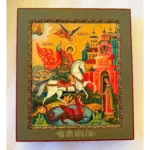
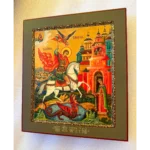
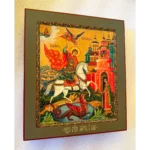
Saint George Icon with White Horse and Dragon
$1000
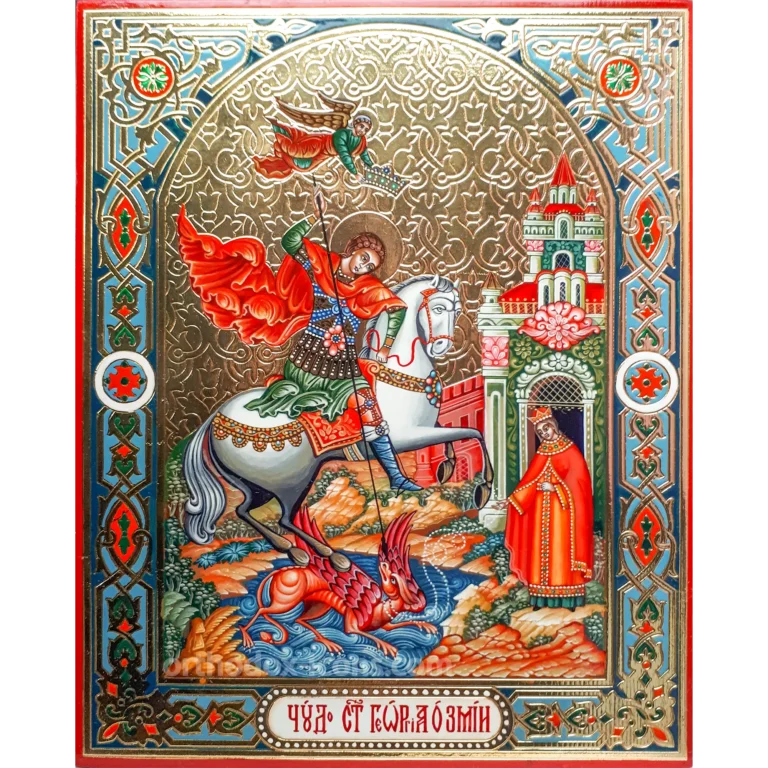
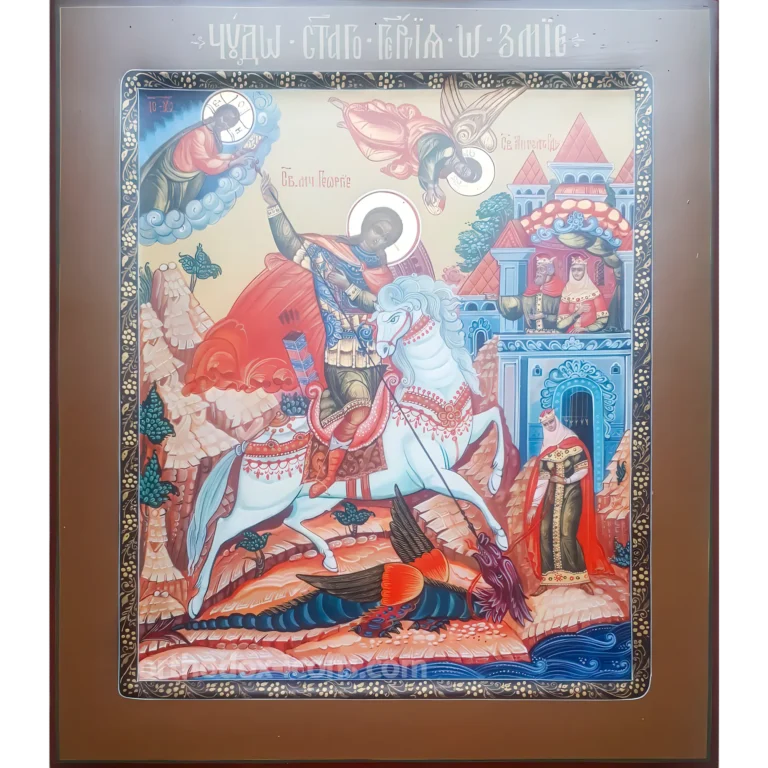
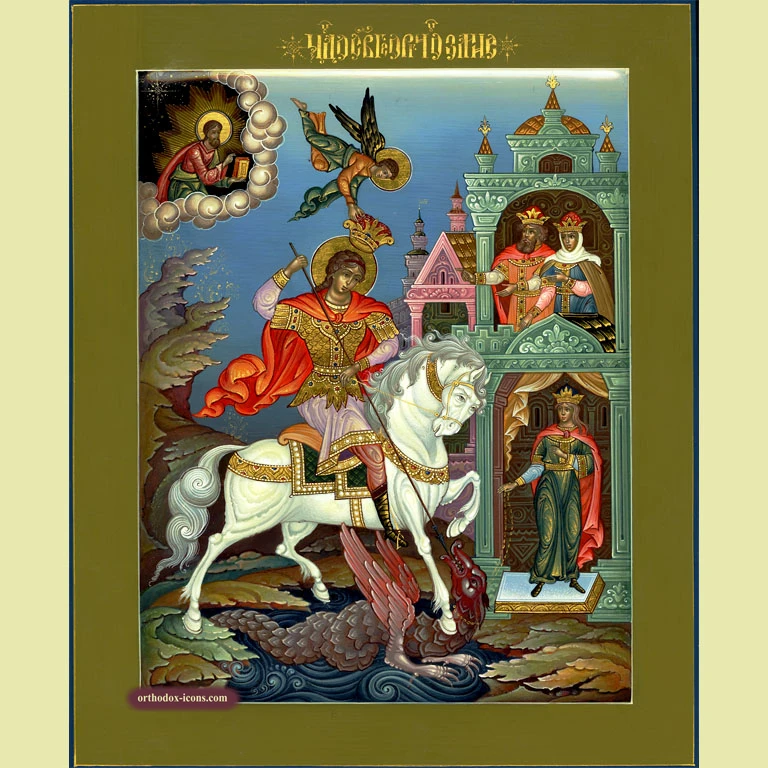
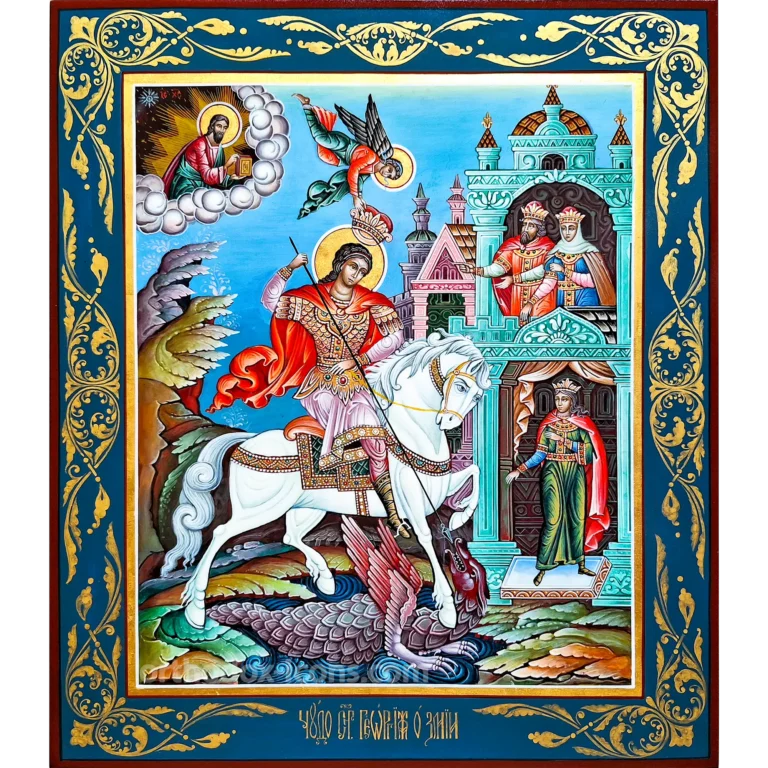
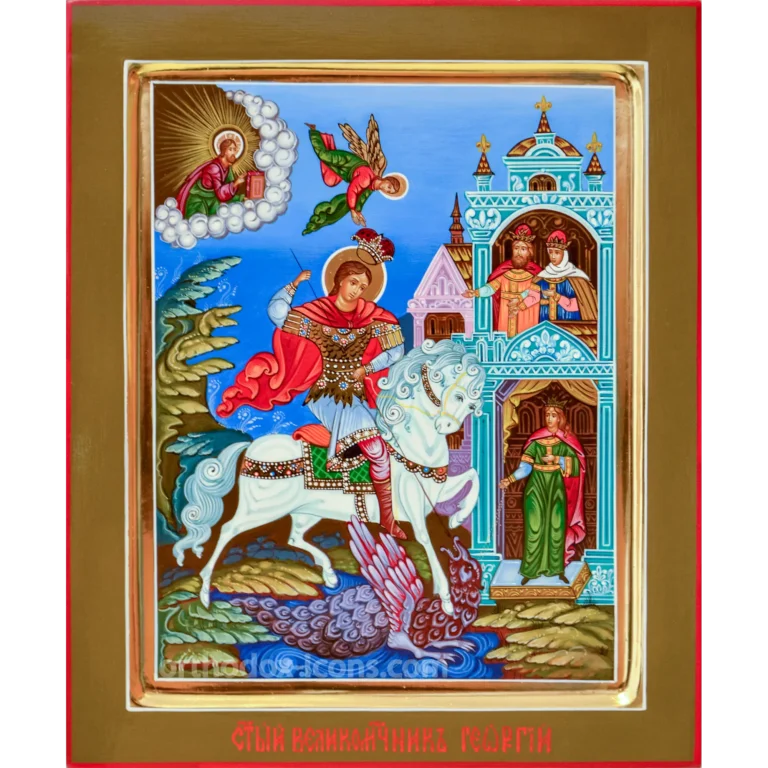
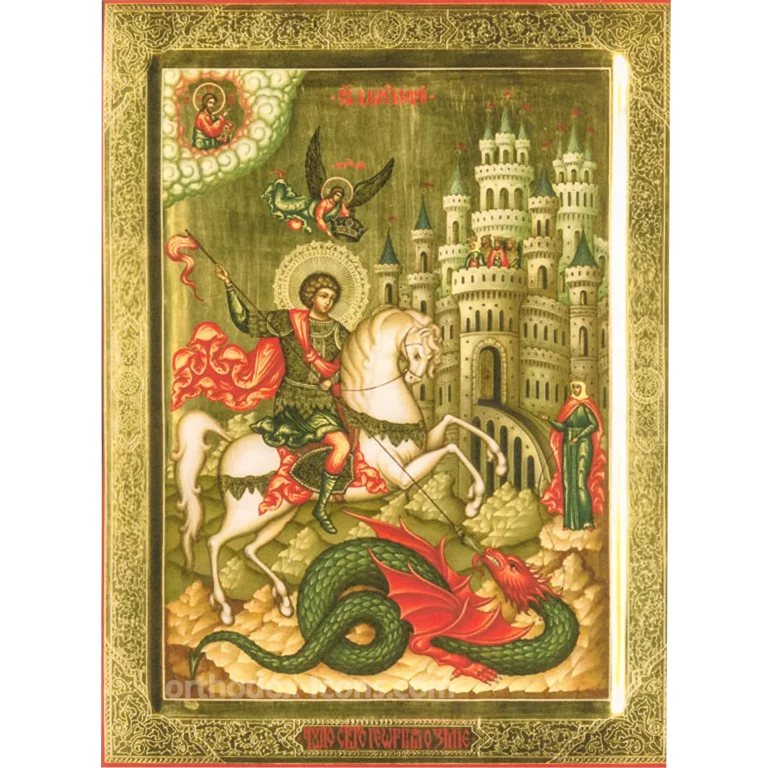
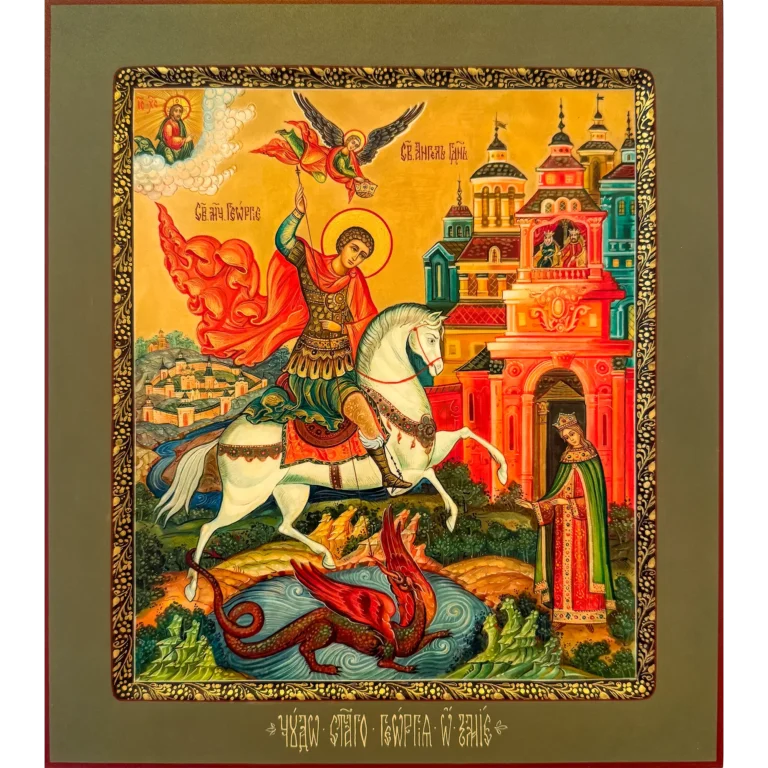
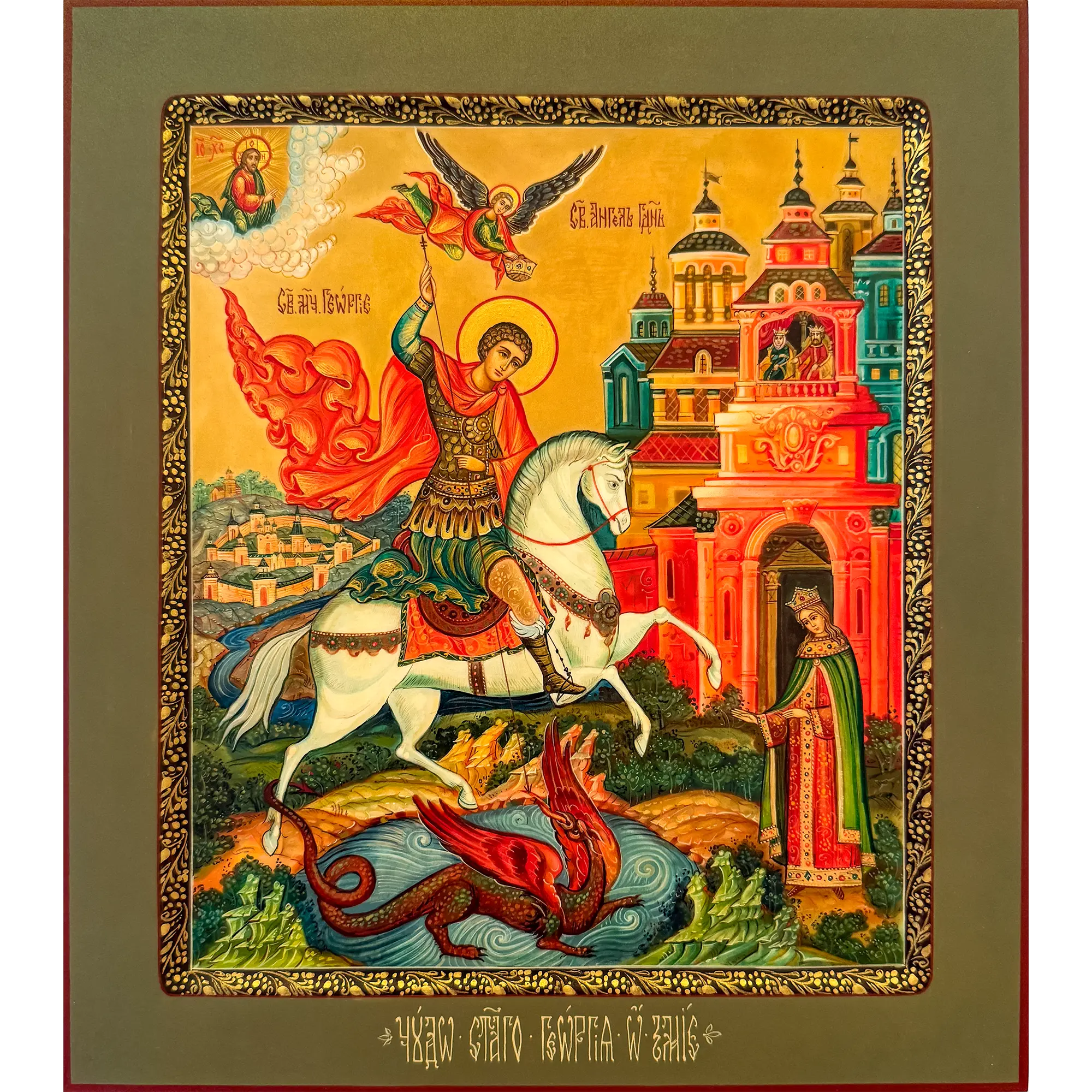
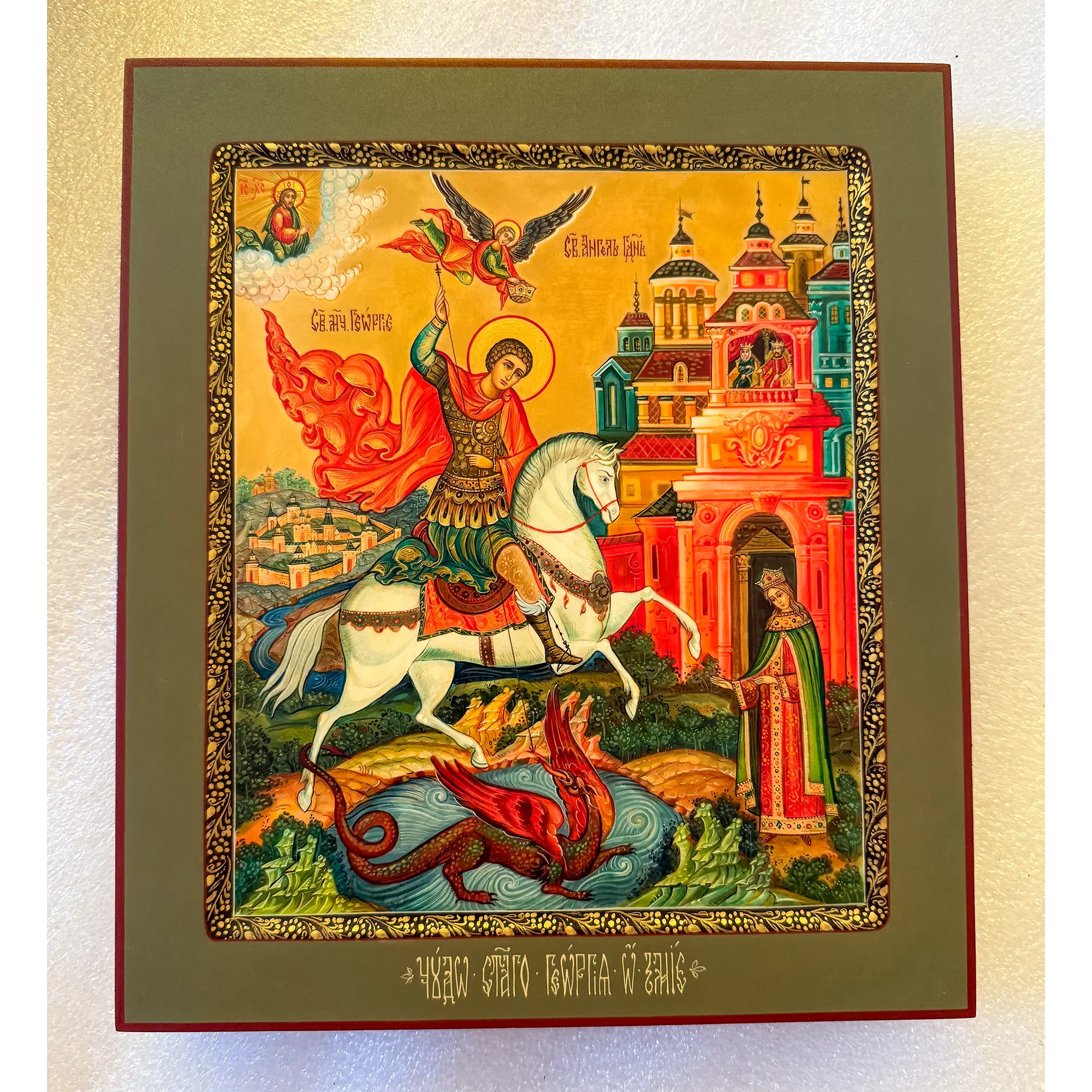
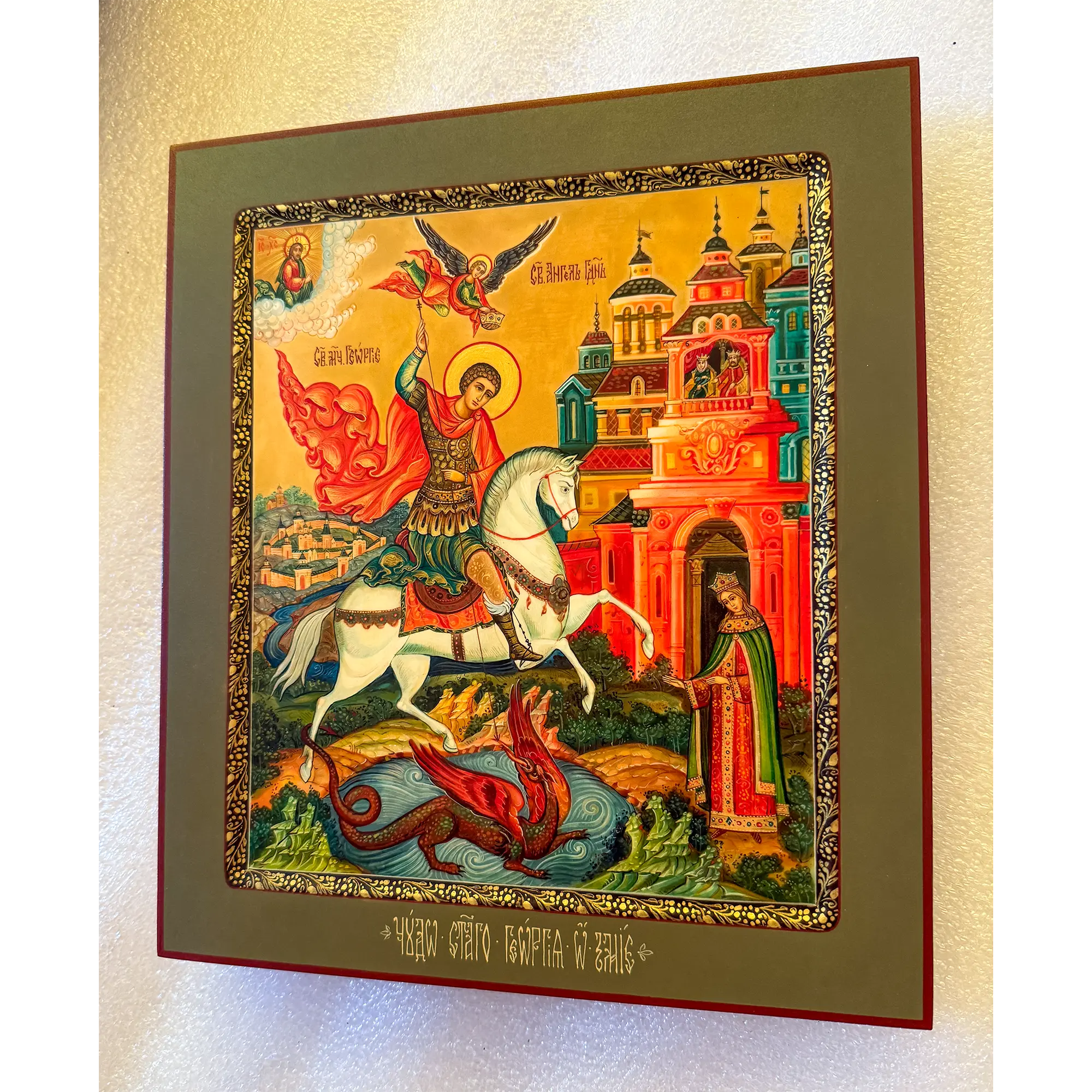
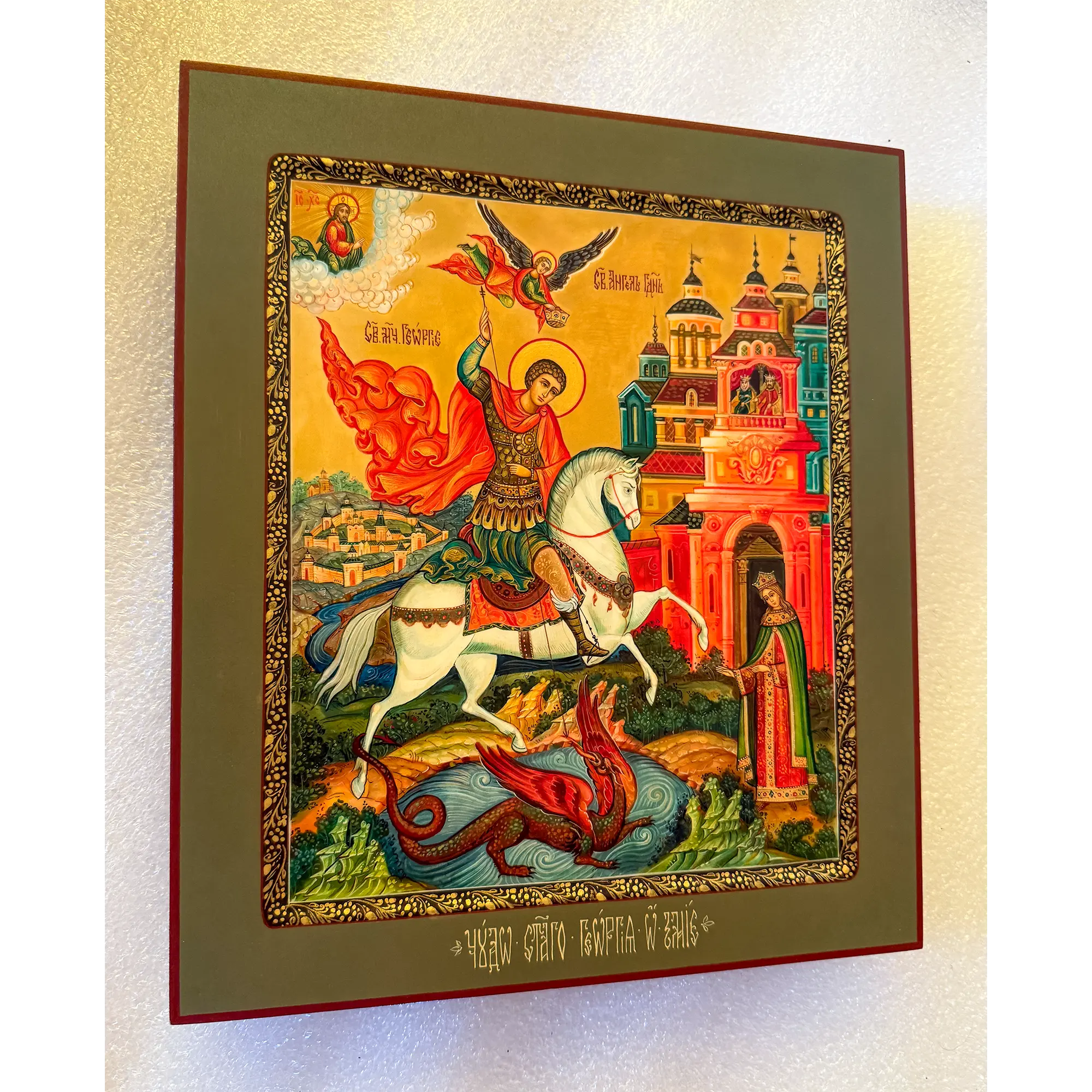
Saint George Icon with White Horse and Dragon is a hand-painted Orthodox icon of Saint George the Victorious on a white horse, striking the dragon with a spear. The composition includes the saved princess, a city background, an angel with a crown, and Christ blessing from heaven.
Available size: 27×31 cm (10.6×12.2 in).
Materials: wooden board, gesso ground, egg tempera, gold leaf, hand-painted architecture, landscape and ornament, and protective finish.
Technique: traditional hand-painted Orthodox icon on wood.
It is possible to paint an image in any size to order
Free shipping worldwide
Saint George Icon with White Horse and Dragon is a hand-painted Orthodox icon of the Holy Great Martyr George the Victorious, one of the most beloved warrior saints of the Christian Church. The saint is shown mounted on a white horse, striking the dragon with a spear, while the saved princess stands nearby and the city rises behind her.
This icon is not only a dramatic scene of victory. In Orthodox iconography, the dragon represents evil, fear, pagan darkness, spiritual danger, and the powers that threaten human life. Saint George’s victory is therefore a sign of faith, courage, and the help of God overcoming darkness.
The icon is available in 27×31 cm (10.6×12.2 in). Its bright colors, detailed architecture, golden background, red mantle, white horse, angel with crown, and blessing figure of Christ make it a rich narrative image for prayer, gift giving, and family devotion.
Saint George the Victorious in Orthodox Tradition
Saint George the Great Martyr holds a special place among Orthodox saints. He is venerated as a soldier of Christ, a defender of the faith, and a heavenly helper for those who face danger, fear, responsibility, and spiritual struggle. His image is known throughout the Orthodox world and is especially loved by soldiers, rescuers, travelers, and families praying for loved ones who serve far from home.
The title Victorious does not refer only to military success. The true victory of Saint George is his faithfulness to Christ. His courage, steadfast confession, and willingness to suffer for the Gospel made him a witness to the power of God, even under persecution.
The dragon-slaying image became one of the most recognizable ways of showing this spiritual victory. It teaches that evil is defeated not by pride or cruelty, but by courage joined to faith, obedience to God, and readiness to protect the innocent.
Life of Saint George
Saint George lived in the third and early fourth centuries and came from a Christian family. He served in the Roman army and became known for his courage, honesty, and military ability. During the persecution of Christians under Emperor Diocletian, George openly confessed his faith in Christ.
He refused to offer sacrifice to pagan gods and would not renounce Christianity, even under the threat of torture and death. His endurance astonished many witnesses, and some were moved toward the Christian faith by his steadfastness. After severe suffering, Saint George was martyred around the year 303.
The well-known tradition of the dragon tells of a city oppressed by a terrible serpent or dragon. When the king’s daughter was to be sacrificed, Saint George appeared on a white horse and struck the monster with his spear, saving the maiden and the people. In the spiritual meaning of the icon, this event points to the victory of Christ and Christian faith over the forces of evil.
Iconography of This Saint George Image
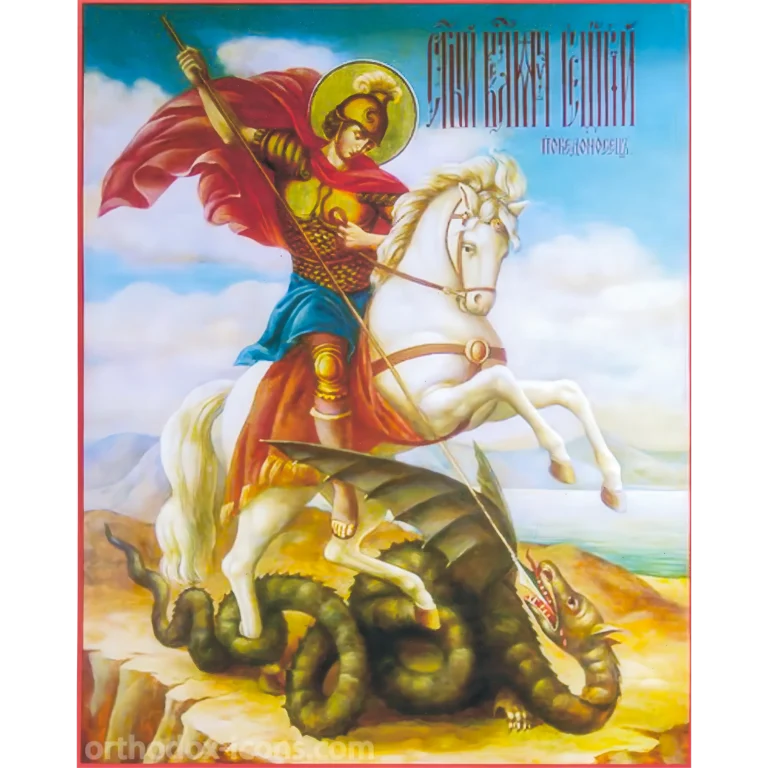
This icon shows Saint George in a dynamic mounted composition. The white horse moves forward with energy, while the saint raises his spear against the dragon below. The red mantle flowing behind him gives the image a sense of movement, courage, and martyrdom.
The white horse signifies purity, nobility, courage, and heavenly assistance. The red mantle recalls the martyr’s blood and the fiery zeal of faith. Saint George’s armor shows him as a warrior, but his calm face reveals that his strength is spiritual before it is physical.
The dragon is shown beneath the horse, near the water and earth, representing the defeated power of evil. The saved princess stands near the city, reminding the viewer that Saint George’s victory is not self-display, but deliverance of the innocent and protection of those in danger.
The architectural background is painted in bright red, gold, blue, and green tones, recalling Byzantine and old Russian icon traditions. Above the saint, an angel descends with a crown, signifying the heavenly reward of martyrdom. In the upper corner, Christ blesses the saint from heaven, showing that the victory belongs ultimately to God.
Prayer Before Saint George
Orthodox Christians pray before Saint George for protection, courage, help in danger, strengthening in difficult circumstances, and deliverance from fear. He is especially invoked for soldiers, officers, rescuers, police, travelers, and all whose duties involve risk and responsibility.
Parents often pray to Saint George for sons and daughters who are serving, traveling, or living far from home. Families may also pray for protection, moral courage, and the strength to stand firm in faith when facing pressure, hostility, or temptation.
The icon should not be treated as a charm. Its purpose is prayer. It turns the heart toward Christ, asking through the intercession of Saint George for courage, truthfulness, protection, and spiritual steadiness.
Traditional Technique and Materials
This icon is painted by hand according to traditional Orthodox icon-painting methods. The wooden board is prepared with gesso, a chalk ground that creates a durable surface for the painted image. Egg tempera is used for the saint, horse, dragon, architecture, landscape, garments, and fine ornamental details.
The golden background and decorative elements are made with gold leaf, giving the icon a luminous and festive character. The architectural forms, the city, the princess, the angel, the clouds, the waters, the horse, and the dragon are all painted by hand, making each icon a unique work within a canonical subject.
The finished icon receives a protective finish to help preserve the paint and gilding. The image is detailed enough to be contemplated closely, while the strong composition remains readable from a distance in a home prayer corner or chapel.
Size, Placement, and Gift Use
The size 27×31 cm (10.6×12.2 in) is convenient for a home icon corner, prayer room, office, chapel, or a dedicated place of prayer. Because of its vivid composition and strong saintly subject, this icon may become a central image for personal devotion.
A Saint George icon is a meaningful Orthodox gift for men and boys named George, Georgi, Yuri, or Egor, for a birthday or name day, for entry into military service, for a serviceman, officer, rescuer, police officer, traveler, or anyone who needs courage and protection in difficult duties.
Free international shipping is included, and payment is made after you receive and approve the icon.
Icon Characteristics
| Icon name | Saint George Icon with White Horse and Dragon |
| Saint shown | Saint George the Great Martyr and Victorious |
| Composition | Saint George on a white horse striking the dragon, with princess, city, angel, and Christ blessing |
| Available size | 27×31 cm (10.6×12.2 in) |
| Board | Wooden icon board |
| Ground | Gesso ground |
| Painting | Egg tempera with hand-painted architectural and landscape details |
| Gold | Gold leaf background and decorative elements |
| Use | Home icon corner, prayer room, chapel, name day gift, gift for servicemen |
| Shipping | Free international shipping; payment after receiving and approving the icon |
Care and Preservation
Keep the icon away from direct sunlight, moisture, heating devices, candle smoke, and sudden changes of temperature. Do not wash the surface with water or clean it with household chemicals. Dust may be removed with a dry soft brush or cloth.
After receiving the icon, it is appropriate to have it blessed in an Orthodox church according to local parish practice. For long-term preservation, especially in a room where candles are used, a glazed wooden kiot is recommended.
Questions and Answers
Who is shown on this Saint George icon?
The icon shows the Holy Great Martyr George the Victorious on a white horse, striking the dragon with a spear, with the saved princess, the city, an angel with a crown, and Christ blessing from heaven.
What does Saint George slaying the dragon mean?
The dragon symbolizes evil, fear, pagan darkness, and spiritual danger. Saint George’s victory points to the triumph of faith, courage, and God’s help over the powers of evil.
Why is the horse white?
The white horse signifies purity, courage, nobility, and heavenly assistance. It emphasizes that Saint George’s victory is not merely physical strength, but spiritual victory through faith.
Why is an angel shown above Saint George?
The angel with a crown recalls the heavenly reward of martyrdom and shows that Saint George’s courage is blessed by God.
Who is the princess in the icon?
The princess belongs to the traditional story of Saint George saving a city from the dragon. In the icon she represents those delivered from danger through faith and divine help.
What materials are used for this icon?
The icon is painted on a wooden board with gesso ground, egg tempera, gold leaf, hand-painted architectural and landscape details, and protective finish.
What size is available?
This icon is available in 27×31 cm (10.6×12.2 in). Other sizes may be discussed individually before ordering.
Is this icon suitable as a gift for a serviceman?
Yes. Saint George is especially venerated by soldiers, officers, rescuers, and people whose lives involve courage, responsibility, travel, or danger.
When is Saint George commemorated?
In many Orthodox calendars, Saint George the Great Martyr is commemorated on April 23 according to the church calendar, May 6 on the civil calendar.
Do you offer international shipping?
Yes. Free international shipping is included, and payment is made after you receive and approve the icon.
| Dimensions | 27x31cm (10.6×12.2 in) |
|---|---|
| Name | George, Georgi |