Constantine the Great Orthodox Icon
Price range: $700 through $2250
Available sizes: 17×21 cm (6.7×8.3 in), 20×24 cm (7.9×9.4 in), 27×31 cm (10.6×12.2 in), 30×40 cm (11.8×15.7 in); larger iconostasis sizes can be made by individual request.
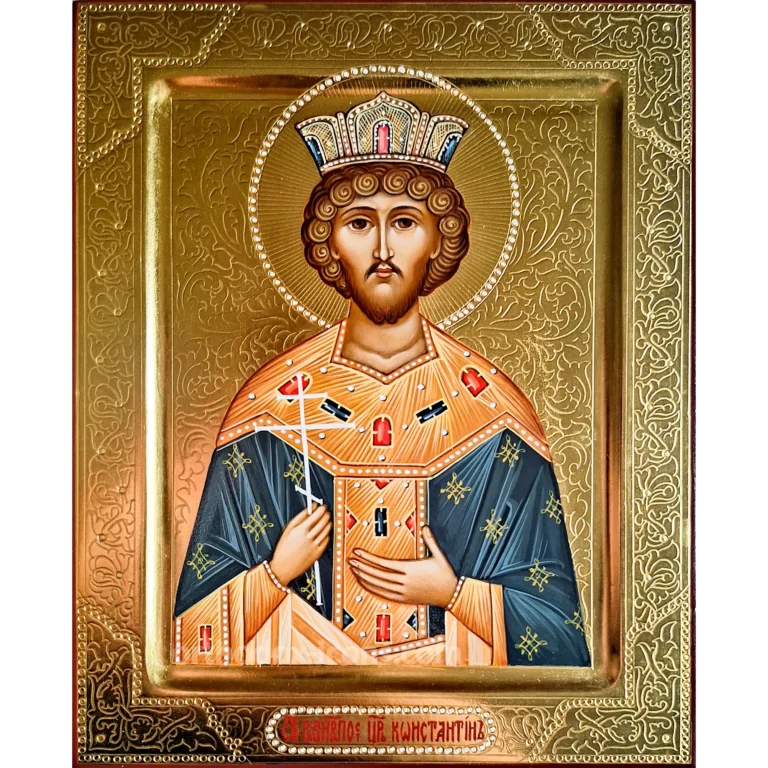
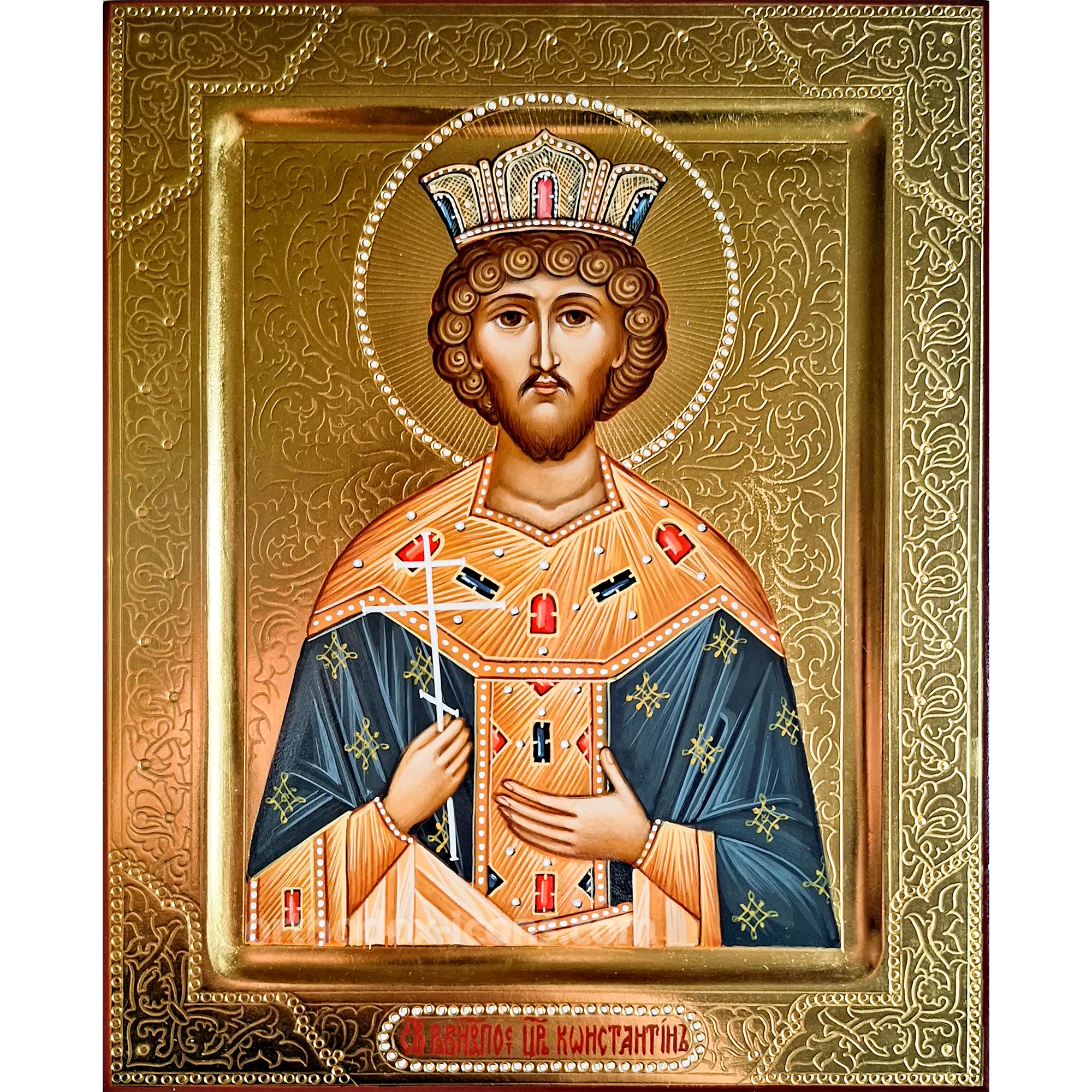
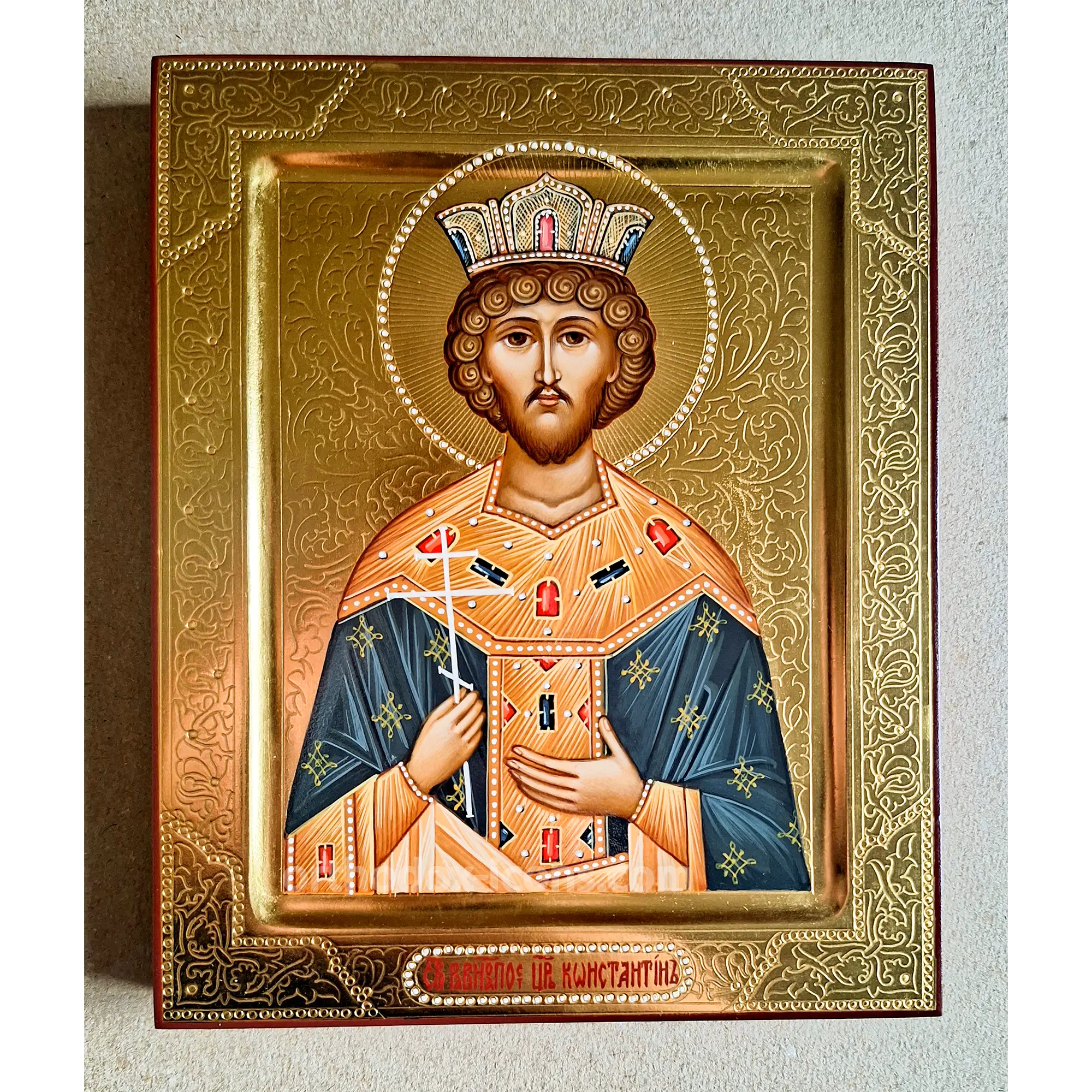
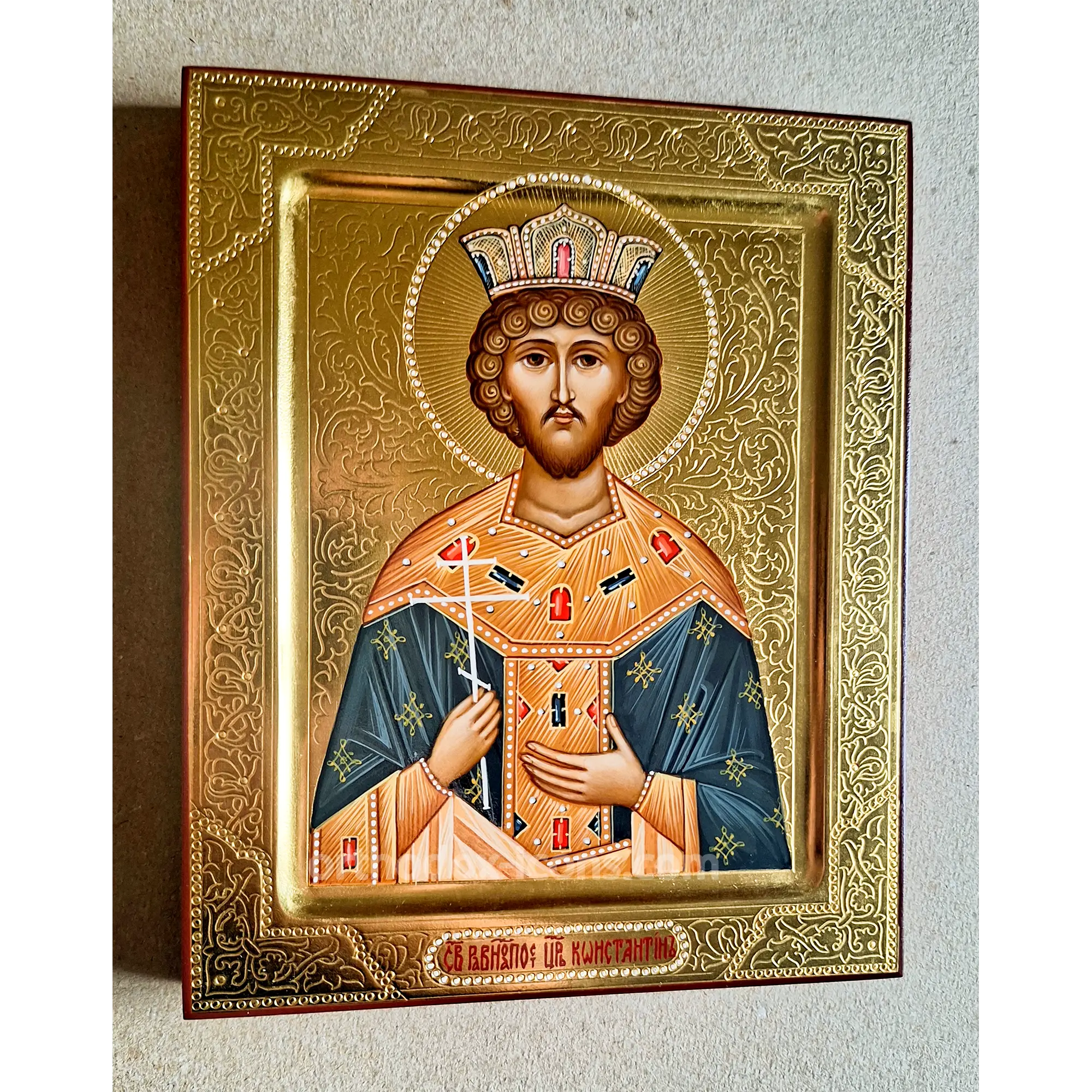
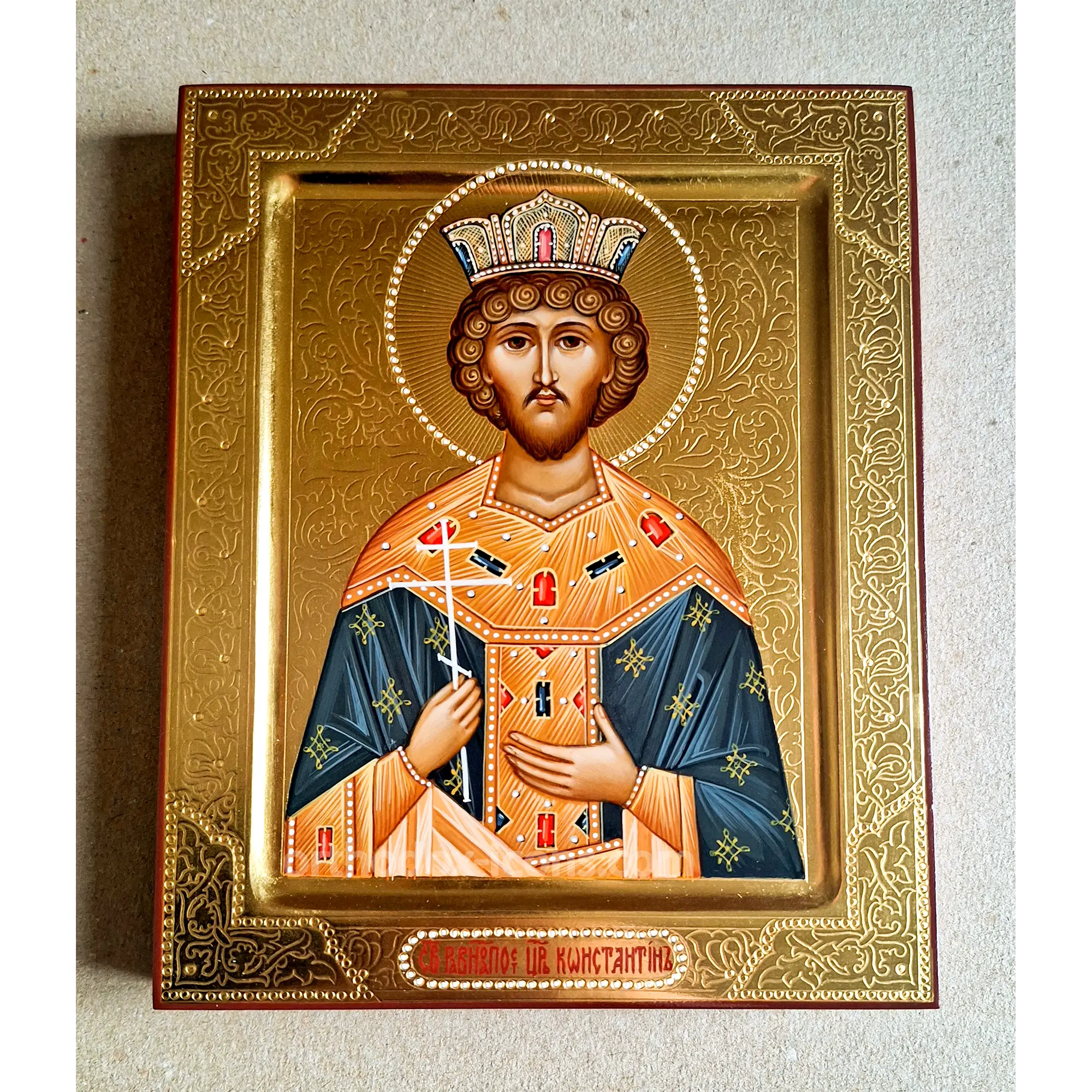
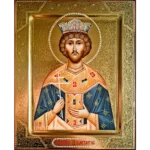
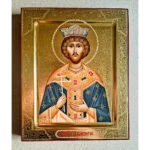
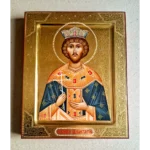
Constantine the Great Orthodox Icon is a hand-painted icon of the Holy Equal-to-the-Apostles Emperor Constantine, the first Roman emperor to recognize Christianity. He is shown half-length in imperial Byzantine garments: a dark blue dalmatic and a broad golden loros richly decorated with painted jewels. On his head is an imperial crown, and in his right hand he holds a white eight-pointed cross, the sign of victory in Christ.
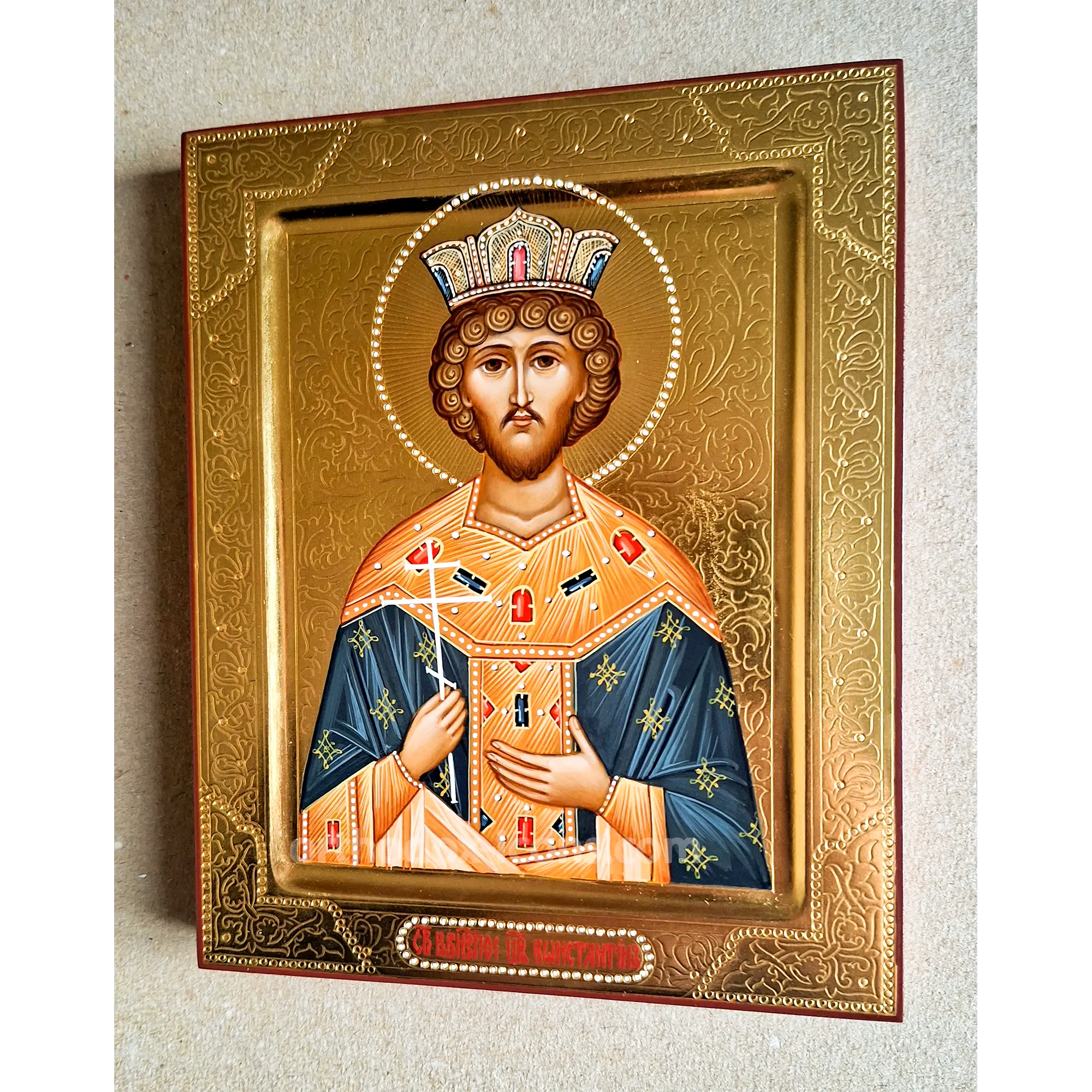
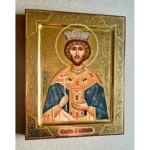
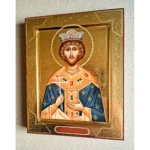
The icon is painted in a recessed kovcheg on a fully gilded background with fine hand engraving, radiant lines, pearl-like dotted ornament, and rich tooled relief decoration on the gold fields.
Prayer focus: wisdom in leadership, responsible decisions, strengthening of Christian faith, protection of the homeland, peace, unity, and support in difficult large undertakings.
Materials: wooden board with kovcheg, oak support slats, chalk gesso, egg tempera, full gold leaf gilding, hand engraving, tooled relief ornament, and protective coating.
It is possible to paint an image in any size to order
Free shipping worldwide
Constantine the Great Orthodox Icon is a hand-painted image of the Holy Equal-to-the-Apostles Emperor Constantine, the ruler whose decisions changed the course of world history. He brought an end to the long persecutions of Christians and opened the way for the Christian faith to be publicly confessed in the Roman Empire. This icon, painted in the spirit of ancient Byzantine sacred art with rich gold leaf, hand engraving, and tooled relief ornament, is a solemn Orthodox image for prayer and a meaningful gift for people who carry responsibility for others.
Saint Constantine is shown half-length, in imperial garments, holding a white eight-pointed cross. The image is not merely a portrait of a ruler; it presents a saint whose earthly power was called to serve the truth of Christ. The imperial crown, dark blue garment, golden loros, jeweled ornament, radiant gold background, and cross in his hand all reveal the theological meaning of the icon: authority is honorable only when it is placed under the will of the Heavenly King.
Icon Characteristics
| Full name | Constantine the Great Orthodox Icon |
| Saint depicted | Holy Equal-to-the-Apostles Emperor Constantine the Great |
| Iconographic type | Half-length imperial image with a cross in the hand |
| Board | Wooden icon board with kovcheg, oak support slats, pavoloka, natural chalk gesso |
| Painting technique | Egg tempera |
| Gilding and decor | Full gold leaf gilding, tooled relief ornament on the fields, engraved background, radiant lines, pearl-like dotted halo outline |
| Available sizes | 17×21 cm (6.7×8.3 in), 20×24 cm (7.9×9.4 in), 27×31 cm (10.6×12.2 in), 30×40 cm (11.8×15.7 in); iconostasis sizes by request |
Who This Icon Is For
The icon of Constantine the Great is first of all an important patron saint image for men and boys named Constantine. It may be given for baptism, name day, patron saint day, coming of age, a jubilee, or another significant family occasion. A patron saint icon in the home helps a person turn in prayer to his heavenly intercessor and remember the Christian meaning of his name.
Because of Saint Constantine’s historical role as a ruler and statesman, this icon is also a fitting spiritual gift for leaders, public servants, officers, business owners, administrators, and all people who make large-scale decisions. The image reminds them that authority should be guided by wisdom, justice, restraint, and accountability before God.
The icon may be placed in a home icon corner, study, office, chapel, church, or public prayer space. Its rich gilding and imperial iconography make it especially suitable for a solemn gift, while the cross in the saint’s hand keeps the image centered on faith rather than worldly status.
Prayer Before the Icon of Saint Constantine
Orthodox Christians turn to Saint Constantine the Great in prayer for wisdom in leadership, strength in difficult undertakings, protection of the homeland, peace and unity among people, strengthening of Christian faith, and the ability to make responsible decisions without losing conscience.
Common prayer intentions before this icon include:
- wisdom in governing a team, organization, business, or public responsibility;
- help in difficult, large, and consequential undertakings;
- peace, unity, and protection of the homeland;
- strengthening of faith and turning of unbelieving loved ones toward God;
- discernment, restraint, and justice in leadership;
- healing and support in bodily or spiritual weakness.
An Orthodox icon is not a charm for power or material success. Prayer before Saint Constantine is a turning to God through the intercession of a saint who used imperial authority to defend the freedom of the Church. His image calls the person praying to responsibility, courage, faith, and service.
Brief Life of Constantine the Great
Saint Constantine was born in 272. His father was Constantius Chlorus, ruler of the western part of the Roman Empire, and his mother was Saint Helen, a Christian who gave her son respect for the faith. At that time the empire was divided among several rulers, some of whom cruelly persecuted Christians.
After his father’s death in 306, Constantine was proclaimed emperor by the troops in Gaul and Britain. His main rival for sole power became Maxentius, the ruler of Rome. In 312, before the decisive battle at the Milvian Bridge, Constantine and his army saw a wondrous vision: a radiant cross in the sky with the words traditionally rendered, By this sign you will conquer. In a dream that night, Christ commanded Constantine to place the sign of the Cross on the shields and standards of his soldiers. Constantine obeyed and won a decisive victory.
In 313 Constantine, together with Licinius, issued the Edict of Milan. This document ended the persecution of Christians, proclaimed freedom of religion, and ordered that churches and property be returned to Christians. Later Constantine defeated Licinius, who had tried to renew persecution in the East, and became sole ruler of the Roman Empire.
The emperor’s activity was directed toward strengthening the Church. He freed clergy from certain burdens, built magnificent churches, and moved the capital to the new Christian city of Constantinople. In 325, at his initiative, the First Ecumenical Council was convened in Nicaea, where the Creed was formed and the Arian heresy was condemned. For his great service to the Church, Constantine was glorified as Equal-to-the-Apostles. He received holy baptism shortly before his death in 337.
Commemoration Day
The Orthodox Church commemorates Saint Constantine together with his mother, Saint Helen, on June 3 according to the new calendar, or May 21 according to the old calendar. This date may be considered when choosing a patron saint icon for a man named Constantine, or when preparing a gift for a leader, family member, church, or chapel.
Features of the Presented Icon
The presented icon is striking in its royal solemnity, which corresponds to the historical status of the saint. The icon is painted on a board with a rectangular kovcheg. The inner edges of the kovcheg are softly rounded. Both the background and the outer fields are covered with gold leaf, symbolizing divine light and incorruptible glory.
The gold surface has been decorated with especially careful work. The background inside the kovcheg is filled with fine engraved plant ornament. Thin radiant lines spread outward from the figure of the emperor, emphasizing the sanctity of the image. The broad fields are framed with raised tooled relief ornament in the form of a Byzantine vine. The halo, like the name cartouche at the bottom of the board, is outlined with a strict row of white pearl-like dots.
Iconography: Imperial Regalia and the Cross
Saint Constantine is shown half-length. His face, framed by full curly hair and a short beard, expresses calm, confidence, and the spiritual wisdom of a ruler. On his head rests a tall, richly decorated Byzantine crown with pearls and red gemstones.
The emperor’s garments emphasize his rank. The lower garment, the dalmatic, is painted in a deep dark blue, almost sapphire tone, with golden ornamental hatching. Over it lies the broad golden loros, a ceremonial element of Byzantine imperial dress. The loros is richly decorated with large rectangular jewels, painted in tempera as rubies and sapphires.
In his right hand Constantine the Great firmly holds a white, silver-toned eight-pointed cross. This cross refers to the heavenly sign that gave him victory and turned his heart toward Christ. His left hand is reverently held close to his chest, symbolizing the submission of an earthly ruler to the will of the Heavenly King.
Materials and Icon-Painting Technique
The icon is painted by hand according to Orthodox iconographic tradition. The base is a strong wooden board with a carved kovcheg. Oak support slats on the back help protect the board from warping during changes in humidity.
The front of the board is covered with linen pavoloka and natural chalk gesso, creating a smooth ground for gilding and painting. The background and fields are covered with sheets of gold leaf. The fields are then worked with tools to create a raised relief pattern, while the background inside the kovcheg is engraved by hand.
The face and garments are painted in egg tempera, a traditional natural paint made with pigments and egg yolk. It allows the iconographer to create deep, saturated colors and fine details. At the final stage, the surface is protected with varnish or natural drying oil.
How to Choose the Size
The 17×21 cm (6.7×8.3 in) and 20×24 cm (7.9×9.4 in) sizes are convenient compact formats. They are suitable for a smaller home icon corner, a leader’s study, or a personal patron saint gift.
The 27×31 cm (10.6×12.2 in) size is a classic solemn format. It allows the iconographer to reveal the beauty of the engraved background, the tooled ornament on the fields, and the painted jewels on the emperor’s garments more fully. It is a strong choice for a jubilee or important celebration.
The 30×40 cm (11.8×15.7 in) format is large and monumental. It is appropriate as a central image in a home prayer corner or as a donation to a church. Iconostasis sizes are created by individual measurements for church interiors.
Blessing and Care
After receiving the hand-painted icon, it may be brought to an Orthodox church for blessing. A blessed icon is treated not as a decorative object, but as a holy image for prayer, thanksgiving, and turning to God through the intercession of the saint.
A hand-painted gilded icon requires careful care. Do not place it near heaters, humidifiers, or direct sunlight. Egg tempera and gold leaf must never be wiped with damp cloths. Dust should be removed only with a very soft dry brush. To protect the image from dust, scratches, candle soot, and changes in the home environment, a glazed wooden kiot is recommended.
Free international shipping is included. Payment is made after you receive and approve the icon.
Questions and Answers
Why is Saint Constantine called Equal-to-the-Apostles?
This title is given to saints whose work in spreading and strengthening Christianity is compared with the apostolic mission. Constantine ended persecutions and gave Christians freedom in the Roman Empire.
Why does Saint Constantine hold a cross?
The cross recalls the vision before the Battle of the Milvian Bridge, when Constantine saw the sign of the Cross and the words meaning, By this sign you will conquer.
Who is this icon suitable for?
It is a patron saint icon for men named Constantine and a meaningful Orthodox gift for leaders, business owners, public servants, officers, and people carrying serious responsibility.
What is the golden band over his garments?
It is a loros, a richly decorated ceremonial garment of Byzantine emperors, symbolizing imperial dignity and responsibility.
How is the ornament on the gold background made?
The background is covered with gold leaf and then hand-engraved, creating a fine shimmering pattern around the saint.
What is the difference between engraving and tooled relief ornament?
Engraving is a fine flat incised pattern inside the kovcheg, while tooled relief ornament on the fields is a deeper raised pattern made with special tools.
When is Saint Constantine commemorated?
The Orthodox Church commemorates Saint Constantine and his mother Saint Helen on June 3 according to the new calendar, or May 21 according to the old calendar.
Why are there white dots around the halo and cartouche?
The white dotted ornament imitates a string of pearls, a traditional decorative device in Byzantine and old Russian icon painting.
Does this icon need careful temperature conditions?
Yes. Like any hand-painted wooden icon, it should be kept away from direct sunlight, heaters, humidity, and sudden temperature changes.
Should this icon be placed in a kiot?
A glazed wooden kiot is recommended, especially for a gilded icon, because it protects the painting and gold leaf from dust, scratches, and candle soot.
| Dimensions | 17x21cm (6.7×8.3 in), 20x24cm (7.9×9.4 in), 27x31cm (10.6×12.2 in), 30x40cm (11.8×15.7 in) |
|---|---|
| Name | Constantine |