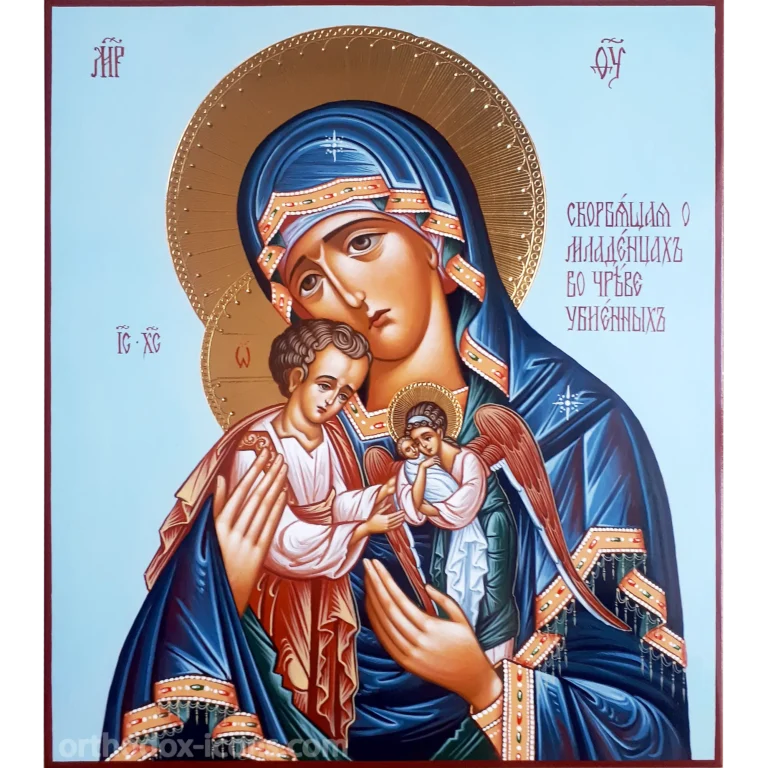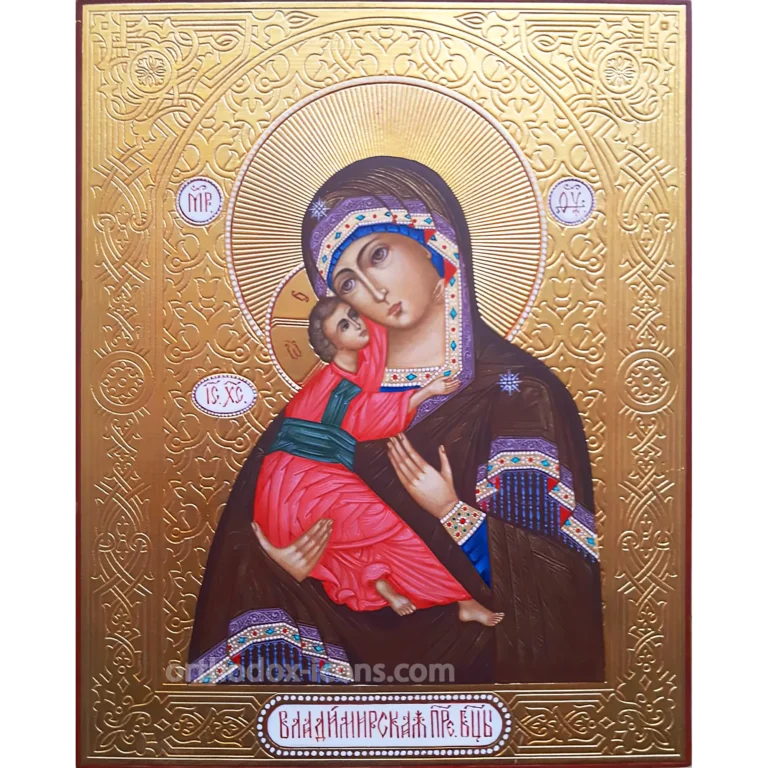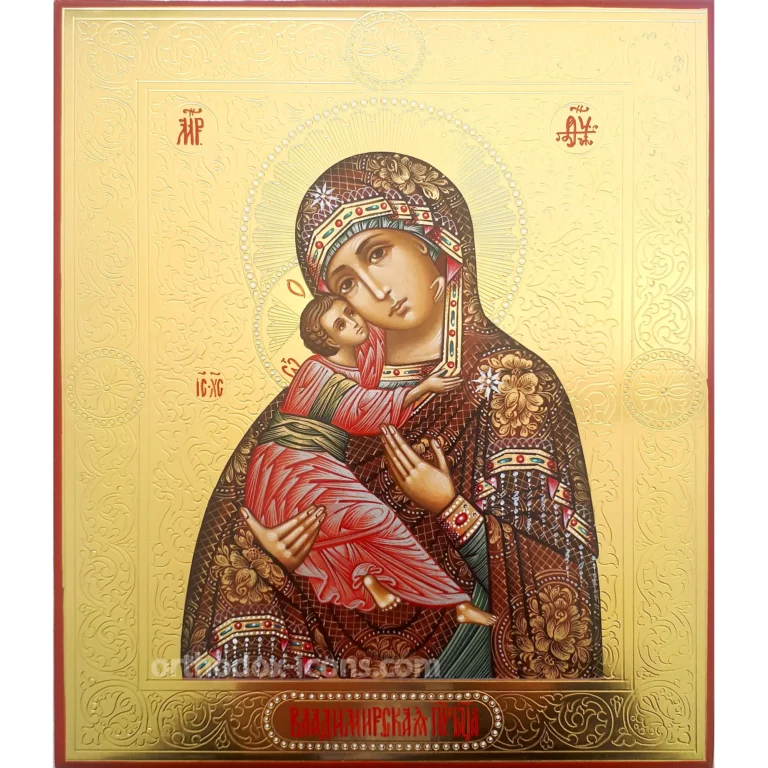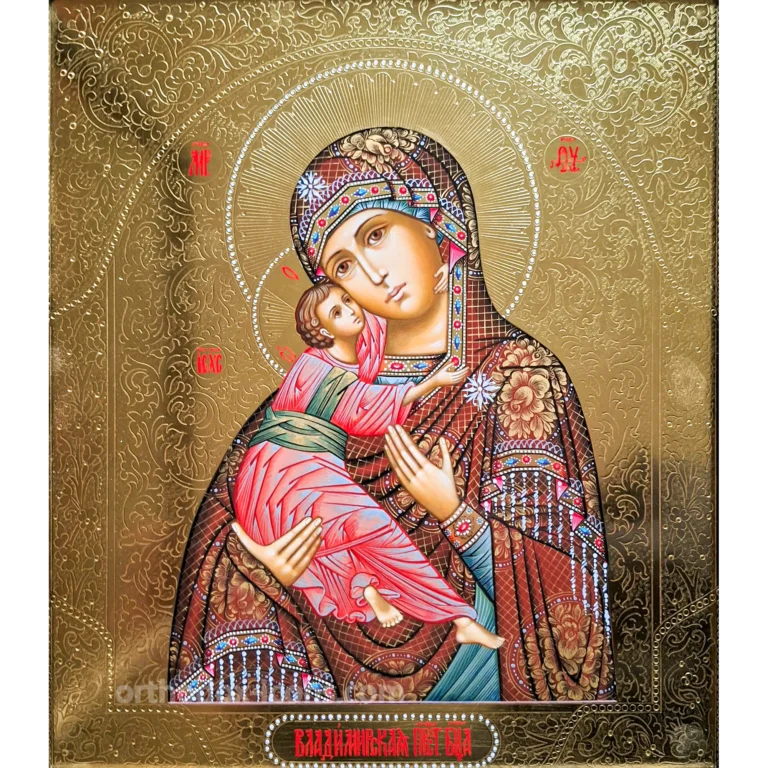
Kazan Virgin Mary Icon
Price range: $700 through $2250
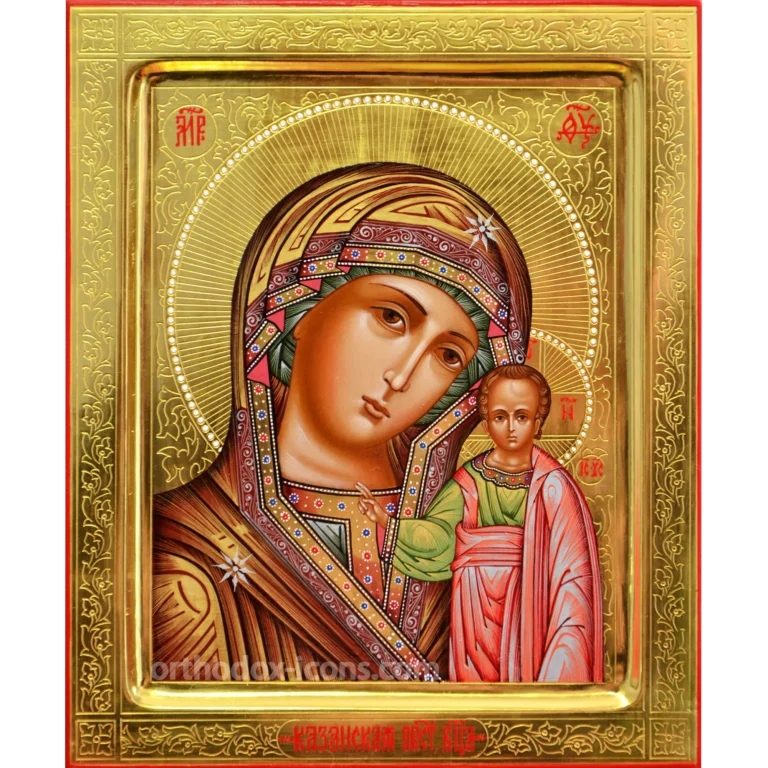
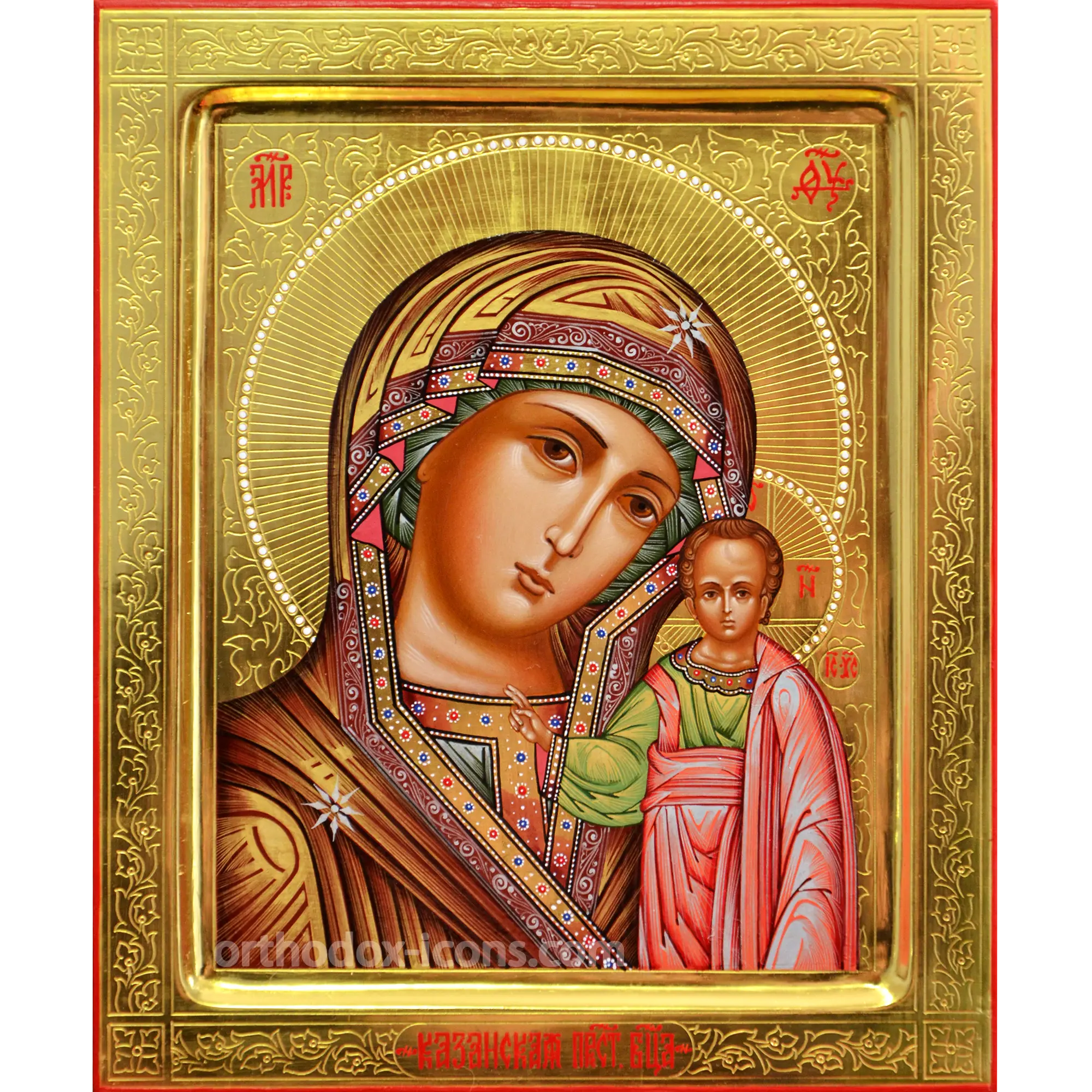
Kazan Virgin Mary Icon is a festive hand-painted Kazan Mother of God icon with 23K gold leaf (960 purity), hand-tooled gold chasing, smooth gold kovcheg, and raised cold enamel garment decoration.
Available sizes: 17×21 cm (6.7×8.3 in), 20×24 cm (7.9×9.4 in), 27×31 cm (10.6×12.2 in), and 30×40 cm (11.8×15.7 in). A wedding blessing icon and family shrine, painted in natural mineral egg tempera on a linden board with kovcheg, linen, chalk gesso, and oak splines. Free international shipping, with payment after delivery.
It is possible to paint an image in any size to order
Free shipping worldwide
Kazan Virgin Mary Icon is a hand-painted Orthodox icon of the Mother of God of Kazan, one of the most beloved and widely venerated images of the Theotokos. The Kazan icon is associated with protection of the home, blessing of marriage, care for children, healing, and help in times of sorrow.
This version is especially festive. The icon combines the solemn Kazan composition with a full 23K gold leaf (960 purity) background, hand-tooled gold chasing on the wide margins, smooth gold in the kovcheg, and raised cold enamel decoration on the garments. It is made as a bright family shrine, a wedding blessing icon, or a memorable Orthodox gift.
Available sizes: 17×21 cm (6.7×8.3 in), 20×24 cm (7.9×9.4 in), 27×31 cm (10.6×12.2 in), and 30×40 cm (11.8×15.7 in). Larger church and iconostasis formats may be discussed individually.
The Place of the Kazan Icon in Orthodox Devotion
Among the wonderworking icons of the Queen of Heaven, the Kazan Mother of God holds a special place in the hearts of Orthodox Christians. Her gaze is gentle, restrained, and full of maternal mercy. For many families, this icon is present from the beginning of married life and remains in the home as a sign of prayerful protection.
People pray before the Kazan icon for peace in the family, health of children, deliverance from visible and invisible enemies, and help in difficult decisions. The image is also loved because it is close and accessible: the faces of the Mother of God and Christ are brought near to the person praying before the icon.
This hand-painted version is not a printed reproduction or decorative panel. It is made in the traditional icon-painting technique, with gold, egg tempera, careful drawing, and detailed ornamental work.
The Miraculous Finding in Kazan
The history of the Kazan icon begins in the summer of 1579. After Kazan had come under Russian rule, a destructive fire swept through the city and ruined many homes. Among the families who suffered from the fire was the family of the archer Daniil Onuchin.
His nine-year-old daughter Matrona saw the Most Holy Theotokos in a dream. The Mother of God told the child to go to the ashes of the burned house and uncover her holy icon, hidden in the ground before the arrival of the Russian troops.
At first, Matrona’s mother did not believe the child’s words. But after the Mother of God appeared again, more sternly, they went to the place of the fire. Under the layer of ash and burned wood, they found the icon wrapped in an old piece of cloth.
The image had not been harmed by the fire. Its colors shone as if freshly painted. Soon after the finding, the first miracle occurred: during a procession with the icon, two blind men, Joseph and Nikita, received their sight after venerating the holy image.
The Kazan Icon as a Protectress
The Kazan icon became widely venerated as a national and family protectress. Its role was especially remembered in 1612, during the Time of Troubles. A copy of the icon accompanied the militia gathered by Kuzma Minin and Prince Dmitry Pozharsky.
After fasting and prayer before the Kazan Mother of God, the army liberated Moscow from foreign occupation. This event strengthened the image’s place in Orthodox memory as a sign of protection, intercession, and deliverance in a time of danger.
For this reason, the Kazan icon is not only a private family image. It also carries a wider meaning of spiritual protection, unity, repentance, and hope in God’s mercy through the prayers of the Mother of God.
Iconographic Type and Shoulder-Length Composition
The Kazan icon belongs to the ancient Byzantine type known as Hodegetria, the Directress or Guide. In the Kazan form, however, the composition is shortened and shown close-up.
The Mother of God and Christ are cropped near the shoulders. The hands of the Theotokos are not visible. This creates a different prayerful effect from a full or waist-length Hodegetria: the holy faces are brought very close to the viewer.
Christ is shown at the side of the Mother of God, facing the viewer directly. His right hand is raised in blessing. His expression is not simply that of an earthly child; the icon reveals Him as the eternal Word of God, full of wisdom and divine authority.
The Kazan composition is therefore both tender and strict. It is close to the heart, but it also keeps the solemn clarity of Orthodox iconography.
The Stars of Ever-Virginity
On the forehead and shoulder of the Mother of God, bright star symbols shine on her maforion. In Orthodox tradition, these stars point to the mystery of her ever-virginity.
They confess that the Theotokos remained Virgin before the Nativity of Christ, in the Nativity, and after the Nativity. This detail is small, but it is one of the most important theological signs in icons of the Mother of God.
In this version, the stars are enriched with raised enamel-like decoration, making them visible and jewel-like while preserving their traditional meaning.
Prayer Before the Kazan Mother of God
The Kazan icon is often called a universal help in the needs of life. It is approached in prayer for family peace, protection of the home, health of children, and reconciliation between spouses.
It is especially important as a wedding icon. In Russian Orthodox custom, parents often bless the bride, or the newly married couple, with the Kazan image. The icon then becomes one of the spiritual centers of the new home.
Parents also pray before the Kazan Mother of God for the gift of children, the health of infants, protection of teenagers from harmful influences, and wisdom in raising a family.
Because the first miracles of the Kazan icon included healing of blindness, Orthodox Christians also pray before it for healing of eye diseases, recovery from serious illness, and help in spiritual blindness, confusion, and grief.
Gold Chasing, Smooth Kovcheg, and Enamel Ornament
This icon is richly decorated and technically complex. The surface of the board is covered with true 23K gold leaf (960 purity). On the wide margins, the icon painter works the gold by hand with fine tools, pressing and cutting a relief vegetal ornament into the surface.
This technique is often called gold chasing or tsirovka. It creates the impression of a precious metal riza or chased cover, while remaining part of the painted icon itself. The ornament catches the light and gives the icon a ceremonial radiance.
The central gold background in the kovcheg is left smooth. This contrast is important: the chased margins create rich movement, while the calm inner gold helps the holy faces remain clear and spiritually focused.
The garments of the Mother of God and Christ are decorated with cold enamel painting. Small raised drops imitate pearls, rubies, and sapphires. The effect recalls precious embroidery and gives the icon a festive, jewel-like appearance.
Traditional Painting Technique
The faces and garments are painted in natural mineral egg tempera. This is the classical technique of Orthodox icon painting. Mineral pigments are ground and mixed with egg medium, producing colors that are stable, deep, and resistant to fading.
The icon is painted on a solid linden board prepared in the traditional manner. The board has a kovcheg, linen, chalk gesso, and inserted oak splines. These elements are not decorative details; they help the icon remain stable and suitable for long-term preservation.
The combination of tempera, gold leaf, chasing, and enamel decoration makes this icon both a prayer image and a refined work of sacred craftsmanship.
Icon Characteristics
| Name | Kazan Virgin Mary Icon |
| Iconographic type | Hodegetria / Kazan Mother of God, shoulder-length composition |
| Available sizes | 17×21 cm (6.7×8.3 in), 20×24 cm (7.9×9.4 in), 27×31 cm (10.6×12.2 in), 30×40 cm (11.8×15.7 in) |
| Background | Full 23K gold leaf (960 purity), smooth gold in the kovcheg |
| Margins | Hand-tooled gold chasing with vegetal ornament |
| Garment decoration | Raised cold enamel ornament imitating pearls and precious stones |
| Painting technique | Natural mineral egg tempera |
| Board | Linden board with kovcheg, linen, chalk gesso, and oak splines |
| Main purpose | Wedding blessing icon, family shrine, gift for marriage, prayer for children and home protection |
Care and Preservation
An icon with gold chasing and raised enamel decoration should be handled carefully. Do not wash the surface with water, wipe it with damp cloths, use household cleaners, or polish the gold. These actions can damage the delicate gold and painted ornament.
Dust should be removed only with a very soft dry brush. For long-term protection, especially in a home where candles or incense are used, a glazed kiot is recommended.
Ordering, Shipping, and Payment
Available sizes are 17×21 cm (6.7×8.3 in), 20×24 cm (7.9×9.4 in), 27×31 cm (10.6×12.2 in), and 30×40 cm (11.8×15.7 in). Larger church and iconostasis formats may be discussed individually. Free international shipping is included, with payment after delivery.
Questions and Answers
What is the Kazan Virgin Mary Icon?
It is a hand-painted Orthodox icon of the Mother of God of Kazan, an abbreviated shoulder-length form of the Hodegetria iconographic type.
Why is the Kazan icon especially loved in Orthodox homes?
The Kazan Mother of God is traditionally venerated as a protectress of the home, a helper in family life, and a quick comforter in sorrow.
Why is this icon often chosen for weddings?
In Russian Orthodox tradition, the Kazan icon is often used to bless a bride and a new family, asking the Mother of God to guard the marriage and home.
What does the shoulder-length composition mean?
The Mother of God and Christ are shown close to the viewer, with the figures cropped near the shoulders, creating a direct and personal prayerful presence.
What is the meaning of the stars on the Mother of God’s garment?
They signify her ever-virginity: before, during, and after the Nativity of Christ.
What is gold chasing or tsirovka?
It is a hand-tooled ornamental technique in which the gold leaf surface is decorated with a relief pattern using fine metal tools.
What are the enamel-like details on the garments?
They are raised cold enamel ornaments that imitate pearl, ruby, and sapphire decoration on the borders of the sacred garments.
What sizes are available?
Available sizes are 17×21 cm (6.7×8.3 in), 20×24 cm (7.9×9.4 in), 27×31 cm (10.6×12.2 in), and 30×40 cm (11.8×15.7 in).
What materials are used?
The icon is painted in natural mineral egg tempera on a linden board with kovcheg, linen, chalk gesso, oak splines, 23K gold leaf (960 purity), gold chasing, and cold enamel decoration.
How are shipping and payment arranged?
Free international shipping is included, with payment after delivery.
| Dimensions | 17x21cm (6.7×8.3 in), 20x24cm (7.9×9.4 in), 27x31cm (10.6×12.2 in), 30x40cm (11.8×15.7 in) |
|---|---|
| Name | Mary |