Iberian Icon of the Mother of God
Price range: $700 through $2250
Available sizes: 17×21 cm (6.7×8.3 in), 20×24 cm (7.9×9.4 in), 27×31 cm (10.6×12.2 in), 30×40 cm (11.8×15.7 in).
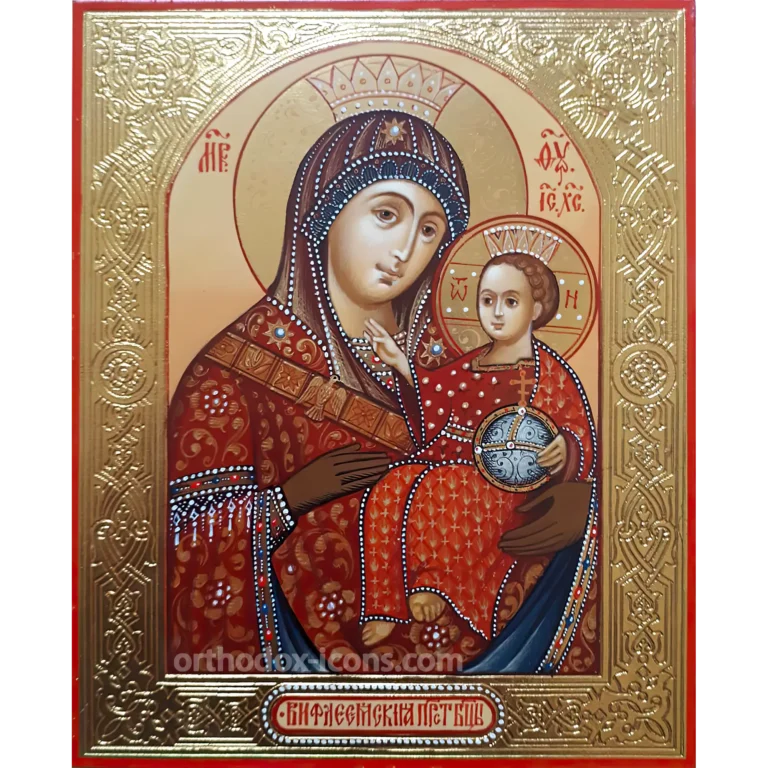
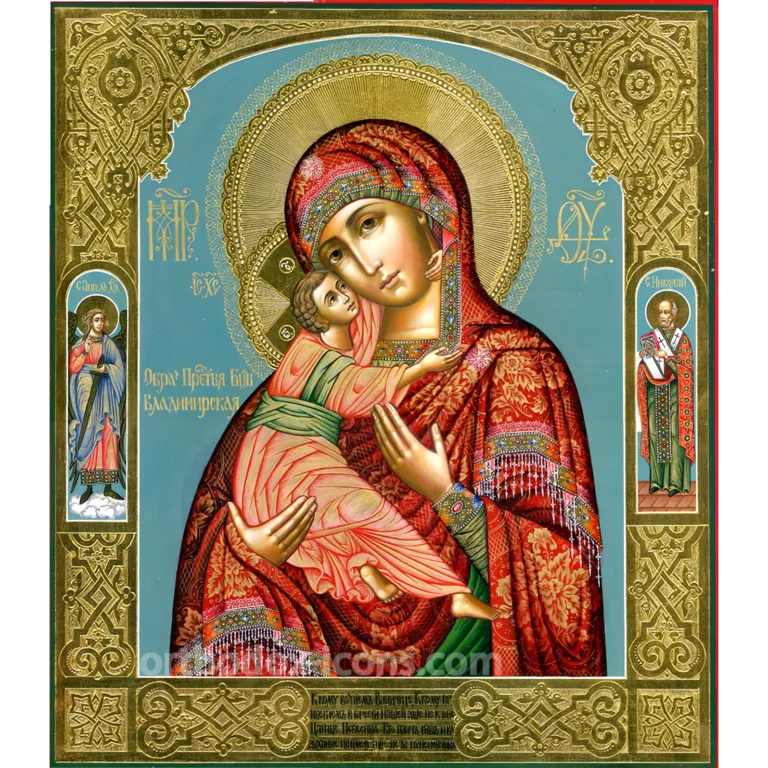
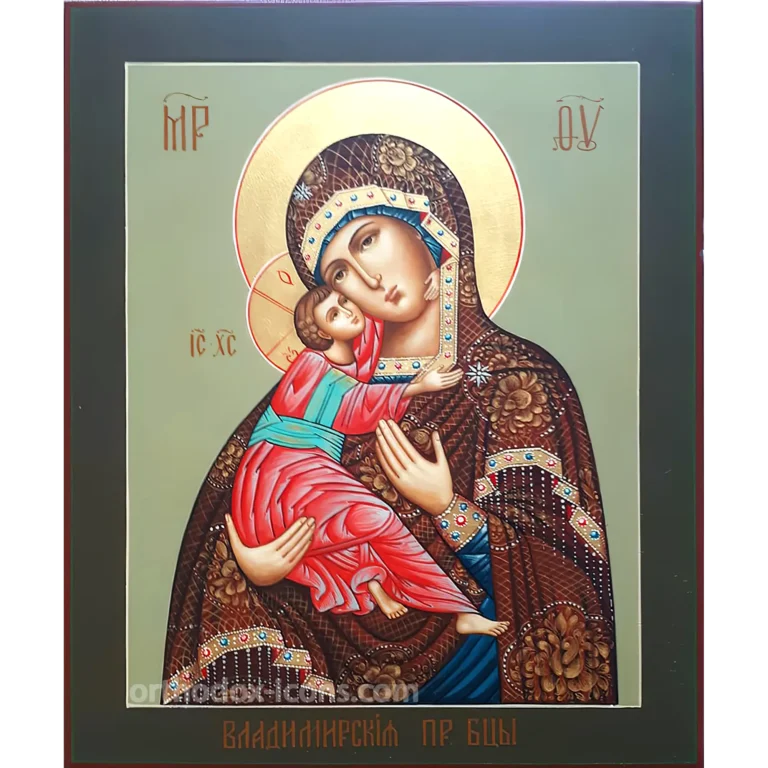
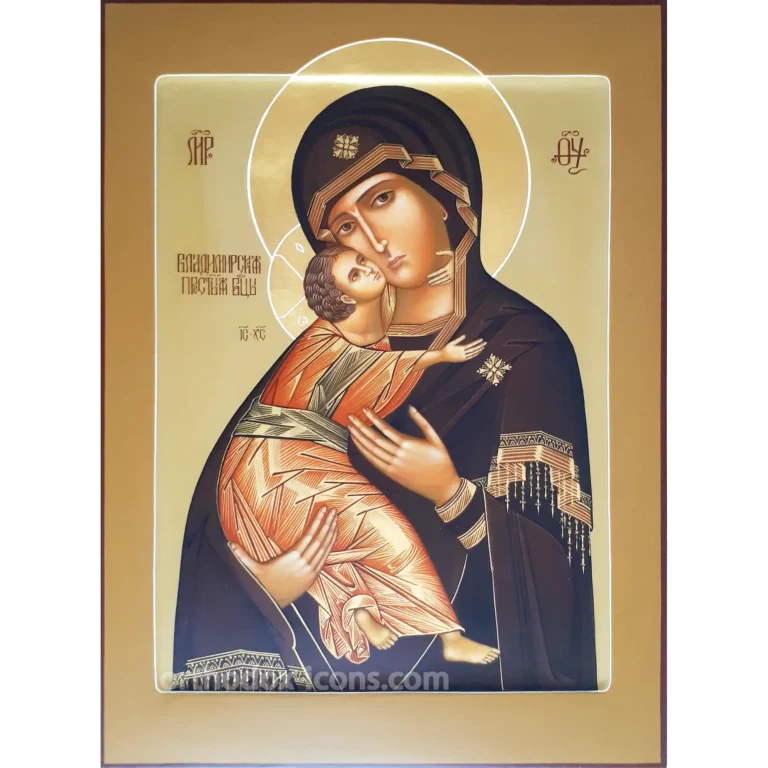
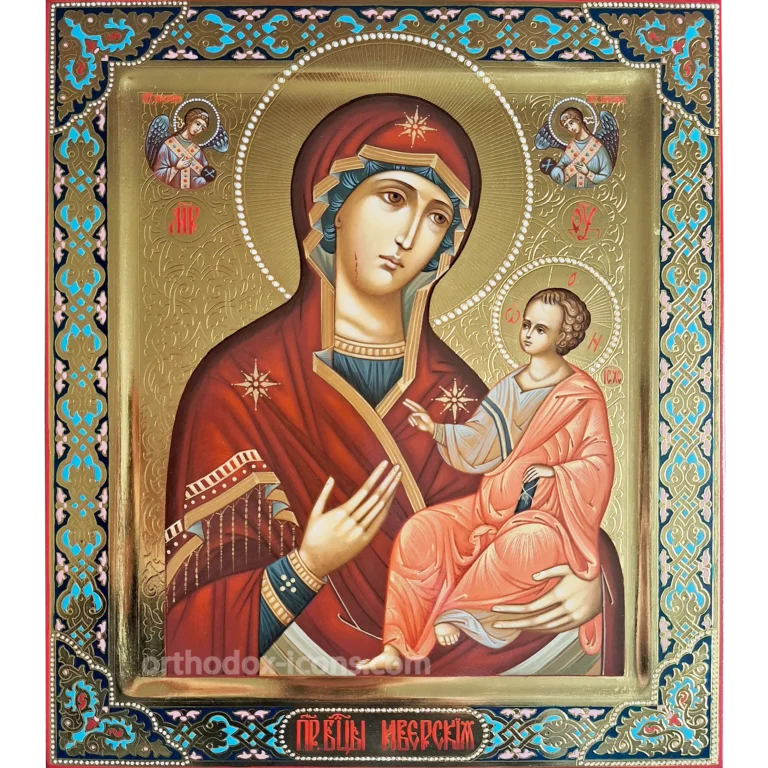
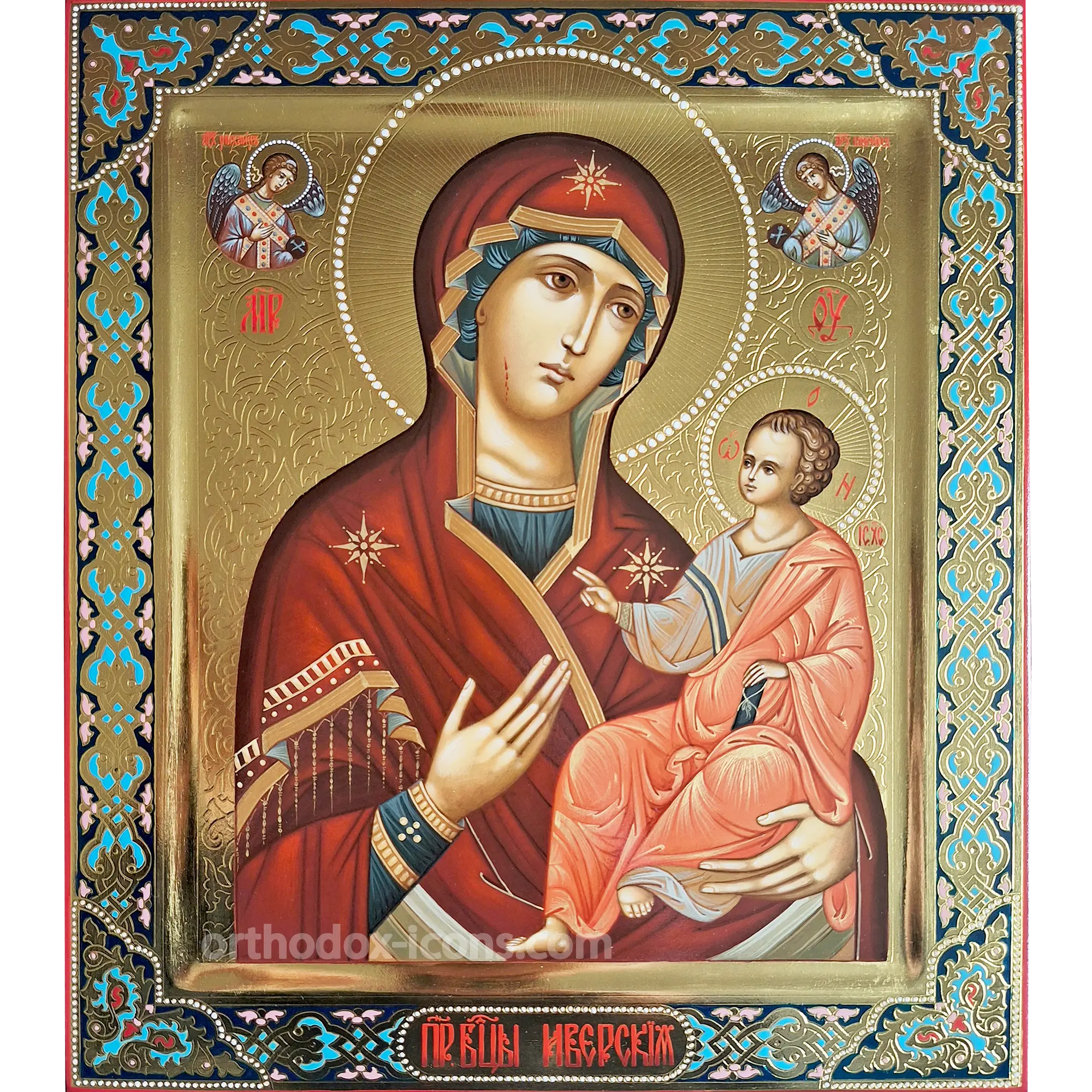
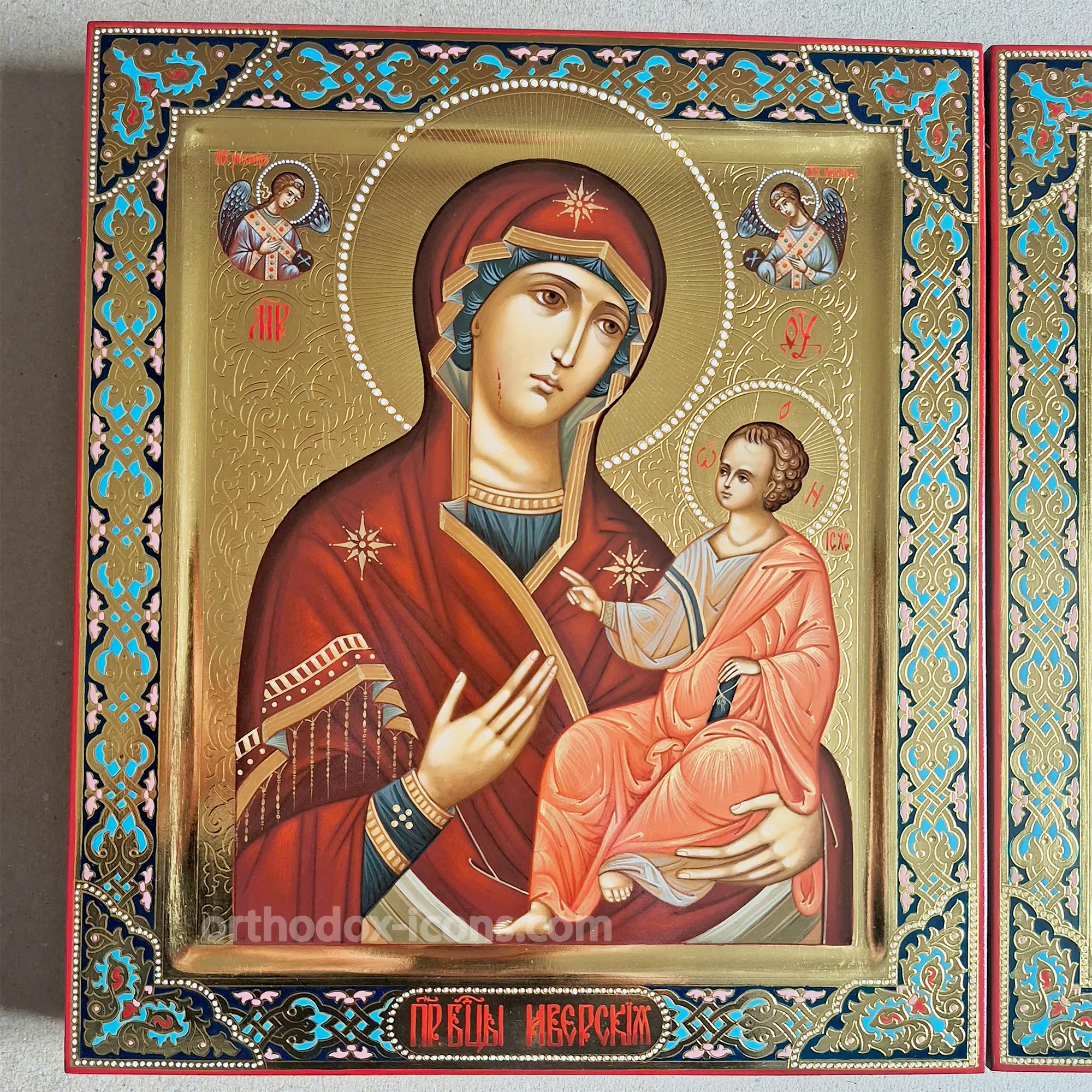
The Iberian Icon of the Mother of God, also known as the Iveron Icon, Portaitissa, or Gatekeeper, is one of the most revered Orthodox icons of the Theotokos. According to tradition, the prototype came miraculously across the sea to Mount Athos and remains at the Iveron Monastery. This hand-painted Hodegetria-type icon shows the Mother of God holding Christ, with the distinctive wound on her right cheek, archangels in medallions, a dark red maphorion, 23K gold leaf, tooled gold ornament, and Byzantine-style enamel-inspired borders. Free international shipping is included; payment is due upon delivery.
It is possible to paint an image in any size to order
Free shipping worldwide
Among the many icons of the Mother of God venerated in the Orthodox Church, the Iberian Icon of the Mother of God holds a royal and deeply beloved place. It is also known as the Iveron Icon, the Iverskaya Mother of God, and by its Greek title Portaitissa, meaning the Gatekeeper. For centuries this image has been connected with Mount Athos, protection, healing, repentance, and the merciful intercession of the Theotokos.
The name Gatekeeper is not merely poetic. According to Athonite tradition, the Mother of God herself chose the place where the icon would remain, above the gates of the Iveron Monastery, as a sign that she protects the monastery and the souls of the faithful. For this reason, many Orthodox Christians keep the Iberian icon near the entrance of the home, asking the Theotokos to guard the household from visible and invisible harm.
This hand-painted version combines strict Byzantine iconography with rich decorative work in the Mstyora tradition. The icon shows the Mother of God holding Christ, with the distinctive wound on her right cheek, archangels in medallions, a dark red maphorion, a 23K gold leaf background, tooled gold ornament, and enamel-inspired Byzantine-style borders.
Iberian Icon of the Mother of God – History and Portaitissa Tradition
The tradition of the Iberian Icon reaches back to the first centuries of Christianity. Church tradition says that the first image was painted by Saint Luke the Apostle and Evangelist, the patron of icon painters, during the earthly life of the Virgin Mary. The icon became especially famous in the ninth century, during the period of iconoclasm, when holy images were being destroyed by order of the Byzantine emperor Theophilos.
At that time, the icon was kept near Nicaea in the home of a pious widow. One night, armed iconoclast soldiers broke into her house. One of them struck the face of the Mother of God with a spear. Immediately, according to tradition, warm blood flowed from the dry wooden board as from a living body. The soldiers were terrified and withdrew.
The widow understood that they would return in the morning to burn the icon. With tears and prayer, she carried the holy image to the sea and entrusted it to the Mother of God. The icon did not fall flat upon the waves. It stood upright and moved miraculously across the sea toward the west.
About two centuries later, in the eleventh century, the monks of the Georgian Iveron Monastery on Mount Athos saw a great pillar of fire rising from the sea. At the base of the light, standing upon the water, was the icon of the Mother of God. When the monks tried to approach it by boat, the image moved away from them. Then the Theotokos appeared in a dream to the holy elder Gabriel, a Georgian monk, and told him to walk on the water with faith and receive the icon.
Elder Gabriel walked over the waves as if on dry land and brought the icon reverently to the monastery church. The next morning, however, the icon was found not in the altar, but above the main gates of the monastery. The monks returned it to the church, but it repeatedly appeared at the gates. At last the Mother of God revealed that she did not wish to be guarded by the monks, but to be their Guardian. From this came the name Portaitissa, the Gatekeeper.
The Iberian Icon in Russian Devotion
The first exact copy of the Iberian Icon was brought to Russia in 1648 at the request of the future Patriarch Nikon. A famous chapel was later built for it near the Resurrection Gate in Moscow. The Iberian Chapel became one of the spiritual centers of the city. Tsars, commanders, pilgrims, and ordinary people prayed before the Gatekeeper before journeys, wars, important decisions, and times of danger.
Because of this history, the Iberian Mother of God is loved as a protectress of homes, cities, monasteries, travelers, families, and all who seek refuge under her intercession.
Iconography of the Iberian Mother of God
The Iberian Icon belongs to the classical Byzantine Hodegetria type, the Mother of God who shows the Way. In this composition the Theotokos holds Christ and points toward Him as the only path of salvation. The image also has a tender and merciful character, which is why some descriptions connect it with the Eleusa tradition.
The most recognizable detail is the small bleeding wound on the right cheek of the Mother of God. This wound recalls the miracle in Nicaea during the iconoclast persecution, when the icon was struck by a spear and blood flowed from the wooden panel. The wound makes the image especially striking: it testifies that the holy icon is not an ordinary object, but a grace-filled image honored by the Church.
The faces in the Iberian type are monumental and expressive. The Mother of God looks not at the Child, but directly toward the faithful. Her large almond-shaped eyes carry royal majesty, hidden sorrow, and deep spiritual attention. She wears a dark red maphorion with a gold border and fringe. The golden stars on her forehead and shoulders signify her ever-virginity before, during, and after the Nativity of Christ.
The Christ Child sits on her left arm. He wears a light himation with gold assist. In His left hand He holds a rolled scroll, the sign of divine teaching. His right hand is raised in a traditional blessing gesture.
Archangels and Decorative Borders
In the upper part of the icon, on both sides of the Mother of God, archangels are shown in round medallions. They are usually understood as Archangel Michael and Archangel Gabriel. In many versions they hold instruments of the Passion, foreshadowing the redemptive suffering of Christ.
This hand-painted version is especially rich in decoration. The background and halos are covered with 23K gold leaf. A fine plant ornament is tooled by hand into the gilded surface, allowing the gold to catch and reflect the light. The wide borders are decorated with polychrome ornament inspired by Byzantine filigree and cloisonne enamel, in turquoise, rose, blue, and other jewel-like tones.
The decoration is not empty luxury. It recalls the precious coverings made for great Orthodox shrines and expresses the beauty of the Kingdom of Heaven. The ornamental frame turns the icon into a radiant setting for the holy image, while the face of the Mother of God remains the spiritual center.
Prayer Before the Iberian Icon
As Portaitissa, the Gatekeeper, the Iberian Icon is especially associated with protection of the home. Orthodox Christians pray before it that the Mother of God would guard the house from thieves, enemies, fire, disaster, envy, and destructive intentions. It may be placed near the entrance, above the door, or opposite the door as a prayerful sign of protection.
The icon is also approached in prayers for healing. In the histories of the Iveron Monastery and the Moscow Iberian Chapel, many healings are associated with prayer before this image. People pray for deliverance from severe illness, spiritual crisis, despair, and fear.
Families also pray before the Iberian Mother of God for loved ones who have gone astray, including those struggling with addictions, harmful influences, or separation from the Church. The icon is a strong image of repentance, return, protection, and motherly mercy.
Materials and Mstyora Technique
Creating an Iberian icon with this level of decoration requires careful and patient work. The base is a seasoned linden board strengthened with inserted oak braces to help prevent warping. Linen is applied to the front surface, and natural chalk gesso is built up in layers and polished to a smooth, stable ground.
The background and halos are gilded with 23K gold leaf. After gilding, the ornament is tooled by hand into the gold, creating a fine relief pattern. The faces and garments are painted with mineral egg tempera, prepared from natural pigments and an egg emulsion. This traditional technique gives the icon durable color, depth, and a noble surface.
The enamel-style ornament on the borders is painted with very fine brushes. The result is a festive and jewel-like image inspired by ancient Georgian and Byzantine shrine decoration, while remaining a hand-painted Orthodox icon for prayer and veneration.
Available Sizes
The available sizes are 17×21 cm (6.7×8.3 in), 20×24 cm (7.9×9.4 in), 27×31 cm (10.6×12.2 in), and 30×40 cm (11.8×15.7 in). The smaller 17×21 cm size is suitable for a compact icon corner, though the fine tooled and enamel-style details are naturally more simplified at that scale.
The 20×24 cm size gives better readability to the faces and border ornament. The 27×31 cm size is the most balanced classic format and allows the gold tooling, painted enamel fields, archangel medallions, and garment folds to be shown clearly. The 30×40 cm size is a large ceremonial format suitable for a spacious home, parish analogion, or placement near an entrance.
Free international shipping is included; payment is due upon delivery.
Icon Characteristics
| Feature | Description |
|---|---|
| Iconographic type | Iberian Mother of God, Hodegetria-related Portaitissa, with wound on the cheek |
| Other names | Iveron Icon, Iverskaya Mother of God, Portaitissa, Gatekeeper |
| Main details | Bleeding wound on the cheek, archangels in medallions, Byzantine-style ornament |
| Board | Linden wood with linen, natural gesso, and inserted oak braces |
| Painting | Mineral egg tempera in the Mstyora tradition |
| Gold and decoration | 23K gold leaf, hand-tooled gold background, painted enamel-style borders |
| Available sizes | 17×21 cm, 20×24 cm, 27×31 cm, 30×40 cm |
| Prayer use | Protection of the home, healing, repentance, return of loved ones, consolation in sorrow |
The Iberian Icon of the Mother of God is a great Orthodox image of protection and mercy. As the Gatekeeper, the Theotokos is invoked as guardian of the home, healer of suffering, and motherly intercessor for every faithful heart seeking refuge in God.
Questions and Answers
Why is the Iberian Icon called the Gatekeeper?
The icon is called Portaitissa, or Gatekeeper, because according to Athonite tradition it chose to remain above the gates of the Iveron Monastery as the protectress of the monastery.
What is the wound on the cheek of the Mother of God?
The wound recalls the tradition that during the iconoclast persecution a soldier struck the icon with a spear, and blood flowed from the wooden board.
Is this icon also called the Iveron Icon?
Yes. Iberian Icon, Iveron Icon, and Portaitissa all refer to the same revered Athonite image of the Mother of God.
Who painted the first Iberian icon?
Church tradition attributes the first image to Saint Luke the Evangelist, the patron of icon painters, during the earthly life of the Mother of God.
Where is the original icon kept?
The original is venerated on Mount Athos at the Iveron Monastery, where it is associated with protection of the monastery and pilgrims.
Where is this icon often placed at home?
Because it is known as the Gatekeeper, many Orthodox families place the icon near or opposite the entrance of the home as a prayerful sign of protection.
What are people accustomed to pray for before this icon?
People pray before the Iberian Mother of God for protection of the home, healing, repentance, help for loved ones who have gone astray, and consolation in sorrow.
What materials are used?
The icon is painted on a prepared wooden board with natural gesso, mineral egg tempera, 23K gold leaf, tooled ornament, and painted enamel-style borders.
What sizes are available?
The available sizes are 17×21 cm, 20×24 cm, 27×31 cm, and 30×40 cm, with inch equivalents shown on the product page.
Do you ship internationally?
Yes. Free international shipping is included, and payment is due upon delivery.
| Dimensions | 17x21cm (6.7×8.3 in), 20x24cm (7.9×9.4 in), 27x31cm (10.6×12.2 in), 30x40cm (11.8×15.7 in) |
|---|---|
| Name | Mary |